Category Archives: Los Angeles

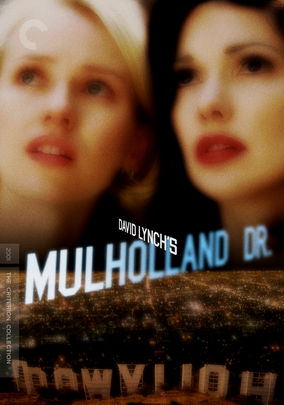
Mulholland Dr.- 2001

Mulholland Dr.- 2001

Director David Lynch

Starring Naomi Watts, Laura Harring, Justin Theroux

Top 250 Films #7

Scott’s Review #297

60021646

Reviewed December 12, 2015

Grade: A

Mulholland Dr. (2001) is my favorite David Lynch film and, as far as I am concerned, a pure masterpiece in experimental filmmaking.

Championed by many, yet hated by others for its non-linear and confusing storyline, trying to make sense of the mishmash of dreamlike plots is a waste of time and undoubtedly headache-inducing, as the film must be experienced and appreciated for its creativity.

My best analogy is that Mulholland Dr. is to film what Pink Floyd is to music – it must be savored and experienced. It is a film that invites interpretation and study.

The main story, if one is attempting to summarize in a paragraph, goes something like this:

Part 1- aspiring actress Betty Elms (played by then-unknown Naomi Watts) arrives in sunny Los Angeles as a perky, clean-cut girl. She stays in her aunt’s gorgeous suburban apartment while she is away filming a movie on location.

Betty meets an amnesiac woman, the gorgeous Rita (Laura Harring), who is hiding in the apartment. Before meeting Betty, we learn that Rita was involved in a car accident on Mulholland Dr. and is carrying a large sum of cash.

Still, she does not know who she is or even her name, making up the name “Rita” from a poster of Rita Hayworth she sees on the wall while showering.

Part 2: Betty (now named Diane) and Rita (now Camilla) are lovers, and Betty, no longer aspiring, has now become a neurotic, struggling actress with no work, and is involved in a love triangle with Camilla and another man, who are both great successes and pity Diane.

Diane and Camilla visit a club named Club Silencio, where a gorgeous singer brings them to tears with her singing, only to collapse and reveal herself as a phony. The host warns that everything is an illusion.

Intersecting vignettes seemingly unrelated to the central part of the story- a young director forced to cast a woman after threats from the mafia, a terrified man who sees a demented man behind the dumpster of a burger joint, and a detective searching for the clues to the car accident involving Rita- all come together to relate to the main story.

Mixed in with all of these stories are recurring odd characters- the seemingly sweet elderly couple that Betty meets on the airplane.

This strange cowboy appears every so often. Coco, the landlord, played by legendary film actress Ann Miller, in her last film, Coco, then doubles as a shrewish character in the alternate story, and finally, a mysterious blue key.

How do all these facets of story and character add up?

That is open to interpretation.

Some details support the theory that “Betty” is a figment of Diane’s imagination. She dreams of being fresh-faced and ready to take on L.A., and the woman that Betty and Rita find dead is likely Diane.

When the plot changes direction, the cowboy utters the line “Hey, pretty girl. Time to wake up.”, which seems to support this theory, though, as mentioned before, Mulholland Dr. is meant to be enjoyed, not stressed over if the puzzle does not always come together.

Mulholland Dr. (2001) is a masterpiece, pure and simple. An odd masterpiece with plots that can be discussed and dissected for ages…..and not understanding the film is not a bad thing.

Oscar Nominations: Best Director-David Lynch

Independent Spirit Award Nominations: 1 win-Best Cinematography (won)
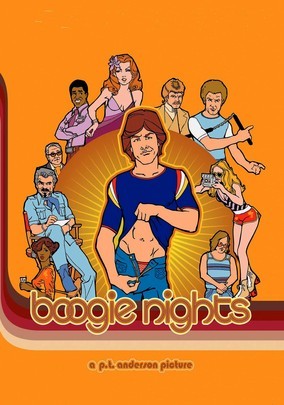
Boogie Nights-1997

Boogie Nights-1997

Director Paul Thomas Anderson

Starring Mark Wahlberg, Burt Reynolds

Top 250 Films #8

Scott’s Review #312

1180077

Reviewed December 31, 2015

Grade: A

Boogie Nights (1997) is a fantastic film about the pornography industry (The Golden Age of Porn) of the 1970s and 1980s, and does an excellent job of portraying the characters as human beings with feelings and emotions, rather than as nymphomaniacs or perverts.

They bond with one another as a family- a group of misfits striving to survive. This, and many other reasons, are why Boogie Nights is one of my all-time favorite films.

Written, produced, and directed by Paul Thomas Anderson (Magnolia, 1999; There Will Be Blood, 2007; Inherent Vice, 2014), he is a master at exploring the underbelly of society and the flawed, desperate characters who inhabit it.

Boogie Nights is no different.

The dysfunctional family is the film’s central theme. Most of his characters are unhappy, but they are survivors who desperately seek a piece of happiness.

Many of the Boogie Nights cast also appear in Magnolia.

Mark Wahlberg (Eddie/Dirk Diggler), Burt Reynolds (Jack Horner), Julianne Moore (Maggie), Don Cheadle (Buck), William H. Macy (Little Bill), John C. Reilly (Reed Rothchild), Heather Graham (Rollergirl), Philip Seymour Hoffman (Scotty), Malora Walters (Jessie), and Alfred Molina (Rahad Jackson), round out the large cast.

The film is set in Los Angeles and spans the period from 1977 to 1984. Although only seven years pass, much happens to most of the characters, and we experience their trials and tribulations.

The unique thing about Boogie Nights is that I care about every character, thanks to excellent writing and fantastic acting. They succeeded in earning my empathy. Boogie Nights is a highly character-driven film, which is an enormous part of its brilliance.

The cast is an ensemble, but the main character is Eddie Adams, a high school dropout whom we meet working as a dishwasher at a nightclub. He has an abusive mother who kicks him out of the house, leading him to audition for and move in with Jack Horner.

Jack is a patriarchal figure who shares a house with Maggie, the matriarch of the household, and Roller Girl, a fellow high school dropout who is always seen wearing roller skates. Eddie’s talent is his large “manhood”.

We watch Eddie, at first shy and polite, rise to superstardom in the porn industry, becoming rich and living a lavish, drug-fueled lifestyle, where his ego gets the best of him. He, like many of the characters, hit rough times as the early 1980s shift to videotape was the death of many 1970s porn actors’ careers.

The musical soundtrack plays a crucial role in the success of Boogie Nights. Many scenes contain songs that were hits of the time or prior, including “Sister Christian”, “Jessie’s Girl”, “God Only Knows”, “Got to Give it Up”, “Ain’t No Stoppin’ Us Now”, and countless others- so much so that the soundtrack is almost a character of the film.

We look forward to hearing what song might be featured next.

Later in the film, circa 1983, as things begin to spiral out of control for many of the characters, the musical score turns ominous, with low bass and a nighttime setting, and the lighting grows darker. Several stories begin to intersect on a late L.A. night on the streets.

Jack, filming a scene in a limousine starring Rollergirl and a young college jock they pick up off the streets, Dirk, forced to prostitute himself for $10 to a young man in a pickup truck, and Buck, who innocently stops to buy doughnuts for his very pregnant wife Jessie.

Each of these stories ends in brutal violence, and the tone is crucial to the scenes’ success. This lengthy scene bears a resemblance to a Quentin Tarantino scene in its macabre tone.

Particular favorite scenes include the heartbreaking scene when Maggie loses custody of her son, the New Year’s Eve party at Jack’s house, and the ill-fated drug sale at Rahad Jackson’s.

Each is heartbreaking, powerful, fraught with tension, or otherwise empathetic toward the characters, making them each quite powerful in different ways.

Induced in the drug sale scene is some black comedy- Rahad’s presumed Chinese houseboy has a fetish for firecrackers, which startle Dirk, Reed, and Todd, as the fear of possible gunshots fills the air. Maggie’s sob scene elicits an emotional response as we cry with her, and the New Year’s Eve turn of events involving Scotty and Little Bill is tragic.

Boogie Nights (1997) is one of my favorite films because it contains brilliant writing, characters who are fleshed out, damaged, and human, a killer soundtrack, and a dark, mysterious industry (porn) that is both misunderstood and categorized.

Thanks to director Anderson, we see the people in this lifestyle as real individuals with their own issues, yet also with full hearts and kindness.

Oscar Nominations: Best Supporting Actor-Burt Reynolds, Best Supporting Actress- Julianne Moore, Best Screenplay Written Directly for the Screen

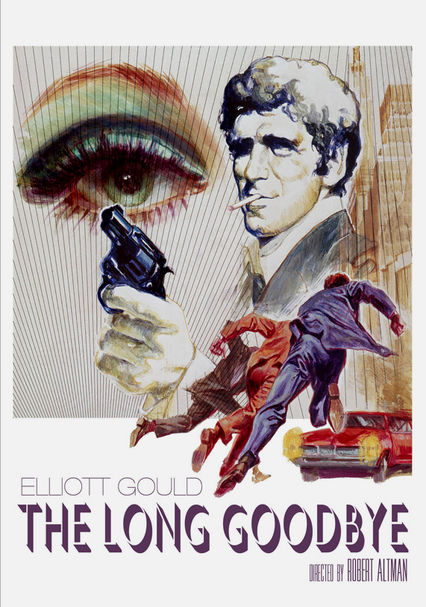
The Long Goodbye-1973

The Long Goodbye-1973

Director Robert Altman

Starring Elliott Gould, Nina van Pallandt

Top 250 Films #50

Scott’s Review #830

Reviewed November 14, 2018

Grade: A

Nearly a full-fledged character study of one man’s moral fiber, The Long Goodbye (1973) is an edgy piece of direction by the famous mastermind Robert Altman.

The setting of Los Angeles’ underbelly is both fabulous and practical, as is the dim lighting and excellent camera work prevalent throughout. The film is not cheery, but rather bleak, which suits me just fine, given the dreary locale.

Perhaps a more obscure Altman offering, but the film sizzles with zest and authenticity.

The film is based on a story written by Raymond Chandler in 1953.

Altman, however, opts to change the setting from 1950 to present times- 1970s Los Angeles and present a film noir experience involving deceit and shenanigans where all is not as it seems.

I think this is a wise move, and I could not help but draw many comparisons (mainly the overall story) to Chinatown (1974), released the year after The Long Goodbye, but a film much better remembered.

Elliott Gould is wonderful as Phillip Marlowe, a struggling private investigator and insomniac. He is asked by a friend, Terry Lennox, for a ride to the Mexico border one night and agrees to do the favor.

This leads to a mystery involving police, gangsters, and Eileen and Roger Wade after Phillip is questioned regarding his connection to Terry, who is accused of murdering his wife, Sylvia.

The seedy side and complexities of several characters are revealed as the story unfolds and the plot gradually thickens.

My favorite aspects of The Long Goodbye are not necessarily the primary storytelling, though the writing is filled with tension.

As the film opens, an extended sequence featuring a “conversation” between Phillip and his cat is both odd and humorous. The finicky feline refuses to eat anything other than one brand of cat food.

As Phillip tries to reason with the cat by talking and meowing, he is forced to venture out in the middle of the night to an all-night grocery store.

Altman, known for allowing his actors free rein with improvised dialogue, appears to let Gould experiment during this scene.

Phillip’s neighbors, a bunch of gorgeous twenty-something females, seem to do nothing except exercise on their balcony, get high, and ask him to buy them brownie mix for a “special occasion”.

As they stretch topless, usually in the background and almost out of camera range, they are a prime example of an interesting nuance of the film. The girls are mysterious but have nothing to do with the actual plot, adding even more intrigue to the film.

In one of the most frightening scenes in cinematic history and one that could be straight from The Godfather (1972), crazed gangster, Marty Augustine (Mark Rydell), slices the beautiful face of his girlfriend to prove a point to Marlowe.

In a famous line, he utters, “That’s someone I love. You, I don’t even like.” The violent act is quick, unexpected, and fraught with insanity.

Finally, the film’s conclusion contains a good old-fashioned twist worthy of any good film noir. In the end, the big reveal makes sense and begs to raise the question, “Why did we trust this character?”

In addition to the viewer being satisfied, Marlowe also gets a deserved finale and proves that he cannot be messed with or taken for a fool.

The Long Goodbye is undoubtedly the best film of Gould’s career. With a charismatic, wisecracking persona, the chain-smoking cynic is considered a loser by most.

He is an unhappy man and down on humanity, but still wants to do what is right. He lives a depressed life with few friends and the company of only his cat.

While his neighbors marginally entertain him, he goes about his days only barely getting by emotionally. Gould is brilliant at relaying all these qualities within his performance.

The addition of the title theme song in numerous renditions is a major win for the film, and something that becomes more noticeable with each viewing. The ill-fated gangster’s girlfriend hums along to the song playing on the radio at one point, and a jazz pianist plays a rendition in a smoky bar.

This is an ingenious approach by Altman and gives the film a greater sense of mystery and style.

There is no question among cinema lovers that Robert Altman is one of the best directors of all time.

In his lengthy catalog of rich, experimental films, The Long Goodbye (1973) is neither the best-remembered nor the most recognizable.

I implore film fans, especially fans of plodding mystery and intrigue, to check this great steak dinner of a film out.

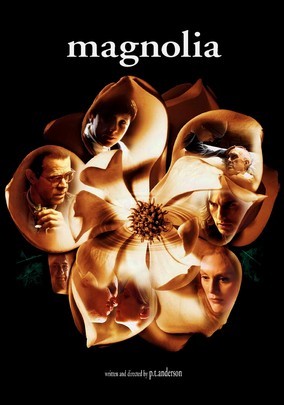
Magnolia-1999

Magnolia-1999

Director Paul Thomas Anderson

Starring Tom Cruise, Julianne Moore, John C. Reilly

Top 250 Films #67

Scott’s Review #777

Reviewed June 21, 2018

Grade: A

Paul Thomas Anderson is one of my favorite modern directors. In my opinion, his best film is Boogie Nights (1997), but he has also created other dark offerings, such as Phantom Thread (2017) and Inherent Vice (2014).

Arguably, his most distinctive effort might be Magnolia (1999), a cerebral film that explores themes of forgiveness and the meaning of life.

An ambitious effort, featuring a stellar ensemble cast, makes the film a fantastic experience.

Set in the San Fernando Valley (a mountainous area of Los Angeles), the film resembles David Lynch’s Mulholland Drive (2001) in its setting and oddness, as well as its unusual dialogue and offbeat characters.

A narrator explains three situations of extreme coincidence and surmises that chance may not be the only responsible party. Anderson then weaves an intricate tale involving numerous characters, intersecting lives, and a riveting climax on a rainy California day (an oddity in itself!).

The plot begins when we meet Jim Kurring (John C. Reilly), a police officer who is called to investigate a disturbance.

After finding a woman’s body in an apartment closet, events turn bizarre as a children’s game show host (Philip Baker Hall), his estranged daughter (Melora Walters), the show’s former producer, Earl (Jason Robards), who is dying from cancer, his drug-addicted wife Linda (Julianne Moore), Earl’s male caretaker (Philip Seymour Hoffman), a former game show champion (William H. Macy), and finally, an intense motivational speaker (Tom Cruise).

Quite a bevy of talented actors!

As the plot progresses mysteriously, the connections among the characters are revealed, and their peculiar motivations begin to take shape.

For example, Linda, who married Earl for his money, seems to have an epiphany and demands her lawyer change Earl’s will. Later, a character may have a connection to Earl and Linda, but is it all as it seems?

In Magnolia, the film is so wonderfully strange that it leaves the audience guessing for most of its running time.

Bizarre scenes are commonplace throughout the film. My favorite one is a marvelously creative scene. Suddenly, frogs begin to fall out of nowhere from the Los Angeles sky, with numerous consequences for the characters.

The incident causes a ripple effect, of sorts, as many of the characters’ fates are determined. Though one may not be able to make heads or tails of this scene or take complete logic from it, it’s enthralling all the same.

Magnolia has an overall quirky tone- sometimes upbeat, sometimes melancholy- that I adore. Films that are tough to figure out and feature an interesting musical score are so rich in flavor.

Aimee Mann is responsible for composing many of the songs on the musical soundtrack, so much so that she received a title credit on the soundtrack itself. Mann infuses her music with moody, diverse richness and ambient essentials.

Many actors make frequent appearances in Paul Thomas Anderson’s films. Magnolia alone seems almost like a Boogie Nights reunion with Moore, Walters, Macy, Baker Hall, and Philip Seymour-Hoffman to name just a handful.

The amazing aspect is that all of the aforementioned actors play vastly different, and arguably even more complex roles than they did in Boogie Nights.

Similar to Quentin Tarantino’s actors appearing in many of his films, this must be a creative treat for them.

There is no doubt that Magnolia (1999) is a complex, dream-like film. Open to interpretation and reflection, I find it a brilliant movie that I would like to revisit and dive into further with each viewing, hopefully for a better understanding and even deeper appreciation.

Oscar Nominations: Best Supporting Actor-Tom Cruise, Best Screenplay Written Directly for the Screen, Best Original Song-“Save Me”

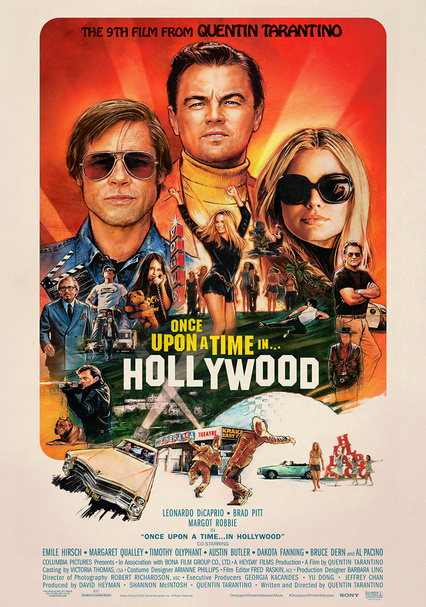
Once Upon a Time in Hollywood-2019

Once Upon a Time in Hollywood-2019

Director Quentin Tarantino

Starring Leonardo DiCaprio, Brad Pitt, Margot Robbie

Top 250 Films #84

Scott’s Review #926

Reviewed August 1, 2019

Grade: A

Once Upon a Time in Hollywood (2019) is another brilliant offering by one of the most (deservedly) respected directors of the modern film era.

This film may be his most personal, as it includes many cinematic references and immerses itself in Hollywood life. Toned down considerably from the violence standard in his other films, the first half lays the groundwork for a startlingly good second half, with every detail of utmost importance.

A bevy of riches awaits any viewer enthusiastically feasting their eyes on this film.

The time is 1969, as actor Rick Dalton (Leonardo DiCaprio) struggles to reinvent himself and revitalize his career in Hollywood amid a changing cinematic landscape.

Famous for a popular western television series from the 1950s, Bounty Law, a pursued film career has not taken off, and he is reduced to guest appearances as the villain, then considered throwaway roles, in other episodic series.

His stunt double and best friend, Cliff Booth (Brad Pitt), accompanies him almost everywhere, serving as both sidekick and errand boy.

Meanwhile, famous director Roman Polanski and his wife, actress Sharon Tate (played by Argot Robbie), have moved into the house next door, which Dalton hopes will help him revitalize his career aspirations.

As Tate goes about her daily life of running errands and watching her movies in the theater, she is visited by Charles Manson one day, looking for the former resident of her house.

Historical viewers are familiar with the subsequent events that unfolded in real life, while Tarantino presents a fictional, tantalizing version of them.

The film’s length is two hours and thirty-nine minutes, quite robust but typical for a Tarantino production. Some may complain about the bloated running time, but the film never drags; instead, the director lays out all the pieces carefully like a fine chess game.

By the mid-point, all hell breaks loose with one of the most suspenseful and edge-of-your-seat scenes in film history. When Cliff drives a flirtatious young hippy hitchhiker, Pussycat (Margaret Qualley), to a range populated by Manson followers, he is in for the adventure of his life…..if he survives.

Once Upon a Time in Hollywood is an orgy of cinematic tidbits, featuring a myriad of clips from forgotten films of the late 1960s and popular songs from that era.

This is just the tip of the iceberg in greatness as Tarantino perfectly immerses the viewer into the time with fury and zest. Every set piece, costume, hairstyle, or car is flawlessly placed. Kraft macaroni and cheese, Velveeta cheese, and popular dog food from the period are featured.

Tarantino is a fan of cinema and makes cinema lovers fall in love with cinema all over again.

The cast is humongous, but each character is necessary and perfectly represented in both large and small roles.

The haunting troupe of Manson followers, specifically Tex Watson (Austin Butler), Squeaky Fromme (Dakota Fanning), and Susan Atkins (Mikey Madison), are all real-life figures. They are foreboding, dangerous, and crucial to the story.

Al Pacino shines in the small but pivotal role of Schwarz (not Schwartz), Dalton’s agent, while Steve McQueen’s look-alike, Damian Lewis, is memorable on-screen for merely seconds.

The list of cameo performances goes on and on and on, and the fun is wondering who may appear next.

Despite the incorporation of big-name stars in important minor roles, the best performances belong to DiCaprio and Pitt. DiCaprio’s best scene takes place alone in his trailer as the washed-up star botches his lines thanks to a hangover, causing a delay in filming.

He abuses himself into nailing the scene, receiving kudos all around, while becoming teary-eyed after a compliment from a young actress.

Pitt has never given a better performance than he does as Cliff, sharing his best scenes with his adorable dog Brandi and with DiCaprio.

Who can ever forget his chest-baring rooftop scene?

Quentin Tarantino scores again with a bombastic and flawless picture, his ninth release. Rumored to retire after his tenth film, one can hardly fathom the reality of that statement. Hismovis can be watched and watched again, continuously absorbing new and noteworthy details of rich texture.

Once Upon a Time in Hollywood (2019) easily joins the ranks of great works, not just of the director’s catalog, but of all time.

Oscar Nominations: 2 wins-Best Picture, Best Director-Quentin Tarantino, Best Actor-Leonardo DiCaprio, Best Supporting Actor-Brad Pitt (won), Best Original Screenplay, Best Sound Editing, Best Sound Mixing, Best Production Design (won), Best Cinematography, Best Costume Design

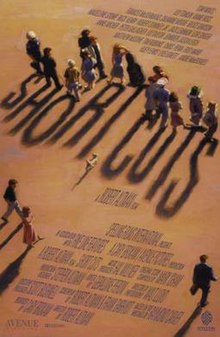
Short Cuts-1993

Short Cuts-1993

Director Robert Altman

Starring AndieMacDowell, Julianne Moore, Bruce Davison

Top 250 Films #123

Scott’s Review #1,400

Reviewed September 20, 2023

Grade: A

I am such a fan of acclaimed director Robert Altman because he typically features an enormous cast of richly drawn characters, all serving a story’s purpose.

Frequently, there is much character development and investment.

Short Cuts (1993) is a latter-day Altman offering set in Los Angeles, California, the City of Angels, that is nearly as good as my all-time favorite of his, Nashville, made in 1975.

Similarities burst onto the screen with twenty-two principal characters to Nashville’s twenty-four. Their lives frequently intersect, and the fun is peeling back the layers of their lives and discovering who is connected to whom.

Comparisons to 1992’s The Player (also Altman) and 1999’s Magnolia, directed by Paul Thomas Anderson, can also be made for obvious reasons related to the Los Angeles setting.

But Magnolia is much weirder than Short Cuts.

The irony is that most characters are anything but angels as they suffer from insecurities, deaths, infidelity, and various shenanigans as they attempt to get through California life amid an earthquake and a fleet of helicopters spraying for medflies.

Altman based the film on the nine short stories and a poem by Raymond Carver.

Some of the tales include a waitress Doreen (Lily) who is married to an alcoholic limo driver (Tom Waits) who accidentally runs into a boy with her car.

Soon after walking away, the child lapses into a coma. While at the hospital, the boy’s grandfather (Jack Lemmon) tells his son, Howard (Bruce Davison), about his past affairs.

Meanwhile, a baker (Lyle Lovett) harasses the family after they fail to pick up the boy’s birthday cake.

Dr. Ralph Wyman (Matthew Modine) and his wife, Marian (Moore), meet Stuart Kane (Fred Ward), an unemployed salesman, and Claire Kane (Anne Archer), a party clown, at a cello concert.

They impulsively decide to have a Sunday dinner date. seemingly having nothing in common.

Meanwhile, Marian’s sister, Sherri (Madeleine Stowe), is married to a cheating cop named Gene (Tim Robbins), who is having an affair with Betty Weathers (Frances McDormand), while Betty is divorcing one of the helicopter pilots, Stormy (Peter Gallagher).

There are other stories and connections to round out the fabulous cast.

The juicy, dramatic storylines play out like a terrific arc on Days of Our Lives or As the World Turns, with some needed comedic elements to balance things out.

Anyone who knows Altman will salivate with the name recognition among the cast, most notably Tomlin and Robbins. Actors frequently chomped at the bit to appear, knowing that he was an actor’s director.

This means he allowed his cast open range to create dialogue appropriate for their characters.

There’s no better example than when Jack Lemmon tells a story in the film. His improv and free dialogue are a dream to watch and a lesson in good and natural acting.

Despite the enormous cast, everyone has something of quality to do. Nobody is languishing on the back burner with throwaway scenes or unimportant activities.

All characters connect to others in some way.

Fans who fancy Los Angeles both in film and in real life, with its bursting sunshine and cheery perception, will revel in the down-and-dirty subtext of Short Cuts.

The fun is getting there.

Some characters are wealthy, but most struggle with day-to-day routine, so the film contains a harsh realism. They try to find any shred of happiness wherever they can.

Like real life, which is part of the brilliance of Short Cuts. The audience can relate to the characters because we all know people like them, which makes the film a beautiful and treasured experience.

Or some may even be like us. The writing is brilliant, and the characters are true to form.

One day, I’ll create a list of my Top Ten Robert Altman films, and I bet Short Cuts (1993) lands in the Top Five.

Oscar Nominations: Best Director-Robert Altman

Independent Spirit Award Nominations: 3 wins-Best Feature (won), Best Director-Robert Altman (won), Best Screenplay (won), Best Supporting Actress-Julianne Moore

Jackie Brown-1997

Jackie Brown-1997

Director Quentin Tarantino

Starring Pam Grier, Robert Forster

Top 250 Films #124

Scott’s Review #356

60010514

Reviewed January 9, 2016

Grade: A

Quentin Tarantino’s Jackie Brown (1997) is a fantastic film and one of the few to have a solely female lead (Kill Bill Volumes I and II are the others) and successfully re-launched the careers of stars Pam Grier and Robert Forster after too many years on the sidelines.

Grier’s earlier films heavily influenced the 1970s blaxploitation genre.

Jackie Brown is one of Tarantino’s more obscure films, but it is brilliant nonetheless and filled with slow, plodding yet tremendous scenes.

Grier plays the title character, Jackie Brown, a flight attendant for a small Mexican airline who smuggles money from Mexico to the United States to supplement her income.

When she is caught and threatened by the Feds to help them catch a much larger fish, she plots to use both sides to her advantage and walk away with the money.

Jackie develops feelings, and a sweet relationship ensues with Max Cherry, a bondsman played by Forster.

Mixed in with the plot are Tarantino staples: Samuel L. Jackson as Ordell Robbie, a crooked drug smuggler; Robert De Niro as Louis, a former cellmate of Ordell’s; and Bridget Fonda as Melanie, a dizzy stoner girl.

As is always the case with Tarantino films, Jackie Brown features a stellar cast just chomping at the bit to deliver the best performances they can, aided by rich, crackling dialogue written for them.

The writing is always fantastic in Tarantino films, and Jackie Brown has plenty of plot twists and turns.

My favorite scene by far is the one involving the transfer of money at the local Mall. Rich with flavor and atmosphere, it is a marvel. Jackie and Max engage in small talk at the food court before the transfer is to take place- Jackie then goes to a fitting room where the “switch” will occur.

Throughout this sequence, the tension is incredibly high, and the film turns into a nail-biter.

Tarantino, not one to focus on a romantic storyline, gives Jackie Brown a unique quality by featuring the respectful and delicious romance between Jackie and Max. This adds layers to the mainly bloody and crime-laden film.

In contrast to this relationship is the volatile relationship between Louis and Melanie, which ends in tragedy.

I love how the film is set in Los Angeles. Sunny, bright, with a stuffy and superficial element to the action, mixing the beach and the hot weather with a crime story, manipulation, and double-crossing works so well.

Giving aging Hollywood stars a deserving comeback, Tarantino weaves a complex, adventurous, and well-paced crime drama featuring veteran actors who deliver the goods.

Jackie Brown (1997) is a treasure in a world of Tarantino’s other treasures and a must-have for all the director’s fans and fanatics.

Oscar Nominations: Best Supporting Actor-Robert Forster

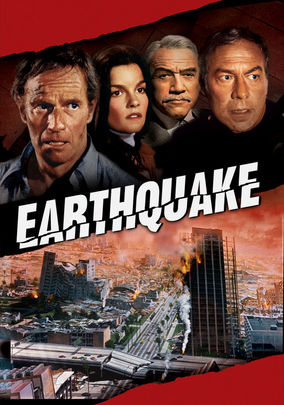
Earthquake-1974

Earthquake-1974

Director Mark Robson

Starring Charlton Heston, Ava Gardner, Geneviève Bujold

Top 250 Films #144

Scott’s Review #407

60030175

Reviewed June 2, 2016

Grade: B+

One of the several disaster films to populate film screens in the early to mid-1970s, Earthquake is one of the “main four” blockbusters (The Poseidon Adventure, 1972, The Towering Inferno, 1974, and Airport, 1970, being the others) that still resonate with viewers in modern times and are nostalgic to watch.

One might argue that the aforementioned few largely influenced Earthquake since it was the last of the group to be filmed.

Certainly, the influence is apparent.

Earthquake is a classic, traditional disaster film containing many stock characters (or types). It is an ensemble piece- as disaster films always are- frequently containing stars of yesteryear attempting exposure in the modern cinema.

The gender roles in Earthquake are quite mainstream for the day, as the females are all clearly “damsels in distress” types, and the men are portrayed as the heroes.

The action begins as we witness a Los Angeles-based middle-aged couple (the central couple, if you will) engaging in a dispute.

Charlton Heston and Ava Gardner play Stewart and Remy Graff, an affluent couple, a former football star, she a boozy socialite. Her father is the wealthy Sam Royce, played by Lorne Greene. Stewart is having an affair with a young actress, Denise Marshall, creating a soap-opera-style romantic triangle that adds drama to the film.

We meet other characters who round out the characters’ stories- LAPD Sgt. Slade (George Kennedy) shares a flirtation with Rosa (Victoria Principal), while drunkard Walter Matthau and evil kineval character Richard Roundtree provide comic relief.

These stories are merely filler until the inevitable earthquake arrives to ‘shake’ things up.

The earthquake is the main character in the film, just like the tidal wave, the fire, and the airline peril are in other films in the same genre.

The character’s trivial relationships soon take a back seat to the action as the earthquake shatters the city in subsequent onsets and aftershocks, destroying buildings and resulting in many deaths.

The very lengthy main earthquake sequence is second to none, hovering around the twenty-minute mark. We see many characters in peril. The scene goes on and on but is hardly redundant.

The scene is masterful and well done. The effects, cinematography, and visuals alone hold up well today and must have been breathtaking circa 1974.

In one particularly thrilling scene, a group of office workers on the thirtieth floor of a skyscraper desperately scrambles to the elevator as the building shakes and shimmies.

One businessman shoves a secretary aside and selfishly steps into the crowded elevator as others desperately pound on the door to escape.

Things do not end well for the folks on the elevator as bolts loosen and the car crashes to the ground. An animated blood splat fills the screen in a lighthearted, comical way.

The film wisely does not take itself too seriously.

As fantastic as the destruction sequence is, Earthquake is not a film without a few flaws, mostly from a character standpoint.

Unbelievable is Heston playing Greene’s son-in-law, and Gardner is assumed to be young enough to be his daughter- they appear to be around the same age.

A strange character, Jody, a store clerk, suddenly dresses as a soldier, wearing a wig, following the destruction, and is assumed to be gay by thugs, who tease him, which prompts him to shoot them with a machine gun. He subsequently becomes obsessed with and nearly rapes Rosa.

The sub-plot seems uneven and very unnecessary.

With spectacular special effects, Earthquake (1974) is a must-see disaster film with a slightly downcast, hopeless tone. It does its job well- it entertains, thrills, and features an all-star cast of former Hollywood elite and a few rising stars.

A fun time will be had.

Oscar Nominations: 1 win-Best Sound (won), Best Art Direction, Best Cinematography, Best Film Editing

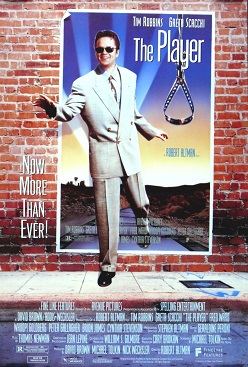
The Player-1992

The Player-1992

Director Robert Altman

Starring Tim Robbins, Greta Scacchi

Top 250 Films #181

Scott’s Review #601

Reviewed January 11, 2017

Grade: A

The Player (1992) ranks up there with other Robert Altman classics such as Gosford Park (2001), Nashville (1975), and Short Cuts (1993).

The film is an excellent piece of Hollywood satire and centers on a jaded movie executive, played by Tim Robbins, who does an incredible job in the role.

Robbins plays Griffin Mill, a man with no scruples. Feeling usurped by a younger executive, played by Peter Gallagher, as well as receiving death threats, he goes on the hunt for the person he feels responsible for, which leads to murder.

The audience is unsure whether to love or hate Mill, thanks to Robbin’s performance. He is snarky, but also vulnerable and a tad sympathetic.

The film contains a slew of real Hollywood celebrities (Cher, Malcolm McDowell, Bruce Willis) playing themselves and is largely improvised (as many of Altman’s films are).

Whoopi Goldberg and Lyle Lovett star as odd police detectives.

The plot is nothing new, but it’s the realism and direction that make this movie a must-see, especially for Robert Altman fans.

The Player (1992) is a hidden gem.

Oscar Nominations: Best Director-Robert Altman, Best Screenplay Based on Material Previously Produced or Published, Best Film Editing

Independent Spirit Award Nominations: 1 win-Best Feature (won)

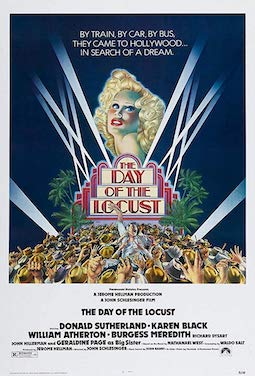
The Day of the Locust-1975

The Day of the Locust-1975

Director John Schlesinger

Starring William Atherton, Karen Black, Donald Sutherland

Top 250 Films #189

Scott’s Review #1,460

Reviewed January 16, 2025

Grade: A

I love films set in Los Angeles, especially those dealing with Hollywood and/or the dark underbelly of the City of Angels. With its lights and allure, there is a murky side laden with drama, jealousy, and loneliness.

John Schlesinger’s dark period piece The Day of the Locust (1975) examines the bleak lives of several aspiring people in 1930s Hollywood, just before World War II.

The prominent themes are alienation and desperation, with aspirations for success that do not come true, emphasizing the sad saying, ‘The road to Hollywood is paved with broken dreams.’

It’s a brilliant adaptation by screenwriter Waldo Salt, based on Nathanael West’s 1939 novel of the same title. The film horrifically depicts the Hollywood film industry in all its artificial glitz and glamour.

In the 1930s, Los Angeles ‘ sunny Hollywood shone like a beacon to helpless people across the city who were looking for fame, fortune, or a quick buck.

In one apartment block, blond bombshell Faye Greener (Black) aspires to be an actress, artist Tod Hackett (Atherton) seeks legitimacy, and a frightening child actor named Adore (Jackie Earle Haley) performs a grotesque homage to Mae West.

Introverted accountant Homer Simpson (Donald Sutherland) watches as society collapses under greed and ambition.

From a romantic standpoint, Homer and Tod vie for Faye’s affection in a tragic triangle fraught with jealousy and competition.

Schlesinger knows his way around dark, influential, intelligent films. He created stalwarts such as Midnight Cowboy (1969) and Sunday Bloody Sunday (1975), both unconventional and controversial, the former being the only film ever to win Best Picture and garner an X rating.

The Day of the Locust is no different.

There is scarcely a likable character in the cast, but I ascertain that Tod is the most stable and trustworthy in the rogues’ gallery.

He appears grounded and the voice of reason, though he mocks Homer later on at a party, so he’s not exactly Prince Charming. He arrives at work as a production illustrator in the art department at a major film studio and rents an apartment in the same community as the other characters.

Gently, he places a lovely flower in a crack in the wall.

Tod is smitten with Faye, a callous vixen who beds not one, not two, not three, but four men and makes no bones about it. Not exactly a feminist, she is more concerned with rising to stardom at any cost.

We meet Faye as she works as an extra in a lavish production. She smacks her gum and then snaps into character as a royal sophisticate, revealing a tacky, tawdry presence to the audience.

Later, during the grand finale, she tries to catch a glimpse of the big stars arriving in limos at a premiere at Grauman’s Chinese Theatre, one in a crowd of thousands.

She’s a lost soul, filled with self-delusion, desperately wanting the spotlight in whatever form she can get.

Her father is played by Burgess Meredith, who nearly steals the show as an elderly, washed-up ex-vaudevillian.

Despite the outstanding performances, the production design and cinematography are flawless, seamlessly portraying what life was like in Hollywood in the early days.

My favorite sequences are in the movie sets filled with pizazz, glamour, and intricacies.

The most significant scene, though, occurs at the star-studded event, a premiere of The Buccaneer, when all hell breaks loose, and a tragic death occurs, leading to subsequent bloodshed and further death and destruction.

It’s a spectacle, supposed to be the movie event of the year, with champagne and the ultimate celebration of film, but the stark nature of one’s rage overtakes the beautiful moment.

During this pivotal scene, we see the darkness of humanity counterbalanced against the glitz and glamour of movie stars.

Schlesinger masterfully takes us through this journey of human depravity with flawless ease.

The Day of the Locust (1975) is a brilliant film.

Oscar Nominations: Best Supporting Actor-Burgess Meredith, Best Cinematography

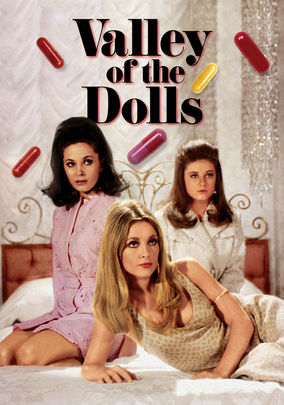
Valley of the Dolls-1967

Valley of the Dolls-1967

Director Mark Robson

Starring Barbara Parkins, Patty Duke, Sharon Tate

Top 250 Films #191

Scott’s Review #657

Reviewed July 3, 2017

Grade: A-

Based on the best-selling novel written by Jacqueline Susann a year earlier, the film version of Valley of the Dolls (1967) has become a cult classic in the years following release- it has earned the dubious description of “it’s so bad it’s good”.

The film dives headfirst into the soapy, dramatic world of Hollywood and Broadway, and the trials and tribulations three young women encounter as they try to “make it” in the backstabbing business.

The film teeters on camp, but it is a favorite of mine, as I love the theme of aspiring stars in La La Land. The set design and groovy styles of the late 1960s are also noteworthy.

Bored with her life in sleepy New England, Anne Welles decides to move to the bright lights of Manhattan, seeking fame, fortune, and excitement.

After she lands a secretarial job for an entertainment lawyer, who handles temperamental Broadway star Helen Lawson (Susan Hayward), Anne meets and befriends two other struggling young actresses.

Neely O’Hara (Patty Duke) is a vivacious, gifted singer, and Jennifer North (Sharon Tate) is a gorgeous blonde with limited talent but looks to die for.

The three women wrestle with the ups and downs of show business as they each achieve various levels of success and failure.

The film centers on both the love and the losses of each woman, and at times it’s rather soap-opera-like, especially the bitchy feud between Neely and Helen, but it’s a fun, entertaining experience.

Various men come in and out of the trio’s lives. The “dolls” referenced in the title are a nickname for pills that the girls readily pop, and alcohol is also used in the film.

One interesting aspect of the film I like is that the three women are very different from one another.

Anne is the most sensible of the three and arguably the most intelligent. Neely is wild, reckless, and constantly battles drugs and alcohol, yet she is both the most successful and the most talented. Jennifer is gorgeous but lacks the talent or the vigor to succeed in Hollywood.

Two of the three women do not have happy endings in their stories.

Some are admittedly a bit uneven, especially the performance of Duke as Neely. She plays the role wildly over the top, especially during her shrieking, drug-saddled tirades, but rather than find the performance irritating (some indeed might), I find the role loud, bombastic, yet sympathetic.

We root for Neely because she has talent despite her shortcomings, and she is a likable character to me, as I want her to find happiness.

Also playing up the camp is Hayward, as she fills Helen with fire, spite, and gusto, doing everything to make the audience view her as a queen bitch. Helen was scheduled to be played by the illustrious star Judy Garland (she would have been perfect!), but was reportedly fired for showing up for work drunk.

An enjoyable aspect of Valley of the Dolls is the humor, though sadly, the laughs are not always intentional. The finale involves a catfight between Neely and Helen in the classy ladies’ room of a famed theater.

With sheer delight, Neely yanks off Helen’s bright orange wig to reveal her natural head of hair. In campy fashion, Helen’s real hair is excellent- more shocking would have been if she were bald or had thinning hair, but her hair is bleached blonde and full.

In melodramatic fashion, Helen waltzes out of the theater sans wig.

Valley of the Dolls is a late-night treat that can be enjoyed and not taken overly seriously- the film differs vastly from the actual novel, and even the time (the 1960s versus the 1940s through the 1960s) is changed.

The film was followed by a much campier and satirical film, Beyond the Valley of the Dolls, made in 1970 and directed by Russ Meyer.

Oscar Nominations: Best Original Song Score or Adaptation Score

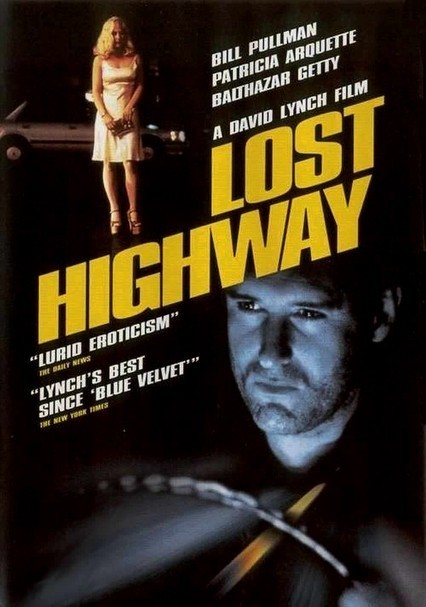
Lost Highway-1997

Lost Highway-1997

Director David Lynch

Starring Bill Pullman, Patricia Arquette

Top 250 Films #211

Scott’s Review #868

Reviewed February 17, 2019

Grade: A-

David Lynch, forever known for his odd and mind-boggling productions, released what might be his most bizarre offering, Lost Highway (1997).

Dreamlike and downright hallucinogenic, the film is impossible to dissect and is open to endless interpretation.

Characters morph into younger or different versions of themselves, or even into different characters entirely, making the film best experienced rather than overanalyzed.

The most enjoyment comes from the fabulous atmospheric elements.

Lost Highway is set in Los Angeles, where we meet saxophonist Fred Madison (Bill Pullman), a nightclub employee who lives with his glamorous wife, Renee (Patricia Arquette), somewhere in the Hollywood Hills.

The couple begins receiving envelopes containing VHS tapes of footage of their house, followed by more invasive tapes of them being filmed while sleeping in their bedroom.

Spooked, they enlist the help of a pair of incompetent detectives.

The events begin to grow more complex with the introduction of a menacing mystery man (Robert Blake) and sequences involving a dismembered Renee, and Fred’s subsequent incarceration for her murder.

Fred suddenly morphs into a young auto mechanic named Pete Dayton (Balthazar Getty), who is released into his parents’ care while being followed by the two detectives.

Pete embarks on an affair with Alice Wakefield, a mirror image of Renee, who is the mistress of powerful Mr. Eddy (Robert Loggia). Pete and Alice plan to escape together, leaving their troubled lives behind.

Any attempt to make more sense of the story than outlined above is fruitless, as a torrent of questions could be raised. The obvious ones are why does Fred turn into Pete (looking completely different), and why does Renee turn into Alice (looking similar)?

What do random scenes of a burning desert cabin mean? What does the bizarre and hazy lesbian sequence with Marilyn Manson have to do with anything?

Discerning the logic and attempting to unravel the mystery will lead to frustration.

The best advice is to immerse yourself in the film and let it manifest in your mind. The terms “dreamlike” and “hallucinating” are often used to describe films, but they are perfect adjectives for Lost Highway.

The stories do run parallel, so the challenge is not following each of them but rather understanding how they connect. The stories also merge in a circular pattern with a rhythmic effect and a satisfying ambiance that lured me immeasurably.

My favorite characters are Alice and Pete, largely because of the actors who portray them. Not appearing until the second half, Getty and Arquette infuse their roles with passion and energy.

I immediately rooted for them as a couple, as their tender and smoldering chemistry was immediately felt. Arquette blazes as a sexy temptress and Getty as the handsome and earnest man submitting to her prowess.

Eagle-eyed viewers may notice comparisons to Russ Meyer’s devilish sexploitation film Supervixens (1975).

The most notable are the dual character representations, the auto mechanic occupation, the locales (more than a few Los Angeles roads seem identical), and various sequences featuring a weightlifter, a gas station drive-up, or other eerily similar scenes.

Whether there is a direct correlation between the films is unknown, but it’s fun to observe.

The musical score and soundtrack are high points, adding both mystique and aggression through the featured hard rock songs. Marilyn Manson’s “I Put a Spell on You”, Rammstein’s “Heirate Mich”, and The Smashing Pumpkins “Eye” are used in important scenes.

The soundtrack release was a huge success on modern rock radio, achieving Gold record sales status.

At the time of Lost Highway’s release, the film was not well-regarded by critics and was dismissed as not making much sense.

In the decades following, the film has garnered more acclaim and, as with a fine wine, has aged well. The beautiful cinematic tone, creative design, and images have become more revered over time.

For a perplexing and cerebral experience, look no further than Lost Highway (1997), a delicious companion piece to the Lynch masterpiece, Mulholland Drive (2001).

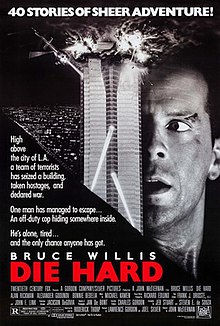
Die Hard-1988

Die Hard-1988

Director John McTiernan

Starring Bruce Willis

Scott’s Review #1,458

Reviewed December 28, 2024

Grade: B+

Die Hard (1988) is one of the best action films of the late 1980s and 1990s. Because of its success and mainstream appeal, it spawned dozens of copycat films.

It features hunky Hollywood star Bruce Willis in his breakout role, propelling him to a box-office stronghold that lasted for many years.

He would later appear in more cerebral offerings like Pulp Fiction (1994) and The Sixth Sense (1999), but Die Hard put him on the map.

Is it a Christmas film, or is it not? It can be debated.

Depending on one’s socioeconomic leanings, Die Hard can be seen as a film that puts the working-class Joe in the driver’s seat and makes yuppies or corporate types look like incompetent fools.

The film, watched decades after its making, is guilty of stereotypes and clichés. It is riddled with nearly every action film standard one-liner intended to evoke laughter, which now seems silly and contrived.

Hokey? Yes, but it’s also fun and a chance to watch the muscular, sweaty Willis run bare-chested for most of the run.

Like Friday the 13th (1980), the film produced several sequels, all subpar to the original.

New York City policeman John McClane (Willis) is visiting his estranged wife (Bonnie Bedelia) in Los Angeles on Christmas Eve. He joins her at a posh holiday party in the headquarters of the Japanese-owned business she works for.

The festivities are quickly interrupted by a group of terrorists led by the crazed but calm Hans Gruber (Alan Rickman), who take over the exclusive high-rise and everyone in it.

McClane realizes that he must save the day.

John McTiernan, who directs, knows his way around the action genre, and Die Hard is easily his best. Other notable works include Predator (1987) and The Hunt for Red October (1990), so he also knows how to create an action star.

The season, the setting, and the villain are other high points of Die Hard.

The perfect setup is a glossy high-rise in downtown Los Angeles at a glitzy corporate party on Christmas Eve. Drizzling with possibilities, McTiernan adds the German terrorists for good measure and a slice of necessary Americana, a fixture of the 1980s ‘USA good, Europe bad’ mentality.

Naturally, McClane is a good old-fashioned American boy. While he initially wants his successful wife, Holly (Bonnie Bedelia), to be a traditional homemaker, he realizes she’s good at her job as a corporate officer.

But the traditional and conservative mindset still shines through.

In a stroke of genius and authenticity, the real Fox Plaza in Century City was used for the skyscraper rather than an ineffectual mock set. This adds a lot to the enjoyment, and glimpses of The Towering Inferno (1974) crossed my mind.

In standard fashion, the feds, detectives, television reporters, and police officers are primarily incompetent, except for McClane. This adds to the earlier notion that the working-class guy is the movie’s hero.

Actor Paul Gleason, well-known for a similar curmudgeonly role in 1985’s The Breakfast Club, bears much of the brunt. As he callously shouts at police officer Powell (Reginald VelJohnson), he also frets at the mayor’s reaction to the handling of the situation with repeated ‘the mayor will have my ass’ remarks.

Interestingly, Powell, who bonds over the radio with McClane, is the only character to receive a competence award. The relationship between the two male cops is warm, respectful, and a high point.

The other well-written character is the main villain, Hans. Played deliciously by Rickman, he’s a baddie for the ages, cold and calm, and his deadly tumble from the top of the enormous building is satisfying to patient fans.

Die Hard (1988) centers on a good hero cop besting the bad guys from Germany, with a definitive pro-American theme popular at the time.

While the terrible 1980s hairstyles, clothes, and cheesy dialogue do not hold up well, the action is, and the film can surprisingly be watched repeatedly.

Oscar Nominations: Best Film Editing, Best Visual Effects, Best Sound Effects Editing, Best Sound

Licorice Pizza-2021

Licorice Pizza-2021

Director Paul Thomas Anderson

Starring Alana Haim, Cooper Hoffman

Scott’s Review #1,213

Reviewed December 27, 2021

Grade: A

Licorice Pizza (2021) is a Los Angeles-based coming-of-age drama by director Paul Thomas Anderson.

Anderson is one of my favorite directors, and the film is a must-see for fans of his. Most fans of his yearn to see everything he creates, and this one will not disappoint.

One may initially yawn at the tired coming-of-age drama genre, and I did too, but once I heard that Anderson was directing, my curiosity was piqued, and I felt secure in the knowledge that the film would be different.

Indeed, Licorice Pizza is special and has a charm all its own.

The expected killer musical soundtrack, prevalent in many Anderson films, is there and befitting of the time of 1973. A bit of quirky black humor and general weirdness is also there, and so are cameos by A-list superstars like Sean Penn and Bradley Cooper.

Speaking of the soundtrack, they may not be the expected top hits of the time, but more obscure gems like ‘Life On Mars?” by David Bowie, “Walk Away” by Joe Walsh, or “But You’re Mine” by Sonny & Cher. I enjoyed the under-the-radar approach as it fits the central characters.

Besides these and other juicy trimmings, the story is an excellent romantic comedy featuring up-and-coming Hollywood stars, Alana Haim and Cooper Hoffman.

They carry the film and emit tremendous chemistry from their very first scene. Haim is in a rock band, and Hoffman is the son of actor and frequent Anderson star Phillip Seymore Hoffman. I bet Dad would be proud of his son.

For a recent comparison, Licorice Pizza shares a similar setting and tone with Quentin Tarantino’s Once Upon a Time in Hollywood (2019), although the stories are pretty dissimilar.

Alana Kane (Haim) and Gary Valentine (Hoffman) are twenty-five years old and fifteen years old, respectively.  They grew up, ran around, and fell in love in California’s San Fernando Valley in 1973.

Gary is a child actor who also runs his own public relations business, while Alana is a struggling photographer’s assistant yearning to do something more meaningful.

Immediately rebuffing the advances of a ‘child,’ Alana slowly falls for Gary, and the two forge an unbroken bond as they navigate successes, failures, heartbreaks, and longings.

The setting of sunny California in 1973 is pure genius, as Anderson authentically transports us there with the cars, clothing, and hairstyles that were then considered trendy.

The added pleasure of seeing stars of the day, such as Jack Holden (really William Holden), Lucy Doolittle (really Lucille Ball), and film producer John Peters, is downright gleeful.

Not to be outdone, Sean Penn, Christine Ebersole, and Bradley Cooper portray these figures. Each actor is delightful in their respective roles, with my favorite being Penn as the martini-slugging Holden.

But the film is hardly about celebrity sightings in a long-ago era.

During the final act, Alana becomes enamored with a politician for whom she works. Not a superfluous romantic entanglement, the figure is Joel Wachs, a real-life then closeted gay male who later would champion gay causes.

The film showcases the pain of a closeted gay man and his secretive boyfriend as Alana helps them put up a front to avoid his career being ruined.

At the heart of Licorice Pizza, though, remains the romance of Gary and Alana. The fact that there is a ten-year age gap between them should be a big deal, but somehow it’s not.

Gary can be precocious and sometimes a little shit, and Alana is moody and temperamental, but I fell in love with them anyway, and other viewers will assuredly share my passion for the pair.

They try to get through their youth with some plan or semblance of direction, and the joy is to accompany them and enjoy the ride.

There is a freshness and honesty to Licorice Pizza (2021) that cannot be shaken. Thanks in large part to Hoffman and Haim, the film is one of those that exude magnificence and appeal that is hard to put into words.

Viewers of any age will be immediately transported back to their young adulthood and the feelings and inadequacies that come with it.

I wish more films of this ilk were made.

Oscar Nominations: Best Picture, Best Director-Paul Thomas Anderson, Best Original Screenplay