Tag Archives: Sonoya Mizuno

La La Land-2016

La La Land-2016

Director Damien Chazelle

Starring Emma Stone, Ryan Gosling

Top 250 Films #173

Scott’s Review #538
80095365

Reviewed December 6, 2016

Grade: A

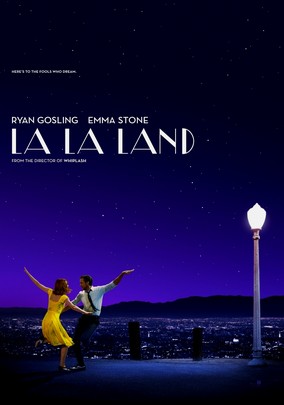
La La Land (2016) breathes new life into the classic musical genre of the 1950s and offers a fresh glimpse into Hollywood.

The film explores the glitz and glamour, triumphs and heartbreaks, and dreams both broken and fulfilled in a town laden with broken hearts.

The bright, colorful film stars two of today’s top young, talented actors: Emma Stone and Ryan Gosling. The chemistry between the leads and the dynamic musical numbers is incredible.

It’s a masterful nod to old Hollywood.

Mia (Stone) is an aspiring young actress struggling to survive the Hollywood scene. She serves lattes in a coffee shop on a studio lot and auditions endlessly for film and television parts without much luck.

Her passion is acting, but she also writes a one-woman play she plans to star in.

On the other hand, Sebastian (Gosling) is a dedicated jazz musician, struggling to make ends meet by playing demoralizing gigs that ruin the essence of jazz, meeting many people who tell him that jazz is a dying genre.

Sebastian’s dream is to open his nightclub one day.

Through circumstances, Mia and Sebastian meet and continue to run into each other, forging a wonderful friendship that eventually leads to romance.

The film is a gorgeous experience with bright sets, creative sequences, and numerous song and dance numbers to keep you humming. Mia and Sebastian even tap-dance one beautiful night following a Hollywood party under the moonlight with the Los Angeles skyline in view as they bond.

It is one of the best scenes in the film.

La La Land is seasonal and begins in the winter, though this is strictly an attempt to separate the chapters. Los Angeles is always warm, but the timing is Christmas, which is engaging in a warm climate.

In the first scene, we are immediately treated to a musical number. Stuck in stifling freeway traffic, the car drivers get out in unison, sing and dance, and then return to their cars to continue their mundane day.

Director Damien Chazelle cleverly balances the cheerful tone with the everyday redundant tasks and the struggles of artists hoping for a dream.

La La Land excels during the scenes of Sebastian and Mia as the chemistry is palpable. Gosling and Stone have something.

Supporting players like J.K. Simmons and Rosemarie Dewitt add pizzazz to their small but meaningful parts.

I adore the odes to classic Hollywood films that director Chazelle incorporates into his movie.

Classics such as Alfred Hitchcock’s Notorious (1946) and the legendary film Casablanca (1940) are mentioned twice.

During a sweet moment, Sebastian takes Mia to see Rebel Without a Cause (1956) at an old-style theater; he is shocked that she has never seen the film and eagerly excited to introduce her to it.

This continues as he shares his love for jazz music with her.

Later, the theater closes, and the film takes a more dour tone as the struggles of both characters overwhelm them.

The film’s finale is terrific.

Suddenly, five years later, many events have happened. In a brilliant sequence, the characters’ lives are explained through a song as we see the period play out until we reach the point of the film where the song began, a treasure of an ode to the truth of the characters.

The sequence is emotional, heartbreaking, and choreographed without missing a beat,

Gosling and Stone sing all their songs, not live as in Les Miserables (2012), but wisely on a sound stage. They are neither novices nor Grammy winners, but they are honest, truthful, and with heart.

It is refreshing to see classic Hollywood told in such a riveting fashion, as seen through the young’s eyes.

Films and styles of decades past are renewed through this excellent piece of cinema.

I noted similarities to An American in Paris (1951) and countless other gems from years ago and stood proudly, knowing that a nostalgic piece of cinema is precisely what we need.

Oscar Nominations: 6 wins-Best Picture, Best Director-Damien Chazelle (won), Best Actor-Ryan Gosling, Best Actress-Emma Stone (won), Best Original Screenplay, Best Original Score (won), Best Original Song-“City of Stars” (won), “Audition (The Fools Who Dream),” Best Sound Editing, Best Sound Mixing, Best Production Design (won), Best Cinematography (won), Best Costume Design, Best Film Editing
Crazy Rich Asians-2018

Crazy Rich Asians-2018

Director Jon M. Hu

Starring Constance Wu, Henry Golding

Scott’s Review #860

Reviewed January 26, 2019

Grade: B+

Crazy Rich Asians (2018), the romantic comedy smash of 2018, is a fun romp that is memorable because it centers on the Asian population, which is shamefully underrepresented in mainstream American cinema.

For this point alone, the film is recommended and worthy of praise, but otherwise, it is a standard genre film with gimmicks, stock characters galore, and a predictable conclusion.

The numerous cultural tidbits included must be mentioned, which raise the film above mediocrity.

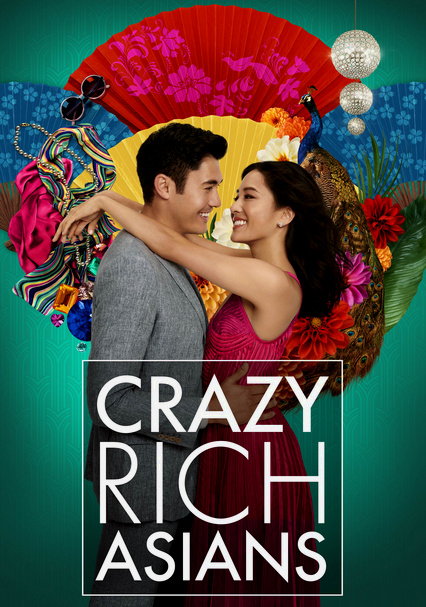
Rachel Chu (Constance Wu) and Nick Young (Henry Golding) are a happily dating New York City couple; she is a New York University college professor, and he is an entrepreneur.

They fly to Singapore to attend Nick’s best friend’s wedding, which results in antics and anguish. Rachel realizes that Nick comes from an extremely wealthy family and is Chinese royalty, owning a multitude of lavish hotels and real estate.

Most of Nick’s family, especially his traditional mother Eleanor (Michelle Yeoh), disapproves of the pairing, viewing Rachel as a typical American who prioritizes passion over family.

Nick is a sought-after commodity among the single women of Singapore, and Rachel is forced to endure harassment and mockery at every turn. Her allies are Nick’s kind sister Astrid (Gemma Chan), Rachel’s outrageous college pal Peik Lin (Awkwafina), and her equally garish family.

The plot thickens when Nick’s scheming mother does a background check on Rachel and discovers a family secret.

Crazy Rich Asians is a formulaic romantic comedy with the standard situations and characters expected of a genre film. The rivalry between the good girl and her boyfriend’s domineering mother, the comic relief of the gay sidekicks as Peik Lin and another friend of Rachel’s, provides.

The caricatures of Peik Lin’s wild family, her unattractive brother fond of taking secret photos of Rachel, and Eleanor’s snooty, judgmental circle of female friends are all well cast yet one-dimensional.

It is perplexing why the filmmakers decided to make Nick only half Chinese rather than authentically Asian. Sadly, this may have been a reassurance that the film would be more marketable to mass audiences.

The film is presented as an Asian film, but it is an American film.

The storyline justification is that Nick’s father (surprisingly never seen) is British and that he and Eleanor met in college, only she being Chinese. Nick and Astrid’s English accents gnawed at me throughout the film.

Despite the myriad of cliches and manipulations, Crazy Rich Asians has a nice flow and offers a fun two hours. The film is flavorful with bright colors and visual spectacles of stylish and sophisticated Singapore and its modern and sleek nuances.

I adored the locales featuring the skyline and a rich overview of the robust and relevant city/country.

Fantastic is how the filmmakers add spices of traditional Chinese culture throughout the film’s telling, quickly becoming more of an ode to the good history. Nick’s grandmother, Su-Yi (Lisa Lu), takes pride in her excellent and artistic flowers, and Rachel is introduced to the art of dumpling making.

Crazy Rich Asians introduces a history lesson for those unfamiliar with ancient Chinese customs.

Flavorful inclusions of Mandarin Chinese language versions of American pop hits are also lovely additions, so the film has some tidbits to revel in other than the story.

Most songs reference money, such as “Money Honey” by Lady Gaga and “Rich Girl” by Hall & Oates.

The pacing of the film is nice. There is never a dull or dragging moment, and a nice balance of comedy and drama. Humorous is when Peik Lin provides Rachel with a costume makeover, ensuring she looks dynamic for the grand wedding, as she convinces her to fight Eleanor with fire.

Drama ensues when someone casts a dead fish on Rachel’s bed, and Eleanor spits that Rachel will never be enough for her son.

The film’s conclusion is predictable, resulting in a marriage proposal aboard a jet heading from Singapore to New York City. With a movie like Crazy Rich Asians, it is guaranteed that the couple lives happily ever after, riding off into the sunset in great defiance of Nick’s roots.

Due to the film’s success, a sequel is a solid bet, though I am also not betting the follow-up will be any good. Are romantic comedy sequels ever decent?

Filled with cliches, but satisfying most mainstream film-goers, Crazy Rich Asians (2018) creates a film with enough shards of Asian culture to at least get the Asian population on the map with a Hollywood production.

Although the film has a polished look and some stereotypes, it breaks no new ground other than good inclusion, and that is a start.

Beauty and the Beast-2017

Beauty and the Beast-2017

Director Bill Condon

Starring Emma Watson, Dan Stevens

Scott’s Review #634

Reviewed April 18, 2017

Grade: A-

When I went to see the live-action version of the Disney animated classic Beauty and the Beast, which was released in the spring of 2017, I was unsure what to expect.

Would it be a cheesy or amateurish retread of the 1991 animated smash only with human beings? Why the lackluster March release date? Indeed, this is telling; otherwise, why not release the film in the coveted fourth quarter with potential Oscar buzz?

I do not have the answers to all these questions, but this version of Beauty and the Beast is enchanting, romantic, and lovely- a spring treat for the entire family to enjoy.

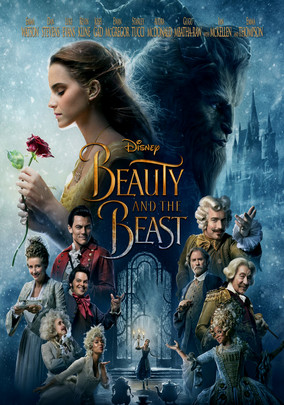
Our protagonist, Belle (producers wisely casting Harry Potter legend Emma Watson), is a kindly farm girl living with her father, Maurice (Kevin Kline),  in a quaint village outside of Paris.

Considered a bit odd by her village mates because she loves to read, she rebuffs the advances of the dashing soldier, Gaston (Luke Evans), because he is arrogant- the other village ladies (as well as Gaston’s gay companion, LeFou) flaunt over Gaston’s good looks.

When Maurice ventures into unknown parts and stumbles upon a dilapidated castle, he is locked up by a vicious beast. Having once been a handsome prince, he has since been cursed by a beggar woman.

The only way the beast can return to his former self is to find true love before a wilted rose loses all of its petals—enter Belle to the rescue. Belle convinces the Beast to let her stay in prison and release her father.

Will Beast and Belle fall madly in love?

Of course they will. The fated romance is part of what makes the film heartwarming and lovely.

The now-legendary classic fairy tale feels fresh and energized with the Disney-produced project. Director Bill Condon carefully and successfully crafts an honest effort, making sure that while providing a fairy tale happy ending, not to make the film seem contrived, overblown, or overdramatized.

I fell for the film hook, line, and sinker. It is an uplifting experience. The song and dance numbers abound with gusto and good costumes—my personal favorites are the rousing “Be Our Guest” and the sentimental “Beauty and the Beast.”

The crucial romance between Watson’s Belle and the Beast, earnestly played by Dan Stevens (of Downton Abbey fame), works in spades. Their chemistry feels authentic and passionate. As Belle is at first held captive by the misunderstood bad boy instead of Maurice, the pair at first loathe each other, but this is done with innocence and no malice.

Condon wonderfully exudes the right amount of slow build to make the pair beloved by audiences with the correct pacing.

The CGI in Beauty and the Beast is heavy, as expected. However, the Beast’s distraction is a bit confusing. Was the Beast a complete CGI creation save for the close-ups, or was Watson dancing with Stevens when filming commenced in certain scenes?

I am unsure.

The controversial “gay storyline”, which helped the film be banned in the southern United States and Russia, as well as other countries, is pure and utter rubbish.

The subject is explored extremely superficially and not worthy of all the fuss.

Worthier of mention is the tremendous diversity that is featured in the film, most notably in the opening sequence. Interracial couples appear in the form of Madame de Garderobe (Audra McDonald), the opera singer turned wardrobe, and Maestro Cadenza (Stanley Tucci), turned harpsichord.

On the gay issue, it is sweet that the implied gay character of LeFlou finds love with another man at the end of the film.

A minor complaint is the scattered authentic French accents of many of the household staff and village people, but Belle and Maurice speak in the British tongue. Being a fairy tale, liberties must be taken, and suspending disbelief is necessary, but this was noticed.

Beauty and the Beast (2017) is a lovely experience that combines fantastic musical numbers with romance, with a side of diversity thrown in for good measure.

Since the film will undoubtedly be seen by many youngsters and teens, this is a wonderful aspect of the film and, hopefully, a shining, positive example in filmmaking.

Oscar Nominations: Best Production Design, Best Costume Design

Ex Machina-2015

Ex Machina-2015

Director Alex Garland

Starring Domhnall Gleeson, Oscar Isaac, Alicia Vikander

Scott’s Review #410

80023689

Reviewed June 17, 2016

Grade: B+

Ex Machina (2015) reminds me of another recent science-fiction film, Her (2013), but with a stronger female-empowerment edge.

The latter is more of a romantic drama with romantic undercurrents.

In contrast, Ex Machina has a cynical tone and elements of imprisonment and psychosis, even narcissism.

The film features excellent visual effects and a futuristic mystique, making it a successful treatment.

Directed by first-timer Alex Garland, who could very well be a director to watch rise the ranks with subsequent projects.

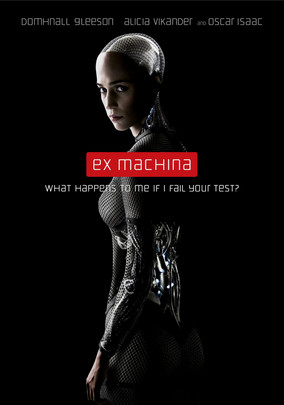
Young, fresh-faced computer programmer, Caleb Smith (Domhnall Gleeson), wins a week-long trip to remote Alaska, to spend it with his mysterious boss, Nathan Bateman (Oscar Isaac), the CEO of a software company.

Caleb must arrive at the luxurious, sprawling estate by helicopter, as it sits in a deserted part of the world and stretches for mile after mile through gorgeous landscape.

Nathan, played by Oscar Isaac, is both charismatic and creepy. He lives alone save for a beautiful Asian servant named Kyoko, who speaks no English, and a female robot named Ava (played by rising star Alicia Vikander).

Caleb’s task is to study Ava and determine whether he can relate to her as a human, even though he knows she’s a robot.

It is soon revealed that Nathan plans to reprogram Ava, thereby killing her. Caleb schemes to rescue Ava, but is that all it seems?

With a cast of only four principals, it is not difficult to assess each character and their relationships. Caleb is the least complex of the four, or rather, the one with motivations readily apparent.

The others are shrouded in mystery. Caleb expects a fun getaway but instead finds himself in the middle of an experiment. Is Nathan’s desire to perform psychological tests on Ava, by way of Caleb, genuine?

The audience immediately senses something is off about Nathan. Merely in his thirties, how could he amass such financial success so soon?

Why are he, a servant, and a robot the only inhabitants? Why does the helicopter pilot refuse to venture further than the drop-off point?

Some of these questions are answered, some remain unanswered. It is part of what makes the film mysterious and complex. Could Ava be the one doing her share of experimentation or manipulation?

Alicia Vikander deserves much praise for her role as Ava, and some would argue that the talented young actress should have won the Best Supporting Actress trophy for this role instead of for The Danish Girl (2015).

I’m not sure I would leap to the same conclusion, but she does amass a ton of subdued emotion as Ava. She is complex and profound. She longs to see the outside world and would cross a crowded street to see all the faces and different kinds of people.

Like Nathan, something about Ava isn’t right.

Is she calculating or simply soulful? But how can she be? She is a robot.

I compared her to another famous film robot/computer- HAL from 2001: A Space Odyssey (1968).

Along with Vikander, Isaac steals the film in a role that mixes creep with genius.

He sits around his estate in comfy clothes a blue-collar man might wear, drinking beer and studying Ava. He has sexual relations with his servant, and she is expressionless.

He doesn’t treat her well, so we don’t root for him. At the same time, his character is tough to read. Is he experimenting on Ava or Caleb?

Visually, Ex Machina has a sleek blend of modern, crisp CGI that never overshadows the story. It also includes a bloodletting scene that chills as much as any good horror film would.

Garland was heavily influenced by 2001: A Space Odyssey and Altered States (1980), and he made the film on a shoestring budget, without outside influences that might change his vision.

I commend this and wish more filmmakers would follow suit.

Ex Machina (2015), while perhaps not perfect, could be a blueprint for what this young director has in store.

Oscar Nominations: 1 win-Best Original Screenplay, Best Visual Effects (won)