Category Archives: 2001 Films

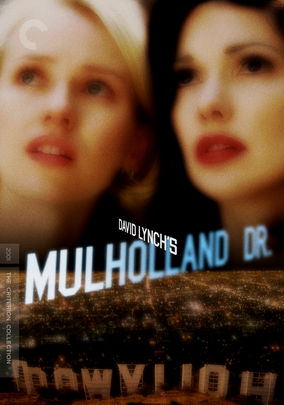
Mulholland Dr.- 2001

Mulholland Dr.- 2001

Director David Lynch

Starring Naomi Watts, Laura Harring

Top 250 Films #7

Scott’s Review #297
60021646

Reviewed December 12, 2015

Grade: A

Mulholland Dr. (2001) is my favorite David Lynch film and, as far as I am concerned, a pure masterpiece in experimental filmmaking.

Championed by many, yet hated by others for its non-linear and confusing storyline, making sense of the mishmash of dreamlike plots is a waste of time and undoubtedly headache-inducing, as the film must be experienced and appreciated for its creativity.

My best analogy is that Mulholland Dr. is to film what Pink Floyd is to music – it must be savored and experienced. It is a film that invites interpretation and study.

The main story, if one is attempting to summarize in a paragraph, goes something like this:

Part 1- aspiring actress Betty Elms (played by then-unknown Naomi Watts) arrives in sunny Los Angeles as a perky, clean-cut girl. She stays in her aunt’s gorgeous suburban apartment while she is away filming a movie on location.

Betty meets an amnesiac woman, the gorgeous Rita (Laura Harring), who is hiding in the apartment. Before meeting Betty, we learn that Rita was involved in a car accident on Mulholland Dr. and is carrying a large sum of cash.

Still, she does not know who she is or even her name, making up the name “Rita” after seeing a poster of Rita Hayworth on the wall while showering.

Part 2: Betty (now named Diane) and Rita (now Camilla) are lovers, and Betty, no longer aspiring, has now become a neurotic, struggling actress with no work, and is involved in a love triangle with Camilla and another man, who are both great successes and pity Diane.

Diane and Camilla visit a club named Club Silencio, where a gorgeous singer brings them to tears with her singing, only to collapse and reveal herself as a phony. The host warns that everything is an illusion.

Intersecting vignettes seemingly unrelated to the central part of the story- a young director forced to cast a woman after threats from the mafia, a terrified man who sees a demented man behind the dumpster of a burger joint, and a detective searching for the clues to the car accident involving Rita- all come together to relate to the main story.

Mixed in with all of these stories are recurring odd characters- the seemingly sweet elderly couple that Betty meets on the airplane.

This strange cowboy appears every so often. Coco, the landlord, played by legendary film actress Ann Miller in her last film, then doubles as a shrewish character in the alternate story, and finally as a mysterious blue key.

How do all these facets of story and character add up?

That is open to interpretation.

Some details support the theory that “Betty” is a figment of Diane’s imagination. She dreams of being fresh-faced and ready to take on L.A., and the woman that Betty and Rita find dead is likely Diane.

When the plot changes direction, the cowboy utters the line “Hey, pretty girl. Time to wake up,” which seems to support this theory, though, as mentioned before, Mulholland Dr. is meant to be enjoyed, not stressed over if the puzzle does not always come together.

Mulholland Dr. (2001) is a masterpiece, pure and simple. An odd masterpiece with plots that can be discussed and dissected for ages…..and not understanding the film is not a bad thing.

Oscar Nominations: Best Director-David Lynch

Independent Spirit Award Nominations: 1 win-Best Cinematography (won)
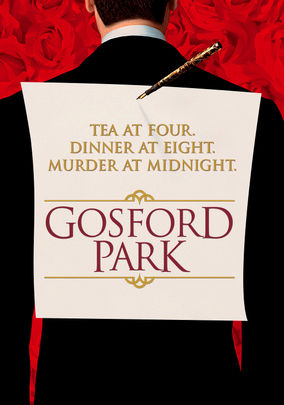
Gosford Park-2001

Gosford Park-2001

Director Robert Altman

Starring Maggie Smith, Helen Mirren, Ryan Phillippe

Top 250 Films #105

Scott’s Review #350

60021796

Reviewed January 9, 2016

Grade: A

Somewhere between the brilliant PBS series of the 1970s and the ultra-modern cool of Downton Abbey (also PBS) lies the masterpiece that is Robert Altman’s 2001 gem, Gosford Park.

It’s ironic that the creator, writer, and executive producer of Downton Abbey, Julian Fellowes, wrote the screenplay of Gosford Park.

No wonder, combined with Altman’s direction, they created genius.

The period is 1932, and the wealthy, along with their servants, flock to the magnificent estate of Gosford Park, a grand English country home.

The guests include both Americans and Brits, and everyone is gathered for a shooting weekend- foreshadowing if ever there was.

Following a dinner party, a murder occurs. The remainder of the film follows the subsequent police investigation, and the perspectives of the guests and the servants as a whodunit ensues.

Many of the characters’ lives unravel as secrets are exposed.

Sir William, the murder victim, is a powerful industrialist. After he announces he will withdraw an investment, the ramifications affect many of the guests, so that the setup is spelled out for the audience.

At the risk of seeming nothing more than a plot device, it is so much more than that.

During a pheasant shoot, Sir William receives a minor wound thanks to a stray birdshot- is this intentional or merely an accident? When Sir William meets his fate that evening, the potential suspects pile up.

If there are two compelling aspects to a great film, they are a good old-fashioned whodunit and an enormous cast, all potential suspects.

What makes Gosford Park exceptional is that every character is interesting in some way, and all are well written.

Secrets abound for miles in this film and are revealed with delicious detail. Torrid affairs, sexuality secrets, and blackmail abound as revelations make their way to the surface, and Altman knows exactly how to cast doubt or suspicion on many of his characters.

The compelling relationship between American film producer Morris Weissman and his valet, Henry Denton (Ryan Phillippe), along with the domineering head housekeeper, Mrs. Wilson (Helen Mirren), is my favorite character and dynamic.

How clever that Maggie Smith would play similar roles as stuffy aristocrats in both Gosford Park and Downton Abbey.

Rich in texture is the balancing between the haves and the have-nots, and how those characters mix (sometimes in secret rendezvous!)

Typical of Altman films, the character dialogue commonly overlaps, and the actors largely improvise the script. In addition to being an actor’s dream, this quality gives a dash of realism to his films, and Gosford Park is no exception.

Since there are so many characters and so many plots and subplots going on at once, my recommendation is to watch the film at least twice to fully comprehend the layers of what’s going on.

Gosford Park (2001) will be increasingly appreciated.

Oscar Nominations: 1 win-Best Picture, Best Director-Robert Altman, Best Supporting Actress-Helen Mirren, Maggie Smith, Best Screenplay Written Directly for the Screen/Original Screenplay (won), Best Art Direction, Best Costume Design

In the Bedroom-2001

In the Bedroom-2001

Director Todd Field

Starring Tom Wilkinson, Sissy Spacek

Scott’s Review #1,313

Reviewed October 29, 2022

Grade: A

Todd Field is an American actor and director who has made very few films. This shows that he must choose his projects carefully.

Little Children (2006) is one of my favorite films.

Based on a 1979 short story titled ‘Killings’ by Andre Dubus, In the Bedroom (2001) is an independent film that exemplifies what independent films do brilliantly.

They tell stories about real people, with emotions, conflict, choices to make, and repercussions to face.

The story depicted in In the Bedroom is one that anyone viewing the film can either directly relate to or sympathize with any number of characters within.

The film centers on the inner dynamics of a family in transition. Matt Fowler (Tom Wilkinson) is a successful small-town doctor practicing in Maine and married to Ruth Fowler (Spacek), a music teacher.

Their son Frank (Nick Stahl) is involved in a summertime love affair with an older single mother, Natalie Strout (Marisa Tomei). He professes it to be merely a fling, but her violent ex-husband is jealous.

As the beauty of the summer comes to an end, these characters find themselves amid an unimaginable tragedy. They must make difficult choices to persevere through the dark autumn and winter.

Having seen the film when it was released in 2001 and not again until 2022, I wondered how it would hold up over twenty years later.

Would it feel dusty and dated or fall into the ‘one and done category like many films do?

The story is just as riveting, thanks to superior acting from the entire cast and exceptional direction and pacing by Field.

The lurid, quiet landscape is still and lonely in most scenes, and this is frightening unto itself. The lush, serene Maine waters, lobsters, lighthouses, and cabins are fraught with danger because of the human threat lurking in their midst.

The atmosphere is everything.

Fields reveals a story about a small town and the secrets buried beneath the surface. Even during a summer barbecue, there is tension when an unwelcome guest arrives unannounced.

With glances between characters, there is a lot of unspoken communication.

The acting is top-notch, especially by Wilkinson and Spacek. Before the tragedy, they both hedgingly accept their son’s relationship with an older woman but hope it’s only a phase. They see the relationship as a major roadblock to his education at a good university.

After the tragedy, Matt and Ruth change. She becomes angry and cold; he is stoic and vengeful. Both actors seamlessly portray their characters just like real-life people.

Other players, like Marisa Tomei and Nick Stahl, as the younger couple who met a tragic end, perform their roles flawlessly.

This is a major reason why In the Bedroom resonates so well. Any viewer can put themselves in the shoes of Matt, Ruth, or even Natalie Strout. Circumstances can change our perspectives and turn us into different people, at least temporarily.

The last sequence is great. A decision made by Matt and Ruth is shocking and will follow them for the rest of their lives. The key is that they do not hastily make this decision but rather calmly ponder and strategize each step.

They are satisfied and have no regrets.

In the Bedroom (2001) is an emotionally honest and compelling journey into character exploration. It is powerful and humanistic, quietly draws the viewer in, and takes a firm grip.

It uses silence to its advantage, making that silence haunting and melancholy.

Oscar Nominations: Best Picture, Best Director-Todd Field, Best Actor-Tom Wilkinson, Best Actress-Sissy Spacek, Best Supporting Actress-Marisa Tomei, Best Adapted Screenplay

Independent Spirit Nominations: 3 wins-Best First Feature (won), Best Male Lead-Tom Wilkinson (won), Best Female Lead-Sissy Spacek (won), Best Screenplay

Valentine-2001

Valentine-2001

Director Jamie Blanks

Starring David Boreanaz, Denise Richards

Scott’s Review #1,146

Reviewed May 26, 2021

Grade: C

Valentine (2001) is a horror film made in the wrong decade.

The film could have been more meaningful or relevant if only it had been made in the early 1980s.

Sadly, it feels like a weak retread and an ode to a former time. Its flight took off twenty years ago.

1981 or 1982 was the heyday of the slasher flick. It’s kind of like a band attempting to play 1980s pop hits passed off as original music- it doesn’t work.

Or, a cover band belting out Bon Jovi hits as their own.

What’s worse is that it’s set in 2001. It might have been a better film with feathered hair, parachute pants, and a direct tribute to the 1980s.

It’s painfully mediocre.

If I sound harsh, that is not my intention. Valentine is not a disastrous film, and the pacing is fine at a short one hour and thirty-six minutes. It’s just that it’s dreadfully unoriginal and therefore uninspiring.

It’s like the filmmakers thought, ‘let’s put some hot chicks in a slasher film and off them one by one and make some money.

But the joke’s on them. Valentine didn’t make much money and was universally panned.

Borrowing from several popular flicks like Prom Night (1980), Terror Train (1980), and My Bloody Valentine (1981), director Jamie Banks even steals the familiar holiday theme so essential to this genre.

Even the final twist is unfulfilling because, like in almost all slasher films, a twist is almost mandatory and therefore unsurprising.

Before I forget, the acting is painfully bad. So there’s that bonus.

The action begins at a junior high school Valentine’s Day dance in 1988. An outcast named Jeremy Melton asks four popular girls to dance and is disdainfully rebuffed by each.

They are mean girls. Their overweight friend Dorothy accepts Jeremy’s invitation, and they make out underneath the bleachers.

When bullies discover them, they are ridiculed. Dorothy lies and claims that Jeremy sexually assaulted her, resulting in his being beaten, expelled, and eventually institutionalized after the group testifies against him, lying on the witness stand.

Years later, on Valentine’s Day, Kate (Marley Shelton), Paige (Denise Richards), Dorothy (Jessica Capshaw), Lily (Jessica Cauffiel), and Shelly (Katherine Heigl) begin receiving scary messages from an unknown sender, signed “JM”.

The women are then killed off one by one by a psycho in a Cupid mask.

They reside in San Francisco.

They suspect the murderer is Jeremy, having returned to exact revenge. Ya think?

There is entertainment in the mean girls being hacked to bits unceremoniously, and it is satisfying.

I sided with the Cupid killer, but was I supposed to? Well, I did anyway. Jeremy is handsome and sympathetic. After all, they ruined his life. Why would we root for the girls to be spared?

And it’s enjoyable. The deaths include a slit throat, a brutal beating with a hot iron, and death by electrocution. A special Valentine’s Day edition is a box of chocolates filled with maggots!

I won’t ruin the final twist by revealing any specifics, but suffice it to say that, yes, Jeremy is indeed the killer. But it’s not quite in the way you’d think.

There is nothing original about Valentine (2001), which is about as formulaic a film as there ever was. Instead of ever watching or thinking about the film again, I’ll happily break out my copies of Halloween (1978) or Friday the 13th (1980).

But still, it’s not the terrible film most people think it is.

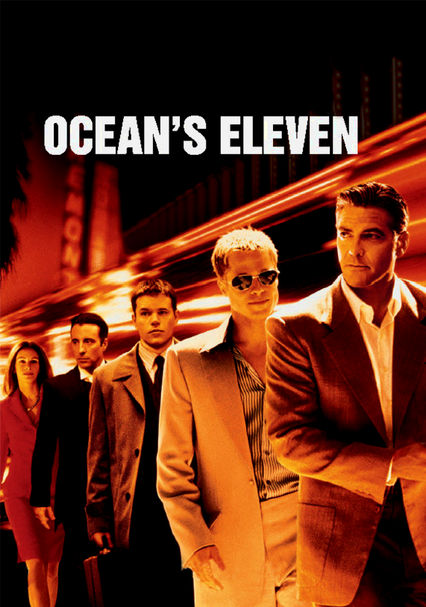
Ocean’s Eleven-2001

Ocean’s Eleven-2001

Director Steven Soderbergh

Starring George Clooney

Scott’s Review #1,105

Reviewed January 28, 2021

Grade: A-

Steven Soderbergh was awarded the Best Director Academy Award for his exceptional direction in Traffic (2000), one of my all-time favorite films.

He follows up that gem with a slick, commercial film that is stylish and looks cool.

It’s fast-paced, with quick editing, and is set in the dangerously appealing world of casinos, as a group of sophisticated thieves attempts to steal $160 million from a casino owner with whom they have a vendetta.

I expected a film of this type to be generic and by-the-numbers, but instead it’s unpredictable and unexpected.

Ocean’s Eleven (2001) is the first (and best) installment of the popular Ocean’s franchise and a remake of the 1960 Rat Pack film of the same name.

George Clooney was in his film prime and led the pack of A-list stars like Brad Pitt, Julia Roberts, and Matt Damon in a packed and brimming two-hour entertainment fest.

A nice touch is inviting two stars from the original, Henry Silva and Angie Dickinson, to appear as themselves.

Clooney leads the charge and embraces his status as a leading man with charm, polish, and style. He plays a handsome Danny Ocean, a man with a plan.

Less than one day into his parole from a New Jersey penitentiary, the thief is already traveling to California to plot his next move with his partner in crime, Rusty (Brad Pitt).

It’s tinged with revenge.

They abide by three rules: Don’t hurt anybody, don’t steal from anyone who doesn’t deserve it, and play the game like you’ve got nothing to lose.

Danny orchestrates his charges to pull off the most sophisticated, elaborate casino heist in history. And it will take place in glitzy Las Vegas on the night of a boxing match.

Providing the rules makes me think fondly of a similar proclamation in David Fincher’s 1999 film Fight Club, where Danny and the gang immediately feel sympathetic to me.

After all, they don’t intend to hurt anyone, and the money stolen will be from folks who are dastardly and might even deserve to be penniless.

Didn’t Jigsaw from the Saw films only kill those who harmed other people? Suddenly, their motives are clear and justified, making them the good guys.

As a bonus, the “victim” of the heist is the unlikable Terry Benedict (Andy Garcia), who owns three casinos and is worth billions.

Making the bad guys the heroes and Benedict the bad guy is clever and situates the players properly, so the audience knows who to root for.

As if the film doesn’t have enough treats, some drama is thrown in. Danny’s ex-wife, Tess (Julia Roberts), is Benedict’s girlfriend. Is she loyal to Danny or Benedict, or might she be playing both sides?

Loyalties are tested and questioned, and the intricate bank heist sequence is titillating and an edge-of-your-seat thrill ride.

The Las Vegas backdrop, with the casino’s bright lights, bells, and other elements, cements Ocean’s Eleven as one of the best in its genre.

It’s also tough not to root for Clooney, Pitt, and Damon in or out of character.

Ted Griffin writes the screenplay and adds some nice characters, more than one-note bank robbers or thieves.

Along with Soderbergh’s direction, which adds the nice atmospheric trimmings like the razzle-dazzle casino scenes, they make a great pair.

I love how Danny and Rusty recruit a team with specialized skills like mechanics, pickpockets, and an electronics and surveillance specialist. There’s even an acrobat!

This seems like an ode to the 1960s television series Mission: Impossible, as the team is carefully selected for their skills.

A highly entertaining popcorn film just perfect for a summer night, Ocean’s Eleven (2001) is sure to satisfy. The intention is to sit back and enjoy what is offered, and all the elements come together perfectly.

The culminating main event boxing match and subsequent twist catapult the film from pure entertainment to something more nuanced and exciting.

The film was a success at the box office and with critics, leading to two Soderbergh-directed sequels and a spin-off with an all-female lead cast, released in 2018.

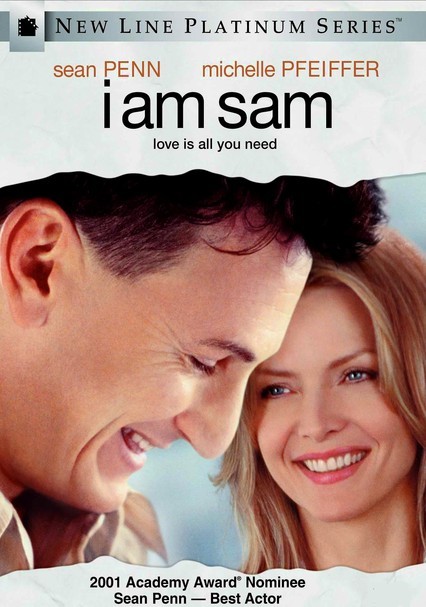
I Am Sam-2001

I Am Sam-2001

Director Jessie Nelson

Starring Sean Penn, Michelle Pfeiffer

Scott’s Review #1,097

Reviewed December 30, 2020

Grade: B-

Sean Penn stars as a mentally disabled man who fathers a child and is determined to cling to the custody of her after he is deemed unfit to parent in I Am Sam (2001), a drama that garnered Penn an Oscar nomination.

The brilliant actor may have deserved the win, since he breathes life into a film riddled with every imaginable cliché.

Aside from his performance and that of the novice Dakota Fanning, the film would be drivel.

As it is, it’s mediocre at best.

Somewhere, sometime, somehow, in cinema history, the consensus became that if an actor plays a mentally challenged character, they are assured an Academy Award nomination.

Juliette Lewis tried and failed with the cringeworthy The Other Sister (1999), but Penn has better credibility. Dustin Hoffman also succeeded with Rain Man (1988).

Sam (Penn) is a well-adjusted man and has a supportive group of friends with disabilities.

His neighbor, Annie (Dianne Wiest), assists in raising Sam’s daughter, Lucy (Fanning), but the eight-year-old quickly exceeds her father’s mental capacity, leading to frustration and conflict.

Lucy’s mother, a homeless woman, has vanished from the scene.

The justice system determines that Lucy must be placed with a foster family led by Randy (Laura Dern), prompting Sam to hire a no-nonsense attorney, Rita (Pfeiffer). Both Randy and Rita sympathize with Sam and must convince the courts that he can raise her.

Jessie Nelson, who directed I Am Sam, also directed safe films like Corrina, Corrina (1994) and Stepmom (1999), so her intention to present a warm, soft experience is easy to discern.

This is not meant to criticize her direction style as much as to point out that the result is not a hard-edged, gritty experience.

It’s a crowd-pleaser, and there is never a moment where Nelson wants the audience to root against Sam keeping custody of Lucy, regardless of the reality.

Penn saves the film from being a complete stereotype. It’s apparent that Sam adores Lucy, and the actor is not afraid to cry and express genuine emotion on cue. He’s a great actor and makes the most out of the role.

He does his best to insinuate that mentally challenged people are like everyone else- they can keep a job, pay bills, hire a lawyer, and fight for their kids. His task is tough, but he succeeds.

That’s what raises I Am Sam as an overall product.

Fanning, who in 2001 was about to embark on a fabulously rich acting career, is wonderful. Unlike many child actors, cast because they are cute or bubbly, she has real acting chops. She is neither girly nor overly sad.

Fanning is as strong, focused, and detailed as her eight-year-old character is.

Speaking of stereotypes, Pfeiffer is awarded the grand prize in female attorney banality. She is haggard, absorbed in her work, and has no time for her son, taking Sam’s case only to prove she is a kind person, since she agrees to pro bono work.

Predictably, she realizes through Sam that she is wasting her life away, leaving her husband and spending more time with her son.

Dern does her best with a weak role as the one-dimensional foster parent who realizes she cannot be half the parent Sam can be.

The film’s title is derived from the opening lines “I am Sam / Sam I am” of the book Green Eggs and Ham, which is read in the movie.

This makes the film showcase sentimentalism and hammers home the point that the mentally disabled are child-like and need the help, patience, and understanding of non-disabled adults, as if that isn’t obvious.

The conclusion to I Am Sam is expected.

The lengthy courtroom scenes are wrapped in a nice, shiny bow as Sam predictably retains custody of Lucy. At the same time, the supporting cast gathers on a soccer field and dutifully gushes with delight at how great a father he is.

This is a fine tribute or fantasy, and if only real life were like this, what a better world it would be. I would have preferred a story with more meat.

I Am Sam (2001) is recommended only for huge Sean Penn fans or those who desire an overly sentimental experience.

It might have been better suited for Lifetime television.

Oscar Nominations: Best Actor-Sean Penn

A.I. Artificial Intelligence-2001

A.I. Artificial Intelligence- 2001

Director Steven Spielberg

Starring Haley Joel Osment

Scott’s Review #1,052

Reviewed August 13, 2020

Grade: B+

A bit of a history lesson about the film A.I. Artificial Intelligence (2001).

The final cinematic version is based on the 1969 short story “Supertoys Last All Summer Long” by Brian Aldiss, which director Stanley Kubrick purchased and developed in the 1970s.

Left unfinished for years, and the subsequent passing of Kubrick after he had started to collaborate with Steven Spielberg, the film was finally carved into a final project by Spielberg.

Upon close study, the film possesses the mark of both directors, with the edge going to Spielberg.

The tone of the story contains a creepiness and oddity familiar to fans of Kubrick, like he may have been thinking along the lines of a similar theme to the brilliant 2001: A Space Odyssey (1968).

Both center around robots and a futuristic world. Spielberg adds a humanistic, sympathetic, and slightly melancholy edge as he did with E.T. the Extra-Terrestrial (1982), so that we adore the main character and want justice for him.

In contrast, Kubrick made his version of an extra-terrestrial in 2001: A Space Odyssey a scary villain.

The results are mostly good, but uneven in parts.

The premise is solid and grasps our attention. The time is the twenty-second century, when the polar ice caps have melted, submerging many coastal cities. It’s also a time when humans live side by side with “mechas,” or sentient robots.

Henry and Monica Swinton are suffering because their son Martin has a rare disease and is placed in suspended animation.

They are given a Mecha child who can experience love.

Henry and Monica fall in love with David and, in a plot twist worthy of a daytime soap opera, Martin returns to life, becomes jealous of David in a plot reminiscent of The Good Son (1993), tries to frame David for monstrous deeds, and David is nearly shipped off to parts unknown.

This is Spielberg’s first crack at screenwriting in nearly twenty-five years, since Close Encounters of the Third Kind (1977), and he does a decent job.

It’s no secret that both films, along with E.T. the Extra-Terrestrial, share common themes, so he feels comfortable with these subjects.

The humanity is there, but the screenplay is often too busy with story points coming and going at a rapid pace.

I wanted a deeper dive into Henry and Monica to understand their characters better and what makes them tick. I felt their pain of having (sort of) lost a child, but not why they needed to fill the void so quickly.

Osment is extremely good in a film so complex that other elements could easily have overshadowed his performance.

Instead, he powers through, adding complexities to a character the audience falls in love with, aching and yearning along with him. David is faced with terrible, life-changing news of not only being adopted but of not even being human.

His determination to find out who he truly is takes the viewer down a path of both entertainment and adventure, but also of bitter emotion.

A.I. Artificial Intelligence (2001) has a lot going on, and critically speaking, maybe too much. Spielberg fleshes out the original short story and tasks the viewer with enduring a global warming message, important, but a trite overdone, and sympathizing with David, the lonely robot boy.

The story becomes an exciting adventure, and the complexities of being human and almost human are explored, though not quite satisfactorily.

Osment and Law are terrific with dazzling chemistry, and the visuals and musical score are astounding. Osment should have received a Best Actor Oscar nomination, following the one he received for The Sixth Sense (1999).

Oscar Nominations: Best Musical Score, Best Visual Effects

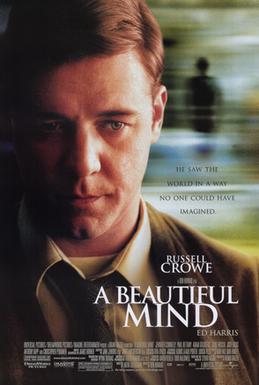
A Beautiful Mind-2001

A Beautiful Mind-2001

Director Ron Howard

Starring Russell Crowe

Scott’s Review #1,003

Reviewed March 25, 2020

Grade: A-

A Beautiful Mind (2001) is a superior-made film based on the life and times of American mathematician John Nash, a Nobel Laureate in Economics and Abel Prize winner.

The biography explores Nash’s battles with schizophrenia and the delusions he suffered, causing tremendous stress on friends and family.

The film is well-written and brilliantly acted, but it deserves a demerit for its factual inaccuracies, especially regarding Nash’s complex sexuality and family life.

This leaves a gnawing paint-by-the-numbers approach aimed only at mass appeal.

The film was an enormous success, winning four Academy Awards for Best Picture, Best Director, Best Adapted Screenplay, and Best Supporting Actress.

It was also nominated for Best Actor, Best Film Editing, Best Makeup, and Best Original Score.

Arguably one of the best films of 2001, it cemented director Ron Howard’s reputation as a mainstream force to be reckoned with in the Hollywood world.

The project was inspired by the Pulitzer Prize-nominated book of the same name.

Starting in 1947, we meet Nash (Russell Crowe) as a virginal, socially awkward college scholar at Princeton University. He is a whiz at science and mathematics, coming up with unique and dynamic ideas for problem-solving.

Rising the ranks in respectability, he is given an important job with the United States Department of Defense, tasked with thwarting Soviet plots.

He becomes increasingly obsessive about searching for hidden patterns and believes he is being followed, sinking further into depression and secrecy.

A Beautiful Mind is an important film because it brings to light the overwhelming issue of mental health and the struggles one suffering from it is forced to endure.

Nash largely lives in a fantasy world and has imaginary friends who have followed him for decades by the time the film ends.

Nash conquers his demons with little aid of medication, causing a controversial viewpoint. Amazing that the man was able to rise above, but is this a realistic message for those suffering from hallucinations?

Russell Crowe carries the film, fresh off his Oscar win the year before for his stunning turn in Gladiator (2000). He would have won for portraying Nash had he not recently received the coveted prize.

Crowe, hunky at this point in his life, convincingly brings the brainy and nerdy character, rather than the stud, to life, adding layers of empathy and warmth to the role.

We root for the man because he is as sensitive as he is a genius.

Jennifer Connelly, in what is disparagingly often described as the wife-or-girlfriend role, does her best with the material given.

My hunch is her Oscar nomination and surprising win have more to do with piggybacking off the slew of other nominations the film received.

She is competent as the supportive yet strong Alicia, Nash’s wife. In her best scene, she flees the house after a confused Nash leaves their infant daughter near a full bathtub, putting her life in danger.

The most heartfelt scene occurs during the conclusion.

After many years of struggle, Nash eventually triumphs over this tragedy and, finally, late in life, receives the Nobel Prize. This is a grand culmination of the man’s achievements and a sentimental send-off for the film.

The aging makeup of all principal characters, specifically Nash and Alicia, is brilliantly done.

Despite the heaps of accolades reaped by A Beautiful Mind, several factual points are reduced to non-existence.

It is questionable why Howard chose not to explore Nash’s rumored bisexuality, instead of passing him off as straight.

Admittedly, the film is not about sexuality, but isn’t this a misrepresentation of truth? Nash had a second family, which is also never mentioned.

These tidbits, eliminated from the film, leave a glossy feel, as if Howard picked and chose what to tell and not to tell for the sake of the mainstream audience.

Bringing needed attention to a problem of epic proportions, A Beautiful Mind (2001) addresses mental health issues in the United States.

The methods may be questionable, and the film has an overall safe “Hollywood” vibe, but it must be credited for a job well done in a film that is not only important but also displays a good biography for viewers eager to learn about a genius who faced unrelenting issues.

Oscar Nominations: 4 wins-Best Picture (won), Best Director-Ron Howard (won), Best Actor-Russell Crowe, Best Supporting Actress-Jennifer Connelly (won), Best Screenplay Based on Material Previously Produced or Published/Adapted Screenplay (won), Best Original Score, Best Makeup, Best Film Editing

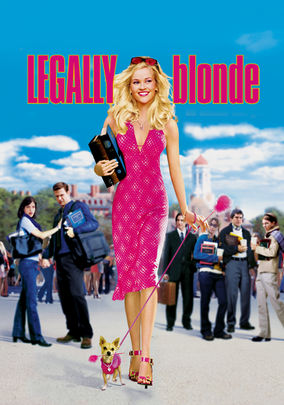
Legally Blonde-2001

Legally Blonde-2001

Director Robert Luketic

Starring Reese Witherspoon, Luke Wilson

Scott’s Review #807

Reviewed August 30, 2018

Grade: B+

Legally Blonde (2001) is a film that, by all accounts, should have been a hot mess, but for some reason is a great ball of fun.

High art it ain’t by any means, and the plot is implausible beyond belief, and suspension of disbelief must be securely tucked away.

Despite portraying more serious roles before and after this film, Reese Witherspoon is largely responsible for the film’s success and is closely associated with it.

Quite simply, all the elements align perfectly in this film.

Elle Woods (Witherspoon) is the president of her sorority at a Los Angeles college. Clad in fluffy pink attire and carrying her cute dog everywhere she goes, she epitomizes the stereotypical “dumb blonde”.

However, she does carry a 4.0 grade point average in fashion.

Expecting a marriage proposal from her upper-class, snooty boyfriend, Warner, Elle instead finds herself dumped due to not being serious enough.

Determined to prove herself worthy, she manages acceptance into Harvard Law School, along with Warner, and embarks on hijinks and adventures.

Warner’s fiancée and a potential new love interest cause turmoil for the boisterous Elle.

Legally Blonde never takes itself too seriously and is simply a fun, silly-minded, comic adventure.

Audiences will likely chuckle and smile along with Elle on her adventures as she gets into one pickle after another, always determined to prove her intelligence.

To be clear, the film itself is very formulaic and could easily have been trivial and uninspired, resulting in a bomb. But Witherspoon shines in the lead role, adding a likable, charming quality to the character.

The actress possesses great wit and comic timing, so that her character becomes more of a champion, and we root for her to overcome obstacles and succeed.

By miles, she is the standout in the film.

Suspension of disbelief is at an all-time high. In “real life,” there is no way Elle would ever get into the elitist Ivy League school, brandishing a pink resume or other silly tricks to be cute and appealing.

Nor would she ever likely be so instrumental in winning a murder case so quickly. To nobody’s surprise, Elle eventually graduates with flying colors and is honored to give a graduation speech, inspiring those around her.

But as implausible as these situations are, they are also Legally Blonde’s appeal.

The supporting characters are pure caricatures, especially the main foils (Warner and Vivian- who take Elle’s place as fiancée). Both are villains, Vivian going so far as to embarrass Elle by inviting her to a stuffy party under the guise that it was a costume party.

In the end, one of the characters “turns good”, another common element of predictable films of this nature. But again, the film is just pure and simple fun, so these stereotypes are okay.

In more modern times (not that 2001 was so long ago), the film would not have been directed by a man, but rather by a woman.

Screenwriters Kirsten Smith and Karen McCullah Lutz prepared a female-driven film that was based on a novel by Amanda Brown.

Why a man was chosen to direct is beyond me, but, alas, this is the way things were at the time.

Interestingly, another recent film I reviewed, My Big Fat Greek Wedding (2002), would work perfectly as a retro romantic-comedy double feature with Legally Blonde (2001).

Both are fun and light, but also celebrate strong female characters.

Legally Blonde borrows heavily from the 1995 brilliant, similar-genre film Clueless, but is not as great as that film. Still, the film is an inspired effort, largely due to the charms of its lead star.

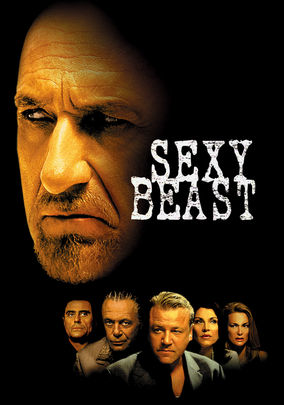
Sexy Beast-2001

Sexy Beast-2001

Director Jonathan Glazer

Starring Ray Winstone, Ben Kingsley

Scott’s Review #286

60020863

Reviewed November 13, 2015

Grade: B+

Sexy Beast is an interesting little indie gem that has garnered quite a cult following, deservedly so, since the year of its release, 2001, and I have recently viewed it for the first time.

In large part, the film belongs to Ben Kingsley, who gives a bravura and frightening performance as a crime lord attempting to convince a retired hitman, now sworn to the straight and narrow, to resurrect his career for one last heist.

The other principal characters are wonderful in their own right, as the film successfully mixes elements of Quentin Tarantino with Ocean’s Eleven- bank heist meets quirkiness, with smart and witty dialogue sprinkled in.

Gary Dove is happily retired and living a life of contentment with his ex-porn-star wife, Deedee, and his best friends, Aitch and Jackie.

Having all been involved in “the biz”, they are long since removed from their respective careers. They now enjoy evening parties of wine and martinis, and days relaxing by the pool in their Spanish villas.

One day, a former criminal associate, Don Logan (Kingsley), who is also a sociopath, arrives to disrupt their peaceful lives and to coordinate a bank heist in London, hoping to lure Gary back into the game.

As Gary and company nervously decline Don Logan’s offer to participate in his sinister plan, a wonderful and important scene unfolds early in the film.

The quartet sits around the dinner table at a swanky Spanish restaurant, anticipating a scrumptious meal.

Jackie reveals that Don has contacted her, and the scene’s tone immediately shifts to dread. All of them both fear and despise Logan.

They agonize over this sudden disruption to their lives, and we, the audience, fear Don Logan before he ever appears on-screen.

What fantastic storytelling.

Kingsley portrays a menacing character and brilliantly so. The character harbors frightening brutality beneath his normally calm demeanor, making the viewer shudder when he appears on-screen.

Lest we forget, Ian McShane also gives a nuanced performance as Teddy Bass, Logan’s right-hand man and wise businessman.

The cat-and-mouse scene towards the end, as Teddy and Gary have an important discussion in a car, is both chilling and integral to the film’s plot.

As Teddy slowly figured out certain events, I was left intensely anticipating his reactions.

The film introduces an intriguing sub-plot involving Don’s long-ago fling with Jackie and subsequent love for her, which adds layers to the plot and the dynamic and tension between Don and Gary.

Upon finishing the film, I loved the foreshadowing it contains. I found myself rewinding the events in my mind, pleasurably so.

From the pool to the young Hispanic kid to the thunderous boulder- all of these elements were crucial to the conclusion and fit like a puzzle.

A dark comedy of sorts, I chuckled after the film at the final reveal involving a double-heart insignia and a pool that gives the villain comeuppance and pleases the viewer.

Having alluded to viewing Sexy Beast (2001) over the years, I am glad that I finally found the time to witness a darkly comical gem that, admittedly, may take repeated viewings to absorb and therefore fully “get”, and I look forward to doing just that.

Oscar Nominations: Best Supporting Actor-Ben Kingsley

Independent Spirit Award Nominations: Best Foreign Film

Amelie-2001

Amelie-2001

Director Jean-Pierre Jeunet

Starring Audrey Tatou

Scott’s Review #74

60022048

Reviewed June 27, 2014

Grade: C+

Amelie (2001) was a major disappointment for me. Critically acclaimed and admired, I did not get this movie at all.

First, the positives: this film is French, which gives it an edge for its beautiful language and French setting.

The cinematography, art direction, and set design are inventive and unique. The movie has a magical, whimsical feel that is appealing.

The story, however, is an enormous drawback.

The central character, a waif-like, sweet waitress, is lonely and feels unloved, yet avoids meeting the man of her dreams by playing a cat-and-mouse game of leaving silly notes and sending him on wild goose chases because she is afraid of happiness. Yet, she does everything she can to ensure others find happiness.

The story did not work for me at all, but I admire the film’s creativity.

Perhaps I should allow myself a second viewing, as this film received much fanfare.

Oscar Nominations: Best Screenplay Written Directly for the Screen/Original Screenplay, Best Foreign Language Film, Best Sound, Best Art Direction, Best Cinematography

Independent Spirit Award Nominations: 1 win-Best Foreign Film (won)