Tag Archives: Robert Loggia

Lost Highway-1997

Lost Highway-1997

Director David Lynch

Starring Bill Pullman, Patricia Arquette

Top 250 Films #211

Scott’s Review #868
Reviewed February 17, 2019

Grade: A-

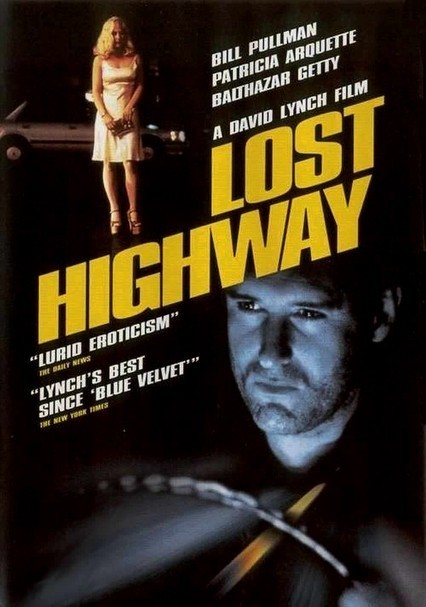
David Lynch, forever known for his odd and mind-boggling productions, released what might be his most bizarre offering, Lost Highway (1997).

Dreamlike and downright hallucinogenic, the film is impossible to dissect and is open to endless interpretation. Characters morph into younger or different versions of themselves or even into different characters entirely making the film best served as an experience not to be over-analyzed.

The most enjoyment comes from the fabulous atmospheric elements.

Lost Highway is set in Los Angeles as we meet saxophonist Fred Madison (Bill Pullman), a nightclub employee who resides with his glamorous wife Renee (Patricia Arquette) somewhere in the Hollywood hills.

The couple begins receiving envelopes containing VHS tapes of footage of their house followed by more invasive tapes of them being filmed while sleeping in their bedroom.

Spooked, they enlist the help of a pair of incompetent detectives.

The events begin to grow more complex with the introduction of a menacing mystery man (Robert Blake) and sequences involving a dismembered Renee, and Fred’s subsequent incarceration for her murder.

Fred suddenly morphs into a young auto mechanic named Pete Dayton (Balthazar Getty), who is released into his parent’s care while being followed by the two detectives.

Pete embarks on an affair with Alice Wakefield, a mirror image of Renee, who is the mistress of powerful Mr. Eddy (Robert Loggia). Pete and Alice plan to escape together leaving their troubled lives behind.

Any attempt to make more sense of the story than outlined above is fruitless as a torrent of questions could be raised. The obvious ones are why does Fred turn into Pete (looking completely different) and why does Renee turn into Alice (looking similar)?

What do random scenes of a burning desert cabin mean? What does the bizarre and hazy lesbian sequence with Marilyn Manson have to do with anything?

Discerning the logic and attempting to unravel the mystery will lead to frustration.

The best advice is to escape into the film and allow it to manifest in the viewer’s mind. The terms “dreamlike” and “hallucinating” are often used to describe films but are perfect adjectives to fit Lost Highway.

The stories do run parallel, so the challenge is not being able to follow each of them, but rather how they connect. The stories also merge circularly with a rhythmic effect and a satisfying ambiance that lured me immeasurably.

My favorite characters are Alice and Pete and this is in large part because of the actors who portray them. Not appearing until the second half Getty and Arquette infuse passion and energy into the roles.

I immediately rooted for them as a couple as their tender and smoldering chemistry was immediately felt. Arquette blazes as a sexy temptress and Getty as the handsome and earnest man submitting to her prowess.

Eagle-eyed viewers may notice comparisons to Russ Meyer’s devilish sexploitation film Supervixens (1975).

The most notable are the dual character representations, the auto mechanic occupation, the locales (more than a few Los Angeles roads seem identical), and various sequences featuring a weightlifter, a gas station drive-up, or other eerily similar scenes.

Whether or not there is a direct correlation between the films is unknown but fun to observe.

The musical score and soundtrack are high points adding both mystique and aggression with the hard rock songs featured. Marilyn Manson’s “I Put a Spell on You”, Rammstein’s “Heirate Mich”, and The Smashing Pumpkins “Eye” are used in important scenes.

The soundtrack release was a huge success on modern rock radio achieving Gold record sales status.

At the time of Lost Highway’s release, the film was not well regarded by critics and dismissed as not making much sense. In the decades following the film has garnered more acclaim and as with a fine wine has aged well. The beautiful cinematic tone, creative design, and images have become more revered over time.

For a perplexing and cerebral experience look no further than Lost Highway (1997), a delicious companion piece to the Lynch masterpiece, Mulholland Drive (2001).
Oliver & Company-1988

Oliver & Company-1988

Director George Scribner

Voices Joey Lawrence, Billy Joel, Cheech Marin

Scott’s Review #818

Reviewed October 8, 2018

Grade: B

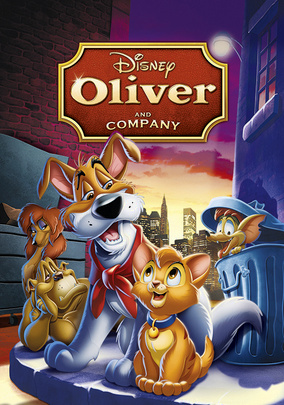
Oliver & Company (1988) is a darling animated film released by Walt Disney Pictures, the twenty-seventh Disney feature film to be produced.

The film is based on the Charles Dickens novel Oliver Twist, but Oliver is now a homeless kitten who joins a gang of dogs, and the setting moves from London to the dangerous streets of New York City- present times.

We meet Oliver (Joey Lawrence) as he huddles with other homeless kittens in a cardboard box, chilly from a driving New York rain. As all of the other kittens are snatched up by adoring animal lovers, Oliver is inexplicably left on his own.

He eventually meets up with Dodger (Billy Joel), a mongrel with street smarts, and the duo steals hot dogs from an abrasive food vendor.

When Dodger swindles Oliver out of his share, the kitten follows the dog to a barge, which turns out to be the hideout of Fagin (Dom DeLuise), a human pickpocket. Fagin houses a gang of assorted dogs as he is bullied by loan shark Sykes.

As Oliver bonds with the miscreants, his life suddenly takes a positive turn when he is rescued from the streets by a kindly, wealthy little girl named Jenny and her bumbling butler, Winston.

Jenny’s parents are on holiday in Europe, leaving her and Winston running the house. Along for the ride is Jenny’s sophisticated and spoiled pet poodle, Georgette (Bette Midler), who takes a dislike to Oliver.

By the 1980s Disney films were hardly the hot commodity they once were, and the small budget is evidence of that. Oliver & Company is not on par with classic, lovely offerings such as Pinocchio (1940), Fantasia (1940), or Dumbo (1941).

The film has a severe and decidedly “1980s quality”, mostly due to the upbeat soundtrack, which decades later makes the film feel rather dated.

Speaking of the soundtrack, the highlight is a treat entitled “Why Should I Worry?”, a tune sung by the ensemble cast and impossible not to hum along to.

The film features an array of famous voices that are perfectly cast. The filmmakers wisely cast plenty of native New Yorkers, which results in a huge measure of authenticity. Brazen voices like Midler’s, Joel’s, and Cheech Marin’s as feisty chihuahua Tito, give credibility to their characters.

The odd romantic pairing of Georgette and Tito, on the surface completely mismatched, gives a good dose of comic relief to the story.

The story written for Oliver & Company is the best part of the entire production.  Anyone familiar with the famous Dickens novel or Oliver! (1968), the most famous of the film incarnations knows how the story will end.

This did not hinder my enjoyment of the animated film though, a compelling and charming experience. Sykes makes a great villain, drawn with a long face and enormous chin, interesting, but not too scary to frighten young children.

One conspicuous omission is the elimination of the important character of Nancy. As fans know, Nancy played a vital role in the original story. Perplexing is the decision not to include her, but perhaps her ultimate death would have made the story too dark, so this can be overlooked.

Surely not the best in the Disney bunch, Oliver & Company (1988) is nonetheless a decent offering sadly overlooked by fans and critics alike.

The film is nearly forgotten and suffers from a dated quality if not for the widespread knowledge of the classic novel. The film is not one of the storied Disney treasures, nor should it be dismissed altogether.

The result is a darling, innocent experience meant for pure enjoyment.

The Believers-1987

The Believers-1987

Director John Schlesinger

Starring Martin Sheen

Scott’s Review #547

Reviewed December 12, 2016

Grade: B

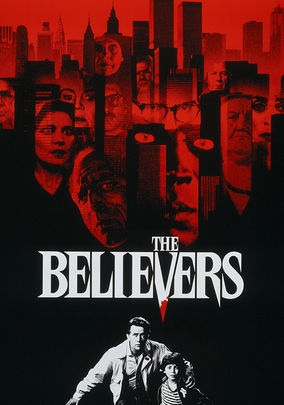
The Believers is a very obscure film that I had never heard of before viewing it. Combined with the fact that it was made in 1987 (not a great time for movies) I was skeptical about this one but was pleasantly surprised.

It has some edge to it, is mysterious, and is set in New York City- always a plus for me.

Martin Sheen- merely a youngster when this was made-plays a police psychologist, Cal Jamison, involved in a voodoo serial killer cult.

He moves from Minnesota to New York City following the death of his wife by electrocution, when her coffeemaker malfunctions.

Is this key to the case or a red herring?

The plot is a bit convoluted as when Cal’s son is targeted by the serial killer and when frazzled police officer, Tom Lopez (Jimmy Smits),  takes center stage.

I did not find Smits all too believable in this role, and the film has a striking 1980s feel to it.

The locales, since it was shot in New York, are fantastic, and the plot contains some scares, surprises, and spooky effects along the way.

I also was very impressed by the satisfying ending.

The Believers (1987) is a very good thriller/horror film.

Scarface-1983

Scarface-1983

Director Brian De Palma

Starring Al Pacino

Scott’s Review #191

60029681

Reviewed November 13, 2014

Grade: B

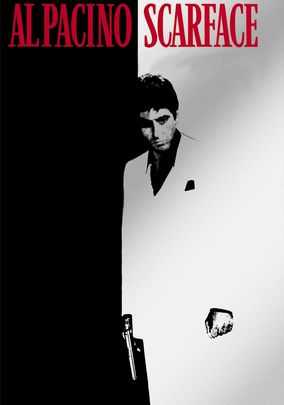
Scarface is a 1983 mob film directed by Brian De Palma and is an atypical film for the acclaimed director of several stylistic thrillers, including Dressed to Kill (1980), Sisters (1973), and Carrie (1976).

The subject matter centers on the mob and the world of drug trafficking, in this case, cocaine, a very popular, powerful drug that ran rampant throughout the 1980s.

Jealousy, greed, and deceit are common themes in Scarface, and the story focuses on a temperamental, cocky, and arrogant Cuban refugee sent to Miami by Fidel Castro a banish criminals from Cuba and ship them to the United States to survive on their own.

Tony Montana, played by Al Pacino, goes from dishwasher to crime lord by selling drugs and building an empire.

He manipulates, tricks, and makes enemies left and right, including stealing his boss’s girlfriend (Michelle Pfeiffer) and eventually falling into a troubled marriage with her.

He loves his financially struggling mother and sister, giving them money and opening a salon for his sister. Still, he also controls them, especially his sister, and is filled with rage whenever she attracts the affection of a potential suitor.

In his mind, nobody is good enough for her, and he is filled with machismo and over-protectiveness. Tony eventually self-destructs due to jealousy, rage, and heavy drug use.

I found the film overall quite compelling, but kept thinking about how much it resembles a lighter version of The Godfather (1972), Part II (1974), and Goodfellas (1990).

I am fully aware that Scarface preceded Goodfellas, but seeing it for the first time in 2014, I had this initial reaction.

I was also kept aware that it must have been influential in the creation of the popular NBC television series Miami Vice, which debuted a year or two after Scarface was released.

Elements such as crime lords, Miami Beach, and drugs mirrored the slick feel of the hit television drama, as well as its look, style, and fashion.

The performance of Al Pacino is problematic- in my view, this is not at all his best work. For starters, his accent keeps going in and out, and I found him slightly unbelievable in the role. A phenomenal actor, something about his performance did not sit well.

The musical score to the film is cheesy- almost shockingly so. Granted, this was 1983, but the silly dance beats that now seem to appear throughout now seem completely dated sporadically.

Parts of Scarface dragged a bit, however, a sudden dramatic scene (the dismembering of Tony’s friend by mobsters and Tony’s meltdown in a fancy restaurant) more than makes up for the occasional lags in drama.

Scarface (1983) is not on the level of other contemporary violent mob films, but fans of the genre will still enjoy it.