Category Archives: Connecticut

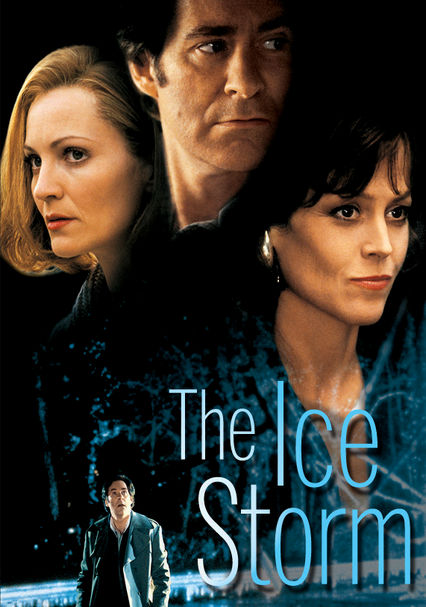
The Ice Storm-1997

The Ice Storm-1997

Director Ang Lee

Starring Kevin Kline, Joan Allen, Sigourney Weaver

Top 250 Films #60

Scott’s Review #850
Reviewed January 1, 2019

Grade: A

The Ice Storm (1997) is a brilliant film directed by Ang Lee of Crouching Tiger, Hidden Dragon (2000) and Brokeback Mountain (2005) fame.

The film is based on a 1994 novel of the same name, written by Rick Moody.

The brilliance lies in the rich way the characters are written, with coldness, repression, and loneliness being central themes.

The film is astonishingly genuine and fresh with an authenticity rarely felt so wholly in adult family dramas.

The period is 1973, and the events take place in New Canaan, Connecticut, a wealthy suburban town.

Two dysfunctional families, the Hoods and the Carvers, co-exist during the Thanksgiving weekend as each deals with repression and escapism amid alcohol and sexual experimentation.

Both the adults’ and the children’s lives are prominently featured in the story. Ben and Elena Hood (Kevin Kline and Joan Allen) and Jim and Janey Carver (Jamey Sheridan and Sigourney Weaver) head the families.

While Ben and Janey carry on a secret affair, Elena lives an unfulfilled existence, craving more from life but not knowing how to get more and reduced to consulting self-help books for support.

Wendy Hood (Christina Ricci) enjoys sexual escapades with multiple boys. At the same time,e Paul Hood (Tobey Maguire), home from boarding school, takes the train into New York City to see a rich classmate, Libbets Casey (Katie Holmes).

The most wonderful aspect of the film is that the story is a slice of life, but with clever nuances. Since the families are rich, why should the viewer feel sympathy for any of the characters, let alone root for them?

Ben and Janey lounge in bed after sex; he is chatty about nonsense, and she is bored and depressed.

During a holiday neighborhood gathering, a kinky “key party” develops, where participants swap spouses for the night, resulting in titillation and excitement.

The bold and controversial writing is exactly why The Ice Storm scores so many points. The characters are cold and frozen, unlikable and selfish, but might that be the point?

All seem unhappy and tired of their dull, small-town existence, craving whatever little excitement they can muster.

Written similarly to American Beauty (1999) the films could be watched in tandem for evenings of Gothic and macabre story-telling.

My favorite character is Elena, as she has the most sensibility. She is lonely and ignored by her husband, dutifully going about her day with little emotion.

She feels temporarily excited when she develops a romantic crush on a neighbor, only to quickly realize the most she can ever hope for with this man is a fling.

Her character is fleshed out as she yearns for more than she has. The other characters are largely selfish and pampered.

The film’s conclusion, however, is monumental as it changes the perceptions of some characters and softens them. A tragic death brings characters together in a powerful way.

Again, the writing in The Ice Storm is the most interesting and compelling appeal.

The acting among the entire cast is professional, heartfelt, and brazen, but the written dialogue and interesting situations make this film rise above others of a similar genre.

Lee’s direction is brilliant, as the blustery winter atmosphere is central to the story in more ways than we might initially think. The frozen power lines and slick, windy country roads evoke a cozy feeling, as if harboring family secrets and scandals.

The bitter yet beautiful ambiance is a soothing and compelling aspect of the film, and Lee portrays it with precision.

As an independent drama, The Ice Storm has a low budget and features big-name stars. The film could easily be performed as a play, but its cinematic elements and fantastic writing make it a memorable, storied piece of filmmaking.

Ang Lee frequently incorporates astounding character development in his works, and The Ice Storm (1997) has all the qualities of a masterpiece.
Far From Heaven-2002

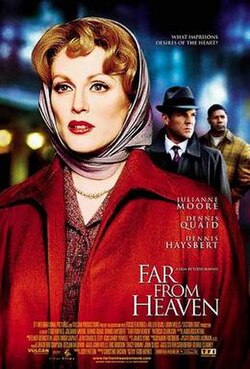
Far From Heaven-2002

Director Todd Haynes

Starring Julianne Moore, Dennis Haysbert, Dennis Quaid

Top 250 Films #127

Scott’s Review #332

Reviewed January 8, 2016

Grade: A

Far From Heaven (2002) is a gorgeous film, set in 1950’s upper-class, sophisticated Connecticut, that tackles not one but two separate social issues in a wonderfully crafted story.

An interracial couple fraught with discrimination, and a homosexual husband hiding his secret lifestyle, encompass this amazing film by acclaimed director Todd Haynes.

In the years to follow, Haynes would also direct masterpieces in a similar period (and story) to Carol (2015).

For starters, the cinematography and art direction are breathtaking- the beautiful and colorful small town in Connecticut, on the surface, prim and proper, is oozing with secrets and scandal just waiting to bubble to the surface.

An aerial view of the town allows the viewer to see it in a sweeping motion, perfectly carved.

Far From Heaven contains many similarities to All That Heaven Allows, made in 1955, and also focuses on a great scandal in a small, seemingly idyllic New England town.

Cathy Whitaker (Julianne Moore) seems to have everything perfectly styled and kept at home in affluent Connecticut: a successful husband, Frank (Dennis Quaid), an advertising executive, beauty, and a neighborhood filled with friends.

One night, when Frank is working late, Cathy surprises him with dinner at the office, only to be surprised herself by catching Frank passionately kissing another man.

In an awkward scene, Frank admits to Cathy that he needs conversion therapy, but instead turns to alcohol and continues to see men secretly.

Devastated, Cathy befriends her gardener, Raymond Deagan (Haysburt), a handsome black man, and slowly begins a relationship with him.

Needless to say, this causes gossip and scandal amongst the townspeople.

Far From Heaven is fantastic storytelling, weaving together, in essence, two main social stories.

Frank questions his sexuality, is afraid to admit he is gay, and risks his reputation and career. Undoubtedly, he is a tormented individual, and we see him slowly come to terms with his sexuality.

Haynes, fantastic at crafting a worthy story, carves a similar tale in 2015’s Carol, only she is a woman confident about her sexuality, but hiding it from society.

Since the time in both films is the 1950s, the sexual revolution has not occurred, let alone anything gay-related.

The central story, though, belongs to Cathy, and Julianne Moore portrays her to perfection. I would argue that Cathy is Moore’s best role, along with Amber Waves from Boogie Nights.

Hurt and betrayed by her husband, she suddenly is filled with new and dangerous emotions- falling in love with a black man in a not very open-minded time.

Moore and Haysbert have fantastic chemistry from their very first scene together.

I love how Haynes showcases the perfection of the town- the lawns are perfectly mowed, the flower beds flawless, and everyone appears cheerful and colorful.

But when something in their little town becomes amiss (in this case, Cathy going against the grain), the fangs come out, and the animals bear their teeth.

A wonderful scene showcases Cathy and Raymond slow-dancing in a black-only bar. They sway as one, and the black patrons accept Cathy.

Raymond (and his daughter) are not treated the same way by the white folks of the town once they catch wind of the shenanigans going on between the interracial couple.

Far From Heaven (2002) is a beautiful film, from the way it looks and is shot to the powerful performances throughout.

Moore may be the star and the central character of the film, but Quaid and Haysbert certainly deserve their due.

They each give layered performances as wounded and tortured men, and the conclusion of the film- perceived as open-ended- is also not a happily ever after climax.

Oscar Nominations: Best Actress-Julianne Moore, Best Original Screenplay, Best Original Score, Best Cinematography

Independent Spirit Award Nominations: 5 wins-Best Feature (won), Best Director-Todd Haynes (won), Best Female Lead-Julianne Moore (won), Best Supporting Male-Dennis Quaid (won), Best Cinematography (won)

Christmas in Connecticut-1945

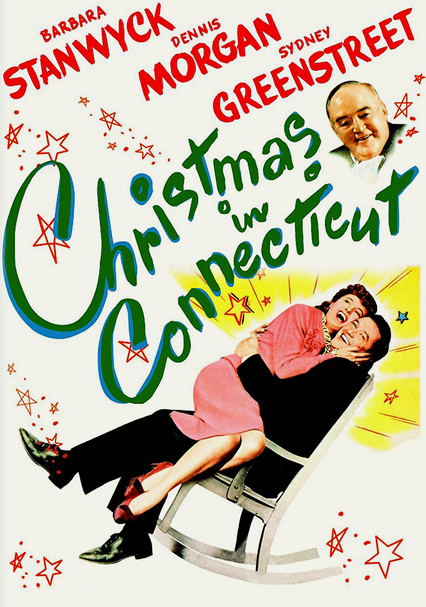
Christmas in Connecticut-1945

Director Peter Godfrey

Starring Barbara Stanwyck, Dennis Morgan

Scott’s Review #1,211

Reviewed December 24, 2021

Grade: B+

Christmas in Connecticut (1945) is a flavorful holiday romantic yarn that will please those looking for a snowy, laugh-out-loud experience with zany moments and silly situations, but that works nonetheless.

Any foodie craving a film that dazzles with showcasing excellent meals will enjoy this treat.

The film also oozes New York’s sophistication and New England’s atmosphere, creating a cinematic balance between city and country.

Despite the colorful cover art, Christmas in Connecticut is shot in black and white, which is better.

The key selling point is the instant chemistry between the leads, Barbara Stanwyck and Dennis Morgan, who carry the film.

Stanwyck had just made the vastly different Double Indemnity (1944), and Morgan was a singer, allowing him to perform a memorable song.

Together, they shine.

Actors like Sydney Greenstreet, S.Z. Sakall and Una O’Connor provide perfect comic timing in their roles, allowing the leads to take the stage in the romance department.

Not to be missed is the timely release of the film in 1945, the year that World War II ended, and a necessary time for a cheery film like Christmas in Connecticut. The main character is an Army veteran who begins the film injured in a vet hospital, but the film opts not to make it a dreary, real-life experience.

The action starts in the Atlantic Ocean, where war hero Jefferson Jones (Dennis Morgan) is stranded on a raft with his mate. He imagines the raft a clean dining room table brimming with delicious food and his mate his waiter.

Awakened in a hospital, he tricks his nurse, Mary Lee (Joyce Compton), into becoming his fiancée so he can be fed steak dinners.

While recovering, he grows familiar with the “Diary of a Housewife” column written by Elizabeth Lane (Barbara Stanwyck), the Martha Stewart of the 1940s. She provides cooking advice for her readers.

Mary arranges with Elizabeth’s publisher, Alexander Yardley (Greenstreet), for Jeff to spend the holiday at Elizabeth’s lavish Connecticut farm with her husband and child.

However, the column is a sham, so Elizabeth arranges to marry her friend, John Sloan (Reginald Gardiner), to make it appear that she is the domestic she claims to be in her columns.

How she can write popular columns that dole out cooking and housekeeping advice without knowing anything about either subject is ludicrous but part of the fun.

When she meets Jeff, they fall madly in love at first sight.

The film is one madhouse situation after another, and while Elizabeth and Jeff will undoubtedly live happily ever after, the main appeal is how they will reach that point.

From the first scene, when they meet at the Connecticut farm, there is instant chemistry between Stanwyck and Morgan that lasts the entire film.

Their gazes and glances made me root for them.

The fun is the situations the pair is put through, mostly Elizabeth. As she pretends she has a baby, she borrows a neighbor’s baby and hastily names him Robert, unaware that the baby is a girl. When Jeff, who is more domestic than Elizabeth, changes the baby’s diaper, he is in for a shock.

That Elizabeth knows nothing about cooking or a baby is the hilarity of Christmas in Connecticut. She awkwardly tries to flip a flapjack or handle a cow or other situation comedy moments that make the film as good as it is.

Stanwyck is fantastic as a woman on the verge of being found out.

Handsome Dennis Morgan portrays a good American man who will make an even better husband, which is a large part of his appeal. We long for Elizabeth and Jeff to be together.

A bevy of food scenes and references appear. Besides the flapjacks and steak sequences, steaming plates of good food and drink appear in almost every scene.

Elizabeth’s uncle/chef and housekeeper, played by Sakall and O’Connor, respectively, light up the screen in comical scenes. I hoped the pair would find their romance together, but this never came to fruition.

An endearing seasonal nugget, Christmas in Connecticut (1945), will please fans of good-natured romance tinged with physical comedy. It has a heart and a pleasant veneer showcasing hapless misunderstandings that lead to the inevitable and satisfying conclusion.