Tag Archives: Lloyd Nolan

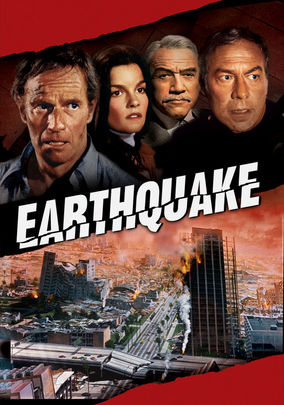
Earthquake-1974

Earthquake-1974

Director Mark Robson

Starring Charlton Heston, Ava Gardner

Top 250 Films #144

Scott’s Review #407
60030175

Reviewed June 2, 2016

Grade: B+

One of the several disaster films to populate film screens in the early to mid-1970s, Earthquake is one of the “main four” blockbusters (The Poseidon Adventure, The Towering Inferno, and Airport being the others), that still resonate with viewers in modern times and are nostalgic to watch.

One might argue that the aforementioned few largely influenced Earthquake since it was the last of the group to be filmed.

Certainly, the influence is apparent.

Earthquake is a classic, traditional, disaster film containing many stock characters (or types) and is an ensemble piece- as disaster films always are- frequently containing stars of yesteryear attempting exposure in the modern cinema.

The gender roles in Earthquake are quite mainstream for the day as the females are all clearly  “damsels in distress” types and the men are portrayed as the heroes.

The action begins as we witness a Los Angeles-based middle-aged couple (the central couple if you will) engaging in a dispute.

Charlton Heston and Ava Gardner play Stewart and Remy Graff, an affluent couple, a former football star, she a boozy socialite. Her father is the wealthy Sam Royce, played by Lorne Greene. Stewart is carrying on an affair with a young actress, Denise Marshall, creating a soap opera-style romantic triangle, adding drama to the film.

We meet other characters who round out the character’s stories- LAPD Sgt. Slade (George Kennedy) shares a flirtation with Rosa (Victoria Principal), while drunkard Walter Matthau and evil kineval character Richard Roundtree provide comic relief.

These stories are merely filler until the inevitable earthquake arrives to ‘shake’ things up.

The earthquake is the main character in the film just like the tidal wave, the fire, and the airline peril are in the other same genre films.

The character’s trivial relationships soon take a back seat to the action as the earthquake shatters the city in subsequent onsets and aftershocks, destroying buildings and resulting in many deaths.

The very lengthy main earthquake sequence is second to none and hovers around the twenty-minute mark. We see many characters in peril. The scene goes on and on but is hardly redundant.

The scene is masterful and well done. The effects, cinematography, and visuals alone hold up well today and must have been breathtaking circa 1974.

In one particularly thrilling scene, a group of office workers on the thirtieth floor of a skyscraper desperately try to scramble to the elevator as the building shakes and shimmies. One businessman shoves a secretary out of the way and selfishly immerses himself in the crowded elevator as others desperately pound on the elevator door to escape.

Things do not end well for the folks on the elevator as bolts loosen and the car crashes to the ground. An animated blood splat fills the screen in a lighthearted, comical way.

The film wisely does not take itself too seriously.

As fantastic as the destruction sequence is, Earthquake is not a film without a few flaws, mostly from a character standpoint.

Unbelievable is Heston playing Greene’s son-in-law and Gardner are assumed to be young enough to be his daughter- they appear to be around the same age.

A strange character, Jody, a store clerk, suddenly dresses as a soldier, wearing a wig, following the destruction and, assumed to be gay by thugs, is teased, which prompts him to shoot them with a machine gun. He subsequently becomes obsessed with and nearly rapes Rosa.

The sub-plot seems uneven and very unnecessary.

With spectacular special effects, Earthquake is a must-see disaster film with a slightly downcast, hopeless tone. It does its job well- it entertains, thrills, and features an all-star cast of former Hollywood elite and a few rising stars.

A fun time will be had.

Oscar Nominations: 1 win-Best Sound (won), Best Art Direction, Best Cinematography, Best Film Editing

Airport-1970

Airport-1970

Director George Seaton

Starring Burt Lancaster, Dean Martin, Helen Hayes

Scott’s Review #1,059

Reviewed September 2, 2020

Grade: A

The film that triggered the popular disaster genre that captivated much of 1970s cinema, Airport (1970), led the pack in innovation and entertained the masses with a large cast of A-list Hollywood stars suffering peril.

What fun!

The blueprint continued with The Poseidon Adventure (1972), Earthquake (1974), and The Towering Inferno (1974). Interestingly, the Airport contains little death, unlike the others who systematically killed off cast members in a reverse whodunit, more like “who gets it”.

It holds up quite well.

Airport is pure bliss for me. An enormous fan of the disaster epic, to begin with, this one satisfies my obsessions with airports and airplanes, adding late 1960s sophistication and style, and a healthy dose of subplots.

From a romantic triangle to mental illness to an elderly stowaway named Ada (Helen Hayes), the storylines mesh so that there’s never a dull moment. Events unfold over a twenty-four-hour period, with a busy, snowy Chicago airport as the backdrop.

The cinematic spectacle was based on a little-known novel of the same name by Arthur Hailey, adapted into a screenplay by George Seaton, who also directed the flick. I love it when a director also writes the dialogue because a better experience often prevails.

Seaton directed Miracle on 34th Street (1947) and a slew of other films, so he knows a thing or two about pulling the heartstrings while offering adventure.

The film was rated “G,” so it’s a family-friendly affair.

A cold and snowy winter night in Chicago results in flight delays and a 707 plane getting stuck on the runway in snow and mud. As crews dig to free the plane, Airport manager Mel Bakersfield (Burt Lancaster) is forced to work overtime.

His furious wife Cindy (Dana Wynter) demands a divorce. He’s in love with Tanya anyway, a pretty customer relations agent for the airline, Trans Global Airlines, a clever play on Trans World Airlines.

Other characters emerge, such as a high-spirited chief mechanic (George Kennedy) and married man Vernon, a TGA captain having an affair with stewardess Gwen (Jacqueline Bisset), who is pregnant with his child.

The heavy is a mentally disturbed man named D.O. Guerrero (Van Heflin) who is so down on his luck that he desperately crafts a handmade bomb and takes out an insurance policy that his struggling wife Inez (Maureen Stapleton) will receive upon his death.

He boards a plane to Rome with most of the other characters, intent on detonating the bomb, killing himself, and leaving Inez with some financial relief. When she catches on, she hurries to the airport, desperate to stop the flight from departing. Of course, things don’t go so well.

The Guerreros are my favorite characters. D.O. could have easily been written as a villain, one-note, and dastardly, but he isn’t. He is a sympathetic character, pained and wounded; his troubles are the result of war, and he oozes compassion.

Stapleton is tremendous as Inez, the suffering wife who loves her husband and desperately wants them to have a nice life. The actress gives a gut-wrenching performance that should have won her the Oscar.

Instead, it went to Hayes’s comic talents.

The main appeal of these stories is that the audience slowly gets to know and falls in love with the characters. They become like good friends.

The pacing is so good that the real action takes place only in the last forty-five minutes of the film.

Strong characters and rich stories are offered as the buildup, and we know that peril is eventually coming, and indeed it does.

The special effects and the airplane set are fantastic for 1970. The luxury airline, with its plush seats and catered meals, is on display, and the entire length of the plane, including the cockpit, is used extensively.

Characters walk up and down the aisles frequently, so the illusion is a vast and stylish airliner, even though a small set was probably used.

The stewardesses and pilots offer a glimpse of what a luxury it used to be to fly in style without the annoyances of long security lines, check-ins, and constant hassles.

Hell, D.O. casually walks on the plane with a bomb, and Ada gets on without a second glance when she claims to be giving a passenger their dropped wallet!

Airport (1970) set the tone for other similar films to follow and successfully mixes sudsy dramatic stories of its characters’ lives with the thrills and plights of those same characters in danger.

I don’t consider it the fluff that many others do, but a satisfying, well-constructed film that still holds up well.

Three sequels followed the film and were hilariously spoofed by the comedy Airplane! (1980).

It bears repeated viewings.

Oscar Nominations: 1 win-Best Picture, Best Supporting Actress-Helen Hayes (won), Maureen Stapleton, Best Screenplay Based on Material from Another Medium, Best Original Score, Best Sound, Best Costume Design, Best Art Direction, Best Cinematography, Best Film Editing

Peyton Place-1957

Peyton Place-1957

Director Mark Robson

Starring Lana Turner, Lee Phillips

Scott’s Review #6

60010779

Reviewed June 17, 2014

Grade: B+

Peyton Place (1957) is a scandalous soap opera but made well.

The sleepy, seemingly wholesome, quiet New England town is captured well, but secrets lie within its white picket fences (don’t they always).

Topics such as adultery, rape, murder, and suicide are tackled.

I’m not entirely sure I agree with the slew of Oscar nominations it received that year (1957), but Hope Lange was the standout actor for me.

It reminded me of the syrupy prime-time soaps of the 1980s, but better written and acted than they were.

This is not intended to demean the film, as it is interesting, engaging, and dramatic, with good characterization. However, when analyzed, it is fluff—just good fluff.

Oscar Nominations: Best Motion Picture, Best Director-Mark Robson, Best Actress-Lana Turner, Best Supporting Actor-Arthur Kennedy, Russ Tamblyn, Best Supporting Actress-Hope Lange, Diane Varsi, Best Screenplay Based on Material from Another Medium, Best Cinematography