Category Archives: New Years Eve

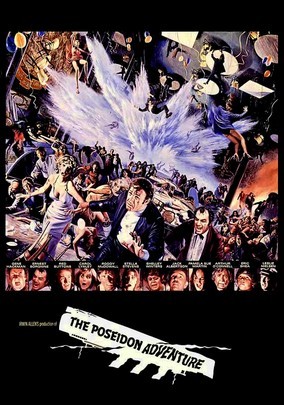
The Poseidon Adventure-1972

The Poseidon Adventure-1972

Director Ronald Neame

Starring Gene Hackman, Ernest Borgnine, Shelley Winters

Top 250 Films #30

Scott’s Review #214

867891

Reviewed January 17, 2015

Grade: A

The disaster genre, primarily represented in film during the 1970s, includes some of my personal favorites, and The Poseidon Adventure (1972) is easily at the top of the list.

Set on a lavish ocean liner, the SS Poseidon, on New Year’s Eve, the doomed ship falls victim to a powerful tsunami while sailing from New York to Athens on its final voyage, causing it to topple over and leaving a handful of survivors to meander through the bowels of the ship in an attempt to find a way out and be rescued.

They are led by a stubborn preacher, played by Gene Hackman.

The appeal of The Poseidon Adventure is, of course, watching the cast of characters in peril and guessing which ones will meet their fates and how- think of a slasher film without the horror component.

Featuring an ensemble cast of Hollywood celebs of the day, the characters are introduced to the audience before the tidal wave erupts, so we care for them immensely.

There is the former hooker with the heart of gold married to a gruff cop (Stella Stevens and Ernest Borgnine as Mike and Linda Rogo).

Then there is the sweet-natured older couple on the cruise to see their grandchild (Shelley Winters and Jack Albertson as Manny and Belle Rosen).

Pamela Sue Martin plays the teen girl, Susan, who falls madly in love with the preacher, Reverend Scott. Robin and her younger brother are traveling to see their parents, who await their arrival.

Roddy McDowall plays a waiter named Acres.

Lastly, Red Buttons plays James Martin, a health-conscious bachelor, and Carol Lynley plays shy singer Nonnie.

Reverend Scott is the moral focal point of the film and questions god several times throughout.

The sets are extraordinary- the colorful Christmas tree in the grand dining room is fantastic. The entire New Year’s Eve party scene is my favorite- it is festive, extravagant, and mixed in with a scene where the ominous tsunami is rapidly approaching.

The festive celebration quickly turns into confusion as the sirens sound, and finally into panic as furniture begins to fly.

Visually, this scene is the most intricate- the ship turns upside down after the crash, thus giving the illusion that the bottom of the ship is the top.

Tricky.

From this point on, all of the sets to follow are intended to be upside down- a crafty and effective style, but none more than the dining room scene.

A victim toppling and crashing into a giant clock is a memorable scene.

As the group of survivors haggardly makes their way throughout the ship, they encounter underwater explosions, dead bodies, rushing water, and disputes, mainly between Reverend Scott and Rogo, as to how to proceed to safety.

One by one a handful of the group meets their fates in gruesome fashion- falling into a fire, a heart attack, and falling to one’s death.

Shelley Winters is the film’s comic relief with her humorous quips about her weight, and her death scene brings me to tears every time I watch it.

A heavyset older woman who, at one time, was a dynamite high school swimmer, she attempts to help the group by holding her breath and swimming underneath the engine room, which is blocked- she does inevitably save the Reverend Scott’s life but succumbs to a heart attack shortly thereafter.

It is a powerful, heartbreaking scene.

The film is a great adventure. What makes The Poseidon Adventure (1972) so timeless and continues to bring so much pleasure? Certainly not high-brow nor high art, but it does not need to be.

It is meant to be enjoyed for what it is- a thrilling, fun, entertaining ride.

Oscar Nominations: 1 win-Best Supporting Actress-Shelley Winters, Best Song Original for the Picture-“The Morning After” (won), Best Original Dramatic Score, Best Costume Design, Best Sound, Best Art Direction, Best Cinematography, Best Film Editing

Terror Train-1980

Terror Train-1980

Director Roger Spottiswoode

Starring Ben Johnson, Jamie Lee Curtis, Hart Bochner

Scott’s Review #1,098

Reviewed January 5, 2021

Grade: B+

Terror Train (1980) is a creepy slasher film released during the heyday of the genre. It embraces a familiar formula of teenage party victims.

Still, it adds a helping of red herrings/whodunit twists, which catapult it above mediocrity and will keep audiences engaged until the finale.

Helpful is the casting of the “scream queen” of the time, Jamie Lee Curtis, who is the main attraction and the “final girl”. Her casting adds credibility and star power.

The film is a puzzle, with a difficult-to-predict ending and many twists and turns along the way—a perfect watch for a snowy New Year’s Eve, when it is set.

Events begin three years before the happenings in the main story, naturally, at a New Year’s Eve fraternity party, inhabited by a group of energetic pre-medical students looking for a good time.

Alana Maxwell (Curtis) is coaxed into participating in a cruel joke meant to lure an insecure pledge, Kenny (Derek MacKinnon), to a bedroom with the promise of sex.

Instead of becoming a light-hearted prank the group later laughs about, the joke spirals Kenny into insanity and a long stay at a mental institution.

Reunited for another party, this time on a train, bitterly cold and snowy New Year’s Eve is again the setting. The same group, now forgetting all about the prank, unwittingly boards the train for a night of booze, laughs, and partying.

This time, a costume party is on the menu, which is convenient for a disguised killer intending to spend the night murdering the partygoers. He first kills Ed (Howard Busgang) on the tracks and takes his Groucho Marx costume to confuse everyone else.

A mysterious magician and assistant are aboard to provide entertainment.

The film belongs to Curtis since the idea was to create “Halloween on a Train”.

While Halloween (1978) is superior and scarier, Terror Train is cleverer. Many a red herring appears throughout the story, so that a deduction about the killer’s identity can quickly be called into question.

Curtis, a popular star with the younger set in 1980, inevitably led fans to the movie theaters to see Terror Train. The comparisons to Halloween are apt- both feature disguises, masks, costumes, and mayhem.

The casting of Ben Johnson as Carne, the train conductor, an actor making films since the 1930s, and who won an Oscar for The Last Picture Show in 1971, provides the patriarchal character as Donald Pleasance did in Halloween.

Despite the vulnerability of being on a train speeding through the middle of nowhere on a frigid winter night with a killer on board, having a father figure and a voice of reason is reassuring. And the casting agents were lucky to get him.

The vibe in Terror Train is great, and the setting works wonderfully. In an ode to Hitchcock, the train is an effective setting for suspense or murder. The victims have few places to hide and a long tube with dark seats and hidden compartments, while they disappear one by one, which is perfect horror fodder.

The gripe is that the killer’s identity is painfully obvious. Spoiler alert- it’s who you think it is!

After the film, I was left feeling tricked and bamboozled. But, just like the mysterious magician, all is not what it seems.

Newcomer director, Roger Spottiswood, casts real-life magician, David Copperfield, for good effect, and the star does a fairly good job of adding tension and looking sinister. When the big revelation is upon us, a cool gender-bender treat awaits, but the killer is predictable, nonetheless.

A quick nod to the inclusion of some diversity, few and far between in the 1980 slasher fare. One of the fraternity brothers is a black male. The character is handsome and arrogant, and he gets his comeuppance quickly, but the addition is worth noting.

Terror Train (1980) is an atmospheric and surprisingly good holiday-themed slasher film that flies under the radar. Snuggle under a warm blanket, open the midnight champagne, and enjoy the claustrophobic, frightening post-Christmas trimmings.

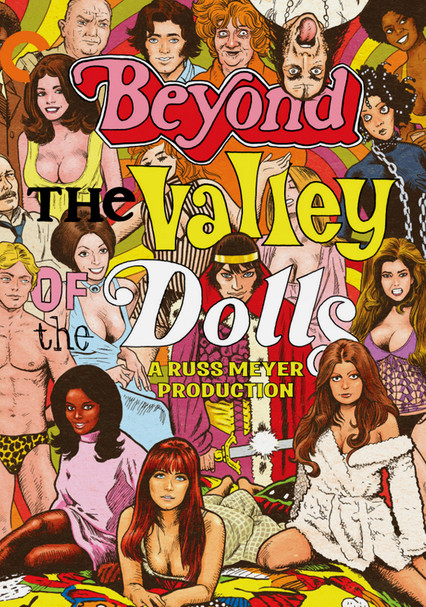
Beyond the Valley of the Dolls-1970

Beyond the Valley of the Dolls-1970

Director Russ Meyer

Starring Dolly Martin, Cynthia Myers

Scott’s Review #976

Reviewed January 2, 2020

Grade: B+

Beyond the Valley of the Dolls (1970) was initially intended as a sequel to the 1967 film Valley of the Dolls but was revised as a parody of the commercially successful but critically panned original.

This was not altogether a smart move, since it would have been interesting to see a coherent follow-up exploring the lives of the original characters, rather than a similarly named film with little to do with the first.

Instead, the film plays like frenetic mayhem, with jarring editing, a peculiar character switch and storyline, and completely over-the-top vulgarity. Still, the film is fun and extravagant, but hardly on par with Valley of the Dolls.

I would not even recommend watching them in sequence- the confusion would only be doubled.

To call Valley of the Dolls a “serious” film is laughable, but compared to Beyond the Valley of the Dolls, it is.

Director Russ Meyer is known for successful sexploitation films that feature campy humor, satire, and large-breasted women, such as Faster, Pussycat! Kill! Kill! (1965) and Supervixens (1975) are at the helm to create the bombastic and eye-dropping shenanigans.

Famous film critic Roger Ebert co-wrote the screenplay along with Meyer.

Three young women, MacNamara (Dolly Martin), Casey Anderson (Cynthia Myers), and “Pet” Danforth (Marcia McBroom), front a struggling rock band, The Kelly Affair, managed by Harris Allsworth (David Gurian), Kelly’s boyfriend.

The four travel to Los Angeles to seek Kelly’s estranged aunt, Susan Lake, an heiress to a family fortune. Fans of Valley of the Dolls will need to know that Susan is supposed to be Anne Welles, the film’s central character.

A battle ensues as Susan graciously offers to give some of her fortunes to Kelly, but Susan’s unsavory financial adviser, Porter Hall (Duncan McLeod) will have none of it. Amid the drama, Kelly meets a gigolo who feuds with Harris, while Harris is pursued by a sexually aggressive porn star named Ashley St. Ives (Edy Williams).

Events all take place against the backdrop of the nightly Los Angeles party.

While the plot is not the central aspect of Beyond the Valley of the Dolls, the renaming of Susan from Anne, the same character, and the recasting of Barbara Parkins as Phyllis Davis make things confusing.

Adding to this point, Parkins was initially cast as Anne/Susan but was abruptly fired from the production. This makes any comparisons to Valley of the Dolls other than the title alone, unwise and a waste of time.

The lively revelry is the fun and the beauty of Beyond the Valley of the Dolls.

The film has a calm, groovy vibe and epitomizes the late 1960s psychedelic, colorful aura. The free love and expressionism make the experience a wild yet liberal-minded one, which is suitable for a film like this.

The intention is to entertain and to express women’s confidence. While the female characters are exploited, they are also driven and comfortable in their own skin.

A fun fact, and cause for musing, is that as wild and exploitative to women (and men) as Beyond the Valley of the Dolls is, Ebert was primarily responsible for penning the script.

In the 1980s, the critic, whom I am a cherished fan of, panned many of the 1980s horror/slasher flicks, especially Friday the 13th (1980), for exploiting women, but he had no issue exploiting them years earlier.

Makes one ponder the hypocrisy of his comments.

Beyond the Valley of the Dolls (1970) is daring and never plays it safe. With a hip edge and plenty ahead of its time in same-sex character representation, the film is unique and brimming with hilarious, bizarre antics.

The plot is rather silly and goofy, and unsurprisingly panned by critics, but it has become a cult classic, and with repeated viewings, it has grown on me more and more.

The production is meant to be watched late at night for better appreciation.