Tag Archives: Henry Wilcoxon

Sunset Boulevard-1950

Sunset Boulevard-1950

Director Billy Wilder

Starring Gloria Swanson, William Holden

Top 250 Films #101

Scott’s Review #330
60010956

Reviewed January 8, 2016

Grade: A

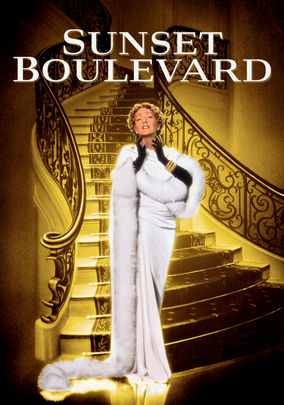
I adore films about Hollywood (good ones), and Sunset Boulevard (1950) is an absolute treasure.

Directed by classic film director Billy Wilder, the film is a film noir about a legendary silent film star, Norma Desmond, who struggles to cope with the advent of sound movies and the instability of her life, plagued by mental illness as her career has long since ended.

Handsome Joe innocently stumbles upon her mansion, forming an eerie relationship that ends in tragedy.

Sunset Boulevard is a famous street in Los Angeles and Beverly Hills, California. It is immediately featured in the film as Joe Gillis, played by William Holden, drives down the street, an unsuccessful screenwriter whose car is about to be repossessed.

Joe narrates the film, and we see a man lying dead in a vast swimming pool. Ironically, this is the film’s ending, and Wilder works backward in an interesting way, so the audience knows tragedy will eventually ensue.

To avoid being chased by men, Joe pulls into a driveway and hides his car in a garage near a vast yet run-down mansion. He is mistaken for a coffin salesman and meets the infamous and creepy Norma and her servant, Max.

The coffin is for Norma’s deceased pet chimpanzee. Intrigued and broke, Joe hatches a plot to rewrite Norma’s terrible screenplay- and make some money from the aging Hollywood star.

Norma needs companionship. The two, along with Max, embark on a complicated relationship marked by jealousy, passion, and rage.

The black-and-white style works exceptionally well in the film, and the lighting creates a sense of intrigue and film noir mystique.

Sunset Boulevard combines noir with a rich character study of Norma, and we feel her pain and isolation as she is cast aside due to the times.

I love how Wilder focuses on the gloomy nature of Norma’s vast mansion—especially when she throws a New Year’s Eve party, isolated with just her, Joe, and a hired band—and intersperses it with a lively Hollywood party filled with young, energetic, up-and-coming talent.

The scenes blend seamlessly and effectively showcase the two different worlds and perspectives.

Sunset Boulevard is a brilliant depiction of old Hollywood at its best (and worst). A study in ambition, struggle, high hopes (Joe), and faded success and dreams shattered in reality, where delusion is the only defense (Norma).

Oscar Nominations: 3 wins-Best Motion Picture, Best Director-Billy Wilder, Best Actor-William Holden, Best Actress-Gloria Swanson, Best Supporting Actor-Erich von Stroheim, Best Supporting Actress-Nancy Olson, Best Story and Screenplay (won), Best Scoring of a Dramatic or Comedy Picture (won), Best Art Direction-Set Decoration, Black-and-White (won), Best Cinematography, Black-and-White, Best Film Editing

Golden Globe Nominations: 4 wins-Best Picture (won), Best Director-Motion Picture-Billy Wilder (won), Best Performance by an Actress in a Motion Picture-Drama-Gloria Swanson (won), Best Performance by a Supporting Actor in any Motion Picture-Erich von Stroheim, Best Screenplay-Motion Picture, Best Original Score-Motion Picture (won), Best Cinematography-Black and White
Mrs. Miniver-1942

Mrs. Miniver-1942

Director William Wyler

Starring Greer Garson, Walter Pidgeon

Scott’s Review #841

Reviewed December 13, 2018

Grade: A-

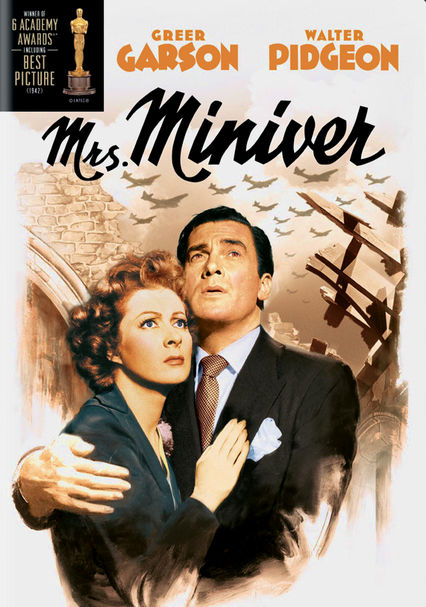
Released in 1942 amid the horrific World War II, Mrs. Miniver (1942) was a smash hit, winning over audiences concerned with the troubled and uncertain times.

Decades later, the film does not age as well as other similarly themed films, but still entertains and tells a good story with an important theme.

The film is nestled in the war drama genre with romance. The film won numerous Oscars the year of its release, including Best Picture and star Greer Garson won for Best Actress.

The story is told from the perspective of an affluent British family and the struggles they face to keep things together during growing peril. The focus primarily remains on an unassuming housewife, Kay Miniver (Garson).

The supporting players do much to flesh out the film with fantastic performances by Walter Pidgeon, Teresa Wright, and Henry Travers as Clem Miniver, Carol Beldon, and Mr. Ballard, respectively.

The direction by William Wyler is astounding and adds to the perfectly crafted ambiance and homey details.

The family lives a comfortable life in a whimsical village outside of London. Quite idealized, they own a large garden and a motorboat on the River Thames.

Along with Kay and Clem, their three children of varying ages and their housekeeper and cook reside with them. Besides the parents, the central couple is son Vin (Richard Ney) and the prominent Carol (Wright); the pair initially disagree on politics but finally fall madly in love.

As the soap opera-style family situations continue, the war grows closer and closer to their house.

As Mrs. Miniver progresses, Vin enlists in the army to assist with war efforts, a German Nazi breaks into the Miniver house, a central character dies, and bombs and planes crash.

Through it all, Kay remains stoic and takes the family through challenging situations, adding melodrama to the film. The woman’s journey and resolve to keep everything and everyone intact is at the core.

The film is mainly a family drama with the Minivers and the townspeople experiencing trials and tribulations. In this way, Mrs. Miniver risks being a one-trick pony, albeit an emotional and teary-eyed one.

The film’s rich characteristics and polished nature make it more than it ought to be, and the superlative cast, production values, and timely release undoubtedly made it what it was in 1942.

In present times, however, Mrs. Miniver seems diminished in importance and relevance with a sappy and overly sentimental feel, World War II in the distant past, and several other wars come and gone.

Wyler carefully packaged the film to hit every emotion, from the bombastic musical score to the proper English characters to the comic relief housekeeper.

The film is a giant Hollywood production, but perhaps a bit too perfect to age with any zest or reason to watch more than once.

The film might be better remembered for its strong female lead. Told from Kay’s perspective, it was unusual in 1942 for a movie (especially with a war theme) not to have the story from the male point of view. Still refreshing in 2018, this quality was downright groundbreaking at the time.

Kay stays strong and proud through the ravages of war that are closing in on her family with unbridled boldness and nary a simpering quality. Wright’s Carol is an early champion for strong, female-driven characters, and, in a more minor way, she is also a muscled female role model.

Mrs. Miniver (1942) is a well-crafted film of its time that displays lavish production values and strong characters worthy of admiration.

The film is a significant win for a glimpse of the 1940s, especially for fans of good, solid drama. There are no significant flaws to harp on, but the overall piece has not aged exceptionally well, and other similar films (Casablanca, 1942) are more memorable.

Oscar Nominations: 6 wins-Outstanding Motion Picture (won), Best Director-William Wyler (won), Best Actor-Walter Pidgeon, Best Actress-Greer Garson (won), Best Supporting Actor-Henry Travers, Best Supporting Actress-Teresa Wright (won), Dame May Whitty, Best Screenplay (won), Best Sound Recording, Best Cinematography, Black-and-White (won), Best Film Editing, Best Special Effects

Caddyshack-1980

Caddyshack-1980

Director Harold Ramis

Starring Chevy Chase, Rodney Dangerfield

Scott’s Review #353

343044

Reviewed January 9, 2016

Grade: A

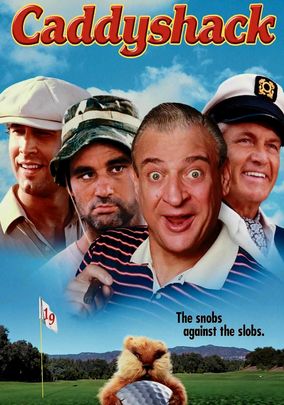
Caddyshack is one of the funniest slapstick comedies of the 1980s, arguably the decade of “mindless comedy”.

Made in 1980, the cusp of the decade, it led the pack during a time when, one after another, comedy films were churned out in a cookie-cutter style, based largely on the success of Caddyshack.

While not every aspect of the film works, the parts that do are hysterical, and its influence on film history is unquestionable.

More than merely a “dumb comedy”, Caddyshack features funnymen of the day (Bill Murray, Chevy Chase, and Rodney Dangerfield), and the talent and timing are good.

Clean-cut teenager Danny Noonan works as a caddy at a posh resort named Bushwood Country Club. An “underachiever”, he lacks direction in life while being pressured by his parents to attend college.

While spending the summer at work pondering his future, high jinks ensue as a rivalry develops between the club co-founder, Judge Smails (Ted Knight), and the outrageous Al Czervik (Rodney Dangerfield), who is a nouveau riche real estate developer.

Meanwhile, bordering on psychotic, Bill Murray as groundskeeper Carl Spackler is engrossed in his feud with a gopher running rampant on the golf course.

Mixed in with all of this are the standard teen romance themes, bathroom gags, and sexual jokes.

Caddyshack is not high art, nor does it need to, or intend to be. It is simply pure juvenile fun. It is not even that well written, but it works. The portions that work so well do not even involve the caddies who were originally set to be the focal point of the film.

Rather, the real scene-stealers are the two oldest members of the cast- Rodney Dangerfield and Ted Knight. The bickering and barbs traded between the two characters are delicious and downright funny.

When Al mocks Smail’s hat, or dances with his snobbish wife, or crashes into his new boat, each scene is rich with goofy comic timing.

Without a doubt, my favorite scene is the “doody” scene in the resort pool. It is laugh-out-loud raucous, as a candy bar tossed into the water is mistaken for something else.

The star of this scene is Lois Kibbee, who plays Judge Smail’s wife.

Her comic mannerisms and upper-crust looks make her a perfect choice for the role, and she arguably steals the show in her limited appearances.

When Al jokes that she must have been something before electricity, her facial expressions perfectly emit comic horror.

There are points of the film that really are unnecessary and do not work well- I have never understood Bill Murray’s character, Carl. Bordering on silly, with a stuffed animal as the gopher, Murray himself is fantastic- improvising, but the role does not seem necessary to the rest of the film.

More scenes between the Judge and Al, or more from Chevy Chase’s character, Ty, and the Judge’s wife, would have been preferable.

Also, the attempted teen triangle between Danny, Maggie, and Lacey is dullsville- plain Maggie cannot compete with gorgeous and slutty Lacey.

These criticisms, however, are small gripes compared to the hilarity and perfect timing of the rest of the film, which is why it ranks among my favorites.

Caddyshack, along with Animal House, paved the way for the plethora of slapstick comedies to follow- a few good, most bad, but must be recognized as the influence that it was, and a must-see for fans of golf, sports, and good, clean fun.

The elements of Caddyshack (1980) come together and work so well.

The Greatest Show on Earth-1952

The Greatest Show on Earth-1952

Director Cecil B. DeMille

Starring Charlton Heston, Betty Hutton, James Stewart

Scott’s Review #204

60034703

Reviewed December 14, 2014

Grade: B+

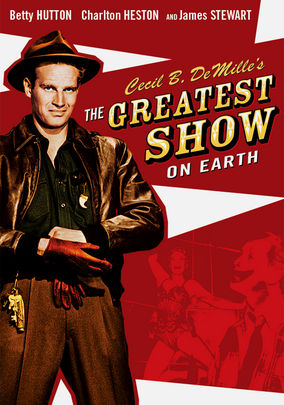
Considered by some critics to be one of the worst Best Picture winners of all time, The Greatest Show on Earth (1952) is quite an impressive Hollywood spectacle.

It tells the story of the world’s largest railroad circus as it launches a tour across the United States, with plenty of drama throughout.

The film stars Charlton Heston, Betty Hutton, and James Stewart as the general manager, acrobat, and clown of the show, respectively.

The film used over 1,400 real Ringling Bros. and Barnum & Bailey employees and hundreds of animals in its production, giving it an authentic circus feel.

Unfortunately, the film also has a schmaltzy quality and lacks strong acting, which, surprisingly, does not bother me and, strangely enough, works in a way.

Various characters have affairs with each other or fall in and out of love rather quickly- it makes for good drama, anyway.

Of course, the main appeal is the extravagant show. While the drama sometimes takes center stage, the lavish production and actual circus events shine through.

My favorite character, and arguably the only interesting character with any depth, in The Greatest Show on Earth is Buttons the Clown, played by James Stewart.

Buttons wears his clown costume, complete with full makeup, at all times. He is kind and mysterious. We learn that he “mercy killed” his dying wife and has joined the circus for protection from the police.

A wonderful human being, he was once a Doctor and tends to anyone in the circus troupe who needs assistance. Later in the film, he plays a vital role after a tragic accident.

His heartbreaking, tender conversation with his elderly mother, whom he only sees in secret once a year for a few seconds as she tearfully and discreetly visits him in the audience, is painfully sad to watch and such a sweet scene.

The Greatest Show on Earth’s best scene by far, still impressing today, is the massive train wreck near the conclusion.

The special effects and direction in Cecil B. DeMille’s 1952 film are brilliant. The train perfectly derails one night—it collides with an oncoming train and derails, highly effective in its enormity.

The scene does not look silly.

The way all the drama comes together in this scene—Harry, the crooked midway concessionaire and vicious elephant trainer; Klaus, who is responsible for the accident; Button’s true identity being revealed; and a significant character in peril—makes it top-notch and a satisfying conclusion to the film.

The stories involving Brad, Holly, Sebastian, and Angel are soapy and melodramatic, making them the film’s weakest point.

As a viewer, I couldn’t care less which character lusted after which or who wound up in bed together, but the movie itself is a spectacle, which is my main enjoyment.

The brightness, the revelry, and the circus performances are all wonderful.

Oscar Nominations: 2 wins-Best Motion Picture (won), Best Director-Cecil B. DeMille, Best Story (won), Best Costume Design, Color, Best Film Editing

Golden Globe Nominations: 3 wins-Best Motion Picture-Drama (won), Best Director-Motion Picture-Cecil B. DeMille (won), Cinematography-Color (won)