Tag Archives: David Arkin

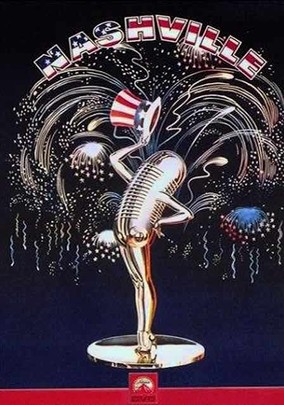
Nashville-1975

Nashville-1975

Director Robert Altman

Starring Lily Tomlin, Keith Carradine, Karen Black

Top 250 Films #3

Scott’s Review #47

60001541

Reviewed June 19, 2014

Grade: A

Nashville (1975)  is a brilliant film.

I have found that with each subsequent viewing, it creeps higher and higher on my list of favorite movies of all time.

The style is unique (largely improvised) and epitomizes the film’s creative freedom in the 1970s.

Director Robert Altman lets his actors express themselves, even allowing them to write their own songs; the overlapping dialogue creates a natural feel as the viewer watches the cast of twenty-four principals intersect over five days at a political rally/country music festival.

It is pure Robert Altman at his finest.

Nashville is a satire of the political arena of the early 1970s, particularly the Vietnam conflict and its politicians.

The film certainly questions and challenges the government with an ironic patriotic setting (Nashville).

The country music industry was in uproar upon the film’s initial release. It is a layered film that can be discussed and appreciated, with every character cared for.

I cannot adequately describe the multitude of nuances in each scene that are noticed over time.

Each character, even those with limited screen time, is vital to the story, as are the political elements —the questions of war, policies, and so on.

The chaotic bits and individual storylines come together at the end, and many background events are exciting to watch and note throughout each viewing.

With each experience, the audience will notice more and more. I certainly do.

Lily Tomlin, for example, plays Linnea, a haggard mother of deaf children with a supportive husband, a woman who, on the surface, is heroic, yet a complex character. She is bored with her life and falls in love with a young musician despite the guilt and repercussions.

The musician in question is Tom Frank, played by Keith Carradine. Handsome and self-absorbed, he arrives in Nashville to dump his bandmates in hopes of a solo career and beds many willing females.

He also lashes out at a soldier at the airport, saying, “Kill anyone lately?”

Despite his unlikable character, Carradine delivers one of the film’s most beautiful performances when he sings “I’m Easy”.

Several of the female characters assume he is singing the song for them, but who is he truly singing it for — if anyone?

Another character to analyze is Barbara Jean, played by Ronee Blakley. A frail yet very successful country singer, she is in and out of hospitals as she frets that her replacement singer will steal her thunder.

Her insecurities rise to the surface.

Insecurity is a common theme among the characters. Many of them are unsure, afraid, or lack confidence in their musical talent, relationships, or themselves.

These are only three examples of the twenty-four richly layered characters- some ambitious, some falling apart, others meandering through life.

Many songs throughout were written and performed by the actors themselves.

Nashville (1975) is storytelling and filmmaking at its best. A creation by Altman that is deservedly admired, revered, and heralded as a significant influence.

It is studied in film schools as it should be.

Oscar Nominations: 1 win-Best Picture, Best Director-Robert Altman, Best Supporting Actress-Ronee Blakley, Lily Tomlin, Best Original Song-“I’m Easy” (won)

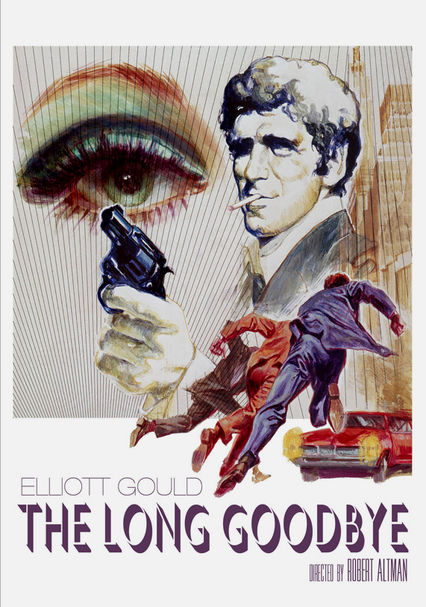
The Long Goodbye-1973

The Long Goodbye-1973

Director Robert Altman

Starring Elliott Gould, Nina van Pallandt

Top 250 Films #50

Scott’s Review #830

Reviewed November 14, 2018

Grade: A

Nearly a full-fledged character study of one man’s moral fiber, The Long Goodbye (1973) is an edgy piece of direction by the famous mastermind Robert Altman.

The setting of Los Angeles’ underbelly is both fabulous and practical, as is the dim lighting and excellent camera work prevalent throughout. The film is not cheery, but rather bleak, which suits me just fine, given the dreary locale.

Perhaps a more obscure Altman offering, but the film sizzles with zest and authenticity.

The film is based on a story written by Raymond Chandler in 1953.

Altman, however, opts to change the setting from 1950 to present times- 1970s Los Angeles and present a film noir experience involving deceit and shenanigans where all is not as it seems.

I think this is a wise move, and I could not help but draw many comparisons (mainly the overall story) to Chinatown (1974), released the year after The Long Goodbye, but a film much better remembered.

Elliott Gould is wonderful as Phillip Marlowe, a struggling private investigator and insomniac. He is asked by a friend, Terry Lennox, for a ride to the Mexico border one night and agrees to do the favor.

This leads to a mystery involving police, gangsters, and Eileen and Roger Wade after Phillip is questioned regarding his connection to Terry, who is accused of murdering his wife, Sylvia.

The seedy side and complexities of several characters are revealed as the story unfolds and the plot gradually thickens.

My favorite aspects of The Long Goodbye are not necessarily the primary storytelling, though the writing is filled with tension.

As the film opens, an extended sequence featuring a “conversation” between Phillip and his cat is both odd and humorous. The finicky feline refuses to eat anything other than one brand of cat food.

As Phillip tries to reason with the cat by talking and meowing, he is forced to venture out in the middle of the night to an all-night grocery store.

Altman, known for allowing his actors free rein with improvised dialogue, appears to let Gould experiment during this scene.

Phillip’s neighbors, a bunch of gorgeous twenty-something females, seem to do nothing except exercise on their balcony, get high, and ask him to buy them brownie mix for a “special occasion”.

As they stretch topless, usually in the background and almost out of camera range, they are a prime example of an interesting nuance of the film. The girls are mysterious but have nothing to do with the actual plot, adding even more intrigue to the film.

In one of the most frightening scenes in cinematic history and one that could be straight from The Godfather (1972), crazed gangster, Marty Augustine (Mark Rydell), slices the beautiful face of his girlfriend to prove a point to Marlowe.

In a famous line, he utters, “That’s someone I love. You, I don’t even like.” The violent act is quick, unexpected, and fraught with insanity.

Finally, the film’s conclusion contains a good old-fashioned twist worthy of any good film noir. In the end, the big reveal makes sense and begs to raise the question, “Why did we trust this character?”

In addition to the viewer being satisfied, Marlowe also gets a deserved finale and proves that he cannot be messed with or taken for a fool.

The Long Goodbye is undoubtedly the best film of Gould’s career. With a charismatic, wisecracking persona, the chain-smoking cynic is considered a loser by most.

He is an unhappy man and down on humanity, but still wants to do what is right. He lives a depressed life with few friends and the company of only his cat.

While his neighbors marginally entertain him, he goes about his days only barely getting by emotionally. Gould is brilliant at relaying all these qualities within his performance.

The addition of the title theme song in numerous renditions is a major win for the film, and something that becomes more noticeable with each viewing. The ill-fated gangster’s girlfriend hums along to the song playing on the radio at one point, and a jazz pianist plays a rendition in a smoky bar.

This is an ingenious approach by Altman and gives the film a greater sense of mystery and style.

There is no question among cinema lovers that Robert Altman is one of the best directors of all time.

In his lengthy catalog of rich, experimental films, The Long Goodbye (1973) is neither the best-remembered nor the most recognizable.

I implore film fans, especially fans of plodding mystery and intrigue, to check this great steak dinner of a film out.

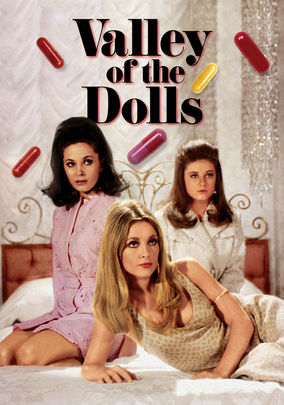
Valley of the Dolls-1967

Valley of the Dolls-1967

Director Mark Robson

Starring Barbara Parkins, Patty Duke, Sharon Tate

Top 250 Films #191

Scott’s Review #657

Reviewed July 3, 2017

Grade: A-

Based on the best-selling novel written by Jacqueline Susann a year earlier, the film version of Valley of the Dolls (1967) has become a cult classic in the years following release- it has earned the dubious description of “it’s so bad it’s good”.

The film dives headfirst into the soapy, dramatic world of Hollywood and Broadway, and the trials and tribulations three young women encounter as they try to “make it” in the backstabbing business.

The film teeters on camp, but it is a favorite of mine, as I love the theme of aspiring stars in La La Land. The set design and groovy styles of the late 1960s are also noteworthy.

Bored with her life in sleepy New England, Anne Welles decides to move to the bright lights of Manhattan, seeking fame, fortune, and excitement.

After she lands a secretarial job for an entertainment lawyer, who handles temperamental Broadway star Helen Lawson (Susan Hayward), Anne meets and befriends two other struggling young actresses.

Neely O’Hara (Patty Duke) is a vivacious, gifted singer, and Jennifer North (Sharon Tate) is a gorgeous blonde with limited talent but looks to die for.

The three women wrestle with the ups and downs of show business as they each achieve various levels of success and failure.

The film centers on both the love and the losses of each woman, and at times it’s rather soap-opera-like, especially the bitchy feud between Neely and Helen, but it’s a fun, entertaining experience.

Various men come in and out of the trio’s lives. The “dolls” referenced in the title are a nickname for pills that the girls readily pop, and alcohol is also used in the film.

One interesting aspect of the film I like is that the three women are very different from one another.

Anne is the most sensible of the three and arguably the most intelligent. Neely is wild, reckless, and constantly battles drugs and alcohol, yet she is both the most successful and the most talented. Jennifer is gorgeous but lacks the talent or the vigor to succeed in Hollywood.

Two of the three women do not have happy endings in their stories.

Some are admittedly a bit uneven, especially the performance of Duke as Neely. She plays the role wildly over the top, especially during her shrieking, drug-saddled tirades, but rather than find the performance irritating (some indeed might), I find the role loud, bombastic, yet sympathetic.

We root for Neely because she has talent despite her shortcomings, and she is a likable character to me, as I want her to find happiness.

Also playing up the camp is Hayward, as she fills Helen with fire, spite, and gusto, doing everything to make the audience view her as a queen bitch. Helen was scheduled to be played by the illustrious star Judy Garland (she would have been perfect!), but was reportedly fired for showing up for work drunk.

An enjoyable aspect of Valley of the Dolls is the humor, though sadly, the laughs are not always intentional. The finale involves a catfight between Neely and Helen in the classy ladies’ room of a famed theater.

With sheer delight, Neely yanks off Helen’s bright orange wig to reveal her natural head of hair. In campy fashion, Helen’s real hair is excellent- more shocking would have been if she were bald or had thinning hair, but her hair is bleached blonde and full.

In melodramatic fashion, Helen waltzes out of the theater sans wig.

Valley of the Dolls is a late-night treat that can be enjoyed and not taken overly seriously- the film differs vastly from the actual novel, and even the time (the 1960s versus the 1940s through the 1960s) is changed.

The film was followed by a much campier and satirical film, Beyond the Valley of the Dolls, made in 1970 and directed by Russ Meyer.

Oscar Nominations: Best Original Song Score or Adaptation Score

Popeye-1980

Popeye-1980

Director Robert Altman

Starring Robin Williams, Shelley Duvall

Scott’s Review #1,474

Reviewed March 31, 2025

Grade: C+

As a loyal fan of the legendary director Robert Altman, I had never seen his 1980 effort, Popeye, which starred his muse, Shelley Duvall, and then rising movie star Robin Williams.

My favorite Altman films, Nashville (1975), Short Cuts (1993), and Gosford Park (2001), are masterpieces sprinkling overlapping dialogue with enormous casts.

Qualities that I adore.

I hoped Popeye would follow the same formula, but strangely and disappointingly, it doesn’t. The end product feels nothing like an Altman film and is a wacky, jagged, attempted-comedy affair that leaves one disappointed.

Desperately, it regains some semblance of control in the midsection as sentimental, touching musical numbers surface, but this cannot save the film from mediocrity.

The entire affair seems rather pointless and overly messy.

When a muscled sailor named Popeye (Williams) journeys to the port town of Sweethaven, looking for the father (Ray Walston) who deserted him as a baby, he befriends an array of bumbling eccentrics.

He falls madly in love with dorky, sweet-natured Olive Oyl (Duvall).

Conflict erupts when it’s revealed that she already has a suitor, the jealous Bluto (Paul L. Smith). Popeye discovers an abandoned baby, Swee’Pea, whom he raises with Olive Oyl’s help, cementing their courtship. But when the spurned Bluto kidnaps Olive and the child, Popeye takes action with the help of his magic spinach.

Williams and Duvall are wonderfully cast and easily the best part of the otherwise ineffectual film.

The chemistry propels an investment in the couple despite the overreaching, zany dialogue. Williams dazzles with a cartoonish performance that befits the funnyman he played best during his career, despite turns towards more dramatic fare.

There is an infectious likeability factor that oozes from the screen. He’s also surprisingly cute.

Duvall nearly upstages Williams and everyone else with a maddeningly frenetic, manic, and excellent acting job. The actor was born to play Olive, even suffering from the nickname as a child.

Her constant and irritatingly grating ‘oohs’ are irresistible, and I mimicked her well before the credits rolled, much to my husband’s and my amusement.

The best moments occur midway through, with a combination of hits, such as ‘He Needs Me’ and ‘It’s Not Easy Being Me, which are performances by Duvall and Williams, respectively.

Both songs made me fall in love with the characters and made me thirst for more sentimentality over silliness.

You’d think I would have loved the film if for Williams and Duvall alone.

From the opening sequence, though, I found myself unamused and unenamored with the rest of the film.

Meant to be funny, the Taxman (Donald Moffat), Wimpy (Paul Dooley), and Bluto (Paul L. Smith) feel over-the-top and silly. They each lack any warmth or endearment and seem like caricatures of the cartoon.

The finale is meant to be edge-of-your-seat peril, with an octopus added to eat Olive Oyl and Swee’Pea, presumably. This is mixed with an uninspired performance by Ray Walston as Poopdeck Pappy (Popeye’s father).

Waiting for the spinach representation, but this comes too late in the game. Recognizing Popeye’s dislike for spinach, Bluto force-feeds it to him before throwing him into the water. The spinach revitalizes Popeye and boosts his strength, helping him defeat Bluto and Salty Sam.

Popeye celebrates his victory and his newfound appreciation of spinach.

If I made a list of Robert Altman films, I would rank Popeye (1980) toward the bottom. Reviled by critics at the time of release, the film has grown some appreciation over the years, but I’m not sure why.