Tag Archives: Patricia Arquette

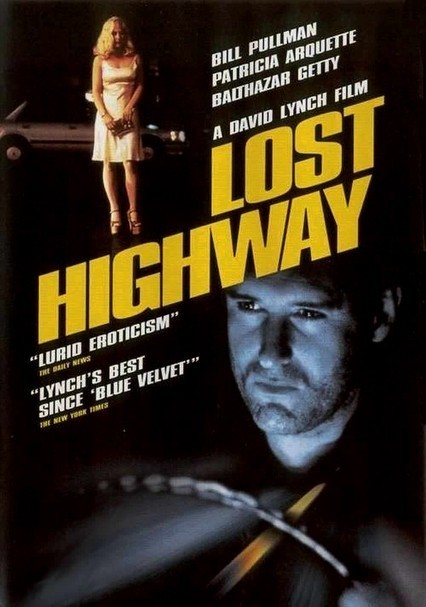
Lost Highway-1997

Lost Highway-1997

Director David Lynch

Starring Bill Pullman, Patricia Arquette

Top 250 Films #211

Scott’s Review #868
Reviewed February 17, 2019

Grade: A-

David Lynch, forever known for his odd and mind-boggling productions, released what might be his most bizarre offering, Lost Highway (1997).

Dreamlike and downright hallucinogenic, the film is impossible to dissect and is open to endless interpretation. Characters morph into younger or different versions of themselves or even into different characters entirely making the film best served as an experience not to be over-analyzed.

The most enjoyment comes from the fabulous atmospheric elements.

Lost Highway is set in Los Angeles as we meet saxophonist Fred Madison (Bill Pullman), a nightclub employee who resides with his glamorous wife Renee (Patricia Arquette) somewhere in the Hollywood hills.

The couple begins receiving envelopes containing VHS tapes of footage of their house followed by more invasive tapes of them being filmed while sleeping in their bedroom.

Spooked, they enlist the help of a pair of incompetent detectives.

The events begin to grow more complex with the introduction of a menacing mystery man (Robert Blake) and sequences involving a dismembered Renee, and Fred’s subsequent incarceration for her murder.

Fred suddenly morphs into a young auto mechanic named Pete Dayton (Balthazar Getty), who is released into his parent’s care while being followed by the two detectives.

Pete embarks on an affair with Alice Wakefield, a mirror image of Renee, who is the mistress of powerful Mr. Eddy (Robert Loggia). Pete and Alice plan to escape together leaving their troubled lives behind.

Any attempt to make more sense of the story than outlined above is fruitless as a torrent of questions could be raised. The obvious ones are why does Fred turn into Pete (looking completely different) and why does Renee turn into Alice (looking similar)?

What do random scenes of a burning desert cabin mean? What does the bizarre and hazy lesbian sequence with Marilyn Manson have to do with anything?

Discerning the logic and attempting to unravel the mystery will lead to frustration.

The best advice is to escape into the film and allow it to manifest in the viewer’s mind. The terms “dreamlike” and “hallucinating” are often used to describe films but are perfect adjectives to fit Lost Highway.

The stories do run parallel, so the challenge is not being able to follow each of them, but rather how they connect. The stories also merge circularly with a rhythmic effect and a satisfying ambiance that lured me immeasurably.

My favorite characters are Alice and Pete and this is in large part because of the actors who portray them. Not appearing until the second half Getty and Arquette infuse passion and energy into the roles.

I immediately rooted for them as a couple as their tender and smoldering chemistry was immediately felt. Arquette blazes as a sexy temptress and Getty as the handsome and earnest man submitting to her prowess.

Eagle-eyed viewers may notice comparisons to Russ Meyer’s devilish sexploitation film Supervixens (1975).

The most notable are the dual character representations, the auto mechanic occupation, the locales (more than a few Los Angeles roads seem identical), and various sequences featuring a weightlifter, a gas station drive-up, or other eerily similar scenes.

Whether or not there is a direct correlation between the films is unknown but fun to observe.

The musical score and soundtrack are high points adding both mystique and aggression with the hard rock songs featured. Marilyn Manson’s “I Put a Spell on You”, Rammstein’s “Heirate Mich”, and The Smashing Pumpkins “Eye” are used in important scenes.

The soundtrack release was a huge success on modern rock radio achieving Gold record sales status.

At the time of Lost Highway’s release, the film was not well regarded by critics and dismissed as not making much sense. In the decades following the film has garnered more acclaim and as with a fine wine has aged well. The beautiful cinematic tone, creative design, and images have become more revered over time.

For a perplexing and cerebral experience look no further than Lost Highway (1997), a delicious companion piece to the Lynch masterpiece, Mulholland Drive (2001).
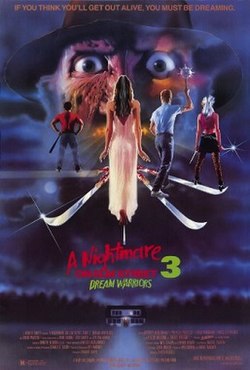
A Nightmare on Elm Street 3: Dream Warriors-1987

A Nightmare on Elm Street 3: Dream Warriors-1987

Director Chuck Russell

Starring Patricia Arquette, Heather Langenkamp, Robert Englund

Scott’s Review #1,028

Reviewed May 29, 2020

Grade: B+

A Nightmare on Elm Street 3: Dream Warriors (1987) is a credible effort to take the, at this point, tired slasher genre in a new direction, using style and special effects to its advantage.

The film is not a work of art and does not stray too far from the norm to risk losing the target audience, but the experiment works, providing the film with a fresh feel.

Thankfully, Freddy Krueger (Robert Englund) is in tow providing wit and humor and rich character history rarely seen in horror.

One year following the events of the previous chapter, Kristen Parker (Patricia Arquette) awakens following a nightmare of being chased by Freddy Krueger, to find him in her bathroom where she is attacked again.

Her mother believes that she is suicidal and sends her to Westin Hills Psychiatric Hospital, where Kristen is placed under the care of Dr. Neil Gordon (Craig Wasson).

The rest of the events of the film mainly take place in this setting. A new intern therapist, Nancy, (Heather Langenkamp) takes an interest in Kristen’s case.

In two clever plot twists, one a bit too coincidental, Nancy reveals to the remaining patients that they are the “last of the Elm Street kids”, the surviving children of the people who banded together and burned Krueger to death many years ago.

The second is more intriguing as a nun named Sister Mary Helena (Nan Martin) provides the history of Freddy’s mother, Amanda Krueger, who turns out to be the same.

This humanizes Freddy a bit and provides layers to his story rather than just another “slice ’em and dice ’em” horror film.

The film has a way of gathering curiosity and delivering the goods with dreams hypnosis and mental synapses, as the kids realize they have dream powers that culminate in a group adventure.

Perfect for the mental hospital setting.

The junkyard sequence that provides the climax with so much muscle is splendid adding creative and colorful bits of junk, littering the entire set with rusty tin trinkets and other nooks and crannies to marvel at.

A feast for the eyes and a perfect backdrop for evil and killings. The set design works tremendously well in this film.

The familiar character Nancy played once again by Langenkamp (the main girl from the first Nightmare) is a nice touch of recognition that will please fans immensely. A returning favorite in a horror franchise is always a smart move.

The casting of esteemed character actress Nan Martin, who can frighten the pants off anyone if given a good part, is a divine decision. The actress even resembles legendary actress Betsy Palmer (familiar to Friday the 13th fans as the dreadful Mrs. Voorhees).

The creepy mommy theme so often works well in horror films and this inclusion is no exception.

The theme song to A Nightmare on Elm Street 3: Dream Warriors is a pop-metal treat written and performed by the heavy metal band Dokken.

This inclusion assuredly brought the teenage girls and the mullet crowd alike to movie theaters across America. The song is catchy and can easily be head-banged as the end credits roll across the screen.

Even more impressive is that the lyrics make sense from a story perspective since dreams are a huge part of the franchise and this specific installment.

Nearly rivaling the original A Nightmare on Elm Street (1984) in originality and plot, A Nightmare on Elm Street 3: Dream Warrior (1987) does a fantastic job bringing energy to a fading genre, one not to be rejuvenated for another nine years when Scream (1996) debuted.

Engaging and brightly lit razzle-dazzle visual sets within dreams are pulse-racing and creative, while a mother story crafts fresh air. This film is the sequel high-point to a series of duds soon to follow.

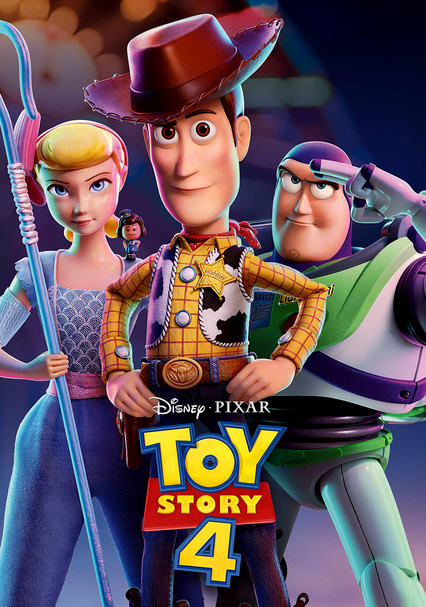
Toy Story 4-2019

Toy Story 4-2019

Director Josh Cooley

Voices: Tom Hanks, Tim Allen, Annie Potts

Scott’s Review #966

Reviewed December 10, 2019

Grade: B

Toy Story 4 (2019) is the fourth installment in the Pixar/Disney-produced Toy Story series, now nearly twenty-five years old!

The glitter is beginning to fade on a once-endearing franchise, and hopefully, this is the last one- additional segments are not needed unless desperation develops.

After a slow start and too many retread moments, the film shows bombast and familiar heart and tenderness in the finale, presumably wrapping up the long story with a neat bow.

The animation is vivid and colorful, almost astounding, and makes up for an otherwise unnecessary story.

In a flashback sequence, nine years after Toy Story 2, Bo Peep (Annie Potts) is donated to a new owner, and Woody (Tom Hanks) begrudgingly decides to maintain his loyalty to the owner, Andy.

Years later, and now a teenager, Andy donates a forgotten Woody to a young child named Bonnie, who lacks the affection for the toy that Andy had. When Bonnie makes and bonds with Forky, a toy made of plastic, Woody struggles to convince Forky that each is more than garbage.

When Bonnie and her parents embark on a summer road trip to an amusement park, Woody and other familiar faces are along for the ride.

The group meets other forgotten toys, some benevolent and some sinister, at the park and a nearby antique store. Woody’s dear friend and comic relief, Buzz (voiced by Tim Allen), is in the mix and helps all the toys realize that they are not forgotten and that they can still bring joy to children.

The film provides an unwieldy list of celebrities in major and minor roles. The incorporation of characters like Chairol Burnett, Bitey White, and Carl Reineroceros (voiced naturally by Carol Burnett, Betty White, and Carl Reiner) may not be necessary.

Still, it’s fun to watch the credits roll and see who’s who from the cast.

The minor characters are little more than window dressing, but the creativity is admirable.

The main story of abandonment, loyalty, and discarding of one’s toys is ample and pleasant, but has occurred in every segment thus far in the series.

Do we need to see this again? Yes, it is an essential message for both children and adults, but why not simply watch the first three installments of Toy Story, each brilliant in their own right?

Toy Story 4 plays by the numbers with little surprises.

One glaring notice is how almost every single adult is either incompetent or played for laughs.

I understand that the main draw is the toys and outsmarting the adults is half the fun, but when Bonnie’s father assumes his navigation system is on the fritz, rather than catching on to the fact that one of the toys is voicing the system, one must shake one’s head.

Suspension of disbelief is increasingly required in these types of films.

Toy Story 4 picks up steam in the final twenty minutes with a thrilling adventure through the amusement park and a cute romance between Woody and Bo Peep.

When the long-forgotten toy Gabby Gabby (Christina Hendricks) emotionally rescues a lost child, she is rejuvenated and breathes new life into both the child’s life and her own.

In a darling moment, Forky meets another creation named Knifey. Knifey suffers from the same existential crisis as Forky once did, and Forky immediately becomes smitten with her, both realizing that even though they are odd-looking, they still matter.

The nice lesson learned is that even toys from the 1960s and 1970s can provide warmth and comfort to a young child and are more than “of their time”.

This is a clear and bold message that resonates with human beings and acknowledges that advanced age does not come with an expiration date.

Everyone matters and brings importance. The underlying theme is heartwarming and central to the film, bringing it above mediocrity.

What should certainly be the final chapter in a tired franchise that continues to trudge along, the bright message and strong animations remain, but the film feels like a retread.

Given that Toy Story 3 was released in 2010, Toy Story 4 (2019) needs to bring the series to a conclusion before installments 5, 6, 7, or 8 result in a dead-on-arrival sequel.

Oscar Nominations: 1 win-Best Animated Feature Film (won), Best Original Song-“I Can’t Let You Throw Yourself Away”

Boyhood-2014

Boyhood-2014

Director Richard Linklater

Starring Ellar Coltrane, Ethan Hawke

Scott’s Review #217

70301281

Reviewed January 19, 2015

Grade: A

Boyhood (2014) is a family drama directed by Richard Linklater that tells the story of a family’s trials and tribulations over twelve years, ranging from approximately 2002-2013.

The film uses the same actors over the entire period, enabling the viewer to see the characters change. What a novel idea! In this day and age of special effects, superheroes, and animated animals, how refreshing to see a simple tale of a family told over a while.

The film’s main character is Mason Evans, Jr. played by Ellar Coltrane.

We are introduced to Mason when he is six years old and in the first grade. He lives with his older sister Samantha, played by the director’s daughter Lorelei Linklater, and his mother Olivia, played by Patricia Arquette, in Texas.

Ethan Hawke, divorced from Olivia plays Mason’s father (Mason Sr.).

As the years go by we see situations arise and the characters grow and develop like real life.

After the film, Mason Jr. is headed off to college following years of life experience including his first relationship. The other characters develop and we see Olivia and Mason Sr. delve into relationships with partners, some successful, others less successful.

Boyhood succeeds because it is a film about real life that feels like a slice of Americana.

It’s a wonderful film.

The audience invests in the characters because we grow to love and care about their lives. It is comparable to seeing cousins or friends once a year and seeing what becomes of their lives over time.

This film fascinates me because it is so basic and real that it does not need contrived dramatic situations to warrant attention. It is simply authentic and that is what makes a great film.

The film is left-leaning politically speaking and I love that current events are brought up throughout the years by the family members.

As the film progresses we are treated to Mason Sr. commenting on his distaste of the Iraq war, the children’s anticipation of the new Harry Potter film, Mason Sr. taking the kids to a Houston Astros game, and The Beatles and Star Wars are mentioned.

Another scene sadly focuses on a returning soldier from Iraq who suffers from Post-traumatic stress disorder. These nuances make the film seem so authentic and rich.

As wonderful a job as Patricia Arquette and Ethan Hawke did neither of them had a huge, bombastic, emotional scene which would have been splendid given the talents of each, but this is a small criticism.

Both are superb as struggling parents trying to do the right thing for their children and carve out a life for themselves.

Boyhood redefines realism in the film as we see a family unit hope, struggle, and dream as it’s played out before our eyes.

The film does not need overwrought dramatics as it is simply a slice of the life of a group of people we come to know and love.

Everyone can relate to Boyhood (2014).

Oscar Nominations: 1 win-Best Picture, Best Director-Richard Linklater, Best Supporting Actor-Ethan Hawke, Best Supporting Actress-Patricia Arquette (won), Best Original Screenplay, Best Film Editing

Independent Spirit Award Nominations: 2 wins-Best Feature, Best Director-Richard Linklater (won), Best Supporting Male-Ethan Hawke, Best Supporting Female-Patricia Arquette (won), Best Editing