Category Archives: Action

The Odyssey-2026

The Odyssey-2026

Director Christopher Nolan

Starring Matt Damon

Scott’s Review #1,542

Reviewed July 23, 2026

Grade: A

Christopher Nolan’s film The Odyssey (2026) is a breathtaking spectacle that feels cinematically invigorating and inspired.

It’s movie magic at its finest.

Fortunate to see this film in an enormous IMAX theater, it’s the perfect and recommended way to see a film of this scale. A crowded and energetic audience is also suggested to connect with the overall moviegoing experience.

My hat goes off to Nolan, who has gotten asses back into empty theater seats in recent years where they belong.

It was thanks to his 2023 film Oppenheimer, which won Best Picture, that cinema became a mandatory part of moviegoing enjoyment again, along with the progressive Barbie (2023).

In the story, Odysseus (Matt Damon), king of Ithaca, embarks on a perilous journey to return home after the Trojan War, after many years away from his land and loved ones.

Crossing the Mediterranean Sea with his fellow soldiers, they soon find themselves battling not only the elements but an array of deadly obstacles and mythical creatures that await the men along the way.

In clever and intriguing form, the story traverses a few different timelines.

It is told in non-linear fashion, from early romantic sequences between Odysseus and his wife, Penelope (Anne Hathaway), to the backstory of his son, Telemachus (Tom Holland), and nemesis, Antinous (Robert Pattinson).

We immediately learn that Odysseus has been away for years, but what happens during those years is mysterious and aching to be slowly unraveled.

Other characters like Menelaus (Jon Bernthal), Helen of Troy/ Clytemnestra (Lupita Nyong’o), Athena (Zendaya), Circe (Samantha Morton), Calypso (Charlize Theron), various nymphs, and others are featured as Odysseus and Telemachus’ stories are explored.

Additionally, lands and worlds like Hades, a distinct realm where individuals go after death, and Aeaea, an island inhabited by the villainous Circe, are featured.

Having some knowledge of Greek Mythology is extremely helpful, as it can be quite difficult to keep track of who everyone is and how their history is part of Odysseus’s.

My two favorite sequences are when Odysseus’s men desperately land on Aeaea, fraught with severe hunger. Circe, who seems motherly and kind, delights in preparing steamy stew and other delicious food for them.

As they greedily chow down, they begin to cough and choke, turning into pigs. Circe turns wicked, vowing revenge on the men for an apparent attack on her sister years earlier.

The final thirty minutes of The Odyssey features a grandiose and daring fight sequence after Penelope declares she will marry whoever can string Odysseus’s bow and shoot an arrow through a row of axe heads.

The suitors all fail, but Odysseus succeeds and reveals his identity to her, culminating in a reunion. The hall erupts in battle, Odysseus slaying the challenging suitors.

The sequence features thunderous sound effects that, to me, sounded like footsteps running along a jogging path increasing in their intensity and momentum as the fight turns darker and bloodier.

Way back to the films The Dark Knight (2008) and Inception (2010), directed by Nolan, I vividly recall being enamored with those similar sound scores.

To say that The Odyssey is a spectacle is an understatement.

It proves with technical precision and grandeur that there’s no filmmaker quite like Nolan to reignite an ancient adventure and that there’s no limit to magnificence and perfection in cinema.

Lush seas, gritty battles, and mythical creatures abound in this opus.

Still, the film also has quality acting and a bit of heart too, so the story is never overwhelmed by the technical stuff, which is always a fear in blockbusters of this nature.

Damon, Hathaway, Holland, and Pattinson get top acting praise from me.

Terrific chemistry exists between Damon and Hathaway, specifically, making their passionate and dedicated love story remarkably believable.

I’ve heard complaints about the film being too ‘woke’, a derogatory term tinged with racism and homophobia. Nolan wisely makes the film inclusive, featuring a trans actor (Page) and several black and brown actors.

The Odyssey (2026) offers action, adventure, battles, and all the other trimmings expected from an epic action film shrouded in fantasy and magic.

But on an entirely different level.

It also offers tenderness, humanity, connection, and heart that exceed expectations all around.

Race with the Devil-1975

Race with the Devil-1975

Director Jack Starrett

Starring Peter Fonda, Warren Oates

Scott’s Review #1,540

Reviewed July 13, 2026

Grade: A-

The 1970s saw the rise of many mainstream horror films that dealt with the occult. They’ve always been around, but thanks to the sizzling success of movies like The Exorcist (1973), they grew larger audiences and emboldened them to do more daring things.

Race with the Devil (1975) is a surprisingly enthralling piece directed by Jack Starrett. The film never lags and paces well with action and characters in peril that are easy to root for.

In fact, despite classifying it as a horror film, it’s part action, thriller, and horror all rolled into one.

Anyone who enjoys classic car chases and dusty backroads, for example, will enjoy this film.

It stars Peter Fonda, Warren Oates, Loretta Swit (television’s M*A*S*H*), and Lara Parker (television’s Dark Shadows), bigger names that undoubtedly led audiences to see it based on star recognition alone.

The film also leverages the recent success of The Texas Chain Saw Massacre (1974) and Deliverance (1972), borrowing their remote locales and the corruption of the local police force and townspeople to heighten the mystique.

Roger (Fonda), his friend Frank (Oates), and their wives (Parker and Swit) embark on a lengthy RV road trip from bustling San Antonio to the wilderness of rural Texas for some off-road motocross and good times.

Their final destination is the ski slopes of Colorado.

While enjoying the deserted landscape late one boozy night, they stumble upon a Satanic cult human sacrifice in the distance, and are unfortunately caught observing the ritual by the assailants.

This catapults the foursome into a cat-and-mouse extravaganza with the cult members as they try to flee the local town after receiving no help from the local authorities.

To say the film has some thrills is an understatement. The most exciting sequence occurs in the claustrophobic RV setting when two deadly snakes pop out from an overhead cabinet, causing the group to go ballistic with fear.

They careen across the highway, trying to keep their footing and avoid being bitten by the angry reptiles.

Minor characters, the group meets as they trek as far away from the incident as possible, are filled with mystery and a hint of the sinister.

Is Sheriff Taylor (R.G. Armstrong), who appears to laugh off the reported incident as a misunderstanding, part of the cult? How about the wacky couple the group has drinks with, Delbert and Ethel?

Finally, the lengthy car chase in the film’s final act is cinematographically impressive. A film with a satanic storyline risks feeling amateurish or hokey, but its technical achievements are as rich as its other qualities.

Proof is by the numerous car crashes and heart-stopping twists and turns that occur amid the barren landscape of northern Texas and the nearly two hundred miles of nothingness they must face before reaching a highway.

And the editing and the somewhat surprising ending are fabulous.

While we know little about the four principal characters, aside from Roger and Frank owning some motorcycle dealership, it hardly matters.

Each seems intelligent and kind, merely victims of being in the wrong place at the wrong time. The audience easily feels we could be friends with them.

Therefore, we care about them and their predicament.

When a fan belt breaks or a window is smashed, we feel the peril along with the characters. During a lighter moment, when the wives ‘borrow’ library books after being scolded by a cold library worker, we snicker in victory alongside them.

Race with the Devil (1975) borrows from other horror films, but it doesn’t feel like a carbon copy either.

Fresh ideas, like the snakes and the luxury RV, combined with superior acting and the terrific chemistry among the leads, make the film work.

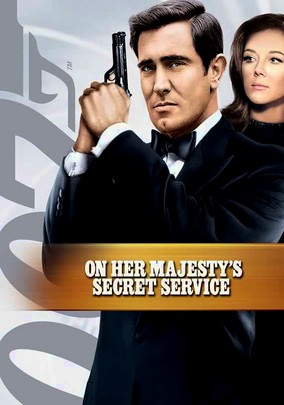
On Her Majesty’s Secret Service-1969

On Her Majesty’s Secret Service-1969

Director Peter Hunt

Starring George Lazenby

Top 250 Films #17

Scott’s Review #156

28630765

Reviewed August 19, 2014

Grade: A

On Her Majesty’s Secret Service (1969) is often derided by fans of the James Bond franchise, which is a shame, as it is artistically and story-wise top of the heap and my personal favorite from the series.

Bond, now played by George Lazenby, is on the hunt for arch-nemesis Blofeld, played by Telly Savalas. Blofeld is intent on securing amnesty for his past deeds and is threatening to ruin the world’s food supply if his demands are not met.

Often known among Bond historians as “the one with George Lazenby”, who, if not for Sean Connery returning to the series in the next film, could have lasted much longer in the role, is a breath of fresh air and wonderfully cast.

Lazenby brings his form of charisma, great looks, and charm to the role, and Sean Connery is a tough act to follow, but Lazenby succeeds in spades.

Diana Rigg is one of the best Bond girls of all time as she is intelligent, sophisticated, confident, and beautiful, a great counterpart to Bond- she is more his equal, rather than simply just a conquest for him, and the two actors have real chemistry.

Telly Savalas is effective as Blofeld, though not my all-time favorite Bond villain by any stretch- something is missing in his performance.

In typical Bond fashion, the film begins in sunny Portugal, skips to London, and finishes in cold Switzerland. I love the icy, snowy Switzerland locales in the movie and the ski chase, downhill bobsled chase, car chase on ice, and subsequent blizzard, which are brilliantly atmospheric.- a perfect film to view on a cold winter’s night!

I love the inside quips in this one, especially when Lazenby says, “I bet this never happened to the other fellow,” and “He had lots of guts.”

Both are laugh-out-loud clever.

The shocking and tragic ending is uncharacteristic of a Bond film and a brilliant change from many of the movies, as Bond is humanized.

On Her Majesty’s Secret Service (1969) is more character-driven than the other films in the franchise while still providing lots of adventure, and should be revered as a more layered Bond offering.

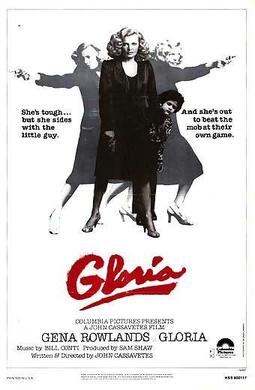
Gloria-1980

Gloria-1980

Director John Cassavetes

Starring Gena Rowlands

Top 250 Films #32

Scott’s Review #166

Reviewed September 9, 2014

Grade: A

Gloria (1980) is an action/thriller film that features the standard action-crime thriller elements, including shoot-em-ups, guns blazing, and clichéd fare.

It also contains an interesting and appealing leading character, a gritty atmosphere, and witty dialogue.

It is a significantly better film than most indistinguishable action films.

Directed and written by independent film master, John Cassavetes, who wanted to make a more conventional, mainstream film than was typical for him- think the very left of center, brilliant A Woman Under the Influence, also starring Gena Rowlands.

Gloria was the perfect film for him to create with Rowlands as the focal point.

Made in 1980, Gloria perfectly captures New York City of that era.

New York City was gritty, dirty, rough, crime-infested, violent, and chaotic, and the film frequently travels throughout Manhattan, the Bronx, and New Jersey, with many scenes shot directly on the streets of New York.

Several other scenes are set in dingy apartments, hotels, seedy bars, and rundown streets, and are highly effective in portraying a gloomy atmosphere.

The cinematography in the film is perfect.

The heart of the film lies with Rowlands (Cassavetes’s wife), who gives a mesmerizing performance as a former mob girlfriend who, by circumstance, must protect a young Hispanic boy from execution by the mob because of an informant’s book he clings to for dear life.

No other actress could have played this role of a tough-talking, brash New Yorker as well as Rowlands does.

The boy’s father, played by Buck Henry, is a scared accountant with ties to a company fronted by the mob.

He fears his entire family will be murdered and hands his kid over to Gloria. Julie Carmen gives a brief but effective performance as Phil’s frazzled mother.

I wish Henry and Carmen had been given more screen time and fleshed-out characters because both had huge potential.

The film belongs to Rowlands- she is no-nonsense, tough, and so convincing in the part.

I also enjoyed the casting of John Adames as the kid, Phil. Many critics inexplicably panned his performance, and I’m not sure why.

I also love the unique opening credits, as intense folk/jazz music plays over watercolor portraits that turn into the skyline of New York City, with a melancholy, eerie quality.

Amid the violence, a sweet bond develops between Gloria and Phil that is neither too sentimental nor cheesy.

A great, compelling late 1970s/early 1980s film with definite Godfather and Dirty Harry influences in its texture and characters, especially in some of the mobster roles.

The appeal of the film is that it has a heart without ever delving into schlock. Surprisingly rated only PG, it is gritty, but not lewd or harsh, and seems dirtier than it is, with barely any filthy language.

The chemistry and heartfelt connection between Gloria and Phil are darling without being too sappy or safe.

Gloria (1980) is a fast-paced, action gem that is both appealing and tough.

Oscar Nominations: Best Actress-Gena Rowlands

From Russia with Love-1963

From Russia with Love-1963

Director Terence Young

Starring Sean Connery

Top 250 Films #76

Scott’s Review #615

Reviewed February 5, 2017

Grade: A

From Russia with Love (1963) is only the second film in the storied James Bond franchise. It is a sequel to the debut installment, Dr. No, and received twice the budget.

This is evident in the film’s exquisite cinematography and look, with chase and battle scenes galore.

The film is lavish and grand, and what a Bond film ought to be, featuring adventures across countries, gorgeous location sequences, and a lovely romance between Bond (Sean Connery) and Bond girl Tatiana (Daniela Bianchi).

Still, she is not in my top Bond girls of all time.

Terence Young returned to direct the film with successful results.

Vowing revenge on James Bond for killing villainous Dr. No, SPECTRE’s Number 1 (seen only speaking and holding a cat) recruits evil Number 3, Rosa Klebb, a Russian director and defector, and Kronsteen, SPECTRE’s expert planner, to devise a plot to steal a Lektor cryptographic device from the Soviets and kill Bond in the process.

Klebb recruits expert killer Donald “Red” Grant and manipulates Tatiana into assisting. The story takes Bond mainly through Istanbul, Turkey, into a gypsy camp and via the Orient Express through Yugoslavia to the ultimate climax.

The villains in From Russia with Love are outstanding and a major draw to the film.

Klebb (Lotte Lenya) and Grant (Robert Shaw) are perfectly cast. Klebb, militant and severe with her short-cropped red hair, has a penchant for deadly footwear (she has a spike that shoots out from her boot containing venom that kills in seconds) and casually flaunts her lesbianism in front of Tatiana.

I admire this level of diversity in early Bond films—it was 1963, which was extremely rare.

Grant, on the other hand, is handsome and charismatic, with a chest of steel. With his good looks and bleached blonde hair, he is a perfect opponent for Bond, as the final battle between him and Bond aboard the Orient Express is a spectacular fight scene and a satisfactory conclusion to the film.

The action sequences are aplenty and compelling, especially the Orient Express train sequence finale, which is grand. As Bond and Tatiana, along with their ally Ali Kerim Bey, a British Intelligence chief from Istanbul, embark on a journey, they are stalked by Grant, who waits for an opportunity to pounce on his foes.

This sequence is the best part of the film for me- Grant, posing as a sophisticated British agent, has a cat-and-mouse conversation with Bond and Tatiana over a delicious dinner of Sole.

Grant drugs Tatiana by placing capsules in her white wine- the fact that he orders Chianti with Sole, a culinary faux pas, gives him away.

Other notable aspects of From Russia with Love are the soon-to-be familiar cohorts of Bond, who will be featured in Bond films for years to come: M, Q, and Miss Moneypenny become treasured supporting characters that audiences know and love.

Mere novices in this film, it is fun to see their scenes- especially lovelorn Moneypenny.

An odd scene of sparring female gypsies is both erotic and comical as the two women wrestle and fight over a gypsy chief, only to forget their rivalry and both bed Bond, falling madly in love with him as the two women suddenly become the best of friends.

The chemistry between Connery and Bianchi is good but nothing spectacular, and it is not the real highlight of this Bond entry. Don’t get me wrong—they make a gorgeous couple—his dark looks and her statuesque blonde figure look great, but I found the pairing just decent rather than spectacular.

The action sequences, especially the Orient Express scenes, are a spectacle, and the many location shots in and around Istanbul are ravishing.

From Russia with Love (1963) is a top entry in the Bond series and a film that got the ball rolling with fantastic Bond features- it is an expensively produced film, and this shows.

Thunderball-1965

Thunderball-1965

Director Terence Young

Starring Sean Connery

Top 250 Films #99

Scott’s Review #364

1046268

Reviewed January 9, 2016

Grade: A

By 1965, the James Bond franchise was embarking on its fourth segment, and the budget reflected the success of the preceding films.

Thunderball reaps the benefits of an enormous budget and is. As a result, it is a grand, epic film. Its sheer magnitude makes it one of my favorite Bond films simply because of its look.

The special effects are a marvel.

By this time, Sean Connery had comfortably immersed himself in the role of Bond, utilizing his charm and ability to exude charisma.

In this story, two NATO atomic bombs have been stolen by SPECTRE and held the world to ransom for millions in diamonds. They are threatening to detonate one of the bombs in a major city in either the United States or England. Mr. Bond must race against time to deter this from happening.

For starters, the opening sequence is one of my favorites. Bond attends the funeral of a deceased SPECTRE agent (number 6) at a lavish chateau in France. The agent is disguised as his widow, but Bond is not fooled.

This sets the stage as a dramatic fight scene ensues between the two “men.”

The main villain of Thunderball is Emilio Largo (Adolfo Celi), a handsome, suave SPECTRE agent (number 2). He is rich and sophisticated, a quality that is reflected throughout the film.

His grand estate is set and filmed in the Bahamas, giving most of the film a steamy, posh look, with bluish-green waters and white, crispy sand.

It’s the most gorgeous backdrop.

Largo is a great Bond villain and on par with Bond. He also has charm, good looks, and charisma.

The main Bond girl is Domino, played by Claudine Auger. Largo’s mistress is typically clad in black and/or white, hence her name.

Auger has the perfect balance of beautiful looks, sophistication, and intelligence, and is an ideal match for Bond. The chemistry between Connery and Auger is palpable and a significant factor in the film’s success.

What sets Thunderball apart from some Bond films is the central portion of the film, mainly in the second half, which takes place underwater.

In a clear example of showcasing the modern technology of the time (1965), some complained that these sequences went on too long and did not advance the plot.

These points may have some validity, but oh, are they so visually appealing! The exotic underwater world is majestic.

Thunderball has it all and is one of the most gorgeous Bond films. It is big, bombastic, and filled with bright colors.

It contains all the elements of a great Bond film, so it has held up remarkably well over the years.

Oscar Nominations: 1 win-Best Special Visual Effects (won)

Diamonds Are Forever-1971

Diamonds Are Forever-1971

Director Guy Hamilton

Starring Sean Connery

Top 250 Films #100

Scott’s Review #328

60000705

Reviewed January 6, 2016

Grade: A

Despite Diamonds Are Forever (1971) being one of the lower-rated James Bond films, this is actually one of my favorite films of all time, and many would disagree with me.

Some say Sean Connery phoned this performance in; others say there was little chemistry between him and Jill St. John, and the sets were tense, leading to a sub-par offering. But I think this is a great film.

I love the Las Vegas locale, the bright lights, flashy costumes, and a ritzy underbelly- and the Vegas car chase is incredible.

A bright, shiny Ford Mustang takes center stage throughout the sequence, and if one looks closely, one will realize that nearly all the cars are Ford- fun fact!

The title song by Shirley Bassey is great, sultry and stylish, only enhanced by the glitzy setting. One immediately imagines the film oozing with diamonds as it does.

The villains are fascinating, and Mr. Wint and Mr. Kidd were the first openly gay Bond villains, which, in 1971, was groundbreaking.

Yes, they are evil and slightly silly, but what a risky, surprising, and blatant scene to see the gentlemen holding hands.

St. John is a sophisticated and intelligent Bond girl, and the action in this film is plenty.

Diamonds Are Forever (1971) contains all the elements for an enjoyable Bond experience.

Oscar Nominations: Best Sound

Goldfinger-1964

Goldfinger-1964

Director Guy Hamilton

Starring Sean Connery

Top 250 Films #114

Scott’s Review #337

22041809

Reviewed January 9, 2016

Grade: A

By the time Goldfinger (1964) was released, the third in the James Bond franchise, the films were huge successes, and the budget was not to be spared a dime.

The lavish sets prove this, and Goldfinger is one of the best Bond films. It contains all the necessary elements for success: interesting villains, Bond girls, gadgets, and locales.

By 1964’s Goldfinger, Ian Fleming’s franchise had hit its stride and was achieving runaway success.

The intriguing premise immediately sets the tone- 007 is assigned to investigate a massive gold smuggling scheme. The conspirator is Auric Goldfinger (Gert Frobe), who hatches a plot to contaminate Fort Knox’s United States Bullion Depository.

His goal, naturally, is to control the world.!

The adventure takes Bond from the United Kingdom to Switzerland and finally to the United States in  Kentucky and Florida.

The main Bond girl, a villain, is uniquely named Pussy Galore. The film implies that the character is bisexual and she is tough. James Bond becomes intrigued by and smitten with her.

Goldfinger has the honor of containing one of the greatest Bond villains of all time- the title character of Goldfinger. Big and burly, he is menacing-looking, and actor Frobe is perfectly cast.

We first meet the man cheating at gin rummy poolside at a lavish Miami Beach hotel, while Bond looks on from dozens of floors up, with the assistance of Goldfinger’s moll, Jill Masterson.

In one of the greatest scenes in Bond history, a knocked-out Bond awakens to find Jill dead—and completely covered in gold paint! This scene, which occurs early on, sets up the Bond/Goldfinger rivalry outstandingly.

Goldfinger’s henchman, Oddjob, is also a grand Bond villain. He is Asian, menacing, and wears a trademark steel-rimmed hat, which he uses to kill his victims. Jill’s sister, Tilly, seeks revenge on Goldfinger but finds herself a victim of Oddjob’s infamous bowler hat as she flees for her life.

Following 1962’s From Russia With Love, an exceptional Bond film with nary a flaw, Goldfinger excels slightly because it has all the right ingredients and is firing on all cylinders.

Everything flows with precision.

Unforgettable is the climax of Goldfinger at the legendary Fort Knox itself. Goldfinger’s private army, an atomic device, a countdown to destruction, and Oddjob all make for a satisfying and riveting conclusion to one exceptional Bond entry.

Oscar Nominations: 1 win-Best Sound Effects (won)

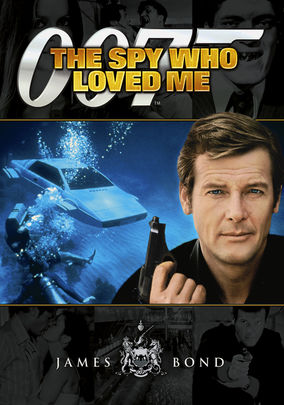
The Spy Who Loved Me-1977

The Spy Who Loved Me-1977

Director Lewis Gilbert

Starring Roger Moore

Top 250 Films #137

Scott’s Review #637

Reviewed April 27, 2017

Grade: A-

The Spy Who Loved Me (1977) is pure James Bond- an installment of the franchise that successfully contains all of the elements of an exceptional Bond film- and then some.

By this time, Roger Moore was firing on all cylinders and had made the character of James Bond his own- Sean Connery, who?

With his third appearance in the role, Bond exudes charisma and wry wit, combined with a fabulous story, sexy Bond girls, and a villain worthy of his role, The Spy Who Loved Me achieves near perfection, save for being too drawn out in the ending- otherwise, an excellent, memorable film that does not feel dated in the least.

When Soviet and British submarines begin to vanish, the two sides team up and send their best agents forward to uncover the circumstances surrounding the disappearances.

Barbara Bach plays Major Anya Amasova, also known as Agent Triple X, a Soviet agent, and naturally, Bond becomes enamored with her beauty and intelligence.

Together they face off against a megalomaniac named Karl Stromberg, who is intent on destroying the world with nuclear missiles and creating his underwater world. Stromberg’s sidekicks are Jaws, a giant with steel teeth, and a deadly vixen named Naomi.

Interestingly, if watched as a companion piece to a 1960s Bond film, as I did this time around (You Only Live Twice), one notices a change in how Bond’s female characters are treated.

No longer servile and obedient to the male characters (Bond specifically), Bond women are now his equals in every way, matching him in career success and intelligence.

The main “Bond girl”, (Anya), is a shining example of this, which the film immediately offers. In one of my favorite scenes, Anya is in bed with a handsome man- when “Agent Triple X” is paged, we assume the agent is the man until Anya slyly responds to the message- it is nonchalant, yet a brazen way to make the point that women have emerged as powerful and sexy figures in the modern Bond world.

The chemistry between Moore and Bach is immeasurably important to the success of the film, and their romance is dynamic- they have “it,” and their scenes smolder with sensuality.

To complicate matters, Bond has killed an agent whom Anya was in love with, and she plans to kill Bond as soon as their mission is victorious.

Director Gilbert also adds a slice of Bond’s backstory, lending the story truth and rich history, and mentions Bond’s deceased wife (married and killed in On Her Majesty’s Secret Service), a subject Bond deems off-limits.

This ode to the past only enhances the connection between these two characters.

Villains play an important part in the success of The Spy Who Loved Me.

Take Stromberg (Curd Jürgens), he is sophisticated, mature, worldly, and rich- and quietly insane. He also has a lavish dining room in his underwater submarine with exotic fish swimming about through visible tanks- a gorgeous element to this film.

Through a trap door,  victims meet their demise at the hands of a vicious killer shark swimming about. One unlucky female assistant, who has double-crossed Stromberg, meets her maker in bloody fashion. Later, Bond sees a severed hand floating about in one of the tanks.

This is great creative writing and adds nuances to the film.

Hulking henchman, Jaws, who would return in the next installment, Moonraker, dazzles and impresses with his deadly, steel teeth.

A great scene, aboard a high-speed train, and a throwback to 1963’s From Russia With Love, is action-packed.

Naomi meets her demise after an ill-fated helicopter chase scene. I would have liked to have had more screen time and to have gotten to know this character. Her brief, but obvious flirtation with Bond is all too short- and he never even gets to share a bed with her!

Not to be outdone, the locales in the film are lavish and gorgeous- Egypt and Italy are countries explored, and scenes are shot on location in each country in grand fashion.

The Egyptian pyramids are featured in a chase, and a murder occurs during a nighttime exhibit. Also fantastic are the gorgeous shots of Sardinia, a beautiful region in Italy where Stromberg’s hideout is set.

A mini gripe is a lengthy conclusion to the film. As Bond struggles to recalculate the two nuclear missiles set to destroy New York and Moscow, Bond must rush to make sure they do not hit their intended target.

The “final act” of the film goes on too long with way too many soldiers and men running around in a panic. The action is great, but by the end, enough is enough.

Roger Moore once commented that The Spy Who Loved Me (1977) was his favorite of all the Bond films to make- it is easy to see why he felt this way.

The film contains all the necessary elements to make it one of the top entries in its franchise and has a magnificent feel.

Oscar Nominations: Best Original Score, Best Original Song-“Nobody Does It Better”, Best Art Direction

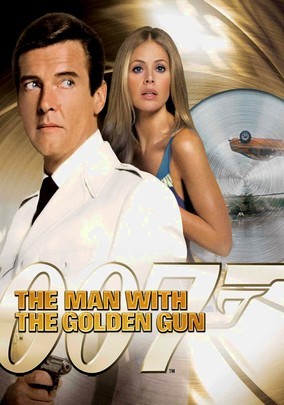
The Man with the Golden Gun-1974

The Man with the Golden Gun-1974

Director Guy Hamilton

Starring Roger Moore

Top 250 Films #142

Scott’s Review #346

28370063

Reviewed January 9, 2016

Grade: A

Though not typically regarded as one of the more appealing of James Bond films, and the second chapter to feature Roger Moore, Sean Connery’s replacement, The Man with the Golden Gun (1974) is one of my favorites, firmly placed in my top 5 of 007 offerings.

This could be the result of the film being one of my first introductions to the world of 007 when I was a child.

Moore seems more comfortable in the role than he did in the uneven Live and Let Die, released in 1973.

Qualities that make The Man with the Golden Gun a success include the wonderful casting of Christopher Lee, a famed horror film icon, in the central role of Francisco Scaramanga, the title character and nemesis of Bond.

Who cannot think of Count Dracula while watching Lee act- his dark, swarthy looks, angular face, and his deep baritone voice make for a perfect villain.

Known in large part for participation in Hammer Horror films opposite another legend, Peter Cushing, this is casting at its finest and a true high point of the film.

To summarize the story, MI6 receives a golden bullet with “007” sketched on the side, a clear threat to James Bond’s life. It is assumed to have been sent by the famed assassin, Scaramanga, whose trademark is a deadly golden gun.

Bond is ordered to remove himself from his current mission. Still, he pays no mind and sets out to find Scaramanga on his own, leading him into a mystery involving a stolen solar energy weapon feared to destroy the world.

The adventure takes Bond to a bevy of gorgeous locales, including Hong Kong, Thailand, Macau, and the South China Sea, where our villain resides on a private island accessible only by helicopter.

I found the main locale of the sunny deserted island and Scaramanga’s dwarf sidekick, Nick Nack, to be great aspects of the film. Majestic caves, sandy beaches, and a gorgeous array of water set the tone with gorgeous fantasy elements.

Servant Nick Nack is sinister, but with a sweet smile, one almost trusts him as he serves lunch or expensive champagne to guests sure to be killed afterward.

The secret maze of mirrors that Bond finds himself in is made all the more perfect by Nick Nack’s taunting and cackling. And the flying car that Scaramanga and Nick Nack drive in, though gimmicky, is a real hoot.

A demerit to The Man with the Golden Gun that I have always been able to look past, since other factors usurp her importance, is the miscasting of Britt Eklund as Bond’s assistant, Mary Goodnight.

The writer’s pen is good, but Goodnight is simpering, silly, and a big goof. An attempt at comic relief falls flat as the character epitomizes a blonde bubblehead- constantly screwing up everything.

Scaramanga’s girlfriend and co-Bond girl, Andrea Anders, played by Maud Adams, is much better, though we do not get to know the character very well before she is offed.

Fortunately, Adams would return to star in Octopussy in 1983.

Perhaps middling at times and suffering from some negative characteristics, The Man with the Golden Gun (1974) is a love of mine, a trip down memory lane to a time as a child when I was first discovering my love and zest for James Bond films.

This offering cemented my love of Roger Moore in the central role, and I still adore watching this film.

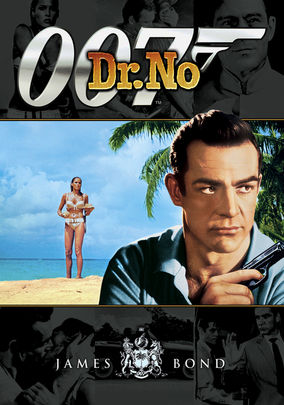
Dr. No-1962

Dr. No-1962

Director Terence Young

Starring Sean Connery

Top 250 Films #145

Scott’s Review #667

Reviewed July 27, 2017

Grade: A-

Watching the 1962 film that launched the James Bond franchise into the legendary status it has since become, Dr. No is rich in history and a blueprint for what the Bond films would encompass in the decades to follow.

Admittedly, while more essential than the more sophisticated and fleshed-out chapters to come, the film is nonetheless a superb entry in the franchise and a chapter to be cherished on its own merits.

Charismatic Sean Connery, soon to forever be identified in the role of James Bond, fills the role with a masculine confidence oozing from the screen in every scene.

His performance in the role is so seamless that one might assume he had been playing Bond for years rather than being a novice.

And who can forget the character’s first entrance- in a casino, confidently gambling and introducing himself to Sylvia Trench, a character initially slated to be his steady girlfriend?

The film version of Dr. No is adapted from the first Ian Fleming spy novel of the same name, which is clever. As the years passed, the Bond films were modified from the originally written pages, so it is cool and original to have them closely mirror the book.

Lacking a hefty budget, the action is set in London and Jamaica and at Crab Key, a fictional island off Jamaica.

When Strangways, a British Intelligence Chief, is killed and his body taken by assassins known as “the Three Blind Mice,” who also steal files related to Crab Key island, and a mysterious man named “Dr. No,” Bond is summoned to his superior’s (M) office in London and tasked with determining whether the incident has anything to do with radio interference of missiles launching in Cape Canaveral.

Naturally, it does, and the adventure sets off a series of dramatic events involving henchmen, scrapes with death, and Bond’s bedding of more than one beautiful woman before facing the ultimate showdown with the creepy title character., who is missing both hands.

Notable and distinguishable to the film are the fabulous, chirpy, child-like songs featured. From the tuneful, harmonic, nursery rhyme, “Three Blind Mice”, sung calypso style, to the sexy and playful, “Under the Mango Tree”, both are light, yet filled with necessary mystery.

The fact that the former is featured at the beginning and end implies that the same villains are joyfully singing the happy tune, is a good indicator.

Dr. No is also inspired by the introduction of the crime organization SPECTRE, which any Bond fan knows very well and is a staple of the franchise.

As Dr. No, Joseph Wiseman is well cast, though sadly, we only see him in the latter part of the film. Much more character potential is left untouched, though the mystique of knowing the man exists but not what he looks like is worth mentioning.

Admittedly, the assumption that the audience will not be witty enough to realize that Dr. No and Miss Taro (a villainous secretary) are Caucasian actors wearing unconvincing makeup is silly.

Why the choice was made not to cast authentically ethnic actors is unclear. My guess is the powers that be wanted to go a safer route due to the uncertainty of the franchise at that time.

Still, for a first try, Dr. No gets it just about right.

What woman in 1962 was sexier or cast more perfectly than Ursula Andress as the gorgeous and fiery sex kitten Honey Ryder? This casting was spot on, and who can forget her sultry introduction to the film as she emerges from the roaring waves on the beach in a scantily clad bathing suit?

The set designs and locales also work well in the film.

The sets are contemporary, specifically the spacious prison apartment in which Bond and Honey briefly reside. Sleek and sophisticated, the sofa, rug, and tables exude luxury and class.

Dr. No (1962) is a worthy film on its own merits and a fantastic introduction to the world of James Bond and the many trademark elements and nuances that the films contain.

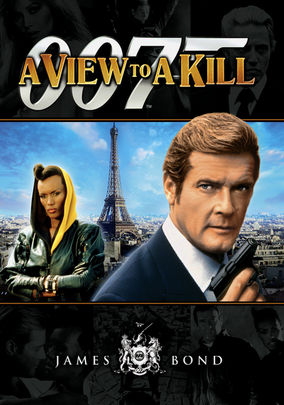
A View to a Kill-1985

A View to a Kill-1985

Director John Glen

Starring Roger Moore

Top 250 Films #151

Scott’s Review #484

60002473

Reviewed September 21, 2016

Grade: A

Not exactly deemed a masterpiece or even a treasured favorite among the masses of James Bond lovers, A View to a Kill (1985) holds a soft spot for me.

It is one of the first Bond films that I was fortunate enough to see in the movie theater, and it has continued to enchant me all these decades later.

Yes, it has flaws (to be mentioned later), but it is a classic, fun, exciting, mid-1980s Bond offering.

It contains Roger Moore- in his final Bond appearance, the exotic Grace Jones, a great villain, and on-location treats such as Paris and Iceland- who could ask for anything more?

We are reintroduced to MI-6 agent James Bond on the snowy slopes of Siberia as he discovers the body of 003, along with a Soviet microchip believed to belong to the wealthy Max Zorin (Christopher Walken).

Bond attends a horse sale hosted by Zorin and discovers he is drugging the horses to make them perform better.

It is also revealed that he intends to destroy Silicon Valley to rule the microchip industry. In Zorin’s camp is a mysterious woman named May Day and an odd Nazi scientist named Dr. Carl Mortner.

Events conclude in San Francisco as the action-packed finale takes place in a mine overlooking (via blimp) the historic Golden Gate Bridge.

I completely get the criticisms hurled at this film- both Roger Moore and, as a secondary character, Lois Maxwell as Miss Moneypenny, had gotten quite long in the tooth by this point in the franchise (1985), which is a shame because both are favorites of mine.

Most glaring in the “bad” department is Tanya Roberts as the main Bond girl, Stacy Sutten, almost rivaling Halle Berry (Die Another Day) as screamingly awful.

Not appearing as a major character until quite late in the film, Stacey is a wealthy heir to whom Zorin attempts to pay $5 million to relinquish her shares in Silicon Valley (she refuses).

Robert’s acting is quite poor- she has no chemistry with Moore, and comes across as a dimwit, despite being written as a doctor or scientist of some sort. Regardless, she does not work as a Bond girl.

Yes, the cartoon-like chase around San Francisco with the brooding police chief is unintentionally funny- another negative to the film.

But here are some strengths- Fantastic is Walken as the main villain role of Zorin. Psychotic, Looney Tunes, and such a pleasure to watch. With his bleached blonde hair and grimacing sneer, a particularly controversial, and favorite scene of mine is when Zorin, machine gun in hand, sprays bullets from left to right, undoubtedly killing dozens, as he gleefully laughs.

This was unprecedented in Bond films up to this point, as most villains contained a safer personality- Zorin is positively monstrous and to be feared.

Also worth mentioning is Jones as May Day, simply mesmerizing in the role- although sadly her character is weakened toward the end, did she believe Zorin was capable of love??

Countering the anemic chemistry between Bond and Roberts, the chemistry between Jones and Moore sizzles.

This is not the first time Bond has explored an interracial (white and black) romance- far from it. Live and Let Die- circa 1973 takes this honor. I would have enjoyed much more emotional exploration between Bond and May Day, rather than the animalistic physical attraction.

One may wonder, with all the recognizable flaws in the film, why the A rating? Because, simply put, this film is fun and contains all the elements a Bond film ought to. The action is plentiful- who can forget the nail-biting Eiffel Tower chase or the Paris car chase- sans car roof?

Not high art, but a grand favorite of mine, A View to a Kill (1985) is entertainment personified.

The pop title-theme song, performed by Duran Duran, which became a #1 hit in the summer of 1985, is a wonderful aspect of the film and immediately takes me back to a different time.

I suppose the film does as well, and that is a great part of my fondness for it.

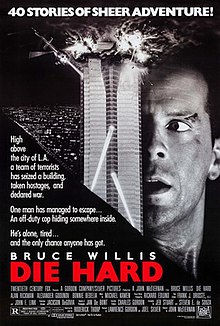
Die Hard-1988

Die Hard-1988

Director John McTiernan

Starring Bruce Willis

Scott’s Review #1,458

Reviewed December 28, 2024

Grade: B+

Die Hard (1988) is one of the best action films of the late 1980s and 1990s. Because of its success and mainstream appeal, it spawned dozens of copycat films.

It features hunky Hollywood star Bruce Willis in his breakout role, propelling him to a box-office stronghold that lasted for many years.

He would later appear in more cerebral offerings like Pulp Fiction (1994) and The Sixth Sense (1999), but Die Hard put him on the map.

Is it a Christmas film, or is it not? It can be debated.

Depending on one’s socioeconomic leanings, Die Hard can be seen as a film that puts the working-class Joe in the driver’s seat and makes yuppies or corporate types look like incompetent fools.

The film, watched decades after its making, is guilty of stereotypes and clichés. It is riddled with nearly every action film standard one-liner intended to evoke laughter, which now seems silly and contrived.

Hokey? Yes, but it’s also fun and a chance to watch the muscular, sweaty Willis run bare-chested for most of the run.

Like Friday the 13th (1980), the film produced several sequels, all subpar to the original.

New York City policeman John McClane (Willis) is visiting his estranged wife (Bonnie Bedelia) in Los Angeles on Christmas Eve. He joins her at a posh holiday party in the headquarters of the Japanese-owned business she works for.

The festivities are quickly interrupted by a group of terrorists led by the crazed but calm Hans Gruber (Alan Rickman), who take over the exclusive high-rise and everyone in it.

McClane realizes that he must save the day.

John McTiernan, who directs, knows his way around the action genre, and Die Hard is easily his best. Other notable works include Predator (1987) and The Hunt for Red October (1990), so he also knows how to create an action star.

The season, the setting, and the villain are other high points of Die Hard.

The perfect setup is a glossy high-rise in downtown Los Angeles at a glitzy corporate party on Christmas Eve. Drizzling with possibilities, McTiernan adds the German terrorists for good measure and a slice of necessary Americana, a fixture of the 1980s ‘USA good, Europe bad’ mentality.

Naturally, McClane is a good old-fashioned American boy. While he initially wants his successful wife, Holly (Bonnie Bedelia), to be a traditional homemaker, he realizes she’s good at her job as a corporate officer.

But the traditional and conservative mindset still shines through.

In a stroke of genius and authenticity, the real Fox Plaza in Century City was used for the skyscraper rather than an ineffectual mock set. This adds a lot to the enjoyment, and glimpses of The Towering Inferno (1974) crossed my mind.

In standard fashion, the feds, detectives, television reporters, and police officers are primarily incompetent, except for McClane. This adds to the earlier notion that the working-class guy is the movie’s hero.

Actor Paul Gleason, well-known for a similar curmudgeonly role in 1985’s The Breakfast Club, bears much of the brunt. As he callously shouts at police officer Powell (Reginald VelJohnson), he also frets at the mayor’s reaction to the handling of the situation with repeated ‘the mayor will have my ass’ remarks.

Interestingly, Powell, who bonds over the radio with McClane, is the only character to receive a competence award. The relationship between the two male cops is warm, respectful, and a high point.

The other well-written character is the main villain, Hans. Played deliciously by Rickman, he’s a baddie for the ages, cold and calm, and his deadly tumble from the top of the enormous building is satisfying to patient fans.

Die Hard (1988) centers on a good hero cop besting the bad guys from Germany, with a definitive pro-American theme popular at the time.

While the terrible 1980s hairstyles, clothes, and cheesy dialogue do not hold up well, the action is, and the film can surprisingly be watched repeatedly.

Oscar Nominations: Best Film Editing, Best Visual Effects, Best Sound Effects Editing, Best Sound

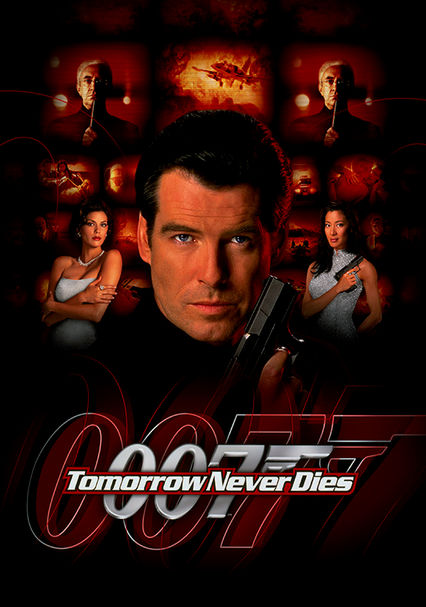
Tomorrow Never Dies-1997

Tomorrow Never Dies-1997

Director Roger Spottiswoode

Starring Pierce Brosnan

Scott’s Review #1,394

Reviewed August 28, 2023

Grade: B

Pierce Brosnan made four appearances as the legendary film character, James Bond. While he gets a marginal thumbs-up as a whole and is not my favorite Bond, he has the ‘look’ and suave charisma.

This works in his favor and makes him entirely believable, even with every ridiculous one-liner or flat line of dialogue.

Tomorrow Never Dies (1997) is the second chapter in the Brosnan book and is only marginally superior to GoldenEye, made two years earlier in 1995. All bets are that the two subsequent Bond films starring Brosnan nosedive quickly.

All good Bond films must include specific qualities such as a strong villain, a sexy yet strong ‘Bond girl’, dazzling stunts and chase scenes, a memorable theme song, and more than one exotic locale.

It’s just what the blueprint is and must never be broken.

Therefore, Tomorrow Never Dies feels more like the producers, director Roger Spottiswoode, and writer Bruce Feirstein sought a check-the-box exercise rather than creating anything brilliant or memorable.

I deem this film rather ordinary. Not bad, but not superior either, falling in the middle of the road when compared to other Bond franchise films.

Media mogul Elliot Carver, played completely over the top by actor Jonathan Pryce, wants his news empire to reach every country on the globe. Still, the Chinese government will not allow him to broadcast there.

Carver then decides to use his media empire to wage war between the Western world and China. Thankfully, James Bond (Brosnan) is on the job and travels to China to stop him with the help of Chinese secret agent Wai Lin (Michelle Yeoh).

Anyone who knows a Bond film knows that the plot is secondary to the aforementioned necessary characteristics.

The story either got too complicated as the film progressed, or I lost interest because, at some point, all I could recall was a news media tycoon trying to start World War III over television ratings.

Yeoh is an exceptional ‘Bond girl,’ though the dose of progressivism, diversity, and female empowerment she brings to the table makes the term beneath her. Her charisma and martial arts chops make her a kick-ass rival, though she naturally ends up head over heels for Bond.

Still, the lengthy scenes between Yeoh and Brosnan do convey strong chemistry as they take down the bad guys and save the world together.

I expected a bit more from Teri Hatcher’s character, Paris Carver, a former girlfriend of Bond who is now Carver’s trophy wife. The setup was superior, and the love triangle could have gone further than killing off her character after just a couple of scenes.

As great an actor as Pryce is, it’s tough to believe he’s the same actor who made films like Two Popes (2019) and The Wife (2017) so good. He turns Elliot into a caricature, dead set on controlling the world, proving that an actor can’t always bring a mediocre script to life.

Tomorrow Never Dies takes viewers to lavish locations such as Bangkok, China, Hamburg, Germany, and London. The tone has a definite Asian feel, which works as well as You Only Live Twice did in 1967.

Finally, the title theme song and opening performed by Sheryl Crow is abysmal, but oddly sounds much better in the version that plays over the ending credits.

I marginally recommend Tomorrow Never Dies (1997), mostly for those in the Brosnan camp, of which I am aware there are many.

Its best quality lies in the degree of equality between Bond and the main female character, Wai Lin, which is further proof of how relevant the franchise remains.

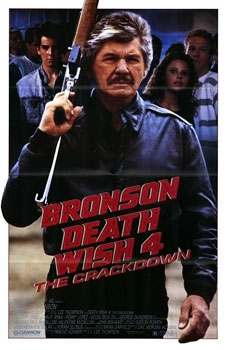
Death Wish 4: The Crackdown-1987

Death Wish 4: The Crackdown-1987

Director J. Lee Thompson

Starring Charles Bronson

Scott’s Review #1,319

Reviewed November 29, 2022

Grade: C+

I have an interesting relationship with the Death Wish films. Besides the first and maybe its follow-up, they pretty much suck, and that’s being kind.

They possess a machismo and right-wing, pro-National Rifle Association stance that’s not my cup of tea.

To make matters worse, poor acting, stagey action sequences, an explosive overuse of smoke ammunition, and endless clichés riddle the screen in nearly every scene.

Sure, there’s usually some heartwarming romantic moment or a justification for the killings, but the series is solidly amateurish.

With my nose to the grindstone, I somehow, someway, plodded through all five of the Charles Bronson film series installments and lived to tell.

I refuse to see the tepidly reviewed, unrelated 2018 incarnation starring Bruce Willis.

But the funny thing is, with all the cinematic negatives, the Death Wish films are fun in a campy, silly way. Hardly high art, they instead provide the viewer with fluff and a quick ninety-minute experience in shoot ’em-up revenge-seeking bloodletting.

With Death Wish 4: The Crackdown (1987) the filmmakers cleverly leverage the 1980s excess with a witty subtitle channeling the crack epidemic of the day set against the backdrop of lusty Los Angeles and the drug carnage seeping over the United States border from neighboring countries.

Some thirty-five years later, the premise is dated to say nothing of being riddled with stereotypes, but at the time, the plot must have seemed downright modern.

Paul Kersey (Bronson), who is no stranger to vigilante justice, is pulled back into the underworld of gritty Los Angeles when the daughter of his new girlfriend, Karen (Kay Lenz), dies after an overdose of crack cocaine.

Intent on dishing out a healthy dose of vigilante justice, he goes after the drug lord who ultimately supplied the crack, apparently forgetting to focus on the social issue of why the young girl was taking drugs in the first place.

The First Lady Nancy Reagan’s famous anti-drug slogan, ‘Just say no,’ fell on deaf ears.

As he hunts down the kingpin’s henchmen, Paul starts taking out a large part of the city’s drug-dealing population on a violent killing spree while posing as a dimwitted bartender.

The acting is laughably bad from Bronson on down to the bit players.

My favorite bad scene is when an interracial couple squabbles on their way out to dinner from the luxurious high-rise apartment they inhabit.

As she sits in the limo, brooding and cursing her mate who forgot something from the apartment, he is suddenly hurled from his penthouse onto the limo as she shrieks with anguish, after wishing him dead only seconds prior.

Director J. Lee Thompson, well past his prime in the late 1980s, forgot to tell his actors to add a bit of humor to the horrendous line delivery.

Or, he might have just phoned the whole thing in himself.

The film is by-the-numbers, and one attempt at a twist toward the end is an inspired effort. A pivotal character is shockingly killed, and it ain’t Paul who meets his maker either.

I didn’t see this surprise coming.

Nonetheless, despite the myriad of bad qualities contained within Death Wish 4: The Crackdown, the bad guys do get their just desserts, which are delightful to witness.

Death Wish 4: The Crackdown (1987) is best served up on a rainy afternoon when the viewer can munch on popcorn and lazily escape the day away with solid cinema trash.

Minority Report-2002

Minority Report-2002

Director Steven Spielberg

Starring Tom Cruise

Scott’s Review #1,318

Reviewed November 27, 2022

Grade: B+

If you study his body of film work, the fascinating thing about acclaimed director Steven Spielberg is the growth and groundbreaking cross-genre categorization of many of his films.

Traversing blockbuster popcorn films like Close Encounters of the Third Kind (1977) and E.T. the Extra-terrestrial (1982) to heavy drama with the 1993 masterpiece Schindler’s List, the man can do it all.

With 2002’s Minority Report, he bravely delves into science-fiction territory with a crime thriller and action tint.

The film is tough to follow and mostly reminds me of Inception (2010), a Christopher Nolan film influenced by it.

Despite its cerebral tone, Minority Report is a fascinating study of futuristic crime-fighting styles with enough twists and turns to keep you engaged.

It turned out well, though I confess that at times I had no real idea what was going on plot-wise.

The casting of Tom Cruise is a major win. Who better to carry a film like this, except maybe Bruce Willis, though Cruise is a better actor. Nonetheless, he is believable as a crime chief with a slick edge and a wicked smile.

Unsure whether to trust him, he remains at the heart of the film’s success.

Based on a story by science fiction writer Philip K. Dick, ‘Minority Report’ contains a perfect premise to bring to the big screen.

Set in Washington, D.C. in 2054, police are now intelligent enough to utilize psychic technology to arrest and convict murderers before they commit their crimes.

The setup is fabulous and rife with possibilities.

Cruise plays Chief John Anderton, the head of this Precrime unit, and is himself accused of the future murder of a man he hasn’t even met.

Following an audit, it is predicted that in thirty-six hours, Anderton will kill a man who is a stranger to Anderton. Anderton flees, prompting a search led by a searcher (Colin Farrell).

It is revealed that Anderton joined the Precrime program after his son was kidnapped and never found. He is depressed, withdrawn, and addicted to hard drugs, and his wife Lara (Kathryn Morris) has since left him.

But is this all a setup, and are others involved in the conspiracy?

The plot goes way off the rails in terms of explanation or logic, but the fun is in trying to put the never-ending puzzle pieces together. Truthfully, after a while, I simply gave up and enjoyed the visual eye candy and terrific futuristic style.

I rarely am a proponent of visuals over storytelling, but the intelligence of the sequences and the thrilling nature of the acting assured me there was something there.

I just wasn’t completely getting it.

Since Spielberg directs it, I was confident that the complexities I was being served were not shit. I was comforted by this knowledge, and my enjoyment escalated.

Enough props can’t be given for Cruise’s dynamic performance, heightened by the coldness and harshness of the film’s overall tone.

Many of Spielberg’s films are heartwarming, but that was not the case in Minority Report (2002), and I liked it even more for that reason.

Spielberg gets another win by suckering me into a cinematic world that he can magically create. This time with perplexities and perhaps even some influence from the Matrix (1999) movies.

Oscar Nominations: Best Sound Editing

Vantage Point-2008

Vantage Point-2008

Director Pete Travis

Starring Dennis Quaid, William Hurt

Scott’s Review #1,271

Reviewed June 25, 2022

Grade: B-

The premise of Vantage Point (2008) is clever and hook-laden, stirring intrigue. After all, the idea of several ‘vantage points’ to one perilous event, in this case, an assassination in a European country, exudes promise and excitement.

An imagined fun game of whodunit or what happened to whom and when, and from whose perspective, prompted me to want to see this film.

The trailer looked good.

The film doesn’t satisfy and feels like a muddled mess, with little character development and, surprisingly, mediocre acting given its A-list cast.

The dialogue is forever repetitious with characters yelling out the same expletives in frustration that soon results in the incredible, teetering on laughably bad.

It plays too much like a carbon copy of the popular and exceptional television series ’24,’ which ran on FOX during the 2000s when Vantage Point was made.

The inspiration, Vantage Point, borrows heavily from the political thriller setup and the day-in-the-life concept popular during this decade.

The editing is rapid-fire quick.

I struggled to find a couple of redeeming qualities in the otherwise forgettable film.

Usually, seeing a film on the big screen in a slick, air-conditioned movie theater is a treat and increases my enjoyment of it, and that matters here.

In the case of Vantage Point, this raised its final grade from a mediocre C+ to a not-much-improved, generous B-.

A stellar company of actors, including Dennis Quaid, Sigourney Weaver, Forest Whitaker, William Hurt, and others, joins Matthew Fox, who was then hot for his lead role in the massively successful ABC television series Lost.

Did these actors read the script before signing on?

Witnesses with different points of view try to unravel an assassination attempt on U.S. President Henry Ashton (Hurt) while he is giving an important speech in Salamanca, Spain.

Special Agents Thomas Barnes (Quaid) and Kent Taylor (Fox) are assigned to protect Ashton during the summit on the war on terror. Television producer, Rex Brooks (Weaver), directs news coverage while American tourist Howard Lewis (Whitaker) films the audience.

After the leader’s arrival, shots ring out, and Ashton is down. In the resulting chaos, Howard comes forward with his camcorder, which he believes contains an image of the shooter.

Everyone attempts to solve the mystery by giving different accounts of what transpired.

Vantage Point is fantastic for about the first thirty minutes until it quickly runs out of gas. The setups are rapid, with Rex, Howard, Barnes, and Taylor each offering different perspectives, and the film moves well through the timeline from pre- to post-shooting.

The novelty wears thin once the perspectives are revised repeatedly and the plot becomes unnecessarily complicated and downright convoluted.

This makes a normally fast-running time of one hour and twenty-nine minutes feel like a lifetime commitment.

Comparisons I’ve heard to a 1950 Japanese film called Rashomon, which I have unfortunately never seen, are laughable.

My hunch is that the art film is worlds away from the slickly Americanized Vantage Point, and a slow build in the former is superior to the quickly edited mainstream latter.

Vantage Point (2008) is not a well-remembered film, nor should it be. There is no reason to watch it a second time.

A better choice is to watch the series 24 again instead.

It’s nearly the same, with one being superior.

The Pacifier-2005

The Pacifier-2005

Director Adam Shankman

Starring Vin Diesel

Scott’s Review #1,251

Reviewed May 1, 2022

Grade: C

The Pacifier (2005) is the kind of film that has been made for decades in one form or another.

The setup is familiar and puts its macho movie star in situations that go against type or are deemed a bit feminine, and lightweight, all for the sake of a laugh.

From Jack Lemmon and Tony Curtis donning women’s clothing in Some Like It Hot (1959) to Michael Keaton in Mr. Mom (1983) to Arnold Schwarzenegger in Kindergarten Cop (1995), there is a pattern to follow.

And those are just the decent films.

In 2005, the sexy Vin Diesel was one of Hollywood’s highest-grossing leading men, churning out hits like Boiler Room (2000) and The Fast and the Furious (2001) to rabid audiences.

Known primarily for his action films, the muscular star had the bright idea to domesticate himself and put himself in a situation where he would comically change baby diapers or vacuum a living room.

Unfortunately, The Pacifier is juvenile in nearly every way, with canned gags and predictability for miles. Diesel is terrific to look at, but he isn’t the best actor in the world, which undermines the film’s credibility.

Despite cliché after cliché and ridiculous situations, the film will occasionally elicit a chuckle or two from anyone brave enough to watch it.

That’s mostly because Diesel is willing to emerge in one scene covered in shit. But don’t expect much more from The Pacifier.

Shane Wolfe (Diesel) is an elite Navy SEAL with muscles and charisma for miles. He is the type of man who would run into a fire and save a baby or swim out to sea to save a drowning child.

One day, he makes a grave error in judgment when he fails to keep scientist Howard Plummer (Tate Donovan) safe from assassination, and the man is killed.

Riddled with guilt, he is assigned to protect Plummer’s five children when the mother, played by Faith Ford, needs to leave the country temporarily. The kids include rebellious Zoe (Brittany Snow), Seth (Max Thieriot), and clingy Lulu (Morgan York).

The kid’s pet duck is along for the ride, pushing the seasoned veteran to his breaking point.

Predictably, when Shane is not busy tending to the kids, there is a secret project contained somewhere in the household that he must uncover.

Of course, a film like The Pacifier requires some romance, so the inclusion of Principal Claire Fletcher (Lauren Graham) is for the sole purpose of having someone for Shane to fall in love with.

There is not great chemistry between Diesel and Graham, so I wasn’t invested in them. The casting of the children is so one-dimensional with standard characteristics that it would be easy to laugh at.

I chose not to do this but rather strove to find something enjoyable in The Pacifier.

It’s a cute film, but it’s so mainstream, dull, and generic that it deserves the bland grade of C I am awarding it.

Diesel is the only appealing factor to The Pacifier.

Why make the bad guys as stereotypical as possible? They are North Korean, and the ‘twist’ that Shane’s boss is in cahoots with them is as surprising as realizing the two-week-old Chinese leftovers in the fridge have gone bad.

The film makes a small comparison to the superior The Sound of Music (1965), which the filmmakers must have realized, as they incorporate it into the story. The kids that Shane is in charge of are behaving badly and attempting to play a practical joke on him.

In the end, there is a chase sequence, a reveal, peril, and a happy ending in more or less that order.

The Pacifier (2005) is a Disney film, so there is a safe, family-friendly vibe throughout. It marginally entertains largely on the strength of Diesel.

He is sexy and macho, and has enough charisma to make you forget the bevy of standard gags and silly situations he and the audience must endure.

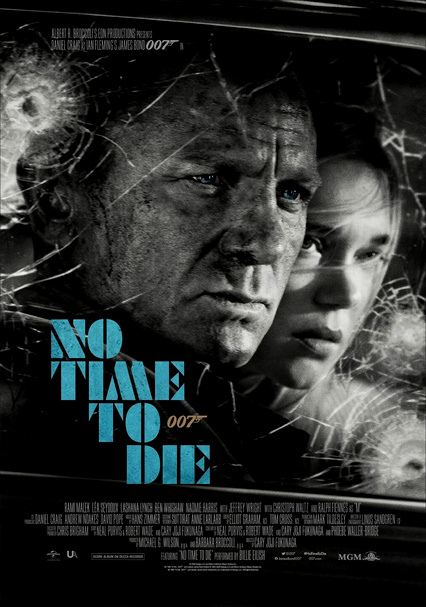
No Time to Die-2021

No Time to Die-2021

Director Cary Joji Fukunaga

Starring Daniel Craig

Scott’s Review #1,236

Reviewed March 6, 2022

Grade: A-

Celebrating the twenty-fifth in the iconic James Bond film franchise, No Time to Die (2021) is Daniel Craig’s fifth and final appearance as the British MI6 agent.

As of this writing, it is yet to be determined who will next step into the shoes of the legendary character, but Craig was able to make the character his own since his debut in Casino Royale (2006).

He retains his hunky and muscular portrayal with a sullen and serious tone.

No Time to Die is visually and stylistically similar to the recent handful of films that came before it, with a slick and modern look and feel.

The difference is that the film is about relationships and has a shocking conclusion that nearly rivals Mrs. James Bond’s death in On Her Majesty’s Secret Service way back in 1969.

James Bond utters a few quips or one-liners, and we can agree that Craig does not play the character in the same way that Roger Moore did. But, there exists a dark and dreary tone throughout and more than one surprising death.

It’s a serious affair.

I love the parallels to On Her Majesty’s Secret Service that emerge mainly in the beginning and end of the film.

The inclusion of the famous Louis Armstrong song ‘We Have All the Time in the World’ recalls both love and loss experienced by Bond and is played in full during the closing credits.

This is a special treat for fans of that film, myself included. I felt emotionally connected to No Time to Die, which was a significant score for it.

In an extended opening sequence, a young girl named Madeleine witnesses the murder of her mother by terrorist Lyutsifer Safin in a failed attempt to murder her father, Mr. White (appearing in Casino Royale). Madeleine shoots Safin (Rami Malek), but he survives and rescues her after she falls into a frozen lake. This connects them for life.

In the present, after the capture of villain Blofeld, Madeleine (Léa Seydoux) is vacationing in Southern Italy with Bond when Spectre’s assassins ambush him. He incorrectly assumes Madelaine has betrayed him, and he ends their relationship after they escape death.

Depressed, Bond retires to Jamaica but returns to action after his friend Felix Leiter (Jeffrey Wright) from the CIA turns up asking for help. The mission to rescue a kidnapped scientist turns out to be far more treacherous than expected, leading Bond onto the trail of a mysterious villain armed with dangerous new technology.

With the emotional and relationship investments successfully sealed, any worthy Bond film should have great action with interesting locales, stellar villains, and relevant Bond girls. In this regard, the film gets a solid B+ with those as mentioned earlier, bumping it up a notch.

The chase throughout southern Italy is fabulous, with delicious scenery of the culturally lavish country getting the film off to a fast start.

Other sequences in Chile and Cuba show the sophistication and investment in quality locales. Naturally, London is heavily featured, and I adore the grand and frequent aerial views that allow prominent landmarks to be discovered.

Although actor Malek can be creepy in his roles and play a dastardly villain, I wasn’t delighted with the character of Safin. Not appearing in an obvious fashion until midway through his screen time is limited, and his motivations murky- I wanted more.

The casting is terrific, but the character is underwhelming and not explored to his full potential.

Christoph Waltz’s limited appearance as an imprisoned Blofeld is excellent, and double agent Logan Ash (Billy Magnussen) and scientist Obruchev (David Dencik) prove quality secondary villains.

The storyline with Felix and the returns of Moneypenny, Q, and M (now played by Ralph Fiennes) is solid.

Main Bond girl Madelaine did not win me over at first, but by the end, I was heavily invested, especially since she is a powerful female character and a true romantic partner to Bond. A new female 007, played by Lashana Lynch, is a progressive inclusion that breathes new life into MI6.

May both appear in the future?

Time, and perhaps another viewing, will determine how No Time to Die (2021) ranks compared to other Bond films. At a hefty two hours and forty-three minutes, the film drags in the middle section, and some characters receive limited exploration.

The nods to history and the heavy emotional investment kept me glued to my seat.

Oscar Nominations: 1 win-Best Original Song-“No Time to Die” (won), Best Sound, Best Visual Effects

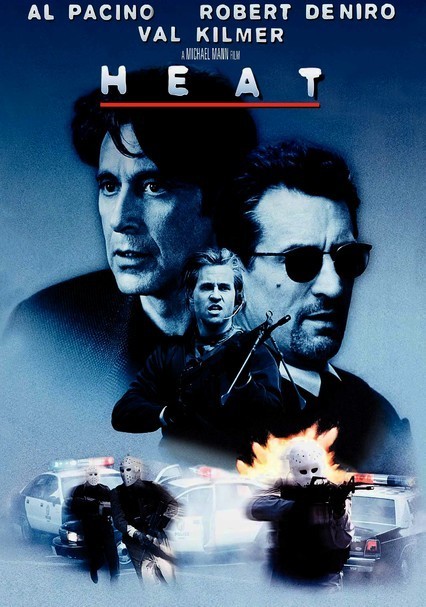
Heat-1995

Heat-1995

Director Michael Mann

Starring Al Pacino, Robert De Niro

Scott’s Review #1,228

Reviewed February 12, 2022

Grade: A-

Fans of the popular 1980s NBC television series, Miami Vice, will recall that Michael Mann was the Executive Producer of the show during its run.

He has a distinctive crime-thriller style that pairs perfectly with Heat, a sizzling 1995 offering starring two film greats, Al Pacino and Robert De Niro.

The fact that the pair do not appear together on screen too often can be forgiven because, when they do, the stars align, and the power of quiet scenes cannot be outdone. I savored the moment when they first appeared together.

Quality over quantity.

De Niro plays Neil McCauley, a lifelong criminal who is trying to handle the damage caused by one of his men while also planning one last big heist before retiring to parts unknown.

He meets a lovely young Los Angeles-based artist, played by Amy Brenneman, in a diner, and the two plan to relocate abroad.

Meanwhile, Lieutenant Hanna (Al Pacino) is a seasoned officer attempting to track down McCauley and his cohort while dealing with the chaos in his own life, including his wife’s (Diane Venora) infidelity and his stepdaughter’s (Natalie Portman) unhinged mental health.

McCauley and Hanna discover mutual respect, even as they try to thwart each other’s plans. The two characters become doppelgangers of one another.

The situation culminates in a cat-and-mouse chase on the tarmac at LAX airport.

To say that Heat is a by-the-numbers 1990s thriller is a fair assessment, although it’s way better than that classification, and it’s of that genre.

For starters, the acting is superior, and obviously, De Niro and Pacino bring a level of professionalism to the film in the lead roles.

My favorite scene is not the one you’d most expect me to say, but rather a quiet and powerful chit-chat in a small coffee shop. They are rivals, having lived opposite lives, yet their troubled lives mirror each other.

Without a doubt, Hanna wants to bring McCauley to justice, yet he admires him and sees parts of himself in him. The feeling is mutual, and the two actors relay this revelation without actually speaking the words.

Viewers immerse themselves in the characters, pivoting from this powerful scene.

There are a ton of characters in Heat, but each one feels like they have much to offer.

Juicy storylines are introduced but never forgotten, even if not part of the main canvas. Hanna’s wife and stepdaughter play a central role in the final act, even though they appear only in the first chapter.

In supporting roles, Val Kilmer and Ashley Judd share beautiful chemistry and a melancholy storyline as a damaged couple trying to survive surrounded by a life of crime.

At two hours and fifty-two minutes, there is plenty of time for each character to make their mark.

I love the rich character development that Heat offers, but sometimes it’s admittedly tough to keep track of the characters’ motivations and how they tie into the main action.

Mann’s style is all over the place, and even the musical score brought me back to the episodic song intervals that Miami Vice created.

The moody, dark atmosphere of dingy, crime-infested Los Angeles is perfectly set against glossy, glamorous high-rise and sprawling estate scenes. The bright and luminous city skyline is a feast for the eyes.

The cop/criminal dynamic is the main draw as Heat flexes its masculine muscles scene after scene. A bloody bank heist gone wrong at the beginning of the film cements what Mann is trying to create here.

A guy’s film with enough juice to hook the introspective film viewer, too.

Not remembered as well as it probably should be, Heat holds up surprisingly well when compared to similar but hokey 1990s action films like Lethal Weapon and the Die Hard films.

Though there’s not a whole lot new in Heat (1995), rich writing and powerful acting win out every time, and, of course, Pacino and De Niro are worth the price of admission.

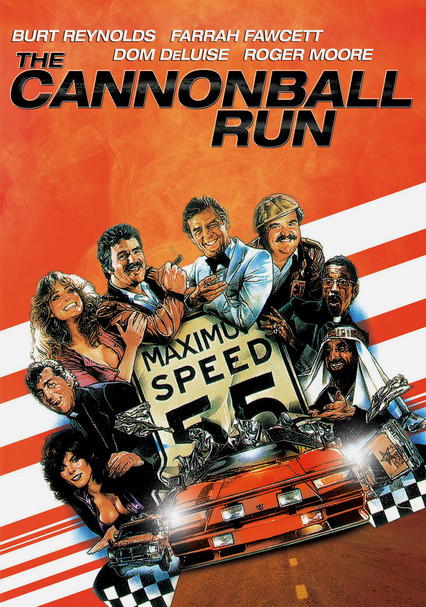
The Cannonball Run-1981

The Cannonball Run-1981

Director Hal Needham

Starring Burt Reynolds, Roger Moore, Farrah Fawcett

Scott’s Review #1,204

Reviewed December 4, 2021

Grade: B-

The Cannonball Run (1981) is someone’s idea of collecting big film and television stars of the time and throwing them into a film with a pointless plot about cross-country road racing.

Truth be told, it’s a pretty bad film.

But it’s a fun way to spend 90 minutes seeing a multitude of celebrities in both cameos and leading roles. Otherwise, The Cannonball Run should be skipped.

Taking a glance at the list of players, we have Burt Reynolds, Farrah Fawcett, Roger Moore, Sammy Davis Jr., Dom DeLuise, Peter Fonda, Dean Martin, Jamie Farr, Jackie Chan, Bert Convy, and Terry Bradshaw.

Hopefully, the actors had a good time making the film.

The acting is not stellar, and one wonders if many of the cast phoned it in or even read much of the script. The out-takes look like everyone was having one grand old time.  And whether some were even sober during the shooting is debatable.

The film is loosely based on the 1979 running of an actual cross-country outlaw road race in the United States, beginning in Connecticut and ending in California.

It was one of 1981’s most successful films at the box office, which is a scary realization. It was followed by two forgettable sequels- Cannonball Run II (1984) and Speed Zone (1989).

Feeling very thrown together, director Hal Needham is most known for collaborations with Burt Reynolds involving cars and car chases, so the plot, if one wants to call it that, is right up his alley.

Race teams gather in Connecticut to start a cross-country car race. One at a time, teams drive up to the starters’ stand, punch a time card to record their departure time, and then take off.

The reward for the winner is one million dollars. A representative of the “Safety Enforcement Unit” tries to stop the race due to its environmental impact and safety concerns.

Various teams are shown either evading law enforcement, most of which deal with talking their way out of a possible ticket, or concocting crazy schemes to outmaneuver their opponents.

The winner of the race is rather unimportant.

It’s all silly and not to be taken seriously. There are plenty of stereotypes, like Jamie Farr’s Middle-Eastern wealthy sheik driving a Rolls-Royce and the inevitable scantily clad females in tight wear.

Despite The Cannonball Run being riddled with enough negative aspects to make me hate the film, it’s kind of fun.

The bevy of different vehicles, like an ambulance, an Aston Martin DB5 (driven by Moore’s James Bond, imitating the character, of course), a Ferrari, and a Chevrolet Malibu, are all entertaining.

There is no character development, nor are there any characters with any depth, so the only reason to see the film is for the speedy cars and the competition.

And to see which celebrity will appear next.

A slapstick film that makes even the similarly penned Smokey and the Bandit (1977) seem like high art, The Cannonball Run (1981) is a must-see only for genre fans or those who are willing to watch and perhaps even be entertained by any movie.

I haven’t seen the film in eons, but I can imagine it’s a film only meant for its time and now would feel incredibly dated.

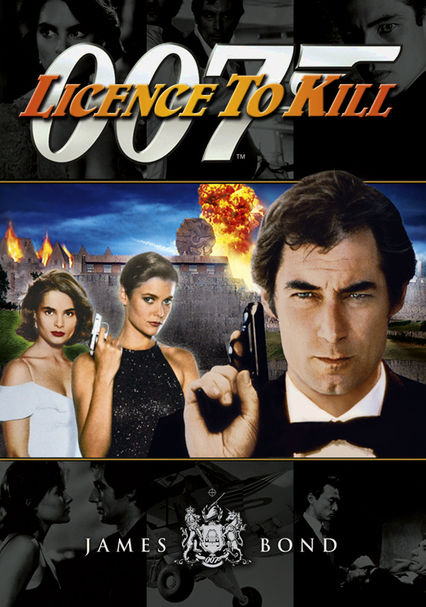
Licence to Kill-1989

Licence to Kill-1989

Director John Glen

Starring Timothy Dalton

Scott’s Review #1,196

Reviewed November 14, 2021

Grade: B

Of the two turns 007 that Timothy Dalton gave us, Licence to Kill (1989) ranks as the weakest, with The Living Daylights (1987) being superior. But that doesn’t mean the film has no good qualities.

It’s an okay film, and director John Glen, now returning for his fifth James Bond film, seems a little out of gas. Many of the stunts and sequences are very familiar territory, and the dialogue is far from crackling or exciting.

The James Bond film franchise would go on a six-year hiatus after Licence to Kill, returning refreshed in 1995. Perhaps it needed to.

Dalton does his best, but his heart doesn’t quite seem in it, and the serious tone of the film gets even darker than The Living Daylights.

I don’t think this is a bad thing, and I love how the franchise regular, Felix Leiter (David Hedison), gets more of a storyline. But the wit and charm are lacking.

Events begin in sunny Key West at the impending nuptials of former CIA agent and Bond friend, Leiter. Pursuing one of the international drug cartel’s most brutal and powerful leaders, Franz Sanchez (Robert Davi), events quickly escalate.

After a double-cross, poor Felix is fed to the sharks. While he survives the attack, his wife is murdered. Bond goes rogue and seeks personal vengeance.

What separates Licence to Kill from other Bond entries is the limited locales. Though exquisite, they occur only in North America. The Florida Keys, the Bahamas, and Mexico are used in fine form, especially the latter.

The gorgeous coastline feels European, and I surmised that it was shot and set in Spain when, in fact, it was Mexico.

Also enjoyable is the Latin flair, with lots of cultural influences throughout. Davi is as powerful and dangerous as the Latin drug lord, and he exudes violence and treachery. He is gleeful when a nemesis falls victim to his pet shark and loses a limb or two before succumbing to death.

A great kill is when dastardly Milton Krest (Anthony Zerbe) topples into a giant microwave oven and explodes into bloody bits. His death is deserved and satisfying.

To build on this, the inevitable death of Sanchez himself is a crowd-cheering moment. Before he explodes into a giant ball of flames, Bond is certain to let the villain know that his death is courtesy of Leiter.

This is an exciting and fulfilling moment.

The Bond girls are not at their finest in Licence to Kill. Carey Lowell plays Pam Bouvier, an ex-Army pilot and DEA informant. While sometimes portrayed as a tough-minded and brazen female character, she is also written as simpering and pining over Bond.

She can also be silly and foolhardy, like when she carelessly plays with dangerous gadgets that Q creates. I would expect greater intelligence and wherewithal given her credentials.

Secondary Bond girl Lupe Lamora (Talisa Soto), Sanchez’s girlfriend, lacks depth. Beautiful, she is quite wooden in the acting department and suddenly falls in love with Bond, insisting on her powerful feelings for the man she barely knows.

It’s a bit far-fetched even for Bond standards, but she is nice to look at.

So there’s that.

Licence to Kill (1989) is usually either lost in the shuffle or derided outright, and that is unfair. It’s not one of the greats, but it’s not garbage either.

It feels a bit tired of its time. Truth be told, it’s grown on me since I first saw it, and even the title song performed by Gladys Knight has enamored me over the years.

The Living Daylights-1987

The Living Daylights-1987

Director John Glen

Starring Timothy Dalton

Scott’s Review #1,194

Reviewed November 12, 2021

Grade: B+

It’s 1987, and Timothy Dalton is the new James Bond, having replaced the aging Roger Moore. Moore made seven Bond films.

Dalton’s reign was brief, and he made only two films: The Living Daylights (1987) and License to Kill (1989).

The Living Daylights is a fine Bond film ranking somewhere midstream with Best Of lists.

I completely agree with this sentiment, as it mostly borrows from other Bond films or stays true to the course, delivering a quality action film with all the typical trimmings a fan would expect from the franchise.

Nothing wrong with that.

This is unsurprising since director John Glen is at the helm once again. Responsible for directing the three prior Bond films- For Your Eyes Only (1981), Octopussy (1983), and A View To A Kill (1985)- he knows how to create a decent picture, and he does just that.

The main issue is with Dalton himself. Handsome, dashing, and British, he doesn’t quite possess the charisma that other Bonds like Moore, Connery, or Lazenby had. There is a seriousness to the actor and a lack of a smirk or wink in his eye that makes fans melt like putty in his hands.

The action commences with British secret agent James Bond (Dalton) helping KGB officer Georgi Koskov (Jeroen Krabbé) defect during a symphony performance. A mysterious blonde woman who plays cello immediately catches Bond’s attention for more than one reason.

She is Russian assassin Kara Milovy (Maryam d’Abo). Predictably, as events unfold, they become madly in love (or lust).

Koskov reveals that the new KGB head has instated a policy of assassinating defectors, Leonid Pushkin (John Rhys-Davies). But as Bond explores this threat, a counterplot surfaces, involving a shady American arms dealer (Joe Don Baker). Bond must thwart the evildoer’s fiendish plans and save the world from disaster.

The plot is secondary and difficult to follow, but the gist is the same as any other Bond film.

The fun (for me, anyway) is in enjoying the exquisite locales the film takes Bond to.

I salivated at the gorgeous concert hall and the surrounding areas of Czechoslovakia (pre-Czech Republic) and was mesmerized as the action moved to the stark desert lands of Afghanistan and Morocco, and finally into historic Austria.

The pre-title sequence was filmed on the Rock of Gibraltar and is utterly fabulous.

With every Bond film, this is a real treat and a major source of enjoyment. The Living Daylights doesn’t disappoint in this regard.

The finale aboard a speeding airplane is pulsating, edge-of-your-seat fun. Fights, ticking time bombs, and impending peril keep the action moving at a breakneck speed.

The villains lack much gusto, save for a hunky blonde assassin named Necros (Andreas Wisniewski), who enjoys prancing around in skimpy swimwear and who may or may not be gay.

In a more progressive Bond, they might have had a dalliance.  The main antagonists, Brad Whitaker, an arms-dealing General, and Koskov, are too goofy to pose any real danger or feel diabolical.

Also forgettable is the main Bond girl. Maryam d’Abo is an okay actress, but lacks much chemistry with Dalton. Their adventures are appealing, but more as buddies, and the romance didn’t work for me. He does respect her more than other Bonds would, so that is a win.

Delightful is the title theme song performed by the band A-Ha, which is catchy enough to stick in my head as I write this review. It is exotic and upbeat. Its standard inclusion in the opening credits makes the cheesy sequence more bearable.

Undoubtedly intended to launch a long and storied career as the new James Bond, Dalton lasted only briefly in the role.

The Living Daylights (1987) presents a Cold War theme that remains relevant but feels slightly tired by today’s standards. As usual, unless we’re talking about one of the superior Bond films, the locales are the real highlight.

For Your Eyes Only-1981

For Your Eyes Only-1981

Director John Glen

Starring Roger Moore

Scott’s Review #1,185

Reviewed October 10, 2021

Grade: B+

Following the outrageousness of 1979’s Moonraker, a film I nonetheless find enjoyable, the decision was made to bring James Bond back to earth in the next chapter.

For Your Eyes Only (1981) has matured well over the years and is an above-average entry among my all-time James Bond list.

The main Bond girl and the villain are not as top-notch as other Bond films, but the action, suspense, and nods to Bond history are fantastic, as is the grittier look and feel.

And, the locales of Italy and Greece are breathtaking.

The title song, a sleek and syrupy love ballad performed by Sheena Easton, is a favorite of mine and is instantly recognizable in association with the film. It charted at number one and sold a gazillion copies.

The plot is typical of a James Bond film.

After a British ship is sunk in foreign waters, the world’s superpowers begin a feverish race to find its cargo: a nuclear submarine control system.

And 007 (Roger Moore) is thrust into the middle of the action as he aligns with Melina Havelock (Carole Bouquet), Milos Columbo (Topol), and others to thwart the fiendish plans of the villainous Kristatos (Julian Glover).

The story is rather secondary to the enjoyment of the film, and I quickly stopped trying to follow every plot point or detail. It’s not that important to know who every bad guy is or what their motivations are.

There is a plot to take over the world, and there you have it.

I adore the opening sequence when Bond visits the gravestone of his deceased wife, Teresa. This tender moment immediately made me reflect on the merits of On Her Majesty’s Secret Service (1969) and the humanistic tone the film conveyed.

Bond then engages in a thrilling helicopter chase with arch-rival Blofeld, which parleys into the opening credits with the title song as a backdrop.

This first sequence has nothing to do with the rest of the film, but the London shots of Big Ben and other historical treats are fabulous. And it’s just dessert to see Blofeld dumped into a massive chimney and presumably to his death.

Bond historians will love this.

The film is recommended to be watched in the winter months, as the snowy and icy scenes work better then. It could be a warm-up act to On Her Majesty’s Secret Service or From Russia With Love (1963), also cold-feeling Bond films.

I didn’t perceive much chemistry between Moore and Bouquet, but their lack of it didn’t ruin the film for me. The thirty-year age difference didn’t help matters, but at least James Bond had the decency not to bed the horny underage figure skater, Bibi Dahl (Lynn-Holly Johnson).

Her character is played for laughs, and her schoolgirl crush on Bond is cute.

Kristatos isn’t the most memorable villain either. His true colors aren’t revealed until late in the game, and his motivations are a stretch. I didn’t buy him as a former war hero and an ally-turned-smuggler.

Nonetheless, Glover plays him straightforwardly, and a compelling sequence occurs when he attempts to kill Bond and Melina with his massive boat and hungry sharks.

Topol, well-known for his role as Tevye in Fiddler on the Roof (1971), is great to see as one of Bond’s allies. The actor’s distinctive voice is tough to miss, though I half-expected him to break into “If I Were a Rich Man” at any moment.

The final sequence atop the Monastery of the Holy Trinity, an Eastern Orthodox monastery in Greece, is terrific and quite justifiably the highlight.

Bond dangles for his life as a henchman slowly breaks each of Bond’s rock climbing stakes, which is a nail-biting and suspenseful scene, even though you know that Bond will find his escape.

Flying under the radar, For Your Eyes Only (1981) is delightful for the locales and action sequences alone.

Dragging slightly midway and lacking a memorable Bond girl or villain, it offers a darker story and fewer cheeky moments. This is refreshing following a silly trip to the moon.

The villains are more dangerous than cartoonish, and the extreme locales and historical throwbacks make this an appreciated effort.

Oscar Nominations: Best Original Song-“For Your Eyes Only”

Ocean’s Twelve-2004

Ocean’s Twelve-2004

Director Steven Soderbergh

Starring George Clooney

Scott’s Review #1,157

Reviewed June 30, 2021

Grade: B-

The casino heist gang is back together again for more action and adventure in a film that was only made because of the success of its predecessor, Ocean’s Eleven (2001).

The uninspiring title of the film, Ocean’s Twelve (2004), is a letdown compared to the fantastic and enthralling 2001 film.

What felt like a purely original idea, even though it was a remake, now feels like stale bread that was fresh only yesterday.

Thankfully, Steven Soderbergh returns to the fold, adding some style and solid direction.

The story is slow to kick off and provides an implausible and unconventional ending that doesn’t work, nearly negating most of the previous activity.

There is something a bit irritating about watching a film knowing it was made for only one reason, and that the plot seems rushed and poorly thought out.

But that’s Hollywood.

Undoubtedly, George Clooney, Brad Pitt, Matt Damon, Julia Roberts, Catherine Zeta-Jones, and other top talent enjoyed hefty paychecks.

This is also concerning, as the performances come across as ho-hum and seem to be driven by the big bucks being deposited into big bank accounts for services rendered.

The inauthenticity all around is evident in lazy acting and writing.

The foil and mark, Terry Benedict, once again played by Andy Garcia, realizes that the gang has robbed him of millions and demands the money back with interest.

Unfortunately, much of it has already been spent.

Unable to come up with the cash, the crew must come together to pull off another series of heists, this time in Europe.

Presumably, they are not well known there.

Being “forced” to do what the career criminals love to do is far-fetched.

Danny (George Clooney) and the gang hatch a plan to swap a Fabergé Imperial Coronation Egg for a holographic recreation. Linus (Damon) comes up with a second plan involving Danny’s wife, Tess (Julia Roberts), posing as a pregnant woman to get close to the Egg and swap it.

They are foiled by Lahiri (Catherine Zeta-Jones), and coincidentally, Bruce Willis, and the rest of the group is captured.

While it’s slightly clever having Willis and Roberts appear as themselves, especially when Julia Roberts plays another character in the film, it doesn’t work as well as it sounds on paper.

The story is way too convoluted, and Ocean’s Twelve quickly turns into the sort of film you tune out of, enjoying the non-story points more than the written word. In this case, that’s not a positive aspect.

The film’s successes, mainly the return of the A-list cast, are also negative.

While it’s fun to reconnect with familiar characters like Danny Ocean, Rusty (Pitt), and Linus, we know the characters too well, and they become caricatures. Meaning they behave exactly as one would expect.

Still, it is admittedly juicy and exciting to witness so many A-listers on one big screen, especially when there is trickery, scheming, and just a hint of romance to be had.

I’ll also take part in just about any film that goes on location in Paris, Rome, Monte Carlo, and Amsterdam. It’s an orgy of European history and goodness, adding cultural trimmings to a sub-par storyline.

Particularly inviting are the villa scenes set in the lush Lake Como.

Ocean’s Twelve (2004) will please only those who are obsessed enough with the franchise to enjoy what is a retread of the 2001 film, set in various parts of Europe rather than Las Vegas.

It isn’t nearly enough for me, as most cleverness and bright, crisp writing are gone.