Category Archives: Paris

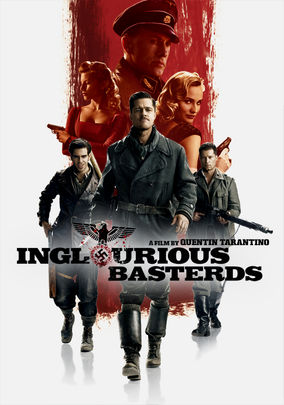
Inglourious Basterds-2009

Inglourious Basterds-2009

Director Quentin Tarantino

Starring Mélanie Laurent, Christoph Waltz, Brad Pitt

Top 250 Films #92

Scott’s Review #589
Reviewed January 7, 2017

Grade: A

Inglorious Basterds (2009) is simply a great movie.

Blending many film genres, it is hard to categorize, but that is because it is a Quentin Tarantino film, and that says it all.

The film as a whole contains excellent acting, is wonderfully shot, and is extremely detail-oriented, plus it has the familiar “Tarantino” style of music and sound, the chapter breakdown, and the heavy violence.

Set mainly in German-occupied France during the early 1940s during World War II, the action centers around two stories: Shosanna (Mélanie Laurent), a teenage girl whose entire family is killed after being discovered hidden by a dairy farmer.

He is a Jewish sympathizer, and Shosanna barely escapes with her life when an SS Colonel, brilliantly played by Christoph Waltz, interrogates the man.

Three years later, now living in Paris and owning a cinema, she plots her revenge. The other story is also of a revenge plot by a group of Jewish-American soldiers to kill as many Nazis as possible.

Both stories eventually intersect with a grand finale inside a cinema.

The story itself is richly nuanced and unlike many generic films of today. The fantastic set design and the perfection of every last set-piece are amazing.

Long scenes play out slowly but bristle with authenticity and good dialogue.

Take the first scene, for example- as the SS Colonel, aptly nicknamed the “Jew Hunter,” plays cat and mouse with the dairy farmer, politely asking for two glasses of milk, the audience knows the payoff will be huge, but the conversation crackles with good dialogue.

What strikes me most about the film is the intelligent writing.

The many scenes of conversations between characters, a chat over strudel and cream, a trivia game at a bar, and the aforementioned scene at the farmhouse crackle with unique, clever written dialogue, so the scenes are far from mere filler.

Of course, this is also a characteristic of Tarantino.

At over two and a half hours, Inglourious Basterds (2009) is long but satisfying.

My only criticism is of Brad Pitt. I didn’t buy him as a Tarantino guy and found his character the only weak point of the film. His southern drawl did not draw me in like I thought it might.

He was touted as the main character (perhaps because he was the biggest star), but he plays a supporting role.

Oscar Nominations: 1 win-Best Picture, Best Director-Quentin Tarantino, Best Supporting Actor-Christoph Waltz (won), Best Original Screenplay, Best Sound Editing, Best Sound Mixing, Best Cinematography, Best Film Editing

An American in Paris-1951

An American in Paris-1951

Director Vincente Minnelli

Starring Gene Kelly

Top 250 Films #113

Scott’s Review #120

Reviewed July 19, 2014

Grade: B+

A classic film directed by Vincente Minnelli, An American in Paris is a musical from 1951 set in marvelous Paris- though, to be fair, the entire movie, save for the opening scenes of Paris, is shot exclusively on a sound stage.

Gene Kelly stars as Jerry Mulligan, a struggling American artist who lives in a quiet neighborhood with his best friend, Adam Cook.

Jerry optimistically sings and tap-dances his way through life, befriending neighbors and school kids and spending time at the local cafe until he is finally noticed by wealthy art buyer Milo, played by Nina Foch.

This sets off a quadrangle when Jerry falls for youthful Lise (Leslie Caron), already dating a suave French singer, Georges Guetary.

An American in Paris is a cheerful fantasy film. It is bright and colorful and filled with musical numbers and dancing.

Highlights in this department are “‘S Wonderful” and “I Got Rhythm”.

The brilliance lies in the incredible eighteen-minute epic finale, which features Gene Kelly’s ballet on Parisian sets designed by various artists. It is as innovative as anything in film history.

The film’s drawback is the lack of chemistry between Kelly and Caron, which I notice more with each passing viewing.

There is more chemistry between Kelly and Foch, who is meant to be the odd woman out, and I still find myself rooting for them rather than the intended couple.

I love that none of the four characters in the story is a villain, which adds to the film’s merry feel.

The predictable ending is fantastic and romantic.

An American in Paris won the 1951 Best Picture Oscar, upsetting the heavily favored A Streetcar Named Desire.

Oscar Nominations: 6 wins-Best Motion Picture (won), Best Director-Vincente Minnelli, Best Story and Screenplay (won), Best Scoring of a Musical Picture (won), Best Art Direction, Color (won), Best Cinematography, Color (won), Best Costume Design, Color (won), Best Film Editing

Golden Globe Nominations: 1 win-Best Motion Picture-Musical or Comedy (won), Best Director-Motion Picture-Vincente Minnelli, Best Performance by an Actor in a Motion Picture-Musical or Comedy-Gene Kelly

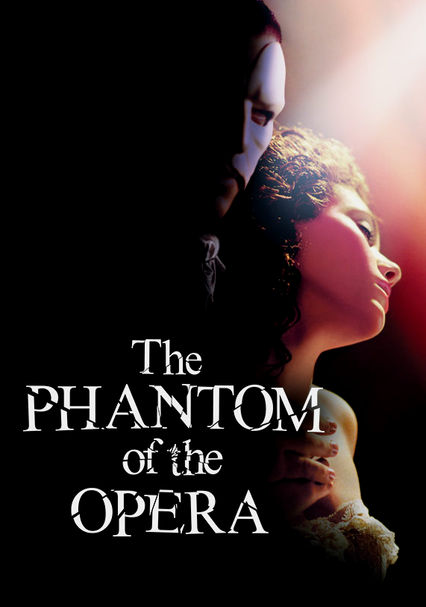
The Phantom of the Opera-2004

The Phantom of the Opera-2004

Director Joel Schumacher

Starring Gerard Butler, Emmy Rossum

Scott’s Review #1,336

Reviewed January 23, 2023

Grade: A-

Having been fortunate enough to see the legendary Broadway production of The Phantom of the Opera makes any film version seem impossible to compare to the live stage show.

The lights, the sets, the booming music, the dreaded chandelier, and presumably phenomenal acting all make for an unforgettable experience.

Since we are talking film, the cinematic version of The Phantom of the Opera (2004) is breathtaking and nearly twenty years late to the game; I should be scolded for not having seen it earlier, like when it was initially released.

It’s based on Andrew Lloyd Webber’s 1986 musical of the same name, which in turn is based on the 1910 French novel Le Fantôme de l’Opéra by Gaston Leroux.

Critics were not kind to the film, though most audiences liked it, so I almost didn’t see it, save for my hubby renting it and encouraging us to watch it.

I am glad I did because this film encompasses a feast of riches.

I wonder aloud if the fact that it was directed by Joel Schumacher, who created the dreadfully bad Batman & Robin, made seven years earlier in 1997, influenced the bad reviews.

After all, nobody likes their superhero movies butchered, and payback’s a bitch after all.

For the novice fan, the summary is as follows. Gerard Butler stars as the disfigured, reclusive Phantom who roams beneath the Paris Opera and takes budding star Christine (Emmy Rossum) under his wing.

But as he falls for her, she finds love with handsome and porcelain-like Raoul, played by Patrick Wilson, leaving the Phantom none too pleased.

If nothing else, and there is something else, the film is a spectacle. Gorgeous Parisian sophistication drips from the screen in nearly every scene, from the gloomy catacombs to the enthralling opera stage.

The costumes reek of French style, glamour, and texture, and the principal cast is easy on the eyes, to say the least.

These treats are merely a warm-up for the astounding, professional art direction, making the winter sequences dreamlike and gothic while perfectly capturing the tone.

This encapsulates the dire sequence of events and helps the viewer feel the Phantom’s pain.

The all-too-familiar numbers are modernized in just the right places, especially “The Music of the Night,” which could have been played on popular radio stations.

The lively “Masquerade” parleys into the lovely “The Phantom of the Opera” duet between the Phantom and Christine in his ugly lair.

I didn’t feel the chemistry between Rossum and Wilson the same way I did between Butler and Rossum, and maybe that’s the point. Wilson has little to work with, since the character isn’t the main attraction.

I never wanted Christine to ride off into the unknown with Raoul, but I ached for the pain that the Phantom felt for Christine’s kindness.

As much as I like Wilson the actor, I champion the casting of Rossum (unknown at this time) and Butler, who is the top draw in the talent department.

His loud, colorful musical numbers enrapture me as a viewer and grip me with their pain. The passion and magnificence are on full display.

Butler is my favorite actor.

Minnie Driver is perfect as the spoiled diva, and the supporting cast, including veteran Simon Callow, lends further credibility.

I was transported to another world while watching The Phantom of the Opera (2004) by the sheer extravagance on the screen. Schumacher more than deserves top accolades and respect for his production.

Oscar Nominations: Best Art Direction, Best Cinematography, Best Original Song-“Learn To Be Lonely”

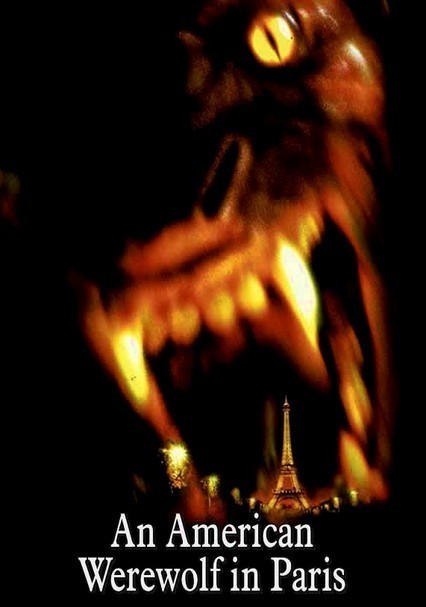
An American Werewolf in Paris-1997

An American Werewolf in Paris-1997

Director Anthony Waller

Starring Thomas Everett Scott, Julie Delpy

Scott’s Review #1,289

Reviewed August 12, 2022

Grade: C+

While fun, An American Werewolf in London (1981) is not in my top 10 best horror films ever.

Werewolf flicks were never my go-to films in the genre, and while I appreciate the incorporated humor, the product is entertaining but not much more.

I’ve gained more appreciation for that film than for the follow-up, the haphazard and goofy An American Werewolf in Paris (1997).

The only elements it gets right are culturally satisfying locale shots of Paris, France, and an underappreciated starring role by charismatic actor Thomas Everett Scott.

An American Werewolf in Paris is a completely watered-down version of An American Werewolf in London, but with little to no connection to it. Considering the sister European cities, it’s a missed opportunity and quite a shame that cross-connection wasn’t utilized.

Three handsome young American male tourists traverse Europe for some fun and, naturally, to meet females. The main focal point is Andy (Everett Scott), who is virginal and serious.

The group arrives in Paris and witnesses an attempted suicide by Parisian Serafine Pigot (Julie Delpy). Andy can amazingly save her from jumping off the Eiffel Tower by diving after her and catching her in the nick of time.

He is injured and transported to the hospital, but eventually locates Serafine.

While on a date at a nightclub with her, Andy is suddenly attacked and bitten by a werewolf. The next day, he discovers that Serafine is also a lycanthrope and that he is beginning his transformation into one of the beasts.

The overall tone of An American Werewolf in Paris is silly and amateurish. The situations work poorly, like when Andy and Serafine are having coffee at a Paris cafe, and he pretends a condom he is chewing is bubble gum.

Later, he stumbles upon ditzy American Amy Finch (Julie Bowen), and they have a graveyard adventure that leaves her un-dead and vowing revenge on Andy.

Anyone expecting authenticity, like the full nudity of the human/werewolf during the transformation, will be severely disappointed by the deliberate lack of skin; the actress, Delpy, bares her breasts.

Otherwise, it’s bare chests only for the males, which is unfair to viewers expecting the running-through-the-forest-naked sequences as in An American Werewolf in London.

It’s a stretch that both Andy and Serafine catapult from the Eiffel Tower and, later, the Statue of Liberty, with barely more than a scratch and very little peril to enjoy.

The wacky plot involves bad-guy Claude (Pierre Cosso), his henchmen, and a drug that induces transformation.

They hold a Fourth of July party to attract American tourists to slaughter, and Serafine’s stepfather is revealed to have created a drug with the opposite intention that led Serafine to kill her mother accidentally.

It’s all weak and uninspired, making an overcomplicated storyline increasingly contrived as the film progresses.

The makeup during the transformation sequences is lacking, especially compared with the superior special effects of An American Werewolf in London.

The CGI used looks fake. And, how could you not compare the two films?

Despite all of the negatives, An American Werewolf in Paris has a moderate presence of fun, but only when Everett Scott appears. He, as Andy, is such a likable guy, wearing his heart on his sleeve, that we root for him to ride off into the sunset with Serafine.

Everett Scott and Delpy don’t have the greatest chemistry, but this can be forgiven because the film is really about the werewolves.

There are no characters to root for besides Andy, and every Parisian character is written as inflexible or as any number of French stereotypes. The only relevant Parisian references are the locales, though most are built sets to replicate the real places.

There is little need ever to see An American Werewolf in Paris (1997) again, since it pales in comparison to the superior An American Werewolf in London (1981).

Irréversible-2002

Irréversible-2002

Director Gaspar Noé

Starring Monica Bellucci, Vincent Cassel

Top 10 Most Disturbing Films #4

Scott’s Review #375

60026141

Reviewed February 7, 2016

Grade: C+

As I ponder my review of Irréversible,  a 2002 French thriller and “art film”, I am attempting (as I always do) to look at the film critically, from a story and a technical standpoint, as well as a myriad of other aspects that make up a film.

This is admittedly a toughie.

On the surface, I despised the film wholeheartedly (more on that later), but from a critical standpoint, I found characteristics to admire and give credit to.

One thing is for certain- I never want to see this film again.

The story is told in a non-linear style, begins after the story, and works backward, which I credit the film for, giving it a unique storytelling experience, cleverly done.

Two Parisian friends, Marcus and Pierre, go on a rampage after Marcus’s girlfriend is brutally raped and beaten.

In panic mode, they learn the name of the attacker (Le Tenia) and go to a gay BDSM club aptly named “The Rectum”, a place the attacker requests, where they fervently search for him all the while beating club-goers and cause havoc.

Since the story is told in reverse, the audience is initially in a state of confusion at the events transpiring, and the jagged, shaky camera work, a very creative technique, only adds to the chaos.

We only know that two maniacs are running rampant, destroying everything in their path.

Slowly, we realize what their motivation is as we work backward.

We are introduced to Alex, a beautiful young woman- in the early stages of pregnancy, who is Marcus’s steady, but used to date, Pierre. They are all very good friends.

We see the romance between Marcus and Alex, and, working even further backward, we see Alex sitting alone in a park, reading a novel, and enjoying a bright, pleasant day in the park.

This peaceful closing scene contrasts drastically with the rest of the dark film. The film then becomes a flashing, frenetic, black-and-white experience, which I do not understand.

The film is quite bizarre and intensely brutal. The rape of Alex in a dark, gloomy underpass is one of the most intense and disturbing scenes I have ever witnessed in the film, and at one point I needed to leave the room briefly.

The scene is ten minutes in length and Alex is anally raped and then beaten into a comatose state. It is a sickening scene and we witness her pain, misery, and humiliation.

When Pierre and Marcus avenge her rape on who they think is Le Tenia, the scene is also extremely brutal.

After (supposed) Le Tenia is captured by them, he attempts to rape Marcus, and Pierre grabs a fire extinguisher and bashes the victim to death as the face is repeatedly destroyed in full detail.

It is a tough scene to watch.

I question the motivations of the director wholeheartedly and wonder if he intended to story-tell, or simply make as gruesome and shocking a film as possible.

I have read that when the film was shown at the Cannes Film Festival, many people walked out of the auditorium in disgust- I can see why.

Irréversible is severely homophobic, with repeated gay slurs being used throughout the gay club scenes, and is also anti- Asian as evidenced by Pierre’s and Marcus’s racial slurs directed at a taxi driver.

The motivations of the character of Le Tenia make no sense to me as it is revealed he is a gay man. Why a gay man would brutally rape a female is unclear to me.

This, combined with the extreme brutality, anti-gay, anti-minority, and anti-women, renders the film rather pointless from a story perspective.

My assumption after processing the film is that the director wants us to sympathize with nobody in the film, except Alex. Pierre, Marcus, and Le Tenia are all hateful characters.

It is interesting how, at first, since the beginning is the end, the motivations of the characters are unclear and confused.

My admiration of Irréversible (2002) comes solely from the unique camera work, the clever pacing of the film in the form of backward chapters, and the frenetic style of the opening work.

However, the homophobia, racism, and brutality left me cold and I could not shake the feeling that this film is shocking for the sake of being shocking, and one that I ultimately cannot applaud.