Category Archives: World War I

Lawrence of Arabia-1962

Lawrence of Arabia-1962

Director David Lean

Starring Peter O’Toole

Top 250 Films #139

Scott’s Review #355

60028312

Reviewed January 9, 2016

Grade: A

Lawrence of Arabia (1962) is quite a grand film that must be seen on a large screen. This will ensure full appreciation of the production’s enormous scale.

Numerous shots of objects in the distance are featured, and the small screen dulls the experience.

An excellent film from top to bottom and groundbreaking at the time, Lawrence of Arabia achieves its place in cinematic history due to the scope and vast proportions of the production.

It’s a treat to revisit from time to time.

The film is divided into two parts with an intermission, as with epics that last nearly four hours.

Peter O’Toole stars as T.E. Lawrence, a bored British Army Lieutenant who talks his way into a transfer to the Arabian desert.

As the film opens, it is 1935, and Lawrence has just been killed in a motorcycle accident. While this concept of revealing the ending and working backward is common in current films, it was novel in 1962 when the film was made.

While in Arabia, Lawrence successfully bonded bitter rival tribes to unite against Turkish oppression during World War I. He meets two young guides and other central characters there: Prince Faisal (Alec Guinness) and Sherif Ali (Omar Sharif).

Much of the film features the battles between the rival tribes and Lawrence’s struggle to achieve peace.

Many location sequences show Lawrence and company traveling miles and miles across hot desert.

Some complain that Lawrence of Arabia is too slow-moving a film, but that is its selling point. I find the scenes of the group languishing across the desert incredibly lush and rich in meaning.

The intense heat and beating sun are fantastic in their cinematic grandeur. The film is meant to take its time—precisely what an experience in the Arabian desert would be like—and the mountainous dunes and swirling winds are brilliantly filmed.

David Lean is the king of the sprawling epic, and Lawrence of Arabia is his crowning achievement.

Lawrence is a well-written, layered, and complex character. He is not easy to describe or understand, which is also to the film’s credit.

The sheer weight loss that O’Toole underwent over the two years it took to film Lawrence of Arabia is impressive enough, but he was also a tortured soul emotionally.

The epic film Lawrence of Arabia (1962) requires a half-day of dedicated viewing, but it is worth every minute.

For a reminder of what an actual, breathtaking film looks like sans the oversaturated CGI and quick edits, one should take a deep breath and appreciate this work of art for its majestic look.

Oscar Nominations: 7 wins-Best Picture (won), Best Director-David Lean (won), Best Actor-Peter O’Toole, Best Supporting Actor-Omar Sharif, Best Screenplay Based on Material from Another Medium, Best Music Score-Substantially Original (won), Best Sound (won), Best Art Direction, Color (won), Best Cinematography, Color (won), Best Film Editing (won)

Golden Globe Nominations: 6 wins-Best Motion Picture-Drama (won), Best Director-Motion Picture-David Lean (won), Best Performance by an Actor in a Motion Picture-Drama-Anthony Quinn, Peter O’Toole, Best Performance by an Actor in a Supporting Role in any Motion Picture-Omar Sharif (won), Best Original Score-Motion Picture, Best Cinematography-Color (won), New Star of the Year-Actor-Omar Sharif (won), Peter O’Toole (won)
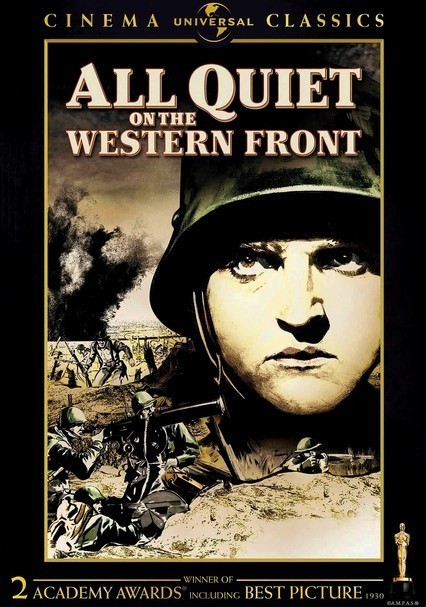
All Quiet on the Western Front-1930

All Quiet on the Western Front-1930

Director Lewis Milestone

Starring Lew Ayres

Top 250 Films #213

Scott’s Review #820

Reviewed October 12, 2018

Grade: A

All Quiet on the Western Front (1930) is one of the oldest films I have seen. It is a masterpiece that resonates in present times just as much as it did nearly one hundred years ago.

The work of art presents an astounding Anti-war message that is a timeless lesson in humanity, idealism, and despair.

Based on the banned novel by Erich Maria Remarque, much of the action takes place on the front lines during World War I.

The cameras follow an anxious group of spirited young men as they sit in a classroom and listen to a passionate speech given by their professor.

He is pretty “pro-war,” instilling patriotism in the boys and emphasizing the importance of serving the Army and their country. At his urging, the group, led by Paul Baumer (Lew Ayres), joins the Second Company. Once enlisted, the youths are enlightened that war is not fun, and their romantic delusions are smashed.

Paul is the film’s hero, and events are told through his eyes, offering his perspective. Beginning as a young recruit, he ages quickly and sees friends and allies slaughtered senselessly.

One recruit, frightened to death, is blinded by shrapnel and hysterically runs into machine-gun fire, resulting in his death. Other scenes involving the soldiers forced to go without food only to finally be offered more food, simply because there are so many dead, are heart-wrenching.

Paul is portrayed as a good man, conflicted by how he is supposed to feel towards the enemy and how he sees people as human beings. At the young age of nineteen, he possesses an innocence toward the world.

When he returns home on leave, the townspeople do not acknowledge the ravages of war. When Paul recounts the brutal situations on the front line, he is derided as a coward.

In an excruciating scene, Paul is trapped overnight in a foxhole with a dying French soldier whom Paul has stabbed in a cemetery. He desperately tries to save the man’s life, but to no avail.

In this crucial scene, Paul sees the enemy soldier as a human being rather than someone to hate. He crumbles into tears for the dead soldier, begging him to speak. The scene is incredibly poignant and meaningful.

The final scene of All Quiet on the Western Front is lovely and memorable. It is the film’s most remembered scene and is firmly ensconced in cinematic history.

As a wounded Paul lies hiding from German soldiers, he spots a beautiful butterfly peacefully circling. Paul smiles, enamored with the pretty creature amid all the horror. He desperately tries to reach for the gorgeous insect.

What happens next is heartbreaking and fraught with the unfair ruining of life—the scene is of the utmost importance.

The film is both sad and poignant, as we are well into the twenty-first century, and wars continue.

Have we learned nothing?

Director Lewis Milestone brazenly and tragically paints a portrait of war’s foolishness and the senseless loss of life it results in. It is tough to think of an equivalent film that depicts this message more clearly.

Many European leaders and countries, including Germany’s Adolf Hitler, banned All Quiet on the Western Front throughout the 1930s and 1940s.

The film has remained controversial in its blatant depiction of war since its release.

All Quiet on the Western Front (1930) is a groundbreaking film that should remind us how precious life is.

The novel and film were both made after World War I—how profound to think that since this film was made, wars such as World War II, the Korean War, and the Vietnam War have occurred. Is war ever really the answer?

Anyone who watches this terrific film will find out.

Oscar Nominations: 2 wins-Best Picture (won), Best Director (won), Best Writing, Best Cinematography

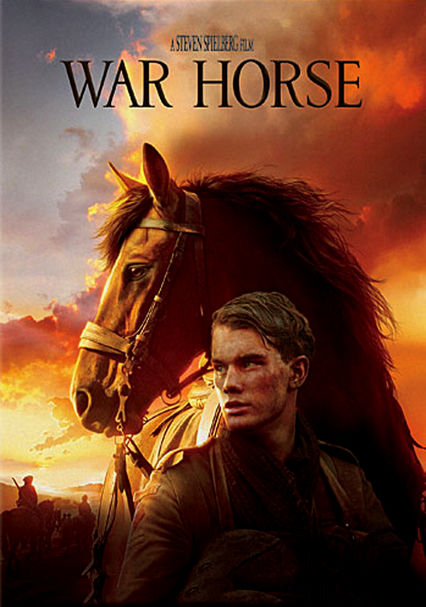
War Horse-2011

War Horse-2011

Director Steven Spielberg

Starring Jeremy Irvine, Emily Watson

Scott’s Review #1,268

Reviewed June 19, 2022

Grade: B+

Director Steven Spielberg has an enormous catalog of films to rank and paw over. From his dabble into the horror genre with Jaws (1975) to fantastical melodramas like E.T. the Extraterrestrial (1982), his best work to me is the dark and powerful Schindler’s List made in 1993.

The recent remake of West Side Story (2021) is also brilliant.

My point in mentioning a few of his films is to compare them to War Horse (2011). The film is mediocre when comparing it to the great director’s filmography but there is no doubt the film is extremely well made, lavishly directed, with a wonderful and heartfelt storyline that will make suckers of most viewers.

The main result is that the film doesn’t resonate very much beyond the closing credits especially when matched against Spielberg’s other films.

War Horse did achieve several Oscar nominations mainly because it’s a Spielberg film after all but came away empty-handed. This is not surprising because it’s the type of film that is trying to get awards notice.

A successful Broadway adaptation preceded the film which was also based on a novel of the same name from 1982.

Albert (Jeremy Irvine) and his beloved horse, Joey, live on a farm in the British countryside. At the outbreak of World War I, Albert and Joey part ways after Albert’s father sells the horse to the British cavalry out of necessity.

Against the backdrop of the war, the horse begins a journey full of danger, joy, and sorrow, as he transforms everyone he meets along the way.

Meanwhile, Albert, unable to forget his friend, searches the battlefields of France to find Joey and bring him home.

It’s interesting to see the different settings and situations the horse gets into. From England to Germany to France, so many cultures are explored. Joey even bonds with another horse named Tophorn, a black stallion.

The film is as syrupy and sentimental as the summary suggests and that is okay. I fell for the story hook, line, and sinker. Seeing the film in a movie theater on the big screen was a wise choice because the sentimentality oozes to audiences leaving not a dry eye in the house.

Spielberg polishes and shines his film like nobody’s business utilizing all the lavish Hollywood trappings like superior editing, sound, and cinematography.

It’s a Hollywood film plus a hundred.

Despite a safe-leaning film Spielberg wisely does not skate over the ravages of war. Several characters that the horse encounters die tragically leaving him in a state of temporary peril.

Unsurprisingly, War Horse satisfies those audiences seeking a fairy tale ending but the fun is the journey we are taken on.

Actor Jeremy Irvine appearing in his big-screen film debut is exceptional and quite likable. War Horse may be his pinnacle film since he hasn’t done all that much since this meaty role.

The main takeaway is friendship and the bond between human beings and animals which cannot be severed. The mere thought of this brings a tear to my eye and Spielberg wisely manipulates the audience, whisking them away on a journey of forever friendship.

This is not exactly a bad thing.

The war backdrop is a fine addition and the exquisite beach scenes and the glossy images of the horse are fantastic. Hundreds of horses were used and clever editing provided rich and authentic texture.

War Horse (2011) is a film with all the standard characteristics of an old-style film that Hollywood used to make. The sum of the parts doesn’t add up to much beyond the experience and it’s not a film worth seeing over and over.

It’s a one-and-done affair but a lavish production of heartfelt ideals.

Oscar Nominations: Best Picture, Best Art Direction, Best Cinematography, Best Original Score, Best Sound Editing, Best Sound Mixing