Category Archives: Blockbuster

Poltergeist-1982

Poltergeist-1982

Director Tobe Hooper

Starring Craig T. Nelson, JoBeth Williams

Scott’s Review #1,548

Reviewed September 1, 2026

Grade: A

Poltergeist (1982) was an enormous blockbuster hit when it was released. It successfully meshed sunny suburban family living with darker, fantastical horror elements.

And who can ever forget the spine-tingling catchphrase ‘They’re here,’ which went from the mouth of an adorable little blonde girl to the shivering mass audiences frightened beyond belief.

I remember sitting in a crowded movie theater as a ten-year-old boy, mesmerized by the events on the silver screen alongside other enthralled moviegoers.

In a strange pairing, Steven Spielberg, then known for sentimental yet well-made crowd-pleasers like Raiders of the Lost Ark (1981) and E.T. The Extra-Terrestrial (1982), wrote the screenplay for Poltergeist.

Tobe Hooper, best known for directing the brutally raw and horrific The Texas Chain Saw Massacre (1974), directed it.

The partnership worked, with each bringing tremendous assets. Spielberg created a likable, suburban family community and a family-ready marketability; Hooper brought the dark terror and creepiness to more mainstream audiences than would see a film like Chain Saw.

Rated PG, the final product is safe horror and hardly like Hooper’s masterpiece, but the elements mesh to create a memorable 1980s trademark extravaganza.

Steve (Craig T. Nelson), Diane (JoBeth Williams), teenage Dana (Dominique Dunne), eight-year-old Robbie (Oliver Robins), and five-year-old Carol Ann (Heather O’Rourke) make up an ordinary suburban California family.

They busily eat breakfast, rush off to school and work, and do everything that other typical families do. Steve is a real estate agent in their planned community of Cuesta Verde.

One day, bizarre ghosts begin to communicate with them through their television set, mostly via angelic Carol-Ann. A glass of milk spontaneously breaks, silverware bends, and furniture moves on its own

Initially benevolent and playful, the spirits turn unexpectedly menacing, and when Carol Ann goes missing, Steve and Diane turn to a parapsychologist (Beatrice Straight) and eventually an exorcist (Zelda Rubinstein) for help.

At the time, the special effects were jaw-dropping. Highly impressive; one example is the tree standing outside Robbie’s bedroom.

Initially nondescript, especially in the daytime, the limbs become fingerlike with electrifying, clawing movements that eventually reach into the bedroom.

In fact, several lightning-like white swirling patterns are used, especially during the frightening conclusion.

But dizzying effects are only one part of the experience. A film needs a proper story, building tension, and characters to root for to earn high praise.

My favorite parts of Poltergeist are the Freeling family’s relatability and the slow build to a frenetic finish. Most people, especially those living in the suburbs in the early 1980s, could see themselves represented.

Parents would relate best to Steve and Diane, and teenage girls to Dana.

I recall feeling like the little boy. Could there be monsters in my closet? Could a tree come to life and become a monster?

Poltergeist works so well because the audience likes the Freeling family.

In 1982, paranormal activity and poltergeists invading a family home were not the norm in film, especially in a mainstream film.

The film also sends a message of greed and gluttony that defined 1980s consumerism. Steve learns from his boss, Lewis Teague (James Karen), that the Cuesta Verde development was built on a former cemetery and that the graves were moved to a nearby location.

But were the graves moved and not the bodies? Of course, because they stood to make money from the development.

So, the spirits’ malevolence can be understood and even supported.

The ending is clever and even provides a needed dose of humor. The family flees their neighborhood as the house implodes into a portal while stunned neighbors look on.

The family checks into a room at a Holiday Inn, where Steve promptly removes the TV.

Poltergeist (1982) is a horror movie for kids. It’s not as scary for adults, but it’s well-written and still provides enough peril.

Compelling moments, like Carol-Ann’s hands on the snowy television set, remain iconic and disturbing.

The sequels followed the original film, and remakes pale in comparison, making the original all the more memorable.

Oscar Nominations: Best Original Score, Best Sound Effects Editing, Best Visual Effects

Basic Instinct-1992

Basic Instinct-1992

Director Paul Verhoeven

Starring Michael Douglas, Sharon Stone

Scott’s Review #1,545

Reviewed August 24, 2026

Grade: B+

Basic Instinct (1992), starring Michael Douglas and Sharon Stone, is a titillating thriller like Fatal Attraction (1987), both of which set the tone for many films patterned after it well into the 1990s.

It was the must-see film of 1992 and became a slick, stylistic mega blockbuster hit.

Body of Evidence (1993) and Sliver (1993), starring Madonna and Stone, respectively, are quick examples of the film’s influence.

Plus, Douglas starred in Fatal Attraction, so several films are connected.

With Basic Instinct, there is an immediate, sizzling sexual tension at hand, largely due to Stone’s smoldering kinkiness and bisexuality.

The actor was a relative newcomer at the time and moved to the forefront of Hollywood notoriety mainly due to the controversial full-frontal crotch exposure, which made headlines and shocked millions.

Other controversies surrounded Basic Instinct, which I will get to in a moment.

The film also put director Paul Verhoeven on the map. Unfortunately, he followed up Basic Instinct with the dreadful yet similarly veined film, Showgirls (1995).

The mysterious Catherine Tramell (Stone), a beautiful crime novelist, becomes a suspect when she is linked to the brutal death of a rock star. The dangerous and sensual femme fatale confidently struts her stuff as she toys with local police, leading a game of cat and mouse.

Primarily investigated by San Francisco homicide detective Nick Curran (Douglas), Catherine seduces him into an intense and addictive relationship. At the same time, the murder case becomes increasingly complicated when more seemingly connected deaths occur.

Is Nick’s life in danger? What does the mysterious character named Roxy (Leilani Sarelle) have to do with the central plot?

Besides being known for making Stone an A-list star, the film borrows from the likes of Alfred Hitchcock and Brian De Palma. This is a marvelous treat for fans of those directors.

In particular, Vertigo (1958) and Psycho (1960) clearly influenced it.

The brutal ice-pick murder at the very beginning is a direct nod to the famous shower scene in Psycho, but with the gender roles reversed (a man is killed instead of a woman).

For Vertigo, Catherine Tramell echoes the icy, enigmatic, and stylish blonde archetype seen in Kim Novak, and both films use San Francisco as a moody, atmospheric backdrop.

Finally, a lush, suspenseful musical score by Jerry Goldsmith pays homage to Hitchcock’s frequent composer, Bernard Herrmann.

As for De Palma, his thriller Body Double (1984) deals directly with voyeurism, obsession, and dangerous, manipulative femme fatales. It’s a direct stylistic and thematic stepping stone to Basic Instinct.

The film is enthralling and edge-of-your-seat intense for most of the way and has an unexpected, arguably jaw-dropping twist ending, but after a while it becomes a bit too gimmicky to earn a solid A grade.

It’s almost as if it borrows so much from other films that it lacks a real identity of its own, though it’s still an entertaining and shocking film.

I don’t share the repeated accusations of misogyny and homophobia that have gnawed at the film ever since it was released.

Sure, the killer is a female, and the killer is also bisexual, but that actually makes the events erotic and tinged with sexual energy and unpredictability; perhaps I merely wanted to enjoy the film.

On the other hand, one can argue that the film is boldly feminist. Catherine plays by her own rules and confidently, sometimes callously, consumes her prey.

She rejects traditional female passivity and wields total sexual, financial, and intellectual power over men.

Decades later, feeling slightly dated, mostly because similar films have more longevity, Basic Instinct (1992) nonetheless is recommended mostly for the smoldering chemistry between Douglas and Stone and for the creation of a badass female character.

Oscar Nominations: Best Film Editing, Best Original Score

Golden Globe Nominations: Best Actress- Drama- Sharon Stone, Best Original Score

The Odyssey-2026

The Odyssey-2026

Director Christopher Nolan

Starring Matt Damon

Scott’s Review #1,542

Reviewed July 23, 2026

Grade: A

Christopher Nolan’s film The Odyssey (2026) is a breathtaking spectacle that feels cinematically invigorating and inspired.

It’s movie magic at its finest.

Fortunate to see this film in an enormous IMAX theater, it’s the perfect and recommended way to see a film of this scale. A crowded and energetic audience is also suggested to connect with the overall moviegoing experience.

My hat goes off to Nolan, who has gotten asses back into empty theater seats in recent years where they belong.

It was thanks to his 2023 film Oppenheimer, which won Best Picture, that cinema became a mandatory part of moviegoing enjoyment again, along with the progressive Barbie (2023).

In the story, Odysseus (Matt Damon), king of Ithaca, embarks on a perilous journey to return home after the Trojan War, after many years away from his land and loved ones.

Crossing the Mediterranean Sea with his fellow soldiers, they soon find themselves battling not only the elements but an array of deadly obstacles and mythical creatures that await the men along the way.

In clever and intriguing form, the story traverses a few different timelines.

It is told in non-linear fashion, from early romantic sequences between Odysseus and his wife, Penelope (Anne Hathaway), to the backstory of his son, Telemachus (Tom Holland), and nemesis, Antinous (Robert Pattinson).

We immediately learn that Odysseus has been away for years, but what happens during those years is mysterious and aching to be slowly unraveled.

Other characters like Menelaus (Jon Bernthal), Helen of Troy/ Clytemnestra (Lupita Nyong’o), Athena (Zendaya), Circe (Samantha Morton), Calypso (Charlize Theron), various nymphs, and others are featured as Odysseus and Telemachus’ stories are explored.

Additionally, lands and worlds like Hades, a distinct realm where individuals go after death, and Aeaea, an island inhabited by the villainous Circe, are featured.

Having some knowledge of Greek Mythology is extremely helpful, as it can be quite difficult to keep track of who everyone is and how their history is part of Odysseus’s.

My two favorite sequences are when Odysseus’s men desperately land on Aeaea, fraught with severe hunger. Circe, who seems motherly and kind, delights in preparing steamy stew and other delicious food for them.

As they greedily chow down, they begin to cough and choke, turning into pigs. Circe turns wicked, vowing revenge on the men for an apparent attack on her sister years earlier.

The final thirty minutes of The Odyssey features a grandiose and daring fight sequence after Penelope declares she will marry whoever can string Odysseus’s bow and shoot an arrow through a row of axe heads.

The suitors all fail, but Odysseus succeeds and reveals his identity to her, culminating in a reunion. The hall erupts in battle, Odysseus slaying the challenging suitors.

The sequence features thunderous sound effects that, to me, sounded like footsteps running along a jogging path increasing in their intensity and momentum as the fight turns darker and bloodier.

Way back to the films The Dark Knight (2008) and Inception (2010), directed by Nolan, I vividly recall being enamored with those similar sound scores.

To say that The Odyssey is a spectacle is an understatement.

It proves with technical precision and grandeur that there’s no filmmaker quite like Nolan to reignite an ancient adventure and that there’s no limit to magnificence and perfection in cinema.

Lush seas, gritty battles, and mythical creatures abound in this opus.

Still, the film also has quality acting and a bit of heart too, so the story is never overwhelmed by the technical stuff, which is always a fear in blockbusters of this nature.

Damon, Hathaway, Holland, and Pattinson get top acting praise from me.

Terrific chemistry exists between Damon and Hathaway, specifically, making their passionate and dedicated love story remarkably believable.

I’ve heard complaints about the film being too ‘woke’, a derogatory term tinged with racism and homophobia. Nolan wisely makes the film inclusive, featuring a trans actor (Page) and several black and brown actors.

The Odyssey (2026) offers action, adventure, battles, and all the other trimmings expected from an epic action film shrouded in fantasy and magic.

But on an entirely different level.

It also offers tenderness, humanity, connection, and heart that exceed expectations all around.

Edward Scissorhands-1990

Edward Scissorhands-1990

Director Tim Burton

Starring Johnny Depp, Winona Ryder

Scott’s Review #1,198

Reviewed November 20, 2021

Grade: B+

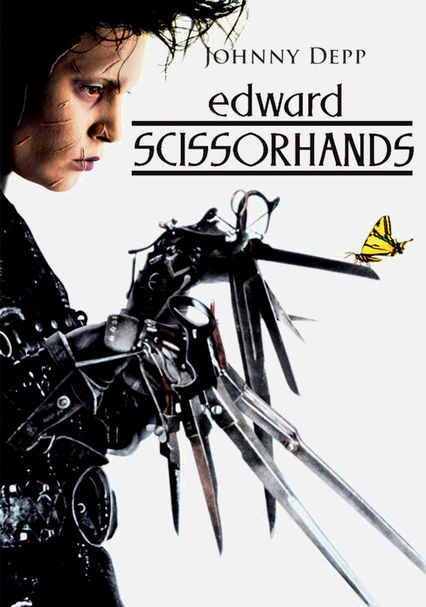
Edward Scissorhands (1990) is a Tim Burton creation, made possible only after his 1989 smash hit, Batman.

A creative, romantic fantasy, it is an unconventional project as charming and whimsical as its stars were at the time.

The film is part sad, part magical, with enough science fiction and romance sprinkled in to make it work across genres.

The result was another box-office hit for Burton, teen-idol status for its lead stars, and an obvious Academy Award nomination for the deserving Makeup department.

As unconventional and original as it appears on the surface, the film suffers slightly from being a bit mainstream.

A safe, romantic-comedy feel pulls the film away from the darker tone it could (and should) have.

Still, Edward Scissorhands is entertaining and fascinating.

An eccentric scientist, deliciously played by Vincent Price, builds an animated human being: the gentle, soft-spoken Edward (Johnny Depp).

He dies before he can finish assembling Edward, leaving the poor young man with a freakish appearance accentuated by the scissor blades he has instead of his hands.

Friendly suburban saleswoman Peg (Dianne Wiest) discovers Edward and takes him home, where he falls for Peg’s teen daughter Kim (Winona Ryder).

However, Edward’s hands make him an outcast despite his kindness and artistic talent.

This is a challenge for everyone.

By 1990, Johnny Depp was becoming a huge Hollywood star, and so was Winona Ryder. As the ‘it’ actors, this helps Edward Scissorhands tremendously by not only adding ticket sales but also a fascination with them as a couple.

The chemistry is palpable, and so is the classic good-girl-helping-boy reform. Depp’s Edward is a sympathetic hero, instantly mysterious and likable.

Wiest, then in her prime, is a hoot as the comical Avon lady who introduces Edward to the joys and pains of suburban Americana.

The perfectly manicured landscapes in Peg’s neighborhood, where she goes door to door selling her products, are particularly enjoyable.

As one can easily predict, the beautiful plants and bushes suffer at the hands of Edward.

The Gothic mansion where Peg discovers Edward is a deliciously creative set piece that has the classic Burton stamp.

The director is so defined by his artistic sets and design that half the fun of the film is discovering and noticing these fabulous creations.

The mainstream part comes with the story, and a smattering of 1982’s E.T. sentimentality is included to win over middle-American audiences.

This isn’t bad, but it lightens the heavy drama and sinister approach Burton could have honed.

Much of the credit goes to Depp because, on paper, the premise could easily be dismissed as silly, trivial, or outlandish. The actor brings pathos to the role and makes the audience believe in and fall in love with the character.

He makes Edward even more relatable by adding some obvious clichés: Kim’s jealous boyfriend, Jim, played by Anthony Michael Hall, and the eccentric religious fanatic who believes Edward is evil incarnate, played by O-Lan Jones.

Adding these villains, and casting most of the rest of the neighborhood as either clueless or misunderstanding townsfolk, further reduces much of the supporting cast to standard stock characters.

Burton, along with Depp, Ryder, and Wiest, gives Edward Scissorhands (1990) heart.

It’s a beautiful fairy tale that feels magical and adventurous, though the storytelling is mediocre. It’s an above-average film that won over audiences at release.

Oscar Nominations: Best Makeup

Golden Globe Nominations: Best Actor- Comedy or Musical-Johnny Depp

Saving Private Ryan-1998

Saving Private Ryan-1998

Director Steven Spielberg

Starring Tom Hanks

Scott’s Review #778

Reviewed June 26, 2018

Grade: A

Famed director Steven Spielberg does not always get the respect he deserves.

This is usually because, for better or worse, he has become synonymous with the “blockbuster” film, drawing comparisons to either lightweight fare or films of “lesser” artistic merit.

His 1980s works- Raiders of the Lost Ark (1981), E.T. the Extra-Terrestrial (1982), and Indiana Jones and the Temple of Doom (1984)- were enormous commercial successes, though I enjoyed all of the films.

During the 1990s, Spielberg continued to direct “popcorn flicks” such as Hook (1991) and Jurassic Park (1993) with large studio budgets but somewhat less critical acclaim.

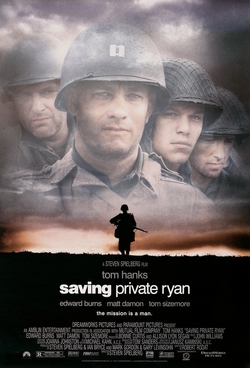
Finally, he changed many opinions with 1993’s Schindler’s List and the war film to end all war films, Saving Private Ryan (1998), an epic, profound experience.

Both received numerous Oscar nominations and achieved box-office success.

The film is a tremendous treat, thanks to the riveting opening sequence alone (more on that later).

If that is not enough to impress, Saving Private Ryan is known for infusing a very graphic element into the war film, with no let-up from the brutality.

Spielberg does not water down this picture; instead shows the pain and angst of war.

The film is greatly strengthened by the casting of Hollywood superstar Tom Hanks, who leads an enormous cast of mostly young men.

Saving Private Ryan opens with a prologue: in the present, a veteran brings his family to visit an American cemetery in Normandy.

Flashbacks then take the audience back to the Omaha Beach debacle in 1944, where American troops faced deadly German artillery attacks in France.

After the horrific three-day D-Day, it is learned that three of the four Ryan sons have died in the events. Captain Miller (Hanks) is ordered to take a team to Normandy and bring the fourth Ryan son (Matt Damon) to safety.

Spielberg’s opening D-Day sequence is just astounding and propels the film to unforgettable status.

With a running time of twenty-four minutes, the riveting and horrific slaughter of American soldiers is intensely brought to the screen.

Audiences undoubtedly sat open-mouthed (I know I did!) as bullets riddled the beach and left soldiers killed or with limbs torn off. The camera work is brilliant, as the use of a shaky technique, almost a documentary style, is used for effect.

This sequence successfully promotes anti-war sentiment without glorifying combat. The scene will stay with its audience for years to come.

Saving Private Ryan can be compared to the decades-later Dunkirk (2017) in that each film took the war genre and turned it on its head.

The similarities start with the obvious: both films take place during World War II, in the same week, and in French beach settings, making them perfect companion pieces.

Both films feature a gray, rainy setting with many horrific moments of death and suffering. The war film is a common genre that has historically teetered on the brink of predictability and oversaturation.

Still, both films do something completely different and unexpected, yet mirror each other in style.

To counter-balance the violence in the opening sequence, a quiet scene is created and remains one of my favorites. The scene contains almost no dialogue throughout the seven-minute duration and is pivotal to the entire film.

As a typist realizes that three letters of death are to be delivered to the same family, a woman on a Midwestern farm quietly washes dishes. She is calmly horrified when she sees a government car approaching.

What else can this mean but that one of her sons is dead? The poor Mrs. Ryan will be told that she has lost not one, but three sons.

How utterly unimaginable, and the scene is incredibly touching!

The best part of Saving Private Ryan is that Spielberg combines a deeply sentimental vision with the terrible atrocities of war. He portrays not only the violent effects of battle on soldiers but also on surviving families.

This isn’t always done in war films, at least not to the level Spielberg chooses.

With a film as startling as Saving Private Ryan, Spielberg turned the war film genre inside out.

Breaking barriers with a no-holds-barred gusto, Spielberg influenced war films for years to come- Black Hawk Down and Enemy at the Gates (2001) are prime examples- and received acclaim from fellow directors for his interesting techniques.

Saving Private Ryan (1998) was an enormous box-office hit, proving that great films don’t have to be watered down to find an audience.

Oscar Nominations: 5 wins-Best Picture, Best Director-Steven Spielberg (won), Best Actor-Tom Hanks, Best Screenplay Written Directly for the Screen, Best Original Dramatic Score, Best Sound Effects Editing (won), Best Sound (won), Best Art Direction, Best Cinematography (won), Best Makeup, Best Film Editing (won)

Golden Globe Nominations: 2 wins-Best Picture-Drama (won), Best Director-Steven Spielberg (won), Best Actor-Drama-Tom Hanks, Best Screenplay, Best Original Score

Twister-1996

Twister-1996

Director Jan de Bont

Starring Bill Pullman, Helen Hunt

Scott’s Review #763

Reviewed May 25, 2018

Grade: B+

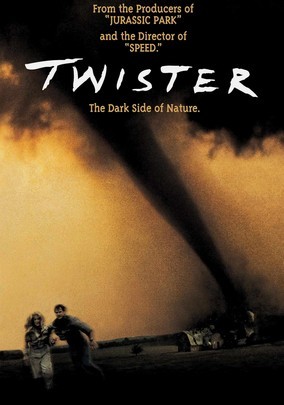
Twister (1996) is a film with amazing, groundbreaking special effects that blew people away (pun intended!) when it was released to the masses over twenty years ago.

Moviegoers flocked to theaters everywhere to enjoy the escapist summer feel-good hit starring popular stars of the time.

The film spawned amusement park rides and lots of other fun things during its run.

The visuals are what truly deserve to be enjoyed here, not the generic, tried-and-true subplots of romance, childhood trauma, and corporate greed that are mixed in.

The film does not hold up well in the present day, as its dazzling effects now look rather dated when compared with modern blockbusters. This results in Twister being reduced to “one of those 1990’s films”.

Bill Paxton and Helen Hunt star as American storm chasers, Bill and Jo, obsessed with their craft of tracking tornadoes throughout the Midwestern United States.

Adding drama to the plot is that Bill and Jo are an estranged married couple in the midst of a divorce.

Bill brings his new fiancée, Melissa (Jami Gertz), along as numerous meteorologists converge to track storms using newly invented devices.

Predictably, a series of vicious storms commences while Bill, Jo, and Melissa play out a love triangle.

Twister gets off to a fantastic start when a wicked storm kills the five-year-old Jo’s father, prompting her to pursue her chosen career. Jo has never gotten over her father’s death, becoming fascinated by deadly storms.

The effects of this initial storm are very well done as Jo’s father’s death scene is riveting- the poor man being sucked into the deadly cyclone is memorable.

Regardless, this scene sets the tone for the ample effects to follow- most notably the terrifying sound of the swirling storm as farm tools and animals fly around onscreen.

After the initial introduction, the rest of the film mainly follows the group as they drive around and encounter storms, with Bill and Jo taking center stage.

As a child who spent many summers in the Midwest, sans tornadoes, thankfully, I felt a sense of nostalgia watching the film.

It is assumed that Twister was filmed on location (with studio help), but the authenticity is apparent. From the vastness of the plains to the dusty roads, cornfields, and the small-town U.S.A.

I enjoyed the down-home, slice-of-life feel.

The action and effects are lightning-quick and quite realistic. As mentioned, the sound effects are as strong as the visual effects, and I never doubted for a second that the twisters had a realistic quality.

This successfully merges into the summer blockbuster that Twister’s producers undoubtedly were going for. Making a ton of money, the result was successful and inspired by Hollywood.

Despite the superlative special effects, though, this is the only reason to watch Twister, and seeing the film once is enough excitement.

The writers (Michael Crichton and Anne-Marie Martin) attempt to incorporate a romance into the story, and this does nobody any good.

This negative aspect is even more apparent since the chemistry between Paxton and Hunt is non-existent, and Gertz’s Melissa is meant to be the odd woman out all along.

A large amount of suspension of disbelief is necessary to “buy” various scenes. Ludicrous are countless scenes where characters either outrun the monstrous twisters or, somehow, the storms encircle them but miraculously never touch them.

When Jo, Bill, and Melissa’s truck is captured inside the funnel cloud, the vehicle and its passengers somehow remain unharmed.  Tornadoes do not simply come out of nowhere to attack without any indication on the radar.

But alas, this is a disaster film, and liberties must be taken.

The famous “cow scene”, notoriously used twice in the film, seemed groundbreaking and cutting-edge in 1996, but in 2018 now seems hokey and unnecessary.

Times sure do change in cinema, especially with technical effects and CGI growing each year.

Admittedly, the film does contain a good, all-American rockin’ summer tune by Van Halen named “Humans Being”, which always makes me think of summertime when I hear it.

The entire Twister soundtrack was an enormous success with radio airplay, which led to further successes for the film.

Perhaps now watched as a blast from the past or a revisit to some sort of nostalgic time for folks, Twister (1996) is a great example of a once-popular popcorn movie falling into semi-obscurity.

Given another twenty years, the film will undoubtedly fall apart—a nice film for its time, but not much more.

Oscar Nominations: Best Sound, Best Visual Effects

The Hangover-2009

The Hangover-2009

Director Todd Phillips

Starring Bradley Cooper, Ed Helms, Zach Galifianakis

Scott’s Review #590

Reviewed January 7, 2017

Grade: B+

It was not my idea to see this particular film- the raunchy, mindless “guy” films have always seemed lackluster and cheesy to me. Still, I confess to finding The Hangover (2009) a novel and entertaining summer blockbuster film.

I did not expect much from this film but instead found it comical and fun.

It has the “dumb frat boy/jock” shenanigans, and not much thought is needed, but it is good old boy entertainment.

Similar to the American Pie films of the 1990s, in which a group of guys finds themselves mixed up in amusing, and sometimes humiliating, situations after a night of boozing, The Hangover has a likable cast led by then-up-and-coming star Bradley Cooper.

What sets The Hangover apart is the great chemistry among the cast (Ed Helms and Zach Galifianakis, specifically) that other flaws or generic writing can be overlooked or forgotten altogether.

The group goes from one hysterical situation to another.

Set in Las Vegas (a great decision), three men awake to find the groom missing after a night of debauchery- they are there to celebrate via a wild bachelor party.

In their hotel room are a tiger and a six-month-old baby, and they have no idea how either has gotten there.

From this point, the film goes back to the arrival of the gang and the events that transpired leading up to the hotel room acquisitions.

This is fun and keeps the audience engaged in the hijinks.

The Hangover (2009) was followed by the inevitable two sequels, neither of which was as good or as successful at the box office, to the surprise of nobody except maybe movie studio executives.

Clash of the Titans-2010

Clash of the Titans-2010

Director Louis Leterrier

Starring Sam Worthington

Scott’s Review #566

Reviewed December 27, 2016

Grade: B

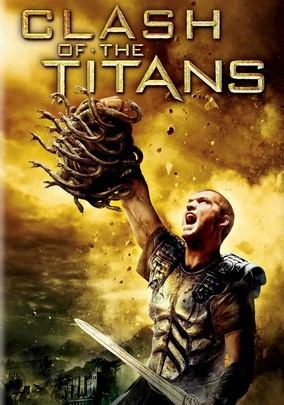
Though I went to the theater begrudgingly to see Clash of the Titans-2010 (fantasy blockbusters are not typically my cup of tea), I have to confess to being moderately impressed by this film.

I had no real expectations other than that it is a tale loosely based on the Greek myth of Perseus.

I have heard some people compare it to the original in an unfavorable way, but I have not seen the original- released in 1981 so any comparisons are a moot point.

At one hour and fifty minutes, the film is a perfect length and does not drag.

The plot is basic and focused. Perseus (Sam Worthington)  must save the life of the beautiful Princess Andromeda, as he leads a team of warriors into battle against vicious enemies.

Some of the creatures they meet along the way are fascinating.

Clash of the Titans (2010) is not fine cinema, and the acting is not spectacular, but the effects are worth mentioning, and the look of the film is impressive.

My only real criticisms are the way Medusa is portrayed (she’s said to be ugly, but she’s really a beautiful woman with snakes on her head) and the 3-D, which was pretty much unnecessary.

This is probably an attempt by the studios to capitalize for profit.

The Martian-2015

The Martian-2015

Director Ridley Scott

Starring Matt Damon

Scott’s Review #379

80058399

Reviewed February 19, 2016

Grade: C-

The latest film from heralded director Ridley Scott (notable for classics Blade Runner (1982) and Alien (1979), The Martian (2015) is a science-fiction space adventure about a presumed-dead astronaut (Matt Damon) trapped on Mars after his fellow team members believe he’s dead.

NASA and a rescue crew desperately try to save him as supplies run out.

Extremely resourceful, Mark Watney (Matt Damon) cleverly avoids death by using his wits to survive and prosper on the challenging planet.

Following several other high-profile modern science fiction offerings, such as Interstellar (2014) and Gravity (2013), The Martian features a big Hollywood star in the lead role.

Much of the action follows Watney as he tries to produce food and supplies and preserve his sanity, think Tom Hanks in Cast Away (2000), on another planet, with an indoor operations station left by his abandoned crew.

The Martian has received accolades, even winning the Golden Globe for Best Musical or Comedy Film, though that’s a poor category.

The film has snippets of humor and a few background songs, but that is it. Maybe some late-1970s disco songs make it a musical?

I found The Martian to be a Hollywood mainstream film in every sense. That may be a high compliment to some, but I expect more.

It is not that The Martian is a bad film; it is not, but it is mediocre and has all the elements of an average offering. The film aimed for an emotional experience that I didn’t get.

I had little doubt that the ending would be sweet and wrapped in a bow.

Mark Watney is the typical all-American character in a “guy film”. He hates disco and loves ketchup. The film makes him a guy’s guy so the average filmgoer can relate to him.

He is in good shape, cracks jokes, and is likable.

But that is also a problem with the character in The Martian. He lacks substance. We know little about him, except that his parents never appear on-screen.

The way the film touts him as the hero and has him cheered and praised, while it would be warranted in real life, just feels forced and contrived.

This is not a knock against Matt Damon, who does a decent job.

My beef is that the character is not fleshed out.  The well-built Damon at the beginning of the film versus the scrawny Damon at the conclusion feels like a facade, since they used a body double in the later scenes.

This lack of authenticity disappointed me.

I expected more from the supporting cast. Jessica Chastain, Jeff Daniels, Chiwetel Ejiofor, and Kristen Wiig play one-note types that any actor could have played.

Why were big stars cast at all?

Chastain as a mission commander, Daniels as Director of NASA, Ejiofor as NASA mission commander, and Wiig as a Public Relations specialist.

The casting, particularly Wiig in the straight-laced, stale role, was mysterious to me, and it wasn’t a particularly good portrayal… and I am a Wiig fan.

The humorous parts in The Martian are contrived and not dissimilar to countless other films, with the smart-ass remarks all containing a bland quality.

Lines like “Eat your heart out, Neil Armstrong” seem silly and unnecessary.

I expected more wit.

Let me be fair, the visual effects (it is space, after all) are impressive, and it was fairly interesting to see what is supposed to be the planet Mars, but in this day and age of CGI effects, the film isn’t that spectacular.

 I would much rather be given a compelling story than visual treats any day of the week.

My review of The Martian may seem harsh, but I expected more from it than I got.

With several Oscar nominations, including Best Picture, I expected a top-notch film, but The Martian didn’t come close.

Mediocrity, straightforwardness, and predictability describe The Martian (2015).

I have heard the novel is fantastic, so I added it to my reading list.

Oscar Nominations: Best Picture, Best Actor-Matt Damon, Best Adapted Screenplay, Best Sound Editing, Best Sound Mixing, Best Production Design, Best Visual Effects

Jurassic World-2015

Jurassic World-2015

Director Colin Trevorrow

Starring Chris Pratt, Bryce Dallas Howard

Scott’s Review #307

Reviewed December 23, 2015

Grade: C

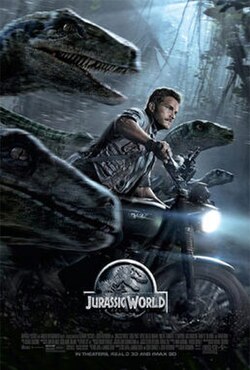
I expected to like Jurassic World (2015) is a film I expected to like much more than I did.

Sure, it is a summer blockbuster, popcorn flick. Based on the success of earlier franchise efforts and, if memory serves, my enjoyment of the 1993 original, Jurassic Park, I expected a fun ride.

Unfortunately, I got a formulaic escapade with uninteresting characters and mediocre writing.

The premise is standard.

A behemoth amusement park exists in Central America, on Isla Nublar, where a dinosaur theme park has run without incident for ten years.

A genetically modified dinosaur, created because a magnificent new attraction is needed, breaks loose and runs rampant.

A silly love story develops between the two leads, Owen and Claire (Chris Pratt and Bryce Dallas Howard), while two young boys (Zach and Gray) are sent by their divorcing parents to stay with their Aunt, Claire, who works as the park’s Operations Manager.

Owen is the dinosaur trainer. Predictably, “bad guys” are greedy and want to advance science at the risk of human life.

The special effects are fine, albeit completely CGI-laden, which is to be expected because the main stars are dinosaurs after all.

I expected better writing, or at least a more creative attempt at something a bit edgy.

The story was completely redundant. Where was the character development? There was none. We know very little about any of the principal characters.

One might argue that an adventure film doesn’t require this, but it’s important. We know that Claire is a workaholic and has no time for her nephews- why? What makes her tick?

Here is a slight complaint. Why kill off only extremely minor characters or villains? I could see this (and the ending) a mile away. The whole film seems forced and sloppy.

Jurassic World is also filled with clichés. Owen and Claire initially dislike each other after one unsuccessful first date.

The film tries to push the love/hate, opposites attract element, and it feels contrived. How many times have we seen this in film history?

Also, Chris Pratt is perfect as the hunky, muscular “hero saves the day” type, and Dallas Bryce Howard running through the forest in a tight tank top is not unintentional.

This isn’t to say the film is bad.

It is a decent adventure film, and the special effects are cool. I did enjoy the homage to the original 1993 version as the boys stumble upon the original visitor station complete with the 1992 jeep from the original Jurassic Park film.

I thought this was a neat little nod to history, and I love that in a franchise film, but that is it for the positives.

Yes, this film was a blockbuster smash and made oodles of money. It, however, feels forced, clichéd, and quite formulaic.

I was hoping for much more and deeper, stronger material.

Dawn of the Planet of the Apes-2014

Dawn of the Planet of the Apes-2014

Director Matt Reeves

Starring Andy Serkis

Scott’s Review #232

70300076

Reviewed March 29, 2015

Grade: C+

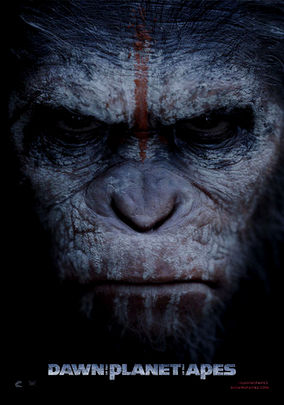
Dawn of the Planet of the Apes (2014) is a summer blockbuster hit that knocks it out of the park visually; it is magnificent to look at, with creative sets and realistic images, but the story is mediocre and predictable.

I think the filmmaker’s true intent was to focus on the look of this film, and succeeds. The film is a slightly better-than-average big-screen adventure with more style than substance.

Set in San Francisco, or what was once San Francisco, the film takes place in a futuristic world. Apes have forged a new civilization after a deadly virus has eliminated 90% of the human population.

The apes are highly intelligent and manage a happy, unified existence. Then, one day, a human is encountered and, scared, shoots an ape.

This leads to a peaceful resolution between Caesar, the leader of the apes, and the humans: they each stay in their respective territories.

However, humans need access to a dam in the apes’ area to generate electricity. Mutual distrust leads to tension, but the civilized apes and humans reach a truce.

Naturally, conflict escalates as sinister humans and apes vow revenge on each other. This leads to a war while the peaceful apes and humans strive to work things out.

A further angle of the story is the hunger for power within the ranks of the Apes, reminiscent of Lord of the Flies.

The human protagonists, Malcolm and Ellie, played by Jason Clarke and Keri Russell, are a wholesome, decent couple.

Dawn of the Planet of the Apes pales in comparison to the original 1968 masterpiece, Planet of the Apes, starring Charlton Heston. Comparing the two is unfair, since, sadly, this one has nothing to do with the original.

It is simply the same franchise tag.

However, Dawn of the Planet of the Apes is weaker than its predecessor, Rise of the Planet of the Apes (2010). We had a charismatic star, James Franco, and an interesting story.

The apes are experimented on, and their intelligence is a strong angle.

The sequel is rather one-note and leans on a machismo, us-against-them angle that isn’t unique.

The main drawback of this film is its limited scope. The characters are portrayed as a) the good and sympathetic humans, b) the evil and destructive humans, c) the good and heroic apes, or d) the evil, bad apes.

The film defines everyone for the audience, with no ambiguity or complexity in the characters. This is a bit limiting. The evil ape Koba is purely bad, and the drunken, gun-happy humans are bad.

This is not to say that Dawn of the Planet of the Apes is not enjoyable; it is. It’s a fun, entertaining flick. For what it is, the film has a message: there is a way to find peace and love between different species and types of people.

Hopefully, the audience gets that message.

Dawn of the Planet of the Apes (2014) is a summer blockbuster action/sci-fi flick many will enjoy; however, it is a plot-driven extravaganza that could have been better with more layers to the story and more shape to some of the characters.

It is worth seeing as a visual cinema treat, but scarcely more than that.

Oscar Nominations: Best Visual Effects

World War Z-2013

World War Z-2013

Director Marc Forster

Starring Brad Pitt

Scott’s Review #121

70262639

Reviewed July 20, 2014

Grade: B

World War Z (2013) is the type of film that is a summer hit but will most likely be forgotten over the years.

It is a slightly above-average, enjoyable action/ zombie thriller, but not much more.

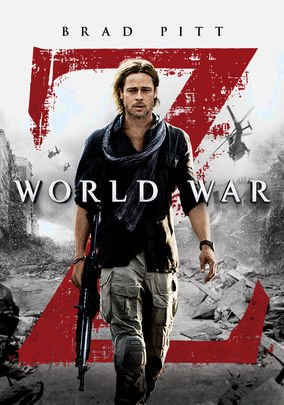
It stars Brad Pitt as a former United Nations investigator called in to save the world from a zombie pandemic. The crisis spreads simultaneously across major cities worldwide.

The film sees Pitt traversing the globe in an attempt to find a cure for the epidemic before it is too late and the zombies make the world extinct of humans.

The zombies are super zombies: they can fly and move at lightning speed, making them ultra-dangerous.

The story is implausible and plot-driven, but it doesn’t matter and works on some level. My theory for this success is that the film is fast-paced, the action starts almost immediately, and Brad Pitt is charismatic.

He is the star, and all the action centers around him.

The film contains exciting, tense scenes, including a plane crash sequence and a chase around a medical lab.

World War Z (2013) is a popcorn film meant to be sat back and enjoyed, not overanalyzed or taken too seriously.

It is a perfect summer hit.

The Amazing Spider-Man 2-2014

The Amazing Spider-Man 2-2014

Director Marc Webb

Starring Andrew Garfield

Scott’s Review #2

70293702

Reviewed June 16, 2014

Grade: B+

Superhero movies aren’t my top genre (though, admittedly, I see many of them).

They are fun, popcorn-type films not to be over-analyzed or taken too seriously.

One thing that confuses me is the seemingly constant rebooting of the Spider-Man franchise and the forgetting of previous installments.

Wasn’t this series just made with Tobey Maguire and Kirsten Dunst not too long ago?

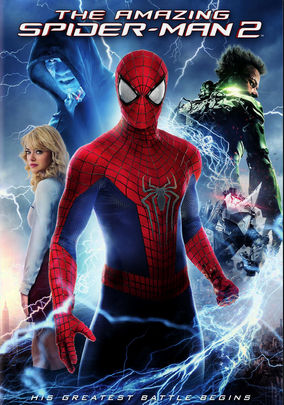
That said, the strongest part of this film is the undeniable chemistry between Andrew Garfield and Emma Stone, which is great to watch.

Sally Field adds life to anything she appears in.

The film’s most “human” parts are the best.

The special effects/CGI are admirable. I enjoyed how one “villain” is a close friend of Peter Parker’s, wonderfully played by Dane DeHaan. His character has many nuances.

The other villain, Electro, played by Jamie Foxx, is silly, and his story almost seems botched. His motivations are weak.

He hates Spider-Man and wants to destroy the city because of a contrived misunderstanding.

I don’t want to overanalyze The Amazing Spider-Man 2 (2014); it’s a fun, enjoyable summer film.