Tag Archives: Fred Ward

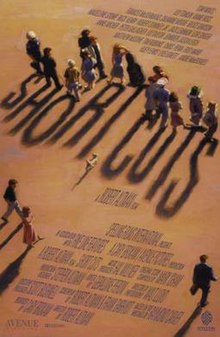
Short Cuts-1993

Short Cuts-1993

Director Robert Altman

Starring Tim Robbins, Julianne Moore, Lily Tomlin

Top 250 Films #123

Scott’s Review #1,400
Reviewed September 20, 2023

Grade: A

I am such a fan of acclaimed director Robert Altman because he typically features an enormous cast with richly composed characters all serving a story purpose. Frequently, with much character development and investment.

Short Cuts (1993) is a latter-day Altman offering set in Los Angeles, California, the City of Angels that is nearly as good as my all-time favorite of his, Nashville made in 1975.

Similarities burst to the screen with twenty-two principal characters to Nashville’s twenty-four. Their lives frequently intersect and the fun is peeling back the layers of their lives and discovering who is connected to whom.

Comparisons to 1992’s The Player (also Altman) and 1999’s Magnolia, directed by Paul Thomas Anderson can also be made for obvious Los Angeles setting reasons.

But, Magnolia is much weirder than Short Cuts.

The irony is that most characters are anything but angels as they suffer from insecurities, deaths, infidelity, and various shenanigans as they attempt to get through California life amid an earthquake and a fleet of helicopters spraying for medflies.

Altman based the film on the nine short stories and a poem by Raymond Carver.

Some of the tales include a waitress Doreen (Lily) who is married to an alcoholic limo driver (Tom Waits) who accidentally runs into a boy with her car. Soon after walking away, the child lapses into a coma. While at the hospital, the boy’s grandfather (Jack Lemmon) tells his son, Howard (Bruce Davison), about his past affairs.

Meanwhile, a baker (Lyle Lovett) starts harassing the family when they fail to pick up the boy’s birthday cake.

Dr. Ralph Wyman (Matthew Modine) and his wife, Marian (Moore), meet Stuart Kane (Fred Ward), an unemployed salesman, and Claire Kane (Anne Archer), a party clown, at a cello concert.

They impulsively decide to have a Sunday dinner date. seemingly having nothing in common.

Meanwhile, Marian’s sister, Sherri (Madeleine Stowe), is married to a cheating cop named Gene (Tim Robbins), who is having an affair with Betty Weathers (Frances McDormand), while Betty is divorcing one of the helicopter pilots, Stormy (Peter Gallagher).

There are other stories and connections to round out the fabulous cast.

The juicy and dramatic storylines play out like a terrific story arc on Days of Our Lives or As the World Turns with some needed comedic elements to balance things out.

Anyone who knows Altman will salivate with the name recognition among the cast most notably Tomlin and Robbins. Actors frequently chomped at the bit to appear knowing that he was an actor’s director.

This means he allowed his cast open range to create dialogue appropriate for their characters.

There’s no better example than when Jack Lemmon tells a story in the film. His improv and free dialogue are a dream to watch and a lesson in good and natural acting.

Despite the enormous cast everyone has something of quality to do. Nobody is languishing on the back burner with throwaway scenes or unimportant activities. All characters connect to others in some way.

Fans who fancy Los Angeles both in film and in real life with its bursting sunshine and cheery perception will revel in the down and dirty sub texture of Short Cuts.

The fun is getting there.

Some characters are wealthy but most struggle with day-to-day routine so the film contains a harsh realism. They try to find some shreds of happiness wherever they can get them.

Like real life which is part of the mastery of Short Cuts. The audience can relate to the characters because we all know people like them which makes the film a beautiful and treasured experience.

Or some may even be like us. The writing is brilliant and the characters are true to form.

One day I’ll create a list of my Top Ten Robert Altman films and I bet Short Cuts (1993) lands in the Top Five.

Oscar Nominations: Best Director-Robert Altman

Independent Spirit Award Nominations: 3 wins-Best Feature (won), Best Director-Robert Altman (won), Best Screenplay (won), Best Supporting Actress-Julianne Moore
Naked Gun 33 1/3: The Final Insult-1994

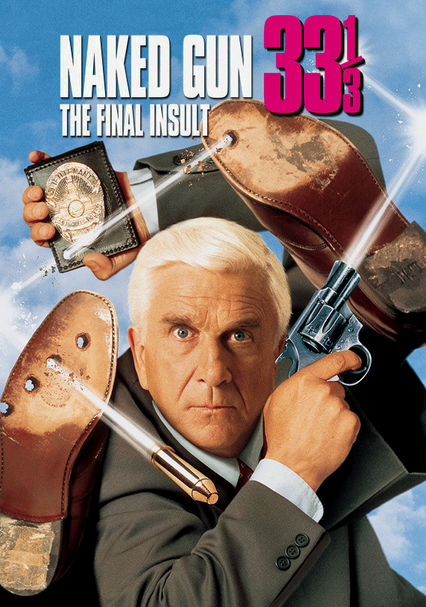
Naked Gun 33 1/3: The Final Insult-1994

Director Peter Segal

Starring Leslie Nielsen, George Kennedy

Scott’s Review #1,104

Reviewed January 26, 2021

Grade: B-

Despite being the third and final installment in the popular Naked Gun (1988-1994) franchise, Naked Gun 33 1/3 The Final Insult (1994) is my favorite of the trio despite having a silly title.

The title of “33 1/3” is a reference to the resolutions per minute of an LP playing on a phonograph, a point that has nothing to do with the actual film.

It was also inexplicably decided to leave off the “The” in the title, leaving Naked Gun instead of The Naked Gun.

Why is anyone’s guess? Nor does it matter.

Don’t get me wrong. It’s not a great film but it’s better than the other two, which is shocking in a spoof/screwball comedy going for the standard gags. But, as dumb as the film is, it’s also kind of fun and lightweight.

It’s like a needed chuckle requiring little thought following a rough day at the office.

A familiar formula is followed and this time the events culminate at the glorious Hollywood Oscar celebration, the apple in the eye of all Los Angeles, undoubtedly the main reason this effort is marginally enjoyable.

For unfamiliar viewers, the Naked Gun films are a combination of the Airplane! (1980-1982) and the over-exhausted Police Academy (1984-1994) franchises. The films were out of gas by 1994.

The franchise is based on the short-lived television series Police Squad! (1982), a procedural comedy about bumbling police personnel and the situations they get themselves into to showcase their ineptness.

The Naked Gun 33 1/3: The Final Insult was O.J. Simpson’s final role before he was damned for all eternity for his presumed role in the murder of his wife and her friend in a ritzy area of California.

Leslie Nielsen returns as Frank Drebin, retired and living with his wife Jane (Priscilla Presley). Bored with life, they experience marital problems and seek counseling. Six months after Frank’s retirement, he is visited by Captain Ed Hocken (George Kennedy) and Officer Nordberg (Simpson), who ask for Frank’s help with an investigation.

Police Squad has caught wind that mischievous bomber Rocco Dillon (Fred Ward), who is currently incarcerated, has been hired by terrorists to conduct a major bombing against the United States.

As Frank tries to keep Jane from finding out that he is dabbling in detective work again, he jokes that he is having an affair to throw her off the track. When she begins to suspect he is having an affair this leads to a silly series of misunderstandings and gags which naturally are wrapped up as is always the case in films like this.

Nielsen is the main draw and he does what he does best and what makes him the king of spoof films. A serious actor before Airplane! he became a typecast but had lots of successes ahead of him.

He embraces his role which adds freshness. He doesn’t take himself so seriously so audiences can sit back and relax, enjoying the entertainment.

The lavish awards ceremony and the ingenious idea to plant the bomb within the coveted Best Picture Oscar sealed envelope is delicious, especially when the bomb is set to detonate when the card is pulled from the envelope and the winner is crowned.

This creates a good measure of suspense as the award show carries on toward the big finale.

George Kennedy has little to do but it’s the inclusion of stars like Vanna White, Weird Al Yankovic, and Pia Zadora that add zest to the production.

Director, Peter Segal, famous for lightweight comedies with heart, is wise to keep the running time at a quick one hour and twenty-two minutes. If longer, any momentum the film musters would have disintegrated.

This was his feature-length directorial debut.

The Naked Gun 33 1/3: The Final Insult (1994) may be the best in the trio but that says quite little considering it’s based on funnier and fresher endeavors.

I champion the early Police Academy films for a needed dose of police incompetence and hilarity done up in a fun way. If one must watch a Naked Gun film and is partial to the Academy Awards, this one is begrudgingly suggested.

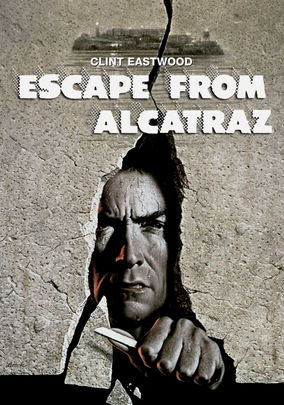
Escape from Alcatraz-1979

Escape from Alcatraz-1979

Director Don Siegel

Starring Clint Eastwood, Patrick McGoohan

Scott’s Review #656

Reviewed July 2, 2017

Grade: B+

Made during the heyday (the 1970s and the early 1980s) of a slew of action and thriller films starring popular actor Clint Eastwood, Escape from Alcatraz is a gritty, man-focused film with not a single female character in sight.

The film is directed by Don Siegel, who also directed Eastwood in several previous films, most notably Dirty Harry in 1971, and contains a grittiness frequently used in this genre of film during the period.

Reminiscent in style of 1975’s One Flew Over the Cuckoo’s Nest in its authority, repression, and exploitation of the victimized commoner, the film is also a good historical account of one of the most famous prison escapes ever achieved in 1962.

Having recently visited the long-since-shut-down Alcatraz prison near San Francisco, California, I found the film wonderful to watch, as much of it was shot inside and around the actual prison grounds.

We immediately meet Frank Morris (Eastwood) as he is unceremoniously led to the infamous Alcatraz prison on a stormy, chilly night in foggy San Francisco. The dark, harsh weather perfectly sets the tone for the dreary prison experience he will face.

Morris is stripped, searched, intimidated by the warden and the guards, and paraded around naked, finally taken to his tiny cell, where he will presumably spend the rest of his life.

The film does not reveal what crimes Morris committed to warrant his tenure at Alcatraz; as a result, the character is more sympathetic.

Slowly, Morris befriends other inmates and devises a plan to escape the impossible prison by digging through the concrete walls with spoons and using the pipes.

The other inmates featured in the film are the Anglin brothers, in for robbery, a kindly older man named Doc, who fervently paints the time away, nervous Charlie Butts, and English, an intelligent black man serving two life sentences for killing two white men in self-defense.

All of these men, in some way, aid Morris in his escape from the torturous Alcatraz.

A side story involves a bully named Wolf, who has designs on Morris from day one. Whether Wolf is actually gay or merely a menace is unknown and not explored.

Throughout the film, Wolf and Morris fight and spend time in solitary confinement, and their rivalry is an interesting subplot.

The film wants the viewer to be on the prisoners’ side, and I am not sure whether, in real life, the prisoners would be as sympathetic as portrayed in the film. Most of them seem to be confined to Alcatraz for robberies or crimes they did not commit, or for circumstances that deem the crimes inevitable in some way.

Furthering a liberal slant to the film is the friendship between Morris and English. An interracial friendship between the men reveals that our hero, Morris, is progressive-thinking and a “good guy”.

Conversely, most of the guards and certainly the Warden (Patrick McGoohan) are written as terrible, unsympathetic people. When an inmate drops dead of a heart attack, the warden coldly remarks, “Some men are destined never to leave Alcatraz alive”.

The Warden is the foil of the film, and in the final scene, the Warden gets a bit of comeuppance when a mocking souvenir is left for him.

To further compare Escape from Alcatraz to One Flew Over the Cuckoo’s Nest, the Warden is a similar character to the infamous Nurse Ratched in their mutual, diabolical sadism.

I am unsure if in “real life” the distinctions between the prisoners and the authority figures were so black and white, but it sure makes for good film drama. It is “the heroes versus the villains” but in reverse.

The inevitable escape sequence is predictable yet highly compelling as Morris and Company enact their escape plan over the course of an overnight.

The usage of papier-mache dolls to fool the guards is heavily dramatic and compelling.

Escape from Alcatraz (1979) is not high art, but it works as a historical account of a real-life incident in one of the most discussed prisons in United States history.

The film is also a perfect vehicle for Eastwood, as he is well cast in the gritty yet likable role of prisoner Morris.

The film is a good, solid late-1970s thriller.