Category Archives: Best Picture-Drama Golden Globe Winners

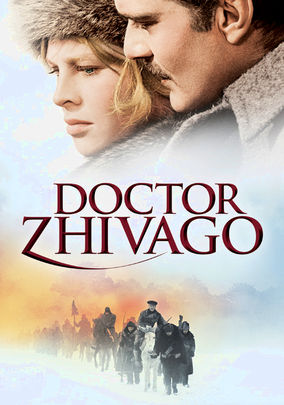
Doctor Zhivago-1965

Doctor Zhivago-1965

Director David Lean

Starring Omar Sharif, Julie Christie

Top 250 Films #31

Scott’s Review #42

449931

Reviewed June 18, 2014

Grade: A

Doctor Zhivago (1965) is a great film to watch on a cold night or throughout the crisp winter or holiday season.

The film is a classic masterpiece directed by the talented David Lean (Lawrence of Arabia, 1962; A Passage to India, 1986), whose perfectionism shines through in his epic films.

Nearly every scene could be a painting, so the cinematography alone is reason enough to become enchanted with art.

Of course, the story is also a goldmine as a sprawling decades-long love story unfolds amid the ravages of the bloody Bolshevik Revolution.

The film is set in the bitter cold of Russia (though all scenes were shot in Spain), and the harsh climate and war combine with a doomed love story set against the backdrop of numerous battles and wartime conditions.

Nearly all sequences are set in winter, and the blustery, icy effects contrast with numerous scenes of cozy, candlelit cabins or more extravagant, glowing surroundings.

For the best viewing experience, viewers should be surrounded by fire, flaming candles, or another form of warmth while a snowstorm or blizzard rages outside for a perfect viewing experience.

A large-screen television or a cinema is simply a must to watch this film, as it is epic on the grandest scale.

Omar Sharif and Julie Christie (a gorgeous star in her day) are perfectly cast as Uri and Lara, young forbidden lovers enthralled with one another but involved with others.

The film dissects their first meeting and their story over the years, through marriages, births, and deaths amid the ravages of early-twentieth-century Russia.

Despite their affairs, neither is deemed unsympathetic—quite the contrary.

Audiences will fall in love with the pair and become enchanted as they watch their love-tortured adventures unfold.

Sharif and Christie are just magnificent and utterly believable as a couple.

The set pieces are magnificent and flawless in design and detail (my favorite is the Ice Palace).

The cinematography is breathtaking, and the content is remarkably close to the superior novel by Boris Pasternak, evoking a sense of “really being there” in the viewer.

Doctor Zhivago (1965) is a brilliant film, perfect for a snowy winter evening.

Oscar Nominations: 5 wins-Best Picture, Best Director-David Lean, Best Supporting Actor-Tom Courtenay, Best Screenplay Based on Material from Another Medium (won), Best Music Score-Substantially Original (won), Best Art Direction, Color (won), Best Cinematography, Color (won), Best Costume Design, Color (won), Best Film Editing

Golden Globe Nominations: 5 wins-Best Motion Picture-Drama (won), Best Director-Motion Picture-David Lean (won), Best Performance by an Actor in a Motion Picture-Drama-Omar Sharif (won), Best Screenplay-Motion Picture (won), Best Original Score-Motion Picture (won), New Star of the Year-Actress-Geraldine Chaplin

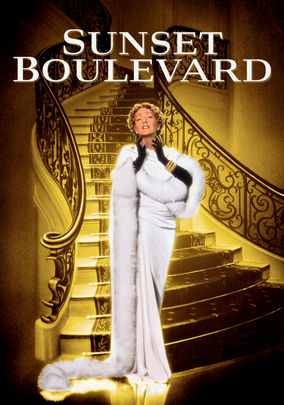
Sunset Boulevard-1950

Sunset Boulevard-1950

Director Billy Wilder

Starring Gloria Swanson, William Holden

Top 250 Films #101

Scott’s Review #330

60010956

Reviewed January 8, 2016

Grade: A

I adore films about Hollywood (good ones), and Sunset Boulevard (1950) is an absolute treasure.

Directed by classic film director Billy Wilder, the film is a film noir about a legendary silent film star, Norma Desmond, who struggles to cope with the advent of sound movies and the instability of her life, plagued by mental illness as her career has long since ended.

Handsome Joe innocently stumbles upon her mansion, forming an eerie relationship that ends in tragedy.

Sunset Boulevard is a famous street in Los Angeles and Beverly Hills, California. It is immediately featured in the film as Joe Gillis, played by William Holden, drives down the street, an unsuccessful screenwriter whose car is about to be repossessed.

Joe narrates the film, and we see a man lying dead in a vast swimming pool. Ironically, this is the film’s ending, and Wilder works backward in an interesting way, so the audience knows tragedy will eventually ensue.

To avoid being chased by men, Joe pulls into a driveway and hides his car in a garage near a vast yet run-down mansion. He is mistaken for a coffin salesman and meets the infamous and creepy Norma and her servant, Max.

The coffin is for Norma’s deceased pet chimpanzee. Intrigued and broke, Joe hatches a plot to rewrite Norma’s terrible screenplay- and make some money from the aging Hollywood star.

Norma needs companionship. The two, along with Max, embark on a complicated relationship marked by jealousy, passion, and rage.

The black-and-white style works exceptionally well in the film, and the lighting creates a sense of intrigue and film noir mystique.

Sunset Boulevard combines noir with a rich character study of Norma, and we feel her pain and isolation as she is cast aside due to the times.

I love how Wilder focuses on the gloomy nature of Norma’s vast mansion—especially when she throws a New Year’s Eve party, isolated with just her, Joe, and a hired band—and intersperses it with a lively Hollywood party filled with young, energetic, up-and-coming talent.

The scenes blend seamlessly and effectively showcase the two different worlds and perspectives.

Sunset Boulevard is a brilliant depiction of old Hollywood at its best (and worst). A study in ambition, struggle, high hopes (Joe), and faded success and dreams shattered in reality, where delusion is the only defense (Norma).

Oscar Nominations: 3 wins-Best Motion Picture, Best Director-Billy Wilder, Best Actor-William Holden, Best Actress-Gloria Swanson, Best Supporting Actor-Erich von Stroheim, Best Supporting Actress-Nancy Olson, Best Story and Screenplay (won), Best Scoring of a Dramatic or Comedy Picture (won), Best Art Direction-Set Decoration, Black-and-White (won), Best Cinematography, Black-and-White, Best Film Editing

Golden Globe Nominations: 4 wins-Best Picture (won), Best Director-Motion Picture-Billy Wilder (won), Best Performance by an Actress in a Motion Picture-Drama-Gloria Swanson (won), Best Performance by a Supporting Actor in any Motion Picture-Erich von Stroheim, Best Screenplay-Motion Picture, Best Original Score-Motion Picture (won), Best Cinematography-Black and White

Lawrence of Arabia-1962

Lawrence of Arabia-1962

Director David Lean

Starring Peter O’Toole

Top 250 Films #139

Scott’s Review #355

60028312

Reviewed January 9, 2016

Grade: A

Lawrence of Arabia (1962) is quite a grand film that must be seen on a large screen. This will ensure full appreciation of the production’s enormous scale.

Numerous shots of objects in the distance are featured, and the small screen dulls the experience.

An excellent film from top to bottom and groundbreaking at the time, Lawrence of Arabia achieves its place in cinematic history due to the scope and vast proportions of the production.

It’s a treat to revisit from time to time.

The film is divided into two parts with an intermission, as with epics that last nearly four hours.

Peter O’Toole stars as T.E. Lawrence, a bored British Army Lieutenant who talks his way into a transfer to the Arabian desert.

As the film opens, it is 1935, and Lawrence has just been killed in a motorcycle accident. While this concept of revealing the ending and working backward is common in current films, it was novel in 1962 when the film was made.

While in Arabia, Lawrence successfully bonded bitter rival tribes to unite against Turkish oppression during World War I. He meets two young guides and other central characters there: Prince Faisal (Alec Guinness) and Sherif Ali (Omar Sharif).

Much of the film features the battles between the rival tribes and Lawrence’s struggle to achieve peace.

Many location sequences show Lawrence and company traveling miles and miles across hot desert.

Some complain that Lawrence of Arabia is too slow-moving a film, but that is its selling point. I find the scenes of the group languishing across the desert incredibly lush and rich in meaning.

The intense heat and beating sun are fantastic in their cinematic grandeur. The film is meant to take its time—precisely what an experience in the Arabian desert would be like—and the mountainous dunes and swirling winds are brilliantly filmed.

David Lean is the king of the sprawling epic, and Lawrence of Arabia is his crowning achievement.

Lawrence is a well-written, layered, and complex character. He is not easy to describe or understand, which is also to the film’s credit.

The sheer weight loss that O’Toole underwent over the two years it took to film Lawrence of Arabia is impressive enough, but he was also a tortured soul emotionally.

The epic film Lawrence of Arabia (1962) requires a half-day of dedicated viewing, but it is worth every minute.

For a reminder of what an actual, breathtaking film looks like sans the oversaturated CGI and quick edits, one should take a deep breath and appreciate this work of art for its majestic look.

Oscar Nominations: 7 wins-Best Picture (won), Best Director-David Lean (won), Best Actor-Peter O’Toole, Best Supporting Actor-Omar Sharif, Best Screenplay Based on Material from Another Medium, Best Music Score-Substantially Original (won), Best Sound (won), Best Art Direction, Color (won), Best Cinematography, Color (won), Best Film Editing (won)

Golden Globe Nominations: 6 wins-Best Motion Picture-Drama (won), Best Director-Motion Picture-David Lean (won), Best Performance by an Actor in a Motion Picture-Drama-Anthony Quinn, Peter O’Toole, Best Performance by an Actor in a Supporting Role in any Motion Picture-Omar Sharif (won), Best Original Score-Motion Picture, Best Cinematography-Color (won), New Star of the Year-Actor-Omar Sharif (won), Peter O’Toole (won)

East of Eden-1955

East of Eden-1955

Director Elia Kazan 

Starring James Dean

Top 250 Films #205

Scott’s Review #1,092

Reviewed December 17, 2020

Grade: A

James Dean wasn’t with us for very long, tragically dying at the tender age of twenty-four, but he made three films: Rebel Without a Cause (1955), Giant (1956), and East of Eden (1955), all-powerful showcases and unique.

Dean gives a brilliant, humanistic, and sometimes tragic performance.

East of Eden, his first film, is the only one he got to preview. I hope he liked it because it will live forever as a gem.

Based on the John Steinbeck novel of the same name, the story is also a biblical retelling of Cain and Abel, brothers who clash and spar.

Director Elia Kazan, famous for supporting and using Method actors in his films, gave a tremendous performance as Dean, which was key to the film’s empathetic nature.

The key to East of Eden is that it reflects on several characters, who are both good and bad, detailing their struggles.

Nobody is completely good or completely bad. The story analyzes good versus evil and the multitude of layers between both extremes, making the experience juicy, truthful, and brilliant.

Set in 1917 during World War I, the story is set against two sunny coastal California towns. Cal Trask (Dean) perceives his father, farmer Adam (Raymond Massey), as favoring Cal’s brother, Aron (Richard Davalos).

This leads to much resentment, jealousy, and conflict. Aron is the apple of Adam’s eye, and we wonder why.

Furthering the drama is Cal’s love for Aron’s girlfriend, Abra (Julie Harris), who doesn’t rebuff any advances.

Cal and Aron’s mother, Kate (Jo Van Fleet), who they think is dead, is alive and well and running a brothel in a nearby town. Assuming a different name, she harbors secrets.

Before you get the impression this is some cheesy soap opera, East of Eden, like the novel, is heavily character-driven and nuanced with development.

It ultimately draws the audience in and envelops everyone in its simmering qualities.

East of Eden is packed with powerful scenes after powerful scenes, and in more than one, the allegiances and rooting values shift from character to character.

Some of the best moments are when Cal self-destructs after his father refuses his birthday gift, or when Cal cruelly reveals the true nature of their mother’s profession to the innocent and unsuspecting Aron.

Finally, Cal and Abra’s kiss atop a Ferris wheel is filled with smoldering desire and deadly consequences.

The acting was tremendous across the board. Much of the credit must go to Kazan for pulling fabulous performances out of the players, a feat only a Method-acting director can achieve.

While the cast is exceptional, the film belongs to Dean, who imbues his character with enough emotion and vulnerability to sustain his topsy-turvy, tortured existence.

Knowing that the actor died soon after filming gives the film an eerie and sentimental feel.

This is comparable to a more recent example, when Heath Ledger died after delivering a brilliant performance in The Dark Knight (2008).

This is hardly a war film or a guy’s film, as the ladies also get to shine with rich characters. Julie Harris and Jo Van Fleet portray flawed characters in juicy roles rife with meaty scenes filled with conflict.

As with most of Steinbeck’s works, specifically The Grapes of Wrath, the landscape is a character, and East of Eden is no exception. With dusty roads and mountainous backgrounds, events ooze with atmosphere and beauty.

The lush northern coastal California landscape portrays a grandiose magnificence that counterbalances the conflict its inhabitants are experiencing.

The central takeaway from East of Eden (1955) is that we are complex creatures with a mixture of good and evil. We sometimes want to do the right thing, but in doing so, we hurt those we love.

The main characters suffer from pain, regret, good intentions, poor decisions, and loss.

The rich dialogue, adaptation, acting, and cinematography make the film near perfection.

Oscar Nominations: 1 win-Best Director-Elia Kazan, Best Actor-James Dean, Best Supporting Actress-Jo Van Fleet (won), Best Screenplay

Golden Globe Nominations: 2 wins-Best Motion Picture-Drama (won), Special Achievement Award-James Dean (won)

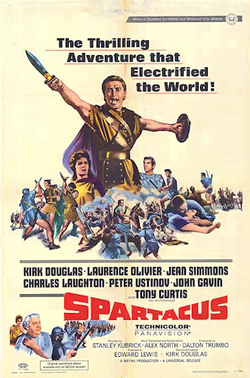
Spartacus-1960

Spartacus-1960

Director Stanley Kubrick

Starring Kirk Douglas

Top 250 Films #247

Scott’s Review #1,250

Reviewed April 30, 2022

Grade: A

Typically, when influential director Stanley Kubrick’s name is uttered, films such as The Shining (1980), 2001: A Space Odyssey (1968), and Barry Lyndon (1975) are immediately thought of, and for obvious reasons.

The haunting, moody musical score, the long camera shots, the dark humor, and the clever camera tricks are easy to pinpoint.

1960, the director was hired to direct the gorgeous epic Spartacus after Hollywood star Kirk Russell unceremoniously fired the first director.

None of the previously mentioned elements are easy for me to notice and are more or less absent, but a grand battle scene in a luscious green field is very reminiscent of Barry Lyndon.

This is likely because Spartacus was not Kubrick’s film entirely; instead, it belonged to others with more clout.

Spartacus is a brilliant film for many reasons. Some epics suffer from a hokey, cliched feel and can be overwrought, predictable, and tired.

The rebellious Thracian Spartacus (Russell), born and raised an enslaved person, is sold to Gladiator trainer Batiatus (Ustinov). After training to kill for the arena, Spartacus turns on his owners and leads the other enslaved people in rebellion.

As the rebels move from town to town, their numbers increase as escaped slaves join their ranks. Under the leadership of Spartacus, they make their way to southern Italy, where they intend to cross the sea and return to their homes.

Spartacus is grand, sweeping, cinematically significant, and everything else you’d expect from a 1960s Hollywood epic with enormous stars of its day.

Looking beneath the surface, the film is riddled with interesting tidbits like bisexuality, homoeroticism, and violence, more in tune with an art film or modern war film than the safety of a movie made during this time.

Particularly noteworthy is that Dalton Trumbo wrote the screenplay. One of the Hollywood Ten, he refused to testify before the House Un-American Activities Committee in 1947 during the committee’s investigation of alleged Communist influences in the motion picture industry.

After the release of Spartacus, it marked the beginning of the end of the Hollywood Blacklist for Trumbo and other affected screenwriters.

Thank goodness.

In a famous scene, recaptured enslaved people are asked to identify Spartacus in exchange for leniency; instead, each enslaved person proclaims himself to be Spartacus, thus sharing his fate.

The suggestion is that this scene was meant to dramatize the solidarity of those accused of being Communist sympathizers during the McCarthy era.

Besides the political importance, Spartacus showcases a beautiful romance between Spartacus (Russell) and Varinia (Jean Simmons), a gorgeous slave girl.

The tenderness and authenticity are palpable as many of their early scenes involve no dialogue but only longing and expression through both actors’ eyes.

I celebrated the connection between the actors at the forefront of much romance. Russell carries the film with calm masculinity, quickly making him heroic and likable.

He is the charismatic, good guy who has been wronged and ill-fated.

A sequence oozing with machismo and homoeroticism occurs when evil Crassus (Olivier) is bathed by his slave boy Antoninus (Tony Curtis).

He seductively explains that while sometimes he prefers snails, he also likes oysters. The implication is that he is bisexual, brazenly so, and expects the youngster to become his sex slave.

The warmth of the bathtub and the luxurious atmosphere contrast with the proximity and touch of both male characters.

In 1960, this scene was way ahead of its time.

The conclusion of Spartacus is melancholy and surprising. Having bested Rome’s cruelty, one might have expected to see Spartacus and Varinia happily ride off into the sunset.

This doesn’t happen, and the film is richer for it. There is pain and despair as there was in real life. Wisely sparing complete doom and gloom, the ending is satisfying as one central character escapes a deadly demise and moves ahead.

Spartacus (1960) is one of the greats. It has muscle and texture, and many below-the-surface nuances are ripe for discussion. For these reasons, it’s a must-see.

Oscar Nominations: 4 wins-Best Supporting Actor-Peter Ustinov (won), Best Art Direction-Color (won), Best Cinematography-Color (won), Best Costume Design-Color (won), Best Film Editing, Best Music Score of a Dramatic or Comedy Picture

Golden Globe Nominations: 1 win-Best Motion Picture-Drama (won), Best Director-Motion Picture-Stanley Kubrick, Best Performance by an Actor in a Motion Picture-Drama-Laurence Olivier, Best Performance by an Actor in a Supporting Role in any Motion Picture-Peter Ustinov, Woody Strode, Best Original Score-Motion Picture

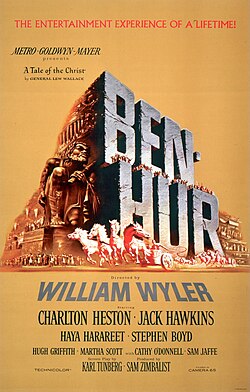
Ben-Hur-1959

Ben-Hur-1959

Director William Wyler

Starring Charlton Heston

Scott’s Review #1,265

Reviewed June 9, 2022

Grade: A

One of the many pleasures of watching Ben-Hur (1959) is marveling at the extensive cinematic brilliance of the entire cast and crew.

Saying it’s a spectacle is not enough; it’s a must-see.

It had the largest budget ($15.175 million) and the most extensive sets built of any film produced at the time, allowing enormous spending to create one of cinema’s most lavish and grand films.

I shudder to think of how powerful it was to see this film on the large screen in a movie theater and the sheer mesmerizing quality it had on audiences.

I’ve anticipated viewing the film for years and finally did. Why I waited so long is beyond me. It does not disappoint, and the extravagance is immeasurable.

I sat in awe at the many aspects of the film created before CGI, making it as impressive in 2022 as it was over sixty years ago.

Charlton Heston plays Judah, a Palestinian Jew who fought the Roman Empire during Christ’s time. He becomes involved in a vicious feud with his ambitious boyhood friend Messala (Stephen Boyd).

Their hatred culminates in an exciting yet vicious chariot race.

Condemned to life as an enslaved person, Judah swears vengeance against Messala. He escapes, later crossing paths with a gentle prophet named Jesus, who helps Judah save his family despite his death.

The film made a household name out of Heston and, other than its big budget, is legendary for its use of homoeroticism and an unspoken love story between two men who are at first the best of friends and who later become bitter rivals.

The film had several screenwriters, and if looking closely, some uneven storytelling is largely overlooked by the enormous spectacle of the finished product.

Gore Vidal, who was openly gay, insisted on a homosexual interlude, conspicuously, of course, between Judah and Messala.

Giggle-worthy to those in the know is that Boyd played his character as a spurned gay lover of Heston’s, with Heston unaware of the underlying romantic angle. This is rumored to be because Heston couldn’t handle it had he known.

This knowledge made me enjoy the subtext of the scenes between the two men even more than I should have.

To prove the above point, the written romance between Judah and Esther (Haya Harareet) lacks much chemistry, and I didn’t view them as brothers and sisters or good friends.

Other scenes of shimmering, muscular men sitting around in towels are further proof of Ben-Hur’s homoeroticism.

These juicy intrigue tidbits provide tingles, but the main draw is the famous chariot scene, which is as exciting as an action scene in a movie.

The outdoor arena, packed with thousands of onlookers, provides a perfect setup for the round-and-round racetrack, as dozens of horses are whipped into a dizzying frenzy and go faster and faster.

The peril is prominent as numerous riders drop to their death, mangled into pieces from being stampeded by the horses.

Other sequences, like the leper colony and the crucifixion of Jesus, are beautiful and astounding.

Director William Wyler, a heavy hitter at the time with gems like Mrs. Miniver (1942) and The Best Years of Our Lives (1946), easily usurps those excellent films with Ben-Hur.

It won eleven of its twelve Oscar nominations and employed ten thousand extras!

Ben-Hur (1959) is the definition of an epic film. Expensive and expansive, the breathtaking chariot scene is one of the best I’ve ever seen in a film.

Not feeling dated, it’s a marvel of exquisiteness and magnificence.

Oscar Nominations: 11 wins-Best Picture (won), Best Director-William Wyler (won), Best Actor in a Leading Role-Charlton Heston (won), Best Actor in a Supporting Role-Hugh Griffith (won), Best Adapted Screenplay, Best Art Direction-Set Direction-Color (won), Best Cinematography (won), Best Costume Design-Color (won), Best Film Editing (won), Best Sound Recording (won), Best Music-Scoring of a Dramatic or Comedy Picture (won), Best Special Effects (won)

Golden Globe Nominations: 4 wins-Best Motion Picture-Drama (won), Best Director-Motion Picture-William Wyler (won), Best Performance by an Actor in a Motion Picture-Drama-Charlton Heston, Best Performance by an Actor in a Supporting Role in any Motion Picture-Stephen Boyd (won), Special Achievement Award-Andrew Marton (won)

The Bridge on the River Kwai- 1957

The Bridge on the River Kwai- 1957

Director David Lean

Starring Alec Guinness, William Holden

Scott’s Review #908

Reviewed June 11, 2019

Grade: A

The Bridge on the River Kwai (1957) is a war film that exemplifies character-driven storytelling from each character’s perspective.

Films of this genre often do not stray too far from the straight and narrow, showcasing a war-event perspective. This often becomes larger than the humanity piece.

A key point is that the American, British, and Japanese points of view turn the grand epic experience into a more personal one.

The film received numerous Oscar nominations, culminating in a Best Picture win.

The time is early 1943, amid the powerful and destructive World War II, when a group of British prisoners of war (POW) arrives at a Japanese camp.

Colonel Saito (Sessue Hayakawa) commands all prisoners, regardless of rank, to begin work on a railway bridge that will connect Bangkok with Rangoon.

Lieutenant Colonel Nicholson (Alec Guinness), the British commanding officer, refuses manual labor, and a battle of wills erupts between the two men.

Meanwhile, Commander Shears (William Holden), an American also being held at the same camp, vows to destroy the bridge to avoid a court-martial.

The complexities of the men’s relationships are the main draw and can be discussed at length. Each possesses a firm motivation, but the emotions teeter back and forth as they face various conflicts.

Each of the three principles is an analytical juggernaut within the human spirit, ranging from the courageous to the cowardly to the evil.

We are supposed to root for Shears and not root for Saito, but why isn’t that cut and dried?

Is Shears too revenge-minded? We cheer Nicholson’s resilience, but is he too stubborn for his own good?

The film’s whistling work theme nearly became famous when it was first released in 1957. Ominous and peppered with a macabre depression, the prisoners go about their work in a near ode to Snow White and the Seven Dwarfs’ cheerier “Whistle While You Work” anthem.

As they continue to build the bridge dutifully, the audience feels a sense of dread and a foreboding atmosphere. What will ultimately happen? When two prisoners are shot dead while attempting to escape, the film takes a different turn.

Given that David Lean, responsible for such epic masterpieces as Lawrence of Arabia (1962) and A Passage to India (1984), directs The Bridge on the River Kwai, should be telling as far as the sweeping exterior landscape treats in store for the viewer.

The lavish Asian landscape, so picturesque and beautiful, is peaceful amid the chaos and vile treatment of the prisoners. This imbalance is wonderfully rich and poignant against the robust storytelling.

The climax is bombastic (literally!) and a nail-biting experience resulting in a stabbing, an explosion, and a heap of tension.

A train carrying important dignitaries and soldiers is racing towards the newly constructed bridge as one man is intent on detonating a bomb and destroying another race against time to prevent the bloodbath.

The suspense, action, and cinematic skill are front and center during the final act.

Deserving of each one of the accolades reaped on The Bridge on the River Kwai (1957), the film is the thinking man’s war film.

Layered with an underlying humanistic approach and with little violence given the subject matter, one can sink into empathy for each point of view presented instead of being force-fed a one-dimensional message.

Fine acting and gorgeous cinematography make this film one to be forever remembered.

Oscar Nominations: 7 wins-Best Motion Picture (won), Best Director-David Lean (won), Best Actor-Alec Guinness (won), Best Supporting Actor-Sessue Hayakawa, Best Screenplay Based on Material from Another Medium (won), Best Scoring (won), Best Cinematography (won), Best Film Editing (won)

Golden Globe Nominations: 3 wins-Best Motion Picture-Drama (won), Best Director-Motion Picture-David Lean (won), Best Performance by an Actor in a Motion Picture-Drama-Alec Guinness (won), Best Performance by an Actor in a Supporting Role in any Motion Picture-Sessue Hayakawa

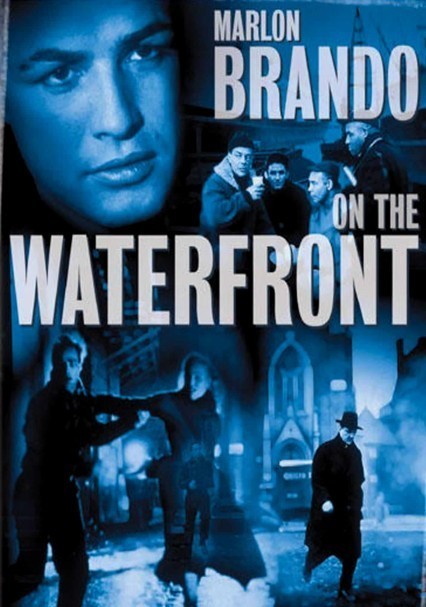
On the Waterfront-1954

On the Waterfront-1954

Director Elia Kazan

Starring Marlon Brando

Scott’s Review #876

Reviewed March 9, 2019

Grade: A

Led by one of the best acting performances of all time, On the Waterfront (1954) was an essential and relevant film when it was made and remains influential today.

Director Elia Kazan and newly minted Hollywood star Marlon Brando collaborate on a film spectacle as much a character study as a tale of morality and social injustice.

The musical soundtrack score composed by Leonard Bernstein only enhances an already astounding picture that is deservedly referenced as a masterpiece.

Terry Malloy (Brando) is a washed-up former local boxer who now spends his days slaving away as a dockworker on the dingy waterfronts of Hoboken, New Jersey.

Terry’s brother Charley (Rod Steiger) works for a vicious mob boss, Johnny Friendly (Lee J. Cobb), who controls the area.

The police are aware of the ongoing corruption, but are limited by the lack of evidence and witnesses in routine crimes. When a fellow dockworker is killed, Terry falls for the victim’s sister, Edie (Eva Marie Saint), leading him to rethink his priorities.

The positive aspects of On the Waterfront are numerous. Meritful cinematography and location sequences, anchored by a rich story and flawless acting, lend the film authenticity.

The film was shot almost entirely on location in New York and New Jersey, using actual docks and outdoor sequences.

The dingy, water-soaked locales are riddled with secrets and dark violence, heightened by realism and grittiness.

Never looking more masculine or more handsome, though his portrayal of Stanley in A Streetcar Named Desire (1951) is a close second, Marlon Brando achieves riches in the world of stellar acting.

He is rugged yet compassionate, macho yet tender, and pours his heart into the role of Terry. One cannot help wondering if the self-professed method actor became Terry during filming.

With both vulnerability and strength, Brando embodies the character so well that he has become my favorite of all the film roles he has undertaken.

The supporting players dutifully flesh out the resounding cast with gusto.

Special mentions go to Karl Malden as Father Barry and Steiger as Charley. Like Barry, Malden brings warmth, patience, and benevolence in a world of crime and deceit. He attempts to console and mentor the folks in his world and is eventually beaten for his honesty and earnestness.

Charley is a different story, selling his soul to the devil and accepting the cards he has been handed, choosing to join with Friendly. At a crucial moment, he makes another devastating choice that changes his life forever.

Few films can proudly boast a scene or dialogue that remains timeless and imprinted on cinematic history, but On the Waterfront contains a scene of this caliber.

During a tremendously important moment in the film, Terry has a conversation with Charley and makes an impassioned statement-“I coulda’ been somebody. I coulda been a contender”, laments Terry to his brother, “Instead of a bum, which is what I am – let’s face it.”

This line is a historic piece of writing and is true to the character.

The film is more powerful and truthful because it represents Elia Kazan’s real-life plight. In the early 1950s, the director famously informed a government committee about suspected Communists, while many of his colleagues chose to go to prison rather than name names.

Many Hollywood actors, directors, and screenwriters were blacklisted for decades. On the Waterfront is frequently deemed an allegory to the director’s plight and is a personal story.

On the Waterfront (1954) is sometimes violent and always realistic, painting a portrait of one man’s struggle to overcome the lousy life he’s been given and do the right thing.

Thanks to gorgeous direction, an explosive lead performance by Brando, and all the pieces fitting perfectly in unison, the film is one of the greats and will remain one that generations will discover.

Oscar Nominations: 8 wins-Best Motion Picture (won), Best Director-Elia Kazan (won), Best Actor-Marlon Brando (won), Best Supporting Actor-Lee J. Cobb, Karl Malden, Rod Steiger, Best Supporting Actress-Eva Marie Saint (won), Best Story and Screenplay (won), Best Music Score of a Dramatic or Comedy Picture, Best Art Direction, Black-and-White (won), Best Cinematography, Black-and-White (won), Best Film Editing (won)

Golden Globe Nominations: 4 wins-Best Motion Picture-Drama (won), Best Director-Motion Picture-Elia Kazan (won), Best Performance by an Actor in a Motion Picture-Drama-Marlon Brando (won), Cinematography-Black and White (won)

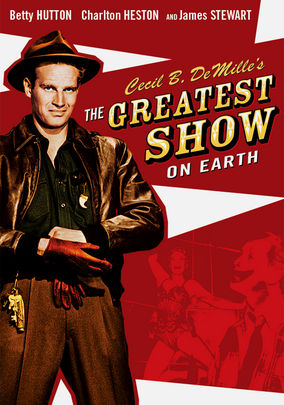
The Greatest Show on Earth-1952

The Greatest Show on Earth-1952

Director Cecil B. DeMille

Starring Charlton Heston, Betty Hutton, James Stewart

Scott’s Review #204

60034703

Reviewed December 14, 2014

Grade: B+

Considered by some critics to be one of the worst Best Picture winners of all time, The Greatest Show on Earth (1952) is quite an impressive Hollywood spectacle.

It tells the story of the world’s largest railroad circus as it launches a tour across the United States, with plenty of drama throughout.

The film stars Charlton Heston, Betty Hutton, and James Stewart as the general manager, acrobat, and clown of the show, respectively.

The film used over 1,400 real Ringling Bros. and Barnum & Bailey employees and hundreds of animals in its production, giving it an authentic circus feel.

Unfortunately, the film also has a schmaltzy quality and lacks strong acting, which, surprisingly, does not bother me and, strangely enough, works in a way.

Various characters have affairs with each other or fall in and out of love rather quickly- it makes for good drama, anyway.

Of course, the main appeal is the extravagant show. While the drama sometimes takes center stage, the lavish production and actual circus events shine through.

My favorite character, and arguably the only interesting character with any depth, in The Greatest Show on Earth is Buttons the Clown, played by James Stewart.

Buttons wears his clown costume, complete with full makeup, at all times. He is kind and mysterious. We learn that he “mercy killed” his dying wife and has joined the circus for protection from the police.

A wonderful human being, he was once a Doctor and tends to anyone in the circus troupe who needs assistance. Later in the film, he plays a vital role after a tragic accident.

His heartbreaking, tender conversation with his elderly mother, whom he only sees in secret once a year for a few seconds as she tearfully and discreetly visits him in the audience, is painfully sad to watch and such a sweet scene.

The Greatest Show on Earth’s best scene by far, still impressing today, is the massive train wreck near the conclusion.

The special effects and direction in Cecil B. DeMille’s 1952 film are brilliant. The train perfectly derails one night—it collides with an oncoming train and derails, highly effective in its enormity.

The scene does not look silly.

The way all the drama comes together in this scene—Harry, the crooked midway concessionaire and vicious elephant trainer; Klaus, who is responsible for the accident; Button’s true identity being revealed; and a significant character in peril—makes it top-notch and a satisfying conclusion to the film.

The stories involving Brad, Holly, Sebastian, and Angel are soapy and melodramatic, making them the film’s weakest point.

As a viewer, I couldn’t care less which character lusted after which or who wound up in bed together, but the movie itself is a spectacle, which is my main enjoyment.

The brightness, the revelry, and the circus performances are all wonderful.

Oscar Nominations: 2 wins-Best Motion Picture (won), Best Director-Cecil B. DeMille, Best Story (won), Best Costume Design, Color, Best Film Editing

Golden Globe Nominations: 3 wins-Best Motion Picture-Drama (won), Best Director-Motion Picture-Cecil B. DeMille (won), Cinematography-Color (won)