Category Archives: Summer

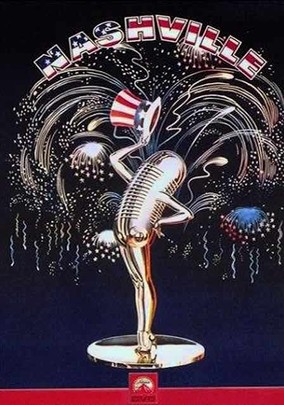
Nashville-1975

Nashville-1975

Director Robert Altman

Starring Lily Tomlin, Keith Carradine, Karen Black

Top 250 Films #3

Scott’s Review #47

60001541

Reviewed June 19, 2014

Grade: A

Nashville (1975)  is a brilliant film.

I have found that with each subsequent viewing, it creeps higher and higher on my list of favorite movies of all time.

The style is unique (largely improvised) and epitomizes the film’s creative freedom in the 1970s.

Director Robert Altman lets his actors express themselves, even allowing them to write their own songs; the overlapping dialogue creates a natural feel as the viewer watches the cast of twenty-four principals intersect over five days at a political rally/country music festival.

It is pure Robert Altman at his finest.

Nashville is a satire of the political arena of the early 1970s, particularly the Vietnam conflict and its politicians.

The film certainly questions and challenges the government with an ironic patriotic setting (Nashville).

The country music industry was in uproar upon the film’s initial release. It is a layered film that can be discussed and appreciated, with every character cared for.

I cannot adequately describe the multitude of nuances in each scene that are noticed over time.

Each character, even those with limited screen time, is vital to the story, as are the political elements —the questions of war, policies, and so on.

The chaotic bits and individual storylines come together at the end, and many background events are exciting to watch and note throughout each viewing.

With each experience, the audience will notice more and more. I certainly do.

Lily Tomlin, for example, plays Linnea, a haggard mother of deaf children with a supportive husband, a woman who, on the surface, is heroic, yet a complex character. She is bored with her life and falls in love with a young musician despite the guilt and repercussions.

The musician in question is Tom Frank, played by Keith Carradine. Handsome and self-absorbed, he arrives in Nashville to dump his bandmates in hopes of a solo career and beds many willing females.

He also lashes out at a soldier at the airport, saying, “Kill anyone lately?”

Despite his unlikable character, Carradine delivers one of the film’s most beautiful performances when he sings “I’m Easy”.

Several of the female characters assume he is singing the song for them, but who is he truly singing it for — if anyone?

Another character to analyze is Barbara Jean, played by Ronee Blakley. A frail yet very successful country singer, she is in and out of hospitals as she frets that her replacement singer will steal her thunder.

Her insecurities rise to the surface.

Insecurity is a common theme among the characters. Many of them are unsure, afraid, or lack confidence in their musical talent, relationships, or themselves.

These are only three examples of the twenty-four richly layered characters- some ambitious, some falling apart, others meandering through life.

Many songs throughout were written and performed by the actors themselves.

Nashville (1975) is storytelling and filmmaking at its best. A creation by Altman that is deservedly admired, revered, and heralded as a significant influence.

It is studied in film schools as it should be.

Oscar Nominations: 1 win-Best Picture, Best Director-Robert Altman, Best Supporting Actress-Ronee Blakley, Lily Tomlin, Best Original Song-“I’m Easy” (won)

Rear Window-1954

Rear Window-1954

Director Alfred Hitchcock

Starring James Stewart, Grace Kelly

Top 250 Films #19

Scott’s Review #317

60000397

Reviewed January 2, 2016

Grade: A

I dearly love several Alfred Hitchcock films, and Rear Window (1954) is at the top of that list.

The film is a unique experience in that much of it is shot from the point of view of the main character, L.B. Jeffries, played with conviction by James Stewart, a fixture in several of Hitchcock’s great films.

Wheelchair-bound and confined to his Manhattan apartment, he has nothing more to do than spy on an entire apartment of neighbors across the street.

He witnesses a crime, and a cat-and-mouse game ensues.

What is great about this film is that the viewer gets to know the series of neighbors L.B. watches and glimpses into their lives, some of which are happy and some sad.

Rear Window is shot like a play. The chemistry between Stewart and Grace Kelly is nice, but secondary to the main story’s tremendous impact.

Rear Window (1954) can be watched repeatedly and enjoyed with each subsequent viewing.

Oscar Nominations: Best Director, Alfred Hitchcock, Best Screenplay, Best Sound Recording, Best Cinematography, Color

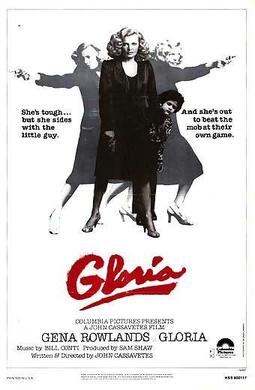
Gloria-1980

Gloria-1980

Director John Cassavetes

Starring Gena Rowlands, John Adames

Top 250 Films #32

Scott’s Review #166

Reviewed September 9, 2014

Grade: A

Gloria (1980) is an action/thriller film that features the standard action-crime thriller elements, including shoot-em-ups, guns blazing, clichéd fare, but also contains an interesting and appealing leading character, a gritty atmosphere, and witty dialogue.

It is a significantly better film than most indistinguishable action films.

Directed and written by independent film master, John Cassavetes, who wanted to make a more conventional, mainstream film than was typical for him- think the very left of center, brilliant A Woman Under the Influence, also starring Gena Rowlands, and Gloria was the perfect film for him to create with Rowlands as the focal point.

Made in 1980, Gloria perfectly portrays New York City at the time.

New York City was gritty, dirty, rough, crime-infested, violent, and chaotic, and the film frequently travels throughout Manhattan, the Bronx, and New Jersey, with many scenes shot directly on the streets of New York.

Several other scenes are set in dingy apartments, hotels, seedy bars, and rundown streets, and are highly effective in portraying a gloomy atmosphere. The cinematography in the film is perfect.

The heart of the film lies with Rowlands (Cassavetes’s wife), who gives a mesmerizing performance as a former mob girlfriend who, by circumstance, must protect a young Hispanic boy from execution by the mob because of an informant’s book he clings to for dear life.

No other actress could have played this role of a tough-talking, brash New Yorker as well as Rowlands does. The boy’s father, played by Buck Henry, is a scared accountant with ties to a company fronted by the mob.

He fears his entire family will be murdered and hands his kid over to Gloria. Julie Carmen gives a brief but effective performance as Phil’s frazzled mother.

I wish Henry and Carmen had been given more screen time and fleshed-out characters because both had huge potential. The film belongs to Rowlands- she is no-nonsense, tough, and so convincing in the part.

I also enjoyed the casting of John Adames as the kid, Phil. Many critics inexplicably panned his performance, and I’m not sure why.

I also love the unique opening credits, as intense folk/jazz music plays over watercolor portraits that turn into the skyline of New York City, with a melancholy, eerie quality.

Amid the violence, there is a sweet bond that develops between Gloria and Phil that is not too sentimental or cheesy.

A great, compelling late 1970s/early 1980s film with definite Godfather and Dirty Harry influences in its texture and characters, especially in some of the mobster roles.

The appeal of the film is that it has a heart without ever delving into schlock. Surprisingly rated only PG, it is gritty, but not lewd or harsh, and seems dirtier than it is, with barely any filthy language.

The chemistry and heartfelt connection between Gloria and Phil are darling without being too sappy or safe.

Gloria (1980) is a fast-paced, action gem that is both appealing and tough.

Oscar Nominations: Best Actress-Gena Rowlands

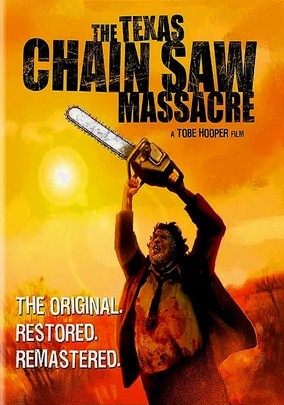
The Texas Chain Saw Massacre-1974

The Texas Chain Saw Massacre-1974

Director Tobe Hooper

Starring Marilyn Burns, Gunnar Hansen

Top 250 Films #55

Top 40 Horror Films #12

Top 10 Most Disturbing Films #5    

Scott’s Review #209                                                      

15815343

Reviewed December 31, 2014

Grade: A

The Texas Chain Saw Massacre (1974) is one of the grittiest, rawest, and most frightening horror films I have ever seen, and it still holds up incredibly well today.

Featuring a documentary-like look, it is horrifying due to its grainy, visual, and realistic feel. It is not psychological horror- it is in-your-face, brutal horror.

The perception of an incredibly hot, sticky, backwoods Texas summer is incredibly well done and only adds to the terror.

A group of five teenagers travels to the vast fields of Texas — aka the middle of nowhere —presumably on a road trip. On their drive, they pick up a strange hitchhiker who ends up stabbing one of the teens and cutting his arm.

Spooked by this odd occurrence, they stop for gas and directions, but veer off course and accidentally wind up at a slaughterhouse owned by cannibals.

The group of teens is led by Sally Hardesty, played by Marilyn Burns.

As the teens are chopped off grotesquely, similar to a slew of similarly fashioned, but less interesting horror films to follow, Sally winds up the lone survivor of the group.

Burns plays the first “final girl”, a title made famous in horror films as the last female remaining alive- it was almost always a female- to take on the maniacal killer.

The Texas Chain Saw Massacre features one of the horror genre’s best villains- Leatherface.

The viewer knows little about him since he does not speak- is he mentally disabled? Is he an intelligent man? He is disguised behind a mask made of strewn-together human skin and wields a scary chainsaw.

We know nothing about him- only that he loves to kill.

The ambiguity is immeasurable.

Besides the way the film is shot, another shocking element is the story’s reality. Could this happen to the viewer? The answer is yes, of course it could. How many times have we been driving and gotten lost in unfamiliar surroundings?

There are no supernatural beings or CGI effects in this film- only a group of youngsters crossing paths with maniacs, and this could happen in real life. This realization adds to the fright.

The famous- or infamous- dinner scene is revolutionary in disgust and distaste. The family attempts to serve Sally as dessert to the elderly patriarch, and as he begins to suck blood from Sally’s finger, it will force the squeamish to turn away.

The Texas Chain Saw Massacre is a short film, running at only 84 minutes, but the breathtaking finale- Sally running through the endless woods followed by Leatherface, seems interminable. Will he catch her? How can she possibly escape?

The Texas Chain Saw Massacre (1974) is dirty, ugly, and intense. It is no-holds-barred brutality. It is one of the best horror films ever made.

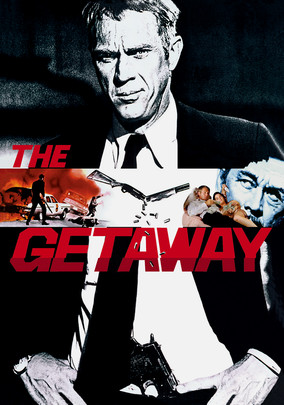
The Getaway-1972

The Getaway-1972

Director Sam Peckinpah

Starring Steve McQueen, Ali MacGraw

Top 250 Films #58

Scott’s Review #439

539604

Reviewed July 3, 2016

Grade: A-

The Getaway (1972) is a classic action film directed by Sam Peckinpah, known for films such as Straw Dogs and The Wild Bunch.

His films are known as “guy films” and are a rather violent experience.  The Getaway is no exception, though it is not immensely brutal either. Still, there is more than one macabre scene and one dastardly villain.

For fans of Peckinpah, The Getaway is a must-see.

The film features Steve McQueen and Ali MacGraw, who are perfectly cast as lovers Doc and Carol McCoy. Inescapable was their chemistry, and art mirrored life: the two were embroiled in a torrid love affair during the shooting, and later they married.

We meet Doc in a Texas prison, where his parole has just been denied. Doc and Carol decide to make a deal with corrupt businessman Jack Benyon to ensure Doc’s release. One stipulation is for Doc to participate in a bank heist with two of Jack’s men (Rudy and Frank).

The heist goes off, but things go awry, and Doc and Carol head for El Paso with a large sum of money, being pursued by Rudy and a double-cross attempt by Jack.

Rudy kidnaps veterinarian Harold and his young wife Fran (Sally Struthers) to aid him with his injuries, taking them along as he pursues Doc and Carol.

Amid the already complicated plot, a con man attempts to steal Doc and Carol’s money.

Doc and Carol are clearly the heroes of the film and are meant to be rooted for, and the characters work very well together. Yes, they are criminals, but they are portrayed as lovely and as not hurting anyone who does not deserve it. Doc does spare Rudy’s life at one point, and I think this only reinforces Doc’s appeal as an antihero.

The love story is also a significant aspect of the filmmaking, making Doc and Carol likable. A few sweet, tender scenes of their romance are mixed in, adding a nice balance to the otherwise testosterone-fueled events.

The Getaway features spectacular editing, particularly at the beginning of the film, where we watch Doc in prison, going through his day-to-day rituals, which are seamlessly interwoven with other stories in the movie.

The musical score matches perfectly with the editing, adding a provocative element of intrigue. These components add the necessary elements to a film like this- edge-of-your-seat!

I love the Texas setting.

Characters are constantly traveling to get somewhere- either by train, by car, or on foot- so we see much of the Texas countryside, almost giving The Getaway a Western flavor.

It is certainly a hot, humid environment, though McQueen always wears a sophisticated suit, and MacGraw looks stylish and put together.

And from a prop perspective, I never tire of seeing those early 1970s sedans driving at high speeds.

Unfortunately, as with most of Peckinpah’s films, women are not portrayed in a positive light, though Carol is one of the strongest of his female characters. Yet, in one tough scene, she is smacked around by Doc after he realizes she slept with Jack to ensure his release from prison.

The most confusing and weak character is Fran. In a strange bit of writing, she inexplicably falls madly in love with her kidnapper, Rudy, even as he abuses and humiliates her, while her husband is around. This is odd and tough to watch, and not the best part of The Getaway.

Her character is not developed well, and it is head-shaking that she feels any passion for Rudy.

The heart of the film belongs to Doc and Carol as they are on the lam for much of the time, and this is a successful part of The Getaway- hence the title. Will they get caught? Will they escape?

The characters remind me of Bonnie and Clyde, so we wonder if Doc and Carol will meet the same fate, but of course, we like them, so we do not want that.

The Getaway is a fast-paced, down-home, red-blooded sort of action film. It is stylized, gritty, and sometimes violent. The chicken wing scene between Rudy, Fran, and Harold starts light and then turns ugly, adding to the film’s unpredictable nature.

A supreme offering by Peckinpah.

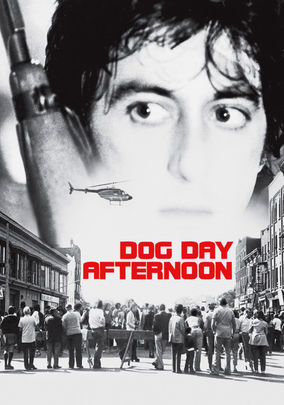
Dog Day Afternoon-1975

Dog Day Afternoon-1975

Director Sidney Lumet

Starring Al Pacino, John Cazale, Chris Sarandon

Top 250 Films #203

Scott’s Review #185

450423

Reviewed October 13, 2014

Grade: A-

Director Sidney Lumet successfully sets the smoldering hot summer afternoon in New York City for his 1975 film Dog Day Afternoon.

Al Pacino plays Sonny, an unemployed, desperate man who, while married with two kids, has a gay lover, Leon (brilliantly played by Chris Sarandon), whom he is attempting to help finance a sex change operation.

Based on a true story, Sonny, along with his dimwitted friend Sal- played by John Cazale- decides to rob First Brooklyn Savings Bank.

Predictably, their plans go awry when Sonny burns a ledger during the robbery attempt, and a pedestrian sees the smoke and alerts the police.

As the police become aware of the attempted heist, a standoff ensues between Sonny and the cops, led by Detective Moretti (Charles Durning), and the robbery receives media coverage.

Most of the action is set inside the stifling hot bank and directly outside on the street, and gradually the supporting characters come into play- the hostages, Sonny’s mother, wife, and lover all make contact with Sonny in some way or another, and his motivations become clearer to the audience.

Dog Day Afternoon is an anti-establishment movie, in this case anti-police, questioning the government and the financial establishment (Lumet also directed Network, challenging the establishment).

This is evident when, after a standoff with police, the crowd sides with Sonny as he chants “Attica!” Attica!, which is a direct reference to a recent prison riot.

Sonny speaks for the working class- the poor, struggling, underpaid workers who cannot afford to feed or adequately take care of their families.

The heat and humidity compare perfectly to the pressure felt by most middle-class people that still resonates today and leaves the viewer contemplating their life.

Sonny relates to the bank tellers who do not earn much. Besides, Sonny is sympathetic to the audience in another way. Leon, recently hospitalized at Bellevue Hospital, is emotionally dependent on Sonny. He would be lost without him.

They share a lengthy and heartfelt phone conversation that is the heart of the film- gay romance had not been explored this way by 1975 in cinema, and the romance was neither shoved down the audience’s throat nor was it looked past entirely.

Their relationship is tender and deep, yet still somewhat ambiguous.

Would they stay together? What would become of Sonny’s wife and two children? Would he leave them for Leon in a world that was not ready to accept two homosexual men together? Is that the reason for Leon’s desire for a sex change operation?

Chris Sarandon, in too small a part, is wonderful as the gay lover, struggling with a sexual identity crisis. Al Pacino gives, per usual, a brilliant portrayal as he takes on a complex character who is far from one-dimensional.

Perhaps not a masterpiece, Dog Day Afternoon is a very good film, but neither is it strictly a gay-themed movie nor an action/thriller- it’s more complex than that.

Ironically, Sonny is portrayed as the hero of the film, as it is not a standard good police versus bad bank robber type of film- quite the contrary. It is much, much more than that.

Oscar Nominations: 1 win-Best Picture, Best Director-Sidney Lumet, Best Actor-Al Pacino, Best Supporting Actor-Chris Sarandon, Best Original Screenplay (won), Best Film Editing