Tag Archives: Lukas Haas

Babylon-2022

Babylon-2022

Director Damien Chazelle

Starring Margot Robbie, Brad Pitt

Scott’s Review #1,365
Reviewed June 4, 2023

Grade: A-

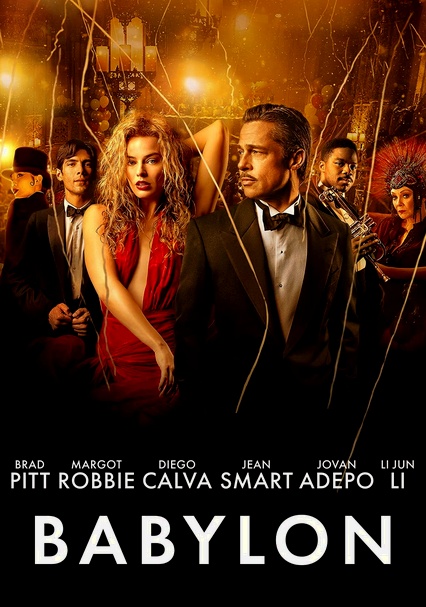
Babylon (2022) is a film that will likely divide audiences broadly. Slightly late to the table, I viewed the film after the awards season hoopla had ended, and the film came up empty-handed.

Sure, a few nominations were received, but much more was expected from the epic Hollywood-themed venture.

I’m a fan of director Damien Chazelle, most famous for the similarly set Los Angeles film La La Land (2016), which I adore.

His direction style reminds me a great deal of Baz Luhrmann’s, with the incorporation of intense musical numbers during many scenes and a strong, chaotic, and frenetic nature.

I realize this style is not for everyone, so I’m not surprised that Babylon is both revered and reviled. This isn’t always a bad thing, as a good film debate can be fun.

I adore Babylon primarily for the potent silent-era Hollywood story and the terror stars of the 1920s faced with the realization that sound had entered their pictures and they were expected to keep up with the times.

Sadly, many careers ended devastatingly, sinking one-time big stars into depression and despair.

The acting is superb, and major props go especially to Margot Robbie as debaucherous film star Nellie LaRoy and newcomer (to me) Diego Calva as handsome Mexican immigrant Manny Torres.

Both actors elicit superb performances that should have landed them Oscar nominations.

The major themes that Chazelle incorporates into Babylon are those of ambition and outrageous excess, as well as belonging and acceptance. The rise and fall of multiple characters during an era of unbridled decadence and depravity in early Hollywood are explored.

As Hollywood transitions from silent films to talkies, ambitious up-and-coming actress Nellie and aging superstar Jack Conrad (Brad Pitt) each struggle to adapt to the new medium, as well as a rapidly changing world.

And Manny wants a seat at the table.

Another reason I love the film is the dedication and exposure given to pre-sound Hollywood movies, which are often forgotten. I struggle to recall ever having viewed a film from that era, with my earliest film being the 1930 film “All Quiet on the Western Front.”

The hit film The Artist (2011) may have paid tribute, but it’s not the same, and Babylon goes for the jugular in showcasing an entire movement that is now largely forgotten.

Cinema fans will respect Babylon.

Besides the film’s characters, there is much to appreciate in the movie itself. A Hollywood movie set, repeated takes, scripts, dialogue, lighting equipment, and rehearsals make for a feast of riches for any cinephile.

The weak point is the film’s excessive length. At three hours and nine minutes, an epic length, the erratic structure is a challenge to get through. A piecemeal approach can sometimes affect the continuity, and it did detract a bit in this case for me.

If one can sit still long enough, the final thirty minutes are superb. A tidy wrap-up and truthful storytelling give several characters a proper sendoff.

The film ends in 1952, so a fitting conclusion is in order.

Before we get to this point, though, a nailbiting sequence involving Manny and a fiendish Los Angeles gangster played by Toby Maguire is second to none. Fake money, a rat-eating entertainer, and pornographic dwarves make for an odd adventure that one can’t look away from.

A fascinating and bombastic experience, Babylon (2022) delves loudly into the silent film world and pays a proper head nod to a long-forgotten era.

The film has made me appreciate Hollywood and its history even more than I already do.

Oscar Nominations: Best Musical Score, Best Production Design, Best Costume Design

First Man-2018

First Man-2018

Director Damien Chazelle

Starring Ryan Gosling, Claire Foy

Scott’s Review #915

Reviewed July 4, 2019

Grade: B+

First Man (2018) is a reteaming of efforts by director Damien Chazelle and actor Ryan Gosling, following the 2016 critical and commercial smash hit La La Land.

The former could not be more different from the latter, and the direction is unrecognizable for those expecting a comparison. First Man is a mainstream Hollywood production with good camerawork and edgy quality.

The necessary full-throttle action approach is interspersed nicely with a personal family story and humanistic spin that is never too sappy nor forced.

The focus of the story is on Neil Armstrong (Gosling) and the events leading up to the historic Apollo 11 mission, which made him the first United States astronaut to walk on the moon.

Buzzy Aldrin (Corey Stoll), the second man to walk on the moon, is featured to a lesser degree, and his character is portrayed as self-centered and complex, though screen time is limited.

The overall message is of the triumphs and the costs to families, the astronauts, and the country during an already tumultuous decade in history.

The events of the film begin in 1961, as we see Armstrong as a young NASA test pilot struggling with mishaps due to his problems, and culminate in 1969 after the successful mission concludes.

Chazelle wisely balances human and personal scenes with the inevitable rocket take-offs and outer space problems that the astronauts face.

Both segments turn out well and keep the action moving, allowing for tender moments between the characters, mainly showcasing the relationship between Neil and his wife, Janet (Claire Foy).

Lacking (thankfully) are the scenes of machismo or “guy talk” that sometimes accompany films in this genre.

During one of the first scenes, the audience quickly witnesses the couple’s two-and-a-half-year-old daughter Karen retching and suffering from learning disabilities, only to promptly die from a brain tumor, forever destroying the couple.

This critical aspect reoccurs as Neil imagines his daughter playing with neighborhood kids and enjoying life.

In a wonderful moment, he tearfully drops Karen’s tiny bracelet into a giant crater, hoping to keep her memory alive forever.

These additions give the film a character-driven quality.

Worthy of analysis before and after viewing the film is the young director’s decision to tackle such a project, heartily appealing to the mainstream audience undoubtedly in mind.

Legendary director Clint Eastwood was initially slated to direct, and the historically rich story seems right up his alley.

It’s interesting to wonder if, during the 1990s, Tom Hanks might have been cast as Armstrong in his younger days, playing a similar part in Ron Howard’s 1995 film Apollo 13.

Well-known character actors appear in supporting roles, fleshing out the production and further adding name and face recognition. Kyle Chandler, Jason Clarke, and Ciaran Hinds appear as astronauts or various NASA Chiefs. Viewers who may not be able to name the actors will certainly recognize them as actors seen in other films.

This only brings First Man to the big leagues with a hearty and talented central cast.

Gosling and Foy are the main draws, and both actors were mentioned as possibilities for Oscar nominations throughout awards season, but a slot in the big race did not come to fruition.

While the film drew a couple of nominations for Best Editing and Best Score, a Best Picture nomination was not to be, probably due to the film not being as big a blockbuster success as expected.

The film is also more brooding and less patriotic than a Howard or Eastwood production would have been.

To expand on this, First Man came under attack by Senator Marco Rubio from Florida and President Donald Trump for Chazelle’s decision to omit any mention of the famous planting of the American Flag on the moon by Armstrong and Aldrin.

Chazelle refused to admit that this was a political statement, instead insisting that he chose to focus more on the lesser-known aspects of the moon landing rather than facts that everybody already knew.

Young director Damien Chazelle proves to be a multi-faceted filmmaker by changing course and creating a historic biopic that is quite different from a story of singing and dancing in Los Angeles.

He proves to be no one-trick pony and gets the job done, creating a brave and robust effort that does not limit action at the hands of humanity, successfully weaving a good dose of both.

First Man (2018) may not be a classic in the making, but it deserves to be seen.

Oscar Nominations: 1 win- Best Sound Editing, Best Sound Mixing, Best Production Design, Best Visual Effects (won)

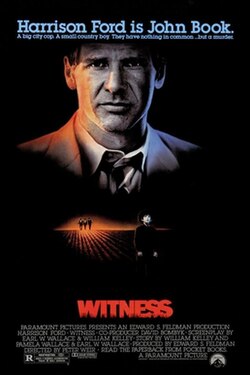
Witness-1985

Witness-1985

Director Peter Weir

Starring Harrison Ford, Kelly McGillis

Scott’s Review #754

Reviewed May 7, 2018

Grade: A-

Witness (1985) is a slick crime thriller that may at first glance seem like a by-the-numbers genre film but instead is well above average.

As the plot unfolds there are key nail-biting and edge-of-your-seat scenes that build the tension in a way that the suspense master himself, Alfred Hitchcock would be proud of.

Decades later it is tough to watch the film and not notice a slightly dated quality, but at the time it was well-regarded and terrifically paced.

Charismatic Harrison Ford and novice child actor Lukas Haas make the film more than it could have been.

The setting of the film is twofold and presents two different cultures- rural Pennsylvania’s Amish country and the bustling metropolitan Philadelphia.

The death of her husband leads Amish woman Rachel (Kelly McGillis) and her son Samuel (Haas) to the big city to see her sister. While transferring trains Samuel witnesses a brutal murder in the men’s room- unbeknownst to the killers.

This riveting scene (explained more below) triggers the rest of the story.

When Detective John Book (Ford) is assigned to the case and questions Samuel, he is unable to determine who the assailants are. After Samuel’s fingers, an unthinkable suspect, events escalate and John uncovers a mighty corruption circuit within the police force.

John, now targeted, must assimilate into the Amish culture as he strives to protect both Samuel and Rachel (as well as keep himself alive) while embarking on a relationship with Rachel.

The story wisely focuses on the differing lifestyles of the principal characters.

What I enjoy most about Witness is the nice mix between both types of people and different cultures and how they can learn from one another. John is so used to and desensitized by being in the midst of the rat race that he often forgets the nicer things in life- peace or even love.

Rachel and Samuel, of course, are highly sheltered, living in a bubble, and are fish out of water amid the bustling streets of Philadelphia. The counter-cultures offer a nice balance in this masculine film with female sensibilities.

Not to be usurped by pure romance, Witness is at its core, a fleshy, male-driven crime thriller. Adding some softer edges, Weir pleases both male and female audience members and appeals to the masses.

John’s precinct, filled with detectives, police officers, and criminals, gives the film appropriate “guy elements”.

So director Peter Weir offers a good balance here.

I like how Weir chooses to portray the Amish- not caricatures, stereotypes, or to be made fun of, they are sweet, stoic, and intelligent, accepting of John in their lives.

As John learns more about the Amish culture and becomes one of them, this is even more prevalent as an immersion of different cultures- a good lesson to even apply to other differences between peoples.

The acting is a strong component of Witness. Charismatic and handsome, Ford is believable as a fast-paced, busy detective. To add further substance, Ford transforms his character (written as one-note in typical films of this nature) into a sympathetic and inspiring man as he slowly becomes a father figure to wide-eyed youngster Samuel and falls in love with Rachel.

Ford is the standout, but the film would not work with fewer supporting actors. Both innocent and gentle characters, McGillis and Haas add layers to their roles with pronounced toughness and resilience- saving John as much as he saves them.

Two scenes are pure standouts and successfully elicit tension and dramatic effect.

As Samuel witnesses the murder in the bathroom, he is seen in a stall peeking through a crack with only one eye exposed. When he makes a slight noise the assailant violently goes through each stall intent on shooting whatever he finds.

Samuel must think quickly to avoid being caught. The camera goes back and forth between Samuel’s looks of panic and the assailant getting closer and closer to catching him.

Viewer’s hearts will pound during this scene.

Later, as Samuel sees a newspaper clipping framed among a case of awards, he recognizes one man as the assailant. Weir shoots it in slow motion so that the reactions of John and Samuel’s characters are palpable and effective.

The scene is tremendously done and cements the bond and trust between these characters.

Thanks to a wonderful performance by Ford and the cast surrounding him, Witness (1985) successfully widens the traditionally one-dimensional masculine crime thriller into something deeper.

Providing slick entertainment with a great story and substance, the film crosses genres and offers a substantial cinematic experience woefully needed in the mid-1980s.

Oscar Nominations: 2 wins-Best Picture, Best Director-Peter Weir, Best Actor-Harrison Ford, Best Screenplay Written Directly for the Screen (won), Best Original Score, Best Art Direction, Best Cinematography, Best Film Editing (won)

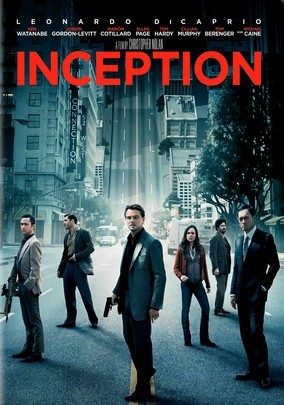
Inception-2010

Inception-2010

Director Christopher Nolan

Starring Leonardo DiCaprio, Ellen Page

Scott’s Review #558

Reviewed December 22, 2016

Grade: A-

Inception (2010) is the type of film that will leave you astounded, baffled, confused, bewildered, and many other adjectives. To put it more simply, this film needs to be pondered after the fact.

This is a high compliment as it is tough to remember such a complex (in a good way!), savory film.

Inception is visionary and meant to be processed.

A highly intelligent film, of sorts, that will leave you thinking afterward. The story is immeasurably complex and will leave many completely confused, but just go with it.

In a nutshell, it tells the story of a man who intercepts people’s subconscious minds through dreams. Different layers of their minds are revealed as the film goes along. There are also virtual levels to each person’s mind- complex, yes.

The film reminds me quite a bit of The Matrix- but better.

The film has many twists and turns throughout and will keep the viewer both perplexed and fascinated. My only slight criticism is the dream sequences do not feel like dreams at all but are highly stylized action sequences.

Many props have been given for being so inventive, though.

Oscar Nominations: 4 wins-Best Picture, Best Original Screenplay, Best Original Score, Best Sound Editing (won), Best Sound Mixing (won), Best Art Direction, Best Cinematography (won), Best Visual Effects (won)

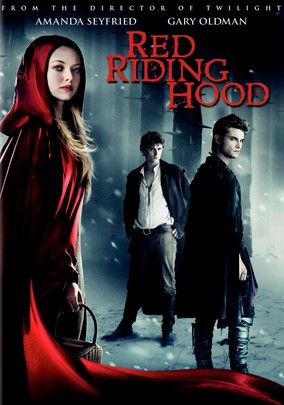
Red Riding Hood-2011

Red Riding Hood-2011

Director Catherine Hardwicke

Starring Amanda Seyfried, Gary Oldman, Julie Christie

Scott’s Review #477

70167073

Reviewed September 10, 2016

Grade: B-

I was hesitant to see Red Riding Hood (2011) in the theater because it seemed like more of a rental to me.

While it is far from high art, it is an above-mediocre thriller riding the current popularity of the vampire-lite genre.

It tells the tale of a teenage girl living in a medieval village that is being attacked by a mysterious wolf. The wolf, however, is human at times.

The fact that it stars young actors known in current American cinema, it is unsurprising that a love story is written.

I thought the movie was decent, but not great. The whodunit is good as we wonder who the wolf in disguise is, and the cinematography is excellent.

I bought the period’s authenticity.

Being treated to Julie Christie in a current film is always a treat, but at times the movie is quite sappy and Twilight-ish. It is directed by the same director Catherine Hardwicke so this is not surprising.

Overall, Red Riding Hood (2011) is not a bad watch.

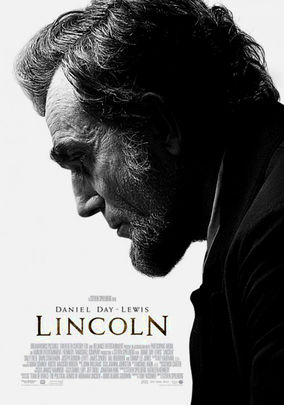
Lincoln-2012

Lincoln-2012

Director Steven Spielberg

Starring Daniel Day-Lewis, Sally Field, Tommy Lee Jones

Scott’s Review #476

70251896

Reviewed September 10, 2016

Grade: A

Lincoln is a 2012 film, which received a slew of Academy Award nominations. There appear to be differing opinions about the film itself, however.

Lincoln has audiences divided over whether it’s a brilliant film or a snore-fest.

My opinion leans decisively toward the former.

I recognize that (especially the first half) the film is slow-moving, but I found it engrossing and well-made.

Even the subtle aspects (costumes, art direction, lighting) are masterfully done.

I found Daniel Day Lewis’s (Abraham Lincoln) lengthy stories intriguing, not dull and found it to be a wonderful history lesson.

Steven Spielberg does what he does best- he creates a Hollywood film done well. He also has done controversial, shocking, or experimental, but the mainstream fare is his forte.

This film is not for everyone, but if you can find the patience it will be an enlightening experience. If nothing else, a thing or two may be learned.

Oscar Nominations: 2 wins-Best Picture, Best Director-Steven Spielberg, Best Actor-Daniel Day-Lewis (won), Best Supporting Actor-Tommy Lee Jones, Best Supporting Actress-Sally Field, Best Adapted Screenplay, Best Original Score, Best Sound Mixing, Best Production Design (won), Best Cinematography, Best Costume Design, Best Film Editing

The Revenant-2015

The Revenant-2015

Director Alejandro G. Iñárritu

Starring Leonardo DiCaprio, Tom Hardy

Scott’s Review #371

80064516

Reviewed January 27, 2016

Grade: A

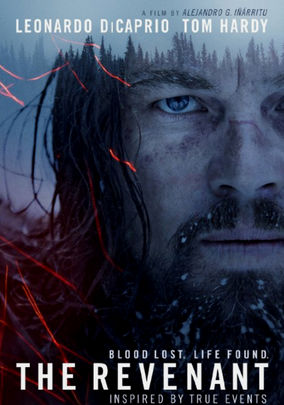
The Revenant is a fantastic 2015 film filled with intensity, great visual camera work/direction, and the acting talents of one of modern cinema’s dynamic performers Leonardo DiCaprio.

He shines every minute he is on-screen.

Almost all of the filming takes place outdoors (the American frontier period), and is a revenge tale, only adding to the excitement and beauty of the film.

The film is set in the 1820s, and we are immediately introduced to a large party of hunters and trappers in remote Wyoming as the film opens.

Right off the bat, I was struck by the picturesque scenery.

We are treated to a compelling (and bloody) battle between the trappers and a tribe of Native American Indians. The Louisiana Purchase has just passed, leading to tensions between various parties causing conflict and blood to spill.

The hunters are decimated so the remaining group must flee on foot, hoping to return to safety hundreds of miles away. The main character, Glass (DiCaprio), later receives a terrible injury and the main crux of the story develops as we embark on a tale of his desperation to survive and exact revenge on the men responsible for leaving him to die.

The film is a lesson in endurance. Glass is arguably put through almost every punishment imaginable and we wonder what more he can endure.

The film belongs to two actors. Dicaprio, and Tom Hardy as the villainous John Fitzgerald, a hunter with a major rivalry with Glass.

The film parlays into a revenge tale between the two characters.

DiCaprio is a gem in this film, not only is he compelling from a physical standpoint, he also looks broken, battered, and bruised, but DiCaprio gives a performance that I am fond of.

He acts non-verbally.

In one crucial scene, Glass is unable to move or speak as a violent act is committed. He is desperate yet helpless. The range of emotions portrayed by DiCaprio is astounding. The pain, hurt, and frustration are evident on his face and we sympathize greatly.

This is a powerful performance by DiCaprio.

Tom Hardy is compelling in his own right as the scoundrel he portrays. We despise this character and all his dirty deeds and Hardy successfully pours all his energy into this grizzled role.

Hardy, quite handsome in real life, is transformed into a partially scalped, dirty man. His fate at the end of the film is a clever aspect of The Revenant that helps make it not a typical run-of-the-mill western, but something so much more.

The infamous “bear scene” is second to none. How this compelling scene was shot is beyond me, but the result is a realism I have seldom witnessed in film. The scene is so prolonged and violent that one wishes it would conclude quickly.

A surprise comes that rivals any horror film.

Directed by Alejandro G. Iñárritu he follows a vastly different type of film (Birdman-2013) and does a wonderful job.

The Revenant is arguably a “guy’s movie”.

There are almost no women featured and the ones that are not treated well, which is unfortunate, however, sadly likely true of the times.

Interesting to note though, is Inarritu decided to have a female victim enact revenge on her abuser in a satisfying (though squeamish moment for the male viewer).

I found The Revenant to have definite left-wing leanings. The age-old controversy of the white man taking the Indian’s land is explored and the film has a way of bringing this up more than once as well as not making the Indian tribes “bad”, but rather sympathetic.

Especially since the character of Glass marries an Indian woman and bears a son with her.

Gorgeous cinematography morphed with a wonderful and intriguing story and peppered with brutality. The Revenant (2015) succeeds on every level and sets an important precedent for a film about perseverance in the face of hopelessness.

Oscar Nominations: 3 wins-Best Picture, Best Director-Alejandro G. Iñárritu (won), Best Actor-Leonardo DiCaprio (won), Best Supporting Actor-Tom Hardy, Best Sound Editing, Best Sound Mixing, Best Production Design, Best Cinematography (won), Best Makeup and Hairstyling, Best Costume Design, Best Film Editing, Best Visual Effects