Tag Archives: Doug Jones

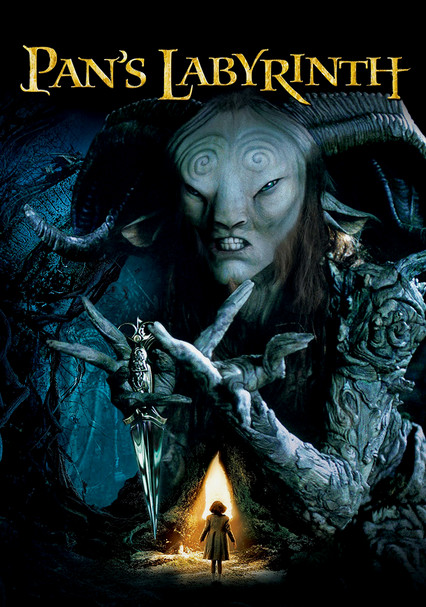
Pan’s Labyrinth-2006

Pan’s Labyrinth-2006

Director Guillermo del Toro

Starring Ivana Baquero, Sergi López

Scott’s Review #1,156
Reviewed June 25, 2021

Grade: A

Pan’s Labyrinth (2006) is a treasure of a film. I would classify it as a masterpiece for creativity alone.

It is not for children!

The fact that it has some fantasy trimmings and tells its story from a child’s perspective is misleading. The film deals with some heady and heavy stuff that will both frighten and be lost on the younger crowd.

A clue is that Guillermo del Toro directs the film, he is well known for creating films such as Hellboy (2004), Hellboy II: The Golden Army (2008), and The Shape of Water (2017), the latter winning the coveted Best Picture Oscar.

I adore that Pan’s Labyrinth is Spanish-Mexican. Somehow, that makes the experience a bit mysterious and exotic right off the bat.

The frightening period of 1944, directly post World War II, is also key to the good story since war and mayhem are themes.

The main character, Ofelia, meets several strange and magical creatures who become central to her story, leading her through the trials of the old labyrinth garden.

Young Ofelia (Ivana Baquero) and her pregnant and sick mother, Carmen (Ariadna Gil), arrive at the post of her mother’s new husband (Sergi López). This sadistic army officer is trying to prevent a guerrilla uprising.

Lonely and feeling lost, Ofelia explores an ancient maze, encountering the faun Pan, who tells her that she is a legendary lost princess and must complete three dangerous tasks to claim immortality.

She is completely and utterly spellbound and intrigued all at once. Finally, she can escape the ravages of real life and immerse herself in a fantasy world all her own.

She hates her stepfather, worries for her mother, and can’t wait to traverse her new world. If only life were that simple.

In a fairy tale, Princess Moanna, who Ofelia becomes, visits the human world, where the sunlight blinds her and erases her memory. She becomes mortal and eventually dies.

The king believes that eventually, her spirit will return to the underworld, so he builds labyrinths, which act as portals, around the world in preparation for her return.

Enter Ofelia.

About that creativity, I mentioned earlier. Pan’s Labyrinth is Alice in Wonderland for adults, taking some of the same themes and blending the horrors of both reality and fantasy into an extraordinary, spellbinding fable.

The forest’s darkness is the best and most memorable part.

The art direction is astonishing. Bewildering forest trimmings and haunting lighting make their appearance as Ofelia immerses herself in her new world.

The viewer sees her new world through her eyes, that is, through the eyes of a child.

So authentic are the sets and ruins that it is impossible not to be thrust full-throttle into the fantasy sequences.

The story can be downright horrifying at times. Carmen eventually dies, and Ofelia is taken under the wing of Mercedes (Maribel Verdú), Ofelia’s stepfather’s housekeeper, and also a revolutionary harboring dangerous secrets.

Ofelia and Mercedes team up to save Ofelia’s baby brother from the hands of the dastardly.

The strange fantasy world may confuse some viewers. It’s simply not the imagination of Ofelia (or is it?) because Vidal, Mercedes, and the baby all play a part in the eerie labyrinth.

Guillermo del Toro creates a world so imaginative and magnificent that we see this world through the eyes of a child, but also through the clear glasses of adults.

Scenes of torture mix with scenes of innocence so well that it is impossible not to be transported to a magical world where reality often disrupts the pleasurable fairy tale.

Pan’s Labyrinth (2008) is a visionary film and must be experienced to be believed.

Oscar Nominations: 3 wins-Best Original Screenplay, Best Foreign Language Film, Best Art Direction (won), Best Cinematography (won), Best Makeup (won), Best Original Score
Quarantine-2008

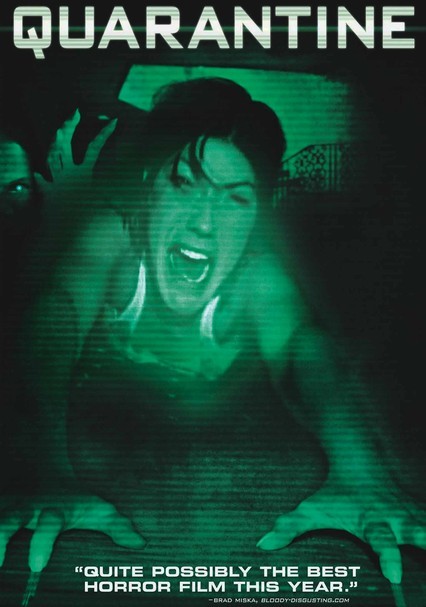
Quarantine-2008

Director John Erick Dowdle

Starring Jennifer Carpenter

Scott’s Review #1,154

Reviewed June 18, 2021

Grade: B+

Patterned after 28 Days Later (2002), Cloverfield (2008), and other popular 2000s zombie-horror offerings, Quarantine (2008) is more of a film of its day than anything fresh or original.

The funny thing is, it works fairly well as an entertaining popcorn horror flick.

It won’t be remembered very well, but it offers jumps, frights, and thrills.

It’s shot like a reality television show with seemingly handheld cameras following the characters, which also gives it a 2000s feel. The irony is that the story involves a reality television series (all the craze in those days).

The dark, glowing lighting and the Los Angeles apartment-building setting provide a good amount of peril.

While suspenseful, that doesn’t mean that Quarantine is necessarily a good film. It’s not, and my grade of a B+ grade feels generous, but the bottom line is that not every film is a cinematic gem. Some are just plain old entertainment.

Quarantine is one of those types of films.

Quarantine is a remake of a 2007 Spanish film called REC, which is set in Barcelona. The United States replaces Spain, and the characters are Americanized for the mainstream masses.

Reporter Angela (Jennifer Carpenter) and her cameraman Scott (Steve Harris) are doing a story on night-shift firefighters for a reality television program.

One night while filming, a late-night distress call takes them to a Los Angeles apartment building, where the police are investigating a report of horrific screams.

Angela, Scott, and firefighters Jake and Fletcher, played by Jay Hernandez and Johnathon Schaech, respectively, report to the building to find a loony older woman who attacks with teeth bared.

Alarmed, they realize the CDC workers have sealed the building and panic.

Of course, laughably, they continue to film despite feeling desperate. Gotta keep those television ratings intact.

The film pairs well with The Blair Witch Project (1999), though nowhere near as fresh and inventive as that film. Instead, it feels like a copy of that film and other films with very little originality of their own.

Again, this didn’t bother me so much as I had no expectations of cinematic art when I agreed to see Quarantine. I had entertainment on my mind, and that is what I received.

John Erick Dowdle writes and directs this project and creates a frenzied horror film. The action is quite quick and instantaneous amid a lightning-quick one-hour and twenty-nine-minute runtime.

Interestingly, Quarantine features no actual musical score, using only sound effects. As a fan of background music in cinema, this wasn’t a great decision, but I understand the intent.

After all, the Hitchcock masterpiece The Birds (1963) featured no music.

Of course, the plot can be picked apart like a salad onion, but that’s not the point. But, for fun, why didn’t the firefighters provide the trapped residents with weapons or objects they could fight with? Why did characters try to ‘save’ characters who had been bitten, only to put their own lives at risk?

Hasn’t anyone ever seen Dawn of the Dead (1978)?

All events and storylines feel like a setup.

I’ve seen better acting. Jennifer Carpenter, whom I have never heard of, is in a constant state of hysterics. That’s fine, but her endless cowering, whimpers, and hyperventilating do nothing to evoke a strong female character.

On a hot summer day, a cold, air-conditioned movie theater is the perfect setting for a film like Quarantine (2008).

There are worse ways to spend an hour and thirty minutes than munching on popcorn and being on the edge of your seat.

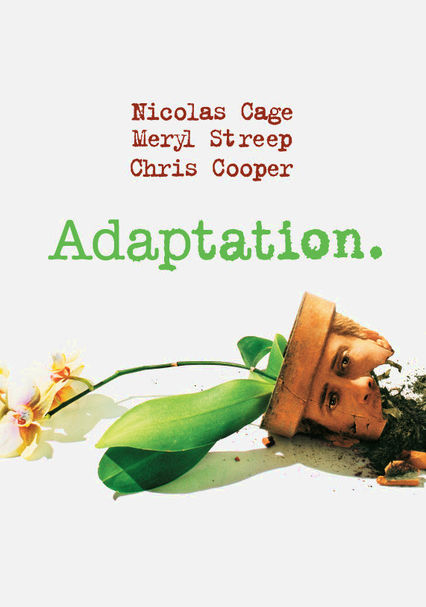
Adaptation-2002

Adaptation-2002

Director Spike Jonze

Starring Nicolas Cage, Meryl Streep, Chris Cooper

Scott’s Review #1,064

Reviewed September 24, 2020

Grade: B+

Adaptation (2002) is a kooky film recommended for all writers or lovers of the written word, especially those who have ever suffered from writer’s block.

The film is wonderful for people who are either curious about or obsessed with (me!) how a novel is turned into a screenplay.

With an A-list cast featuring Nicolas Cage and Meryl Streep, the offering is credible and not just a bumbling indie experiment on a shoestring budget.

Stars must get paid, which allows the film a mainstream audience, and awards.

The film will be too weird for some.

There is a measure of conceit and self-indulgence (it’s set in Los Angeles after all!) that is sometimes off-putting, but I adored the premise too much and chomped at the bit at what I was offered.

It’s quite non-linear, and the characters sometimes do things that are weird or out of turn.

Adaptation is different (in a good way) and is recommended for its oddness, as I cannot think of another film like it, though Being John Malkovich (1999) would be close.

Director Spike Jonze would later create Her (2013) and, of course, directed Malkovich too.

Charlie Kaufman wrote the screenplay, and the central character is Charlie Kaufman, played by Cage, who also plays Kaufman’s brother Donald, a mooch. Charlie is self-loathing and disheveled but somehow likable.

He struggles mightily to bring words into his head as he nervously sits at his typewriter day after day when he is tasked to adapt the novel, The Orchid Thief, into a film.

The novel’s author, Susan Orlean, played by Meryl Streep, intimidates Charlie, who decides to pay her a visit to New York City.

This film features the best work of Cage’s career. An actor who is “not for everybody”, the performance rivals that of Leaving Las Vegas (1995), in which he won an Academy Award.

A dual role is tough to play, but the actor does so with bombast and confidence, making the characters very different from each other and making me forget they were Cage.

Too often sinking to inferior action films like Face/Off (1997) or Con Air (1997), the actor wisely had an epiphany or something and made a wise decision. Cage does best when he goes for wacky- Raising Arizona (1987) is proof of that.

The supporting players, specifically Streep and Cooper, are fantastic. Streep could fart through a film and still give a great performance, and you can tell she enjoys the part of Susan, which allows her to let loose.

Her character loves sex and drugs and is not above devious shenanigans to get her way.

Cooper, who won the Oscar, is delicious as John Laroche, a theatrical character with missing front teeth who is Susan’s secret lover.

Both provide great entertainment.

Adaptation simply feels good for a thought-provoking writer providing oodles of “writer things” to ponder and discuss with friends after the credits roll.

Many scenes are rich with layered dialogue and rife with originality, making the words sparkle with pizzazz.

And there are enough twists and turns to keep viewers guessing.

One of the most original and kooky films you will ever see, Adaptation (2002) pairs well with Being John Malkovich (1999) for an evening of the odd and absurd, but also films not altogether hard to follow.

The satirical Hollywood theme will both please and annoy, but it’s all good fun and a lesson in creative art cinema.

Oscar Nominations: 1 win-Best Actor-Nicholas Cage, Best Supporting Actor-Chris Cooper (won), Best Supporting Actress-Meryl Streep, Best Adapted Screenplay

The Shape of Water-2017

The Shape of Water-2017

Director Guillermo del Toro

Starring Sally Hawkins, Richard Jenkins, Michael Shannon

Scott’s Review #705

Reviewed December 16, 2017

Grade: A

Director Guillermo del Toro created a lovely Beauty and the Beast-style film, The Shape of Water (2017). It is gorgeous to look at, and the story is intelligent and sweet to experience.

Thanks to a talented cast led by Sally Hawkins, the film is part drama, part science fiction, even part thriller, but touching to one’s heart and a lesson in true love regardless of outward appearances.

Vanessa Taylor co-wrote the story, giving it a needed female perspective to perfectly balance the traditional male machinations.

The setting is Baltimore, Maryland, in the early 1960s. The Cold War is ongoing, pitting the United States and the Soviet Union against each other.

Both sides are mistrustful of the other.

Kindly and mute, Elisa Esposito (Hawkins) is a curious and whimsical young woman who works as a cleaning lady at an Aerospace Research Center.

When she stumbles upon a mysterious “shape” being held prisoner for experimentation, she slowly communicates with and befriends the creature, eventually falling madly in love with him.

The “asset,” as the scientists like to call him, is an amphibian/humanoid that needs saltwater to survive. Elisa sees an opportunity to help her love escape captivity, and off she goes.

Hawkins exudes warmth and fills Elisa with courage and astounding determination. Not uttering a word is a tricky feat for an actor to challenge, but instead of words, Hawkins successfully provides a vast array of emotions to reveal how Elisa feels.

Despite her “handicap,” she is a strong woman who speaks her mind on more than one occasion, using sign language to express her frustration. Hawkins gives a fantastic and believable performance.

In excellent and vital supporting roles are Richard Jenkins as Elisa’s friend and neighbor, Giles, a closeted gay man who works as a commercial artist. Jenkins fills this character with intelligence, heart, and empathy as he struggles with his issues of alcoholism and loneliness- unable to be accepted for who he is.

Octavia Spencer shines as witty and stubborn Zelda Fuller, Elisa’s best friend and co-worker. Zelda has her domestic problems but is forever there for her friend, and Spencer gives her character zest, humor, and energy.

Finally, Michael Shannon plays the dastardly and menacing Colonel Richard Strickland, the man who found the “asset” in the rivers of South America and has a lovely family.

Each character is written exceptionally well and has a storyline rather than simply supporting Hawkins’s character.

The audience becomes involved in Giles, Zelda, and Strickland’s private lives, and we get to know and care for them—or hate them, as the case may be.

Giles, harboring a crush on a handsome pie shop owner, is afraid to reveal his feelings. Zelda, with a lazy husband, dutifully takes care of her man, though she is as sassy as they come. And Strickland lives in an all-American family with a pretty wife and two kids, unaware of his shenanigans.

The film is a gorgeous and lovely experience with a magical element. The opening and closing sequences, shot underwater, resound in beauty as objects float along in a dreamy way.

The narrator (Jenkins) takes us on a journey to explain the events of the story.

At its core, The Shape of Water is a romantic love story, and my favorite scenes—those of Hawkins and the “asset”—are to be treasured. Yes, the two do make love, which may be too much for some, but the scenes are tasteful and important, showing the depth of the characters’ love for one another.

Cherishing is how Elisa uses music and hard-boiled eggs to communicate with the “asset.” When Elisa imagines the two characters dancing, the sequence is an enchanting experience reminiscent of Beauty and the Beast.

Other underwater scenes involving Elisa and the “asset” are tender, graceful, and filled with loveliness.

A key part of the film involves a story of intrigue between the Americans and the Soviets. While both are portrayed negatively, the Americans are arguably written as more unsympathetic than the Soviets.

Thanks to Strickland—abusive and vicious—and his uncaring superior, General Holt, we do not root for the government officials at all but rather for ordinary folks like Elisa, Zelda, and Giles, who are outcasts.

Interestingly, Dmitri (Michael Stuhlbarg), a Soviet spy scientist, is the only character working at the center who wants to keep the “asset” alive and is written sympathetically.

My overall assessment of The Shape of Water is that it is a film to be enjoyed on many levels and by particular varied tastes- the film will cater to those seeking an old-style romance, complete with some tasty French music.

Then again, the film can be considered a political espionage thriller, with a cat-and-mouse chase and other nail-biting elements.

Overall, the film has heart and truth and will appeal to vast audiences seeking an excellent movie.

Oscar Nominations: 4 wins-Best Picture (won), Best Director-Guillermo del Toro (won), Best Actress-Sally Hawkins, Best Supporting Actor-Richard Jenkins, Best Supporting Actress-Octavia Spencer, Best Original Screenplay, Best Original Score (won), Best Sound Editing, Best Sound Mixing, Best Production Design (won), Best Cinematography, Best Costume Design, Best Film Editing