Tag Archives: Sid Haig

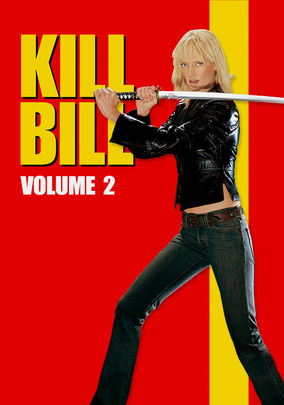
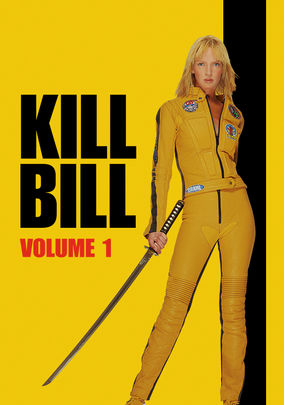
Kill Bill: Volume 1 and Volume 2-2003/2004

Kill Bill: Volume 1 and Volume 2- 2003/2004

Director Quentin Tarantino

Starring Uma Thurman, David Carradine

Top 250 Films #98

Scott’s Review #322
6003123660032563

Reviewed January 3, 2016

Grade: A

Despite being released as separate films (Fall of 2003 and Spring of 2004), Kill Bill: Volume 1 and Kill Bill: Volume 2 are one grand, sprawling feature.

The films were shot as one, but at a running time of over four hours, it was impossible to release them as one, so director Quentin Tarantino decided to release his masterpiece martial arts film as two sequential films.

I have decided to review them as one since Volume 2 is a clear continuation of Volume 1.

From a story perspective, Kill Bill is a basic revenge thriller. The plot is not complex nor ingenious and is rather ordinary containing B-movie components- think the really bad Kung-Fu films of long ago.

What makes Kill Bill an extraordinary masterpiece, however, is the style that exudes from the film, thanks to the direction and creation of Tarantino.

The film is brimming with good flavor and crackling dialogue of an intelligent sort.

Characters have long conversations with each other-not for redundancy’s sake- in between the endless martial arts and bloody sequences.

We meet our heroine, The Bride (Uma Thurman), in a chapel in El Paso, Texas. About to be married to her groom, the entire wedding party is suddenly assassinated in a bloody fashion by the Deadly Viper Assassination Squad.

Their leader, Bill (David Carradine), shoots The Bride after she reveals to him that she is carrying his baby.

The film flashes forward four years later- The Bride has survived the massacre but has been comatose ever since. When a hospital worker rapes her, she escapes and vows revenge on each one of her attackers- the revenge culminating with Bill.

Her path of destruction leads her to Japan.

Like most of Tarantino’s films, Kill Bill is divided into chapters and often goes back and forth from past to present.

The brilliance of Kill Bill is its pizazz. We know The Bride will get her revenge on the assassins, we just do not know in what way or how bloody the slaughters will be.

The film contains copious amounts of blood and swords and machetes are everywhere to be found.

The slow drawl dialogue as The Bride has conversations with her prey before she kills them, oftentimes ends in a big fight scene. Her first revenge, against Vernita (Vivica A. Fox), is unique in that it takes place in Vernita’s kitchen as her young daughter is happily eating her breakfast cereal.

The entire battle ensues in the kitchen and we are left watching blood and cereal.

It is Tarantino’s unique style of filmmaking and storytelling, adding violence, and long character conversations, that give Kill Bill, and all of his other classic films, his unique brand, and stamp of approval.

I dearly hope he continues to make films that challenge the norm, for years to come.
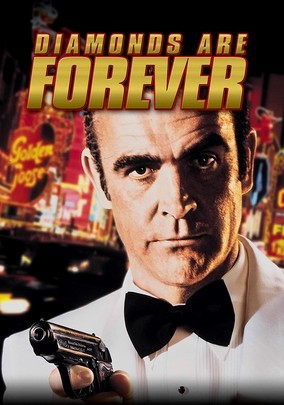
Diamonds Are Forever-1971

Diamonds Are Forever-1971

Director Guy Hamilton

Starring Sean Connery

Top 250 Films #100

Scott’s Review #328

60000705

Reviewed January 6, 2016

Grade: A

Despite Diamonds Are Forever (1971) being one of the lower-rated James Bond films, this is actually one of my favorite films of all time, and many would disagree with me.

Some say Sean Connery phoned this performance in; others say there was little chemistry between him and Jill St. John, and the sets were tense, leading to a sub-par offering. But I think this is a great film.

I love the Las Vegas locale, the bright lights, flashy costumes, and a ritzy underbelly- and the Vegas car chase is incredible.

A bright, shiny Ford Mustang takes center stage throughout the sequence, and if one looks closely, one will realize that nearly all the cars are Ford- fun fact!

The title song by Shirley Bassey is great, sultry and stylish, only enhanced by the glitzy setting. One immediately imagines the film oozing with diamonds as it does.

The villains are fascinating, and Mr. Wint and Mr. Kidd were the first openly gay Bond villains, which, in 1971, was groundbreaking.

Yes, they are evil and slightly silly, but what a risky, surprising, and blatant scene to see the gentlemen holding hands.

St. John is a sophisticated and intelligent Bond girl, and the action in this film is plenty.

Diamonds Are Forever (1971) contains all the elements for an enjoyable Bond experience.

Oscar Nominations: Best Sound

Jackie Brown-1997

Jackie Brown-1997

Director Quentin Tarantino

Starring Pam Grier

Top 250 Films #124

Scott’s Review #356

60010514

Reviewed January 9, 2016

Grade: A

Quentin Tarantino’s Jackie Brown (1997) is a fantastic film and one of the few to have a solely female lead (Kill Bill Volumes I and II are the others) and successfully re-launched the careers of stars Pam Grier and Robert Forster after too many years on the sidelines.

Grier’s earlier films heavily influenced the 1970s blaxploitation genre.

Jackie Brown is one of Tarantino’s more obscure films, but it is brilliant nonetheless and filled with slow, plodding yet tremendous scenes.

Grier plays the title character, Jackie Brown, a flight attendant for a small Mexican airline who smuggles money from Mexico to the United States to supplement her income.

When she is caught and threatened by the Feds to help them catch a much larger fish, she plots to use both sides to her advantage and walk away with the money.

Jackie develops feelings, and a sweet relationship ensues with Max Cherry, a bondsman played by Forster.

Mixed in with the plot are Tarantino staples: Samuel L. Jackson as Ordell Robbie, a crooked drug smuggler; Robert De Niro as Louis, a former cellmate of Ordell’s; and Bridget Fonda as Melanie, a dizzy stoner girl.

As is always the case with Tarantino films, Jackie Brown features a stellar cast just chomping at the bit to deliver the best performances they can, aided by rich, crackling dialogue written for them.

The writing is always fantastic in Tarantino films, and Jackie Brown has plenty of plot twists and turns.

My favorite scene by far is the one involving the transfer of money at the local Mall. Rich with flavor and atmosphere, it is a marvel. Jackie and Max engage in small talk at the food court before the transfer is to take place- Jackie then goes to a fitting room where the “switch” will occur.

Throughout this sequence, the tension is incredibly high, and the film turns into a nail-biter.

Tarantino, not one to focus on a romantic storyline, gives Jackie Brown a unique quality by featuring the respectful and delicious romance between Jackie and Max. This adds layers to the mainly bloody and crime-laden film.

In contrast to this relationship is the volatile relationship between Louis and Melanie, which ends in tragedy.

I love how the film is set in Los Angeles. Sunny, bright, with a stuffy and superficial element to the action, mixing the beach and the hot weather with a crime story, manipulation, and double-crossing works so well.

Giving aging Hollywood stars a deserving comeback, Tarantino weaves a complex, adventurous, and well-paced crime drama featuring veteran actors who deliver the goods.

Jackie Brown (1997) is a treasure in a world of Tarantino’s other treasures and a must-have for all the director’s fans and fanatics.

Oscar Nominations: Best Supporting Actor-Robert Forster

Halloween-2007

Halloween-2007

Director Rob Zombie

Starring Malcolm McDowell, Scout Taylor-Compton

Scott’s Review #1,234

Reviewed February 27, 2022

Grade: B

I’ve seen director/musician/entertainer Rob Zombie tear down the house as the headlining second stage act at the metal festival Ozzfest in the 2000s.

He’s a striking individual with ferocious energy and a creative persona.

He’s also quite brave to undertake such an undertaking as remaking the legendary slasher film Halloween from 1978.

The results of his 2007 effort, titled Halloween, are a mixed effort, but props to him for having the guts to try.

As with other horror films he has directed and his music, there is brutality and rawness mixed with nastiness and a grim outlook. He wisely focuses on the character of Michael Myers, but fills in too much backstory for my liking.

Part of the appeal of the crazed killer is his mysteriousness.

Both Daeg Faerch and Tyler Mane play Michael.

The story is a bit of a remake.

The new aspect focuses on events that begin on Halloween when ten-year-old Michael inexplicably butchers a school bully, his sister, her boyfriend, and his abusive stepfather.

He is sent to a mental hospital for the next fifteen years, becoming despondent and fixated on making papier-mache masks.

The second part is more familiar territory.

Nearly two decades later, he breaks out, intent on returning to the town of Haddonfield, Illinois. He arrives in his hometown on Halloween to hunt down his younger sister, Laurie (Scout Taylor-Compton).

The only thing standing between Michael and a night of bloody carnage is psychologist Dr. Samuel Loomis (Malcolm McDowell).

I stress the near-impossible task Zombie faced in remaking, or even reviving, a film as iconic as John Carpenter’s 1978 masterpiece. Without even pen to paper, there would immediately be those who would mock and trivialize any attempt.

Zombie both wrote and directed the film.

He immediately provides a reason for Michael’s dirty deeds. Close with his mother, played by Zombie’s real-life wife, Sheri Moon Zombie, who does a fantastic job, Deborah is a struggling stripper married to an abusive man.

So Michael’s earlier butchery can be somewhat understood by audiences.

My preference is how Michael’s parents were portrayed in the original in their one brief scene. They appear to be an upstanding middle-class couple with a nice house and family. This makes Michael’s psychotic rampage all the more vague and confusing.

A fabulous scene at the mental hospital showcases an ominous moment. It’s Halloween Eve, and Doctor Loomis visits the despondent Michael in the outdoor yard.

The audience knows he will escape, but not when or how things will erupt and who will be slashed; we know the bloodletting will soon commence.

The rest of the film is standard fare and a letdown compared to the ambitious first half, though there is far more violence and gore than one could imagine. The film feels haunting and brutal, with Zombie’s uncompromising approach kicking the killings up ten notches.

It’s like the original Halloween on steroids.

The casting highlights start and stop with the exceptional Malcolm McDowell as the tortured Loomis. The famous actor, forever known as Alex in A Clockwork Orange (1971), carries the film with his expression-filled, crystal blue eyes and tremendous acting ability.

Another winning choice is Brad Dourif as Sheriff Lee Brackett. Classic film fans will remember the actor as a person with a mental health condition in One Flew Over the Cuckoo’s Nest in 1975, for which he was Oscar-nominated.

Scout Taylor-Compton does a decent job as Laurie Strode, but can anyone compare to Jamie Lee Curtis? I snicker at the thought. The rest of the actors portraying the teen friends are okay, but not memorable.

Followed by Halloween II in 2009, Halloween (2007) received enough attention at the time to give fans a flurry of excitement, but with the later recreation and reprisal by Jamie Lee Curtis and others from the original, the Zombie offerings won’t be remembered well.

It’s dirty, bloody, and raw but never terrifying.

Zombie adds story points, some that work and some that don’t, but I give the man much respect for dusting off a film as brilliant as Halloween (1978).

Bone Tomahawk-2015

Bone Tomahawk-2015

Director S. Craig Zahler

Starring Kurt Russell

Scott’s Review #403

80075001

Reviewed May 10, 2016

Grade: B+

Bone Tomahawk is a 2015 film almost nobody has seen or heard of, and it’s a unique independent horror/western hybrid.

It draws heavily on Quentin Tarantino and features an impressive cast for such a low-profile film.

Bone Tomahawk is the proverbial diamond in the rough and is worth seeing for film fans with patience enough to sit through the slow-moving pace to get to the good stuff.

The best of it comes in the final thirty minutes.

Notably, the film was recognized by the Independent Film Committee and received two Spirit Awards, for Best Supporting Male (Richard Jenkins) and Best Screenplay.

It won neither.

The film does not have a “star”, but rather a myriad of heavy hitters in a clear ensemble.

Kurt Russell plays Franklin Hunt, sheriff of a tiny town named Bright Hope, presumably somewhere in the West (Wyoming?) circa 1890.

His deputy sheriff, Chicory,  is played by Jenkins.

When drifters kill some travelers, they accidentally stumble upon a mysterious Native American burial ground and taint its contents, leaving one brutally murdered by the tribe.

The other (played by David Arquette) stumbles into Bright Hope and is immediately deemed suspicious.

When he, a female Doctor’s assistant, and a young local man disappear, it is realized that they have been abducted by the owners of the burial ground, who are feared to be cannibalistic savages.

Hunt, Chicory, a foreman named Arthur (the doctor’s assistant’s wife), played by Patrick Wilson, and a local playboy played by Matthew Fox decide to trek through rugged terrain to find and rescue the missing.

The pace is slow and will undoubtedly turn off some folks seeking slicker, high-tech viewing, or even some CGI, but the payoff for patience is immense.

The group’s trek through the desert in pursuit of the accosted feels endless, and I did wonder what the point was, but the forthcoming turn of events makes the tedium worth it.

In defense of the long, plodding journey, this aspect lets the audience get to know and begin to care about the characters; some make it out alive, and others are not as lucky.

The fun part is finding out who does and doesn’t.

Bone Tomahawk contains one of the most gruesome scenes that I have ever witnessed in my thousands of viewed films.

A male character, nude, is brutally scalped, and a spear is hammered into his throat in full view of the prisoners.

As if this is not shocking enough, he is then turned upside down, split down the middle, and chopped in half, as his insides spill to the ground.

The snapping sounds of his bones and the visual horror of the guts are even too much for the non-squeamish to view.

It is uncanny that Kurt Russell plays a similar character in another 2015 film, the much higher-profile The Hateful Eight. Sure, he is a bounty hunter, but the period, setting, and costumes are almost identical.

One might wonder which was made first.

Bone Tomahawk is a guy’s movie, but not in the traditional sense; there are no explosions, no unnecessary machismo, and no obvious clichés.

But at the end of the day, it is a Western, and the cast is mainly male. Besides the Doctor’s assistant, the only other females are wives with small roles.

The most glaring is Sean Young- given hardly anything to do in a cameo appearance. Otherwise, the only other females in sight are Native American women who are blind, deaf, pregnant, or missing appendages.

A unique hybrid of film genres, Bone Tomahawk (2015) is a clever, different experience.

I am a champion of independent film, and this film is a good example of why.

Evidently, with a stellar cast of A-list or former A-list stars banding together to make a piece of art, it seems others champion good films too.

Independent Spirit Award Nominations: Best Supporting Male-Richard Jenkins, Best Screenplay