Tag Archives: Chris Cooper

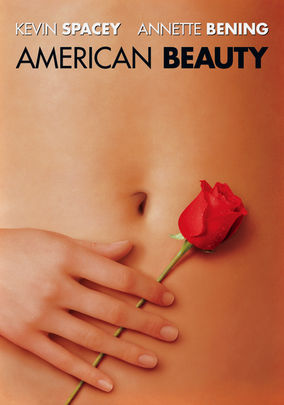
American Beauty-1999

American Beauty-1999

Director Sam Mendes

Starring Kevin Spacey, Annette Bening

Top 250 Films #136

Scott’s Review #70

60000407

Reviewed June 25, 2014

Grade: A

American Beauty is a film that holds up magnificently well and packs the same punch as it did when I originally saw it premiered in 1999.

The film won the Best Picture Oscar in 1999, surprisingly so, as it is not a mainstream film and is edgy, artistic, and poetic.

The film is a thought-provoking story of the American Dream gone wrong and how most people live ordinary, humdrum, on the surface, happy lives, but ultimately are unhappy, damaged, or otherwise unfulfilled.

It is a truthful film and reminds me quite a bit of The Ice Storm, a film from 1997.

American Beauty is not a downer but rather is witty, dark-humored, and filled with dry sarcasm.

Kevin Spacey is tremendous as the central character going through a mid-life crisis and Annette Bening is frighteningly good as his neurotic, controlling wife.

Their daughter, played by Thora Birch, has her teenage angst and falls in love with a neighborhood misfit. Every character, even small and supporting, is troubled in some way.

American Beauty (1999) is a film that was loved or hated at the time of its release; some did not get it or did not want to invest in the thought it requires, but, to me, it’s a work of art, which has achieved a timeless quality.

Oscar Nominations: 5 wins-Best Picture (won), Best Director-Sam Mendes (won), Best Actor-Kevin Spacey (won), Best Actress-Annette Bening, Best Screenplay Written Directly for the Screen (won), Best Original Score, Best Cinematography (won), Best Film Editing

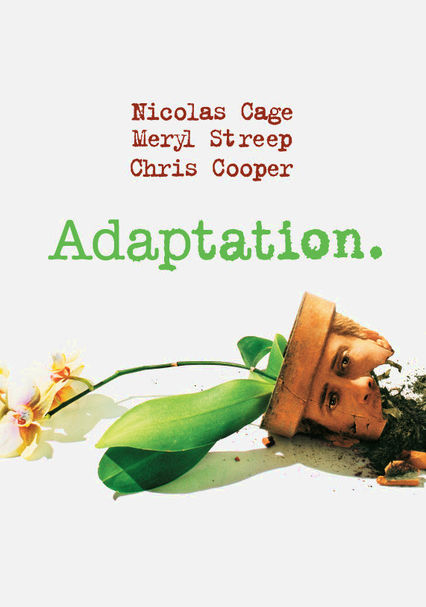
Adaptation-2002

Adaptation-2002

Director Spike Jonze

Starring Nicolas Cage, Meryl Streep, Chris Cooper

Scott’s Review #1,064

Reviewed September 24, 2020

Grade: B+

Adaptation (2002) is a kooky film that is recommended for all writers or lovers of the written word, especially for those ever having suffered from writer’s block.

The film is wonderful for people who are either curious or obsessed (me!) with how a novel is turned into a screenplay.

With an A-list cast featuring Nicolas Cage and Meryl Streep, the offering is credible and not just a bumbling indie experiment with no budget. Stars must get paid, which allows the film a mainstream audience, and awards.

The film will be too weird for some. There is a measure of conceit and self-indulgence (it’s set in Los Angeles after all!) that is sometimes off-putting, but I adored the premise too much and chomped at the bit at what I was offered.

It’s quite non-linear and the characters sometimes do things that are weird or out of turn.

Adaptation is different (in a good way) and is recommended for its oddness as I cannot think of another film like it, though Being John Malkovich (1999) would be close. Director, Spike Jonze would later create Her (2013) and, of course, directed Malkovich too.

Charlie Kaufman wrote the screenplay and the central character is Charlie Kaufman, played by Cage, who also plays Kaufman’s brother Donald, a mooch. Charlie is self-loathing and disheveled but somehow likable. He struggles mightily to bring words into his head as he nervously sits at his typewriter day after day when he is tasked to adapt the novel, The Orchid Thief, into a film.

The novel’s author, Susan Orlean, played by Meryl Streep, intimidates Charlie, who decides to pay her a visit to New York City.

This film features the best work of Cage’s career. An actor who is “not for everybody”, the performance rivals that of Leaving Las Vegas (1995), in which he won an Academy Award.

A dual role is tough to play, but the actor does so with bombast and confidence, making the characters very different from each other and making me forget they were Cage.

Too often sinking to inferior action films like Face/Off (1997) or Con Air (1997), the actor wisely had an epiphany or something and made a wise decision. Cage does best when he goes for wacky- Raising Arizona (1987) is proof of that.

The supporting players, specifically Streep and Cooper are fantastic. Streep could fart through a film and still give a great performance and you can tell she enjoys the part of Susan, allowed to let loose. Her character loves sex and drugs and is not above devious shenanigans to get her way.

Cooper, who won the Oscar, is delicious as John Laroche, a theatrical character with missing front teeth, who is the secret lover of Susan.

Both provide great entertainment.

Adaptation simply feels good for a thought-provoking writer providing oodles of “writer things” to ponder and discuss with friends after the credits roll. Many scenes are rich with layered dialogue and rife with originality making the words sparkle with pizzazz.

And there are enough twists and turns to keep viewers guessing.

One of the most original and kooky films you will ever see, Adaptation (2002) pairs well with Being John Malkovich (1999) for an evening of the odd and absurd, but also films not altogether hard to follow.

The satirical Hollywood theme will both please and annoy but it’s all good fun and a lesson in creative art cinema.

Oscar Nominations: 1 win-Best Actor-Nicholas Cage, Best Supporting Actor-Chris Cooper (won), Best Supporting Actress-Meryl Streep, Best Adapted Screenplay

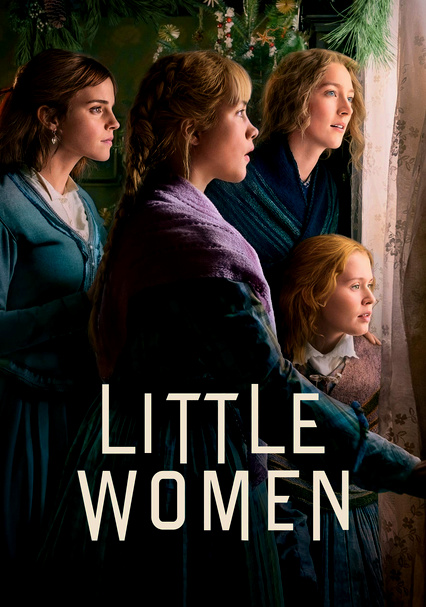
Little Women-2019

Little Women-2019

Director Greta Gerwig

Starring Saoirse Ronan, Florence Pugh

Scott’s Review #982
Reviewed January 21, 2020

Grade: A-

Numerous adaptations of the 1860s classic novel by Louisa May Alcott have been forged upon the silver screen, some good and some not as good.

The consensus is that Little Women (2019) is one of the better offerings, if not the best.

Director Greta Gerwig crafts a clear feminist, progressive version of the trials and tribulations of the March family, led by the spirited, spitfire Jo (Saoirse Ronan). Gerwig’s telling is fantastic, breathing fresh life into a classic story.

The story fluctuates heavily between 1868 and 1861, spanning both the United States Civil War and its aftermath.

Liberal, the Marches reside in Massachusetts, led by matriarch Marmee (Laura Dern), who mainly lives life while their patriarch, Father March (Bob Odenkirk), is off at war. The rest of the household includes sisters Jo, Meg (Emily Watson), Amy (Florence Pugh), and the youngest daughter, Beth (Eliza Scanlen).

The family endures joy, hardship, romance, love, and death as they navigate the decade.

The focal point is Jo, a determined young lady, who moves to New York City, frequently reflecting on her life through back-and-forth sequences.

She begins, as an aspiring writer, and as she grows up, eventually becomes a success, having her novel published boldly. She resists the tried and true and questions why a woman must rely on a man for success rather than her efforts and talents.

During the story, she is pursued by two young men, Laurie (Timothee Chalamet) and Friedrich (Louis Garrel).

Little Women is a fantastic and emotional story and a film that has no need for CGI, car chases, explosions, or any ingredients meant to enliven a film. It does not need them.

The excitement is in the plot, as we thirst for more of the ups and downs that the March family faces. With any successful drama, there are nuanced characters, each taking a turn at a story.

While Jo is the headliner, Amy, Meg, and Beth are much more than opening acts. They each have their own lives, dreams, triumphs, and hardships, and the audience cares about each of them.

To capitalize on this point, the casting is dynamite. In a small, but brilliant role, Meryl Streep gives a bombast to her character of Aunt March, the wealthy widow who owns a gorgeous house and vacations in Paris.

She is cranky, but wise, only wanting the very best for her nieces, which is, of course, to marry rich!

Ronan is well-cast and charismatic as Jo, the actress who loses her Irish accent for an American one. She utilizes her acting skills to imbue Jo with determination and just enough empathy to win over the audience.

Gerwig assures that the audience is reminded of the times and what it meant to be female during the 1860s, with a minimal chance at self-achievement, having to rely on a man for nearly everything.

She is in no way demeaning or ridiculing the male gender, though. She paints no villains in her film, instead showing men as supportive at times, enamored at other times, but never exerting their power over women.

Little Women receives a minor demerit in the pacing department. The film sharply shifts back and forth, in a too rapid manner, from period to period, at times leaving the viewer unclear as to which section of the film they are in.

Blessedly, this ceases about midway through, but the technique is jarring and unnecessary. One wonders what the action was intended to achieve and why a more straightforward approach to storytelling was not used.

A key facet of any outstanding film is the emotional reaction, and Little Women had this viewer with tears streaming down his face. Sometimes for joy, sometimes for sadness, all in an organic way given oomph by a powerful musical score that resonates but never overwhelms.

The film is one in which all its elements come together in perfect harmony.

The film received six nominations, including Best Picture, Best Actress (Ronan), Best Supporting Actress (Pugh), and Best Adapted Screenplay. Sadly, and in a never-ending slight for female directors, Gerwig was overlooked.

Before the 2019 film adaptation of Little Women, the novel had been adapted for film six times, with the most successful versions being in 1933 and 1949.

Seventy years later, the most modern version is arguably the best, with a left-leaning stance that is oh so necessary in modern times.

Oscar Nominations: 1 win- Best Picture, Best Actress- Saoirse Ronan, Best Supporting Actress- Florence Pugh, Best Adapted Screenplay, Best Original Score, Best Costume Design (won)
A Beautiful Day in the Neighborhood-2019

A Beautiful Day in the Neighborhood-2019

Director Marielle Heller

Starring Matthew Rhys, Tom Hanks

Scott’s Review #964

Reviewed December 6, 2019

Grade: A

Any viewer seeking a weepy affair should look no further than A Beautiful Day in the Neighborhood (2019). The film is sentimental, without ever feeling sappy or overwrought; instead, it abounds with freshness and authenticity.

Tom Hanks is brilliant as the iconic children’s television personality, and Matthew Rhys holds his own, delivering a fantastic performance as an angry journalist tasked with writing a magazine article about the legend.

The film is heartwarming and teary with a poignant and inspirational message, and in 2019, we could all use a little Mister Rogers in our lives.

The film’s period is 1998, and on the outs with his father, Jerry (Chris Cooper), Lloyd Vogel (Rhys) works as a writer for Esquire magazine. Both attend Lloyd’s sister’s wedding, where the two men come to blows over past disputes, ruining the wedding reception and reigniting their feud.

Lloyd’s wife, Andrea, serves as a mediator when their newborn son becomes an interesting link between father and son. When Lloyd meets with Mister Rogers (Hanks), he is at first skeptical of the man’s benevolence, but the two men slowly develop a strong bond, forging a deep friendship.

Director Marielle Heller drew acclaim for her recent film, Can You Ever Forgive Me? (2018), a project about a grizzled New York writer.

Once again, her lead character is a dark and troubled writer, but with enough humanity bubbling under the surface to make the character likable. The contrast between the two main characters (Lloyd and Mister Rogers) is palpable and central to the story, making it intriguing and successful.

Her message is a strong lesson in humanity.

The setup is tremendous for anyone who has a clue to the unconditional kindness that Mister Rogers embodies. He not only adores children but also all of humanity, and, as referenced, he is particularly drawn to those who are wounded or broken.

The legend sees the goodness in all human beings and focuses on everyone he speaks with rather than on himself. What a wonderful message of patient, goodness, and empathy Heller carves from start to finish.

No surprise is how Rogers teaches Lloyd to accept and forgive Jerry. During a thrilling scene, Lloyd lashes out at his father, reminding him that when he was bedding other women, his wife (Lloyd’s mother) lay riddled with cancer, not dying in peace, but screaming with agony.

The irony is that Jerry is now at death’s door, attempting to make amends with Lloyd before he dies. Both men are wounded and damaged, but because of Mister Rogers’ kindness, they come to an understanding. The message is lovely and kind.

I was surprised at how emotionally fulfilling the film turned out to be. Mister Rogers cares, and one can easily slip into a fantasy that, as he sits and holds a conversation with Lloyd, gazing whimsically and thoughtfully into his eyes, he is staring into our very own eyes.

I sure did, and what a powerful emotion that conjures. When Mister Rogers asks to take a moment of silence to think about the people who have shaped our lives, there is no doubt that each member of the movie theater audience did just that.

Hanks is a godsend and ideally suited for the role. Known to be a kindly humanitarian himself, he easily slips into the role of Mister Rogers and imitates the mannerisms perfectly. Especially impressive is when Danny, a puppet bear, appears on screen.

Savvy viewers will realize that Rogers channels his childhood through this character and the pain he felt as an overweight child.

Hanks is a tremendous actor, winning Oscars for Philadelphia (1993) and Forrest Gump (1994), so we have every confidence in his ability to craft a new character so well.

A Beautiful Day in the Neighborhood (2019) wins the year’s award for evoking the most emotion from viewers. The familiar “Mister Rogers’ Neighborhood” tune will evoke memories and add a level of sentiment to a heartwarming film.

Instead of crafting a sterile or preachy film, Heller delivers a simple message of kindness and understanding, along with a valuable lesson in accepting people as they are.

Oscar Nominations: Best Supporting Actor-Tom Hanks

August: Osage County-2013

August: Osage County-2013

Director John Wells

Starring Meryl Streep, Julia Roberts

Scott’s Review #32

70276334

Reviewed June 17, 2014

Grade: B+

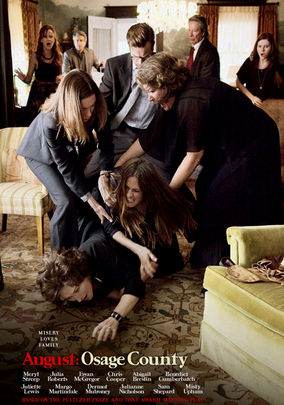
Based on the play of the same name, August: Osage County (2013) is a family drama led by the incomparable Meryl Streep.

The family reunites after the patriarch disappears and drama and sniping ensue in no time.

The setting of stifling hot Oklahoma is effective and lends a smothering, suffocating, aspect to the film, much like many of the characters.

It’s a bleak, depressing film, and reminded me of Who’s Afraid of Virginia Woolf-1966, or A Streetcar Named Desire-1951 in tone.

This film has exceptional acting all around, especially Streep and Julia Roberts, as well as Chris Cooper and Margo Martindale.

It’s a raw, angry movie, and the intensity builds throughout.

Oscar Nominations: Best Actress-Meryl Streep, Best Supporting Actress-Julia Roberts

The Amazing Spider-Man 2-2014

The Amazing Spider-Man 2-2014

Director Marc Webb

Starring Andrew Garfield, Emma Stone

Scott’s Review #2

70293702

Reviewed June 16, 2014

Grade: B+

Superhero movies are not my top genre (although admittedly, I see many of them).

They are fun, popcorn-type films not to be over-analyzed or taken too seriously.

One thing that confuses me is the seemingly constant reboots of the Spider-Man franchises and forgetting the previous installments.

Wasn’t this series just made with Tobey Maguire and Kirsten Dunst not too long ago?

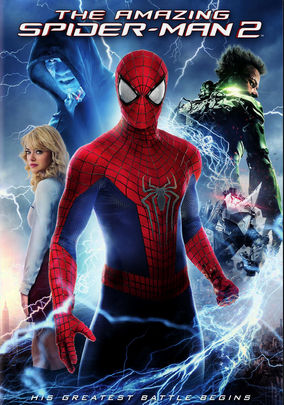
That being said, the strongest part of this film is the chemistry between Andrew Garfield and Emma Stone, which is undeniable and great to watch. Sally Field adds life to anything she appears in.

The more “human” parts of the film are the best.

The special effects/CGI are admirable. I enjoyed how one “villain” is a close friend of Peter Parker’s, wonderfully played by Dane DeHaan. His character has many nuances.

The other villain, Electro, played by Jamie Foxx, is silly and his story almost seems botched. His motivations are weak. He hates Spider-Man and wants to destroy the city because of a contrived misunderstanding.

I do not want to over-analyze The Amazing Spider-Man 2 (2014), as this is a fun, enjoyable summer film.