Category Archives: Chick Flicks

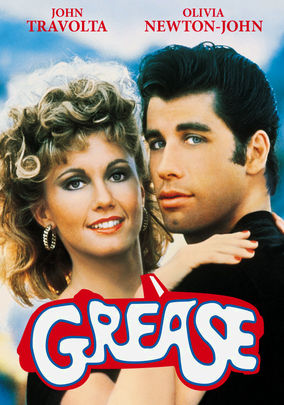
Grease-1978

Grease-1978

Director Randal Kleiser

Starring John Travolta, Olivia Newton-John

Top 250 Films #69

Scott’s Review #354

60000577

Reviewed January 9, 2016

Grade: A

Grease (1978) is the ultimate musical fantasy that comes to life and can be appreciated by anyone looking to re-live their high school days through song, or merely escape life’s stresses with a fun, bright musical that is very well made.

Is it realistic? Not, but sometimes escapism is just what the doctor ordered, and Grease is one of my favorite films that meets that criteria.

It is light-hearted and sweet, and above all, it contains wonderful legendary musical numbers.

The time is the 1950s, and we meet Danny and Sandy on a windswept beach with cascading waves and bright sunshine. It is summer break for the two high school students, who meet in California, she vacationing from Australia, and he is a local boy.

They say their goodbyes and return to normal lives, but cannot forget about each other.

Suddenly, Sandy arrives at Rydell High in Los Angeles, coincidentally, where Danny goes to school. Her parents (whom we never see) decided to stay in California.

Danny is a “tough guy” in high school, much different from who he was on the beach with Sandy. He is the leader of the infamous T-birds, a group of boys who love their black leather jackets and cars.

Torn, he maintains his tough image, and he and Sandy find their way back to each other through classmates, songs, and dancing, intermingling with fun supporting characters who encourage them to find true love.

Travolta and Newton-John have magical chemistry, which allows this film to work.

Grease has appeared on stage numerous times, but these actors are fine together. I bought them as teenagers in love, although both were well beyond their teen years.

The supporting cast is excellent- specifically Stockard Channing as the lead Pink Lady, Rizzo, and Sandy’s kind-hearted friend, Frenchy.

Interestingly, no parents ever appear in the film, as it is not about the adults.

However, Rydell’s female principal, Mrs. McGee (played by Eve Arden), and her dotty Vice Principal, Blanche (Dody Goodman), are marvelous as comic relief.

Rizzo is an interesting character and can be argued to be the only one who threatens to steal the thunder from Danny and Sandy. Containing a tough exterior, she is also vulnerable as she fears she has become pregnant mid-way through the film.

Being unmarried and pregnant in the 1950s was quite the scandal, and Channing conveys layers of emotion during her solo number, “There Are Worse Things I Could Do”.

The wonderful high school dance scene is choreographed amazingly well. The excitement of the student body at being filmed for a special television show is apparent as dance numbers and dance contests, some raunchy, follow.

The musical numbers “Grease”, “Greased Lightning”, “Hopelessly Devoted To You”, and “Beauty School Dropout” are intrinsically memorable, all of which are personal favorites of mine.

Grease is a film meant not to be analyzed but rather enjoyed for its fantastic chemistry and energy.

Sometimes, in a film, all the elements come together perfectly, and Grease (1978) is an excellent example.

Oscar Nominations: Best Song-“Hopelessly Devoted to You”

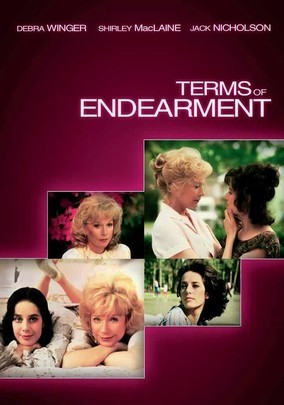
Terms of Endearment-1983

Terms of Endearment-1983

Director James L. Brooks

Starring Shirley MacLane, Debra Winger, Jack Nicholson

Top 250 Films #152

Scott’s Review #368

60004508

Reviewed January 9, 2016

Grade: A

Terms of Endearment (1983) is a sentimental favorite of mine, and while I am slightly embarrassed to include this chick-flick to end all chick-flicks on my favorites list, it is also a damned good sentimental film and makes me a bit weepy each time I see it.

It is pure Hollywood mainstream formula, but somehow Terms of Endearment works (romantic films are not usually at the forefront) and even won the coveted Best Picture Oscar in 1983.

That must say something.

So if it is so sappy, what makes it so great? For starters, it has exceptional acting all around, especially from the leads Shirley MacLaine, Jack Nicholson, and Debra Winger.

How can you go wrong with a talent of that caliber?

MacLaine and Winger play Aurora and Emma Greenway, a mother and daughter (the father is deceased) who share a lifelong love-hate relationship and live in the Midwest in the present.

Nicholson plays Garrett, a retired astronaut (and womanizer) and the object of Aurora’s affection.

The chemistry among all three is apparent- I sinfully find it delicious that Winger and MacLaine despised each other throughout filming, adding a layer of curiosity and intrigue to the film, and during their scenes.

Director James L. Brooks wisely balances the heavy drama with comedy, so the film does not become too overwrought.

For example, Garrett and Aurora have a humorous courtship, constantly bickering or misunderstanding each other- he is a womanizing playboy type and Aurora a domineering, insecure woman- they end up needing each other, nonetheless.

Unforgettable is the hilarious drive and the beach scene that the two share.  Even though the duo is tenuous and difficult, I love them all the same.

The tear-jerker scenes are emotional, especially the deathbed scene at the end of the film. There is so much raw emotion going on at once, and, a rarity in film, the child actors involved are real, believable, and flawless.

The film feels like watching a true, real-life drama play out. The heartache feels real, and the film as a whole feels very genuine.

Also interesting is Emma’s failing marriage to Flap (Jeff Daniels) and her subsequent affair with kind-hearted Sam (John Lithgow), as well as her departure from her mother’s hometown, the constant phone calls, and being in one another’s lives, just like a real mother and daughter relationship often is.

Terms of Endearment (1983) incorporates all of the elements that make a good, old-fashioned, dramatic tear-jerker, and I find myself a sucker for it each time that I watch it.

Oscar Nominations: 5 wins-Best Picture (won), Best Director-James L. Brooks (won), Best Actress-Shirley MacLaine (won), Debra Winger, Best Supporting Actor-Jack Nicholson (won), John Lithgow, Best Screenplay Based on Material Based on Another Medium (won), Best Original Score, Best Sound, Best Art Direction, Best Film Editing

Titanic-1997

Titanic-1997

Director James Cameron

Starring Leonardo DiCaprio, Kate Winslet

Top 250 Films #160

Scott’s Review #327

1181461

Reviewed January 6, 2016

Grade: A

1997’s Titanic is a sweeping, gorgeous epic, directed by James Cameron, that is perfection at every level.

This film has it all: romance, disaster, gorgeous art direction, and flawless attention to detail.

The film will make you laugh, cry, and fall in love with the characters, even though you know the inevitable outcome.

The film is based on the real-life sinking of the RMS Titanic in 1912, when the ship collided with an iceberg.

I have witnessed this film being derided for being a “chick flick” or too “sappy”, but I vehemently disagree and feel it is a classic for the ages.

Titanic successfully re-invented the Hollywood epic.

Jack Dawkins (Leonardo DiCaprio) is a penniless artist who meets high-class socialite Rose DeWitt (Kate Winslet) aboard the luxurious Titanic, on its maiden voyage from the coast of England to the United States.

Rose is engaged to cagey Cal Hockley (Billy Zane).

Depressed, Rose contemplates diving overboard to her death, but Jack saves her and convinces her otherwise. They spend time together, and he draws her portrait. As their romance blossoms, Cal catches on and plots revenge.

In the mix is Rose’s snobbish mother, Ruth, played by Frances Fisher.

The main theme of the film is social class and the divide between the haves and the have-nots.

James Cameron demanded perfection from this film, and he sure got it. Every detail of Titanic is flawless and historically accurate, from the dining room silverware to the costumes to the set pieces barely visible in the background.

Cameron even had a replica of the original Titanic built for filming purposes- with limitations, but what a vast undertaking this must have been.

That, along with the smoldering romance between Jack and Rose, is what makes Titanic one of my favorite films.

Two fantastic scenes are when Jack is taken under the wing of Molly Brown, played by Kathy Bates. Molly is not the snob that many other upper-class people are, and she lends Jack a tuxedo so he will look dapper for Rose. She also tenderly teaches him the appropriate way to use silverware.

Tragically, the other scene is more melancholy- a gorgeous classical piece plays in the background as the vast ship is engulfed in water and slowly sinks, causing many deaths.

At well over three hours long, the film’s conclusion is quite sprawling, and one feels as if one is aboard the ship. By this time, I was invested in the characters, both lead and supporting, and the tragedy that ensues is both a marvel and heart-wrenching.

Titanic (1997) is a film that must be viewed on the big screen for full effect, and is a timeless masterpiece that has aged perfectly.

Oscar Nominations: 10 wins-Best Picture (won), Best Director-James Cameron (won), Best Actress-Kate Winslet, Best Supporting Actress-Gloria Stuart, Best Original Dramatic Score (won), Best Original Song-“My Heart Will Go On”, Best Sound Effects Editing (won), Best Sound (won), Best Art Direction (won), Best Cinematography (won), Best Makeup, Best Costume Design (won), Best Film Editing (won), Best Visual Effects (won)

Beaches-1988

Beaches-1988

Director Garry Marshall

Starring Bette Midler, Barbara Hershey

Top 250 Films #162

Scott’s Review #352

Reviewed January 9, 2016

Grade: A

Beaches (1988) is a film that can easily be described as sentimental, sappy, and a chick flick- all in a derogatory fashion- but that, regardless, is a treasure to me.

I fall for this tearjerker every single time that I watch it.

It is not necessarily a great film, not high art, nor particularly edgy, but a good, old-fashioned, conventional film about friendship.

Bette Midler and Barbara Hershey give the film believability, whereas other similar films would appear contrived.

C.C. Bloom (Midler) and Hillary Whitney (Hershey) are lifelong friends from opposite backgrounds. Besides, they could not have more opposite personalities. C.C. is blue-collar, outrageous, and brash; Hillary is demure, rich, and sophisticated.

We meet our friends as young girls on the boardwalk of Atlantic City, C.C., hiding from her overbearing stage Mom, and Hillary is lost and wandering the boardwalk.

The two become fast friends despite their vastly different upbringings and stay connected through life’s ups and downs for over thirty years.

The chemistry between Midler and Hershey is great. I completely buy them as best friends through the years, despite having little in common.

Throughout their tender, emotional scenes and the knock-down-drag-out fight at the mall (a fantastic scene!), there is never a doubt about what they have.

They compete over a man, which ordinarily is a lame plot device, but in Beaches, it works because the two stars make it work.

Each actress puts her mark on the individual role. Midler’s C.C. is arrogant, feisty, and interesting as she begins as a “have-not” and becomes a “have”.

She becomes spoiled and pampered- all of the things she envies about Hillary. She does not handle wealth as well as Hillary because she lacks education. Hillary, an attorney, is classy and graceful.

These characteristics make it believable that the women would be at odds.

The last act is a weepy one as one of the women dies, leaving the other to pick up the pieces and move on- alone. This is a sad moment in the film, but the women’s devotion and loyalty are admirable.

Beaches (1988) may not be high art, but boy, will it get you reaching for the tissues.

Oscar Nominations: Best Art Direction

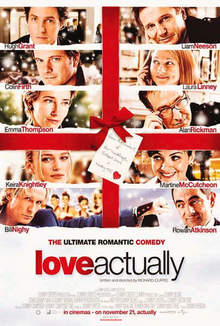
Love Actually-2003

Love Actually-2003

Director Richard Curtis

Starring Hugh Grant, Emma Thompson, Liam Neeson

Scott’s Review #1,438

Reviewed September 8, 2024

Grade: B

Love Actually (2003) is a British romantic comedy that’s perfect to watch around the holidays, especially on Christmas Eve.

Perhaps even on Valentine’s Day, the setting is tinsel-laden and filled with holiday merriment and sweetness.

It features an ensemble cast of dozens, but it is surprisingly easy to follow. The myriad of stories had me naturally more invested in some than others, preferring the heavy drama to the silly side plots.

The film begins beautifully as a voice-over narrator sets the stage and message of love. He ruminates about pure and uncomplicated love of lovers and friends and points out that the messages from the 9/11 victims were messages of love and not hate.

The story then switches among the interconnecting “love stories” of many people.

The quick segment nearly left me in tears, and I let the poignant message sink in.

I was pleasantly surprised to find nine stories, some of which intersect with others. I am a fan of this type of storytelling, but not all of them connect with others, which might have made it too confusing or even better layered.

Some stories are not given a lot of exposure, but the balance feels close to right.

I preferred the first half of Love Actually to the second. I had heard of the film and finally watched it twenty years later. Still, I anticipated more of a sappy romantic comedy than anything substantive, especially since the rom-com master Hugh Grant stars.

I immediately felt an emotional connection to stories like that of the United Kingdom Prime Minister (Grant) and his romantic relationship with Natalie (Martine McCutcheon), a junior member of his household staff.

This ‘boy meets a girl from the wrong side of the tracks’ felt authentic and laden with possibilities.

Another win is the love story between Sarah (Laura Linney) and handsome creative director, Karl (Rodrigo Santoro). Their buildup and near-tryst after a Christmas party had me in their corner and rooting for the pair to overcome an obstacle involving Sarah’s dependent brother.

Finally, my favorite couple is writer Jamie (Colin Firth) and his Portuguese housekeeper, Aurélia (Lúcia Moniz). Their sweetness and innocence are gleeful and true, and rooting for them to get together despite language barriers was easy. 

Richard Curtis, who directs and writes the screenplay, misses an opportunity when he creates an unfulfilling love triangle between newlyweds Juliet (Keira Knightley), Peter (Chiwetel Ejiofor), and best man Mike (Andrew Lincoln).

Initially unclear if Mike is smitten with Juliet or Peter, the traditional route is chosen instead of an LGBTQ+ presence.  

In one story, the horny British lad named Colin (Kris Marshall) unsuccessfully tries to woo British women and decides to go to America to get laid. Predictably, he meets one hot woman after another in the Midwest USA.

This story is hokey and could have been dropped altogether in favor of more screen time for the more interesting stories.

In the final act, I was disappointed when the film teeters too much towards cheesy, with a tepid Christmas pageant where many stories come to a head.

This culminates in a silly chase through Heathrow Airport, where one character jumps security and outwits inattentive airport personnel to catch his love interest before she boards a flight to New York.

Since 9/11 is mentioned in the beginning, this tired plot device is surprising, given the times of heightened terrorism and deserved respect for airport security.

Curtis rips off Paul Thomas Anderson’s Boogie Nights (1997) in the epilogue by using the same song, ‘God Only Knows’ by the Beach Boys, and the same wrap-up of what happens to the characters.

Despite the thievery, I did enjoy seeing what happens in my favorite stories.

Love Actually (2003) wobbles a bit by trying to have all nine stories pack a punch, but the effort is nice, and the message of love closes out the film.

We know happiness and Christmas miracles usually don’t pan out, but it’s nice to escape and pretend they do.

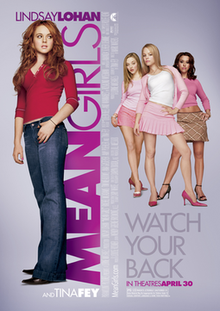
Mean Girls-2004

Mean Girls-2004

Director Mark Waters

Starring Lindsay Lohan

Scott’s Review #1,433

Reviewed July 21, 2024

Grade: B+

Upon its release, I doubt the creators of Mean Girls (2004) knew how influential the film would become.

Not only did it become a box-office hit, but it also became a Broadway musical, with a reboot twenty years later.

It’s also one of those films everyone has heard of and immediately knows what it’s about.

After reading a self-help book about high school social cliques, Tina Fey, who stars in it, wrote the screenplay. The book also delved into school bullying and its damaging effects.

Mean Girls, the film, is intended to be a comedy and skirts over the horror and contempt that is the reality of vulnerable students being picked on by mean girls.

I doubt that in real life, ‘mean girls’ victims’ would appreciate a comedy based on their terror and ridicule.

A darker version, while depressing, would also be closer to reality. I took Mean Girls as a fantasy.

Nonetheless, the film is a roaring success if for no other reason than its examination of the insecurities and hierarchies of the high school (and middle school) years, which 90% of adults would likely soon forget.

This is powerfully done through comedy, allowing us to laugh at the characters’ over-the-top and hypocritical actions across different scenarios.

It’s fun to watch because it takes us back to a time in cinema when its star, Lindsay Lohan, was an up-and-coming sensation, and before co-stars Rachel McAdams and Amanda Seyfried were Oscar-nominated.

Cady Heron (Lohan) is a sophisticated yet naïve student, educated in Africa by her scientist parents.

When her family moves to the suburbs of Illinois, Cady gets to experience public school and the cruel laws of popularity that divide her fellow students into tightly knit cliques.

She unwittingly finds herself in the good graces of an elite group of cool students dubbed “the Plastics,” but soon realizes how her shallow group of new friends earned this nickname.

They are led by Regina (McAdams), a rich, popular mean girl.

Things quickly go south after Cady becomes smitten with Regina’s ex, Aaron (Jonathan Bennett).

Despite the title, the film is for anyone with teenage angst, a crush on a fellow student, or feeling either left out or part of a group at the expense of other unpopular kids.

The message of Mean Girls is universal and therapeutic, as audiences can cheer along with Cady, especially when she exacts her revenge on the queen bee, Regina, hilariously.

The cat-and-mouse play between the two characters is merciless and delightful in the cruel measures to one-up the other in pure comical fashion.

Lohan and McAdams deserve kudos for energetically infusing the characters with likability, even in scenes where they should be hated.

Cheering when Regina gets hit by a bus never felt so good.

The writing is astounding and surprisingly good, with vicious, quick wit and humorous scene after scene.

Wisely, the film ends after one hour and thirty-seven minutes, which is a perfect length for a teenage comedy. Anything longer might have made it drag because the ending isn’t unexpected or a huge surprise.

Since we assume Cady will emerge victorious, which she does, the conclusion is satisfying, and the event hints at a sequel.

The film is peppered with diversity, which is also an enormous win. The principal of North Shore High School, Mr. Duvall (Tim Meadows), is black, while other ethnic characters also appear.

This provides a nice progressive message.

Watching the film twenty years following its release, I never expected to enjoy it quite so much as I did.

This is a testament to the power of Mean Girls (2004), director Mark Waters, and Tina Fey, who create something that holds up well.

The Object of My Affection-1998

The Object of My Affection-1998

Director Nicholas Hytner

Starring Jennifer Aniston, Paul Rudd

Scott’s Review #1,249

Reviewed April 24, 2022

Grade: B

The Object of My Affection (1998) is a romantic comedy riddled with the standard clichés and obvious plot setups of similar films.

As a whole, it is plot-driven rather than character-driven.

The redeeming factor is that it takes a left-of-center approach and delves into LGBTQ territory, albeit in a soft-touch way, which more mainstream American films were only starting to do in the late 1990s.

The best part of the film is the casting of Jennifer Aniston and Paul Rudd, who have tremendous chemistry as a potential couple who have no chance of riding off into the sunset together.

At least in any romantic sort of way. He is gay, and she is straight, and nothing can change that.

Though fluffy, The Object of My Affection deserves some level of praise.

Several gay men can easily relate to a situation where they find a female friend who is enamored with them and experience a return of affection differently.

It’s common to fantasize about what might have been if feelings had been different, and, as the film explores, even to try to go straight.

The film itself has a definite Will & Grace vibe, a popular television program emerging at this time, and even has the same location. The main characters become the very best of friends, watching movies together and sharing intimate moments, just like a romantic couple would.

The late 1990s were a time when gay characters took center stage, so The Object of My Affection gets a thumbs up for being part of the herd.

Nina Borowski (Jennifer Aniston) lives in Brooklyn, New York, and works as a social worker. She invites her new gay friend, George (Paul Rudd), to move into her apartment after he breaks up with his longtime lover, Robert (Tim Daly).

Meanwhile, Nina gets pregnant and decides to keep the baby, but ends her relationship with the child’s father, her controlling boyfriend Vince (John Pankow).

As Nina and George live and experience her pregnancy together, they grow close, and Nina realizes she’s beginning to fall in love with her friend.

Aniston and Rudd work well together as a couple, as friends, or otherwise, and the chemistry is terrific. Even during the sappiest of scenes, and there are many of them, I always smiled a bit at their bond.

When Nina and George have the inevitable dramatic scene and express their feelings, it doesn’t feel as forced as one might expect. Their bond is solidified, and the film unsurprisingly has the pair remain in each other’s lives, presumably forever.

In satisfying form, Nina and George do ride off into the sunset along with little Molly, but in solid relationships with other mates. Each character finds their destiny and soulmate while keeping in each other’s lives.

While nice, there are many hurdles the filmmakers could have gone further with, but don’t. The message is clear- regardless of sexuality, race, religion, or politics, a friend is a friend and a bond is meant to be forever.

It’s a warm message that is the basis for what the intent was, and the film delivers a heartfelt story that eases the conflict of real life, and perhaps that is needed sometimes.

As much as The Object of My Affection (1998) has its heart in the right place with a progressive and inclusive slant, the film is bogged down by clichés and a fairy-tale ending.

It’s a nice, fulfilling fantasy film, but skates over hard-hitting, realistic issues in favor of kid-glove-type situations, making it feel dated nearly twenty-five years later.

Other films in the years ahead would supersede the premise and take it to different, more interesting levels, delving further and further outside the box.

But, a nice attempt.

Legally Blonde-2001

Legally Blonde-2001

Director Robert Luketic

Starring Reese Witherspoon, Luke Wilson

Scott’s Review #807

Reviewed August 30, 2018

Grade: B+

Legally Blonde (2001) is a film that, by all accounts, should have been a hot mess, but for some reason is a great ball of fun.

High art it ain’t by any means, and the plot is implausible beyond belief, and suspension of disbelief must be securely tucked away.

Despite portraying more serious roles before and after this film, Reese Witherspoon is largely responsible for the film’s success and is closely associated with it.

Quite simply, all the elements align perfectly in this film.

Elle Woods (Witherspoon) is the president of her sorority at a Los Angeles college. Clad in fluffy pink attire and carrying her cute dog everywhere she goes, she epitomizes the stereotypical “dumb blonde”.

However, she does carry a 4.0 grade point average in fashion.

Expecting a marriage proposal from her upper-class, snooty boyfriend, Warner, Elle instead finds herself dumped due to not being serious enough.

Determined to prove herself worthy, she manages acceptance into Harvard Law School, along with Warner, and embarks on hijinks and adventures.

Warner’s fiancée and a potential new love interest cause turmoil for the boisterous Elle.

Legally Blonde never takes itself too seriously and is simply a fun, silly-minded, comic adventure.

Audiences will likely chuckle and smile along with Elle on her adventures as she gets into one pickle after another, always determined to prove her intelligence.

To be clear, the film itself is very formulaic and could easily have been trivial and uninspired, resulting in a bomb. But Witherspoon shines in the lead role, adding a likable, charming quality to the character.

The actress possesses great wit and comic timing, so that her character becomes more of a champion, and we root for her to overcome obstacles and succeed.

By miles, she is the standout in the film.

Suspension of disbelief is at an all-time high. In “real life,” there is no way Elle would ever get into the elitist Ivy League school, brandishing a pink resume or other silly tricks to be cute and appealing.

Nor would she ever likely be so instrumental in winning a murder case so quickly. To nobody’s surprise, Elle eventually graduates with flying colors and is honored to give a graduation speech, inspiring those around her.

But as implausible as these situations are, they are also Legally Blonde’s appeal.

The supporting characters are pure caricatures, especially the main foils (Warner and Vivian- who take Elle’s place as fiancée). Both are villains, Vivian going so far as to embarrass Elle by inviting her to a stuffy party under the guise that it was a costume party.

In the end, one of the characters “turns good”, another common element of predictable films of this nature. But again, the film is just pure and simple fun, so these stereotypes are okay.

In more modern times (not that 2001 was so long ago), the film would not have been directed by a man, but rather by a woman.

Screenwriters Kirsten Smith and Karen McCullah Lutz prepared a female-driven film that was based on a novel by Amanda Brown.

Why a man was chosen to direct is beyond me, but, alas, this is the way things were at the time.

Interestingly, another recent film I reviewed, My Big Fat Greek Wedding (2002), would work perfectly as a retro romantic-comedy double feature with Legally Blonde (2001).

Both are fun and light, but also celebrate strong female characters.

Legally Blonde borrows heavily from the 1995 brilliant, similar-genre film Clueless, but is not as great as that film. Still, the film is an inspired effort, largely due to the charms of its lead star.

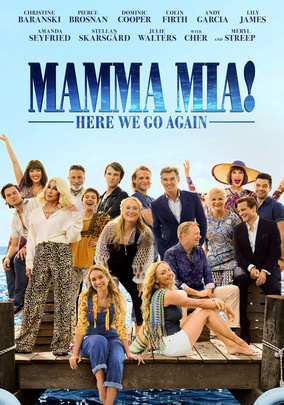
Mamma Mia! Here We Go Again-2018

Mamma Mia! Here We Go Again- 2018

Director Ol Parker

Starring Lily James, Amanda Seyfried

Scott’s Review #797

Reviewed July 31, 2018

Grade: B+

My expectations for Mamma Mia! Here We Go Again (2018) was not lofty, nor was I anticipating drivel. I expected (and was in the mood for) a summer popcorn musical flick with fun and dancing, and little in the way of analysis or requiring too much thought.

I can proudly say that this film fulfilled my expectations —it delivers its intent, and sometimes, that is exactly what the doctor ordered.

The film is enthusiastic and lively, with the musical numbers serving as the standouts.

In an immediate plot twist, it is revealed that the main character, Donna (Meryl Streep), died a year earlier, and her daughter Sophie (Amanda Seyfried) is planning a lavish reopening of her hotel on the beaches of Greece.

The film serves as both a sequel and a prequel, as events also go back to 1979 when a young Donna (Lily James) graduates from college and embarks on a journey to “find herself”.

She travels extensively and meets her three beaus (anyone who saw the 2008 original will be familiar with this plot), and the film is excellent at pleasingly connecting the events of both films.

Mamma Mia! Here We Go Again is hardly high art and not intended to be. Truthfully, it is a bit sub-par to the original, as some of the musical numbers are “secondary” ABBA songs. The biggest hits were used in the 2008 film.

The overall plot feels a bit forced and not exactly compelling, especially since we know the eventual result of Donna’s relationships. The story seems geared towards a bombastic finish.

But the sheer fact that the song and dances are interspersed throughout the film makes it enjoyable enough.

The film plays more like someone’s fantasy than a real-life sequence, and liberties must certainly be taken.  Everything always seems to go Donna’s way, and events merely fall into place- if only real life were that way!

The introduction of Donna’s mother (Sophie’s grandmother)—explained to be a rich and famous singer residing in Las Vegas—is a way to add the legendary Cher to the story. Disappointingly, the star does not appear until the end of the film, more like a cameo appearance.

This leads me to the film’s best parts, which occur during the final thirty minutes. As Sophie’s grand hotel reopening party comes to fruition (a devastating storm thrown into the story is purely for dramatic effect), all details fall into place in magical form.

Hundreds of party guests show up, Donna’s beaus reunite, and the aforementioned absentee grandmother (Ruby) makes a grand entrance via helicopter (in stiletto heels naturally).

In this way, the grand finale is superior to the rest of the film.

Cher, still looking gorgeous at age seventy-two, is the pure highlight of the film, and it kicks into high gear when she appears. Considering all of the hype and press surrounding a film reunion between Cher and Meryl Streep- they starred together in 1983’s Silkwood- it should be no real surprise that Streep’s deceased Donna appears.

The two best scenes come at the end of Mamma Mia! Here We Go Again! As much as the lavish Cher demands the grand finale in terms of glamour and song, Streep’s touching duet with Sophie will bring tears to the viewer’s eyes and capture the emotional element of the film.

As Streep and Seyfried churn out a gorgeous rendition of “My Love, My Life,” the actresses’ mother-daughter relationship is lovely and will fondly remind audiences of the chemistry in the 2008 film.

Regarding Cher, the revelation that Ruby is a long-lost lover of the hotel manager, Fernando (Andy Garcia), is sweet and romantic. Despite limited screen time, the duo shares fantastic on-screen chemistry, so much so that I yearned to know the back story of their relationship.

Do we only know that they were madly in love in 1959? Why did it not work out?  Regardless, Cher’s version of the song “Fernando” is both appropriate and enchanting.

Mamma Mia! Here We Go Again (2018) is a summer film sure to please audiences eager for a fluffy musical.

With bright and cheerful Greek island locales, lavish oceans, and bombastic feel-good pop sensibilities, this film was marketed well and shares enough connection with 2008’s Mamma Mia! to enrapture and please audiences who enjoyed the first version.

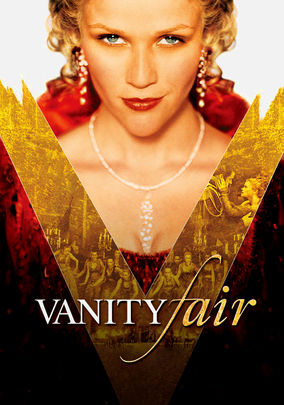
Vanity Fair-2004

Vanity Fair-2004

Director Mira Nair

Starring Reese Witherspoon

Scott’s Review #772

Reviewed June 12, 2018

Grade: B

An adaptation of the classic 1848 novel by William Makepeace Thackeray, Vanity Fair (2004) softens the traditionally unlikable, roguish character of Becky Sharp quite a bit.

This proves not to be the smartest move as the character, now more of a heroine, is watered down and forever changed, as is this film adaptation.

Reese Witherspoon (Becky) drew harsh criticism for her starring turn, but I do not think she is so bad, and the costumes and set designs are wonderful and quite the highlight of the resulting period piece.

In 1802 England, we meet Becky Sharp, a young woman who has just graduated from a School for Girls and been sent to work as a governess.

Because her father, a talented painter, is impoverished, Becky is cast aside as lower-class and deemed undesirable by anyone in the upper class, the men she is most interested in.

Despite her reputation as a tart, Becky aspires to marry rich and frequently gets into trouble with her shenanigans and smart tongue while romance blooms with the handsome Rawdon Crawley (Purefoy).

The story is supposed to encompass Becky’s life from approximately age eighteen through her mid-thirties (though Witherspoon never appears to age) and displays her trials and tribulations, her loves and losses through the years.

We follow her from rural England to London and Belgium, eventually residing in Germany, reduced to working in a casino, where the film concludes.

The film is a treat, as it features various countries as they appeared in the nineteenth century and the wars and battles of the period, making for an interesting history lesson.

The main appeal should be Becky Thatcher, since the film revolves around her, and numerous criticisms were leveled, accusing the film of casting Reese Witherspoon in the important and demanding role based on her star power at the time.

In 2004, Witherspoon was experiencing enormous film success after 2001’s Legally Blonde and 2002’s Sweet Home Alabama- admittedly fluff films- but securing her box office power nonetheless.

These films undoubtedly led to her being cast in the pivotal role, but I thought the star was perfectly adequate and gave Becky appropriate humor and zest.

Based on Witherspoon’s “girl next door” persona and the fact that she looks like a good character, it’s perplexing to cast her if filmmakers want to be true to the character.

Witherspoon was delicious in 1999’s Election as villainous Tracy Flick, a role of a lifetime. But that is the exception and not the standard.

But I digress- the bottom line is that while she is a capable actress, she does not give the gritty performance that many were expecting to be true to the character in the novel.

The rest of Vanity Fair is just mediocre as far as the story goes.

While Becky’s antics are both humorous and dramatic, her rooting value in the romance department does not come across in the 2004 film; there is not enough chemistry between the leads to warrant much support.

Opinions abound that other incarnations of Vanity Fair are far superior and more compelling than this film is, but I have yet to see any.

Compliments must be reaped on the costume department and the art direction- both are superior. Such threats are the lavish and colorful costumes and gowns that mark the time.

From the classic-style hats and highfalutin dresses featured in ball after ball, this aspect is nearly enough to recommend a watch over the dull story and, immeasurably, the highlight of the entire film.

Vanity Fair (2004) is considered a messy travesty to those well-read enough to have turned the pages of the classic novel.

Since I have not yet read the book, perhaps I enjoyed the film slightly more than I should have, but alas, I did not find the casting of Witherspoon as Becky, nor the overall product, to be drivel, as many did.

I recommend the film for the gorgeous visual treats if nothing else.

Girl, Interrupted-1999

Girl, Interrupted-1999

Director James Mangold

Starring Winona Ryder

Scott’s Review #461

60000428

Reviewed August 8, 2016

Grade: B+

Girl, Interrupted is a film I viewed twice when it came out (1999) and again in 2013.

The film is a star-making performance for Angelina Jolie (then unknown) and warrants a watch for that alone. Jolie completely steals the show as she portrays a damaged mental patient during the 1960s.

The film itself is interesting as its intended star is Winona Ryder, at this point in her heyday, but completely usurped by Jolie- glaringly so.

Ryder was in prime form as the “it” girl in the 1990s. Sadly, her star has since faded.

Besides the “who is the real star of Girl, Interrupted” debate, the film itself is very good, though it has a glossy, happily-ever-after Hollywood vibe.

It is not as gritty as it could have been.

Throughout, the film has a very safe feel- even in moments of peril, as when one girl commits suicide, or another suffers from burns, it feels light.

I did not buy Whoopi Goldberg as the kindhearted nurse. Her performance was okay, but it didn’t stand out.

Ryder and Jolie are tops.

Despite the subject matter, the film suffers from a chick-flick, cliché-ridden, happy-ending sort of style, but I still immensely enjoy it.

Oscar Nominations: 1 win-Best Supporting Actress-Angelina Jolie (won)