Category Archives: Cerebral

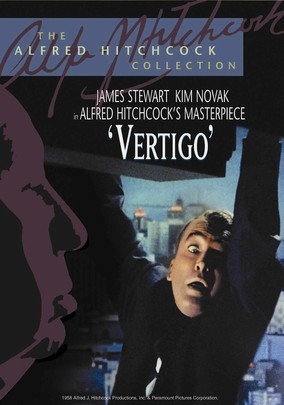
Vertigo-1958

Vertigo-1958

Director Alfred Hitchcock

Starring James Stewart, Kim Novak

Top 250 Films #1

Scott’s Review #151
1089727

Reviewed August 7, 2014

Grade: A

Over the years, Vertigo (1958) has quickly become one of my favorite Alfred Hitchcock films. With each repeated viewing, I learn, appreciate, or see something new.

It is an absolute masterpiece.

The primary appeal of Vertigo lies in its mystique and dream-like quality, which offer a beautiful cinematic experience. It is sometimes ominous, psychological, gloriously complex, and even confusing.

That is what makes it extraordinary.

Considering the time, the colorful opening visuals are dynamic, groundbreaking, and stunning.

The story involves a retired detective, Scottie, played by Hitchcock stalwart Jimmy Stewart. Scottie suffers from vertigo, which hinders his daily life.

After an incident in which a police officer is killed, and Scottie blames himself and his vertigo for causing the death, he whiles away the days brooding and keeping companionship with Midge, a college friend to whom he was once engaged.

One day, he is hired by another college friend to follow his wife, played tremendously by Kim Novak, who is acting strangely and periodically disappearing, obsessed with a painting of a woman from years past.

From this point, the plot twists and turns in a mysterious fashion, and a romantic, bizarre, and obsessive love story is intertwined.

Is Scottie in his right mind? Will his vertigo continue to haunt him? What is the secret to Madeleine and Judy? Is Midge as sweet as she appears?

The score to Vertigo is haunting and unforgettable, adding significantly to the film’s mood and ambiance.

Several location shots are featured in San Francisco, including the Golden Gate Bridge, steep streets, the Mission District, and the Redwood Forest.

As with all Hitchcock films, every set and detail is perfect, from paintbrushes, coffee mugs, curtains, and furniture to the gorgeous, bright red décor of the restaurant, which is heavily featured in the film.

How exquisite does Kim Novak look in the film??

Initially, it was critically panned upon its release, but it is now considered one of the greatest films. Its unique camera angles and slow, methodical pacing have influenced other films.

The film is not always an easy watch; it is complex, to be fair, but, like a fine wine, it improves with age.

Vertigo (1958) is a layered psychological thriller that gains more appreciation with each viewing.

Oscar Nominations: Best Sound, Best Art Direction
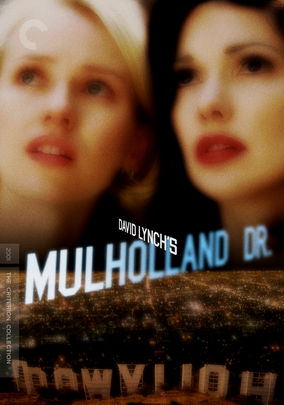
Mulholland Dr.- 2001

Mulholland Dr.- 2001

Director David Lynch

Starring Naomi Watts, Laura Harring

Top 250 Films #7

Scott’s Review #297

60021646

Reviewed December 12, 2015

Grade: A

Mulholland Dr. (2001) is my favorite David Lynch film and, as far as I am concerned, a pure masterpiece in experimental filmmaking.

Championed by many, yet hated by others for its non-linear and confusing storyline, making sense of the mishmash of dreamlike plots is a waste of time and undoubtedly headache-inducing, as the film must be experienced and appreciated for its creativity.

My best analogy is that Mulholland Dr. is to film what Pink Floyd is to music – it must be savored and experienced. It is a film that invites interpretation and study.

The main story, if one is attempting to summarize in a paragraph, goes something like this:

Part 1- aspiring actress Betty Elms (played by then-unknown Naomi Watts) arrives in sunny Los Angeles as a perky, clean-cut girl. She stays in her aunt’s gorgeous suburban apartment while she is away filming a movie on location.

Betty meets an amnesiac woman, the gorgeous Rita (Laura Harring), who is hiding in the apartment. Before meeting Betty, we learn that Rita was involved in a car accident on Mulholland Dr. and is carrying a large sum of cash.

Still, she does not know who she is or even her name, making up the name “Rita” after seeing a poster of Rita Hayworth on the wall while showering.

Part 2: Betty (now named Diane) and Rita (now Camilla) are lovers, and Betty, no longer aspiring, has now become a neurotic, struggling actress with no work, and is involved in a love triangle with Camilla and another man, who are both great successes and pity Diane.

Diane and Camilla visit a club named Club Silencio, where a gorgeous singer brings them to tears with her singing, only to collapse and reveal herself as a phony. The host warns that everything is an illusion.

Intersecting vignettes seemingly unrelated to the central part of the story- a young director forced to cast a woman after threats from the mafia, a terrified man who sees a demented man behind the dumpster of a burger joint, and a detective searching for the clues to the car accident involving Rita- all come together to relate to the main story.

Mixed in with all of these stories are recurring odd characters- the seemingly sweet elderly couple that Betty meets on the airplane.

This strange cowboy appears every so often. Coco, the landlord, played by legendary film actress Ann Miller in her last film, then doubles as a shrewish character in the alternate story, and finally as a mysterious blue key.

How do all these facets of story and character add up?

That is open to interpretation.

Some details support the theory that “Betty” is a figment of Diane’s imagination. She dreams of being fresh-faced and ready to take on L.A., and the woman that Betty and Rita find dead is likely Diane.

When the plot changes direction, the cowboy utters the line “Hey, pretty girl. Time to wake up,” which seems to support this theory, though, as mentioned before, Mulholland Dr. is meant to be enjoyed, not stressed over if the puzzle does not always come together.

Mulholland Dr. (2001) is a masterpiece, pure and simple. An odd masterpiece with plots that can be discussed and dissected for ages…..and not understanding the film is not a bad thing.

Oscar Nominations: Best Director-David Lynch

Independent Spirit Award Nominations: 1 win-Best Cinematography (won)

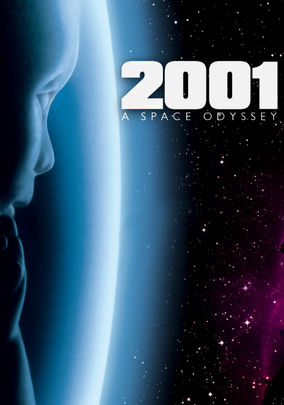
2001: A Space Odyssey-1968

2001: A Space Odyssey-1968

Director Stanley Kubrick

Starring Keir Dullea, Gary Lockwood

Top 250 Films #10

Scott’s Review #314

207856

Reviewed December 31, 2015

Grade: A

In my opinion, 2001: A Space Odyssey (1968) is a masterpiece, pure and simple, and must be seen repeatedly to let the message and experience sink in.

It is one of those films comparable to a fine wine – it just gets better and better with age and understanding, and this is palpable in deep thought, allowing the viewer to experience the rich taste of film art.

The delicious quality is meant to be savored and enjoyed- the slow pace and odd elements only enrich the film.

Needless to say, it is my favorite Stanley Kubrick film.

Simply an epic journey through space.

Made in 1968, and not 2001, the film challenges and breaks down barriers in film, as Kubrick makes a film that he wants to make, and the results are genius.

The film contains no dialogue during the first twenty or the last twenty minutes.

The film begins in the African desert millions of years ago as the evolution of man is apparent- two tribes of ape-men dispute over a watering hole. A black monolith appears, and one of the tribes is guided to use bones as weapons.

Millions of years later, we meet a team of scientists, led by Dr. David Bowman (Keir Dullea) and Dr. Frank Poole (Gary Lockwood), as they embark on a mission aboard the United States spacecraft, Discovery One, on a journey to Jupiter.

The ship is mainly controlled by an intelligent, talking computer named HAL 9000, often referred to as “HAL”. Hal boasts that he is “foolproof and incapable of error”.

As events unfold, the film dives into a study of humans versus technology in a cerebral game of mental chess.

The film is very tough to review analytically, as it is so intelligent and visually stimulating – it must be experienced. It challenges the viewer to think and absorb the events occurring.

Visually, it is breathtaking and still holds up shockingly well from this perspective. The use of Strauss’s classical music throughout, especially in dramatic scenes, is effective.

The stunning scene where David and Frank converse about their suspicions regarding “HAL”, as the intelligent computer system looks on, is incredibly compelling.

The scene is enhanced by the simple presence of an orange light, which seems a evoke myriad emotions (surprise, rage) in the viewer’s mind.

2001: A Space Odyssey (1968) is an enduring masterpiece.

Oscar Nominations: 1 win-Best Director-Stanley Kubrick, Best Story, and Screenplay Written Directly for the Screen, Best Art Direction, Best Special Visual Effects (won)

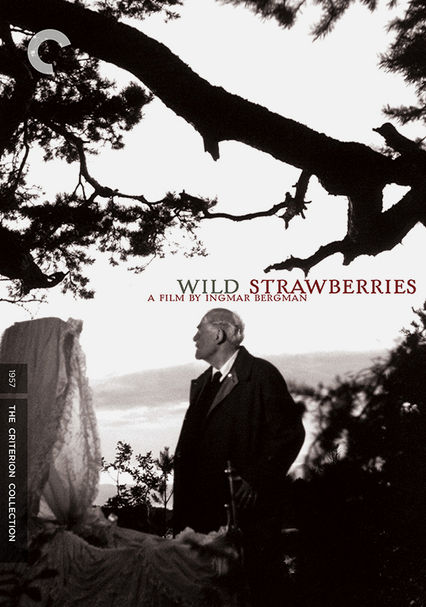
Wild Strawberries-1957

Wild Strawberries-1957

Director Ingmar Bergman

Starring Victor Sjostrom, Bibi Andersson

Top 250 Films #82

Scott’s Review #1,111

Reviewed February 10, 2021

Grade: A

A seventy-eight-year-old man (Victor Sjostrom) reflects on life, loss, and a million other emotions as he ponders his inevitable death in the Ingmar Bergman masterpiece Wild Strawberries (1957).

The film’s melancholy tone forces viewers to imagine themselves in the older man’s shoes and wonder how senior citizens view death.

One significant point is that it represents the geriatric demographic, which has traditionally been lacking in cinema.

It’s cerebral and reminds me of A Christmas Carol since an older man struggles over his forgotten and sometimes misbegotten youth.

Bergman creates genius on par with his most famous work, The Seventh Seal, also released in 1957. I’d list these two films as his very best and most inspiring.

Do older people fear death? Do they whimsically revisit their youth from time to time, or do they live with regret and unfulfilled desires?

My hunch is that it’s probably a bit of all.

Wild Strawberries made me think like the older man, and the effect was powerful. They made me worry about my death and relive my glory days.

Isak Borg (Sjostrom) begins to reflect on his life after he takes a road trip from his home in Stockholm to the distant town of Lund to receive a special award. Along the way, a string of encounters causes him to experience hallucinations that expose his insecurities and fears.

He realizes that his choices have rendered his life meaningless, or so he perceives it.

He is accompanied by his daughter-in-law Marianne (Ingrid Thulin), who doesn’t like Isak too much, is pregnant, and plans to leave her husband. They meet a trio of friendly hitchhikers led by Sara (Bibi Andersson), who reminds Isak of the love of his youth.

A bickering couple reminds him of his unhappy marriage, while his elderly mother reminds him of himself.

The best part is when the group stops at Isak’s childhood seaside home and imagines his sweetheart, Sara, with whom he remembered gathering strawberries but who instead married his brother.

Anyone who has returned to their childhood home or neighborhood can easily relate to the powerful memories. I pretended I was in Isak’s character, and several emotions occurred.

Sjostrom infuses a natural range of emotions. At first, crotchety and distant, I admired his sentimentality as he fondly recalls innocently picking strawberries on a summer day. How glorious and innocent it is to reminisce in a mundane yet monumental act.

Although he was an older man, he was once young. How quickly the years pass. I took this as a lesson to appreciate each day and experience. Sjostrom had me mesmerized.

Some find Izak unsympathetic. I found him incredibly likable.

Relationships are a strong element of Wild Strawberries. Izak muses over past loves, his mother, daughter-in-law, housekeeper, and hitchhikers. Peculiar is his relationship with his housekeeper, Agda, who is played stunningly well by Julian Kindahl.

Are they secret lovers or platonic friends? They seem like husband and wife.

While the story is astounding, the visual qualities of Wild Strawberries are exceptional.

The video content is crisp and clear, with very bright black-and-white photography. Each shot is mesmerizing and reminiscent of paintings.

There is so much going on in Wild Strawberries. The closest adjectives to describe the experience are hallucinogenic and mesmerizing.

The people gathered over a meal were young, fresh, and carefree. They all have lives ahead of them, and almost every viewer can recount a time when they felt that way.

It’s both nostalgic and sad to realize it doesn’t last, as Bergman makes so painfully evident.

The scene where Isak witnesses a hearse approaching is terrifying. When he realizes it is himself lying in the casket, it gives one a chill. The scene is creepy and powerful in tone and effect.

Wild Strawberries (1957) explores many facets of the human experience, including sorrow, joy, depression, acceptance, frustration, and fulfillment.

This is a work of genius and is highly recommended to anyone who appreciates excellent experiences in cinema.

Oscar Nominations: Best Original Screenplay

Golden Globe Nominations: 1 win- Best Foreign Film-Foreign Language (won)

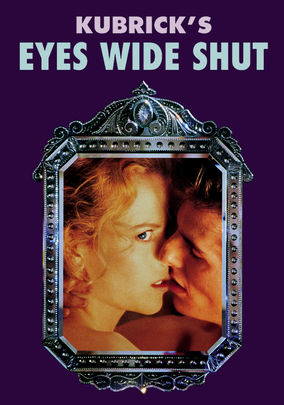
Eyes Wide Shut-1999

Eyes Wide Shut-1999

Director Stanley Kubrick

Starring Tom Cruise, Nicole Kidman

Top 250 Films #125

Scott’s Review #464

5670434

Reviewed August 14, 2016

Grade: A

Eyes Wide Shut is a film that I saw in theaters upon its release in 1999 and found fascinating, to say the least.

I have watched the film twice more in the years following, and it is even more fascinating today- it gets better and more nuanced with each viewing.

It is not an easy film to follow or explain, but it is rich in mystery and psychologically challenging.

A huge Stanley Kubrick fan, I found this film an eerie, plodding, cerebral psychological/sexual thriller.

The creepy piano score is very effective, and Tom Cruise and Nicole Kidman are both excellent as affluent, yet restless, thirtysomethings living in New York City.

Cruise plays Bill, a successful doctor, and Kidman his gorgeous wife, both sexually restless and escaping into fantasy and otherwise real dalliances with other partners as they bicker about fidelity and jealousy as they lounge in their underwear and smoke pot.

It’s a film about relationships, temptation, and desire, and does not always make perfect sense, but boy, will it leave you thinking.

The supporting characters are some of the most interesting I’ve ever seen, as they compel and mystify, and one wonders how they fit with the main characters.

The naughty Long Island orgy is as bizarre and surreal as one can imagine.

The movie reminds me somewhat of The Ice Storm (1997), Magnolia (1999), and Mulholland Drive (1992), which is the ultimate compliment as the aforementioned are film masterpieces.

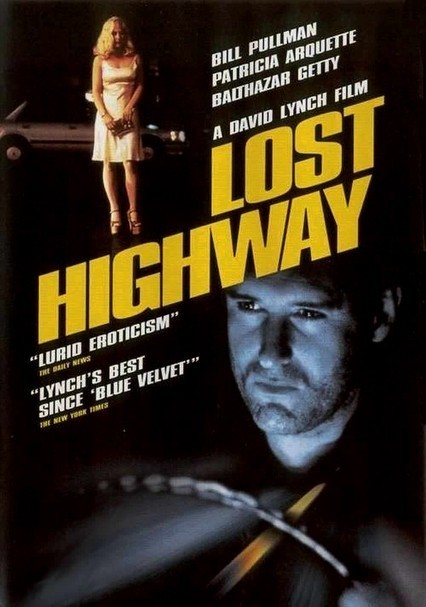
Lost Highway-1997

Lost Highway-1997

Director David Lynch

Starring Bill Pullman, Patricia Arquette

Top 250 Films #211

Scott’s Review #868

Reviewed February 17, 2019

Grade: A-

David Lynch, forever known for his odd and mind-boggling productions, released what might be his most bizarre offering, Lost Highway (1997).

Dreamlike and downright hallucinogenic, the film is impossible to dissect and is open to endless interpretation.

Characters morph into younger or different versions of themselves, or even into different characters entirely, making the film best experienced rather than overanalyzed.

The most enjoyment comes from the fabulous atmospheric elements.

Lost Highway is set in Los Angeles, where we meet saxophonist Fred Madison (Bill Pullman), a nightclub employee who lives with his glamorous wife, Renee (Patricia Arquette), somewhere in the Hollywood Hills.

The couple begins receiving envelopes containing VHS tapes of footage of their house, followed by more invasive tapes of them being filmed while sleeping in their bedroom.

Spooked, they enlist the help of a pair of incompetent detectives.

The events begin to grow more complex with the introduction of a menacing mystery man (Robert Blake) and sequences involving a dismembered Renee, and Fred’s subsequent incarceration for her murder.

Fred suddenly morphs into a young auto mechanic named Pete Dayton (Balthazar Getty), who is released into his parents’ care while being followed by the two detectives.

Pete embarks on an affair with Alice Wakefield, a mirror image of Renee, who is the mistress of powerful Mr. Eddy (Robert Loggia). Pete and Alice plan to escape together, leaving their troubled lives behind.

Any attempt to make more sense of the story than outlined above is fruitless, as a torrent of questions could be raised. The obvious ones are why does Fred turn into Pete (looking completely different), and why does Renee turn into Alice (looking similar)?

What do random scenes of a burning desert cabin mean? What does the bizarre and hazy lesbian sequence with Marilyn Manson have to do with anything?

Discerning the logic and attempting to unravel the mystery will lead to frustration.

The best advice is to immerse yourself in the film and let it manifest in your mind. The terms “dreamlike” and “hallucinating” are often used to describe films, but they are perfect adjectives for Lost Highway.

The stories do run parallel, so the challenge is not following each of them but rather understanding how they connect. The stories also merge in a circular pattern with a rhythmic effect and a satisfying ambiance that lured me immeasurably.

My favorite characters are Alice and Pete, largely because of the actors who portray them. Not appearing until the second half, Getty and Arquette infuse their roles with passion and energy.

I immediately rooted for them as a couple, as their tender and smoldering chemistry was immediately felt. Arquette blazes as a sexy temptress and Getty as the handsome and earnest man submitting to her prowess.

Eagle-eyed viewers may notice comparisons to Russ Meyer’s devilish sexploitation film Supervixens (1975).

The most notable are the dual character representations, the auto mechanic occupation, the locales (more than a few Los Angeles roads seem identical), and various sequences featuring a weightlifter, a gas station drive-up, or other eerily similar scenes.

Whether there is a direct correlation between the films is unknown, but it’s fun to observe.

The musical score and soundtrack are high points, adding both mystique and aggression through the featured hard rock songs. Marilyn Manson’s “I Put a Spell on You”, Rammstein’s “Heirate Mich”, and The Smashing Pumpkins “Eye” are used in important scenes.

The soundtrack release was a huge success on modern rock radio, achieving Gold record sales status.

At the time of Lost Highway’s release, the film was not well-regarded by critics and was dismissed as not making much sense.

In the decades following, the film has garnered more acclaim and, as with a fine wine, has aged well. The beautiful cinematic tone, creative design, and images have become more revered over time.

For a perplexing and cerebral experience, look no further than Lost Highway (1997), a delicious companion piece to the Lynch masterpiece, Mulholland Drive (2001).

Birth-2004

Birth-2004

Director Jonathan Glazer

Starring Nicole Kidman

Scott’s Review #1,124

Reviewed March 18, 2021

Grade: B+

Because of the film’s complex storyline, Birth (2004) is a tough sell for most cinema lovers.

A grown woman embarking on any romance with a ten-year-old boy will turn off viewers, though, can you even imagine if the genders were reversed?

I was fascinated by the premise and the endless possibilities of a conclusion.

I’m not quite sure what I expected to happen ultimately, but I felt slightly underwhelmed by the ending.

All in all, it is a daring effort that I wish had more payoff.

The first hour or so is extremely provocative.

Nicole Kidman excels at making the unbelievable material as believable as possible, and Jonathan Glazer directs the film very well, giving it a haunting, mysterious Stanley Kubrick vibe.

The director would come into name recognition following his 2013 masterpiece Under the Skin.

The film opens with a voiceover of an unknown man, a professor, lecturing about his disbelief in reincarnation. The audience then sees the man jogging through New York City’s Central Park, where he collapses and dies.

It takes Anna (Kidman) ten years to recover from the death of her husband, Sean (the professor), but now she’s on the verge of marrying her boyfriend, Joseph (Danny Huston), and finally moving on.

We suspect she may not be completely keen on marrying Joseph, but most of their relationship is unclear. We know that she aches for Sean.

On the night of their lavish engagement party, a young boy named Sean (Cameron Bright) turns up, claiming to be her dead husband reincarnated.

At first, she ignores the child, thinking it’s a joke, but his knowledge of her former husband’s life is uncanny, leading her to realize that he could be telling the truth slowly.

Anna is conflicted to say the very least, and Kidman effortlessly makes the audience believe that what is considered ridiculous might be true.

Is there a supernatural element here?

Her family members, led by her mother, Eleanor (Lauren Bacall), are disbelieving and antagonistic towards the boy for disrupting Anna’s life.

An issue is that, other than one supporting character, Clara (Anne Heche), who has a great opening sequence burying mysterious letters, the others have next to nothing to contribute to the story except to brood and get angry.

Bacall, in particular, is completely wasted in a role that any other older actress could have played.

Parallels to Rosemary’s Baby (1968) are hard not to make. Anna dons a similar pixie haircut to Rosemary. They both reside in swanky, old-style New York City high-rises with a ghostly, haunting feel.

The ambiance is a positive.

My favorite camera shot that Glazer includes is a lengthy one of Kidman’s Anna. In a close-up, the character’s reactions are on full display for what feels like several minutes. Kidman gets to show her tremendous range- tears, shock, realization.

I’ve noticed a similar shot in a handful of modern films, and it’s an actor’s delight- a viewer’s too!

The finale, without giving much away, is interesting to a point. The big reveal involving Clara is intriguing until the viewer backtracks and tries to add up all the events.

The fact is, they don’t add up, and I longed for something more concrete or believable.

There is no good payoff.

Birth (2004) doesn’t always add up to satisfaction, but it’s edgy, gloomy, and unpredictable, and I enjoyed those facets enough to recommend it.

This is not a mainstream film like Ghost (1990) with a similar theme- it’s much more cerebral and thought-provoking.

Kidman’s performance is the main draw here, but it’s tough to find a film in which she isn’t great.

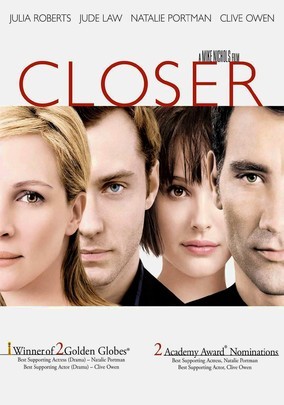
Closer-2004

Closer-2004

Director Mike Nichols

Starring Julia Roberts, Jude Law, Natalie Portman

Scott’s Review #605

Reviewed January 11, 2017

Grade: B+

Closer (2004) is a very odd, offbeat sort of film, yet it is strangely fascinating and reels you in as the story unfolds and more is revealed.

One will become engrossed in the characters as the film is rich in nuanced character development.

Closer is very adult and not for everyone, but if you enjoy character-driven films, it’s worth checking out.

Based on a play of the same name and featuring a star-studded cast to go along with several Oscar nominations, Closer tells the story of companionship, isolation, and betrayal.

It centers on four characters (Anna-Julia Roberts, Dan-Jude Law, Alice-Natalie Portman, and Larry-Clive Owen), each of whom spends the film either bedding, scheming, or being jealous of the others.

Purely a character study, the film shows many different emotions in each, which is its strength.

To the film’s credit, it is shot much like a play; however, it is just a tad slow-moving.

However, I adored the London locales and the film’s successful attempt to make the viewer uncomfortable and just a tinge disturbed.

Oscar Nominations: Best Supporting Actor-Clive Owen, Best Supporting Actress-Natalie Portman