Category Archives: Heist

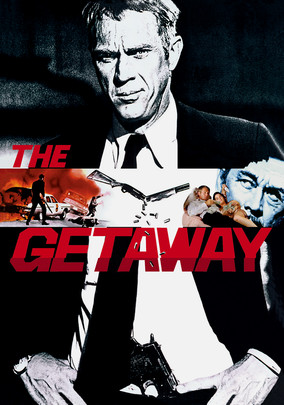
The Getaway-1972

The Getaway-1972

Director Sam Peckinpah

Starring Steve McQueen, Ali MacGraw

Top 250 Films #58

Scott’s Review #439
539604

Reviewed July 3, 2016

Grade: A-

The Getaway (1972) is a classic action film directed by Sam Peckinpah, known for films such as Straw Dogs and The Wild Bunch.

His films are known as “guy films” and are a rather violent experience.  The Getaway is no exception, though it is not immensely brutal either. Still, there is more than one macabre scene and one dastardly villain.

For fans of Peckinpah, The Getaway is a must-see.

The film features Steve McQueen and Ali MacGraw, who are perfectly cast as lovers Doc and Carol McCoy. Inescapable was their chemistry, and art mirrored life: the two were embroiled in a torrid love affair during the shooting, and later they married.

We meet Doc in a Texas prison, where his parole has just been denied. Doc and Carol decide to make a deal with corrupt businessman Jack Benyon to ensure Doc’s release. One stipulation is for Doc to participate in a bank heist with two of Jack’s men (Rudy and Frank).

The heist goes off, but things go awry, and Doc and Carol head for El Paso with a large sum of money, being pursued by Rudy and a double-cross attempt by Jack.

Rudy kidnaps veterinarian Harold and his young wife Fran (Sally Struthers) to aid him with his injuries, taking them along as he pursues Doc and Carol.

Amid the already complicated plot, a con man attempts to steal Doc and Carol’s money.

Doc and Carol are clearly the heroes of the film and are meant to be rooted for, and the characters work very well together. Yes, they are criminals, but they are portrayed as lovely and as not hurting anyone who does not deserve it. Doc does spare Rudy’s life at one point, and I think this only reinforces Doc’s appeal as an antihero.

The love story is also a significant aspect of the filmmaking, making Doc and Carol likable. A few sweet, tender scenes of their romance are mixed in, adding a nice balance to the otherwise testosterone-fueled events.

The Getaway features spectacular editing, particularly at the beginning of the film, where we watch Doc in prison, going through his day-to-day rituals, which are seamlessly interwoven with other stories in the movie.

The musical score matches perfectly with the editing, adding a provocative element of intrigue. These components add the necessary elements to a film like this- edge-of-your-seat!

I love the Texas setting.

Characters are constantly traveling to get somewhere- either by train, by car, or on foot- so we see much of the Texas countryside, almost giving The Getaway a Western flavor.

It is certainly a hot, humid environment, though McQueen always wears a sophisticated suit, and MacGraw looks stylish and put together.

And from a prop perspective, I never tire of seeing those early 1970s sedans driving at high speeds.

Unfortunately, as with most of Peckinpah’s films, women are not portrayed in a positive light, though Carol is one of the strongest of his female characters. Yet, in one tough scene, she is smacked around by Doc after he realizes she slept with Jack to ensure his release from prison.

The most confusing and weak character is Fran. In a strange bit of writing, she inexplicably falls madly in love with her kidnapper, Rudy, even as he abuses and humiliates her, while her husband is around. This is odd and tough to watch, and not the best part of The Getaway.

Her character is not developed well, and it is head-shaking that she feels any passion for Rudy.

The heart of the film belongs to Doc and Carol as they are on the lam for much of the time, and this is a successful part of The Getaway- hence the title. Will they get caught? Will they escape?

The characters remind me of Bonnie and Clyde, so we wonder if Doc and Carol will meet the same fate, but of course, we like them, so we do not want that.

The Getaway is a fast-paced, down-home, red-blooded sort of action film. It is stylized, gritty, and sometimes violent. The chicken wing scene between Rudy, Fran, and Harold starts light and then turns ugly, adding to the film’s unpredictable nature.

A supreme offering by Peckinpah.

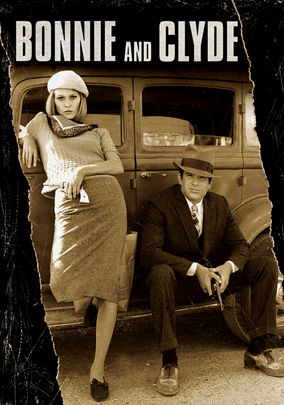
Bonnie and Clyde-1967

Bonnie and Clyde-1967

Director Arthur Penn

Starring Warren Beatty, Faye Dunaway

Top 250 Films #89

Scott’s Review #628

Reviewed March 25, 2017

Grade: A

Bonnie and Clyde is an excellent 1967 crime drama that is not only a great film but also successfully and surprisingly influenced an entire generation, becoming something of a rallying cry for the youth of the time.

Released in a tumultuous period in history (the Vietnam War, the Sexual Revolution, and Civil Rights), the film fits the times and was groundbreaking in its use of violence, blood, and sex.

The film holds up tremendously well to this day and is beloved by intelligent film lovers everywhere.

The film begins with snapshots of the honest Bonnie and Clyde- a duo of bank robbers who rampaged the southwest during the Great Depression.

Set in steamy Texas, circa the 1930s, the film tells its story.

Clyde Barrow (Warren Beatty) meets Bonnie Parker (Faye Dunaway) when he tries to steal her mother’s car one hot day. Instantly infatuated with each other, the steamy duo team up and become partners in crime.

Over time, they enlist others and become more successful bank robbers, with the stakes rising with each heist.

Rounding out the crew of criminals are gas-station attendant, C.W. Moss, and Clyde’s older brother Buck, played by Gene Hackman, along with his wife, Blanche (Estelle Parsons), an innocent-minded and sometimes hysterical preacher’s wife.

Bonnie and Clyde is a unique film in many different ways- the quick-cut editing style influenced Sam Peckinpah in his movies to come, and the film uses a fast-paced rat-a-tat-tat style that symbolizes the gunfire, a significant element of the film.

Blood spurts from victims’ bodies in a style never before seen on the big screen, which led to many filmmakers’ comfort with using increased violence.

You could say that Bonnie and Clyde took away the innocence of Hollywood films and shook all of the traditional elements inside out.

The film’s conclusion is one of the greatest in cinematic history.

Far from an idyllic, happy ending, the traditional one in those days, the law finally catches up with Bonnie and Clyde, with grim results for the pair, and their demise is gruesome but true to form.

We have fallen in love with the characters, so their hasty exit from this world is tough to stomach, and as they writhe and twitch with each gunshot wound, the bullets pummeling the bodies, the scene is a difficult one to watch.

The love story between Bonnie and Clyde is intense yet sweet, and the casting of Beatty and Dunaway is spot-on. Smoldering with sexuality- as Bonnie fondles Clyde’s gun, who does not see this as a phallic symbol- their relationship is fraught with stamina and emotional energy.

The two actors feed off of each other and fill the scenes with gusto. Their chemistry is part of what makes the film so great.

One of the best scenes is the shoot-’em-up showdown at a ranch where the robbers are hiding out. The scene is laden with intensity and violence.

As Buck is mortally wounded, Blanche is blinded and captured, soon to make a grave mistake in revealing one of the others ‘ identities.

Bonnie, Clyde, and C.W. barely escape with their lives, and their antics from this point become bloodier and bloodier. The cat-and-mouse play during this scene makes it the most suspenseful of them all.

Amid all the violence, a fantastic scene unfolds when Bonnie and Clyde meet at a secret location with Bonnie’s mother. A local townswoman, not an actress, was cast in the pivotal role of Bonnie’s mother, and the scene is emotionally charged.

The woman’s kindness and sensibility, and the sheer “regular person” she embodies, humanize Bonnie and Clyde, and ominously, their downfall is imminent.

A highly influential film, Bonnie and Clyde is a film that is still quite relevant, especially for those who appreciate good movies and rich, intelligently written characters who are flawed yet humanistic, layered with complexity.

This is what director Penn carves out, and the film is an all-time Hollywood classic.

Oscar Nominations: 2 wins-Best Picture, Best Director-Arthur Penn, Best Actor-Warren Beatty, Best Actress-Faye Dunaway, Best Supporting Actor-Gene Hackman, Michael J. Pollard, Best Supporting Actress-Estelle Parsons (won), Best Story and Screenplay Written Directly for the Screen, Best Costume Design, Best Cinematography (won)

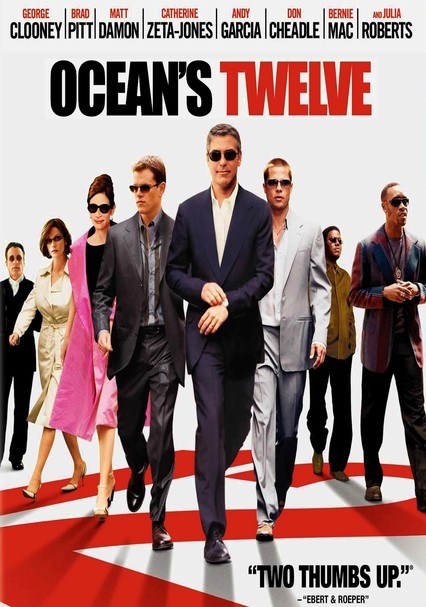
Ocean’s Twelve-2004

Ocean’s Twelve-2004

Director Steven Soderbergh

Starring George Clooney, Brad Pitt, Matt Damon

Scott’s Review #1,157

Reviewed June 30, 2021

Grade: B-

The casino heist gang is back together again for more action and adventure in a film that was only made because of the success of its predecessor, Ocean’s Eleven (2001).

The uninspiring title of the film, Ocean’s Twelve (2004) is a letdown as compared to the fantastic and enthralling 2001 film.

What felt like a purely original idea, even though it was a remake, now feels like stale bread that was fresh only yesterday.

Thankfully, Steven Soderbergh returns to the fold which adds some style and general good direction.

The story is slow to kick off and provides an implausible and unconventional ending that doesn’t work nearly negating most of the previous activity. There is something a bit irritating about watching a film with the knowledge that it was only made for one reason and the plot seems to be rushed and poorly thought out.

But that’s Hollywood.

Undoubtedly, George Clooney, Brad Pitt, Matt Damon, Julia Roberts, Catherine Zeta-Jones, and other top talent enjoyed the hefty paychecks they received. This is also perturbing as the performances seem ho-hum and inspired by the big bucks being deposited into big bank accounts for services rendered.

The inauthenticity all around is evident in lazy acting and writing.

The foil and mark, Terry Benedict, once again played by Andy Garcia realizes that the gang has robbed him of millions and demands the money back with interest. Unfortunately, much of it has already been spent.

Unable to come up with the cash, the crew must come together to pull off another series of heists, this time in Europe. Presumably, they are not well known there.

Being “forced” to do what the career criminals love to do is far-fetched.

Danny (George Clooney) and the gang hatch a plan to swap a Fabergé Imperial Coronation Egg for a holographic recreation. Linus (Damon) comes up with a second plan involving Danny’s wife, Tess (Julia Roberts), posing as a pregnant Julia Roberts to get close to the Egg and swap it.

They are foiled by Lahiri (Catherine Zeta-Jones) and a coincidentally present Bruce Willis, and the rest of the group are captured.

While it’s slightly clever having Bruce Willis and Julia Roberts appear as themselves especially when Julia Roberts plays another character in the film, it doesn’t work as well as it sounds on paper.

The story is way too convoluted and Ocean’s Twelve quickly turns into the sort of film you tune out of enjoying the non-story points more than the written word. In this case, that’s not a positive aspect.

The film’s successes, mainly the returning A-list cast, are also negative. While it’s fun to reconnect with familiar characters like Danny Ocean, Rusty (Pitt), and Linus, we know the characters too well and they become caricatures. Meaning, they behave exactly as one would expect them to.

Still, it is admittedly juicy and exciting to witness so many A-listers on one big screen especially when there is trickery, scheming, and just a hint of romance to be had.

I’ll also partake in just about any film that goes on location to Paris, Rome, Monte Carlo, and Amsterdam. It’s an orgy of European history and goodness adding cultural trimmings to a sub-par storyline.

Particularly inviting are the villa scenes in luscious Lake Como.

Ocean’s Twelve (2004) will please only those who are obsessed enough with the franchise to enjoy what is a retread of the 2001 film set in various parts of Europe instead of Las Vegas.

It isn’t nearly enough for me as most cleverness and bright and crisp writing are gone.

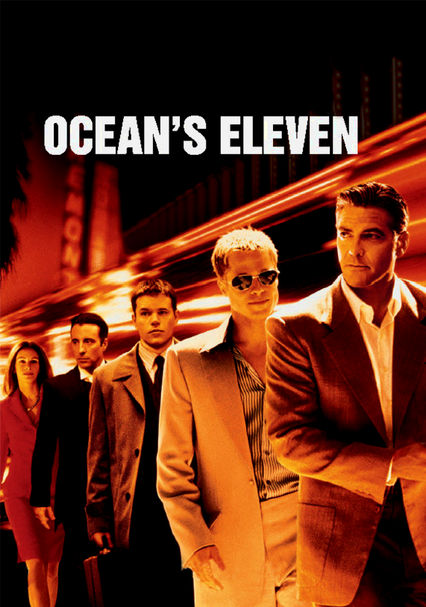
Ocean’s Eleven-2001

Ocean’s Eleven-2001

Director Steven Soderbergh

Starring George Clooney

Scott’s Review #1,105

Reviewed January 28, 2021

Grade: A-

Steven Soderbergh was awarded the Best Director Academy Award for his exceptional direction in Traffic (2000), one of my all-time favorite films.

He follows up that gem with a slick, commercial film that is stylish and looks cool.

It’s fast-paced, with quick editing, and is set in the dangerously appealing world of casinos, as a group of sophisticated thieves attempts to steal $160 million from a casino owner with whom they have a vendetta.

I expected a film of this type to be generic and by-the-numbers, but instead it’s unpredictable and unexpected.

Ocean’s Eleven (2001) is the first (and best) installment of the popular Ocean’s franchise and a remake of the 1960 Rat Pack film of the same name.

George Clooney was in his film prime and led the pack of A-list stars like Brad Pitt, Julia Roberts, and Matt Damon in a packed and brimming two-hour entertainment fest.

A nice touch is inviting two stars from the original, Henry Silva and Angie Dickinson, to appear as themselves.

Clooney leads the charge and embraces his status as a leading man with charm, polish, and style. He plays a handsome Danny Ocean, a man with a plan.

Less than one day into his parole from a New Jersey penitentiary, the thief is already traveling to California to plot his next move with his partner in crime, Rusty (Brad Pitt).

It’s tinged with revenge.

They abide by three rules: Don’t hurt anybody, don’t steal from anyone who doesn’t deserve it, and play the game like you’ve got nothing to lose.

Danny orchestrates his charges to pull off the most sophisticated, elaborate casino heist in history. And it will take place in glitzy Las Vegas on the night of a boxing match.

Providing the rules makes me think fondly of a similar proclamation in David Fincher’s 1999 film Fight Club, where Danny and the gang immediately feel sympathetic to me.

After all, they don’t intend to hurt anyone, and the money stolen will be from folks who are dastardly and might even deserve to be penniless.

Didn’t Jigsaw from the Saw films only kill those who harmed other people? Suddenly, their motives are clear and justified, making them the good guys.

As a bonus, the “victim” of the heist is the unlikable Terry Benedict (Andy Garcia), who owns three casinos and is worth billions.

Making the bad guys the heroes and Benedict the bad guy is clever and situates the players properly, so the audience knows who to root for.

As if the film doesn’t have enough treats, some drama is thrown in. Danny’s ex-wife, Tess (Julia Roberts), is Benedict’s girlfriend. Is she loyal to Danny or Benedict, or might she be playing both sides?

Loyalties are tested and questioned, and the intricate bank heist sequence is titillating and an edge-of-your-seat thrill ride.

The Las Vegas backdrop, with the casino’s bright lights, bells, and other elements, cements Ocean’s Eleven as one of the best in its genre.

It’s also tough not to root for Clooney, Pitt, and Damon in or out of character.

Ted Griffin writes the screenplay and adds some nice characters, more than one-note bank robbers or thieves.

Along with Soderbergh’s direction, which adds the nice atmospheric trimmings like the razzle-dazzle casino scenes, they make a great pair.

I love how Danny and Rusty recruit a team with specialized skills like mechanics, pickpockets, and an electronics and surveillance specialist. There’s even an acrobat!

This seems like an ode to the 1960s television series Mission: Impossible, as the team is carefully selected for their skills.

A highly entertaining popcorn film just perfect for a summer night, Ocean’s Eleven (2001) is sure to satisfy. The intention is to sit back and enjoy what is offered, and all the elements come together perfectly.

The culminating main event boxing match and subsequent twist catapult the film from pure entertainment to something more nuanced and exciting.

The film was a success at the box office and with critics, leading to two Soderbergh-directed sequels and a spin-off with an all-female lead cast, released in 2018.