Category Archives: Animals

Alligator-1980

Alligator-1980

Director Lewis Teague

Starring Robert Forster, Robin Riker, Michael V. Gazzo

Scott’s Review #1,491

¸â.

Reviewed August 18, 2025

Grade: B-

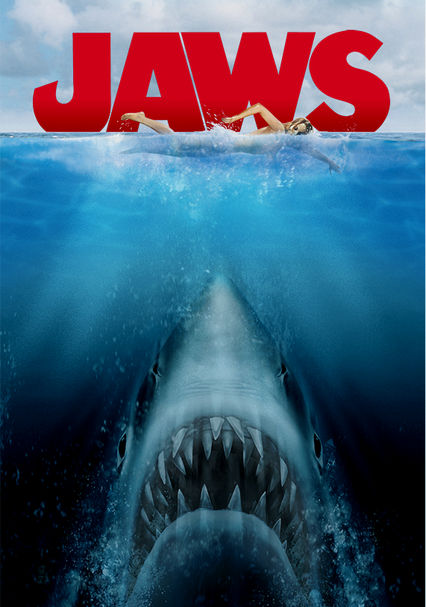
Alligator (1980) capitalizes on the Jaws (1975) and Jaws 2 (1978) craze with a similarly themed ‘creature that attacks humans’ idea.

The film’s musical score is essentially the same as Jaws’, and it includes a copied underwater camera shot of a victim in peril trying to reach a boat.

The late-night offering is adequate, though amateurish and cheaply made, with enough stock characters to make for a comical offering, whether intentional or unintentional.

The romantic chemistry between the two leads, Robert Forster and Robin Riker, is surprisingly genuine and sweet, which barely lifts this effort above mediocrity.

The kills are underwhelming and quickly become redundant as a leg or arm is chomped off a victim with little more than systematic style as the doomed person desperately attempts to escape being the giant alligator’s next meal.

Set in Chicago, the film follows Detective David Madison (Forster) and a reptile expert, Dr. Marisa Kendall (Riker), who team up to track an enormous, ravenous man-eating alligator flushed down the toilet years earlier as a baby.

The reptile terrorizes and attacks residents without capture after escaping from the city’s toxic sewers.

An inane explanation is provided, involving the alligator mutating to a humongous size due to feeding on animals used as test subjects for an experimental growth formula intended to increase agricultural livestock meat production.

The plot-driven story assuredly pairs David and Marisa as romantic counterparts from the get-go, so there is little doubt they will wind up together. A weak attempt at a spat between the couple is perplexing and a waste of time.

Thank goodness the actors have a decent amount of chemistry, which keeps things compelling during scenes when they traverse the metropolis trying to catch the reptilian murderer.

Marisa is well written as a self-assured, intelligent female doctor, though inexplicably, she lives with her overbearing mother. David has a mediocre backstory involving an incident in which he should have saved his partner’s life but failed to do so.

The death setups are outrageously satisfying as cookie-cutter stock characters quickly get their comeuppance. For example, the villainous Slade (Dean Jagger), an influential local tycoon responsible for the experiments, is crushed by a car flattened by the alligator.

This follows Slade’s selfish attempt to save his skin at the expense of another character, whom he locks out of his car.

Interestingly, Alligator features Jagger, an Oscar-winning actor (for 1949’s Twelve O’Clock High) and Oscar-nominated actor Michael V. Gazzo (for The Godfather Part II, 1974).

The grand finale is delicious, B-movie-style. The alligator goes on a rampage through a high-society wedding hosted at Slade’s mansion, eating a maid serving guests at the reception and killing Slade, the mayor, and Slade’s chief scientist for the hormone experiments, who was also his intended son-in-law.

The shrieking women and scrambling guests hilariously try to outrun the creature amid flying champagne glasses, wedding cakes, and delicate dining dishes.

This scene is worth the price of admission.

The rest of the experience is ludicrous, as the alligator goes unnoticed in a city of millions. He crawls down urban streets and hides in dark alleys at whim, occasionally eating a villain or two.

Like any horror film of the 1970s or 1980s, Alligator perfectly sets up a sequel, a la Alien (1979), with a spawn hatching in the sewers.

Playing more like a light comedy than a scary film, Alligator (1980) has moments of satisfaction. But most of it is an attempt to capitalize financially on an idea that has been used before, making it feel more like a ripoff movie than anything original.
Jaws 2-1978

Jaws 2-1978

Director Jeannot Szwarc

Starring Roy Scheider, Lorraine Gary, Keith Gordon

Scott’s Review #1,307

Reviewed October 13, 2022

Grade: A-

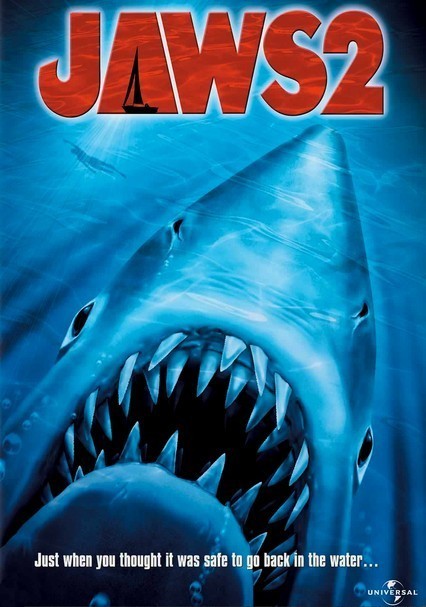
Because of the enormous critical and commercial success of Jaws in 1975, a sequel was created. Important to keep in mind is that in the mid-1970s, it was not yet common to produce sequels, especially if the director, Steven Spielberg, had no interest in participating.

Jaws 2 (1978) was an enormous box-office success, but the reviews were only mixed.

I adore the film, which mixes thrills with the horror genre and wisely sets up the kills like a slasher film.

The teenagers are savagely attacked and killed by the Great White shark, one by one, in a style that uses a lurking and effective musical score.

The film’s tagline, “Just when you thought it was safe to go back in the water…” has become one of the most famous in film history and has been parodied and homaged several times.

I want to assume it led to a healthy, almost now-mandatory helping of sequels to other successful films.

Unfortunately, Jaws 2 also spawned a couple more sequels of its own, which were piss-poor and laughable, but we won’t get into that here.

A fun fact is that the film was nearly as troubled as Jaws. The first director of the film, John D. Hancock, was deemed incompetent and replaced by Jeannot Szwarc.

Star Roy Scheider, who only reprised his role to end a contractual issue with Universal, was also unhappy during production and had several heated exchanges with Szwarc.

Maybe that should have been a sign not to make any more Jaws films.

Years after the shark attacks that left Amity Island reeling, Sheriff Martin Brody (Scheider) finds new trouble lurking in the waters and must rise to the occasion.

To add conflict, Mayor Vaughn (Murray Hamilton) wants to end the beach town’s poor reputation. But the sudden disappearance of a pair of divers suggests that something is up. When Sheriff Brody voices his warnings about holding an exciting sailing competition, everyone thinks he is suffering the effects of post-traumatic stress.

That is, until a shark fin is spotted in the water, sending the town into panic mode.

There’s no logical plot reason to make Jaws 2, but somehow I’m okay with that. The film entertains with enough frights and jumps to satisfy, and the formulaic approach works well.

Besides the enthralling final sequence when Brody must rescue his sons, Mike and Sean (Mark Gruner and Marc Gilpin), the opening sequence involving scuba divers and a female water skier is quite enticing and the best part of the film.

The musical score by John Williams, who fortunately returned to the fold, is fabulous and enhances any peril the characters face. The slick and clever approach gives the audience a clue that danger lurks nearby, but we don’t know when or where the shark will strike.

I mentioned slasher films earlier, and this formula is used in Jaws 2. As the teens set sail for the competition, it is good fun to wonder who will get killed and who will live to see another sunny beach day.

Despite Scheider not wanting to do the film, you’d never know it by his terrific acting. He doesn’t phone in his performance, and he brings macho swagger and muscle. He’s everyone’s favorite dad who only wants to save and protect.

Jaws 2 (1978) attempts to scare and entertain, and it succeeds. There is little character development, but it’s not the type of film that needs deep texture.

The reason to watch is to see folks who intend to enjoy the water get attacked and ripped to shreds.

Madagascar-2005

Madagascar-2005

Director Eric Darnell, Tom McGrath

Voices Ben Stiller, Chris Rock, David Schwimmer

Scott’s Review #1,247

Reviewed April 17, 2022

Grade: B-

Madagascar (2005) is a film that I found mildly entertaining but struggled to enjoy as much as others might.

Films with a target audience of ages thirteen and under are a tough sell for me because I don’t see them very often.

Having no children, I have few opportunities to join in on the children’s games or sit at the kiddie table and get in that mindset.

Nonetheless, this film somehow crossed my radar.

It’s lighthearted and juvenile, but playfully fun, sending a positive message of friendship and dedication. Not a fan of the zoo at all, my curiosity was piqued at how this angle would be represented, if at all.

Would the zoo’s captivity face off against the natural African wildlife?

The screenwriters tread carefully, keeping their audience in mind, and don’t go for any deep messages or environmental or animal issues, playing it quite safe.

Madagascar suffers from blandness and predictability, knowing that the audience isn’t quite ready to think outside the box, and their parents will obediently sit beside them, watching the film.

The result is a film brimming with possibilities that it never realizes. It’s a ready-made family film and nothing more.

Alex the Lion (Ben Stiller) is the king of the urban jungle and the main draw at New York’s Central Park Zoo.

He and his best friends, Marty the zebra (Chris Rock), Melman the giraffe (David Schwimmer), and Gloria the hippo (Jada Pinkett Smith), have spent their lives at the zoo, with admiring fans and tasty meals provided for them.

In their minds, they have it pretty good.

Yet Marty yearns for more and lets his curiosity get the better of him when he escapes the zoo to explore the world.

He and his friends wind up aboard a ship back to Africa, are then shipwrecked on Madagascar, and are left to fend for themselves in the wild.

They face dangers and allies during their adventures and wrestle with whether to return to the zoo or remain in their natural habitat.

There is plenty of humor to occupy the crowd, but most of the jokes are tepid or fall flat altogether. They have very little substance to offer, but rather are silly gags meant to keep the adventure going.

Big stars like Rock, Schwimmer, and Stiller are cast most likely to appeal to parents forced to go to the show with their kids.

Recognizable voices always sell tickets in the animated world.

Secondary characters work better than the main cast. Sacha Baron Cohen as King Julien XIII is a standout.

Mildly entertaining and soft touch in its approach, Madagascar (2005) left me feeling dull and yearning for something a bit more challenging and robust in the field of kids’ films.

Its intent is merely to entertain rather than challenge, so the result is a middle-of-the-road experience for me.

I’ll take the Toy Story (1995-2019) films any day.

Jaws-1975

Jaws-1975

Director Steven Spielberg

Starring Roy Scheider, Richard Dreyfuss, Robert Shaw

Scott’s Review #1,240

Reviewed March 28, 2022

Grade: A

The directorial breakthrough by the iconic Steven Spielberg is Jaws (1975).

The film is such a legendary and familiar project that even stating the name to pretty much any human being immediately conjures images of a man-eating great white shark and the unforgettable ‘duh-duh, duh-duh’ musical score.

It’s the film that famously made people afraid to go into the water, just as Hitchcock’s 1960 masterpiece, Psycho, made people afraid to take a shower. When I have to be near the ocean, I always think of this film.

Jaws is a hybrid horror/thriller/adventure/action film, whereas the subsequent sequels were all straight-ahead horror films that cast more teenagers, and some better than others.

Spielberg teaches a valuable lesson that much can come from very little and that a small budget can create greatness. What he accomplishes with Jaws is admirable, to say the least.

With Jaws, the story is more about the attempts of three men to destroy a killer shark and their relationship with the shark itself. The scary aspect, always terrific in horror, is that we do not know what the shark’s motivation is.

Why does it kill?

It’s a brilliant film that holds up well decades later, despite the shark feeling less authentic over time. But the time a film is made must always be kept in mind.

When one summer day, a young woman is killed by a shark while skinny-dipping near the New England tourist town of Amity Island, police chief Martin Brody (Roy Scheider) wants to close the beaches.

He comes into conflict with the mayor, Larry Vaughn (Murray Hamilton), who overrules him, fearing that the loss of tourist revenue will negatively affect the town during its summer season.

Dismissed as a mere boating accident, the great white shark then kills a young boy in full view of a beach crowd, resulting in panic and mayhem. It’s as if the shark is determined to be taken seriously.

Oceanographer Matt Hooper (Richard Dreyfuss) and grizzled ship captain Quint (Robert Shaw) offer to help Brody capture the killer shark, and the trio engages in an epic battle with the beast.

Jaws is a film that can be viewed multiple times and provides sheer pleasure each time. Forgetting the horror elements, the film provides adventure and heart-pounding thrills per minute once the men dare to try and foil the shark.

The fun, as in any film of this kind, is not knowing when or where danger will strike, only that it inevitably will come.

Scheider excels in his household name-making role as the determined police chief. He cares deeply about the townspeople and is therefore a likable hero. During frequent scenes, he gazes out to the water, a troubled look on his face, pained and feeling responsible for the deaths.

The audience empathizes with him.

Lorraine Gary, who would later play a lead role in poorly received films, is terrific as the supportive yet challenging wife, Ellen. She is the yin to his yang, and it comes across on-screen.

The best scenes of the film are the very first one, when the girl is eaten by the shark, and the later one, when Brody yells at everyone on a crowded beach to flee the water. Munching on the first victim, this is the scene where the dreaded music makes its debut.

From this point, the audience knows that hearing this music means the shark is nearby.

In the other scene, the panic caused is breathtaking and palpable, and sympathy is felt for Brody. He obediently takes the blame for the chaos and the deaths and makes it personal when his son is victimized. The scene sets the tone for the scramble and mayhem.

Jaws (1975) has it all: adventure, thrills, horror, action, a hero, and blood. The technical aspects are astounding, with underwater sequences and effects that remain viable.

It arguably created what has come to be known as the summer blockbuster.

Oscar Nominations: 3 wins-Best Picture, Best Film Editing (won), Best Original Dramatic Score (won), Best Sound (won)

Year of the Dog-2007

Year of the Dog-2007

Director Mike White

Starring Molly Shannon

Scott’s Review #1,131

Reviewed April 9, 2021

Grade: B-

Comedienne Molly Shannon stars in Year of the Dog (2007), a quirky independent film that can be classified as a hybrid of comedy and drama.

It’s peculiar, sometimes being very creative and nuanced while other times feeling generic and clichéd. Somehow it’s not predictable either- a plus.

It’s not the cute, sentimental film the premise might lead one to believe it is, and at times it’s downright dark and depressing.

A story centering around dogs seems pretty cool, but it usually conjures up a pitifully dreary family-style affair with a husband, wife, two cookie-cutter kids (a boy and girl, naturally), and some story and drama involving the family pet.

And, of course, a happy ending. Thankfully, Year of the Dog bears little resemblance to that type of film.

While it could have been more cohesive and less messy, the film deals with the death of a pet in interesting ways, and the effort is evident. While it’s not a downer, it’s not cheery either.

After her beloved beagle, Pencil, dies unexpectedly when she lets it stay outside all night, an administrative assistant named Peggy (Shannon) strives to find ways to fill the void in her life while blaming herself for his death.

She becomes lonely and despondent, finally bringing in treats for her co-workers and fussing over other people’s kids. An ill-advised love affair with a gun fanatic (John C. Reilly) leads to more misery, causing Peggy to go off the deep end and change her life completely.

Shannon, unsurprisingly, is the best part of the film, though she doesn’t quite cut it as the lead. She is cast perfectly as the oddball secretary with no life outside of her pet dog, but isn’t she better as the interesting sidekick?

It’s tough to imagine another actress being as believable in the part, and her comic timing is on fire. The dramatic parts are a bit of a stretch, and I like her better in comedic situations.

The supporting characters are what Year of the Dog lacks. None of them is very interesting.

Laura Dern and Regina King are reduced to caricature types as the loyal best friend, Layla, and the cold sister-in-law, Bret, respectively. Layla is only interested in finding romance for lonely Peggy, while Bret barely notices Peggy’s suffering.

Yawn!

Characters like these occur so often in stock comedies that I can hardly keep count. Talents like Dern and King deserve better than one-note characters.

Reilly, as the intended love interest, has no chemistry with Shannon, and it’s obvious from the start that Al is written as the foil to Peggy, opposite in every way.

It’s just another standard cliché screaming from a mile away. Peggy dates Newt (Peter Sarsgaard), but the romance isn’t there either.

Where the film gets both interesting and lost is when Peggy becomes an animal rights activist. It sets up Year of the Dog as a message film, which never really works.

Peggy ruins furs, attempts to show children a slaughterhouse, and spontaneously adopts fifteen dogs because another injured dog dies.

It just doesn’t flow together with the comedy stuff. Especially when the ending takes Peggy in yet another direction.

It’s like the filmmakers decided to try and roll things up in a neat little bow, but instead have a sloppily wrapped present with a nice bow on it.

Director Mike White, also a producer and writer, creates a great concept, but Year of the Dog (2007) hardly lights the world on fire.  The finale is too sentimental, and too many cliches surface as the action plays out.

Shannon is the only interesting character, and the supporting players are stock-written.

White also penned School of Rock (2003), which is a better film.

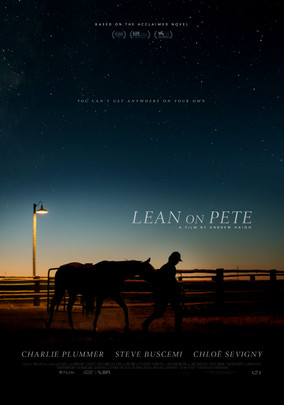
Lean on Pete-2018

Lean on Pete-2018

Director Andrew Haigh

Starring Charlie Plummer, Steve Buscemi

Scott’s Review #747

Reviewed April 24, 2018

Grade: B+

Lean on Pete (2018) is a heartbreaking and emotional slice-of-life film written and directed by British director Andrew Haigh.

The film centers on the relationship between a boy and a horse, so the heartstrings will be tugged a lot as the viewer is taken on a journey as the protagonist struggles through both pain and triumph.

While slow-moving and matter-of-fact, the film celebrates excellent writing and good story chapters, perfectly nestled into the independent drama genre.

Based upon the novel of the same name—reportedly a much darker experience—actor Charlie Plummer portrays Charley Thompson, a fifteen-year-old boy living outside of Portland, Oregon, with his troubled father.

His mother has taken off for parts unknown.

As his already complicated life turns upside down after a violent attack, Charley becomes increasingly attracted to the world of local horse racing and becomes involved with a shady horse trainer, Del Montgomery (Steve Buscemi).

There, he befriends and falls in love with an aging horse named Lean on Pete, who sadly is destined for the slaughterhouse in Mexico.

The film is about Charley’s journey and determination to survive while facing seemingly insurmountable odds and obstacles. The intriguing aspect of Lean on Pete is watching what Charley experiences and hoping against hope that he will come out unscathed and undamaged.

The youngster aspires to reach his estranged aunt, whom he knows only to have been living in Wyoming as a waitress. How on earth will he be able to find her? If he does reach her, will she welcome him with open arms, as he hopes, or will he suffer more defeat?

Several key aspects struck me as I watched this film. Charley embarks on his travels to find his beloved aunt, with Lean on Pete in tow, and encounters many individuals who either aid or hinder his intentions.

However, the common theme of waitresses continues to be portrayed—for starters, his aunt is referenced as working as a waitress at a bar. When Del gives Charley some fatherly advice, he implores him that the best women have always worked as waitresses.

On the road, he is treated kindly by two different waitresses—one of whom gives him free dessert, the other gives him a major break. I am not sure why Haigh chose to add this to the film, but it is a nice touch and effectively gives the story a warm, blue-collar sensibility.

Another intelligent decision Haigh makes is to keep the focus on Plummer and Charley’s facial expressions and reactions during pivotal scenes- for example, a scene where Charley is painting a house for extra money is essential.

As he hears a jovial father and son playing outside, Haigh shoots Charley’s reactions to this poignant scene rather than deciding to show the father and son. Hearing their pleasure is enough to elicit a look of pain on Charley’s face, rather than a blatant scene of said father and son shoved down the viewer’s throat.

Enough praise cannot be given to young talent Plummer, who gives a layered performance that will surely make him a star in future years.

The actor possesses an earnest, trustworthy sensibility, making him a likely hero in any film he appears in. Furthermore, he quietly gives Charley depth with various emotions, including disappointment, fear, and anger at his predicament.

The supporting cast members give well-acted performances that add to the overall meat of the story. As grizzled, yet responsible Del, Buscemi sinks his teeth into a role that allows his sarcastic humor and wit to take center stage, and he is perfect.

Chloë Sevigny, like Bonnie, a female jockey who befriends Charley, yet also gives it to him straight with lessons on life’s hard knocks, offers a satisfactory performance.

Lean on Pete (2018) is a quiet film that elicits an emotional response from its intended audience by giving firm texture to the story and fantastic cinematography of the western United States landscape.

Viewing a likable young adult in constant turmoil seems to be a complex subject, but instead, it is rather beautiful and inspiring, as captured by Haigh’s piece, instead of a complete downer as it might have been.

The film is a tale of a journey and struggle that accomplishes what it sets out to achieve.

Piranha 3D-2010

Piranha 3D-2010

Director Alexandre Aja

Starring Richard Dreyfuss, Elisabeth Shue, Ving Rhames

Scott’s Review #529

70108986

Reviewed November 29, 2016

Grade: C-

2010’s Piranha 3D is a tongue-in-cheek horror comedy that saves itself from being a complete drivel by having some sense of humor.

Remarkably, it stars some decent talents- Richard Dreyfuss, Ving Rhames, and Elisabeth Shue.

The film is pure fluff- not high art in the least, with no message or purpose to be found.

The film is terrible, but kind of fun at the same time. It’s camp and not to be taken at all seriously.

The plot is simplistic and standard horror fare- a school of piranhas are unleashed after an underwater earthquake, kill a fisherman, and ravage a college vacation party on a lake.

The college kids come to Lake Victoria to party and lounge on the beach, and typically, are dressed precariously. They are unceremoniously ripped to shreds by the angry and hungry killer fish.

Shue and Rhames must have hit rough times, and have required a paycheck to star in this. They play a Sheriff and Deputy- laughably unbelievable- as they try to protect the beach-goers from a grisly fate.

Dreyfuss plays a ridiculous and unnecessary role as the aforementioned fisherman.

On a serious (and sour) note, the objectifying of women is shocking in this day and age. Haven’t we seen enough stereotypes in one lifetime?

A few cool kills and humor, but Piranha 3D (2010) is a dumb, popcorn horror film.

Babe-1995

Babe 1995

Director Chris Noonan

Starring James Cromwell

Scott’s Review #475

268776-1

Reviewed September 9, 2016

Grade: B

Babe (1995) is a cute, charming family film about a pig who becomes a hero while living on a farm with a family of other animals, a farmer, and his wife.

It is not a risky film from a story perspective- any doubts about a happy ending?- though there are props for some visual creativity.

And let’s face it- the film is sweet and heartwarming with not a mean bone in its body.

The film is an inspirational one, nice for kids no doubt, and the visual effects, i.e., how they edited the animal movements with voices successfully, are well done and not tacky.

The film is predictable and harmless, and I’m not sure I agree with the Best Picture or Best Supporting Actor (for James Cromwell) nominations it garnered, but it was enjoyable all the same.

Oscar Nominations: 1 win-Best Picture, Best Director-Chris Noonan, Best Supporting Actor-James Cromwell, Best Screenplay Based on Material Previously Produced or Published, Best Art Direction, Best Film Editing, Best Visual Effects (won)