Category Archives: Martial Arts

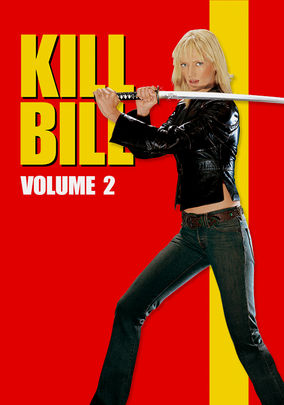
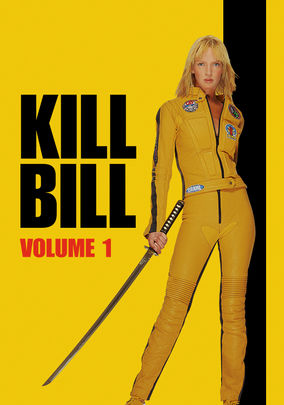
Kill Bill: Volume 1 and Volume 2-2003/2004

Kill Bill: Volume 1 and Volume 2- 2003/2004

Director Quentin Tarantino

Starring Uma Thurman, David Carradine

Top 250 Films #98

Scott’s Review #322
6003123660032563

Reviewed January 3, 2016

Grade: A

Despite being released as separate films (Fall of 2003 and Spring of 2004), Kill Bill: Volume 1 and Kill Bill: Volume 2 are one grand, sprawling feature.

The films were shot as one, but at a running time of over four hours, it was impossible to release them as one, so director Quentin Tarantino decided to release his masterpiece martial arts film as two sequential films.

I have decided to review them as one since Volume 2 is a clear continuation of Volume 1.

From a story perspective, Kill Bill is a basic revenge thriller. The plot is not complex nor ingenious and is rather ordinary containing B-movie components- think the really bad Kung-Fu films of long ago.

What makes Kill Bill an extraordinary masterpiece, however, is the style that exudes from the film, thanks to the direction and creation of Tarantino.

The film is brimming with good flavor and crackling dialogue of an intelligent sort.

Characters have long conversations with each other-not for redundancy’s sake- in between the endless martial arts and bloody sequences.

We meet our heroine, The Bride (Uma Thurman), in a chapel in El Paso, Texas. About to be married to her groom, the entire wedding party is suddenly assassinated in a bloody fashion by the Deadly Viper Assassination Squad.

Their leader, Bill (David Carradine), shoots The Bride after she reveals to him that she is carrying his baby.

The film flashes forward four years later- The Bride has survived the massacre but has been comatose ever since. When a hospital worker rapes her, she escapes and vows revenge on each one of her attackers- the revenge culminating with Bill.

Her path of destruction leads her to Japan.

Like most of Tarantino’s films, Kill Bill is divided into chapters and often goes back and forth from past to present.

The brilliance of Kill Bill is its pizazz. We know The Bride will get her revenge on the assassins, we just do not know in what way or how bloody the slaughters will be.

The film contains copious amounts of blood and swords and machetes are everywhere to be found.

The slow drawl dialogue as The Bride has conversations with her prey before she kills them, oftentimes ends in a big fight scene. Her first revenge, against Vernita (Vivica A. Fox), is unique in that it takes place in Vernita’s kitchen as her young daughter is happily eating her breakfast cereal.

The entire battle ensues in the kitchen and we are left watching blood and cereal.

It is Tarantino’s unique style of filmmaking and storytelling, adding violence, and long character conversations, that give Kill Bill, and all of his other classic films, his unique brand, and stamp of approval.

I dearly hope he continues to make films that challenge the norm, for years to come.
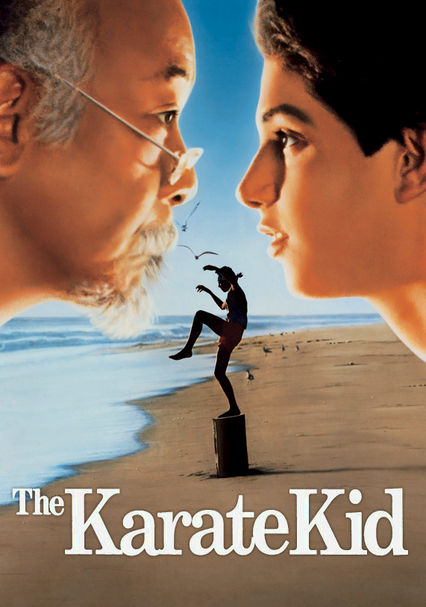
The Karate Kid-1984

The Karate Kid-1984

Director John G. Avildsen

Starring Ralph Macchio

Scott’s Review #1,241

Reviewed April 2, 2022

Grade: B+

The Karate Kid (1984) is a wholesome and predictable film from the commercial era of 1980s cinema.

With a clever marketing pitch about a bullied boy overcoming obstacles, the film is utterly predictable. But the warm message and chemistry between the two leads make the film work marvelously.

It’s a truthful film that showcases the power of friendship.

The film was a smash at the box office, becoming one of Hollywood’s biggest sleeper summer hits of 1984, making the lead actor, Ralph Macchio, an enormous star and household name.

It also successfully brought karate to American households, sparking a new trend and appreciation for Asian sports.

Three tired sequels before the franchise finally ran out of steam. A relaunch emerged in 2010 with mixed results.

Daniel (Macchio) moves to Southern California with his mother, Lucille (Randee Heller). Still, he quickly finds himself the target of a group of bullies who study karate at the Cobra Kai dojo.

This intensifies when he becomes smitten with the ex-girlfriend (Elisabeth Shue) of the lead bully, Zabka (Johnny Lawrence), who vows revenge on Daniel.

Fortunately, Daniel befriends Mr. Miyagi (Noriyuki “Pat” Morita), a kindly repairman who is a martial arts master himself. Miyagi takes Daniel under his wing, training him in a more compassionate form of karate, and prepares him to compete against the brutal Cobra Kai.

The Karate Kid is sweet but never too saccharine, and it’s easy to compare to Rocky (1976).

In a clear example of manipulation and copycatting, Robert Mark Kamen, who wrote the screenplay, was instructed to write something similar to Rocky, which won the Academy Award for Best Picture.

Avildsen also directed that critically acclaimed film.

The result is Rocky-lite. The Karate Kid would be a great warm-up film before the headliner, Rocky, takes the screen.

The mission is to tell a story about an underdog rising to glory while staying true to himself. The Karate Kid is a product, but it is extremely likable and a fist-pumping good time.

It’s not the sort of film one necessarily needs to see repeatedly, nor will it be studied in film school.

The main reason The Karate Kid works is the chemistry and connection between Macchio and Morita. The latter is terrific casting, since Morita was usually known for comedic roles, but he plays against type in this memorable role.

His character is kind and humble, and it’s impossible not to fall in love with him. As a mentor, he coaches Daniel on valuable, truthful life lessons.

Macchio surprisingly carries the film. Handsome and charismatic, he also represents anyone who has ever felt like an outsider or different from everyone else. He’s the boy next door but with an ethnic overtone.

He is clearly different and, therefore, disliked by some.

The elements that don’t work as well are the traditional love triangle, hardly a triangle because one of the three is the villain, and the stereotypical nature of the bully gang.

Shue plays her part well, but the romance between Ali and Daniel is the supporting act to the fight scenes, which inevitably show up mostly towards the end of the film.

The finale feels familiar in sports-type films because it’s too obvious how events will play out. Surprisingly, though, it’s a satisfying payoff as every character wins out, even the villainous Johnny.

Though he is soundly defeated, he learns a lesson from Daniel and comes to respect him. So, he repents.

It’s a powerful message that stayed with me and made me appreciate the approach to valued storytelling.

Safe and sturdy for a PG audience, The Karate Kid (1984) may feel dated and struggle to resonate with modern audiences, but the message remains poignant and fresh—hard work, determination, and respect equal success and satisfaction.

This may be a point easy to ridicule and pick apart, but the film works well.

Oscar Nominations: Best Supporting Actor-Pat Morita

Golden Globe Nominations: Best Supporting Actor-Pat Morita