Category Archives: Arabic

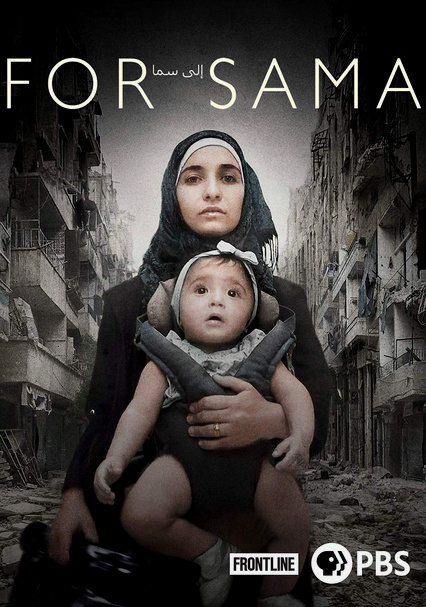
For Sama-2019

For Sama-2019

Director Waad al-Kataeb, Edward Watts

Starring Waad al-Kataeb, Hanza al-Kataeb

Scott’s Review #1,044
Reviewed July 25, 2020

Grade: B+

The wonderful thing about documentaries is that a viewer can absorb and learn something they have not been exposed to and know little or nothing about.

Aware via news outlets of unrest in Syria, For Sama (2019) personalizes and humanizes the battles as the film chronicles the life of a young Syrian woman and her husband, both rebels, and he a doctor, with a young daughter born and raised amid the war-ravaged city of Aleppo from 2011-2016.

For Sama is horrifically brutal and unkind at times, but to soften the experience would be to do an injustice to those on the front lines living with war every day.

The viewer should see firsthand the inhumanity and terror imposed on innocent civilians before they become cavalier about the effects of war.

The film bravely shows both human suffering and death, including dead children. Waad al-Kataeb wrote, produced, co-directed, and stars in this brutal yet hopeful production.

She also narrates it.

Waad al-Kataeb focuses on five years of living in Aleppo, Syria, before and during the infamous Battle of Aleppo, a major military confrontation between the Syrian government and its opposition.

She is a marketing student when the documentary begins, and highly intelligent. Waad al-Kataeb meets and falls in love with Hamza, a skilled doctor whose wife has already fled for safety, leaving him behind.

Waad gives birth to her first daughter, Sama, and navigates motherhood, all while the conflict begins to engulf the city.

Waad and Hamza work at one of the few remaining hospitals in the city, facing daily agonizing decisions whether to flee to safety or stay behind to help the innocent victims of war.

Despite having Sama and later becoming pregnant again, they cannot bring themselves to leave, as it would be abandoning those who rely on them. The documentary features their friends who also stay on, refusing to leave the city they still love.

The group tries for brief moments of pleasure, sitting around and chatting, all while the constant threat of bombings is a daily occurrence.

Notably, For Sama is told from the perspective of the female. This is unusual in the war genre, whether it be a film or a documentary feature, as it is more common for it to be male-driven.

When she provides narration, Waad exudes a warmth and kindness that is hard not to fall in love with. She cares for Sama, never knowing if today will be their last day alive.

In one frightening moment, Waad quickly gives Sama to another person to hide when the bombs start hitting the hospital, determined that Sama’s life might be spared if she is thought to be an orphan, rather than the spawn of hated rebels.

Props must be given for getting this project off the ground and released, rewarded with wide acclaim and recognition. In a country as volatile as Syria, it is inspiring to have someone like Edward Watts, an English filmmaker, able to follow through with For Sama. Amazing is how some footage, especially during the bombings, was spared.

Waad explains how determined she was to film as much as possible, even during very personal moments. In the most heartbreaking scene, a pregnant woman is injured during a bombing, and her lifeless baby is born.

After minutes of real-time uncertainty, the baby finally coughs and gags and is alive. Watts and Waad go to horrific depths to show how close the baby comes to dying, and the scene is fraught with sadness and finally relief. I have never seen moments as chilling as these in any documentary.

Other scenes feature young boys whose playmates or siblings have just been killed by bombs, and their emotional exhaustion and grief.

Thankfully, the documentary attempts to incorporate as many moments of human connection as possible, showcasing the laughs and good times that can be mustered when fear is the main ingredient of daily life.

For an experience that bears the ugliness of war, the constant fear, and peril, and a humanistic story of raising one’s child during frightening times, For Sama (2019) also shows the love and dedication to one’s flesh and blood, as well as the beauty of spirit and perseverance during tragic times.

It is heartbreaking, humanistic, and inspiring.

Oscar Nominations: Best Documentary Feature

Independent Spirit Award Nominations: Best Documentary
The Insult-2017

The Insult-2017

Director Ziad Doueiri

Starring Adel Karam, Kamel El Basha

Scott’s Review #815

Reviewed October 1, 2018

Grade: B

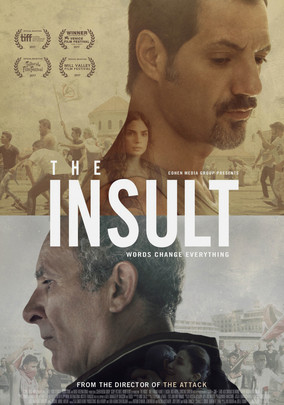
A Lebanese film nominated for the Best Foreign Language Film Academy award, The Insult (2017) offers its audience what I would categorize as a message film.

A battle of cultures and religions leads to chaos and controversy, culminating in an embattled court case as we also get to know supporting characters.

While the film is above average, it is also too glossy and sometimes plays out more like a television series- with dramatic effects and plot developments for miles.

Still, the film is a worthy watch.

The main character, Tony Hanna (Adel Karam), lives with his pregnant wife, Shirine, in a small Lebanese village. Tony works as an automobile mechanic but is a proud member of the Christian community, attending rallies and events.

His village employs Palestinian refugees to perform maintenance repairs, which irritates Tony. When a verbal altercation with middle-aged refugee Yasser (Kamel El Basha) occurs over a broken gutter, a failed apology results in physical violence as the situation rapidly escalates.

The courtroom drama, while compelling, seems a very familiar story.

Other recent foreign-language films, such as A Separation (2011) and Gett: The Trial of Vivian Amsalem (2014), use similar plot devices of family conflict that end up in the courtroom.

Those films are better written and feel more authentic and raw than The Insult. Throughout the film, I kept telling myself I was not watching a Middle Eastern version of Law & Order, but that is what it felt like.

I felt little sympathy for Tony, and I was unsure if we were supposed to feel anything for him. With his brooding nature and populist attitude, he is initially written as downright unlikeable.

I assume the intent was to soften the character over the film’s length when he briefly comes to Yasser’s aid and helps start the man’s car. However, Tony soon reverts to his original stubborn nature.

Yasser is a much more likable fellow, albeit with a temper. Hurling curse words at Tony is why the tension between the two men begins in the first place, and attempted apologies only lead to miscommunication between everyone.

But Yasser gets my vote for the most compassionate character.

In the supporting roles, an interesting (though perhaps not completely necessary) side story exists as the embattled lawyers are revealed to be father and daughter.

The major problem with The Insult is that the entire story seems plot-driven, and each step is created to create a way to build or add tension.

For example, a speeding motorcycle angrily side-swipes Tony and his wife.  The partners are then in peril because their daughter is born prematurely due to stress.

Situations and tensions could have been quickly resolved or smoothed under different circumstances. Therefore, despite some good drama, the tone of the films feels less than authentic and manipulative.

Still, the writing team introduces the audience to the turbulent world of Middle Eastern politics in a way that undoubtedly results in thought-provoking views and exposure to opposing ideas.

The film also provides a distinct hopeful slant at the conclusion to avoid sending a dour message. The direction is that people can come together as one peaceful group, but it will not be easy.

The Insult (2017) is not a bad watch. It compels the viewer to witness a fascinating story of differing cultures and warring religious beliefs churning two men inside out when faced with conflict.

The film also does a fine job of emitting a peaceful message of coming together as human beings.

An overall rating of “B” is a nice score. Still, given the dozens of potential Best Foreign Language finalists, I am not sure the film entirely “cuts the mustard” for me- indeed, there were superior entries.

But then, this Oscar category’s nominating process has always been a mystery.

Oscar Nominations: Best Foreign Language Film

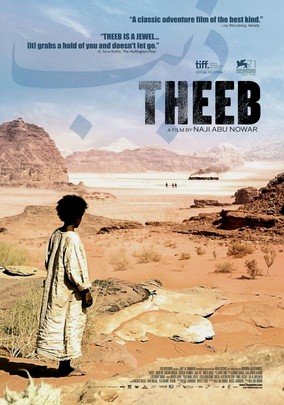
Theeb-2015

Theeb-2015

Director Naji Abu Nowar

Starring Jacir Eid

Scott’s Review #459

80017216

Reviewed August 4, 2016

Grade: B+

An Arabic-spoken foreign language film that received a 2015 nomination for Best Foreign Language Film, Theeb is an old-world film set in 1916 during the Ottoman Empire.

The event is  World War I as an Englishman battles Arabs and nobody can be trusted.

The film is largely shot in the smoldering Arabian desert (in Jordan) and told from the perspective of a child named Theeb.

Despite the slow pace, the moments of action are even more important. It has a grainy quality to it that makes it somewhat of a bizarre Arabian western.

Theeb lives in a small village run by his father and older brother, Hussein. One night a mysterious Arab man and an Englishman arrive seeking a guide to take them to a Roman well, close to the Ottoman railway.

The mission is feared a dangerous one, as the trail they must take is riddled with bandits, not to mention, the Englishman owns a box containing gold, making him a vulnerable target.

Theeb, left behind because he is so young, follows and joins them, much to the group’s chagrin. Predictably, trouble ensues and Theeb must fend for himself.

What I enjoyed about this film is its unpredictability in what happens after the group faces danger. Sure, when the foursome sets out on a trail led by camels, we know bad stuff will happen.

But, finally left to his own devices, I was intrigued as to how Theeb would face his new challenges, having up until now been protected by his family.

In ways, Theeb reminded me of another adventure film, Life Of Pi (2012), though Theeb is much darker. Both feature a young, non-American male of Indian or Middle Eastern background, forced to survive largely alone.

The John Boorman classic, Deliverance (1972), also came to mind during one dark scene, as Theeb and Hussein cower amongst rocky caves while their devilish pursuers taunt and whistle at them mockingly from below.

The hunter vs. victim component is front and center and it is killed or be killed.

Later, an interesting bond develops between Theeb and one of the raiders (Hassan) as both mistrust each other. Will they forge the bond or will one betray the other?

The answer to this question emerges during the final moments and the buildup is compelling. I became aware of the father and son dynamic mixed in with the friend and enemy.

When Theeb treats Hassan’s wounds there is tenderness on the exterior, but is Theeb fully kind to Hassan?

A slight negative for me existed in that I did not buy that the period was the early Twentieth century, but rather, everyone looked and acted so modern as if they were merely dressed up for their parts….as they were. Perhaps it had to do with the hairstyles or mannerisms.

Shot entirely in Wadi Rum, Jordan, a gorgeous part of the world, the desert and big sky lend much to the ambiance this creates. It was almost like being in the old, wild west and an ode to old Western films, only set in the Arabic world.

The entire cast, save for the Englishman, are non-actors, an amazing achievement, and a measure that creates an obvious level of realism that rehearsed actors cannot always bring to the table.

Originally meant to be a short film only, Theeb emerged as a full-length feature and I am glad it did, as it has enough meat to warrant a longer duration.

The film is a cinematic wonder with a psychological edge.

Oscar Nominations: Best Foreign Language Film

5 Broken Cameras-2012

5 Broken Cameras-2012

Director Emad Burnat, Guy Davida

Starring Emad Burnat

Scott’s Review #452

70229917

Reviewed July 22, 2016

Grade: B-

5 Broken Cameras is a 2012 documentary spoken in the Arabic language, which received critical acclaim upon release and heaps of award nominations.

A documentary about a Palestinian farmer, Emad Burnat who recounts Israeli soldiers overtaking his land for several years, it became a Best Documentary Oscar nominee.

Non-political in his life, Emad is threatened as the Israelis build a wall through his land, which he refuses to part with.

As important as the subject matter is, it never really captured my attention and I found it to drag a bit, which pains me to say because I was hoping to be really into it, given the topic.

This could simply be my opinion since it is a critically acclaimed piece.

I would have voted in the far superior Invisible War, from the same year, for Oscar glory.

Oscar Nominations: Best Documentary-Feature

Omar-2013

Omar-2013

Director Hany Abu-Assad

Starring Adam Bakri, Eyad Hourani

Scott’s Review #132

70285669

Reviewed July 24, 2014

Grade: B

Omar is a 2013 Best Foreign Language Film Oscar nominee.

Omar tells the story of a young Palestinian man living in the political unrest of Israel, personally conflicted, and a freedom fighter, sympathetic to the other side.

He is in love with a young girl whose brother is a leader in the freedom fight and their romance eventually becomes a love triangle.

Once Omar is arrested on suspicion of murdering a soldier, a series of events take place that makes the audience wonder what side of the fence he is on and who his allegiance lies with.

The film starts slowly and has too much emphasis on the romantic story- seemingly endless scenes of Omar and Nadia professing their love and passing notes to each other.

The film seems to know not what it wants to be a political thriller or a romance film.  Approximately, thirty minutes into the film it kicks into high gear as the arrest and the political cat-and-mouse aspects come to the forefront.

The ending of the film is unexpected and rather excellent.

At times, though, the story is a bit unrealistic and implausible, especially in some prison scenes. Would a Palestinian traitor be given a second chance and not killed instantly? Would the prisoner and interrogator become friends?

Certain aspects of the film seemed plot-driven and too convenient to be realistic, but I was enraptured with the story overall, minus the romance, which seemed overextended and sappy.

Oscar Nominations: Best Foreign Language Film