Category Archives: Teen Comedy

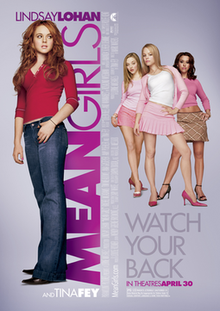
Mean Girls-2004

Mean Girls-2004

Director Mark Waters

Starring Lindsay Lohan

Scott’s Review #1,433
Reviewed July 21, 2024

Grade: B+

Upon its release, I doubt the creators of Mean Girls (2004) knew how influential the film would become.

Not only did it become a box-office hit, but it also became a Broadway musical, with a reboot twenty years later.

It’s also one of those films everyone has heard of and immediately knows what it’s about.

After reading a self-help book about high school social cliques, Tina Fey, who stars in it, wrote the screenplay. The book also delved into school bullying and its damaging effects.

Mean Girls, the film, is intended to be a comedy and skirts over the horror and contempt that is the reality of vulnerable students being picked on by mean girls.

I doubt that in real life, ‘mean girls’ victims’ would appreciate a comedy based on their terror and ridicule.

A darker version, while depressing, would also be closer to reality. I took Mean Girls as a fantasy.

Nonetheless, the film is a roaring success if for no other reason than its examination of the insecurities and hierarchies of the high school (and middle school) years, which 90% of adults would likely soon forget.

This is powerfully done through comedy, allowing us to laugh at the characters’ over-the-top and hypocritical actions across different scenarios.

It’s fun to watch because it takes us back to a time in cinema when its star, Lindsay Lohan, was an up-and-coming sensation, and before co-stars Rachel McAdams and Amanda Seyfried were Oscar-nominated.

Cady Heron (Lohan) is a sophisticated yet naïve student, educated in Africa by her scientist parents.

When her family moves to the suburbs of Illinois, Cady gets to experience public school and the cruel laws of popularity that divide her fellow students into tightly knit cliques.

She unwittingly finds herself in the good graces of an elite group of cool students dubbed “the Plastics,” but soon realizes how her shallow group of new friends earned this nickname.

They are led by Regina (McAdams), a rich, popular mean girl.

Things quickly go south after Cady becomes smitten with Regina’s ex, Aaron (Jonathan Bennett).

Despite the title, the film is for anyone with teenage angst, a crush on a fellow student, or feeling either left out or part of a group at the expense of other unpopular kids.

The message of Mean Girls is universal and therapeutic, as audiences can cheer along with Cady, especially when she exacts her revenge on the queen bee, Regina, hilariously.

The cat-and-mouse play between the two characters is merciless and delightful in the cruel measures to one-up the other in pure comical fashion.

Lohan and McAdams deserve kudos for energetically infusing the characters with likability, even in scenes where they should be hated.

Cheering when Regina gets hit by a bus never felt so good.

The writing is astounding and surprisingly good, with vicious, quick wit and humorous scene after scene.

Wisely, the film ends after one hour and thirty-seven minutes, which is a perfect length for a teenage comedy. Anything longer might have made it drag because the ending isn’t unexpected or a huge surprise.

Since we assume Cady will emerge victorious, which she does, the conclusion is satisfying, and the event hints at a sequel.

The film is peppered with diversity, which is also an enormous win. The principal of North Shore High School, Mr. Duvall (Tim Meadows), is black, while other ethnic characters also appear.

This provides a nice progressive message.

Watching the film twenty years following its release, I never expected to enjoy it quite so much as I did.

This is a testament to the power of Mean Girls (2004), director Mark Waters, and Tina Fey, who create something that holds up well.
American Pie-1999

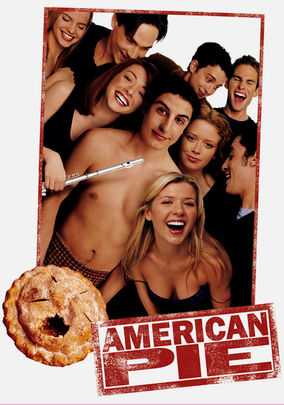
American Pie-1999

Director Paul Weitz

Starring Jason Biggs, Eddie Kaye Thomas, Chris Klein

Scott’s Review #813

Reviewed September 23, 2018

Grade: B+

With each generation of film, there seems to be a gross-out comedy that speaks to a young, coming-of-age generation, mostly male and jock in persuasion.

American Pie (1999) finishes the 1990s strongly with a raunchy story that feels fresh and genuinely funny, with precarious situations facing the cast, specifically the protagonist and “everyman”, played by Jason Biggs.

The film is a teen sex comedy of the crudest nature yet engulfed with characters audiences like, not mean-spirited, but rather fun-loving and endearing.

An enormous box-office hit at the time, the film was all the rage and brought a tawdry new meaning to the Americana staples of apple pie and band camp.

Spawning several sequels over the next decade, the franchise successfully revived the teen comedy genre with strong, highly recognizable characters.

American Pie also brought back the fun to R-rated films and put a nice cherry on top of a creative decade in cinema. The film is not high art, but it does what it aims to do quite well.

Living a middle to upper-middle-class existence in the suburban USA (presumably Michigan), five high school seniors make a pact to lose their virginity by the time they graduate. Most of the group are nerdy, insecure, and sexually naive, the central character being Jim Levenstein (Biggs).

Most events are taken from his point of view, and he is continually advised by his very nerdy father, Noah (Eugene Levy).

The setup is an age-old premise with lots of room for jokes and precarious situations in hilarious form. As Jim has the hots for a sexy foreign exchange student, Nadia, she is out of his league.

In a hilarious scene, a “warm apple pie” incident leads to an attempt to set up a webcam to watch Nadia change clothes. When events go amiss, everyone gains access to the webcam link, and Nadia is sent back to Czechoslovakia in shame.

This leads to a new pursuit for Jim, a geeky band camp girl, Michelle (Alyson Hannigan). Surprisingly, they fall madly in love and have fantastic chemistry.

Some of the supporting characters add energy and sometimes hilarity. Jennifer Coolidge is great as the mother of Stifler (the jock of the group), who has eyes for younger men, specifically Finch.

As they finally consummate their relationship on a basement pool table, Stifler walks in at the worst time and faints in horror. These antics are genuine and fresh, with great acting by all principals.

Coolidge, Hannigan, and Levy are arguably the best secondary characters. Each, in a different way from the others, provides comic relief by crafting interesting nuances to the characters.

Levy, as Jim’s father, is well-meaning, yet bumbling. Every teen cringes at the thought of having a father like Noah, yet the pair share a close bond and a classic father-son relationship, making the character endearing.

American Pie was successful at coining new pop-culture phrases such as “warm apple pie, “milf” and “this one time in band camp…” that the young generation of the time (myself included) enjoyed giggling over and repeating in glee.

The film set the tone for similar genre films, but none of them matched the chemistry and charm of American Pie, and it was better than it ever should have been!

The turn-of-the-century version of Animal House, American Pie (1999), introduces a new generation of young people into the world of comedic, R-rated, raunchy fun. The numbers have churned out films like this, but rarely are any as authentic as this film feels.

The franchise sustained its popularity with well-written sequels, most notably American Pie 2 (2001), which further developed the storylines. Still, the original remains a fine blueprint for what good comedy can achieve.