Tag Archives: Brad Pitt

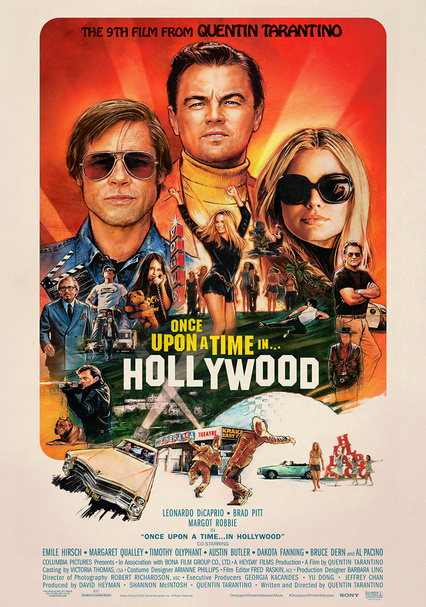
Once Upon a Time in Hollywood-2019

Once Upon a Time in Hollywood-2019

Director Quentin Tarantino

Starring Leonardo DiCaprio, Brad Pitt, Margot Robbie

Top 250 Films #84

Scott’s Review #926

Reviewed August 1, 2019

Grade: A

Once Upon a Time in Hollywood (2019) is another brilliant offering by one of the most (deservedly) respected directors of the modern film era.

This film may be his most personal as it includes many cinematic references and immerses itself in the Hollywood lifestyle. Toned down considerably from the violence standard in his other films, the first half lays the groundwork for a startlingly good second half with every detail of utmost importance.

A bevy of riches awaits any viewer enthusiastically feasting their eyes on this film.

The time is 1969, as actor Rick Dalton (Leonardo DiCaprio) struggles to reinvent himself and revitalize his career in Hollywood amid a changing cinematic landscape.

Famous for a popular western television series from the 1950s, Bounty Law, a pursued film career has not taken off, and he is reduced to guest appearances as the villain, then considered throwaway roles, in other episodic series.

His stunt double and best friend, Cliff Booth (Brad Pitt), accompanies him almost everywhere, serving as both sidekick and errand boy.

Meanwhile, famous director Roman Polanski and his wife, actress Sharon Tate (played by Argot Robbie), have moved into the house next door, which Dalton hopes will help him revitalize his career aspirations.

As Tate goes about her daily life of running errands and watching her movies in the theater, she is visited by Charles Manson one day, looking for the former resident of her house.

Historical viewers are familiar with the subsequent events that unfolded in real life, as Tarantino presents a fictional and tantalizing version of the events.

The film’s length is two hours and thirty-nine minutes, quite robust but typical for a Tarantino production. Some may complain about the bloated running time, but the film never drags; instead, the director lays out all the pieces carefully like a fine chess game.

By the mid-point, all hell breaks loose with one of the most suspenseful and edge-of-your-seat scenes in film history. When Cliff drives a flirtatious young hippy hitchhiker, Pussycat (Margaret Qualley) to a range populated by Manson followers, he is in for the adventure of his life…..if he survives.

Once Upon a Time in Hollywood is an orgy of cinematic tidbits, featuring a myriad of clips from forgotten films of the late 1960s and popular songs from that era.

This is just the tip of the iceberg in greatness as Tarantino perfectly immerses the viewer into the time with fury and zest. Every set piece, costume, hairstyle, or car is flawlessly placed. Kraft macaroni and cheese, Velveeta cheese, and popular dog food from the period are featured.

Tarantino is a fan of cinema and makes cinema lovers fall in love with cinema all over again.

The cast is humongous, but each character is necessary and perfectly represented in roles large and small.

The haunting troupe of Manson followers, specifically Tex Watson (Austin Butler), Squeaky Fromme (Dakota Fanning), and Susan Atkins (Mikey Madison), are all real-life figures. They are foreboding, dangerous, and crucial to the story.

Al Pacino shines in the small but pivotal role of Schwarz (not Schwartz), Dalton’s agent, while Steve McQueen’s look-alike, Damian Lewis, on-screen for merely seconds, is memorable.

The list of cameo performances goes on and on and on, and the fun is wondering who may appear next.

Despite the incorporation of big-name stars in important minor roles, the best performances belong to DiCaprio and Pitt. DiCaprio’s best scene takes place alone in his trailer as the washed-up star botches his lines thanks to a hangover, causing a delay in filming.

He abuses himself into nailing the scene, receiving kudos all around, while becoming teary-eyed after a compliment from a young actress.

Pitt has never given a better performance than he does as Cliff, sharing his best scenes with his adorable dog Brandi and with DiCaprio.

Who can ever forget his chest-baring rooftop scene?

Quentin Tarantino scores again with a bombastic and flawless picture, his ninth release. Rumored to retire after his tenth film, one can hardly fathom the reality of that statement. Hismovis can be watched and watched again, continuously absorbing new and noteworthy details of rich texture.

Once Upon a Time in Hollywood (2019) easily joins the ranks of great works, not just of the director’s catalog, but of all time.

Oscar Nominations: 2 wins-Best Picture, Best Director-Quentin Tarantino, Best Actor-Leonardo DiCaprio, Best Supporting Actor-Brad Pitt (won), Best Original Screenplay, Best Sound Editing, Best Sound Mixing, Best Production Design (won), Best Cinematography, Best Costume Design

Inglourious Basterds-2009

Inglourious Basterds-2009

Director Quentin Tarantino

Starring Brad Pitt, Christoph Waltz

Top 250 Films #92

Scott’s Review #589

Reviewed January 7, 2017

Grade: A

Inglorious Basterds (2009) is simply a great movie. Blending many film genres, it is hard to categorize, but that is because it is a Quentin Tarantino film, and that says it all.

The film as a whole contains excellent acting, is wonderfully shot, and is extremely detail-oriented, plus it has the familiar “Tarantino” style of music and sound, the chapter breakdown, and the heavy violence.

Set mainly in German-occupied France during the early 1940s, during World War II, the action centers around two stories- Shosanna (Melanie Laurent), a teenage girl whose entire family is killed after being discovered hidden by a dairy farmer.

He is a Jewish sympathizer, and Shosanna barely escapes with her life when an SS Colonel, brilliantly played by Christoph Waltz, interrogates the man.

Three years later, now living in Paris and owning a cinema, she plots her revenge. The other story is also of a revenge plot by a group of Jewish-American soldiers to kill as many Nazis as possible.

Both stories eventually intersect with a grand finale inside a cinema.

The story itself is richly nuanced and unlike many generic films of today. The fantastic set design and the perfection of every last set-piece are amazing. Long scenes play out slowly but bristle with authenticity and good dialogue.

Take the first scene for example- as the SS Colonel, aptly nicknamed the “Jew Hunter” plays cat and mouse with the dairy farmer, politely asking for two glasses of milk, the audience knows the payoff will be huge, but the conversation crackles with good dialogue.

What strikes me most about the film is the intelligent writing. The many scenes of conversations between characters- a chat over strudel and cream, a trivia game at a bar, and the aforementioned scene at the farmhouse, bristle with unique, clever written dialogue so that the scenes are far from mere filler.

Of course, this is also a characteristic of Tarantino.

At over two and a half hours Inglourious Basterds (2009) is long but satisfying.

My only criticism is of Brad Pitt. I didn’t buy him as a Tarantino guy and found his character the only weak point of the film. His southern drawl just did not draw me in like I thought it might.

He was touted as the main character (perhaps because he was the biggest star), but he plays a supporting role.

Oscar Nominations: 1 win-Best Picture, Best Director-Quentin Tarantino, Best Supporting Actor-Christoph Waltz (won), Best Original Screenplay, Best Sound Editing, Best Sound Mixing, Best Cinematography, Best Film Editing

Seven-1995

Seven-1995

Director David Fincher

Starring Brad Pitt, Morgan Freeman

Top 250 Films #230

Scott’s Review #780

Reviewed June 29, 2018

Grade: A-

Many films containing a similar theme as Seven (1995) have come along over the years- some good, most mediocre. The mixture of homicidal detectives tracking crazed killers has been done ad nauseam and more often than not, done with either poor writing or a predictable outcome-or both.

Instead of being a run-of-the-mill film, Seven serves as a representative blueprint of the tautness and unpredictability that can be achieved by using a familiar yet compelling concept, provided there is good writing and good direction.

The film is incredibly brutal and riveting.

Respected director David Fincher gathers an all-star cast of Hollywood heavies including Brad Pitt, Morgan Freeman, Kevin Spacey, and Gwyneth Paltrow, all of whom add to the well-crafted script.

It also brings the talent level to respectability and, as great as the story is, with weaker actors, the stakes would not have been as high and the film may have even been ruined.

A serial killer is on the loose in Los Angeles- detective duo William Somerset (a very good Freeman) is set to retire and is tasked with finding the killer. He is partnered with David Mills (Pitt), a young, hot-tempered man who has just moved to the city with his wife Tracy (Paltrow).

Unbeknownst to David, Tracy is pregnant and unsure whether to keep the child- this point factors in heavily as events unfold.

The killer is using the seven deadly sins: greed, gluttony, sloth, lust, pride, envy, and wrath, as his motivation for the creative slayings.

In retrospect Seven is very similar to the still-to-come Fincher work, 2007’s Zodiac, so much so that both films could be watched in sequence- one being a true story, the other pure fiction.

Both focus on the serial killer element with a message, they each have marvelous psychological intrigue and purpose. There are cat-and-mouse scenes aplenty for fans to enjoy.

At the risk of this point being a total stretch, I’d also argue that 1971’s Dirty Harry influenced Zodiac, Seven, and The Silence of the Lambs (1991).

A heinous killer shrouded in intelligence, danger, and motivation is a commonality of all of the aforementioned films, and numerous studies of each of the killers could be dissected if time permits.

Each killer is calculating and manipulative.

On that note, Kevin Spacey gives a tremendous performance as the cold and villainous John Doe. Clever and inventive, his victims are intended to suffer and suffer greatly.

Some of the kills could be included in the best of the torture-horror franchise, Saw (2004), as they are very twisted and carved in brutality.

A supermodel is disfigured after being given a choice to call for help or overdose on pills, representing pride. A man is forced to consume food until his stomach ruptures, representing gluttony. Spacey portrays his role as calm, cool, and collected, eliciting a terrifying response from audiences, especially as he toys with the detectives.

Still coming into his own as an actor in 1995, Pitt proves he can almost measure up (though not quite) with big-boy acting talents Spacey and Freeman. Playing an ambitious man eager to prove himself in “the big city” with his pretty wife in tow, Pitt’s David is wholesome and family-oriented, yet has an edge.

All around the likable hero, Pitt is perfectly cast in the role and a large part of its success.

The frightening final sequence still resonates with me after all of these years since Seven was released. In a classic standoff between Doe and the detectives, as is typically the case in these types of films, the ultimate climax is twisted, psychological, and gruesome.

I did not see this shocker coming as it culminates in lives being forever changed. The expressions and actions of Freeman, Pitt, and Spacey are superlative.

Seven (1995) is a film basking in riches. On par with the best of the best in serial killer films, it is powerfully directed by Fincher. The film is fraught with grisly symbolism and its share of suspenseful sequences.

With powerful acting, it is a film relevant and watchable decades after the original release. Perhaps not quite on the level as Dirty Harry or The Silence of the Lambs, but pretty damned close and that is impressive in itself.

Oscar Nominations: Best Film Editing

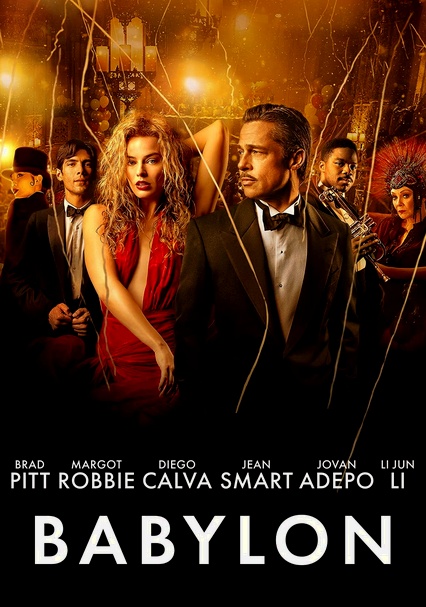
Babylon-2022

Babylon-2022

Director Damien Chazelle

Starring Margot Robbie, Brad Pitt

Scott’s Review #1,365

Reviewed June 4, 2023

Grade: A-

Babylon (2022) is a film that will likely divide audiences broadly. Slightly late to the table, I viewed the film after the awards season hoopla had ended, and the film came up empty-handed.

Sure, a few nominations were received, but much more was expected from the epic Hollywood-themed venture.

I’m a fan of director Damien Chazelle, most famous for the similarly set Los Angeles film La La Land (2016), which I adore.

His direction style reminds me a great deal of Baz Luhrmann’s, with the incorporation of intense musical numbers during many scenes and a strong, chaotic, and frenetic nature.

I realize this style is not for everyone, so I’m not surprised that Babylon is both revered and reviled. This isn’t always a bad thing, as a good film debate can be fun.

I adore Babylon primarily for the potent silent-era Hollywood story and the terror stars of the 1920s faced with the realization that sound had entered their pictures and they were expected to keep up with the times.

Sadly, many careers ended devastatingly, sinking one-time big stars into depression and despair.

The acting is superb, and major props go especially to Margot Robbie as debaucherous film star Nellie LaRoy and newcomer (to me) Diego Calva as handsome Mexican immigrant Manny Torres.

Both actors elicit superb performances that should have landed them Oscar nominations.

The major themes that Chazelle incorporates into Babylon are those of ambition and outrageous excess, as well as belonging and acceptance. The rise and fall of multiple characters during an era of unbridled decadence and depravity in early Hollywood are explored.

As Hollywood transitions from silent films to talkies, ambitious up-and-coming actress Nellie and aging superstar Jack Conrad (Brad Pitt) each struggle to adapt to the new medium, as well as a rapidly changing world.

And Manny wants a seat at the table.

Another reason I love the film is the dedication and exposure given to pre-sound Hollywood movies, which are often forgotten. I struggle to recall ever having viewed a film from that era, with my earliest film being the 1930 film “All Quiet on the Western Front.”

The hit film The Artist (2011) may have paid tribute, but it’s not the same, and Babylon goes for the jugular in showcasing an entire movement that is now largely forgotten.

Cinema fans will respect Babylon.

Besides the film’s characters, there is much to appreciate in the movie itself. A Hollywood movie set, repeated takes, scripts, dialogue, lighting equipment, and rehearsals make for a feast of riches for any cinephile.

The weak point is the film’s excessive length. At three hours and nine minutes, an epic length, the erratic structure is a challenge to get through. A piecemeal approach can sometimes affect the continuity, and it did detract a bit in this case for me.

If one can sit still long enough, the final thirty minutes are superb. A tidy wrap-up and truthful storytelling give several characters a proper sendoff.

The film ends in 1952, so a fitting conclusion is in order.

Before we get to this point, though, a nailbiting sequence involving Manny and a fiendish Los Angeles gangster played by Toby Maguire is second to none. Fake money, a rat-eating entertainer, and pornographic dwarves make for an odd adventure that one can’t look away from.

A fascinating and bombastic experience, Babylon (2022) delves loudly into the silent film world and pays a proper head nod to a long-forgotten era.

The film has made me appreciate Hollywood and its history even more than I already do.

Oscar Nominations: Best Musical Score, Best Production Design, Best Costume Design

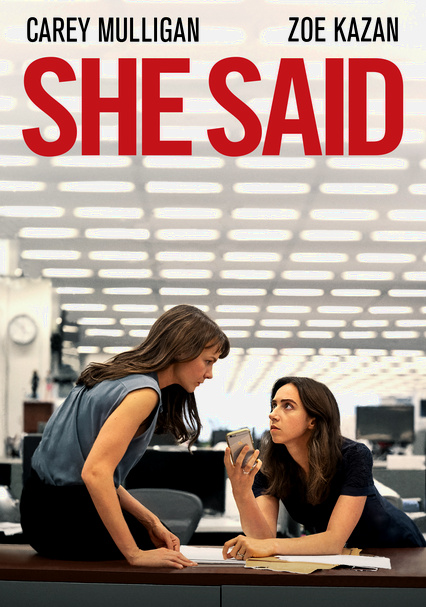
She Said-2022

She Said-2022

Director Maria Schrader

Starring Zoe Kazan, Carey Mulligan

Scott’s Review #1,353

Reviewed April 7, 2023

Grade: B

Telling a highly relevant story that also happens to be topical, She Said (2022) is a film I champion people to see for its powerful message. The importance of its mere creation, with the added urgency of a female director being tied to it, is critical.

The #MeToo movement and uncovering sexual harassment in liberal-minded workplaces like Hollywood only make this project more relevant.

As dynamic as the story is, the overall package could have been a bit better in my evaluation of the encompassing project. Director Maria Schrader mostly goes the safe route, choosing to craft the message carefully, but hardly in a dark way.

The film, at times, feels almost wimpy and lacks some crucial elements that might have made it more impactful. The screenwriter is Rebecca Lenkiewicz, who deserves much credit but plays softball rather than hardball.

The film is good but not great, and unsurprisingly, it completely whiffed of any Academy Award nominations. There are a few transparent misses that leave She Said with a courageous yet unfulfilling feeling.

Carey Mulligan and Zoe Kazan star as New York Times reporters Megan Twohey and Jodi Kantor, respectively, who together break one of the most important stories in a generation. This story helped propel the # MeToo movement.

The revelations and eventual conviction of multi-millionaire film production mogul Harvey Weinstein shattered decades of silence around the subject of sexual assault in Hollywood and altered American culture forever. This led to a needed examination of the industry.

Mulligan and Kazan are terrific, delivering strong, charismatic lead performances as female reporters with a vested interest in getting to the truth.

It’s tough to say who the lead is, since both characters’ personal lives and their sympathetic husbands run parallel.

I’m a bigger fan of Mulligan’s, and I’m still smarting from her Best Actress loss for Promising Young Woman in 2020. Hers is the more hardened of the two characters, and her one gritty scene in a local bar, when she angrily rebuffs the advances of a jock, is excellent.

Another impressive aspect of She Said is Ashley Judd’s appearance as herself. News junkies will recall that Judd was instrumental in coming forward and telling her story, even though she could have kept it hidden, as other victims did.

Finally, the jarring first sequence sets the tone quite well as disgraced former President Donald J. Trump is examined pre-2016 election, when sexual harassment allegations were hurled at him.

The point of this is to show that powerful men have historically gotten away with sexual abuse against women.

She Said tones down too considerably when it never shows Trump, Weinstein, or the pivotal actress Rose McGowan. Only their voices and the back of Weinstein’s head are used.

This sparks a peculiar feeling and a watered-down approach. It’s unclear why real video footage or actors couldn’t or wouldn’t be used, but it gives off a weird vibe.

It’s nice to see the legendary Patricia Clarkson in any film, but her role as news reporter Rebecca Corbett is limited and one-dimensional.

Finally, the climactic wrap-up, when finally one of Weinstein’s abused victims agrees to go public, feels anti-climactic and is better served for a Hallmark Movie of the Week moment.

Ouch!

The film is overall good, with the message being the most important takeaway. She Said might serve as a warm-up act to the much meatier, yet similarly themed, All the President’s Men from 1976, or the recent Bombshell from 2019.

Based on the vitality of the real-life events that She Said (2022) was created from, I expected something much more than I was served. It’s like trying for a grand slam home run and instead flying out to the shallow center field.

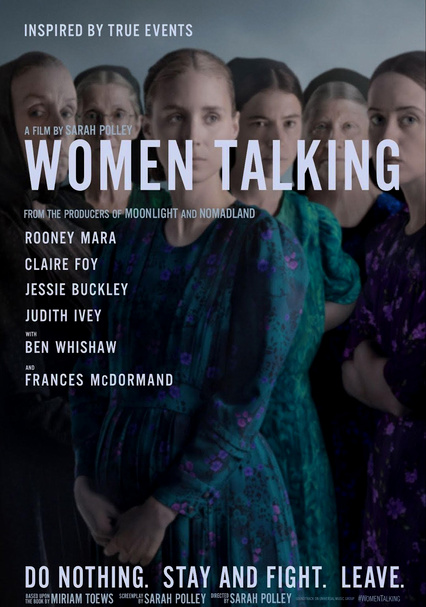
Women Talking-2022

Women Talking-2022

Director Sarah Polley

Starring Rooney Mara, Claire Foy, Jessie Buckley

Scott’s Review #1,341

Reviewed February 7, 2023

Grade: B+

Women Talking (2022) is a quiet film faithful to its title because it is about a group of women, well, talking. But, instead of idle gossip, these women have something powerful to say. They debate and discuss their fates throughout the film’s one hour and forty-four-minute running time.

It is written and directed by Sarah Polley, a former actress, and adapted from the recent 2018 novel of the same name written by Miriam Toews.

Shockingly, the film is inspired by actual events that took place in the ultraconservative Manitoba colony in Bolivia.

For years, the women of a rural colony have been drugged and raped nightly by demons punishing them for their sins. They have, until recently, acquiesced.

But when the women discover that these “demons” are the men of their community, they boldly decide to take a vote to determine what action to take.

The year is 2010, but the woman’s dress makes it seem like it’s the 1800s. I wasn’t sure of the year going in, save for a 1960s pop tune bursting from the speakers of a pushup truck, so the viewer can easily be misled or unclear.

A male rapist is caught and imprisoned, which leads the men to conveniently be out of town while the women have two days to make a decision. They will either stay and do nothing, stay and fight, or leave.

One male remains with the females; the kind teacher, August, played by Ben Whishaw. There also exists a transgender man who has been raped by men and no longer speaks to adults.

While the film is a slow one, it has something intelligent and interesting to offer. Despite the women being repressed and abused a feminist overtone is readily apparent which uplifts the dire tone.

Hollywood heavyweights like Frances McDormand and Brad Pitt executive-produced and produced, respectively, so Women Talking has big-time backing, deservedly so.

Comparisons to a female version of the classic play, Twelve Angry Men, cannot be overlooked by the astute viewer. The women are divided and not in agreement or harmony…..at first. The lone juror would be most similar to Ona (Rooney Mara), a sensible woman who reasons and weighs the pros and cons.

McDormand also appears in a small role as the grizzled and beaten-down ‘Scarface’ Janz, who has accepted her lot in life.

Mara, Claire Foy, and Jessie Buckley are the standouts; the latter two characters are fueled with anger at the revelations and mistrust of the men.

Liberties must be taken.

It’s mentioned that the women are not taught to read or write, but the characters are wise, cagey, and well-spoken. The ambiguity of what’s to become of the women slightly let me down. A decision has been reached, but what’s next?

Polley has directed a gem and garnered considerable notice for her project, and the kudos can’t come loudly enough. I thought it wise that, besides August, the male characters are either not seen or seen only from a long distance. Some are blurred entirely.

This adds to the mystique and grotesqueness of their actions.

An accurate ensemble picture that could easily be shaped into a stage play, Women Talking (2022), led by Polley and backers, produces a compelling narrative.

The point is well-intentioned and well-received that repression and victimization are alive and well.

Oscar Nominations: 1 win-Best Picture, Best Adapted Screenplay (won)

Independent Spirit Award Nominations: 1 win-Best Feature, Best Director-Sarah Polley, Best Screenplay, Robert Altman Award (won)

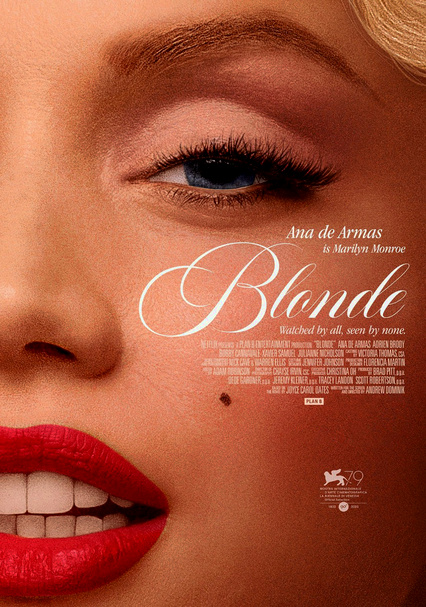
Blonde-2022

Blonde-2022

Director Andrew Dominik

Starring Ana de Armas, Adrien Brody, Bobby Cannavale

Scott’s Review #1,305

Reviewed October 7, 2022

Grade: A

Blonde (2022) is not the kind of film that I expected.

When I became aware that a new film vehicle showcasing the legendary film icon Marilyn Monroe was in the works, I assumed it would be a biographical-style effort. After all, this is hardly the first time the star’s life has been explored.

Throw in bits about her struggles, her love life, her famous screen roles, and her rise to fame, and there you’d have it.

My only real thought was who would be playing her?

Films about Marilyn have been made before, including the most recent effort I can recall, My Week With Marilyn (2011), starring Michelle Williams, a superior film but hardly groundbreaking or well remembered ten years later.

Released via the Netflix streaming service, director Andrew Dominik kicks the shit out of any preconceived notions about glamorous, happy, and prosperous Marilyn.

He creates a story focused on the dark side of the star: her failures, her insecurities, her forced abortions, and her humiliations. The result is a film that is both tragic and profound, and it should be well remembered.

Blonde delves into facts and some of the more profound thoughts of the legend herself, creating a muddy and dreamlike quality that makes the viewer apprehensive about what’s going on.

Since it’s based on Joyce Carol Oates’ 2000 fictional memoir, which is her interpretation of events, it makes truth and imagination all the muddier.

It’s not happy days watching Blonde, which left me wondering if Marilyn had a happy day in her life. From her abortions to sexual harassment, drug addiction, and physical abuse by her husband, she excitedly scampers off to a date with President Kennedy, only to be forced to give him oral sex.

Ana de Armas, known for Knives Out (2019) and No Time to Die (2021), is brilliant as Marilyn. Her mannerisms, speech patterns, and facial expressions reveal a genuine, layered portrayal rather than a carbon copy imitation of her.

Blonde boldly reimagines the life of one of Hollywood’s most enduring icons in two hours and forty-seven minutes of storytelling. It is advisable not to watch the film in one sitting, but instead spread it over three nights to let the story unfold.

Events begin with her volatile childhood as Norma Jeane, marked by an abusive mother and an absent father, and her rise to stardom and romantic entanglements. Blonde blurs the lines of fact and fiction to explore the widening split between her public and private selves.

In a way, Marilyn suffered from a split personality, longing to be Norma Jeane and despising Marilyn.

Enhancing the ambiguity, Dominik elects to use cinematography that is sometimes blurry as if in a sleepy haze, and sprinkles color with the primarily black and white filming. He even films one abortion scene from the perspective of Marilyn’s vagina.

These creative details lead me to classify Blonde as an art film and a highly interpretive one.

While not a crowd-pleaser, Blonde is not all doom and gloom either.

Tidbits about her most famous films, Gentlemen Prefer Blondes (1953) and Some Like It Hot (1959) are featured, showcasing one or two neat camera tricks, so it appears that de Armas is acting opposite Tony Curtis.

I worry that poor reviews for Blonde may hinder de Armas’s chances of receiving an Academy Award nomination. Positive reviews usually help secure Oscar recognition.

Thankfully, despite many critics and viewers having issues with the film, de Armas has received worldwide acclaim.

Bobby Cannavale and Adrien Brody are excellent as Marilyn’s husbands, controlling Joe DiMaggio and insecure artist Arthur Miller. Both actors combine effective acting with distinguished portrayals, allowing the audience to appreciate the appeal of both men.

Other interesting subplots involve Monroe’s ‘throuple’ romance with bisexual actors Cass and Eddy, and a haunting exposure of the abuse suffered by Marilyn at the hands of her mother, Gladys, wonderfully played by Julianne Nicholson.

There is little doubt that Blonde (2022) is an unconventional film that may not appeal to everyone. However, it’s the down-and-dirty texture and tour-de-force portrayal of Monroe that won me over.

It chilled me to the bone in the best possible way.

Oscar Nominations: Best Actress-Ana de Armas

Minari-2020

Minari-2020

Director Lee Isaac Chung

Starring Steven Yeun, Han Ye-ri, Youn-Yuh Jung

Scott’s Review #1,181

Reviewed September 24, 2021

Grade: A-

I proudly champion films like Minari (2020) for further bringing Asian actors and directors into the Hollywood mainstream with truthful stories.

They have slowly (and it’s about time!) begun to reap the riches from the Academy Awards and other such honors. Parasite (2019) and, to a lesser degree, Crazy Rich Asians (2018) helped propel respectability to the Asian film community.

With that said, I expected Minari to be a masterpiece, and instead, it is simply a terrific film. That’s a tough statement for me to make. Undoubtedly, it was heavily helped by the progress I mentioned above.

This is to take nothing away from its cast and wonderful director, Lee Isaac Chung.

I found the film sentimental and heartwarming, but it only felt dangerous or edgy in one scene.

Of strong interest to me is the fact that the film is a semi-autobiographical take on Chung’s upbringing, but is it a fantasized version?

The plot follows a family of South Korean immigrants as they attempt to make a life for themselves in rural America during the 1980s. Specifically, the year is 1983 in the southern state of Arkansas, where the family sticks out like a sore thumb amid the suffocating summer heat.

Chung, who writes and directs the piece, offers a tender look at the ties that bind —family. The Yis are a Korean-American family that moves from California to invest in a crummy plot of land and their own American Dream. Jacob and Monica (Yeun and Han) are reduced to taking even crummier jobs sexing chicks at a local factory.

The family home changes completely with the arrival of their scheming, foul-mouthed, but incredibly loving grandmother Soon-Ja, played by Yuh-Jung.

Amidst the instability and challenges of this new life in the rugged Ozarks, Minari shows the undeniable resilience of family and what makes a home. The Yis are resilient through the constant bickering of Jacob and Monica, Soon-JA’s stroke, bad water, and the burning of their shed, which stores their goods.

The story is all well and good, and it is good, but I desired more. I blame this on the heaps of praise heaped on Minari and the numerous Top 10 lists it appeared on.

For example, hearing the premise I couldn’t help but wonder what discrimination the Yi’s would inevitably face down in the deep south. But they faced none.

In one soft scene, the young Yi boy, David, played exceptionally by Alan Kim is asked by a local kid why his face is flat. They quickly become best friends.

Will Patton plays another ally and Jacob’s farming partner. He is a Korean War veteran and a bit nutty, yet he adores Jacob and the rest of the Yis and harbors no ill will towards them.

I expected him to despise them because of the war. This would have been more realistic.

The southern characters are portrayed as kind and always ready to lend a helping hand. This is all fine and good, but is it realistic?

The casting is outstanding and brings the dialogue to reality. Yeun and Han bring their A-games in more than one vicious fight scene where their words crackle with intensity leaving them teetering on the verge of divorce. Yeun was recognized during awards season, but Han was sadly overlooked.

Soon-Ja mixes humor with drama and will leave many viewers bawling with her facial expressions and terrific acting during the final sequence. Her performance deservedly led her to a Supporting Actress Oscar win.

The finale felt so incredibly raw and honest to me, whereas the rest felt sentimental, which, based on this alone, caused me to raise its grade from a B+ to an A-.

Beautiful landscape and brilliant acting make Minari (2020) a fine experience. It teeters too close to formula at times, but offers freshness and representation for a group only starting to receive its recognition.

Oscar Nominations: 1 win-Best Picture, Best Director-Lee Isaac Chung, Best Actor-Steven Yeung, Best Supporting Actress-Youn Yuh-Jung (won), Best Original Screenplay, Best Original Score

Independent Spirit Award Nominations: 1 win-Best Feature, Best Director-Lee Isaac Chung, Best Male Lead-Steven Yeung, Best Supporting Female-Youn Yuh-Jung (won), Han Ye-ri, Best Screenplay

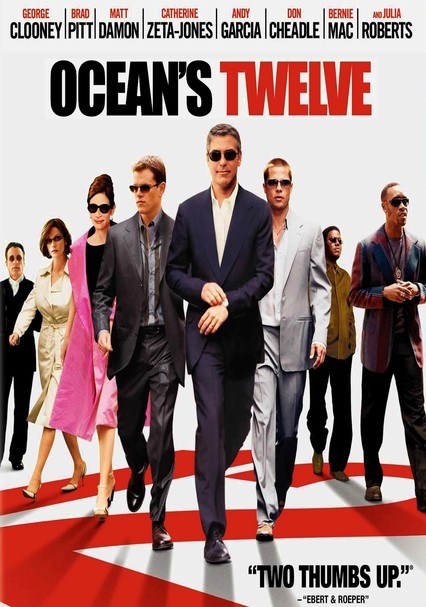
Ocean’s Twelve-2004

Ocean’s Twelve-2004

Director Steven Soderbergh

Starring George Clooney, Brad Pitt, Matt Damon

Scott’s Review #1,157

Reviewed June 30, 2021

Grade: B-

The casino heist gang is back together again for more action and adventure in a film that was only made because of the success of its predecessor, Ocean’s Eleven (2001).

The uninspiring title of the film, Ocean’s Twelve (2004) is a letdown as compared to the fantastic and enthralling 2001 film.

What felt like a purely original idea, even though it was a remake, now feels like stale bread that was fresh only yesterday.

Thankfully, Steven Soderbergh returns to the fold which adds some style and general good direction.

The story is slow to kick off and provides an implausible and unconventional ending that doesn’t work nearly negating most of the previous activity. There is something a bit irritating about watching a film with the knowledge that it was only made for one reason and the plot seems to be rushed and poorly thought out.

But that’s Hollywood.

Undoubtedly, George Clooney, Brad Pitt, Matt Damon, Julia Roberts, Catherine Zeta-Jones, and other top talent enjoyed the hefty paychecks they received. This is also perturbing as the performances seem ho-hum and inspired by the big bucks being deposited into big bank accounts for services rendered.

The inauthenticity all around is evident in lazy acting and writing.

The foil and mark, Terry Benedict, once again played by Andy Garcia realizes that the gang has robbed him of millions and demands the money back with interest. Unfortunately, much of it has already been spent.

Unable to come up with the cash, the crew must come together to pull off another series of heists, this time in Europe. Presumably, they are not well known there.

Being “forced” to do what the career criminals love to do is far-fetched.

Danny (George Clooney) and the gang hatch a plan to swap a Fabergé Imperial Coronation Egg for a holographic recreation. Linus (Damon) comes up with a second plan involving Danny’s wife, Tess (Julia Roberts), posing as a pregnant Julia Roberts to get close to the Egg and swap it.

They are foiled by Lahiri (Catherine Zeta-Jones) and a coincidentally present Bruce Willis, and the rest of the group are captured.

While it’s slightly clever having Bruce Willis and Julia Roberts appear as themselves especially when Julia Roberts plays another character in the film, it doesn’t work as well as it sounds on paper.

The story is way too convoluted and Ocean’s Twelve quickly turns into the sort of film you tune out of enjoying the non-story points more than the written word. In this case, that’s not a positive aspect.

The film’s successes, mainly the returning A-list cast, are also negative. While it’s fun to reconnect with familiar characters like Danny Ocean, Rusty (Pitt), and Linus, we know the characters too well and they become caricatures. Meaning, they behave exactly as one would expect them to.

Still, it is admittedly juicy and exciting to witness so many A-listers on one big screen especially when there is trickery, scheming, and just a hint of romance to be had.

I’ll also partake in just about any film that goes on location to Paris, Rome, Monte Carlo, and Amsterdam. It’s an orgy of European history and goodness adding cultural trimmings to a sub-par storyline.

Particularly inviting are the villa scenes in luscious Lake Como.

Ocean’s Twelve (2004) will please only those who are obsessed enough with the franchise to enjoy what is a retread of the 2001 film set in various parts of Europe instead of Las Vegas.

It isn’t nearly enough for me as most cleverness and bright and crisp writing are gone.

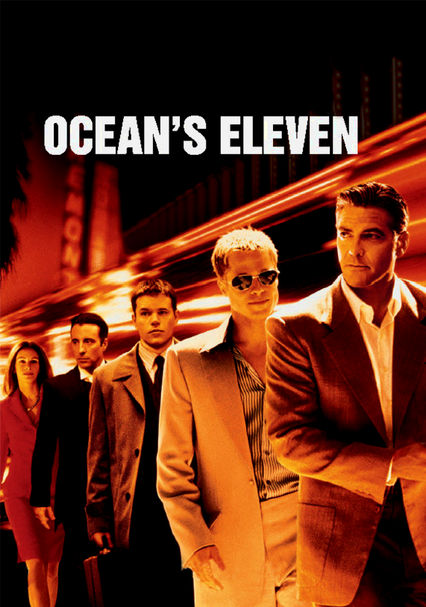
Ocean’s Eleven-2001

Ocean’s Eleven-2001

Director Steven Soderbergh

Starring George Clooney, Matt Damon, Brad Pitt

Scott’s Review #1,105

Reviewed January 28, 2021

Grade: A-

Steven Soderbergh was awarded the Best Director Academy Award for his exceptional direction in Traffic (2000) one of my all-time favorite films.

He follows up that gem with a slick, commercial film that is stylish and looks cool. It’s fast-paced with quick editing and is set in the dangerously appealing world of casinos as a group of sophisticated thieves attempt to steal $160 million from a casino owner with whom they have a vendetta.

I expected a film of this type to be generic and by the numbers, but instead, it’s unpredictable and unexpected.

Ocean’s Eleven (2001) is the first (and best) installment of the popular Ocean’s franchise and a remake of the 1960 Rat Pack film of the same name.

George Clooney was in his film prime and led the pack of A-list stars like Brad Pitt, Julia Roberts, and Matt Damon in a packed and brimming two-hour entertainment fest.

A nice touch is inviting two stars from the original, Henry Silva and Angie Dickinson, to appear as themselves.

Clooney leads the charge and embraces his leading role status with charm, polish, and style. He plays a handsome Danny Ocean, a man with a plan. Less than one day into his parole from a New Jersey penitentiary, the thief is already traveling to California to arrange his next plan with his partner-in-crime Rusty (Brad Pitt). It’s tinged with revenge.

They abide by three rules: Don’t hurt anybody, don’t steal from anyone who doesn’t deserve it, and play the game like you’ve got nothing to lose. Danny orchestrates his charges into creating the most sophisticated, elaborate casino heist in history. And it will take place in glitzy Las Vegas on the night of a boxing match.

By providing the rules it makes me think fondly of a similar proclamation in David Fincher’s 1999 film Fight Club, Danny and the gang immediately feel sympathetic to me.

After all, they don’t intend to hurt anyone, and the money stolen will be from folks who are dastardly and might even deserve to be penniless.

Didn’t JigSaw from the Saw films only kill those who harmed other people? Suddenly their motives are clear and justified making them the good guys.

As a bonus, the “victim” of the heist is the unlikable Terry Benedict (Andy Garcia), who owns three casinos and is worth billions. Making the bad guys the heroes and Benedict the bad guy is clever and situates the players properly so the audience is sure who to root for.

As if the film doesn’t have enough treats some drama is thrown in.  Danny’s ex-wife, Tess (Julia Roberts), is Benedict’s girlfriend. Is she loyal to Danny or Benedict or might she be playing both sides?

Loyalties are tested and questioned and the intricate bank heist sequence is titillating and an edge-of-your-seat thrill-ride. The Las Vegas backdrop with the casino’s bright lights, bells, and like elements cement Ocean’s Eleven as one of the best of its genre.

It’s also tough not to root for Clooney, Pitt, and Damon in or out of character.

Ted Griffin writes the screenplay and adds some nice characters, more than one-note bank robbers or thieves. Along with Soderbergh’s direction, which adds the nice atmospheric trimmings like the razzle-dazzle casino scenes they make a great pair.

I love how Danny and Rusty recruit a team with specialized skills like mechanics, pickpockets, and an electronics and surveillance specialist. There’s even an acrobat!

This seems an ode to the 1960s television series Mission: Impossible as the team is carefully selected based on skill.

A highly entertaining popcorn film just perfect for a summer night, Ocean’s Eleven (2001) is sure to satisfy. The intention is to sit back and enjoy what is offered and all the elements come together perfectly.

The culminating main event boxing match and subsequent twist catapults the film from pure entertainment to something more nuanced and exciting.

The film was a success at the box office and with critics leading to two sequels directed by Soderbergh and a spin-off with an all-female lead cast, was released in 2018.

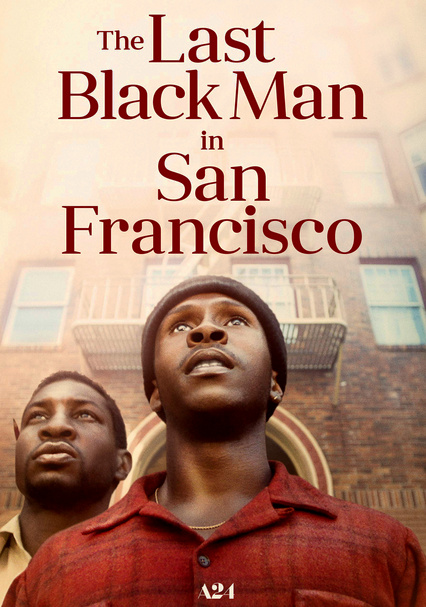
The Last Black Man in San Francisco-2019

The Last Black Man in San Francisco- 2019

Director Joe Talbot

Starring Jimmie Fails, Jonathan Majors

Scott’s Review #1,018

Reviewed May 1, 2020

Grade: A

The brilliance of The Last Black Man in San Francisco (2019) is multi-fold. The immediate call-out is that the work is the creation of up-and-coming director Joe Talbot, an artist with an excellent eye for both the visual and humanistic aspects of cinema.

Whoever influenced this young man deserves props, for he has a great future ahead of him. Given that this is his film debut and he also co-wrote it, the future is indeed bright. The film is loosely based on the life of Jimmie Fails, his childhood best friend, who also stars.

A24 is arguably the new “it” film studio for independent entertainment offerings, and this is to be celebrated.

Indie films provide creative artists with the means and time to develop their products and tell stories that are fraught with meaning, and in many cases, dare to go where other films have not ventured, at the risk of turning off a mainstream audience.

This is to be celebrated and championed, and has resulted in many fantastic and unique films. Hereditary (2018), Midsommar (2019), and The Lighthouse (2019) immediately spring to mind.

The Last Black Man in San Francisco gets off to an interesting start as two young black men, Jimmie (Fails) and Mont (Jonathan Majors), wait for the bus as men clad in protective gear appear to clean polluted waters.

The implication is clear that residents are not protected while the men are. Protesters chant while images of the changes San Francisco has experienced over the years are shown.

The two then skateboard to a Victorian house in the city’s Fillmore District, where Jimmie grew up and says it was built by his grandfather in 1946.

Their skateboard trip is cerebral and surrealistic and has ten glorious cinematic moments.

It is evident that Talbot is channeling either an autobiographic story or one of a friend- it proves to be the latter. Unclear is if Mont is supposed to be Talbot, but my guess would be in the affirmative.

Jimmie and Mont are inseparable, residing both at Mont’s grandfather’s house (played by a startlingly elderly Danny Glover) and the house that Jimmie’s grandfather built.

The friends trudge along with their daily lives by enduring insults hurled at them by a neighborhood gang and fixing up the Victorian house whose owners neglect it, only to be subsequently evicted.

Jimmie and Mont are fantastically nuanced, rich characters, each for different reasons. Jimmie is pained that his city has forgotten his grandfather and his legacy, which have been cast aside for progress and wealth.

His father (Rob Morgan) is angry, his mother, a recovering drug addict, is barely in his life, as they run into each other by chance on the city bus. Jimmie’s Aunt (Tichina Arnold) resides outside the city and serves as his confidante.

Mont is creative, yearning to write a play based on the local gang, but struggles to create the words or authentically express his voice. He works in a fish shop and frequently acts out his thoughts about others down by the water. Considered odd, he is a good guy and loyal to his grandfather.

Since a female love interest is never mentioned (another high point of the film), neither Jimmie’s nor Mont’s sexuality is ever discussed, nor is a potential relationship between the two ever mentioned.

The ambiguity works remarkably well and evokes comparisons to the groundbreaking Moonlight (2016).

When a sudden death erupts, the proceedings, Mont finally finds his voice and composes an improvised stage play which he stars in as a dedication to the fallen victim.

He elicits responses from the people in attendance (including all principal cast members) as a shocking secret erupts, resulting in disarray. This takes the already layered film in a new direction as all Jimmie thought to be true is suddenly shattered.

In a word, the film feels fresh, both visually and from a story perspective.

Fails and Majors are a top young talent with bright futures who add a patient climb to their characters amid a film that paces slowly but steadily, letting the events unfold in a thought-provoking way.

I eagerly await the next project by the talented Talbot.

In a film industry hungry for new ideas, the creator of The Last Black Man in San Francisco (2019) offers a journey into the minds of two black men, written not as stereotypes, but as interesting and intelligent individuals, who are not looking forward, but looking backward.

The film provides characters who are not standard but are so much more than that.

Independent Spirit Award Nominations: Best First Feature, Best Supporting Male-Jonathan Majors

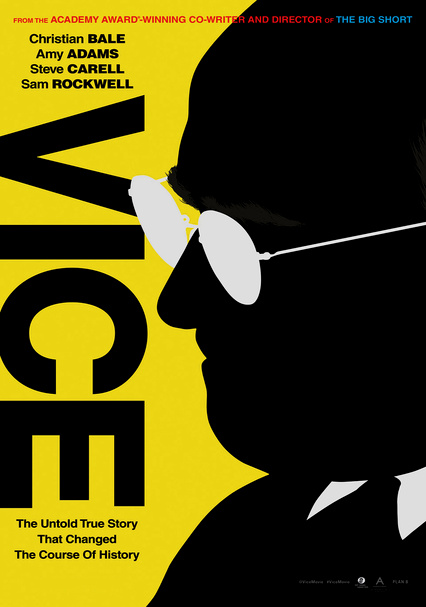
Vice-2018

Vice-2018

Director Adam McKay

Starring Christian Bale, Amy Adams, Steve Carell

Scott’s Review #849

Reviewed December 31, 2018

Grade: A

Following 2015’s The Big Short, Adam McKay once again creates an intelligently written, thought-provoking political film based on facts and historical accounts.

With Vice (2018) he focuses on former Vice President Dick Cheney and his rise through the political ranks to second in command.

Brilliant and wise in every way, the film is fair-minded in its approach. Predictably, in this era of “fake news,” it will be embraced by liberals but shunned by conservatives.

In the first seconds of Vice, a disclaimer appears stating that Cheney was a private man with secrets, but the filmmakers did their best to relay accurate information. The salty language in this clip will likely elicit chuckles, but McKay stays the course with his statement.

Immediately, the film flashes to the September 11 attacks with Cheney sitting in crisis mode, about to make an important decision.

Vice then retreats to 1963 Wyoming as a drunken college-aged Dick Cheney (Christian Bale) is pulled over for erratic driving after a barroom brawl. He is nearly dumped by his girlfriend and future wife Lynne Cheney (Amy Adams), who threatens to find another man if Dick does not straighten out.

He manages an internship and an admiration for Donald Rumsfeld (Steve Carell), a staunch Republican and White House Chief of Staff, and begins his political climb.

In clever form, the film is narrated by a character named Kurt (Jesse Plemons), who we do not know is connected to Cheney until the end of the film. This adds an added measure of intrigue to the overall film, as we know a secret will be revealed.

Vice is also unique in direction, with constant back-and-forth timeline scenes and quirky humor throughout. Are the Cheneys portrayed as ridiculous? No, but sardonic humor is directed at them as their ambitions and power-hungry motivations are completely exposed.

The film does a great job of taking the viewer through the political state of Cheney’s administration, roughly the early 1970s until 2008, when Obama took office. The Clinton years are completely skipped, but that is more to do with Cheney being in the private sector rather than an intentional slight.

The Nixon years and the George W. Bush years are given hefty screen time and the latter is portrayed as nearly a buffoon as Rockwell portrays him as a boozy, dumb frat boy.

Bale is startlingly good as Cheney and deservedly steals the show. In addition to the forty-pound weight gain, the actor endured the facial and hair treatments (props to the makeup department!) and became the man.

His body movements, smile, and speech patterns are daringly good. With a sneer and a calculating grin, we see the wheels spinning in Cheney’s head numerous times, and Bale is incredible at portraying these thoughts to the audience.

The film contains many well-known actors in vital supporting roles worth noting. The depictions of the following are examples of excellent casting with spot-on representations: Tyler Perry as Colin Powell, LisaGay Hamilton as Condoleezza Rice, Sam Rockwell as George W. Bush, Alison Pill as Mary Cheney, and Lily Rabe as Liz Cheney.

All portrayals are excellent to watch, especially for viewers who remember the real-life people involved.

Some will undoubtedly complain that the film has a “liberal slant” and portrays Cheney as power-hungry and self-serving. While this is a valid point, and McKay makes left-leaning choices, the director bravely carves the film into an experience that goes both ways.

More than a few scenes (including the final scene) justify Cheney’s actions, in his mind anyway. Claiming to do what is suitable for the people and be a true American, his actions and yearning for power can be understood to some degree, or perhaps by some people.

Vice (2018) is controversial and undoubtedly divisive, which is unsurprising given the current state of American politics. It tells an inspiring and rich story of an elusive politician’s life and policies, daring to be forgotten, that still resonate across the United States.

The more I ponder this film’s importance, the greater it becomes, but stay past the credits for arguably the best moment in the movie and of monumental importance in 2018.

Oscar Nominations: 1 win-Best Picture, Best Director- Adam McKay, Best Actor- Christian Bale, Best Supporting Actor- Sam Rockwell, Best Supporting Actress- Amy Adams, Best Original Screenplay, Best Makeup and Hairstyling (won), Best Film Editing

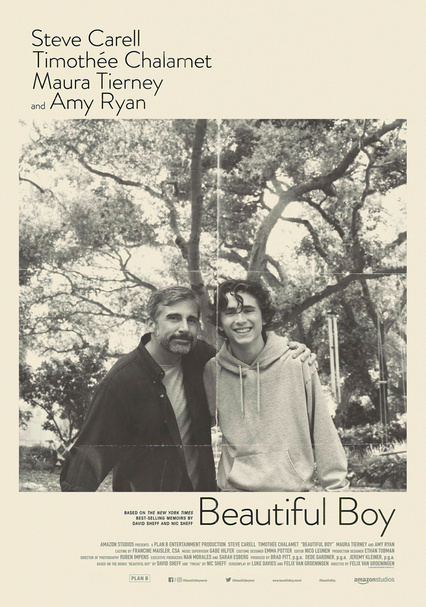
Beautiful Boy-2018

Beautiful Boy-2018

Director Felix Van Groeningen

Starring Steve Carell, Timothée Chalamet

Scott’s Review #835

Reviewed November 23, 2018

Grade: A-

Beautiful Boy (2018) tells a humanistic and vital story about the ravages of drug addiction and how the issue affects not only the person with an addiction but the entire family unit. Nestled within the powerful writing is a lovely father/son relationship and the duo’s trials and tribulations over the years.

The film feels pure and honest, with rich storytelling and many good acting performances.

Beginning in the present, David Sheff (Steve Carell) realizes that his son Nic (Timothée Chalamet) has been missing for two days. When Nic finally arrives at the Sheff household, he is strung out and sick.

David suspects Nic has been abusing drugs, and all parties agree that Nic needs professional help and a stint in a rehab facility. However, nobody realizes the depths of Nic’s addiction.

When Nic checks out early and goes on a bender, the film begins to segue back and forth between periods of Nic’s recovery and his many relapses. It also presents scenes of David and Nic’s relationship during their childhood years.

The best parts are the conversations and moments between father and son, and their enduring love. David’s second wife, Karen (Maura Tierney), and Nic’s mother, Vicki (Amy Ryan), are also in the mix.

The screenplay is based on memoirs written by David and Nic Sheff. The chronicles of their journey include triumph and heartbreak over many years as recovery and relapse become frequent parts of their lives, threatening to tear them apart or result in Nic’s ultimate death.

The road to recovery is not an easy path.

Carell and Chalamet wonderfully portray the primary characters, David and Nic. The fact that the actors do not resemble each other is quickly forgotten as their dynamic is emotional and palpable, and they share easy chemistry.

Carell is a strong actor, capable of infusing his character with strength and calm while slowly falling apart at the seams.

He loves his son and wants him to recover, but he finally accepts that he needs to let him go. This moving realization is Carell’s best scene.

Chalamet, boyish and innocent-looking, is perfectly cast. With kind blue eyes and a mop of raven hair, the actor could easily pass for twelve years old. This only enhances the tragedy of youth ravaged by drug abuse.

These qualities are mirrored by those of his girlfriend Lauren (Kaitlyn Dever). She also possesses a fresh-faced, clean look, which strengthens the message.

Ryan’s and Tierney’s performances in what could easily be throwaway “wife roles” must be mentioned.

For a while, I thought Tierney was in a marginal role until she finally had a wonderful scene in which her frustration reached a boiling point. Fuming with rage, she attempts a car chase with Nic, only to finally crumble into tears, realizing how the mess has changed her as a person.

Ryan also sinks her teeth into a teary role, almost blaming herself for Nic’s problems.

The film wisely presents statistics to hit home further, mainly the low percentage recovery rate of most crystal meth users. A single-digit success rate on this note is frightening; the user requires more and more substance to feel anything close to the first high they experienced.

A pivotal scene occurs at the film’s end as David and Karen attend a support group. As they tearfully listen to a woman’s story of the recent death of her addict sister, we are left to wonder if Nic has also died.

Kudos to a powerful cameo performance by actress Lisa Gay Hamilton.

The sunny California setting benefits the film and starkly contrasts the darkness of New York City, where Nic attends school. With multiple exterior shots of San Francisco and Los Angeles, the metropolitan scope is vast and cruel for drug users.

Easily accessible to anyone with the motivation to obtain drugs, the streets of San Francisco are portrayed as hard and drug-infused, mainly when David drives around desperately looking for Nic.

Featuring a story told before but rarely from the family perspective, Beautiful Boy (2018) does what it sets out to do and does it splendidly.

Careful not to soften the challenges and sufferings of the person with an addiction, the devastation they bring to their loved ones is also showcased. The sound and emotional father/son relationship may be the film’s best part.

12 Monkeys-1995

12 Monkeys-1995

Director Terry Gilliam

Starring Bruce Willis, Madeline Stowe, Brad Pitt

Scott’s Review #804

Reviewed August 21, 2018

Grade: B+

Bruce Willis stars in a 1995 science-fiction thriller named 12 Monkeys that is sure to confuse even the keenest of viewers. Containing a plot that is impossible to follow (at least with only one watch), the film is quite novel and filled with edge nonetheless.

With this film, Willis came into his own and proved to some naysayers that he is more versatile than a one-note action hero. He would develop even more as the years passed- think Sixth Sense (1999).

If I may begin to summarize the complex plot, 12 Monkeys is a film about time-travel (confusing enough), that traverses from the year 2035 to the year 1990, to the year 1996, with a bevy of dreams or memories thrown in, but I am still not crystal clear on that.

The time involved threw me for a loop and I was not able to comprehend where things shifted to……or was part of it a memory possessed by Willis’s character as a little boy?

Nonetheless, in 2035 James Cole (Willis) is a prisoner who is selected by “the powers that be” to go back in time to find a cure for a deadly virus that has wiped out a large part of the world. He is transported to the year 1990 instead of 1996 and lands in a psychiatric hospital, where he meets fanatical Jeffrey Goines (Brad Pitt).

Dr. Kathryn Railly (Madeleine Stowe) appears in both the 1990 and 1996 stories as a respected psychiatrist and author. Both she and Goines become central to the main plot and the story twists and turns as events move along.

The intention to make Willis and Stowe a romantic couple did not seem to quite work at first, but their chemistry grew on me. The duo never received a “happily ever after” finale as they deserved nor was their troubled romance ever fully realized to say nothing of consummated.

The flirtation and bond they share felt more like a tease than anything else, or rather, having two Hollywood heavyweights forge some sort of romance. Regardless, “romance” did not seem the point of this film.

Brad Pitt was nominated for the Best Supporting Actor Oscar award for the film. While he provides a quirky, showy style role (actually multiple roles or personalities), complete with tics resembling a Tourette syndrome patient, the role is not one of his best.

At this time (1995), Pitt was a rising star and the recognition helped him tremendously. But he seems slightly overact and makes the character too over-the-top.

I much prefer his more subdued work in Seven (released the same year), or future roles in Babel (2006) and Moneyball (2011).

Appealing in parts are the frequent exterior shots of the cities of Philadelphia and Baltimore, where the film is set. Treats include the Baltimore-Washington International Airport, Pennsylvania Convention Center, and Eastern State Penitentiary filming locations as well as numerous highway and bridge shots, which add tons of authenticity.

A major score for the film, and Alfred Hitchcock fans everywhere, is the incorporation of classic film clips, specifically the mysterious Vertigo (1958) into the story.

As Kathryn and James camp out in a rustic movie theater and disguise themselves as different people, they watch a marathon of Hitchcock films (as evidenced by the many titles on the marquee).

Clever is that the characters of James and Kathryn begin to mirror the actions of Vertigo characters Scottie and Judy.

Blondes anyone?

12 Monkeys (1995) does sort of come together after the film as the dreams/memories are laid out pretty clearly. As we have witnessed these sequences throughout, it leads to a semi-satisfying conclusion.

A bit of a beautiful mess, the film has clever tidbits and is well-acted, and the baring of both Willis’s and Pitt’s butts might get some additional viewers.

I think I need to watch the film again to perhaps understand and connect all of the dots better.

Oscar Nominations: Best Supporting Actor-Brad Pitt, Best Costume Design

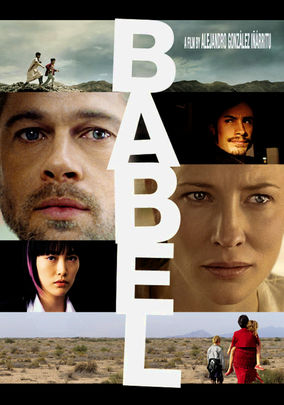
Babel-2006

Babel-2006

Director Alejandro G. Iñárritu

Starring Brad Pitt, Cate Blanchett

Scott’s Review #791

Reviewed July 19, 2018

Grade: A

Babel (2006) is part of director Alejandro G. Iñárritu’s “Death Trilogy” films- Amores Perros (2000) and 21 Grams (2001) are the others. The director crafts a riveting drama involving intersecting stories that are a thrill ride a minute and highly compelling.

The film is at risk of being forgotten, however, largely due to Iñárritu’s subsequent successes- Birdman (2014) and The Revenant (2015), but Babel is a fantastic companion piece to either Traffic (2000) or Crash (2006), as those films hold a similar style.

The three stories are riveting in their own right and could each be a gripping short film of their own. The fact that characters within each segment are related to the others in some way takes the stories over the top.

The film switches back and forth within each story which is a huge plus, making the tension even more palpable as we begin to connect the dots. The spliced editing is a remarkable achievement in making the continuity seamless.

Each story is summarized below.

An affluent American couple, Richard and Susan (Brad Pitt and Cate Blanchett), vacation in Morocco, happily enjoying a bus tour.

When two local boys play with their father’s rifle and experiment by shooting at long-range, the American woman is shot, leading to a terrorist accusation while the couple desperately seeks medical attention in the middle of nowhere and in a foreign country.

In Japan, a wealthy businessman (and owner of the rifle), is investigated while his promiscuous teenage daughter (Rinko Kikuchi) seeks attention from young men.

The girl, deaf, is angry and depressed due to her mother’s recent suicide.

As she flirts with a local detective, she slips him a mysterious note and implores him to read the note only after he leaves her father’s gorgeous high-rise apartment, leading to a mysterious revelation.

Finally, in southern California, Richard and Susan’s Mexican nanny, Amelia (Adriana Barraza), cares for the couple’s young children. Almost like a real family member, Amelia adores the kids (and they love her.)

When she is notified that the couple will be delayed returning home, she panics and foolishly takes the kids across the border to Mexico to attend her son’s wedding.

When an incident allows the police to become involved, Amelia and the kid’s lives are in peril.

The connecting stories are only part of what makes Babel so fantastic, but an enormous aspect is the direction Iñárritu has the characters go in.

As the stories play out we care deeply for the characters which play a great role in adding meat to each story.

Sometimes the connections of the characters are immediately known, other times the audience can savor the inevitable big reveal. Not every story featured in Babel will have a happy ending, which makes the film all the more compelling and satisfying.

How incredible are the different locales and cultures featured in Babel from a geographical perspective alone?

The action traverses from the hip, modern metropolis of Tokyo, with slick nighttime sequences dance clubs, and urban hip-hop beats.

The deserts of remote Morocco with the vast and sweeping lands mix perfectly with the hot Mexican atmosphere and the cultural nuances of a real Mexican wedding.

Another key element is the different backgrounds of the characters and the conflict this sometimes leads to. As Richard frantically seeks medical attention for Susan, he is met with resistance from some while receiving aid from a local veterinarian.

At the border of Mexico and the United States, Amelia and her brother are not treated well by Border patrol. One cannot help knowing that this is because they are Mexican and carrying American children, thus discriminated against.

Wonderful call-outs are deserved for relatively unknown actors, Kikuchi and Barraza, both of whom received tremendous accolades in 2006 for their work when they could have easily been overlooked in favor of bigger, high-profile stars like Blanchett and Pitt.

I love when this happens and gritty performances find their due respect. Both actors give great performances in complex, layered characters.

Since making Babel Iñárritu has progressed to great acclaim with Oscar winners like Birdman and The Revenant, but let’s not forget that Babel received a heap of Oscar nominations, though sadly only one victory for the musical score.

Unfortunately usurped by his more high-profile works, Babel (2006) is an excellent, fast-paced, and layered film with spectacular characters, story-telling, and editing.

Oscar Nominations: 1 win-Best Picture, Best Director-Alejandro G. Iñárritu, Best Supporting Actress-Adriana Barraza, Rinko Kikuchi, Best Original Screenplay, Best Original Score (won), Best Film Editing

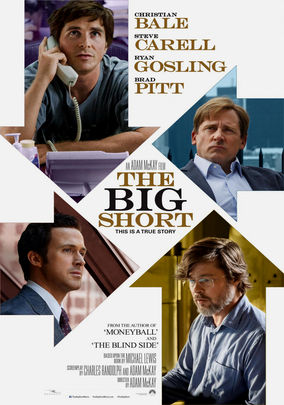
The Big Short-2015

The Big Short-2015

Director Adam McKay

Starring Christian Bale, Steve Carell

Scott’s Review #369

80075560

Reviewed January 10, 2016

Grade: A-

The Big Short (2015) is a confusing film and is its intention and also its genius.

Throughout some of the film, I was uncertain how much I liked it (or got it) and found many of the characters unlikeable, but at the conclusion, I realized that is exactly what the filmmakers intended is a clever tactic and makes The Big Short a success.

On the surface, the film has some humor but a very dark story at its core and left me a bit depressed and terrified at the conclusion.

I am happy that the film is receiving accolades and is the “thinking man’s” hit movie of the season.

To attempt to summarize the film, the film begins in 2005, approximately two years before the financial crisis of 2007-2008.

Eccentric hedge fund manager Michael Burry (Christian Bale), realizes the U.S. housing market is unstable and predicts a crash.

He attempts to profit by betting against the market, a move laughable to all around him, especially the banks who anticipate a windfall at Michael’s expense. Trader and fellow market managers, Jared Vennett and Mark Baum (played by Ryan Gosling and Steve Carrell) catch wind of Michael’s theory and try to get in on the action.

There is a sub-plot involving two younger investors also attempting to profit through the guidance of a retired banker (played by Brad Pitt).

The financial collapse is a tender subject and certainly no laughing matter, especially since it is so recent and affects many people.

The Big Short is touted as a comedy, which is strange. I found the audience didn’t know exactly what to laugh at or when. The film’s “laughs” were cynical, witty, and sometimes wicked. Many people do not get this type of humor.

In real life, people were kicked out of their homes and lost their jobs, pensions, etc. and it was all the result of greed, which The Big Short hammers home.

Several scenes include frat-boy investor/trader types getting rich by enabling almost anyone to afford a new house. Little did these people realize that there was a catch.

The film paints a jaded picture of Wall Street. The rich get richer at the expense of the middle class and the poor. It is an age-old sad tale.

Performance-wise, Carrell and Bale are the standouts. They both play characters who are damaged. Bale’s Michael is socially awkward, and has a false eye, but is also a genius. Carrell’s Mark is angry, grizzled, and is in therapy as a result of his brother’s suicide.

Both actors are great and have developed into worthy, credible acting talents. Worth mentioning, are small, but meaningful roles by Melissa Leo and Marisa Tomei.

The Big Short is shot interestingly, and highly unusual. From time to time, the action will stop and a famed celebrity (Selena Gomez, a world-renowned chef, or a model in a bubble bath) will explain the events, thus far, or give some review.

Also, more than once the actors will turn to the camera and speak directly to the audience. A personal touch that I found effective.

In the end, not much in life has changed, which is the message, and a frightening one. As one character brilliantly puts it “people will go back to blaming the poor and the immigrants”, which is a sad message.

After millions lost everything, not much has changed in the world and The Big Short makes that very clear. The people responsible have gotten away with crime, the banks bailed out, and a new scheme is undoubtedly in place.

It’s a sad world.

The Big Short (2015) is a gritty, harsh look at reality and a terrific film.

Oscar Nominations: 1 win-Best Picture, Best Director-Adam McKay, Best Supporting Actor-Christian Bale, Best Adapted Screenplay (won), Best Film Editing

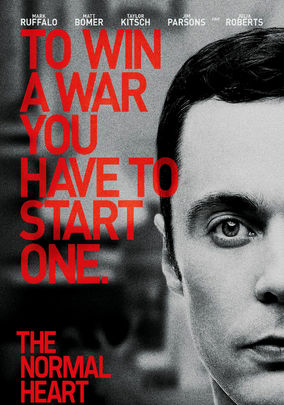
The Normal Heart-2014

The Normal Heart-2014

Director Ryan Murphy

Starring Mark Ruffalo, Matt Bomer

Scott’s Review #198

70302186

Reviewed December 1, 2014

Grade: B+

The Normal Heart is a 2014 HBO television movie based on the true story of Ned Weeks, an openly gay AIDS activist/writer, played by Mark Ruffalo.

The film is set during the period when the epidemic first surfaced, from 1981-1984, and the challenges and frustrations faced, mostly within the gay community, to bring exposure and assistance to the disease.

Weeks was famous for establishing a group of passionate members who banded together to attempt to hurdle these struggles.

The film was produced by Brad Pitt.

This is wonderful to know as films with this content (AIDS) are often tough to produce. It’s wonderful that Pitt’s wealth and influence were used effectively.

At a vastly different time in the country to be gay, the government did very little to assist with financing funding for treatment or researching a cure for it, which is the main point of the story.

The talented cast makes this film what it is.

Matt Bomer plays Ned’s closeted gay lover, Felix Turner, one of the many casualties of the deadly disease. Bomer lost forty pounds in preparation for the role.

Julia Roberts plays polio-stricken doctor, Emma Brookner, who was instrumental in helping the sick when few others within the medical community wanted to.

Other actors providing support are Alfred Molina, who plays Ned’s supportive, powerful, attorney and brother, and Joe Mantello, who has a terrific meltdown scene as his anger and anguish over the disease not being taken seriously by the government finally bubble to the surface.

Finally, Mark Ruffalo plays Ned competently, but why the slight feminization of the character? The real Ned Weeks was masculine. A needless stereotype the film (or Ruffalo) chose to pursue.

The film shows the discrimination faced by AIDS victims, from an airline pilot refusing to fly a plane carrying a sick patient, to an electrician refusing to enter a patient’s hospital room to fix a television set.

This is sad when one realizes how ridiculous these unfounded fears proved to be.

According to the film’s statistics, a major point of the film is how the United States Government, specifically President Reagan, did very little in the way of funding or even wanting to discuss the issue for years following the initial outbreak, resulting in thousands of lost lives.

And why exactly is Reagan considered a great President?

It makes one ponder. It was only due to beloved Hollywood star Rock Hudson acquiring and dying from the disease and Elizabeth Taylor using her star power to get people involved that finally led to the topic being discussed and action taken on a federal level.

My slight criticism of the film is that it looks and feels like a television movie similar in texture to Behind the Candelabra (2013), another HBO film.

The colors are bright and vivid and look television-like. could have used darker lighting and perhaps a gloomier more dower feel, especially given the subject matter involved in the story.

Otherwise, thumbs up and respect for bringing this story to millions of viewers and hopefully educating those who were not there.

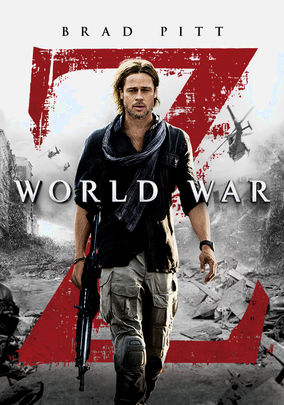
World War Z-2013

World War Z-2013

Director Marc Forster

Starring Brad Pitt

Scott’s Review #121

70262639

Reviewed July 20, 2014

Grade: B

World War Z (2013) is the type of film that is a summer hit but will most likely be forgotten over the years. It is a slightly above-average, enjoyable action/ zombie thriller, but not much more.

It stars Brad Pitt as a former United Nations investigator called in to save the world from a zombie pandemic. The crisis is spreading throughout major cities of the world simultaneously.

The film sees Pitt traversing the globe in an attempt to find a cure for the epidemic before it is too late and the zombies make the world extinct from humans.

The zombies are super zombies in that they can fly and move at lightning speed making them ultra-dangerous.

The story is implausible and plot-driven, but it doesn’t matter and works on some level. My theory for this success is that the film is fast-paced, the action starts almost immediately, and Brad Pitt is charismatic.

He is the star and all the action centers around him.

The film contains exciting, tense scenes including a plane crash sequence and a chase around a medical lab.

World War Z (2013) is a popcorn film, meant to be sat back and enjoyed and not overanalyzed or taken too seriously.

It is a perfect summer hit.

No Way Out-1987

No Way Out-1987

Director Roger Donaldson

Starring Kevin Costner, Sean Young, Gene Hackman

Scott’s Review #96

810117

Reviewed July 5, 2014

Grade: B+

No Way Out is a slick political thriller from 1987 starring Kevin Costner as a U.S. Naval Officer investigating a Washington D.C. murder.

Gene Hackman and Sean Young are co-stars. Costner is at the top of his game in the film and is quite charismatic and charming.

The plot has several twists and turns that keep the viewer guessing and engaged and is a classic edge-of-your-seat stylistic film.

The film is paced very well as it gradually picks up steam with each plot turn until it builds to a frenetic finish. Specifically, the final forty-five minutes that take place in the CIA are quite a cat-and-mouse game.

It’s a film about sex, murder, love affairs, politics, and backstabbing.

Hugely successful in the 1980s, and as much as I still enjoy it, the film unfortunately now appears quite dated as the soundtrack, hair, and clothes, all scream late 1980’s and that is not to its credit.

It now seems all too similar, though a cut above, to other countless themed films of the same period. Truly great films are timeless.

Kevin Costner was in his prime with No Way Out (1987) and Sean Young has a wonderful turn as the mysterious Susan Atwell.

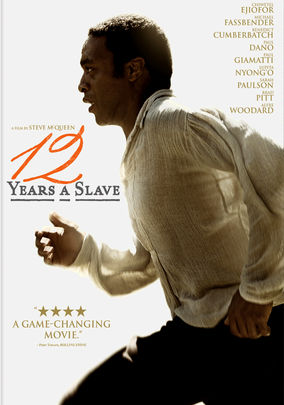
12 Years a Slave-2013

12 Years a Slave-2013

Director Steve McQueen

Starring Chiwetel Ejiofor, Lupita Nyong’o, Michael Fassbender

Scott’s Review #62

70284282

Reviewed June 24, 2014

Grade: A

At the time of 12 Years a Slave’s (2013) release, a ton of buzz began circulating. Was it that good?

Considered the front-runner to win the Best Picture statue, it did go on to win the top honor.

The film is not easy to watch. It is brutal and heart-wrenching at times. I will spare the details, but the most intense scene involves a whip.

There are scenes of torture, degradation, and cruelty against the slaves by the slave owners.

While tough to watch, I applaud the film for not glossing over the atrocities of slavery. Some have criticized it for being a retread of similar films, but I disagree. It is worlds more intense than watered-down versions.

However, the film is not a downer.

Yes, a class of people is beaten down and victimized, but they also rise above and never give up hope. The fact that it’s a true story and a book was written on the subject by the real Solomon Northup makes it all the more powerful.

The performances are outstanding (Ejiofor, Fassbender, Paulson, and Nyong’o).

The look and cinematography are sharp and I love the distinctiveness of the north and south scenes. The setting is stifling hot and dreary.

There are at least two scenes where the camera pans on a shot and holds it for seemingly an eternity until an action occurs, which makes the scenes effective.

While difficult to watch, 12 Years a Slave (2013) should be viewed by everyone to see how far society has come, not forgetting how far we still need to go to eliminate discrimination and victimization.

Oscar Nominations: 3 wins-Best Picture (won), Best Director-Steve McQueen, Best Actor-Chiwetel Ejiofor, Best Supporting Actor-Michael Fassbender, Best Supporting Actress-Lupita Nyong’o (won), Best Adapted Screenplay (won), Best Production Design, Best Costume Design, Best Film Editing

Independent Spirit Award Nominations: 5 wins-Best Feature (won), Best Director-Steve McQueen (won), Best Male Lead-Chiwetel Ejiofor, Best Supporting Male-Michael Fassbender, Best Supporting Female-Lupita Nyong’o (won), Best Screenplay (won), Best Cinematography (won)

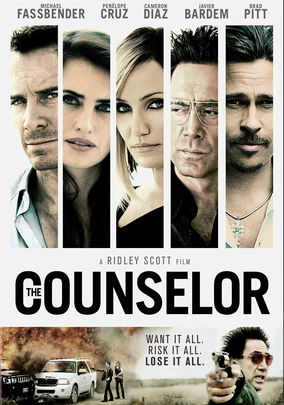
The Counselor-2013

The Counselor-2013

Director Ridley Scott

Starring Michael Fassbender, Brad Pitt

Scott’s Review #18

70276713

Reviewed June 17, 2014

Grade: A-

The Counselor (2013) is a star-studded, unique, drug trafficking thriller set in Mexico and Texas.

The film has met with some debate as viewers either loved or hated it. There appears to be a case made that those who hated it did not understand the movie.

It is not a “by the numbers” or “predictable” popcorn film. It’s much better than that. It’s a thinking man’s movie.

I saw shades of Quentin Tarantino’s influence and parts were reminiscent of the wonderful TV series Breaking Bad (2008-2013).

There are intersecting stories and heavy acting talent (Fassbender and Diaz are the standouts). This is Cameron Diaz’s best role and wish she would go edgy more often.

There are three brilliantly well-done scenes (motorcycle, Brad Pitt on the street, and landfill scene) that are as disturbing as they are artistic.

There are some plot holes, that can be overlooked.

It’s not simply an action film, but a character-driven one.

The viewing of The Counselor (2013) is a unique experience.