Category Archives: LGBTQ+ Comedy

Single All the Way-2021

Single All the Way-2021

Director Michael Mayer

Starring Michael Urie, Philemon Chambers, Luke Macfarlane

Scott’s Review #1,325

Reviewed December 21, 2022

Grade: C+

Single All the Way (2021) is an LGBTQ+ romantic comedy film released by the streaming behemoth Netflix. However, I swear the film feels like a Hallmark or Lifetime television movie of the week offering.

The film, a Christmas-themed romantic comedy about gay men, is the streaming service’s first gay holiday film.

As inspired and momentous as this may sound, please hold the accolades and champagne for just a hot second. I had hoped for a bit more danger, complexity, or even darker drama from Single All the Way, given it’s the first of its kind.

Instead, I was presented with a childish, cliched, saccharine-induced, run-of-the-mill story that swaps the standard straight-laced, blue-eyed, blonde-haired straight couple from the Midwest, USA, with gay characters.

Everything else remains the same.

Since the LGBTQ+ is to be celebrated, the result is a marginally enjoyable romantic comedy featuring gay men and a timid triangle where the audience knows all along how it’s going to play out.

Desperate to avoid his family’s judgment about his perpetual single status, Peter (Michael Urie), who lives in Los Angeles, convinces his best friend Nick (Philemon Chambers) to join him for the holidays in snowy New Hampshire and pretend that they’re now in a relationship.

But when Peter’s mother (Kathy Najimy) sets him up on a blind date with her hunky trainer James (Luke Macfarlane), the plan goes awry. Peter becomes caught in a quandary about either confessing his feelings for Nick or pursuing relations with James while his family schemes to unite Peter and Nick.

Let me make clear that the only reason Single All the Way rates as high as a ‘C+’ is that I applaud the decision to write, produce, and release an LGBTQ+-themed film. It’s about damn time, but I wish it were a better film.

Nick being light-skinned black is also a way to promote at least a bit of diversity, although the other characters and environment feel as white as the fake snow draping the wintry set design.

Despite being slightly effeminate, he works as a rugged handyman, which somehow doesn’t quite work out.

The main issue is that there is no chemistry between any of the three men. It’s unbelievable that Nick and Peter have been roommates for years, and it takes a trip to New Hampshire for them to realize their undying love for one another.

Macfarlane, well-known for appearing in Bros. (2022), the first gay romantic comedy released by a major studio, is almost distractingly good-looking. Hunky and drop-dead gorgeous, it’s laughable to think his character would be the odd man out against the semi-cute Peter and Nick.

It’s as if someone wanted the average Joe to beat out the hunk, finally.

Realistically,  Peter would have at least slept with James instead of hemming and hawing before declining an invitation to James’s apartment after a date.

The family, led by Peter’s mother Carole (Najimy), is beyond irritating. Wanting desperately for her son to find love, she is what every gay man doesn’t want his mother to be.

Landing Jennifer Coolidge, a gay icon, is a significant win wasted by casting her in the cliche-riddled role of Aunt Sandy, a man-hungry diva.

If that isn’t bad enough, Peter’s two sisters’ scheming to separate Peter and James’s burgeoning romance and unite Peter and Nick is silly and not worthy of a daytime soap opera.

At the end of the day, Single All the Way (2021) is barely even a cute film. It’s as safe as can be with every cliche (straight and gay) imaginable, as if someone was so thrilled to be making an LGBTQ+ film that they didn’t dare take one single risk.
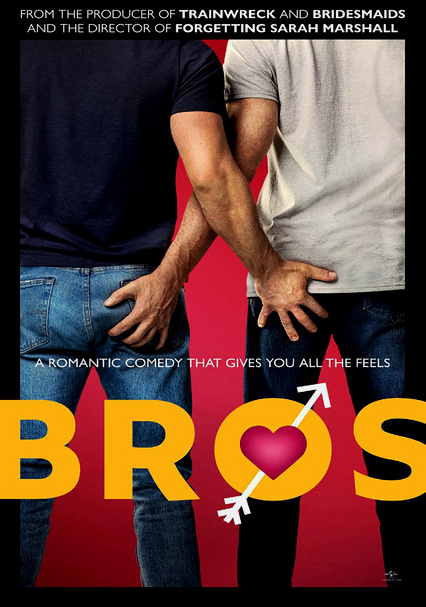
Bros-2022

Bros-2022

Director Nicholas Stoller

Starring Billy Eichner, Luke Macfarlane 

Scott’s Review #1,304

Reviewed October 5, 2022

Grade: A

Even if Bros (2022) were a bad film, it would still hold the monumental distinction of being the first LGBTQ+-themed romantic comedy released and supported by a major distributor.

In 2022, years after the legalization of same-sex marriage in the United States and various other milestones that would take too long to list, Bros is the first of its kind.

Fortunately, Bros is not a poor film but an exceptional one with brazen confidence and a lot to say.

Led by crisp and intelligent dialogue, lovable lead actors, a cast comprised solely of the LGBTQ+ community, strong characters, and hilarious moments, it has something for everyone, whether gay, straight, or otherwise.

Before readers pigeonhole the film as one only to be seen by the  LGBTQ+ community, I will cry bullshit.

Straight audiences will fall in love with the characters and learn valuable lessons about stereotypes and deep-seated emotions of gay men who are not always comfortable in their skin.

Unfortunately, Bros was not the box office smash hit the studio had hoped it would be. Some straight viewers felt the film was not for them, and that’s a shame.

There is still more work to be done to eliminate conscious and unconscious bias and educate others to embrace differences.

Billy Eichner, who co-wrote the Bros screenplay along with director Nicholas Stoller, stars in the film, alongside Luke Macfarlane.

Eichner plays a sardonic, gay Jewish male named Bobby Leiber who resides in New York City.  We meet Bobby while he is recording another episode of his New York podcast and radio show, The Eleventh Brick at Stonewall, where he talks to callers about his written works on gay history and gay icons.

He claims to be okay with being single and not having found love, instead hooking up with random men through a dating application called Grindr, although he is successful in his career and has good friends.

He awkwardly meets Aaron Shepard (Macfarlane), a hunky, masculine guy deemed ‘hot but boring’ by those in Bobby’s circle, in a gay club.

The two men slowly develop a romantic relationship despite their commitment problems and hectic schedules, which seem designed to put the kibosh on love.

Despite all the other aforementioned wins, what makes this LGBTQ+ film stand out is that the screenwriting feels fresh and intelligent. Above all else, it wisely paints the struggles that most gay men seeking a relationship of substance face.

As in other romantic comedies, specific setups and situations create conflict that risks preventing Bobby and Aaron from getting together. Bobby feels Aaron is out of his league, preferring other muscular men to his overbearing and critical approach.

One can understand Bobby’s angst, but in one of the film’s most poignant and beautiful scenes, Aaron tearfully reveals that Bobby constantly challenges him, and it feels good.

He needs to be with Bobby because it is right. Bobby serves as a mentor to Aaron as he wrestles with being true to himself. Stuck in a depressing yet financially secure job, Aaron longs to be a chocolate maker instead.

Beauty is only skin deep. Regardless of occasional insecurities, the two men are firmly connected, and that beats everything else.

On a personal level, both characters resonated with me, evoking their angst. One would assume that Aaron the hunk would be more confident, but is that the case? Both men teach and learn from each other, which makes their relationship powerful.

In addition to the romantic moments, Bros has its share of raunchy and comical scenes, which justify its ‘R’ rating. In typical Judd Apatow (the film’s producer) form, the sex scenes are revealing.

There are enough orgies, toe-sucking, and fist-sucking to make the prudish blush. The planned ‘rimming’ scene was cut from the final cut. One wonders what that would have been like.

The film follows a distinct comedy formula and includes a helping of standard annoying, clueless, or over-the-top colorful characters that appear to justify its mainstream comedy placement.

The genius is that Bros works.

I implore straight audiences to give the film a chance, if for no other reason than to show that gay people are as different from each other as apples and oranges. As Bobby makes clear, some are nice and some are assholes.

Bros (2022) treads conventional but with a twist, and shows that gay characters are as genuinely funny as straight characters. It provides laugh-out-loud moments and teary sentimental ones.

I’m eager for the next project from Billy Eichner.

The Object of My Affection-1998

The Object of My Affection-1998

Director Nicholas Hytner

Starring Jennifer Aniston, Paul Rudd

Scott’s Review #1,249

Reviewed April 24, 2022

Grade: B

The Object of My Affection (1998) is a romantic comedy riddled with the standard cliches and obvious situation setups of similar types of film.

As a whole, it is plot-driven rather than character-driven.

The redeeming factor is that it adds a left-of-center approach and delves into LGBTQ territory, albeit in a soft touch, which more mainstream American films were only starting to do in the late 1990s.

The best part of the film is the casting of Jennifer Aniston and Paul Rudd who have tremendous chemistry as a potential couple who has no chance of riding off into the sunset together. At least in any romantic sort of way.

He is gay and she is straight and nothing can change that.

Though fluffy, The Object of My Affection deserves some level of praise. Several gay men can easily relate to a situation where they find a female friend enamored with him and experience a return of affection differently.

It’s common to fantasize about what might have been if feelings were different and as the film explores, even try to go straight.

The film itself has a definite Will & Grace vibe, a popular television program emerging at this time, and even has the same location. The main characters become the very best of friends, watching movies together and sharing intimate moments just like a romantic couple would do.

The late 1990s was a time when gay characters took center stage so The Object of My Affection gets a thumbs up for being part of the herd.

Nina Borowski (Jennifer Aniston) lives in Brooklyn, New York, and works as a social worker. She invites her new gay friend, George (Paul Rudd), to move into her apartment after he breaks up with his longtime lover, Robert (Tim Daly).

Meanwhile, Nina gets pregnant and decides to keep the baby, but ends her relationship with the child’s father, her controlling boyfriend Vince (John Pankow).

As Nina and George live and experience her pregnancy together, they grow close and Nina realizes she’s beginning to fall in love with her friend.

Aniston and Rudd work well together as a couple, friends or otherwise, and the chemistry tones are terrific. Even during the sappiest of scenes, and there are many of them, I always smiled a bit at their bond.

When Nina and George have the inevitable dramatic scene and express their feelings it doesn’t feel as forced as one might expect. Their bond is solidified and the film unsurprisingly has the pair remain in each other’s lives, presumably forever.

In satisfying form, Nina and George do ride off into the sunset along with little Molly but in solid relationships with other mates. Each character finds their destiny and soulmate while keeping in each other’s life.

While nice, there are many hurdles the filmmakers could have gone further with but don’t. The message is clear- regardless of sexuality, race, religion, or politics, a friend is a friend and a bond is meant to be forever.

It’s a warm message which is the basis for what the intent was and the film delivers a heartfelt story that eases the conflict of real life and perhaps that is needed sometimes.

As much as The Object of My Affection (1998) has its heart in the right place with a progressive and inclusive slant, the film is bogged down by standard cliches and a fairy tale ending.

It’s a nice, fulfilling fantasy film but skates over hard-hitting realistic issues in favor of kid gloves-type situations making it feel dated nearly twenty-five years later.

Other films in the years ahead would supersede the premise and take it to different and more interesting levels delving outside the box further and further.

But, a nice attempt.

I Love You Phillip Morris-2009

I Love You Phillip Morris-2009

Director John Requa, Glenn Ficarra

Starring Jim Carey, Ewan McGregor

Scott’s Review #1,235

Reviewed March 5, 2022

Grade: A-

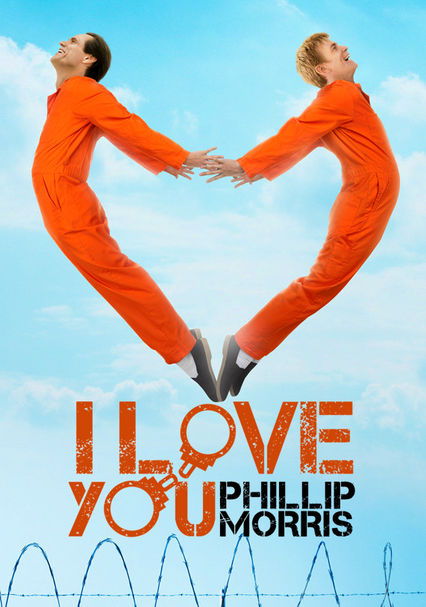
Easily the most daring and arguably the best film role of Jim Carey’s career, I Love You Phillip Morris (2009) is a delightful romantic comedy featuring same-sex characters in the central roles.

At the risk of being too fluffy, there is a sardonic and wry wittiness that I fell in love with.

Those criticizing the film as ‘gay porn’ are silly since there is hardly a sex scene to be critical of or anything more than would appear in a traditional male/female romantic comedy.

Prudes wouldn’t see a film as I Love You Phillip Morris anyway.

It is based on the 1980s and 1990s real-life story of Texas con artist, impostor, and multiple prison fugitive Steven Jay Russell who was clever beyond belief and successful at outwitting his opponents.

I Love You, Phillip Morris, is the directorial debut by John Requa and Glenn Ficarra who received a nomination from the Writers Guild of America Award for Best Adapted Screenplay.

Steven Russell  (Carrey) becomes a cop, gets married, and starts a family, but after a terrible car accident, he vows to be true to himself. Thus far in his life, he has played by the rules and done what is expected of him and because of the crash, he pivots to an emotional bloodletting.

The key irony is that Steven is telling the audience his story from his deathbed so most of the activity is in the past. This is the hook because it made me wonder how and why he died. But is there a twist?

He comes out of the closet, moves to Florida, and finances a luxurious lifestyle with bad checks and credit cards. Arrested and now in prison, Steven meets Phillip (Ewan McGregor), a mild-mannered inmate who becomes the love of his life.

Determined to build a beautiful life with his partner, Steven embarks on another crime spree.

The film caters to the LGBTQ+ audience but has a crossover appeal so that all audiences can enjoy it. This is in large part thanks to the screenwriters and whoever had Carey and McGregor in mind for the film.

Too often films centering around gay characters are deemed second fiddle and not profitable but with bigger stars, the audiences will come.

I Love You Phillip Morris is an independent film that builds momentum when the message is that big stars are comfortable in gay roles, something Heath Ledger and Jake Gyllenhaal taught us a few years earlier in Brokeback Mountain (2005).

Jim Carey, fabulous in The Mask from 1994, and having his share of hits and misses over the years, is perfect in the role of Steven. It’s the most interesting role he has portrayed since he gets to provide his usual physical humor in a role that matters.

LGBTQ+ audiences see a character who makes them laugh without the typical gay stereotypes.

Straight audiences will see a character whose sexual identity doesn’t matter to them.

Props go to McGregor as well who makes a perfect counterpart for Carey as the calm, cool, and collected ‘straight man’. The film could not have worked without him.

He meshes so well with Carey that the audience instantly roots for Steven and Phillip to ride off into the sunset despite being criminals.

The stereotypes are limited but the subject matter of AIDS, especially given the time in which the film is set, is given notice. This is a win and Requa and Ficarra are very careful not to teeter too close to the edge of doom and gloom while respecting the disease.

At its core, I Love You Phillip Morris (2009) is a romantic comedy, and the trials and tribulations of Steven and Phillip are told. I immediately fell in love with them and viewers will too.

It’s a film that feels fresh and alive with the exploration of character richness that is not easy to come by.

The Prom-2020

The Prom-2020

Director Ryan Murphy 

Starring Meryl Streep, James Corden, Nicole Kidman

Scott’s Review #1,101

Reviewed January 17, 2021

Grade: A

Hollywood legends Meryl Streep and Nicole Kidman take on singing and dancing roles in the lovely and timely film, The Prom (2020).

James Corden joins them in a prominent role in a musical based on the popular and recent Broadway production of the same name.

The LGBTQ+ storyline is important and influential, but doesn’t overshadow the fun. The message is perfectly incorporated in the delicious comedy romp.

The Prom reminds me of John Waters’ Hairspray from 1988 or even the fun remake from 2007. Instead of racism, the topic is now homophobia, with a few characters rebuffing the lifestyle.

Most of the performances are over-the-top, but the film works on all levels. The one-liners are crackling and polished, especially by Streep and Corden.

Director Ryan Murphy has become a favorite of mine for creating both extremely dark and light-hearted projects alike that usually slant towards LGBTQ+ recognition and inclusion.

His treasured FX series American Horror Story (2011-present) and miniseries The Assassination of Gianni Versace: American Crime Story are excellent examples of this.

I drool with anticipation over what his next offering might be.

High school student, Emma Nolan (Jo Ellen Pellman), wants to bring a female date to the upcoming prom. Chaos has erupted after the head of the PTA (Parent-Teacher Association), Mrs. Green (Kerry Washington), has canceled the prom.

The setting is Indiana, where same-sex couples face conflicts with the town’s traditional beliefs and values. Little does she know that her daughter, Alyssa (Ariana DeBose), is Emma’s secret girlfriend. The school principal, Tom Hawkins (Keegan-Michael Key), supports Emma and has leaked the story to social media outlets.

Meanwhile, in sophisticated New York City, snooty broadway stars Dee Dee Allen (Streep), Barry Glickman (Corden) are devastated when their new musical flops.

They join forces with struggling performers Angie Dickinson (Kidman) and Trent Oliver (Andrew Rannells) and take a bus trip with the cast of Godspell to champion Emma’s cause and drum up sympathy from their fans and critics.

The rest of the film, as one might expect, features bursts of song and dance, teaching the stuffy residents of small-town Indiana to accept and even embrace Emma and her LGBTQ+ brethren.

Amid a flurry of misunderstandings, mainly between newly dating Tom and Dee Dee, Emma and Alyssa, and Alyssa and her mother, a lavish prom is funded for the town, high school students, straight and gay, to flock to and co-mingle in unity.

While The Prom (2020) is sheer fantasy and real life doesn’t usually work out so perfectly, the sentiment is meaningful, and the film takes a progressive stance.

The Favourite-2018

The Favourite-2018

Director Yorgos Lanthimos

Starring Olivia Colman, Emma Stone, Rachel Weisz

Scott’s Review #843 

Reviewed December 17, 2018

Grade: A

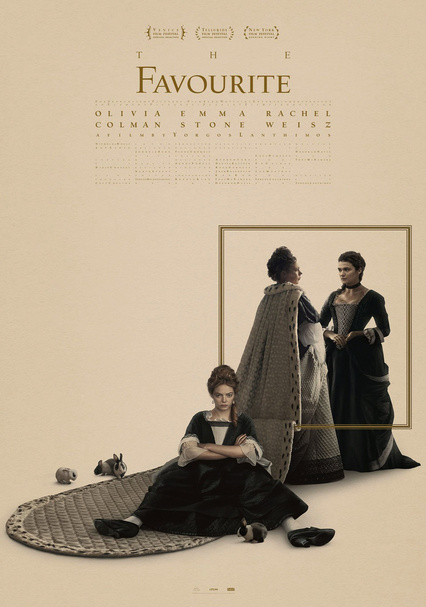
The Favourite (2018) is a deliciously wicked comedy about greed, jealousy, and rage during early eighteenth-century England.

The primary rivalry consists of two feuding cousins, each jockeying for position and “favor” with the Queen, both resorting to dire methods to achieve these goals.

With splendid acting and grand designs, director Yorgos Lanthimos adds to his growing collection of odd and compelling works with the dark comedy offering.

The film takes place during the British and French War of 1708, as a physically and mentally ill Queen Anne (Olivia Colman) rules the country through her confidante and secret lover, Sarah, Duchess of Marlborough (Rachel Weisz).

Though deals and modifications must be made with the ruling Parliament, Anne has the final say in all decisions, including doubling the state tax to pay for the war.

When Abigail (Emma Stone), a distant cousin of the Duchess, and former royalty herself, arrives seeking work as a servant, she quickly plots her way to the bedside of the Queen at all costs.

Lanthimos, known for such bizarre treats like Dogtooth (2009), The Lobster (2015), and The Killing of a Sacred Deer (2017), is not afraid to get down and dirty and wrestle with the macabre subject matter.

The Favourite is the director’s most mainstream affair yet and is quickly becoming one of my favorite modern-day films. As he now charts into royal territory, the possibilities are endless in a world of politics and scheming.

Some morose highlights include an abused bunny, naked tomato throwing, and pheasant shooting.

The film is not kind to animals.

Despite being mainstream for Lanthimos, The Favourite is a bizarre and brazen experience. The film’s numerous award nominations are remarkable, given that not all audiences will enjoy it.

Despite being categorized as a comedy (see more below), the film is not an easy watch, and none of the characters are likable. Abigail is initially sympathetic and quite humorous, but her true colors and motivations are exposed as the plot develops.

Conversely, Anne and Sarah are initially despicable, but garner support as the story evolves.

The comic elements are the best, and clever lines come at a deliciously rapid pace. The best dialogue is the sparring between Sarah and Abigail, as the women realize they are bitter enemies and each attempts to one-up the other in a chess game for Anne’s attention.

Anne, known for fits of emotion, stuffing her face with cake and vomiting, and berating the servants, offers her comic wit. The language is salty, bordering on vulgar, but that makes the experience so stellar and morosely enjoyable.

The musical score adds muscle, and the diabolical string arrangements give The Favourite a gruesome, morbid atmosphere.

The feeling of dread is prevalent and downright haunting at times, as the audience knows that some shenanigans will soon occur, but they do not know when or how.

This quality enhances the overall product and gives ambiance to a superior piece.

Finally, the acting in The Favourite is brilliant and worth the price of admission. This is unsurprising with heavyweights like Colman, Stone, and Weisz, but the gravy is in the individual moments.

The chemistry the women share is what works best, as every scene sparkles with exceptional delivery and a sly sense of humor. When the three women appear together, these are the best scenes.

Deserving of all the accolades lauded upon it, The Favourite is an experience that contains all elements of a fine film, though one that is quite an unconventional work.

With glistening art direction, authentic set pieces, and costumes that would make Scarlett O’Hara drool with envy, The Favourite (2018) takes all of its parts and spins a crafty tale that encompasses the entire film.

Oscar Nominations: 1 win-Best Picture, Best Director- Yorgos Lanthimos, Best Actress- Olivia Colman (won), Best Supporting Actress- Emma Stone, Rachel Weisz, Best Original Screenplay, Best Production Design, Best Cinematography, Best Costume Design, Best Film Editing

Independent Spirit Award Nominations: Best International Film

Love, Simon-2018

Love, Simon-2018

Director Greg Berlanti

Starring Nick Robinson

Scott’s Review #789

Reviewed July 17, 2018

Grade: B+

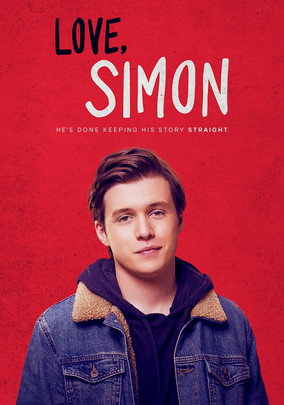
Love, Simon (2018) is a friendly, mainstream, LGBT film focused on a likable central character. Given the myriad dark films within this genre, the film is refreshing, usually ensconced in the independent genre.

Finally, a wholesome, family-oriented “coming out” story is upon us, and the film succeeds in spades. Perhaps a shade too “happily ever after” with a couple of stereotypes among the supporting characters, Love. Simon is a film to be heralded and certainly recommended.

Popular high school senior Simon (Nick Robinson) has a close circle of friends, hip parents, and an affluent existence in the suburban USA. Seemingly “having it all,” he is nonetheless filled with angst and harbors a deep secret—he is gay.

Closeted, he finds solace with a similarly closeted male student through the school website.

Determined to find out who his classmate is, he embarks on a way to discover his secret crush’s identity while being blackmailed by another schoolmate.

Young newcomer Nick Robinson is an absolute gem and carries the movie successfully. This is in stark contrast to another 2018 release starring a newcomer who failed (A Wrinkle in Time). Alas, Robinson has charm, charisma, wholesome looks, and an earnest persona, which are perfect traits for a coming-of-age film such as Love, Simon.

The audience will instantly root for the teen to find happiness and come to terms with the dreaded coming out to family and friends, which any gay person can relate to.

An enormous positive to the film is that Simon is okay with being gay- it’s the telling of other people that bothers him. He daydreams about starting fresh next year as an out and proud college freshman.

He worries that coming out will ruin his final year of high school and change his relationships with his circle of friends. But he is never ashamed or self-harming in his preference for men.

Lesser, but still significant, high points to the film are the rich diversity among the supporting players.

Several of Simon’s friends are black, and his parents are liberal, open-minded, and well-rounded. Of course, they will be accepting of their son’s chosen lifestyle.

Love, Simon also features diversity among the teachers. The theater teacher is not only black but also a champion for LGBT fairness. These qualities are always a breath of fresh air in film, especially when the target audience undoubtedly is younger.

The filmmakers succeed at breaking a key barrier with Love, Simon. As often is the case, LGBT-themed films target the LGBT audience, which makes sense.

In the case of Love, Simon, the film is an experience that the entire family can watch together, regardless of anyone’s sexual preferences. This detail is critical, as LGBT matters should be considered daily.

At the risk of pigeon-holing, the fact that Simon is masculine and popular and not the slightest bit effeminate or girly is undoubtedly a key to the film’s success.

On that note, the film does add an extremely effeminate and outgoing supporting character named Ethan. I am not sure this character is necessary other than to contrast with Simon.

Perhaps to drive the point home, Simon is a cool, macho guy, and Ethan is not. In one scene, it is assumed that Simon and Ethan are boyfriends, and Simon seems mildly disgusted by this. I’m not sure this subplot works or serves the film’s overall message very well.

Love, Simon contains frequently seen supporting character types that bring us seasoned filmgoers back to the days of the 1980s teen coming-of-age films like Pretty in Pink (1986) and Sixteen Candles (1984).

Several subplots involving characters having crushes on other characters, while another character likes them, are added to the mix for fun and a little drama.

The conclusion is sweet as the initial mystery of “who is the other gay student?” is finally revealed amid a lovely scene of Simon waiting on a Ferris wheel for his online admirer to arrive.

In a purely inclusive moment, the entire school surrounds the newly united couple and beams with pride as the duo tenderly kisses. Mass audience members are exposed to a heartfelt moment and an enormous lesson in dignity and spirit.

Director Greg Berlanti creates a lovely Hollywood film that is rich with diversity, a powerful story, and an inclusive element.

Sure, the film is not heavy and either skims over or misses discussions of powerful emotions that many gay youngsters face, but it is nonetheless a brave and necessary story in its own right.

Love, Simon (2018) is classy, tender, and quite a pleasant experience.

Other People-2016

Other People-2016

Director Chris Kelly

Starring Jesse Plemons, Molly Shannon

Scott’s Review #676

Reviewed August 24, 2017

Grade: B+

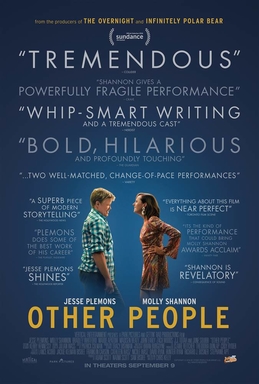
2016’s recipient of numerous Independent Film award nominations is equal parts a touching drama and equal parts witty comedy, providing a film experience that crosses more than one genre.

Is it a heavy drama, or is it a comedic achievement?

Without being sappy or overindulgent, Other People is a film that will elicit laughs and tears from viewers fortunate enough to see it. The subject is a tough one- a woman dying of cancer.

The title, in which one character states he always thought cancer was something that happened to “other people,” is poignant.

Jesse Plemons and Molly Shannon play son and mother. The film is both written and directed by Chris Kelly.

The very first scene is a confusing one and caught me off guard. We see the entire Mulcahey clan- father Norman (Bradley Whitford), three kids, David (Plemons), Alex, and Rebeccah, along with their dead mother Joanne (Shannon), all lying in the same bed, sobbing and clutching hands.

Joanne has just succumbed to her battle with cancer. This powerful opening scene, also the final scene, sets the tone as Kelly works his way back, beginning a year before the critical “death scene.”

Cancer is a challenging subject to cover in film, especially going the comedy/drama route.

The sensitive filmmaker must be careful not to trivialize the subject matter with too many comedic elements or heavy drama. Kelly successfully mixes humor and drama well, making it a cross-genre film.

He achieves this with capable talents like Plemons and Shannon. They share tremendous chemistry in every scene they appear in together.

Scenes that show David and Joanne crying in each other’s arms work well, as do others, such as when David takes a giddy Joanne to meet his comedy friends.

Most impressive is that the story in Other People is mainly autobiographical. Kelly, a gay man like the character of David, moved from New York City to Sacramento, California, to tend to his ailing mother, who had also died from cancer.

Actress Shannon reminded him so much of her that he had the fortune of casting the talented lady in his film- the part slated initially to go to Sissy Spacek instead.

Along with Joanne’s battle with cancer, a lovely story about David is included. A gay man, David has broken up with his boyfriend Paul, who previously lived together on the East Coast (though he still pretends to spare Joanne worry), and is returning to the West Coast.

Over the next year, we see Joanne and Norman slowly come to terms with David’s sexuality. The turbulent father/son relationship is explored during the film as Norman, initially hesitant to meet David’s boyfriend, Paul, pays for his airline ticket to attend Joanne’s funeral.

A slight miss with the film is the Norman/David dynamic.

Other than a few hints of Norman encouraging David’s struggling writing career and his obsession with David joining the gym and boxing, it is not clear what issue he takes with his son being gay or why he is uncomfortable with it. Besides the family being rather conservative, no other reason is given.

David’s sisters and grandparents do not seem to take issue with David’s sexuality, though it is not made sure if the grandparents are even aware of it. Is it a machismo thing with Norman?

This part of the story is unclear.

Still, Other People (2016) is a good, small indie film. It is rich with crisp, sharp writing and a tragic “year in the life of a cancer patient. ” The film also features good family drama and the relationships that abound when a family comes together and unites because of a health threat.

The film is nothing that has not been done before, but thanks to good direction, a thoughtful, nuanced approach, and one character’s sexuality mixed in, the film feels relatively fresh.

Independent Spirit Award Nominations: 1 win-Best Male Lead-Jesse Plemons, Best Supporting Female-Molly Shannon (won), Best First Screenplay, Best First Feature

BearCity-2010

BearCity-2010

Director Douglas Langway

Starring Joe Conti, Stephen Guarino

Scott’s Review #626

Reviewed March 19, 2017

Grade: B

BearCity is a small, independent, LGBT, coming-of-age film that tells of a young man living in New York City, and his exploration of a sub-culture within the LGBT community and the subsequent romance that follows.

The film is a comedy and has a “Sex in the City” or “Queer as Folk” approach to its storytelling- a group of close-knit friends and raunchy and gratuitous to be sure.

The budget is very small and some aspects are rather amateurish, but the film is enjoyable, especially for those exposed to the LGBT lifestyle.

The film is not heavy nor are any of the characters dealing with “coming out” issues, but rather it is a fun sex comedy romp.

Our central character, Tyler (Joe Conti), is a young man in his twenties, an aspiring actor, who moves to New York City to pursue his career, with a mind for casual dating.

His roommates encourage him to date Abercrombie and Fitch types, but Tyler comes to realize he prefers “bear” types- mature, hairy men.

On the sly, he begins to pursue this subculture and makes many friends. The apple of his eye, handsome Roger (Gerald McCullough) is a popular mature man, distinguished in the bear circle, and risks his reputation with “the bears” by falling in love with Tyler.

The two men spend the greater part of the film conquering their respective fears and finding their way into each other’s arms in a predictable ending.

BearCity is a fun farce and nothing very heavy and the feature of a strong circle of friends is a nice, positive portrayal- all of the friends connect well and stick by each other through thick and thin.

Comical sub-plots abound such as one couple (Brent and Fred) awkward parlay into the world of threesomes with unsuccessful results.

Another bear who is unemployed, and grossly obese, decides to undergo weight loss surgery much to the chagrin of his hunky boyfriend.

The main story though belongs to Tyler and Roger and their inevitable reunion can be seen miles away. The film throws various hurdles in their ways, such as a third-person briefly dating Roger, or Roger’s commitment issues, but the climax of the film will be no surprise to anyone.

Tyler and Roger make a nice couple as a whole, but perplexing is how the film makes Roger the undisputed leader of the bear group when he is a lean, muscular man- not a “bear” at all!

This is odd to me, but BearCity is so light-hearted that I suppose I can let this detail slide in favor of a good romance.

Critically, the film is nice but quite amateurish, and super low-budget. The acting, especially by some of the supporting characters (the pre-surgery guy’s boyfriend is the most glaring example), is not great.

I half-expected him to accidentally look at the camera.

Additionally, the film has a low-budget look and feel, which on one level is fine, but combined with the not-so-stellar acting, enhances the inexperience of the cast and crew. The film is tough to take too seriously- if this is even the intention of the filmmakers.

The film is a logistical treat for anyone privy to popular gay hangouts in New York City- specifically The Eagle and The Ramrod, both locales are featured prominently, and the use of many real-life people who hang out at those establishments are used throughout the production.

BearCity (2010) is not a bad experience and a film that is light and comical within the LGBT community seems rather fresh compared to the myriad of dramatic and heavy films that exist.

At the same time, the film teeters towards goofy too much with more than one silly, sex-crazed, stereotypical gay man, that it almost gives a bad impression, so the film has mixed results for me.

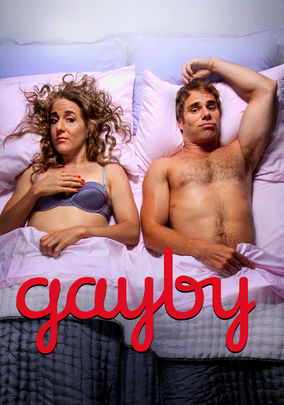
Gayby-2012

Gayby-2012

Director Jonathan Lisecki

Starring Jenn Harris, Mathew Wilkas

Scott’s Review #441

70234883

Reviewed July 3, 2016

Grade: C+

Gayby (2012) is a sketch-type comedy about two best friends (a gay man and a straight woman) who decide to have a child together.

Both have reached a certain age and are unhappy to have not found the perfect mate. The story is not novel and feels more like a Saturday Night Live sketch than a film.

The film is also playing on the success of television comedies like NBC’s Will and Grace, the obvious dynamic of the central characters.

The two leads are quite appealing in a comic way, have wit (Jenn Harris is deliciously neurotic), and have great timing.

The subject matter is interesting, though as years go by and more LGBTQ+ topics are covered,  it is becoming rather dated and not novel anymore.

The negative is the frenetic, quick pacing of the film, ultimately making it rather off-putting and annoying, to say nothing of the irritating stereotypical, supporting characters.

They are written so over-the-top that it is tough to take the film as seriously as it should be taken.

Independent Spirit Award Nominations: Best First Screenplay