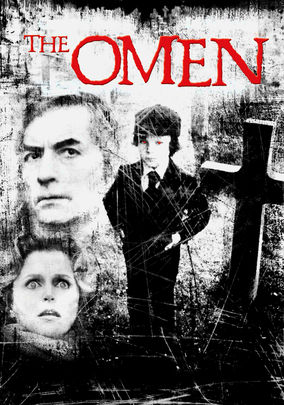
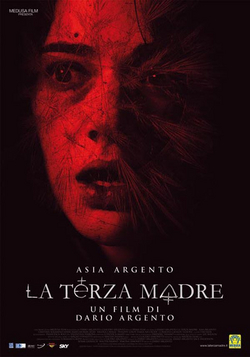
Category Archives: Satanic

Race with the Devil-1975

Race with the Devil-1975

Director Jack Starrett

Starring Peter Fonda, Warren Oates

Scott’s Review #1,540

Reviewed July 13, 2026

Grade: A-

The 1970s saw the rise of many mainstream horror films that dealt with the occult. They’ve always been around, but thanks to the sizzling success of movies like The Exorcist (1973), they grew larger audiences and emboldened them to do more daring things.

Race with the Devil (1975) is a surprisingly enthralling piece directed by Jack Starrett. The film never lags and paces well with action and characters in peril that are easy to root for.

In fact, despite classifying it as a horror film, it’s part action, thriller, and horror all rolled into one.

Anyone who enjoys classic car chases and dusty backroads, for example, will enjoy this film.

It stars Peter Fonda, Warren Oates, Loretta Swit (television’s M*A*S*H*), and Lara Parker (television’s Dark Shadows), bigger names that undoubtedly led audiences to see it based on star recognition alone.

The film also leverages the recent success of The Texas Chain Saw Massacre (1974) and Deliverance (1972), borrowing their remote locales and the corruption of the local police force and townspeople to heighten the mystique.

Roger (Fonda), his friend Frank (Oates), and their wives (Parker and Swit) embark on a lengthy RV road trip from bustling San Antonio to the wilderness of rural Texas for some off-road motocross and good times.

Their final destination is the ski slopes of Colorado.

While enjoying the deserted landscape late one boozy night, they stumble upon a Satanic cult human sacrifice in the distance, and are unfortunately caught observing the ritual by the assailants.

This catapults the foursome into a cat-and-mouse extravaganza with the cult members as they try to flee the local town after receiving no help from the local authorities.

To say the film has some thrills is an understatement. The most exciting sequence occurs in the claustrophobic RV setting when two deadly snakes pop out from an overhead cabinet, causing the group to go ballistic with fear.

They careen across the highway, trying to keep their footing and avoid being bitten by the angry reptiles.

Minor characters, the group meets as they trek as far away from the incident as possible, are filled with mystery and a hint of the sinister.

Is Sheriff Taylor (R.G. Armstrong), who appears to laugh off the reported incident as a misunderstanding, part of the cult? How about the wacky couple the group has drinks with, Delbert and Ethel?

Finally, the lengthy car chase in the film’s final act is cinematographically impressive. A film with a satanic storyline risks feeling amateurish or hokey, but its technical achievements are as rich as its other qualities.

Proof is by the numerous car crashes and heart-stopping twists and turns that occur amid the barren landscape of northern Texas and the nearly two hundred miles of nothingness they must face before reaching a highway.

And the editing and the somewhat surprising ending are fabulous.

While we know little about the four principal characters, aside from Roger and Frank owning some motorcycle dealership, it hardly matters.

Each seems intelligent and kind, merely victims of being in the wrong place at the wrong time. The audience easily feels we could be friends with them.

Therefore, we care about them and their predicament.

When a fan belt breaks or a window is smashed, we feel the peril along with the characters. During a lighter moment, when the wives ‘borrow’ library books after being scolded by a cold library worker, we snicker in victory alongside them.

Race with the Devil (1975) borrows from other horror films, but it doesn’t feel like a carbon copy either.

Fresh ideas, like the snakes and the luxury RV, combined with superior acting and the terrific chemistry among the leads, make the film work.

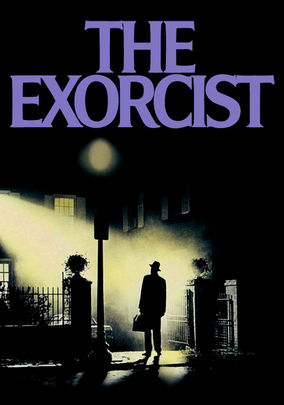
Rosemary’s Baby-1968

Rosemary’s Baby-1968

Director Roman Polanski

Starring Mia Farrow, John Cassavetes

Top 250 Films #14

Top 40 Horror Films #4

Scott’s Review #9

60002403

Reviewed June 17, 2014

Grade: A

Rosemary’s Baby (1968) is not only a great film, but it’s also a masterpiece. Easily one of my favorites in the horror genre, it’s also towards the top of the list of my all-time favorite films.

The beauty of this film lies in its power of suggestion and subtleties. It lacks the blood, gore, or standard horror frights one might expect.

It doesn’t need them.

The audience senses something is amiss through clues provided throughout the film.

The closed-off room in the young couple’s apartment, the sweet but a bit odd elderly neighbors, a strange suicide, a mysterious, horrid-smelling good luck charm. Rosemary’s due date (June 6, 1966- “666”).

The strange, dreamlike conception scene is intense and surreal.

Her husband- claiming Rosemary passed out from too much alcohol- begins to become a suspicious man following the incident, but we are confused by his involvement- what are the neighbors up to, we wonder? Are they sinister or simply innocent meddlers?

In a sinister scene, Rosemary gnaws on bloody raw meat, catches her reflection in the glass, and is horrified by her behavior.

Mia Farrow is excellent as the waifish, pregnant Rosemary, who loses weight rather than gains it.

The film also has a couple of real-life eerie occurrences: the building setting (The Dakota) is where John Lennon was shot and killed, and Director Roman Polanski’s wife, Sharon Tate, in a cameo, was murdered shortly after filming by Charles Manson.

Rosemary’s Baby shares a similar theme with other devilish/demon films, such as The Exorcist (1973) and The Omen (1976).

This is a film that must be seen by everyone and only shines brighter with each subsequent viewing.

Oscar Nominations: 1 win-Best Supporting Actress-Ruth Gordon (won), Best Screenplay Based on Material from Another Medium

Golden Globe Nominations: 1 win-Best Actress-Drama-Mia Farrow, Best Supporting Actress-Ruth Gordon (won), Best Screenplay, Best Original Score

Mother of Tears-2007

Mother of Tears-2007

Director Dario Argento

Starring Asia Argento

Top 250 Films #227

Top 40 Horror Films #35

Scott’s Review #1,360

Reviewed May 13, 2023

Grade: B+

Mother of Tears (2007) is a film I have a great fondness for, and I’ll never forget its debut in my life.

It is the very first film my husband and I saw in a movie theater together. So, I’m pretty partial to the nostalgic feeling it evokes on a personal level.

Both fans of esteemed horror director Dario Argento, we cohabitated in the dusty art theater one rainy Saturday evening following a delicious Italian dinner on one of our first dates.

The atmosphere was nearly as perfect as an Argento film itself since he is known for operatic, visceral, and visual perfection.

The film is the concluding installment of Argento’s supernatural horror trilogy The Three Mothers, preceded by Suspiria (1977) and Inferno (1980. It depicts the confrontation with the final “Mother” witch, known as Mater Lachrymarum.

Grisly deaths await several unlucky Italian citizens after an American archaeology student named Sarah Mandy (Asia Argento) innocently releases a demonic witch from her ancient prison.

A mysterious urn comes into her possession, and when it is attempted to be restored at the Museum of Ancient Art in Rome, all hell breaks loose.

Sarah has a personal connection to the witch because her mother was once embroiled in a feud with the witch.

Making Mother of Tears a family affair and a source of comfort for viewers of Argento’s work, daughter Asia plays the lead character. At the same time, younger brother Claudio co-produces the picture with Dario.

Religion is always a fun theme in horror, especially in the oft-targeted Roman Catholic church. Like The Exorcist did in 1973, and many other horror films followed over the years, the religion is mocked in the kindest of ways.

As an ode to previous works involving children, a child is massacred, and more than one baby is sacrificed in the name of Mater Lachrymarum, so be forewarned if this is a dealbreaker for some.

Who doesn’t enjoy a coven of witches flocking down on Rome, screeching at passerby folks and wreaking havoc on the sacred city, now overcrowded with demons?

For the bloodthirsty types who crave a healthy dose of bloodletting, Mother of Tears lets the floodgates spill wide open.

One poor woman is speared through her private area and upwards, while another’s mouth and face are expanded until they pop. Several eyes are violently gouged.

You get the idea.

It’s recommended to watch Suspiria and Inferno first for chronological ease, but this isn’t a must; a stand-alone viewing will do just fine.

Nothing can match the sheer madness and visual mastery of 1977’s Suspiria, and Mother of Tears is the weakest of the three films, but this is not a gripe, merely a comparison.

They work well together, and the final confrontation involving Sarah and Mater Lachrymarum’s fight over a red tunic is the highlight.

The dark texture of the filming mixed with glowing lights and red colors is easily noticeable. This aligns well with religious or occult characters such as a monsignor, a cardinal, and various witches.

The film, though American-made, feels Italian and is quite authentic. Further, it naturally sits well with films of Argento’s heyday, the 1970s and 1980s. Most, if not all, actors appear to be Italian or European, adding flavor and culture to the experience.

If one has traveled to Rome, many exterior shots of the ancient city appear, adding to the enjoyment. Sarah ravages the streets and scurries through the vast train station in one powerful sequence.

Since trains are the main mode of transportation in Italy, viewers can transport themselves back to a previous trip.

To know Dario Argento is to love him. Mother of Tears (2007) may not measure up to his very best works, but it is an entertaining and enthralling visit to the macabre world.

It may or may not win over new fans, but it will satisfy the director’s existing fans.

The Convent-2000

The Convent-2000

Director Mike Mendez

Starring Adrienne Barbeau

Scott’s Review #1,246

Reviewed April 16, 2022

Grade: C+

I debated whether to give Adrienne Barbeau top-billing recognition for The Convent (2000).

After all, she doesn’t even appear, save for a quick silhouette scene that probably wasn’t even the actress, until the final third of the film.

Since I am a fan of Barbeau’s work, mainly the television series Maude, and films like The Fog (1980) and Escape From New York (1981), I decided to throw caution to the wind and cement her star status.

The film itself is not very good and could use all the help it can get. It’s campy beyond belief, amateurish, hokey, and poorly acted, with enough ridiculous one-liners to make me wonder whether director Mike Mendez was purposely trying to make a bad film.

But before I get all curmudgeonly and smack this film in the face with an ‘F’ rating, I’d like to justify my more-than-generous ‘C+’ rating.

If The Convent had tried to take itself seriously and produced shit like this, I would have gone for the jugular in my review, but it knows it’s a silly film and instead embraces this fact wholeheartedly.

Still, I kept wondering whether the film was some nod to the slasher film genre that took over the world from the late 1970s until the late 1980s, or if it feebly tried to merge the slasher and zombie genres to produce something fresh.

If made in, say, 1985, The Convent would have fit snugly amongst the heaps of other similarly themed films patterned after superior feasts like Halloween (1978) and Nightmare on Elm Street (1984).

The film opens impressively enough when a young woman named Christine walks into a convent and goes batshit crazy, shooting every nun she sees and burning the place to the ground.

I grinned because Christine looked exactly like Uma Thurman’s character in Quentin Tarantino’s 1994 masterpiece, Pulp Fiction, with bright red lipstick and dark shades. Even her outfit looks the same.

Unfortunately, that’s where any parallels end. From this point, the plot is basic and uninspired.

A coed named Clorissa (Joanna Canton) joins her best friend Mo (Megahn Perry) and a group of college students on a dare to venture into the aforementioned convent (now rebuilt) and tangle with nun and priest spirits rumored to be inhabiting the structure.

After Mo is left alone and the rest of the bunch dine at Denny’s, the plot goes from standard to wacky as the returning students are bitten and become possessed by Satanists who want to beckon Satan back to earth.

There is an attempt to sacrifice a virgin among the group to help with this.

Conveniently, Christine (now older) lives down the street after spending a thirty-year stint in the loony bin. The badass woman comes barreling to the rescue with her motorcycle and an arsenal of machine guns to kick Satan’s ass.

The fun begins when Barbeau finally appears. With her dangling cigarette and macho talk, the actress is in her comfort zone. The dialogue between her and the other characters is so bad that, once again, I wondered whether this was the intent. I truly hope it was.

The robotic heads twitching and the green-eyed students now glowing align perfectly with the gimmicky art direction and juvenile special effects. I’ve seen better on a 3 pm daytime soap opera.

Rapper Coolio easily plays the most irritating character in a ridiculous role as a loud policeman. This attempt at comedy fell completely flat, and I was more entertained by the gay satanist who cleverly decides that if he and another virgin boy have sex, they will be spared.

Once the credits rolled, I was happy not to have to endure any more of the one-hour and twenty-minute experience.

After my five-minute reflection, I decided to interpret the film as a comical satire rather than anything more.

The Convent (2000) isn’t distinct enough to earn the ‘it’s so bad it’s good’ award because it lacks any identity.

However, for a midnight movie that is so goofy and over-the-top that there is plenty to mock, the film is a fun time.

And, it’s always a joy to see Barbeau in anything she is willing to appear in.

The Witches-1967

The Witches-1967

Director Cyril Frankel

Starring Joan Fontaine

Scott’s Review #1,096

Reviewed December 29, 2020

Grade: B

Legendary film actress Joan Fontaine chose a Hammer horror film as her final role. While not high-brow art, these films are an entertaining treat for horror fans.

They are frequently macabre, clever, and make the most of a small budget.

In The Witches (1967), Fontaine leads the way, adding class and huge star quality. The film is good, but not great, with an unfulfilling ending. The cinematography and Fontaine’s involvement are the best aspects.

Also worthy of mention in the acting department is Kay Walsh, a talented British actress, who is terrific as the seemingly kind woman who becomes a crazed witch. She adds professionalism to a pivotal role. The other supporting actors play their parts well, ensuring that the craft of acting is respected.

I adore the British flair that Hammer films always have.

Fontaine plays Gwen Mayfield, an English schoolteacher who accepts a new job as the headmistress of the local school in the quaint village of Heddaby. The quiet town is exactly what Gwen needs after suffering a nervous breakdown while residing in Africa.

She experiences a small flirtation with the Reverend Alan Bax (Alec McCowen), who confesses that he is not overly religious. Stephanie is his sister, played by Walsh.

Before long, Gwen becomes immersed in the worlds of two of her students, Ronnie (Martin Stephens) and Linda (Ingrid Brett). Ronnie insists that Linda is being abused, which prompts Gwen to investigate. Meanwhile, Gwen discovers a voodoo doll and sleuths to find out what is going on in the village.

Events lead her to a sanitarium, and finally to a coven of witches, intent on human sacrifice.

The Witches has a late-1960s look and feel, which adds some sophistication. Gwen is draped in stylish clothes and jewelry and wears a cute, trendy bob haircut.

The set design is cool, with groovy, colorful furniture that makes the tight budget work to its full advantage.  Alan and Stephanie’s estate is particularly impressive with modern furniture, drapes, and various trimmings.

Another positive is the hefty amount of exterior sequences offered.

Director Cyril Frankel, who directed many episodes of the popular British television series The Avengers, provides a similar production, so The Witches feels like a long episodic series. The luxurious English village is sunny, calming, and atmospheric, brightening the film’s atmosphere.

This nicely counterbalances the themes of demons, voodoo, and witches.

Frankel builds the story momentum throughout The Witches at a good pace, but this is lost in the final act, which is way too abrupt. During the first three-quarters of the production, we are led to believe that Gwen is either crazy, imagining the strange events, or that one of the townspeople is gaslighting her.

It’s easy to deduce that the latter is what is going on, and the fun is figuring out who is doing the dirty deeds.

When the culprit is revealed (and it’s displayed on the cover art!), the conclusion is underwhelming. An attempted cemetery human ritual to remove life from Linda and infuse it into Stephanie so that she can live forever is weak.

After an odd sequence of the townspeople dancing and writhing around like nutcases in an unintentionally laugh-out-loud example of overacting, Gwen foils Stephanie’s plan. The witch succumbs to death, a victim of her heinous plan backfiring.

It is hinted that Gwen and Alan (who are revealed to be good) will forge a romance in the future, but I would have liked to have gotten a stronger sense of their budding attraction during the film. Still, it is likely the two will ride off into the sunset together, safely.

While not as gory as other Hammer films, The Witches (1967) instead features exceptional performances and tells a decent story, interesting until the low-key finale.

I expected a bit more from the ending, which simmers out instead of electrifying.