Tag Archives: Guy Pearce

The Brutalist-2024

The Brutalist-2024

Director Brady Corbet

Starring Adrien Brody, Guy Pearce, Felicity Jones

Scott’s Review #1,468

Reviewed March 1, 2025

Grade: A

The three-hour and thirty-five-minute film The Brutalist (2024) captivated me from the first sequence.

Adrien Brody’s character László Tóth, emerges from what is revealed as a ship. He emigrated to the United States after being sent to the Buchenwald concentration camp and forcibly separated from his wife, Erzsébet, and orphaned niece, Zsófia.

As his ship enters New York Harbor, he sees the Statue of Liberty.

The sequence follows László in the dark, and the audience is confused and unaware of what’s happening. His wife reads a Hungarian letter amid the scene explaining the events.

This is a top notch first scene.

The film is very long, so if you can’t watch it in a movie theater, we recommend watching it in miniseries style and digesting the segments slowly.

While The Brutalist initially feels like a studio blockbuster extravaganza, it’s shockingly an independent film made for relatively little money.

It’s brilliant but slow and methodic with rich moments of raw emotion, and graceful humanity. Parts are edgy and artistically creative with a quiet bombast.

Events occur between 1947 and 1958; the conclusion is set in 1980.

Having escaped post-war Europe, visionary architect László is well-respected and admired in his home country. He finds his way to Pennsylvania, where the wealthy and prominent industrialist Harrison Lee Van Buren (Guy Pearce) recognizes his talent for building.

The central theme of The Brutalist is László’s struggles to achieve the American Dream. While a wealthy client changes his life, it comes at a price. Do we trust Harrison?

An early scene showcases Harrison’s bad temper, and we know this will come into play again, but it does at the expense of László.

There are so many wonderful facets to The Brutalist; some slowly build and reach a dramatic crescendo, and others continue to bubble under the surface, ripe for discussion after the film has ended.

Though sometimes conventional with a heartwarming story of an immigrant’s struggle to succeed in 1950s USA, it is anything but a mainstream film when looked at closely.

Is there an attraction between Harrison and László? Harrison has no wife and seems uninterested in women. László visits a prostitute and cannot perform; he dances with a gorgeous woman and cannot be seduced. He cannot have sex with his wife.

A male/male rape scene is both gorgeously shot and filled with animalistic brutality. It’s the most unconventional rape scene I’ve ever seen in cinema.

László is also addicted to heroin and has bouts of rage. Is his relationship with Erzsébet more a friendship than a romance?

Brady Corbet’s direction is flawless, led by astounding cinematography of rural Pennsylvania. An early shot of a speeding bus with the opening credits shifting sideways brims with fresh style and creativity.

The sophisticated costumes and makeup perfectly fit the era, which is even more reason to give it kudos on such a small budget.

The acting by Brody, Pearce, and Jones is terrific.

We finally meet Erzsébet (Jones) halfway through the film when she makes her way to America. Crippled, due to osteoporosis, she is a brave and confident woman, finding career work as a writer for a newspaper.

Jones enfuses confidence into a role where she could be the victim. In a late scene, she tears down the house in a powerful performance, interrupting a family dinner.

Pearce electrifies in the best role of his career. His sexuality might explain his Jekyll and Hyde personality and bouts of rage. After all, this was the 1940s and 1950s. The actor plays ambiguity so well that knowing what Harrison feels is challenging.

Finally, Brody is brilliant. In a role arguably similar to his character in The Pianist (2002), he is a clever man forced as an immigrant to play the lousy cards he is dealt. With raw emotion, Brody makes every scene real and powerful.

Is he better off in Hungary or Israel?

Corbet, who also co-wrote the screenplay, delves into the experience of an immigrant. He showcases discrimination, preconceived notions, and the hopes and dreams of one man with the cards stacked against him.

The Brutalist (2024) is a beautiful film with much to say. It has soul and grit and perfectly pays tribute to an experience in the 1950s while sadly feeling relevant to the discrimination still facing immigrants in present times.

Oscar Nominations: 3 wins-Best Picture, Best Director-Brady Corbet, Best Actor-Adrien Brody (won), Best Supporting Actor-Guy Pearce, Best Supporting Actress-Felicity Jones, Best Original Screenplay, Best Original Score (won), Best Production Design, Best Cinematography (won), Best Film Editing

Independent Spirit Award Nominations: Best Director-Brady Corbet
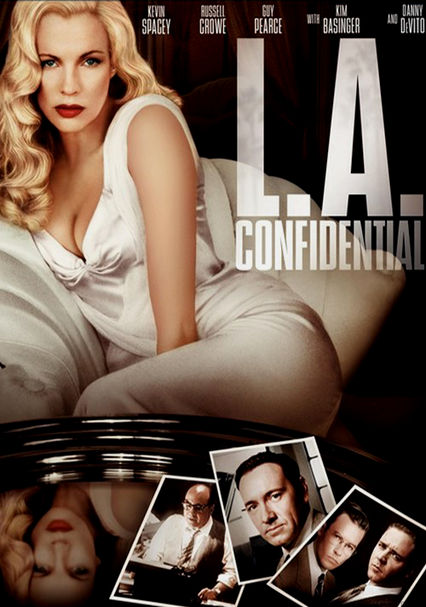
L.A. Confidential-1997

L.A. Confidential-1997

Director Curtis Hanson

Starring Kevin Spacey, Russell Crowe, Kim Basinger

Scott’s Review #1,102

Reviewed January 19, 2021

Grade: A

An enormous critical and commercial hit of 1997, L.A. Confidential spins a tale of intrigue and mystery during the 1950s with plenty of big-name stars to go around.

The film can be classified as a throwback, neo-noir escapade, but it’s quite stylistic and fleshed out. It’s well-made with slick elements and Hollywood looks and feels like the lavish production design and musical score, but it’s the seduction and bevy of secrets that will keep viewers glued to their seats, trying to guess what happens next.

As if it doesn’t have enough great elements a powerful whodunit is constructed leading viewers to question if the bad guys are good or the good guys bad.

Stalwarts like Kevin Spacey, Kim Basinger, and Danny DeVito bring star power, while unknowns at the time, Russell Crowe and Guy Pearce are the real reasons to tune in.

L.A. Confidential has a seemingly endless tangled web to absorb and unravel, but the film is paced well and never overcomplicates itself. The strong art direction and musical score make it a delight to the eyes and ears.

The film is fraught with a saucerful of secrets just waiting to be brought to the surface.

Based on the James Ellroy 1990 novel of the same name, it’s the third book in his L.A. Quartet series, the others being The Black Dahlia (1987) and The Big Nowhere (1988). All focus on the Los Angeles Police Department, corruption, and scandal. The former was turned into an unsuccessful film in 2006 starring Josh Hartnett and Scarlett Johansson.

I love films set in the City of Angels with a focus on Hollywood darkness lurking beneath the sunny and swanky exterior. Especially effective is the 1950s time, post World War II, when everything seemed to be coming up roses.

Naturally, murder is the offering of the day.

To summarize, three policemen, each with his motives and obsessions, tackle the corruption surrounding an unsolved murder at a downtown Los Angeles coffee shop in the early 1950s.

Detective Lieutenant Exley (Pearce), the son of a murdered detective, is out to avenge his father’s killing. The ex-partner of Officer White (Crowe), implicated in a scandal uncovered by Exley, was one of the victims.

Sergeant Vincennes (Spacey) feeds classified information to a tabloid magnate (DeVito). Basinger portrays Lynn Bracken, as a glamorous prostitute.

It’s nice watching the film with the knowledge of the big stars Crowe and Pearce would become. Also interesting is to see Spacey when he was a big star, eventually destined to turn into Hollywood mud due to a scandal.

That’s the beauty of watching a classic film and adds a realistic element unknown at the time of the first release.

From a romantic angle, it’s fun and juicy to wonder who Lynn, a Veronica Lake lookalike, will wind up with. Basinger has chemistry with all of the handsome cops and one wonders who she will screw and screw over.

The role is the best of Basinger’s career.

L.A. Confidential is a film that can be viewed multiple times to notice intricacies missed during the first go-around. It harkens back to the 1940s in style, pizazz, and texture. There is something for everyone and it develops well beyond the film noir genre.

It contains great acting, exceptional writing with twisting storylines and events, bloodshed, and thrills. It is an exceptional crime drama almost on par with one of the greats, Chinatown (1974).

The 1990s was an excellent decade for well-made films and L.A. Confidential (1997) is near the top of the pile.

Oscar Nominations: 2 wins-Best Picture, Best Director-Curtis Hanson, Best Supporting Actress-Kim Basinger (won), Best Screenplay Based on Material Previously Produced or Published (won), Best Original Dramatic Score, Best Sound, Best Art Direction, Best Cinematography, Best Film Editing

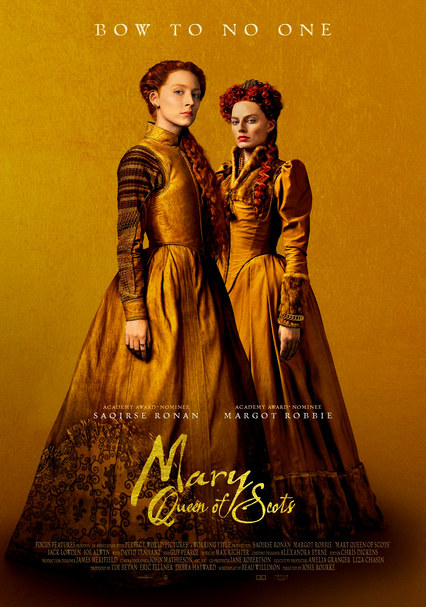
Mary Queen of Scots-2018

Mary Queen of Scots- 2018

Director Josie Rourke

Starring Saoirse Ronan, Margot Robbie

Scott’s Review #851

Reviewed January 2, 2019

Grade: B+

A period piece with all the trimmings for brilliance (on paper anyway), Mary Queen of Scots (2018) is a very good film, but its pacing misses the mark, preventing it from being a truly great film.

Fantastic acting and wonderful photography are the high points of an otherwise uneven experience, even if most of the components are intact.

This is not so much a total knock as a light critique, as the film is ultimately quite good and just missing the big oomph to take it over the top.

Saoirse Ronan stars as Mary Stuart, the likable Queen of France, who has returned to her native Scotland to reclaim the throne after her husband dies. Only eighteen years of age, she initially refuses pressure to remarry, but conflict ultimately ensues with Queen Elizabeth I (Margot Robbie), who rules neighboring England and Ireland.

The women admire each other from afar but develop a rivalry in power and love. To complicate matters, religious conflict, scandals, and deceit are also present in the story.

The feminist theme is inspiring and makes the film better than merely a soap opera of two rival females sparring over men.

In the mid-sixteenth century, women in control were hardly commonplace and relatively resented by the men forced to serve the “whims of women,” as one male character puts it.

Constantly showcased are males’ attempts at wooing the women in hopes of gaining power and ultimately the throne.

Still, director Josie Rourke (a woman) keeps the power firmly among the women, showing they can be as tough as they are sympathetic.

Furthermore, Mary Queen of Scots continues its progressive agenda with a startling LGBT subplot, which largely enriches Mary’s image.

One young androgynous male friend, presumably a bodyguard, frolics with Mary and other maids and confesses that he feels more like a sister than a brother to her. She accepts him wholeheartedly with an added message of “being your true nature.”

Later, the character suffers a terrible fate that devastates Mary. Regardless of the accuracy, this is a nice addition with an inspiring message.

The acting, particularly among leads Ronan and Robbie, is fantastic. Both young “it” women in Hollywood, the roles of Mary and Elizabeth, showcase their acting talents and chops for handling period piece roles.

Ronan, with flawless pale skin and authentic red locks, is beyond believable as Mary, who exudes strength yet kindness in the role she tackles. She can be stubborn but also fun and light, and Ronan has no trouble making the role her own.

Hot on the heels of playing the trailer trash character of Tonya Harding in I, Tonya (2017), Robbie hits it out of the park and does a one-eighty with the role of Elizabeth. Insecure and barren, afflicted with a skin disorder and a balding head of hair, the actress infuses the character with sensitivity and composure.

Robbie portrays her insecurity and yearning for unconditional love as she wears bawdy wigs and pancake makeup to hide her affliction.

Rourke’s mistake is not including more scenes of Ronan and Robbie together, save for one treasured scene at the end of the film. This is a wasted opportunity, as the treasured actresses could have played off each other’s talents in innumerable ways.

A knock-down, drag-out fight scene would have been a treasure to view.

The male characters do not leave much impact other than perhaps Lord Darnley (Jack Lowden), Mary’s bisexual second husband. As he betrays her on her wedding night with another man, Mary sees little use for him besides producing a child.

The handsome blonde actor adds some pizzazz, but is ultimately unlikable, as are the other similarly written men. Mary’s half-brother and Elizabeth’s advisor (Guy Pearce) are fine but ultimately underdeveloped.

Mary Queen of Scots (2018) is an effort to be commended for its female-driven and pro-LGBT stances. Perhaps unrealistic given the period and questions of historical accuracy looming over the entire film, problems with the production do exist.

The film ebbs and flows with some high moments and some looming blandness, but overall, it is to be respected and thereby recommended.

Oscar Nominations: Best Makeup and Hairstyling, Best Costume Design

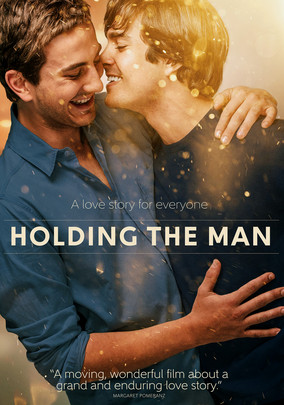
Holding the Man-2015

Holding the Man-2015

Director Neil Armfield

Starring Ryan Corr, Craig Stott

Scott’s Review #612

Reviewed January 24, 2016

Grade: B+

Holding the Man (2015) is a brave love story centering on two young men and spanning fifteen years as the men begin as high school sweethearts and progress into adulthood and sadly both contract AIDS.

This is a pivotal aspect of the film as it is set during the 1970s and 1980s- a time when this disease was dreadful and more or less a death sentence.

The film is tender and poignant, but despite these characteristics, I felt something with more vigor was missing. I did not have the exact emotional reaction I thought I might have.

The film is set in Australia and adapted from a 1995 memoir of the same name.

The action begins in 1976 as we meet Tim and John, both high school students. They are from opposite social groups, Tim a theater student, and John captain of his soccer team.

Surprisingly, they connect romantically as Tim asks John out on a date.

The pair receive little hassle and are quite open with their relationship. Certainly, they face a bit of opposition from officials at the school, but this is not the main aspect that the film goes for.

Instead, the main problems come from John’s family- specifically, his father, but this is played safely. Tim’s family is much more accepting.

Over the next fifteen years, the couple encounters death directly when they are simultaneously told they have acquired HIV.

The film is mostly told chronologically but goes back and forth at times. Specifically, we are reminded of John’s youthful good looks in flashbacks, when he is close to death, bald and sickly looking.

The main point is the men’s enduring love for each other, which is a nice message.

Otherwise, the film (2015 and long since the AIDS plague), goes for a reminder of how harsh those times were for gay men, though there is a softness to the film that I felt instead of the brutal reality.

The actors playing John and Tim (Craig Stott and Ryan Corr, respectively) have decent chemistry, but this may have been stronger than my perception was, and the reason I did not feel emotionally invested in the film.

The film was nice and sweet-the romance part, but when one of the men succumbs to AIDS I should have been a puddle of tears and I just wasn’t.

I did enjoy how the film does not focus too much on the opposition by John’s father (Anthony LaPaglia). He would wish his son’s sexuality differently but is more concerned with how his son’s relationship with a male looks to Dad’s friends and neighbors.

The deeper story was the love between the men who knew no barriers.

It was nice to see Geoffrey Rush and Guy Pearce in supporting turns as a drama teacher (Rush) and as Tim’s father, Dick (Pearce). Both do well with limited roles and I adore how the film portrays Dick as a supportive father- even dancing a slow dance with his son at a wedding- free of embarrassment.

Also notable is the sweet ending where a photo of the real Tim and John is shown during a narrative from an interview with the real Tim before his death.

Holding the Man (2015) is a nice film, but does not have the power that other LGBT films in recent decades had. Brokeback Mountain (2006) immediately comes to mind as a similar film, but one that was more emotional and engaged me much more.

An honest effort, though.

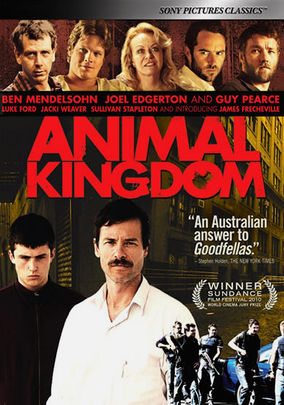
Animal Kingdom-2010

Animal Kingdom-2010

Director David Michod

Starring Ben Mendelsohn, Joel Edgerton

Scott’s Review #519

70129388

Reviewed November 15, 2016

Grade: A-

Animal Kingdom (2010) is an excellent Australian crime drama movie that is in the same vein as Goodfellas (1990), The Godfather (1972), or a myriad of other mafia/mob-type films- only Aussie style, which in itself piques interest.

The film has an indie feel, is raw and not slickly produced, and is not over-dramatized with explosions, CGI effects, and various other bells and whistles, making it character-driven.

It is simply a well-made drama about a seventeen-year-old boy named Joshua, who is taken in by his extended family of criminals.

Starting like an innocent, he slowly becomes entangled in the family’s web of corruption. This is similar to Al Pacino’s Michael Corleone from The Godfather.

Making the plot even more compelling, is the arrival of a goodhearted detective (Guy Pearce) who tries to steer Joshua on the straight and narrow.

The acting is topnotch (Jacki Weaver in particular is amazing as the diabolical leader of the family), shocking events happen out of the blue, and operatic music mixed in with dramatic events is well done.

Animal Kingdom (2010) is a diamond in the rough.

Oscar Nominations: Best Supporting Actress-Jacki Weaver

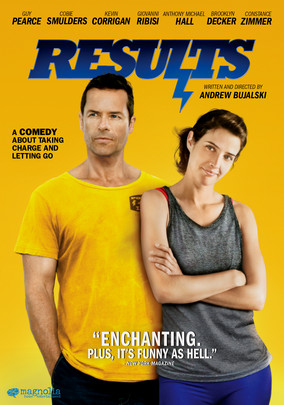
Results-2015

Results-2015

Director Andrew Bujalski

Starring Guy Pearce, Kevin Corrigan

Scott’s Review #471

80038442

Reviewed August 29, 2016

Grade: C-

Other than one fantastic supporting performance by Kevin Corrigan, who should have been the star of this film, Results (2015) is an independent romantic comedy that lacks any real identity.

The film has trouble deciding which couple the audience is meant to root for leaving me to root for none of them, and frankly, a bit bored with the overall script.

Still, Corrigan and to some degree, Guy Pearce make it a tolerable watch.

Corrigan plays Danny, a newly wealthy average Joe type, who joins a gym presumably to achieve a supportive network of friends, as he is new in town- Austin, Texas.

He meets Trevor (Pearce), who owns a local gym and is trained by the moody Kat (Cobie Smulders).

The three individuals’ lives intersect as a triangle of sorts develops.

Kevin Corrigan, who has appeared in numerous independent films over his decades-long career, and blockbusters such as Goodfellas (1990), completely steals the show and is the main reason to tune in.

His acting is effortless as he plays a lonely, rich man looking for human connections. He is troubled but has a comic wit that shines and gives him needed vulnerability. We want him to find happiness despite being unlikable.

Speaking of unlikeable, Smulders as Kat is a frigid iceberg with attitude for miles. Why anyone, let alone two men, would be interested in her is beyond me.

Pearce is appealing as the good-natured, aspiring-to-be successful businessman named Trevor, who is buff beyond belief- to enormous credit since Pearce is no spring chicken. Otherwise, we know little about his character.

He is not in love with Kat, but suddenly seems to be.

Kat warms to Danny but then is in love with Trevor. The entire romantic entanglement is silly and no chemistry exists among them.

The casting of Giovanni Ribisi as a stoner lawyer and Anthony Michael Hall (The Breakfast Club from the 1980s) as a fitness guru are pointless.

The fitness/gym angle is cool if one, as I am, is a fan of physical fitness. It is a nice little lesson as Kat teaches Danny basic core exercises. But after too many scenes of Kat drinking kale shakes and jogging incessantly, or Trevor eating egg white omelets and body strengthening, the message is overkill.

They are fitness buffs- we get it.

The biggest fail is how the film focuses on Danny and Kat as a potential romantic couple, then suddenly shifts gears, making Kat and Trevor the main couple, with Danny on the outside looking in.

It really makes little sense, and by that point, I was rather bored anyway and the film just petered out for me.

Results (2015) has shreds of potential with better-structured story-telling, but misses good potential in many areas- underdeveloped characters and a meandering plot are a couple of major problem points.

Independent Spirit Award Nominations: Best Supporting Male-Kevin Corrigan