Tag Archives: Robert Ridgely

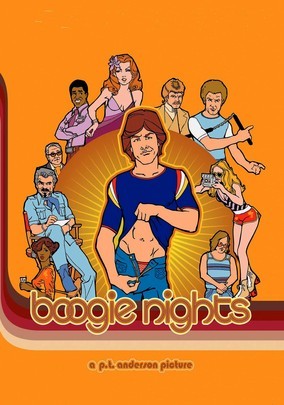
Boogie Nights-1997

Boogie Nights-1997

Director Paul Thomas Anderson

Starring Mark Wahlberg, Burt Reynolds

Top 250 Films #8

Scott’s Review #312
1180077

Reviewed December 31, 2015

Grade: A

Boogie Nights (1997) is a fantastic film about the pornography industry (The Golden Age of Porn) of the 1970s and 1980s, and does an excellent job of portraying the characters as human beings with feelings and emotions, rather than as nymphomaniacs or perverts.

They bond with one another as a family- a group of misfits striving to survive. This, and many other reasons, are why Boogie Nights is one of my all-time favorite films.

Written, produced, and directed by Paul Thomas Anderson (Magnolia, 1999; There Will Be Blood, 2007; Inherent Vice, 2014), he is a master at exploring the underbelly of society and the flawed, desperate characters who inhabit it.

Boogie Nights is no different.

The dysfunctional family is the film’s central theme. Most of his characters are unhappy, but they are survivors who desperately seek a piece of happiness.

Many of the Boogie Nights cast also appear in Magnolia.

Mark Wahlberg (Eddie/Dirk Diggler), Burt Reynolds (Jack Horner), Julianne Moore (Maggie), Don Cheadle (Buck), William H. Macy (Little Bill), John C. Reilly (Reed Rothchild), Heather Graham (Rollergirl), Philip Seymour Hoffman (Scotty), Malora Walters (Jessie), and Alfred Molina (Rahad Jackson), round out the large cast.

The film is set in Los Angeles and spans the period from 1977 to 1984. Although only seven years pass, much happens to most of the characters, and we experience their trials and tribulations.

The unique thing about Boogie Nights is that I care about every character, thanks to excellent writing and fantastic acting. They succeeded in earning my empathy. Boogie Nights is a highly character-driven film, which is an enormous part of its brilliance.

The cast is an ensemble, but the main character is Eddie Adams, a high school dropout whom we meet working as a dishwasher at a nightclub. He has an abusive mother who kicks him out of the house, leading him to audition for and move in with Jack Horner.

Jack is a patriarchal figure who shares a house with Maggie, the matriarch of the household, and Roller Girl, a fellow high school dropout who is always seen wearing roller skates. Eddie’s talent is his large “manhood”.

We watch Eddie, at first shy and polite, rise to superstardom in the porn industry, becoming rich and living a lavish, drug-fueled lifestyle, where his ego gets the best of him. He, like many of the characters, hit rough times as the early 1980s shift to videotape was the death of many 1970s porn actors’ careers.

The musical soundtrack plays a crucial role in the success of Boogie Nights. Many scenes contain songs that were hits of the time or prior, including “Sister Christian”, “Jessie’s Girl”, “God Only Knows”, “Got to Give it Up”, “Ain’t No Stoppin’ Us Now”, and countless others- so much so that the soundtrack is almost a character of the film.

We look forward to hearing what song might be featured next.

Later in the film, circa 1983, as things begin to spiral out of control for many of the characters, the musical score turns ominous, with low bass and a nighttime setting, and the lighting grows darker. Several stories begin to intersect on a late L.A. night on the streets.

Jack, filming a scene in a limousine starring Rollergirl and a young college jock they pick up off the streets, Dirk, forced to prostitute himself for $10 to a young man in a pickup truck, and Buck, who innocently stops to buy doughnuts for his very pregnant wife Jessie.

Each of these stories ends in brutal violence, and the tone is crucial to the scenes’ success. This lengthy scene bears a resemblance to a Quentin Tarantino scene in its macabre tone.

Particular favorite scenes include the heartbreaking scene when Maggie loses custody of her son, the New Year’s Eve party at Jack’s house, and the ill-fated drug sale at Rahad Jackson’s.

Each is heartbreaking, powerful, fraught with tension, or otherwise empathetic toward the characters, making them each quite powerful in different ways.

Induced in the drug sale scene is some black comedy- Rahad’s presumed Chinese houseboy has a fetish for firecrackers, which startle Dirk, Reed, and Todd, as the fear of possible gunshots fills the air. Maggie’s sob scene elicits an emotional response as we cry with her, and the New Year’s Eve turn of events involving Scotty and Little Bill is tragic.

Boogie Nights (1997) is one of my favorite films because it contains brilliant writing, characters who are fleshed out, damaged, and human, a killer soundtrack, and a dark, mysterious industry (porn) that is both misunderstood and categorized.

Thanks to director Anderson, we see the people in this lifestyle as real individuals with their own issues, yet also with full hearts and kindness.

Oscar Nominations: Best Supporting Actor-Burt Reynolds, Best Supporting Actress- Julianne Moore, Best Screenplay Written Directly for the Screen
High Anxiety-1977

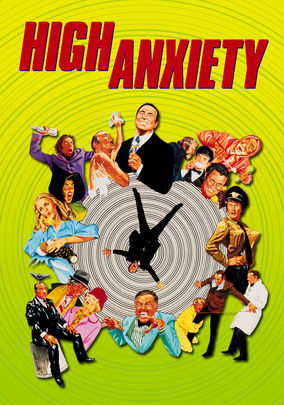
High Anxiety-1977

Director Mel Brooks

Starring Mel Brooks, Madeline Kahn, Cloris Leachman

Top 250 Films #146

Scott’s Review #740

Reviewed April 11, 2018

Grade: A

For lovers of legendary film director Alfred Hitchcock (as this reviewer is a die-hard fan), the 1977 spoof/satirical feast High Anxiety is a must-see.

The film is simply a treat for the multitude (nearly twenty!) of fun references to Hitchcock classics that fans can easily point out. Such classics as 1964’s The Birds, 1945’s Spellbound, 1958’s Vertigo, and 1960’s fan-favorite Psycho are heavily parodied.

Producer, director, and star Mel Brooks abounds all expectations with a brilliant performance and a smattering of veteran Brooks ensemble players along for the ride.

Featured stars Madeline Kahn, Harvey Korman, and Cloris Leachman deliver wonderful, lively, and memorable comic performances without ever being too zany or silly.

High Anxiety is a hilarious and clever production.

Brooks plays neurotic Doctor Richard Thorndyke, whom the Psycho-Neurotic Institute has hired for the Very Very Nervous. His role is to replace Doctor Ashley, who has died mysteriously at the facility.

Transported by his nervous driver, Brophy, he meets a bevy of peculiar characters led by Doctor Charles Montague (Korman), a man with a BDSM fetish, and Nurse Charlotte Diesel (Leachman), the grizzled head nurse.

Thorndyke immediately receives death threats amid strange shenanigans that seem to follow him wherever he goes.

Brilliantly, Thorndyke suffers from “high anxiety,” a witty reference to Hitchcock’s character of Scotty from 1958’s Vertigo.

As he meets and falls in love with Victoria Brisbane (Kahn), a woman whose father is a patient at the facility, he becomes determined to prove the fraudulence and deceit of Montague and Diesel, while subsequently clearing himself of a murder charge orchestrated by the pair.

The murder scene- occurring in a crowded lobby- with Thorndyke caught red-handed holding the murder weapon as a camera snaps the shot for evidence, is a direct spoof of 1959’s North by Northwest.

To be clear, High Anxiety is not a high-brow film, nor does it ever dare to take itself too seriously. It knows what it is and what it wants to achieve: to both entertain and please fans of Hitchcock.

The film is an ode and tribute to the general filmmaking of the director, who reportedly adored the picture and the accolades that Brooks received for making it.

There is hardly a better stamp of approval than that.

I adore the casting and the odd characters Brooks writes, specifically Leachman and Korman. The duo ham it up with a script laced with great comic moments to sink their teeth into.

Leachman, with her drill-sergeant-like stiff posture and pointed bosom (Mrs. Danvers from Rebecca in the 1940s), combined with the wimpy and snarky mannerisms of Korman’s character, is the perfect combination of female dominant and male submissive as they play off one another in a crisp style.

The sinister way that Nurse Diesel (my favorite character) utters the word “Braces”, a reference to her henchman, drizzles with dark humor and wit.

Piggybacking off these characters, Dick Van Patten (Eight Is Enough) gives a fine turn as the doomed straight man with a conscience, Dr. Wentworth, who knows something is up at the facility but is too timid to know exactly what it is.

His death scene is one of my favorites as derived from 1976’s Family Plot, the poor man is driven to ruptured eardrums and a subsequent stroke after his car is rigged to blast rock music, trapping him inside.

Brooks and Kahn make a lovable duo as the beleaguered romantic couple is forced into an adventure to prove innocence and rescue Victoria’s father from harm.

A favorite moment is Brooks’s wonderful rendition of “High Anxiety” at a hotel piano bar as he successfully woos Victoria, an entertaining romantic-comedy moment.

Predictably, he gets the girl.

High Anxiety (1977) is delicious, silly, and peppered with great classic Hitchcock moments that are fun to watch and to pick out which movie each one references.

An absolute must-see for all Hitchcock fans or those who want a humorous, lightweight introduction to the works of the Master.

Philadelphia-1993

Philadelphia-1993

Director Jonathan Demme

Starring Tom Hanks, Denzel Washington

Top 250 Films #171

Scott’s Review #782

Reviewed July 3, 2018

Grade: A

Having the powerful distinction of being one of the first Hollywood LGBT films to deal with heavy issues such as HIV/AIDS and homophobia, Philadelphia (1993) is a film to champion.

The film does contain some less-than-positive stereotypes across the board, but was a tremendous box office success and more importantly introduced a large audience to a still (at that time) taboo subject.

Hopefully, this had a tremendous effect on creating an understanding of a vicious disease and its ramifications.

Tom Hanks deservedly won the Best Actor Oscar for his lead performance of an AIDS and discrimination victim as did the heartbreaking theme song “Streets of Philadelphia”, penned by Bruce Springsteen, win for Best Original Song.

Director Jonathan Demme creates a world quite realistic in portrayal at the corporate level. Hotshot attorney Andrew Beckett (Hanks) has a promising future at one of the country’s largest law firms in Philadelphia.

Assigned a high-profile case, it is noticed that Andrew has developed lesions across his body and is subsequently fired from the firm. After deciding to sue the firm and having no luck finding an attorney to represent him, he finally meets struggling black attorney, Joe Miller (Denzel Washington), who begrudgingly takes the case to gain exposure.

Philadelphia is a film that is a courtroom drama with a cause and is firmly ensconced in the “message movie” genre.  A lesser version, and perhaps one made even a decade or so after 1993, might be reduced to the Hallmark television movie category.

Fortunately, the timing is perfect and Philadelphia can be remembered as a film championing LGBT rights.

Hanks’s performance is just dynamic- his character is meant to be empathetic, a victimized man unjustly suffering not only discrimination but a death sentence. The audience knows what is to come and as Andrew loses more weight and appears more sullen and haggard, the tale increases in sadness.

The final act of Andrew’s court victory is to be celebrated, but also is heartbreaking as a feeble and dying Andrew now lies close to death.

Hanks brilliantly infuses Andrew with courage, heart, and values, so much so that he becomes a hero to the audience even if their sexuality is different than his.

As much as the undying love for Hanks is deserved, the powerful supporting cast is a treasure. Washington is not as sympathetic a character as Andrew is, but learns a lesson and eventually leaves his machismo on the sidelines.

The heart-wrenching death scene culminating in the hospital room involves lover Miguel (Antonio Banderas), surrounded by Andrew’s family, all-embracing as one. There is beauty mixed with tragedy in this one scene alone.

Even Mary Steenburgen as the tough defense lawyer shows some heart. And who can say more about the dynamic Joanne Woodward as Andrew’s mother?

Unfortunately, there are a few stereotypes to endure, and sadly many early LGBT films (and some still do!) include these for emphasis- or perhaps ignorance? Nonetheless, these make the film seem slightly dated given the LGBT progress made in the decades since the film was released.

Joe Miller is portrayed as a macho guy afraid to be viewed as gay- he even jokes around about being a “man” with his wife. Joe also grimaces when he shakes hands with Andrew and suddenly realizes Andrew has AIDS.

Nearly all of Andrew and Miguel’s gay friends are effeminate- this hardly seems possible.

Such is a monumental achievement when a film breaks barriers by telling a story of critical importance. Philadelphia (1993) does just that by patiently asking its audience for tolerance, understanding, and heart.

In return, the film educates, floods with emotion, and breaks hearts. Other LGBT films would come along that were arguably even better, but Philadelphia is a groundbreaking experience sure to be remembered as the first of its kind.

Oscar Nominations: 2 wins-Best Actor-Tom Hanks (won), Best Original Screenplay, Best Original Song-“Streets of Philadelphia” (won), “Philadelphia”, Best Makeup