Tag Archives: Jack Nance

Blue Velvet-1986

Blue Velvet-1986

Director David Lynch

Starring Kyle MacLachlan, Laura Dern, Isabella Rossellini

Top 250 Films #65

Scott’s Review #343

319022

Reviewed January 9, 2016

Grade: A

Based on a 1963 Bobby Vinton tune of the same name, Blue Velvet (1986) is an independent noir thriller directed by the master of the weird and the unusual, David Lynch.

It is surreal in look and so mysterious- almost a precursor to Lynch’s fantastic television series, Twin Peaks. I adore the film and find new facets to it with each passing viewing.

Though it’s not an easy or mainstream watch, the payoff can be big, and you know you are watching a deep, layered film.

The story can be tough to understand in full, but it goes something like this: Under the guise of a cheerful, suburban surface, evil lurks somewhere.

College student, Jeffrey (MacLachlan) discovers a severed human ear lying in an abandoned lot, delivers it to police detective John Williams, and reconnects with the detective’s daughter, Sandy (Dern).

Sandy, being privy to secret information about the case, reveals that a mysterious woman, Dorothy Valens (Isabella Rossellini), resides in an apartment key to the case. Jeffrey and Sandy decide to investigate further, only to get themselves in over their heads as the mystery deepens.

The film’s dreamlike quality is very compelling and intriguing. Layers upon layers come to the forefront as the story unfolds, and very few answers are ever provided- this adds to the mystery and is really the point of the film.

Many aspects are open to interpretation.

The relationship between Jeffrey and the much older Dorothy is fascinating, but what about his chemistry with the innocent Sandy? And who is the Yellowman? When the youngsters see Dorothy perform “Blue Velvet” at her nightclub, it is a great moment in the film.

The character of Frank Booth, played by Dennis Hopper, must be one of the strangest in film history, as the man is maniacal and bizarre beyond measure. With his unusual sexual tastes- he enjoys inhaling gas and sadomasochism- he is a unique character. He is also quite abusive to Dorothy.

The film is a throwback to classic film noir from the 1950s, and a clear femme fatale, Dorothy, is central to the film.

I find the film so compelling since its subject matter is secrets. Many secrets and dark corruption, as well as various forms of left-of-center dealings, reside in this small North Carolina town- it is the audience’s challenge to put all the pieces of this puzzle together.

Oscar Nominations: Best Director-David Lynch

Independent Spirit Award Nominations: 1 win-Best Feature, Best Director-David Lynch, Best Male Lead-Dennis Hopper, Best Female Lead-Isabella Rossellini (won), Laura Dern, Best Screenplay, Best Cinematography
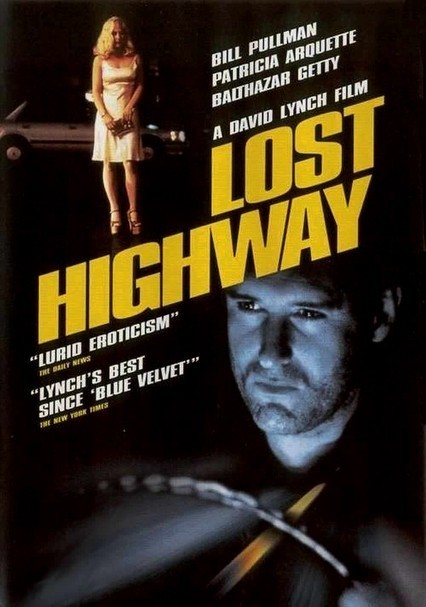
Lost Highway-1997

Lost Highway-1997

Director David Lynch

Starring Bill Pullman, Patricia Arquette

Top 250 Films #211

Scott’s Review #868

Reviewed February 17, 2019

Grade: A-

David Lynch, forever known for his odd and mind-boggling productions, released what might be his most bizarre offering, Lost Highway (1997).

Dreamlike and downright hallucinogenic, the film is impossible to dissect and is open to endless interpretation. Characters morph into younger or different versions of themselves or even into different characters entirely making the film best served as an experience not to be over-analyzed.

The most enjoyment comes from the fabulous atmospheric elements.

Lost Highway is set in Los Angeles as we meet saxophonist Fred Madison (Bill Pullman), a nightclub employee who resides with his glamorous wife Renee (Patricia Arquette) somewhere in the Hollywood hills.

The couple begins receiving envelopes containing VHS tapes of footage of their house followed by more invasive tapes of them being filmed while sleeping in their bedroom.

Spooked, they enlist the help of a pair of incompetent detectives.

The events begin to grow more complex with the introduction of a menacing mystery man (Robert Blake) and sequences involving a dismembered Renee, and Fred’s subsequent incarceration for her murder.

Fred suddenly morphs into a young auto mechanic named Pete Dayton (Balthazar Getty), who is released into his parent’s care while being followed by the two detectives.

Pete embarks on an affair with Alice Wakefield, a mirror image of Renee, who is the mistress of powerful Mr. Eddy (Robert Loggia). Pete and Alice plan to escape together leaving their troubled lives behind.

Any attempt to make more sense of the story than outlined above is fruitless as a torrent of questions could be raised. The obvious ones are why does Fred turn into Pete (looking completely different) and why does Renee turn into Alice (looking similar)?

What do random scenes of a burning desert cabin mean? What does the bizarre and hazy lesbian sequence with Marilyn Manson have to do with anything?

Discerning the logic and attempting to unravel the mystery will lead to frustration.

The best advice is to escape into the film and allow it to manifest in the viewer’s mind. The terms “dreamlike” and “hallucinating” are often used to describe films but are perfect adjectives to fit Lost Highway.

The stories do run parallel, so the challenge is not being able to follow each of them, but rather how they connect. The stories also merge circularly with a rhythmic effect and a satisfying ambiance that lured me immeasurably.

My favorite characters are Alice and Pete and this is in large part because of the actors who portray them. Not appearing until the second half Getty and Arquette infuse passion and energy into the roles.

I immediately rooted for them as a couple as their tender and smoldering chemistry was immediately felt. Arquette blazes as a sexy temptress and Getty as the handsome and earnest man submitting to her prowess.

Eagle-eyed viewers may notice comparisons to Russ Meyer’s devilish sexploitation film Supervixens (1975).

The most notable are the dual character representations, the auto mechanic occupation, the locales (more than a few Los Angeles roads seem identical), and various sequences featuring a weightlifter, a gas station drive-up, or other eerily similar scenes.

Whether or not there is a direct correlation between the films is unknown but fun to observe.

The musical score and soundtrack are high points adding both mystique and aggression with the hard rock songs featured. Marilyn Manson’s “I Put a Spell on You”, Rammstein’s “Heirate Mich”, and The Smashing Pumpkins “Eye” are used in important scenes.

The soundtrack release was a huge success on modern rock radio achieving Gold record sales status.

At the time of Lost Highway’s release, the film was not well regarded by critics and dismissed as not making much sense. In the decades following the film has garnered more acclaim and as with a fine wine has aged well. The beautiful cinematic tone, creative design, and images have become more revered over time.

For a perplexing and cerebral experience look no further than Lost Highway (1997), a delicious companion piece to the Lynch masterpiece, Mulholland Drive (2001).

Eraserhead-1977

Eraserhead-1977

Director David Lynch

Starring Jack Nance, Charlotte Stewart

Top 250 Films #249

Top 40 Horror Films #38

Scott’s Review #541

Reviewed December 10, 2016

Grade: B+

Eraserhead is one of the oddest films that I have ever seen. The film is an early (1977) David Lynch film, shot entirely in black and white.

It is a surrealist horror film.

Entrancing is the locale of the film- a bleak wasteland, of sorts, in an even bleaker town. The name is unknown.

Factory worker Henry Spencer (Nance) is garish in appearance/with spiky hair and wild eyes; he is peculiar, to say the least.

He trods day after day, to and from his job, meeting interesting, yet grotesque characters. He has an inhuman child with a snake-like face.

Henry meets an odd woman while carrying groceries home, and his apartment is filled with rotting vegetation.

While not one of Lynch’s best works, since the “plot” is incomprehensible to follow or make very much sense of, still, Eraserhead is a blueprint for his later works, with odd visuals and even odder characters. It is to be revered for its imagination alone.

The film is fascinating in its weirdness, but I probably never need to see it again.

It’s a must-see for any David Lynch fan for the warped experience.

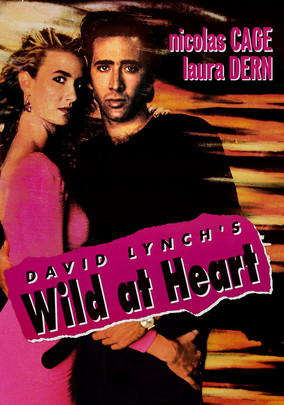
Wild at Heart-1990

Wild at Heart-1990

Director David Lynch

Starring Nicolas Cage, Laura Dern

Scott’s Review #1,230

Reviewed February 19, 2022

Grade: B+

David Lynch has created some weird films. Blue Velvet (1986) and Mulholland Drive (1992) are masterpieces that skew the odd and peculiar facets of human behavior. But Wild at Heart (1990) takes the cake as the strangest in the lot.

Fascinatingly unhinged, yet hard to understand, it’s got the Lynch handprint from start to finish, but only a warm-up act as stacked against those other films.

Somehow the film is classified as a comedy. It’s got to be one of the darkest of dark comedies. Anyone who is not a Lynch fan will not appreciate or get this film- I am a Lynch fan and I’m not sure I even got it. I do appreciate it though.

It’s also the best role of Diane Ladd’s career in which she plays a fiendish, witchy mama. The graceful actress belts a home run in her storied performance.

A situation occurs during the opening sequence that sets the tone for the rest of the film. Sailor Ripley (Nicolas Cage) serves prison time for a self-defense killing and reunites with his girlfriend Lula Fortune (Laura Dern) when he is released.

Lula’s mother, Marietta (Diane Ladd), is desperate to keep them apart and hires a hitman to kill Sailor. But those are only the start of his troubles when he and Bobby Peru, played by Willem Dafoe, an old buddy who’s also out to get Sailor, try to rob a store.

When Sailor lands in jail again, he may be destined never to reunite with Lula ever again.

Wild at Heart is a love story about Sailor and Lula and the many obstacles they must overcome to live happily ever after.

Cage and Dern are terrific though I fantasized while watching how nice it would have been to see Kyle MacLachlan in the role of Sailor. A Blue Velvet reunion would have been splendid since his chemistry with Dern in that film was top-notch. Nonetheless, I enjoyed watching Cage and Dern as the romantic leads.

The many references to The Wizard of Oz are delightful like when an image of Marietta flying through the air on a haggard broomstick appears just like the Wicked Witch of the West. When Lula desperately clicks her red heels three times to no avail we strangely wonder where the home she wants to return to is.

The film is one of those that is hard to take seriously or focus on the plot too much. This is evidenced by the inclusion of Twin Peaks (1990-1991; 2017) alumni Sheryl Lee, Sherilyn Fenn, and Grace Zabriskie. They play The Good Witch, Girl in Accident, and Juana Durango, respectively.

Each character is indescribable in their strangeness.

The nuttiness continues with bizarre turns from Crispin Glover and Harry Dean Stanton.

Interesting is how Wild at Heart was released the same year as Twin Peaks was. The inclusion of a seedy bar named One-Eyed Jacks which appears in both productions is about all that is comparable with each other. The main events in Wild at Heart are in Texas and Washington for Twin Peaks.

Forgetting the storylines, the best part about Wild at Heart is the cinematography. Enough dark and dusty highway sequences emerge using glowing and moody lighting and foreboding cracks and crevices in other visceral scenes. Cigarette smoking has never looked as sexy or dangerous as it does in this film.

Despite there being admirable and perfectly Lynch-y elements to Wild at Heart (1990) the film is just too far overboard for me to fall in love with.

I’ll pull out my copies of Blue Velvet and Mulholland Drive any day before Wild at Heart.

Oscar Nominations: Best Supporting Actress-Diane Ladd

Independent Spirit Award Nominations: 1 win-Best Supporting Male-Willem Dafoe, Best Cinematography (won)