Category Archives: Guy Films

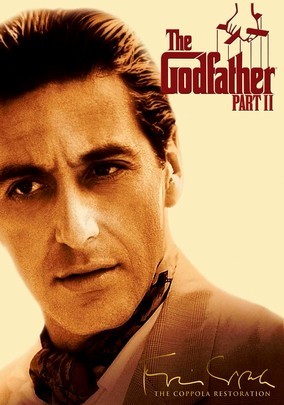
The Godfather: Part II-1974

The Godfather: Part II-1974

Director Frances Ford Coppola

Starring Al Pacino, Robert DeNiro

Top 250 Films #2

Scott’s Review #197

60011663

Reviewed: November 25, 2014

Grade: A

Frances Ford Coppola’s sequel (and, technically, a prequel) to the highly regarded and successful The Godfather (1972) is one of the rare sequels to equal, if not surpass, the original in greatness, creativity, and structure.

The Godfather Part II (1974) feels more profound, more complex, and ultimately richer than The Godfather- and that film itself is a masterpiece. Part II is much darker in tone. Francis Ford Coppola had complete freedom to write and direct as he saw fit, with no studio interference.

The results are immeasurable in creating a film masterpiece.

The film is sectioned into two parts, which is an exciting and practical decision.

The story alternates between the early twentieth century, following Don Corleone’s life, now played by Robert DeNiro, as his story is explained- left without a family and on the run from a crime lord, Don escapes to the United States as a young boy and struggles to survive in the Little Italy neighborhood of New York City.

He obtains a modest job as a grocery stockboy and finally celebrates his eventual rise to power in the mafia.

The other part of the film is set in 1958, as Michael Corleone faces a crumbling empire, with both rivals and the FBI investigating him and holding Senate committee hearings in Washington, D.C., and a failing marriage to Kay (Diane Keaton).

Betrayal is a common theme of the film, as Michael’s wife, brother, and mobster allies are revealed to be cagey enemies. Michael becomes increasingly uncertain and mistrustful of almost everyone around him. Is Kay a friend or foe? Is Fredo plotting against him? He even begins lashing out at Tom Hagen on occasion.

What makes The Godfather Part II so brilliant, and in my opinion richer than The Godfather, is that it is tougher to watch- and that is to its credit. Now, instead of being a warm, respected member of a powerful family, Michael is questioned, analyzed, and betrayed.

New, interesting characters are introduced, including Hyman Roth, played by Lee Strasberg, a former ally of Don’s, and Frankie Pentangeli, played by Michael V. Gazzo. These characters are intriguing, and their allegiances remain unknown throughout most of the film: are they loyal to the Corleones or deadly enemies?

The character of Michael evolves from conflicted to all-out revenge-minded, including seeking revenge against members of his own family. Michael is now a dark, angry character- gone is the nice, decorated war hero with his whole life ahead of him.

He is much older and has changed.

Similar to the original Godfather, the opening scene is a large celebration- this time, Anthony Corleone’s first communion celebration.

Additionally, the film’s finale features the deaths of several significant characters, one after another.

Unique to this film are the multiple-location scenes, featuring New York, Nevada, Italy, Florida, and Cuba, which make for an enjoyable segue throughout and a more substantial budget.

The blow-up confrontation between Michael and Kay reaches a devastating, shocking climax. When Michael punches Kay in a sudden rage, the audience feels punched as well.

The incredible scene at the end of the film, with the entire family gathered around for Don’s fiftieth birthday in 1942, is a special treat for viewers; familiar faces make cameo appearances.

I love these aspects of the film.

The rich history of Don is the most significant aspect of The Godfather Part II, known as “Godfather” and patriarch of the family. His life as a boy and a young father is explained, showing how he became one of the most powerful men in the crime world.

I love how he remains a decent man and helps people experiencing poverty and the victims of the ruthless Don Fanucci, his predecessor. He loves his wife and children, but also loves his neighbors and helps them, believing in the principle of fairness.

Ultimately, the characters of Don and Michael are worlds apart.

The Godfather Part II (1974) is one of the most complex and well-written films in movie history- studied in film school, discussed, imitated, and championed.

It remains vital and should be viewed and analyzed repeatedly.

Oscar Nominations: 5 wins-Best Picture (won), Best Director-Francis Ford Coppola, Best Actor-Al Pacino, Best Supporting Actor-Robert De Niro (won), Michael V. Gazzo, Lee Strasberg, Best Supporting Actress-Talia Shire, Best Screenplay Adapted from Other Material (won), Best Original Dramatic Score (won), Best Costume Design, Best Art Direction (won)

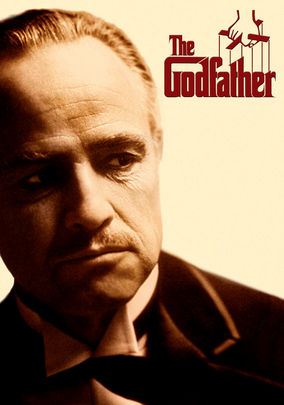
The Godfather-1972

The Godfather-1972

Director Frances Ford Coppola

Starring Marlon Brando, Al Pacino, James Caan

Top 250 Films #4

Scott’s Review #196

60011152

Reviewed November 24, 2014

Grade: A

The Godfather (1972) is one of the most identifiable and brilliant film masterpieces of all time. It is so ingrained in pop culture and film history that it was a blueprint for 1970s cinema, and its legend deserves to live on.

The film has not aged poorly nor been soured by over-exposure. It is as much a marvel today as it must have been when it was initially released in theaters.

The film revolves around the Corleone family- a mob family living in New York. They are high-powered, wealthy, and influential with politicians and law enforcement alike. They are the cream of organized crime families.

The patriarch of the family is known as “The Godfather”; his real name is Don Corleone, played by Marlon Brando.

The eldest son, hot-headed Sonny, is played by James Caan. Middle son Fredo, played by John Cazale, is dim-witted and immature, serving as the family’s weak link.

Finally, the youngest son is the central character in the film. Michael, played by a very youthful Al Pacino, has just returned home from World War II, a decorated and Ivy League-educated hero.

Throughout the film, Michael wrestles with steering the Corleone family business toward the straight and narrow or continuing the death, bloodshed, and corruption that currently plague the family.

Rounding out the Corleone family is Tom Hagen, an Irish surrogate son of sorts, who serves as the family attorney. Connie, the temperamental and emotional sister, and Mama Corleone, the passive wife of Don, complete the prominent family.

The supporting characters are numerous, ranging from family friends and relatives to corrupt mobsters and those introduced while Michael lives in Italy.

The brilliance of The Godfather lies in the richness of its numerous characters, as well as its structure and pacing.

Even minor characters are vital to the film, and every scene is essential and effortlessly paced, so that they neither seem rushed nor dragged out; the film is immeasurably character-driven.

My favorite character is Michael Corleone, as he is the most troubled and complex of all. Pacino plays him to the hilt as, initially, a nice guy trying to do the right thing, going against the grain, and non-traditional- he proposes to a WASP woman who has no Italian heritage.

When events unfold in a particular way, Michael suddenly becomes the family’s leader, despite being the youngest son, and the character’s complexities deepen from this point.

Specifically, the revenge-killing sequence is brilliant, keeping the viewer on the edge of their seat through a car ride, a meal at a restaurant, and a men’s room scene, until all hell finally breaks loose, all the while Michael is conflicted, unsure, and intense.

Has he veered too far from being a nice guy? Can he salvage the family business without being ruthless? Michael faces a battle of good vs. evil.

The scenes are brilliantly structured- the grand opening scene alone is beautiful as the audience is introduced to the entire family- cheerfully dancing and frolicking during a bright and sunny outdoor wedding (Connie’s) at the Corleone estate, while inside a dark interior study, a man begs Don Corleone to help avenge his raped and beaten daughter by having her attackers killed.

Several scenes in The Godfather are my personal favorites —the aforementioned restaurant scene, where Michael is faced with a dilemma involving a corrupt policeman and a high-powered figure. One can feel the tension in this extended scene.

The scene in a Hollywood mansion where poor, innocent, horse Khartoum meets his fate in the most gruesome way imaginable.

Later, Michael’s beautiful Italian wife, Apollonia, has an explosive send-off.

Towards the end of the film, there is an improvised scene set in a tomato garden, with an elderly Don Corleone playing with his young grandson.

Finally, the brutal scene at the toll booth involving Corleone’s son, Sonny, is mesmerizing, murderous, and flawlessly executed.

The lack of any strong female characters and how women are treated (either beaten or passively following their husbands) is bothersome.

Unfortunately, this was still the case circa the 1940s.

One could argue that Kay Adams, played by Diane Keaton, is the strongest female character because she questions the Corleone family’s motives and tries to keep Michael honest and trustworthy. She has little in common with the other female characters.

Lines such as “I’m gonna make him an offer he can’t refuse” and “Don’t forget the cannolis” are unforgettable and quote-worthy.

The film’s finale is breathtaking—a combination of bloody killings and a peaceful scene in which Michael accepts the honor of becoming his nephew’s godfather. As he pledges his devotion to God and denounces Satan, the murders he orchestrated are simultaneously being executed.

The character, while complex, suddenly becomes a hypocrite.

Some view Michael as strictly a hero whose choices should not be questioned or analyzed; others see him as a complex, tortured, and flawed character rather than a hero.

One must watch The Godfather and The Godfather Part II (1974) as companion pieces, as Part I is slightly more straightforward and easier to follow than the more complex and layered sequel.

The Godfather (1972) is storytelling and filmmaking at its absolute best and continues to influence films to this day.

Oscar Nominations: 3 wins-Best Picture (won), Best Director-Francis Ford Coppola, Best Actor- Marlon Brando (won), Best Supporting Actor- James Caan, Robert Duvall, Al Pacino, Best Screenplay Based on Material from Another Medium (won), Best Costume Design, Best Sound, Best Film Editing

Goodfellas-1990

Goodfellas-1990

Director Martin Scorsese

Starring Ray Liotta, Robert De Niro, Joe Pesci

Top 250 Films #46

Scott’s Review #349

70002022

Reviewed January 9, 2016

Grade: A

Director Martin Scorsese adapts Goodfellas, a crime-mob film, from Nicholas Pileggi’s 1986 nonfiction book. Pileggi helped Scorsese write the screenplay.

The film is more matter-of-fact in its telling than the purely dramatic The Godfather, with added wit and humor, and excellent editing.

Featuring powerful acting by Ray Liotta, Robert De Niro, and Joe Pesci, it is a memorable classic mob film that can be enjoyed via repeated viewings.

Largely ad-libbed, the film is rich in good dialogue and contains one of the highest totals of curse words in film history.

The film is told from the first-person narrative of the lead character, Henry Hill.

Henry, now in the Witness Protection Program, recounts his years affiliated with the mob from 1955 to 1980.

We meet Henry as a youngster in Brooklyn, New York. He is half-Italian, half-Sicilian. He idolizes the “wise guys” on the streets and intends to join their ranks one day.

From there, the film describes the trials and tribulations of Henry’s group of miscreants. Henry meets and falls in love with Karen (Lorraine Bracco), and their tumultuous love story is explored through tender moments and affairs.

What I love most about Goodfellas is the characters’ love and the sense that you are part of the action.

The film is a highly stylized family drama- gritty nonetheless, but the viewer feels like they are part of things and a family member- milestones are celebrated, and meals are shared.

We see Henry grow from a gullible teenage boy who idolizes the neighborhood men to a member of the group.

The other characters, such as the vicious and volatile Tommy DeVito (Pesci) and Jimmy “The Gent” Conway (De Niro), are older and more mature.

Bracco’s character is interesting. Unlike most of the female characters in The Godfather films, she is not content to merely sit on the sidelines and look past her husband’s shenanigans and torrid affairs with floozies.

She is a more modern, determined woman, and Bracco plays her with intelligence and a calm demeanor. She wants to be Henry’s equal, not just some trophy wife.

Pesci deservedly won the Best Supporting Actor Oscar for his role; he is brutal and filthy, but a mesmerizing character.

During a memorable scene, his character, Tommy, jokingly teases Henry, but when Henry responds in a way that displeases him, the scene grows tense, and Tommy becomes increasingly disturbing.

His famous line “What am I, a clown- do I amuse you?” is both clever and haunting in its repercussions.

I adore the soundtrack Scorsese chose for the film—spanning decades, he selects songs true to their times, such as “Layla” (1970) and “Remember (Walking in the Sand)” (1964), which are just perfect.

Worth noting is that when a scene plays, the song is sometimes mixed into the narrative to enhance the scene altogether—becoming a part of it rather than simply background music.

If one is looking for the perfect mob film, one that contains music, wit, charm, and fantastic writing, Goodfellas is among the best.

I prefer The Godfather and The Godfather II, but while Goodfellas has similarities to these films, it is also completely different and stands on its own merits.

Oscar Nominations: 1 win-Best Picture, Best Director-Martin Scorsese, Best Supporting Actor-Joe Pesci (won), Best Supporting Actress-Lorraine Bracco, Best Screenplay Based on Material from Another Medium, Best Film Editing

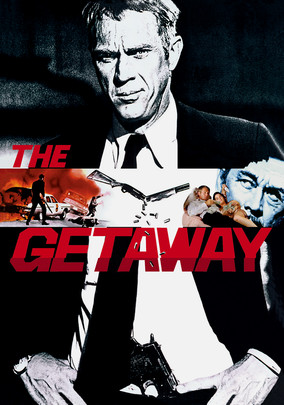
The Getaway-1972

The Getaway-1972

Director Sam Peckinpah

Starring Steve McQueen, Ali MacGraw

Top 250 Films #58

Scott’s Review #439

539604

Reviewed July 3, 2016

Grade: A-

The Getaway (1972) is a classic action film directed by Sam Peckinpah, known for films such as Straw Dogs and The Wild Bunch.

His films are known as “guy films” and are a rather violent experience.  The Getaway is no exception, though it is not immensely brutal either. Still, there is more than one macabre scene and one dastardly villain.

For fans of Peckinpah, The Getaway is a must-see.

The film features Steve McQueen and Ali MacGraw, who are perfectly cast as lovers Doc and Carol McCoy. Inescapable was their chemistry, and art mirrored life: the two were embroiled in a torrid love affair during the shooting, and later they married.

We meet Doc in a Texas prison, where his parole has just been denied. Doc and Carol decide to make a deal with corrupt businessman Jack Benyon to ensure Doc’s release. One stipulation is for Doc to participate in a bank heist with two of Jack’s men (Rudy and Frank).

The heist goes off, but things go awry, and Doc and Carol head for El Paso with a large sum of money, being pursued by Rudy and a double-cross attempt by Jack.

Rudy kidnaps veterinarian Harold and his young wife Fran (Sally Struthers) to aid him with his injuries, taking them along as he pursues Doc and Carol.

Amid the already complicated plot, a con man attempts to steal Doc and Carol’s money.

Doc and Carol are clearly the heroes of the film and are meant to be rooted for, and the characters work very well together. Yes, they are criminals, but they are portrayed as lovely and as not hurting anyone who does not deserve it. Doc does spare Rudy’s life at one point, and I think this only reinforces Doc’s appeal as an antihero.

The love story is also a significant aspect of the filmmaking, making Doc and Carol likable. A few sweet, tender scenes of their romance are mixed in, adding a nice balance to the otherwise testosterone-fueled events.

The Getaway features spectacular editing, particularly at the beginning of the film, where we watch Doc in prison, going through his day-to-day rituals, which are seamlessly interwoven with other stories in the movie.

The musical score matches perfectly with the editing, adding a provocative element of intrigue. These components add the necessary elements to a film like this- edge-of-your-seat!

I love the Texas setting.

Characters are constantly traveling to get somewhere- either by train, by car, or on foot- so we see much of the Texas countryside, almost giving The Getaway a Western flavor.

It is certainly a hot, humid environment, though McQueen always wears a sophisticated suit, and MacGraw looks stylish and put together.

And from a prop perspective, I never tire of seeing those early 1970s sedans driving at high speeds.

Unfortunately, as with most of Peckinpah’s films, women are not portrayed in a positive light, though Carol is one of the strongest of his female characters. Yet, in one tough scene, she is smacked around by Doc after he realizes she slept with Jack to ensure his release from prison.

The most confusing and weak character is Fran. In a strange bit of writing, she inexplicably falls madly in love with her kidnapper, Rudy, even as he abuses and humiliates her, while her husband is around. This is odd and tough to watch, and not the best part of The Getaway.

Her character is not developed well, and it is head-shaking that she feels any passion for Rudy.

The heart of the film belongs to Doc and Carol as they are on the lam for much of the time, and this is a successful part of The Getaway- hence the title. Will they get caught? Will they escape?

The characters remind me of Bonnie and Clyde, so we wonder if Doc and Carol will meet the same fate, but of course, we like them, so we do not want that.

The Getaway is a fast-paced, down-home, red-blooded sort of action film. It is stylized, gritty, and sometimes violent. The chicken wing scene between Rudy, Fran, and Harold starts light and then turns ugly, adding to the film’s unpredictable nature.

A supreme offering by Peckinpah.

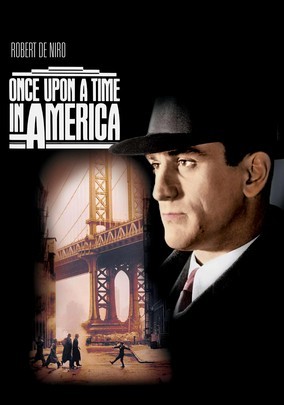
Once Upon a Time in America-1984

Once Upon a Time in America-1984

Director Sergio Leone

Starring Robert De Niro

Top 250 Films #85

Scott’s Review #218

60028306

Reviewed January 19, 2015

Grade: A

An epic film, the extended director’s cut of 1984’s Once Upon a Time in America is more than four hours in length and a directed by Sergio Leone, who also directed the 1968 masterpiece Once Upon a Time in the West and numerous other westerns starring Clint Eastwood.

This particular film is in a different vein and not to be confused as any sequel or related to the aforementioned film- this time Leone explores the crime drama genre rather than the western, and does so in remarkable fashion.

The film tells the story of a group of Jewish friends who became involved in organized crime in New York City during the 1920s.

The main story is told via flashbacks as the central character, Noodles, played by Robert De Niro, returns to Brooklyn thirty years later to reunite with his former mobster friends.

In this way, the film is sectioned- the group of youngsters and kids, and the same characters as adults.

Once Upon a Time in America has been met with considerable controversy since its release. At the time of its release, the film was butchered, with over an hour of footage cut by the studio heads, leaving it largely uneven.

Fortunately, the restored version, over three hours long, is available for viewing. Furthermorethe director’s cut clocks in at well over four hours and is the best version to watch. Due to so many cuts, other versions appear shoddy and out of order, making the viewing experience difficult.

Once Upon a Time in America is largely underappreciated, except among die-hard cinema lovers, most of whom are patient with the film, and it deserves mention as an excellent crime epic drama.

The film shares many similarities with The Godfather and The Godfather Part II, and the role De Niro plays is not too different from that of Vito Corleone in Part II.

However, the greatest contrast is that Once Upon a Time in America is more visually artistic than The Godfather films.

The film centers on Noodle’s perspective as he enjoys his youth in the Lower East Side of Manhattan, where he meets his lifelong friends.

The focal point is his friendship with Max, the adult character played by James Woods, and his undying love for Deborah, played by Elizabeth McGovern as an adult.

As kids, they are worry-free but gradually fall in with a group of older mobsters, first doing their dirty work, then venturing out on their own.

The film’s themes are loyalty, childhood friendship, betrayal, and greed, as all the characters change (or die) over the course of the film.

When a mysterious letter forces Noodles to resurface in Brooklyn, we begin to understand the backstory and the history between the friends as layers are slowly peeled back.

The film drags slightly in the middle section, but the first and last parts are very well made and absorbing.

Leone has a way of pacing the film that works- it is methodical and nuanced, with wonderful set pieces and each period explored- 1920s, 1930s, and 1960s seem equally as authentic as the next one does.

I especially enjoyed the 1920s art direction- it revealed such a state of genuineness and felt like truly being there in that period.

The relationship between Noodles and Deborah is an interesting one worth mentioning. Falling in love as youngsters (when a very young Jennifer Connelly played Deborah), they had an innocent puppy-love relationship.

As adults, they are ruined by a violent, disgraceful act, and one might argue that one of the characters becomes quite unsympathetic.

Once Upon a Time in America (1984) is a sprawling epic film sure to be enjoyed by intelligent fans of the crime epic drama genre and specifically Sergio Leone fans- an underappreciated gem.

Once Upon a Time in the West-1968

Once Upon a Time in the West-1968

Director Sergio Leone

Starring Henry Fonda, Charles Bronson, Claudia Cardinale

Top 250 Films #187

Scott’s Review #886

Reviewed April 17, 2019

Grade: A

At one time dismissed as either frivolous or cartoon-like, the derogatory genre classification “spaghetti western” was originally played for laughs or featured a comical slant, often with bad lip-syncing.

Many of these films have aged tremendously well, though, and are now more widely appreciated and have become a part of the cinematic canon.

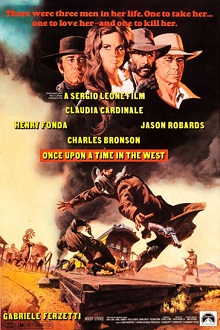
Once Upon a Time in the West (1968) is a lesson in camp art that marinates like a fine steak, drizzling with texture and a good atmosphere across a sprawling two-hour-and-forty-six-minute landscape.

In a great sequence, the film begins with a mysterious harmonica-playing gunman (Charles Bronson), dubbed “Harmonica” for reasons eventually revealed, shooting three men sent to kill him.

Meanwhile, to get his hands on prized railroad land in Sweetwater, disabled railroad baron Morton (Gabriele Ferzetti) hires killers, led by blue-eyed baddie Frank (Henry Fonda), who murders property owner Brett McBain (Frank Wolff) and his family.

The film immediately exudes intensity, with a severe revenge theme.

The story develops further, with romance mixed in a Western style, as McBain’s newly arrived bride, Jill (Claudia Cardinale), inherits the land instead.

Jill is a former prostitute who catches the eye of most of the men she encounters. Both outlaws, Cheyenne (Jason Robards) and Harmonica, take it upon themselves to look after Jill and thwart Frank’s plans to seize her land.

With standard Western flair, they are both attracted to Jill and yearn for her affection while also feeling protective of her.

Not professing to be enamored with the Western genre- the stereotypical Cowboys and Indians and token damsel in distress have their limitations- Once Upon a Time in the West is a feast for the eyes and the ears with cinematography on par with Lawrence of Arabia (1963) and a killer musical score.

While the story may have a traditional backbone, the nuances are astounding. The sweeping mountains of the western United States are heavily featured, and the tension-infused music sets up every thrilling scene with gusto and foreboding.

Hot on the heels of another similarly themed masterpiece, The Good, The Bad, and The Ugly (1966), Leone delivers the goods at every turn, most notably setting up each scene with sizzling elements that emit a clear sense of danger.

The audience knows trouble is about to transpire, but not exactly when the shit will hit the fan. The family death scene is paced astoundingly well as the family merrily goes about preparing a delicious summer meal, unaware that destruction is around the corner.

Sure, the cast is a mix of American and Italian actors with varying degrees of accents, not exactly mirroring the Wild West.

Yes, Jill wears heavy mascara and a hairstyle straight out of the 1960s, and one character has brightly dyed red hair, but these intricacies give the film character rather than turn the production into a disheveled mess.

Forever known for heroic or everyman roles, Fonda plays against type, cast as the central, sadistic villain, and the result is superlative.

Leone’s ability to cast a legendary star in production with little expectations is quite a feat, and Fonda seems to revel in role-playing him dangerously and straight.

With his piercing blue eyes and a gaze sure to make children run away in terror, his brutal villainy is fully realized only at the film’s conclusion.

Dozens of iconic comparisons to Quentin Tarantino’s modern directing style can be drawn. The director undoubtedly watched and studied this film repeatedly, as numerous qualities mirror his movies.

Viewers will delight in drawing these comparisons, including a harmonica reference, a revenge story, and the climactic reveal at the end of the film via flashback, which pulls all the pieces together.

Once Upon a Time in the West (1968) is a quality film that has finally gotten its due. Tremendous and compelling storytelling is combined with flavorful qualities and a dusty atmosphere.

The film is the sum of all its parts, and while at first underappreciated, it has finally risen to the ranks of a high-quality masterpiece.

Influencing many great directors, including Martin Scorsese, George Lucas, and Tarantino, is quite a testament to its staying power.

Die Hard-1988

Die Hard-1988

Director John McTiernan

Starring Bruce Willis

Scott’s Review #1,458

Reviewed December 28, 2024

Grade: B+

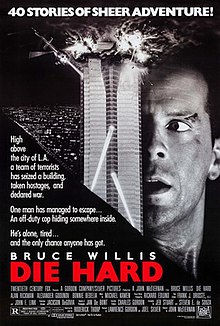
Die Hard (1988) is one of the best action films of the late 1980s and 1990s. Because of its success and mainstream appeal, it spawned dozens of copycat films.

It features hunky Hollywood star Bruce Willis in his breakout role, propelling him to a box-office stronghold that lasted for many years.

He would later appear in more cerebral offerings like Pulp Fiction (1994) and The Sixth Sense (1999), but Die Hard put him on the map.

Is it a Christmas film, or is it not? It can be debated.

Depending on one’s socioeconomic leanings, Die Hard can be seen as a film that puts the working-class Joe in the driver’s seat and makes yuppies or corporate types look like incompetent fools.

The film, watched decades after its making, is guilty of stereotypes and clichés. It is riddled with nearly every action film standard one-liner intended to evoke laughter, which now seems silly and contrived.

Hokey? Yes, but it’s also fun and a chance to watch the muscular, sweaty Willis run bare-chested for most of the run.

Like Friday the 13th (1980), the film produced several sequels, all subpar to the original.

New York City policeman John McClane (Willis) is visiting his estranged wife (Bonnie Bedelia) in Los Angeles on Christmas Eve. He joins her at a posh holiday party in the headquarters of the Japanese-owned business she works for.

The festivities are quickly interrupted by a group of terrorists led by the crazed but calm Hans Gruber (Alan Rickman), who take over the exclusive high-rise and everyone in it.

McClane realizes that he must save the day.

John McTiernan, who directs, knows his way around the action genre, and Die Hard is easily his best. Other notable works include Predator (1987) and The Hunt for Red October (1990), so he also knows how to create an action star.

The season, the setting, and the villain are other high points of Die Hard.

The perfect setup is a glossy high-rise in downtown Los Angeles at a glitzy corporate party on Christmas Eve. Drizzling with possibilities, McTiernan adds the German terrorists for good measure and a slice of necessary Americana, a fixture of the 1980s ‘USA good, Europe bad’ mentality.

Naturally, McClane is a good old-fashioned American boy. While he initially wants his successful wife, Holly (Bonnie Bedelia), to be a traditional homemaker, he realizes she’s good at her job as a corporate officer.

But the traditional and conservative mindset still shines through.

In a stroke of genius and authenticity, the real Fox Plaza in Century City was used for the skyscraper rather than an ineffectual mock set. This adds a lot to the enjoyment, and glimpses of The Towering Inferno (1974) crossed my mind.

In standard fashion, the feds, detectives, television reporters, and police officers are primarily incompetent, except for McClane. This adds to the earlier notion that the working-class guy is the movie’s hero.

Actor Paul Gleason, well-known for a similar curmudgeonly role in 1985’s The Breakfast Club, bears much of the brunt. As he callously shouts at police officer Powell (Reginald VelJohnson), he also frets at the mayor’s reaction to the handling of the situation with repeated ‘the mayor will have my ass’ remarks.

Interestingly, Powell, who bonds over the radio with McClane, is the only character to receive a competence award. The relationship between the two male cops is warm, respectful, and a high point.

The other well-written character is the main villain, Hans. Played deliciously by Rickman, he’s a baddie for the ages, cold and calm, and his deadly tumble from the top of the enormous building is satisfying to patient fans.

Die Hard (1988) centers on a good hero cop besting the bad guys from Germany, with a definitive pro-American theme popular at the time.

While the terrible 1980s hairstyles, clothes, and cheesy dialogue do not hold up well, the action is, and the film can surprisingly be watched repeatedly.

Oscar Nominations: Best Film Editing, Best Visual Effects, Best Sound Effects Editing, Best Sound

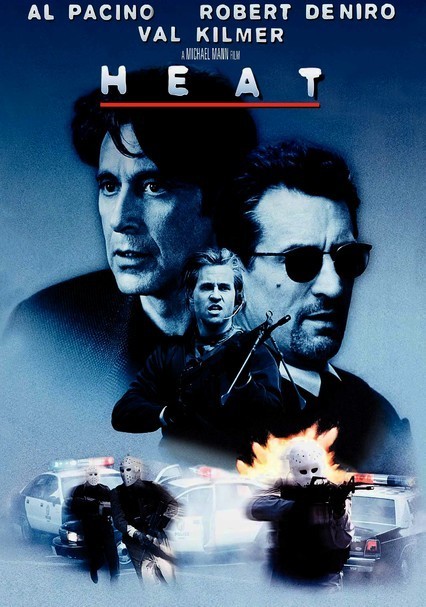
Heat-1995

Heat-1995

Director Michael Mann

Starring Al Pacino, Robert De Niro

Scott’s Review #1,228

Reviewed February 12, 2022

Grade: A-

Fans of the popular 1980s NBC television series, Miami Vice, will recall that Michael Mann was the Executive Producer of the show during its run.

He has a distinctive crime-thriller style that pairs perfectly with Heat, a sizzling 1995 offering starring two film greats, Al Pacino and Robert De Niro.

The fact that the pair do not appear together on screen too often can be forgiven because, when they do, the stars align, and the power of quiet scenes cannot be outdone. I savored the moment when they first appeared together.

Quality over quantity.

De Niro plays Neil McCauley, a lifelong criminal who is trying to handle the damage caused by one of his men while also planning one last big heist before retiring to parts unknown.

He meets a lovely young Los Angeles-based artist, played by Amy Brenneman, in a diner, and the two plan to relocate abroad.

Meanwhile, Lieutenant Hanna (Al Pacino) is a seasoned officer attempting to track down McCauley and his cohort while dealing with the chaos in his own life, including his wife’s (Diane Venora) infidelity and his stepdaughter’s (Natalie Portman) unhinged mental health.

McCauley and Hanna discover mutual respect, even as they try to thwart each other’s plans. The two characters become doppelgangers of one another.

The situation culminates in a cat-and-mouse chase on the tarmac at LAX airport.

To say that Heat is a by-the-numbers 1990s thriller is a fair assessment, although it’s way better than that classification, and it’s of that genre.

For starters, the acting is superior, and obviously, De Niro and Pacino bring a level of professionalism to the film in the lead roles.

My favorite scene is not the one you’d most expect me to say, but rather a quiet and powerful chit-chat in a small coffee shop. They are rivals, having lived opposite lives, yet their troubled lives mirror each other.

Without a doubt, Hanna wants to bring McCauley to justice, yet he admires him and sees parts of himself in him. The feeling is mutual, and the two actors relay this revelation without actually speaking the words.

Viewers immerse themselves in the characters, pivoting from this powerful scene.

There are a ton of characters in Heat, but each one feels like they have much to offer.

Juicy storylines are introduced but never forgotten, even if not part of the main canvas. Hanna’s wife and stepdaughter play a central role in the final act, even though they appear only in the first chapter.

In supporting roles, Val Kilmer and Ashley Judd share beautiful chemistry and a melancholy storyline as a damaged couple trying to survive surrounded by a life of crime.

At two hours and fifty-two minutes, there is plenty of time for each character to make their mark.

I love the rich character development that Heat offers, but sometimes it’s admittedly tough to keep track of the characters’ motivations and how they tie into the main action.

Mann’s style is all over the place, and even the musical score brought me back to the episodic song intervals that Miami Vice created.

The moody, dark atmosphere of dingy, crime-infested Los Angeles is perfectly set against glossy, glamorous high-rise and sprawling estate scenes. The bright and luminous city skyline is a feast for the eyes.

The cop/criminal dynamic is the main draw as Heat flexes its masculine muscles scene after scene. A bloody bank heist gone wrong at the beginning of the film cements what Mann is trying to create here.

A guy’s film with enough juice to hook the introspective film viewer, too.

Not remembered as well as it probably should be, Heat holds up surprisingly well when compared to similar but hokey 1990s action films like Lethal Weapon and the Die Hard films.

Though there’s not a whole lot new in Heat (1995), rich writing and powerful acting win out every time, and, of course, Pacino and De Niro are worth the price of admission.

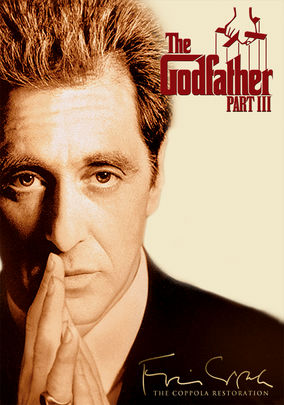
The Godfather: Part III-1990

The Godfather: Part III-1990

Director Francis Ford Coppola

Starring Al Pacino, Diane Keaton, Andy Garcia

Scott’s Review #533

60011153

Reviewed December 3, 2016

Grade: B+

The Godfather: Part III, released in 1990, has traditionally been met with unwavering criticisms for not being as great as the two preceding epics.

Sofia Coppola, who plays Mary, the daughter of Michael Corleone, in particular, has borne the brunt of the attacks.

No, The Godfather: Part III is not on the level of the others, but it is pretty damned good on its own merits and is a capable mob epic that concludes the franchise satisfyingly.

The central themes of the film are Michael’s continued desire to leave the mafia and religion, and the Catholic Church is a central theme.

Some backstory to the making of the film: Coppola had a non-expiring offer to create a third installment to the saga ever since 1974, when Part II was released.

After a financial crisis, Coppola agreed to do the follow-up in 1990.

The ever-crucial role of Mary (now a coming-of-age young lady) was to be played by Julia Roberts, who dropped out. Winona Ryder was then cast and bailed at the very last minute.

Out of necessity, Coppola’s daughter, Sofia, was cast and had little time to prepare or much acting experience (she would later become an acclaimed director, which better suited her talents).

In a similar fashion to the other epics, a major event launches the film: Michael (Pacino) is named Commander of the Order of Saint Sebastian in a lavish ceremony at St. Patrick’s Old Cathedral.

It is revealed that Michael is approaching age sixty and semi-retired, leaving his business dealings mainly to Joey Zasa in New York, who has ravaged what the Corleone family had once built.

Many characters- Kay, Mary, Tony, and Connie- are reintroduced, and new characters such as Vincent Mancini (Andy Garcia) and Don Altobello (Eli Wallach) are introduced, in a flurry of new storylines.

It is like a big, grand soap opera, with wonderful, rich writing.

I was immediately impressed by the neat cinematography- the camera captures wind-swept leaves and an artistic introduction to the film, as well as characters from the first two films, either appearing in cameo roles or appearing in cameo roles, small characters from the first two films- a great touch in continuity and history.

Coppola does a fantastic job of providing little updates on these characters during a party.

For example, we learn that Vincent is the deceased, illegitimate son of Sonny, his mother being Lucy Mancini, who appears in a scene. (Clever viewers will remember Sonny and Lucy’s torrential affair in the bathroom during The Godfather (1972)-it is suggested that this produced Vincent).

It is mentioned that Tom Hagen (Robert Duvall) has died, though his wife and son appear, and Coppola treats us to a myriad of flashbacks (Apollonia, a young Michael, and Kaye).

These nuances make The Godfather: Part III a film filled with cool little aspects that warm the loyal viewer.

The main story- Michael takes Vincent under his wing- and strives to steer the family clear of criminal ties- is interesting, if not spectacular.

Connie rises from a battered mafia wife, raising kids, to a major player in the family, just as women progressed from the 1940s to the 1980s when the story takes place.

She even feeds her godfather a poisoned cannoli!

Michael, Vincent, and Connie involve themselves with the Catholic Church, bailing it out (the real-life Papal banking scandal is linked to the story) and striking a deal with it for a major stake in the real estate company Immobiliare.

In-fighting between the major crime mob bosses leads to several bloody massacres throughout the film, on the streets, in Atlantic City, and finally, in the Sicilian Opera house.

The pairing of cousins and lovers, Vincent and Mary, never really works, nor does Bridget Fonda’s one-two-scene appearance as Grace Hamilton, a brief dalliance for Vincent.

Also, the exclusion of the loyal family attorney, Tom, is a glaring omission.

So the film does contain a few negatives.

In a nutshell, The Godfather: Part III (1990) is a very good, epic crime drama even without the Godfather name. To measure up to the glory of Parts I and II is impossible.

With the bonus of having the rich Corleone family history and the intricate relationships between the characters, this makes for a treat for fans.

There has not been a Part IV, nor should there ever need to be, as the conclusion of the film is a satisfying wrap-up to the saga.

Oscar Nominations: Best Picture, Best Director-Francis Ford Coppola, Best Supporting Actor-Andy Garcia, Best Original Song-“Promise Me You’ll Remember”, Best Art Direction, Best Cinematography, Best Film Editing