Category Archives: 70’s Horror

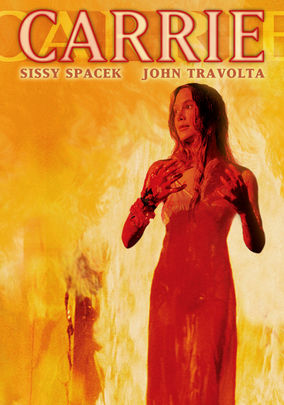
Carrie-1976

Carrie-1976

Director Brian De Palma

Starring Sissy Spacek

Top 250 Films #63

Top 40 Horror Films #14

Scott’s Review #325

352989

Reviewed January 5, 2016

Grade: A

Carrie is a 1976 horror film adapted from Stephen King’s novel of the same name.

Many King adaptations have failed, but Carrie (along with The Shining, 1980) is among the best.

Going beyond the scope of horror and earning more than one major Oscar nomination (largely unheard of in the genre), Carrie influenced films and filmmakers for decades after its release.

This is due mainly to the dream-like and breathtaking direction of mood master Brian De Palma.

By this time (2016), the film and the character of Carrie White were legendary.

Carrie (Sissy Spacek) is a lonely suburban teenager, ostracized by her classmates for being “weird”. Her mother (Piper Laurie) is a devout Christian who spreads the word of god amongst the neighbors.

Carrie has a special ability to move things, usually during anger- this is called telekinesis.

After a humiliating incident in the girl’s locker room when Carrie begins menstruating, one of the nicer girls in the class, Sue Snell (Amy Irving) feels sorry for Carrie and convinces her boyfriend, Tommy Ross, to take Carrie to the prom.

When others in the class take revenge upon Carrie with a sick joke, things take a horrific turn.

Betty Buckley as the empathetic gym teacher, Miss Collins, and John Travolta and Nancy Allen as the dastardly Billy and Chris also star and are perfectly cast.

The direction in the film is second to none. De Palma adds interesting camera work throughout the film.

During a tender, lovely prom dance between Carrie and Tommy, the camera circles the pair repeatedly, giving a spellbinding, but not dizzying quality.

The use of slow motion in the pivotal “pig blood” scene is immeasurably effective.

The seemingly eternal time it takes for the blood to spill, and the camera (in slow motion) going from Sue to Miss Collins to Chris to the bucket of blood, is fantastic.

The list of inspired and intense scenes goes on and on- from the climactic scene between Carrie and Mrs. White to the “jump out of your seat” final scene.

The acting is also worthy of high praise. Spacek and Laurie deservedly received Oscar nominations for their work. Spacek brings so much rooting value to her role, with a shred of psychosis bubbling just beneath the surface.

Carrie wants to fit in and have a happy life, so the audience is drawn into her corner and celebrates her brief happiness with Tommy at the prom. Spacek is just perfectly cast.

Laurie, on the other hand, exudes crazy in every sense, but we do feel pangs of sympathy for her. We strongly believe she cares for her daughter and wants to protect her from the dangers of the world.

Carrie (1976) is a masterpiece that continues to hold up well and influence generations who can relate to school bullying,  taunting, and the desire to see the nasty popular kids get their just desserts.

More than a great horror film, it is a revered classic with a dreamy, moody vibe.

One of my all-time favorites.

Oscar Nominations: Best Actress-Sissy Spacek, Best Supporting Actress-Piper Laurie

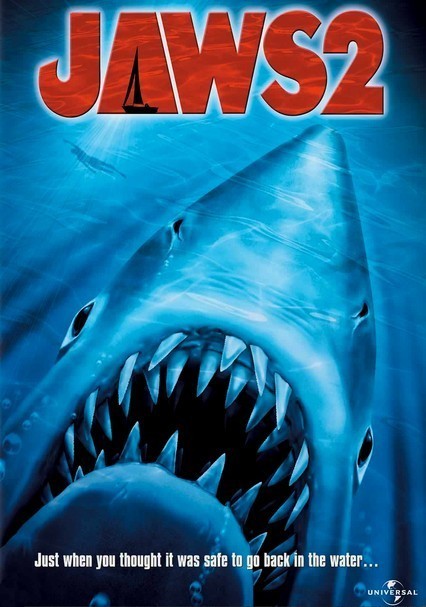
Jaws 2-1978

Jaws 2-1978

Director Jeannot Szwarc

Starring Roy Scheider, Lorraine Gary, Keith Gordon

Scott’s Review #1,307

Reviewed October 13, 2022

Grade: A-

Because of the enormous critical and commercial success of Jaws in 1975, a sequel was created. Important to keep in mind is that in the mid-1970s, it was not yet common to produce sequels, especially if the director, Steven Spielberg, had no interest in participating.

Jaws 2 (1978) was an enormous box-office success, but the reviews were only mixed.

I adore the film, which mixes thrills with the horror genre and wisely sets up the kills like a slasher film.

The teenagers are savagely attacked and killed by the Great White shark, one by one, in a style that uses a lurking and effective musical score.

The film’s tagline, “Just when you thought it was safe to go back in the water…” has become one of the most famous in film history and has been parodied and homaged several times.

I want to assume it led to a healthy, almost now-mandatory helping of sequels to other successful films.

Unfortunately, Jaws 2 also spawned a couple more sequels of its own, which were piss-poor and laughable, but we won’t get into that here.

A fun fact is that the film was nearly as troubled as Jaws. The first director of the film, John D. Hancock, was deemed incompetent and replaced by Jeannot Szwarc.

Star Roy Scheider, who only reprised his role to end a contractual issue with Universal, was also unhappy during production and had several heated exchanges with Szwarc.

Maybe that should have been a sign not to make any more Jaws films.

Years after the shark attacks that left Amity Island reeling, Sheriff Martin Brody (Scheider) finds new trouble lurking in the waters and must rise to the occasion.

To add conflict, Mayor Vaughn (Murray Hamilton) wants to end the beach town’s poor reputation. But the sudden disappearance of a pair of divers suggests that something is up. When Sheriff Brody voices his warnings about holding an exciting sailing competition, everyone thinks he is suffering the effects of post-traumatic stress.

That is, until a shark fin is spotted in the water, sending the town into panic mode.

There’s no logical plot reason to make Jaws 2, but somehow I’m okay with that. The film entertains with enough frights and jumps to satisfy, and the formulaic approach works well.

Besides the enthralling final sequence when Brody must rescue his sons, Mike and Sean (Mark Gruner and Marc Gilpin), the opening sequence involving scuba divers and a female water skier is quite enticing and the best part of the film.

The musical score by John Williams, who fortunately returned to the fold, is fabulous and enhances any peril the characters face. The slick and clever approach gives the audience a clue that danger lurks nearby, but we don’t know when or where the shark will strike.

I mentioned slasher films earlier, and this formula is used in Jaws 2. As the teens set sail for the competition, it is good fun to wonder who will get killed and who will live to see another sunny beach day.

Despite Scheider not wanting to do the film, you’d never know it by his terrific acting. He doesn’t phone in his performance, and he brings macho swagger and muscle. He’s everyone’s favorite dad who only wants to save and protect.

Jaws 2 (1978) attempts to scare and entertain, and it succeeds. There is little character development, but it’s not the type of film that needs deep texture.

The reason to watch is to see folks who intend to enjoy the water get attacked and ripped to shreds.

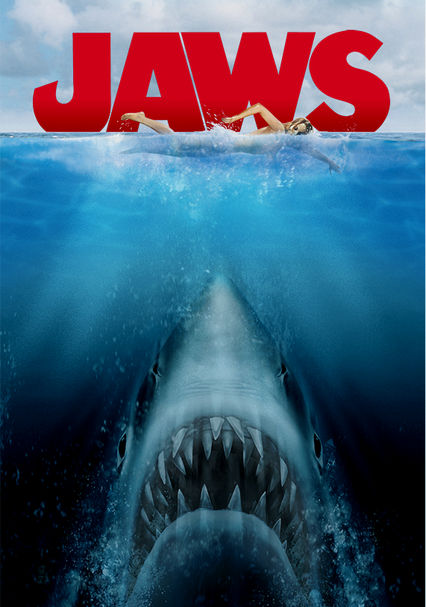
Jaws-1975

Jaws-1975

Director Steven Spielberg

Starring Roy Scheider, Richard Dreyfuss, Robert Shaw

Scott’s Review #1,240

Reviewed March 28, 2022

Grade: A

The directorial breakthrough by the iconic Steven Spielberg is Jaws (1975).

The film is such a legendary and familiar project that even stating the name to pretty much any human being immediately conjures images of a man-eating great white shark and the unforgettable ‘duh-duh, duh-duh’ musical score.

It’s the film that famously made people afraid to go into the water, just as Hitchcock’s 1960 masterpiece, Psycho, made people afraid to take a shower. When I have to be near the ocean, I always think of this film.

Jaws is a hybrid horror/thriller/adventure/action film, whereas the subsequent sequels were all straight-ahead horror films that cast more teenagers, and some better than others.

Spielberg teaches a valuable lesson that much can come from very little and that a small budget can create greatness. What he accomplishes with Jaws is admirable, to say the least.

With Jaws, the story is more about the attempts of three men to destroy a killer shark and their relationship with the shark itself. The scary aspect, always terrific in horror, is that we do not know what the shark’s motivation is.

Why does it kill?

It’s a brilliant film that holds up well decades later, despite the shark feeling less authentic over time. But the time a film is made must always be kept in mind.

When one summer day, a young woman is killed by a shark while skinny-dipping near the New England tourist town of Amity Island, police chief Martin Brody (Roy Scheider) wants to close the beaches.

He comes into conflict with the mayor, Larry Vaughn (Murray Hamilton), who overrules him, fearing that the loss of tourist revenue will negatively affect the town during its summer season.

Dismissed as a mere boating accident, the great white shark then kills a young boy in full view of a beach crowd, resulting in panic and mayhem. It’s as if the shark is determined to be taken seriously.

Oceanographer Matt Hooper (Richard Dreyfuss) and grizzled ship captain Quint (Robert Shaw) offer to help Brody capture the killer shark, and the trio engages in an epic battle with the beast.

Jaws is a film that can be viewed multiple times and provides sheer pleasure each time. Forgetting the horror elements, the film provides adventure and heart-pounding thrills per minute once the men dare to try and foil the shark.

The fun, as in any film of this kind, is not knowing when or where danger will strike, only that it inevitably will come.

Scheider excels in his household name-making role as the determined police chief. He cares deeply about the townspeople and is therefore a likable hero. During frequent scenes, he gazes out to the water, a troubled look on his face, pained and feeling responsible for the deaths.

The audience empathizes with him.

Lorraine Gary, who would later play a lead role in poorly received films, is terrific as the supportive yet challenging wife, Ellen. She is the yin to his yang, and it comes across on-screen.

The best scenes of the film are the very first one, when the girl is eaten by the shark, and the later one, when Brody yells at everyone on a crowded beach to flee the water. Munching on the first victim, this is the scene where the dreaded music makes its debut.

From this point, the audience knows that hearing this music means the shark is nearby.

In the other scene, the panic caused is breathtaking and palpable, and sympathy is felt for Brody. He obediently takes the blame for the chaos and the deaths and makes it personal when his son is victimized. The scene sets the tone for the scramble and mayhem.

Jaws (1975) has it all: adventure, thrills, horror, action, a hero, and blood. The technical aspects are astounding, with underwater sequences and effects that remain viable.

It arguably created what has come to be known as the summer blockbuster.

Oscar Nominations: 3 wins-Best Picture, Best Film Editing (won), Best Original Dramatic Score (won), Best Sound (won)