Category Archives: New York City

Rear Window-1954

Rear Window-1954

Director Alfred Hitchcock

Starring James Stewart, Grace Kelly

Top 250 Films #19

Scott’s Review #317

60000397

Reviewed January 2, 2016

Grade: A

I dearly love several Alfred Hitchcock films, and Rear Window (1954) is at the top of that list.

The film is a unique experience in that much of it is shot from the point of view of the main character, L.B. Jeffries, played with conviction by James Stewart, a fixture in several of Hitchcock’s great films.

Wheelchair-bound and confined to his Manhattan apartment, he has nothing more to do than spy on an entire apartment of neighbors across the street.

He witnesses a crime, and a cat-and-mouse game ensues.

What is great about this film is that the viewer gets to know the series of neighbors L.B. watches and glimpses into their lives, some of which are happy and some sad.

Rear Window is shot like a play. The chemistry between Stewart and Grace Kelly is nice, but secondary to the main story’s tremendous impact.

Rear Window (1954) can be watched repeatedly and enjoyed with each subsequent viewing.

Oscar Nominations: Best Director, Alfred Hitchcock, Best Screenplay, Best Sound Recording, Best Cinematography, Color

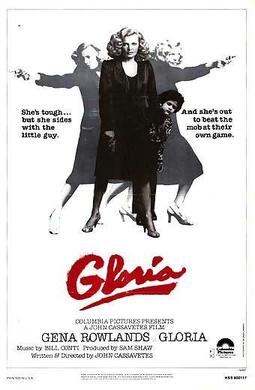
Gloria-1980

Gloria-1980

Director John Cassavetes

Starring Gena Rowlands, John Adames

Top 250 Films #32

Scott’s Review #166

Reviewed September 9, 2014

Grade: A

Gloria (1980) is an action/thriller film that features the standard action-crime thriller elements, including shoot-em-ups, guns blazing, clichéd fare, but also contains an interesting and appealing leading character, a gritty atmosphere, and witty dialogue.

It is a significantly better film than most indistinguishable action films.

Directed and written by independent film master, John Cassavetes, who wanted to make a more conventional, mainstream film than was typical for him- think the very left of center, brilliant A Woman Under the Influence, also starring Gena Rowlands, and Gloria was the perfect film for him to create with Rowlands as the focal point.

Made in 1980, Gloria perfectly portrays New York City at the time.

New York City was gritty, dirty, rough, crime-infested, violent, and chaotic, and the film frequently travels throughout Manhattan, the Bronx, and New Jersey, with many scenes shot directly on the streets of New York.

Several other scenes are set in dingy apartments, hotels, seedy bars, and rundown streets, and are highly effective in portraying a gloomy atmosphere. The cinematography in the film is perfect.

The heart of the film lies with Rowlands (Cassavetes’s wife), who gives a mesmerizing performance as a former mob girlfriend who, by circumstance, must protect a young Hispanic boy from execution by the mob because of an informant’s book he clings to for dear life.

No other actress could have played this role of a tough-talking, brash New Yorker as well as Rowlands does. The boy’s father, played by Buck Henry, is a scared accountant with ties to a company fronted by the mob.

He fears his entire family will be murdered and hands his kid over to Gloria. Julie Carmen gives a brief but effective performance as Phil’s frazzled mother.

I wish Henry and Carmen had been given more screen time and fleshed-out characters because both had huge potential. The film belongs to Rowlands- she is no-nonsense, tough, and so convincing in the part.

I also enjoyed the casting of John Adames as the kid, Phil. Many critics inexplicably panned his performance, and I’m not sure why.

I also love the unique opening credits, as intense folk/jazz music plays over watercolor portraits that turn into the skyline of New York City, with a melancholy, eerie quality.

Amid the violence, there is a sweet bond that develops between Gloria and Phil that is not too sentimental or cheesy.

A great, compelling late 1970s/early 1980s film with definite Godfather and Dirty Harry influences in its texture and characters, especially in some of the mobster roles.

The appeal of the film is that it has a heart without ever delving into schlock. Surprisingly rated only PG, it is gritty, but not lewd or harsh, and seems dirtier than it is, with barely any filthy language.

The chemistry and heartfelt connection between Gloria and Phil are darling without being too sappy or safe.

Gloria (1980) is a fast-paced, action gem that is both appealing and tough.

Oscar Nominations: Best Actress-Gena Rowlands

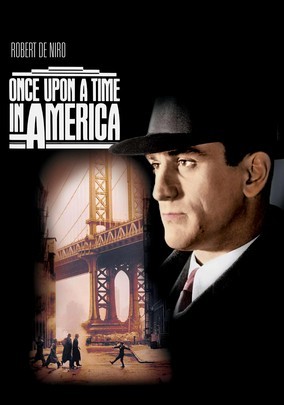
Once Upon a Time in America-1984

Once Upon a Time in America-1984

Director Sergio Leone

Starring Robert De Niro

Top 250 Films #85

Scott’s Review #218

60028306

Reviewed January 19, 2015

Grade: A

An epic film, the extended director’s cut of 1984’s Once Upon a Time in America is more than four hours in length and a directed by Sergio Leone, who also directed the 1968 masterpiece Once Upon a Time in the West and numerous other westerns starring Clint Eastwood.

This particular film is in a different vein and not to be confused as any sequel or related to the aforementioned film- this time Leone explores the crime drama genre rather than the western, and does so in remarkable fashion.

The film tells the story of a group of Jewish friends who became involved in organized crime in New York City during the 1920s.

The main story is told via flashbacks as the central character, Noodles, played by Robert De Niro, returns to Brooklyn thirty years later to reunite with his former mobster friends.

In this way, the film is sectioned- the group of youngsters and kids, and the same characters as adults.

Once Upon a Time in America has been met with considerable controversy since its release. At the time of its release, the film was butchered, with over an hour of footage cut by the studio heads, leaving it largely uneven.

Fortunately, the restored version, over three hours long, is available for viewing. Furthermorethe director’s cut clocks in at well over four hours and is the best version to watch. Due to so many cuts, other versions appear shoddy and out of order, making the viewing experience difficult.

Once Upon a Time in America is largely underappreciated, except among die-hard cinema lovers, most of whom are patient with the film, and it deserves mention as an excellent crime epic drama.

The film shares many similarities with The Godfather and The Godfather Part II, and the role De Niro plays is not too different from that of Vito Corleone in Part II.

However, the greatest contrast is that Once Upon a Time in America is more visually artistic than The Godfather films.

The film centers on Noodle’s perspective as he enjoys his youth in the Lower East Side of Manhattan, where he meets his lifelong friends.

The focal point is his friendship with Max, the adult character played by James Woods, and his undying love for Deborah, played by Elizabeth McGovern as an adult.

As kids, they are worry-free but gradually fall in with a group of older mobsters, first doing their dirty work, then venturing out on their own.

The film’s themes are loyalty, childhood friendship, betrayal, and greed, as all the characters change (or die) over the course of the film.

When a mysterious letter forces Noodles to resurface in Brooklyn, we begin to understand the backstory and the history between the friends as layers are slowly peeled back.

The film drags slightly in the middle section, but the first and last parts are very well made and absorbing.

Leone has a way of pacing the film that works- it is methodical and nuanced, with wonderful set pieces and each period explored- 1920s, 1930s, and 1960s seem equally as authentic as the next one does.

I especially enjoyed the 1920s art direction- it revealed such a state of genuineness and felt like truly being there in that period.

The relationship between Noodles and Deborah is an interesting one worth mentioning. Falling in love as youngsters (when a very young Jennifer Connelly played Deborah), they had an innocent puppy-love relationship.

As adults, they are ruined by a violent, disgraceful act, and one might argue that one of the characters becomes quite unsympathetic.

Once Upon a Time in America (1984) is a sprawling epic film sure to be enjoyed by intelligent fans of the crime epic drama genre and specifically Sergio Leone fans- an underappreciated gem.

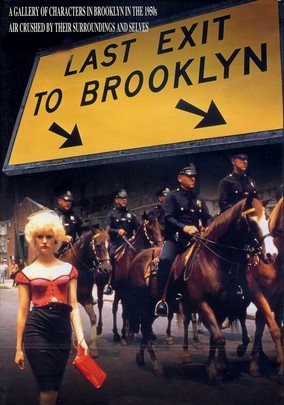
Last Exit to Brooklyn-1989

Last Exit to Brooklyn-1989

Director Uli Edel

Starring Stephen Lang, Jennifer Jason Leigh

Top 250 Films #176

Scott’s Review #152

70141619

Reviewed August 13, 2014

Grade: A-

Last Exit to Brooklyn (1989) is a slice-of-life film set in lower-class Brooklyn, NY, in the early 1950s.

It tells the story of a group of struggling neighborhood people- sex workers, union members, drag queens, etc., whose lives intersect. Also in the neighborhood is a military base where soldiers come and go on their way to war-torn Korea.

The central characters, though there are several with small yet interesting stories, are Harry, played by Stephen Lang, a sexually conflicted union worker with a wife and newborn child.

He is in love with a selfish drag queen, and Marilyn Monroe lookalike, Tralala, played superbly by Jennifer Jason Leigh, a prostitute whose best days are behind her, and who will do anything for attention.

The sets and cinematography in the film are very well done- the feeling of despair and hopelessness is accomplished by the dowdy streets, homes, and bars that the cast frequents.

Some of the characters are sympathetic- the aforementioned plus Tralala’s love interest, the Diner boy madly in love with Tralala, and the virginal seeming (but not really) Donna, portrayed by a young Rikki Lake.

Other characters are abhorrent in their violence and hatred.

Last Exit to Brooklyn is quite a dark film and sometimes tough to watch, but it captures a dreary time and atmosphere. The Brooklyn set is excellent in its dreariness.

Jennifer Jason Leigh is the standout as the tough-talking, boozy prostitute who is losing her luster, and the final scene of the film is truly a heartbreaker.

The topics of union, strike, bisexuality, gangs, and drag queens are covered, and unique characters and conflict/loneliness are presented.

This film is an overlooked gem from 1989.

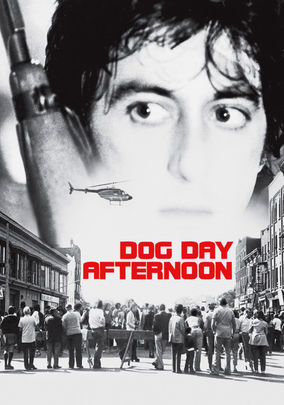
Dog Day Afternoon-1975

Dog Day Afternoon-1975

Director Sidney Lumet

Starring Al Pacino, John Cazale, Chris Sarandon

Top 250 Films #203

Scott’s Review #185

450423

Reviewed October 13, 2014

Grade: A-

Director Sidney Lumet successfully sets the smoldering hot summer afternoon in New York City for his 1975 film Dog Day Afternoon.

Al Pacino plays Sonny, an unemployed, desperate man who, while married with two kids, has a gay lover, Leon (brilliantly played by Chris Sarandon), whom he is attempting to help finance a sex change operation.

Based on a true story, Sonny, along with his dimwitted friend Sal- played by John Cazale- decides to rob First Brooklyn Savings Bank.

Predictably, their plans go awry when Sonny burns a ledger during the robbery attempt, and a pedestrian sees the smoke and alerts the police.

As the police become aware of the attempted heist, a standoff ensues between Sonny and the cops, led by Detective Moretti (Charles Durning), and the robbery receives media coverage.

Most of the action is set inside the stifling hot bank and directly outside on the street, and gradually the supporting characters come into play- the hostages, Sonny’s mother, wife, and lover all make contact with Sonny in some way or another, and his motivations become clearer to the audience.

Dog Day Afternoon is an anti-establishment movie, in this case anti-police, questioning the government and the financial establishment (Lumet also directed Network, challenging the establishment).

This is evident when, after a standoff with police, the crowd sides with Sonny as he chants “Attica!” Attica!, which is a direct reference to a recent prison riot.

Sonny speaks for the working class- the poor, struggling, underpaid workers who cannot afford to feed or adequately take care of their families.

The heat and humidity compare perfectly to the pressure felt by most middle-class people that still resonates today and leaves the viewer contemplating their life.

Sonny relates to the bank tellers who do not earn much. Besides, Sonny is sympathetic to the audience in another way. Leon, recently hospitalized at Bellevue Hospital, is emotionally dependent on Sonny. He would be lost without him.

They share a lengthy and heartfelt phone conversation that is the heart of the film- gay romance had not been explored this way by 1975 in cinema, and the romance was neither shoved down the audience’s throat nor was it looked past entirely.

Their relationship is tender and deep, yet still somewhat ambiguous.

Would they stay together? What would become of Sonny’s wife and two children? Would he leave them for Leon in a world that was not ready to accept two homosexual men together? Is that the reason for Leon’s desire for a sex change operation?

Chris Sarandon, in too small a part, is wonderful as the gay lover, struggling with a sexual identity crisis. Al Pacino gives, per usual, a brilliant portrayal as he takes on a complex character who is far from one-dimensional.

Perhaps not a masterpiece, Dog Day Afternoon is a very good film, but neither is it strictly a gay-themed movie nor an action/thriller- it’s more complex than that.

Ironically, Sonny is portrayed as the hero of the film, as it is not a standard good police versus bad bank robber type of film- quite the contrary. It is much, much more than that.

Oscar Nominations: 1 win-Best Picture, Best Director-Sidney Lumet, Best Actor-Al Pacino, Best Supporting Actor-Chris Sarandon, Best Original Screenplay (won), Best Film Editing

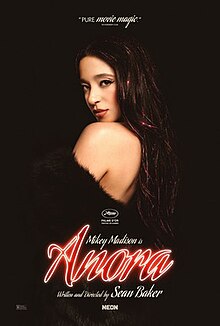
Anora-2024

Anora-2024

Director Sean Baker

Starring Mikey Madison, Mark Eidelstein, Yura Borisov

Top 250 Films #243

Scott’s Review #1,450

Reviewed November 3, 2024

Grade: A

Anora (2024) is one of the boldest films I’ve seen in some time and is my favorite Sean Baker film so far. Tangerine (2015) and The Florida Project (2017) are also great works.

Those planning to see the film should do homework and learn what Baker films are about. He frequently directs independent feature films about the lives of marginalized people, especially immigrants and sex workers.

Baker’s films are dirty, dark, and outrageous.

Because Anora has received awards buzz and is classified as a romantic comedy, the audience at my showing seemed slightly overwhelmed by its raw nature. While there are comedic moments, they are shrouded in darkness, and I don’t think my audience quite knew how to respond.

Some cover art captured the main couple, played by Mickey Madison and Mark Eidelstein, happily dancing and depicted them with the caption ‘a modern day Cinderella story’. This is misleading to the gritty nature of the story.

Madison plays Ani (Anora), an exotic dancer and part-time sex worker at a swanky Manhattan strip club. She lives in a Russian section of Brooklyn. Her life takes an unexpected turn when she meets and impulsively marries Vanya (Mark Eidelstein), the childlike son of a Russian billionaire.

When Vanya’s godfather and parents catch wind of the union, they send their henchmen to annul the marriage, setting off a wild chase through the streets of New York. Vanya flees the scene, and the others must find him.

Madison is brilliant. Known for a small role as Susan Atkins in Quentin Tarantino’s Once Upon a Time in Hollywood (2019) and a role in one version of Scream (2022), the young actress comes on as gangbusters.

Her character is tricky. We only know she lives with her older sister, and their mother lives in Florida with her boyfriend. Presumably, her father is absent, and she has had to find work to support herself. She is brassy, savvy, and intelligent. Most importantly, the audience roots for her.

Madison has an aura surrounding her, and she believably plays loving and hysterical with ease. Ani wants love but is also intelligent enough to know love doesn’t come easy and has a price. Madison channels each emotion with seeming ease.

Baker has become a favorite director of mine. He also writes, produces, and edits most of his projects. Although his films are not easy to watch, that’s what I like about them.

His films take marginalized or dismissed groups and provide representation.

Another standout is Russian actor Yura Borisov. Since Ani is the only character worth rooting for, Borisov’s character, Igor, slowly becomes a fan favorite. Assumed to be a henchman, he begins to care for Ani and strive to do the right thing amid chaos.

Borisov provides Igor with warmth and kindness in a world of chaos. I yearned to know more about the character. How did he get to be where he is? Did he need to escape Russia any way he could?

It’s hard to like the other characters, and I wouldn’t say I enjoyed quite a few, especially the wealthier ones. I yearned to leap across the aisles and smack Vanya, his mother, and one stripper who is Ani’s rival.

This caused me to react viscerally to the film and think about my emotions after it ended. Anyone who appreciates good cinema knows that the longer you think about it, the better it is.

Towards the end, Baker incorporates satisfying moments of Ani standing up for herself, especially against Vanya and his mother. This only reaffirmed the passion of her character. Even in despair, Ani remains tough and refuses to be mistreated by anyone.

My favorite sequence is at the end, during a January snowstorm in Brooklyn. A tender moment occurs between Ani and Igor where the writing, cinematography, and camera angles are beautiful.

Anora (2024) is recommended for fans of Baker’s work. He successfully and carefully weaves an emotional and raw tale of adventure, romance, desperation, and the haves versus the have-nots.

Oscar Nominations: 5 wins-Best Picture (won), Best Director-Sean Baker (won), Best Actress-Mikey Madison (won), Best Supporting Actor-Yura Borisov, Best Original Screenplay (won), Best Film Editing (won)

Independent Spirit Award Nominations: 3 wins-Best Feature-(won), Best Director-Sean Baker-(won), Best Lead Performance-Mikey Madison-(won), Best Supporting Performance-Yura Borisov, Karren Karagulian