Category Archives: Courtroom

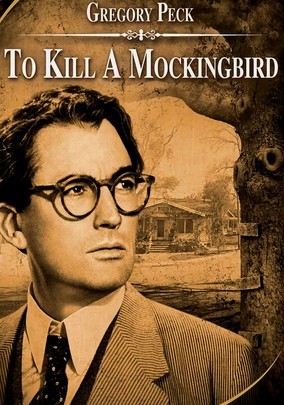
To Kill a Mockingbird-1962

To Kill a Mockingbird-1962

Director Robert Mulligan

Starring Gregory Peck, Mary Badham, Robert Duvall

Scott’s Review #468

1051852

Reviewed August 25, 2016

Grade: A

To Kill a Mockingbird is a 1962 film based on Harper Lee’s renowned novel. It was released only two years earlier, in 1960.

The novel was groundbreaking, and the film is equally so. Race and racism are front and center in the storyline. The film is still a marvel because it tells the story through the eyes of a child—in present-day terms, an adult—as she reflects on her experience.

The film is set in the 1930s in a small Alabama town.

We follow the lives of Atticus Finch, a respected lawyer and father, and his two young children- Scout and Jem.

Gregory Peck, as Atticus, is the moral center of the film. Scout (Mary Badham) narrates, and her innocence makes the story much more compelling and less like a preachy vehicle for a social topic.

The Finchs are a tight family unit as Atticus is widowed, leaving Jem and Scout motherless. A poor black man-Tom- is accused of raping and beating a white woman, also poor, coached into the accusations by her racist father.

We accept that the woman had designs on Tom and, when caught by her horrified father, was beaten, with Tom left to take the blame.

Much of the film, but not too much, takes place in the courtroom, as we hear testimony by the poor woman, her father, and Tom.

Not to be missed is that every juror is a white man- a sad reminder of the racism that existed and one argues still exists, though not as blatant in today’s modern world.

One cringe when the black attendees are forced to sit in the upper portion of the courthouse, an obvious way to demean and lessen them, and which speaks volumes for the town- we realize Tom does not have a chance, yet we hope against hope for his acquittal.

Wisely, I do not feel the point is the trial’s outcome—we know what will result. But the film teaches us a lesson about reality: life is often unfair and painful.

The after-effects of the trial are the most exciting part of To Kill a Mockingbird.

Gregory Peck was awarded the Best Actor Oscar in 1962 for his role as a liberal, progressive, and honorable man who can do no wrong and is an excellent example for his children.

A black maid, Calpurnia, works for him, and he treats her like family. I could not help but think she is the mother figure in Jem and Scout’s lives.

Atticus does the right thing, treating everyone fairly and living a moral life. He is an excellent example, and it is no wonder Peck won the trophy.

A subplot involves a mysterious neighbor, Boo Radley, feared by the town kids but turning out to be a protector and companion to Scout and Jem. This role was the first for acclaimed actor Robert Duvall- the actor has a tiny yet important role and does a great deal of expressive acting without uttering a line.

The title of the film is poignant and essential to the ending.

The film is really about Jem and Scout and their quick journey into the pains and unfairness endured by adults- once innocently enjoying the summer, playing games, and making friends with a visiting young boy, they are exposed to evil and a hate-filled racist town, which they slowly come to realize exists.

Filmed in black and white, this quality enhances the picture. The blowing leaves and dark shadows add much to the impressive cinematography and give the film a dark quality that color would have ruined.

The 1930s time period is very authentic.

To Kill a Mockingbird is a timeless film with an important message about the world. Children and adults of every generation should view it as a lesson in empathy and compassion.

The film is not ugly or raw but is truthful and still feels fresh. It will resonate with all audiences patient enough to give it a good watch.

Oscar Nominations: 3 wins-Best Picture, Best Director-Robert Mulligan, Best Actor-Gregory Peck (won), Best Supporting Actress-Mary Badham, Best Screenplay Based on Material from Another Medium (won), Best Music Score-Substantially Original, Best Art Direction, Black-and-White (won), Best Cinematography, Black-and-White

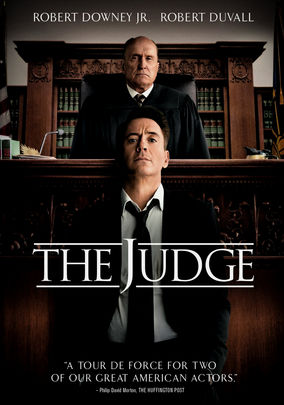
The Judge-2014

The Judge-2014

Director David Dobkin

Starring Robert Downey Jr., Robert Duvall

Scott’s Review #261

70305896

Reviewed August 2, 2015

Grade: B+

The Judge (2014) is a formulaic, courtroom drama that we have all seen many times before, but I found the film rather enjoyable.

The main reason for this is the casting of Robert Downey Jr. and Robert Duvall in the pivotal central roles. The two actors play estranged father and son.

The clichés are numerous, but with excellent acting, the story feels fresh, fun, and compelling, if not innovative. As seen by only a few, The Judge was on my radar only because of Duvall’s Oscar nomination for his role.

Hank Palmer (Downey Jr.) is a big-shot attorney from Chicago. Highly successful, he is selfish, driven, and a downright prick. Going through a messy divorce with his gorgeous, athletic wife, he has a close bond with his daughter, despite not being home very often.

Suddenly, Hank’s mother dies tragically and he must return to small-town Carlinville, Indiana, a place he despises, not simply because the town is in the sticks, but because he has bad memories.

When he arrives he reconnects with his two brothers and his father (Duvall), the local judge. While staying at the family house, Hank once again butts heads with his father and runs into an old girlfriend (Vera Farmiga), who now owns the local diner.

On his way out of town for good, Hank is asked to defend his father when he is arrested and charged with murder.

The Judge is a family drama that contains suspense and a few twists.

The film reminds me of a slew of 1990s-era courtroom dramas based on John Grisham novels (A Time to Kill, The Client, The Firm) so I expected a bland, dated film.

I love the chemistry between Downey Jr. and Duvall, which I think is the most successful aspect of the film, and the family-style drama with numerous trials and tribulations thrown in.

Hank is smarmy and ruthless, but has a humorous side and tells it like it is. I smiled at his wry wit.

Judge Parker is equally stubborn and the battles are wonderful to watch. Conversely, the film also has tender bonding moments between the two men, which are sentimental and warm. As one man takes care of the other during sickness it is a tender and heartbreaking scene.

An interesting aspect is the small-town sense of community of Indiana, which I found charming. Everyone gravitates towards the cute diner in the center of town owned by Hank’s high school sweetheart. There is a nice wholesome, small-town appeal to the entire film.

I half expected a county fair or apple pie baking scene to be added.

The film feels wholesome and comfortable- a slick, mainstream drama. Movie comfort food if you will.

The relationships among the three brothers- Hank, Glen- a middle-aged man regretting never having moved from Carlinville, and Dale, a sweet-natured autistic man, determined to one day become a filmmaker, are interesting.

They are so different but stick together bicker, and bond. Similar to real-life families.

The negatives are that the courtroom scenes sometimes go on too long and the film brings nothing new or exciting to cinema and plays it safe throughout.

Still, I was pleasantly surprised to be treated to a film above mediocrity but not a reinvention of the wheel.

To be seen for simmering acting by the entire cast and especially film stalwarts, Duvall and Downey Jr, who bring life and wit to an otherwise traditional film.

Oscar Nominations: Best Supporting Actor-Robert Duvall

Anatomy of a Murder-1959

Anatomy of a Murder-1959

Director Otto Preminger

Starring James Stewart, Lee Remick

Scott’s Review #61

60001625

Reviewed June 24, 2014

Grade: B+

Anatomy of a Murder (1959) is a thought-provoking courtroom/legal thriller that is not a black-and-white, good and bad story.

It is more profound and more complex than that.

Starring James Stewart as an everyman defense attorney, the film, shot effectively in black and white, pushed barriers for its time by using certain words such as “rape” and “panties” that were never spoken in films before this time.

Much of the action takes place inside the courtroom.

The film pushed the envelope and is still enjoyable today.

Throughout the film, which is admittedly slow at times, the audience is unsure of the defendant’s guilt and wary and suspicious of him from the start, which creates great drama.

The rooting value is with Stewart, the hero, and the interesting supporting cast provides deeper layers than similar type films that risk being wordy or preachy.

As each new fact or twist and turn arrives throughout the film, it becomes more and more engaging until it reaches a satisfying climax.

Oscar Nominations: Best Motion Picture, Best Actor-James Stewart, Best Supporting Actor-Arthur O’Connell, George C. Scott, Best Screenplay Based on Material from Another Medium, Best Cinematography, Black-and-White, Best Film Editing