Tag Archives: William Holden

The Towering Inferno-1974

The Towering Inferno-1974

Director John Guillermin

Starring Paul Newman, Steve McQueen, Faye Dunaway

Top 250 Films #41

Scott’s Review #194

1059232

Reviewed November 15, 2014

Grade: A

The Towering Inferno (1974) epitomizes the disaster film craze heaped on audiences throughout the 1970s (Airport, Airport ‘75 and ‘77, The Poseidon Adventure (1972), and Earthquake (1974) to name a few).

I am (guilt-free) a huge fan of this 1970s movie genre, though some certainly look down on it, I am not one of them and feel The Towering Inferno is one of the greatest.

The film is enormous and has such a sense of adventure and danger.

The grand film tells of the trials and tribulations of an enormous cast of characters trapped inside an inferno-flamed skyscraper – led by Paul Newman and Steve McQueen (fun fact- the two actors reportedly despised each other).

An incredible skyscraper is erected in San Francisco, at one hundred and thirty-eight floors it is professed to be the tallest building in the world and incredibly state-of-the-art. At the ribbon-cutting ceremony, an elaborate party is held atop the building overlooking the gorgeous Pacific Ocean.

Due to faulty electrical wiring, the building catches fire and the cast of characters faces one challenge after another to escape the grips of death.

The stellar cast features stars like William Holden, Faye Dunaway, Fred Astaire, Robert Wagner, Jennifer Jones, and O.J. Simpson in addition to Newman and McQueen.

The film is quite a soap opera style- numerous characters are introduced, many having affairs with each other or suffering some sort of conflict.

Wagner having a torrid office romance with his secretary played by then up-and-coming star Susan Flannery is deliciously sexy and I yearned to know more about both characters.

Holden’s son-in-law is responsible for the faulty electrical system yet blames his father-in-law for cutting budgets.

Another subplot involves Astaire’s character attempting to swindle Jones’s character but then falling in love with her. The plots are so melodramatic that, given the period of the film, it has a definite primetime television soap opera style to it- think Dallas or Dynasty in a state of peril.

I enjoyed the enormous cast and trying to guess who will be killed off next and in what elaborate way the film will burn them to death is a joy to watch- several victims fall or jump to their deaths, which eerily (and sadly) bring back morbid images of jumpers from the World Trade towers on 9/11.

The beginning of the film shows a dedication to firemen everywhere and the film has a definite moral and heroical quality to the firemen sent to rescue the people in the building. They are portrayed as heroes and intended not to be forgotten amid all the drama encompassing the story. This is admirable.

The special effects are elaborate and quite impressive- the glass elevator rescue scene is amazing! The beautiful set designs are a treat to watch as each lobby, apartment, or lounge in the skyscraper is exquisitely designed at the height of the 1970s style.

Every sofa or carpet featured is plush, colorful, and sophisticated. The skyscraper, made of glass, is an amazing element of the film, and the aerial views of the building, especially while ablaze are impressive, to say the least- remember- 1974 was long before CGI. I am assuming small replicas of the building were used, but what an achievement from a visual perspective.

The effects certainly champion the syrupy story elements.

My only small gripe with The Towering Inferno is, assumed to be 138 stories high, the action taking place at the top of the tower- the rooftop as well as the party scenes on the top floor- do not feel that high- The scenic outlook overlooking the water and some land feel about twenty-five stories high, not one hundred and thirty-eight.

Some find The Towering Inferno (1974) to be nothing more than schmaltzy drama- I say schmaltz was never done better.

Enjoy this feast of a big film.

Oscar Nominations: 3 wins-Best Picture, Best Supporting Actor-Fred Astaire, Best Original Dramatic Score, Best Song-“We May Never Love Like This Again” (won), Best Sound, Best Art Direction, Best Cinematography (won), Best Film Editing (won)

Picnic-1955

Picnic-1955

Director Joshua Logan

Starring William Holden, Kim Novak

Top 250 Films #81

Scott’s Review #550

Reviewed December 19, 2016

Grade: A-

Picnic is a classic 1955 film that is wonderful to watch over Labor Day weekend or anytime during the humid summer season.

The film perfectly depicts summertime in a tiny town in Kansas. It is a slice-of-life story about life in middle America during the 1950s, despite its trials and tribulations.

William Holden stars as a “wrong side of the tracks” type of guy who arrives in a quiet Kansas town on Labor Day weekend, disrupting the town’s events and causing scandals for the townspeople.

He is a hunky former college football player and exudes sexuality.

He then falls in love with his best friend’s girlfriend, Madge Owens, played by Kim Novak. The chemistry between the two stars is the film’s main appeal.

The supporting cast makes this film unique (Arthur O’Connell and Rosalind Russell star as townspeople who are in a relationship of their own).

Picnic also contains a gorgeous and lovely musical score, precisely “Theme from Picnic” and “Moonglow”.

It is shot on location in Kansas, mostly in and around Hutchinson, and is considered classic summer enjoyment.

Based on the Pulitzer-award-winning play.

Oscar Nominations: 2 wins-Best Motion Picture, Best Director-Joshua Logan, Best Supporting Actor-Arthur O’Connell, Best Scoring of a Dramatic or Comedy Picture, Best Art Direction, Color (won), Best Film Editing (won)

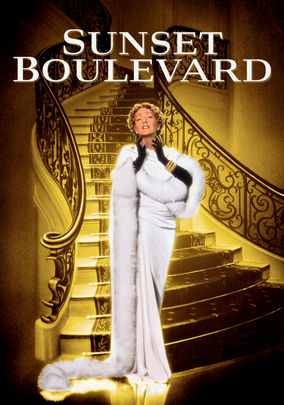
Sunset Boulevard-1950

Sunset Boulevard-1950

Director Billy Wilder

Starring Gloria Swanson, William Holden

Top 250 Films #101

Scott’s Review #330

60010956

Reviewed January 8, 2016

Grade: A

I adore films about Hollywood (good ones), and Sunset Boulevard (1950) is an absolute treasure.

Directed by classic film director Billy Wilder, the film is a film noir about a legendary silent film star, Norma Desmond, who struggles to cope with the advent of sound movies and the instability of her life, plagued by mental illness as her career has long since ended.

Handsome Joe innocently stumbles upon her mansion, forming an eerie relationship that ends in tragedy.

Sunset Boulevard is a famous street in Los Angeles and Beverly Hills, California. It is immediately featured in the film as Joe Gillis, played by William Holden, drives down the street, an unsuccessful screenwriter whose car is about to be repossessed.

Joe narrates the film, and we see a man lying dead in a vast swimming pool. Ironically, this is the film’s ending, and Wilder works backward in an interesting way, so the audience knows tragedy will eventually ensue.

To avoid being chased by men, Joe pulls into a driveway and hides his car in a garage near a vast yet run-down mansion. He is mistaken for a coffin salesman and meets the infamous and creepy Norma and her servant, Max.

The coffin is for Norma’s deceased pet chimpanzee. Intrigued and broke, Joe hatches a plot to rewrite Norma’s terrible screenplay- and make some money from the aging Hollywood star.

Norma needs companionship. The two, along with Max, embark on a complicated relationship marked by jealousy, passion, and rage.

The black-and-white style works exceptionally well in the film, and the lighting creates a sense of intrigue and film noir mystique.

Sunset Boulevard combines noir with a rich character study of Norma, and we feel her pain and isolation as she is cast aside due to the times.

I love how Wilder focuses on the gloomy nature of Norma’s vast mansion—especially when she throws a New Year’s Eve party isolated with just her, Joe, and a hired band—and intersperses it with a lively party in Hollywood filled with young, energetic, up-and-coming talents.

The scenes blend seamlessly and effectively showcase the two different worlds and perspectives.

Sunset Boulevard is a brilliant depiction of old Hollywood at its best (and worst). A study in ambition, struggle, high hopes (Joe), and faded success and dreams shattered in reality, where delusion is the only defense (Norma).

Oscar Nominations: 3 wins-Best Motion Picture, Best Director-Billy Wilder, Best Actor-William Holden, Best Actress-Gloria Swanson, Best Supporting Actor-Erich von Stroheim, Best Supporting Actress-Nancy Olson, Best Story and Screenplay (won), Best Scoring of a Dramatic or Comedy Picture (won), Best Art Direction-Set Decoration, Black-and-White (won), Best Cinematography, Black-and-White, Best Film Editing

Network-1976

Network-1976

Director Sidney Lumet

Starring Faye Dunaway, Peter Finch, William Holden

Top 250 Films #228

Scott’s Review #1,481

Reviewed May 13, 2025

Grade: A

A conceptual film laden with intelligence and satire, Network (1976) is innovative, not easily digestible, but satisfying nonetheless. It pairs well with films like All the President’s Men (1976) or Spotlight (2015), with a focus on media frenzy, ratings, and the frustrating search for the truth amid chaos.

Or, does the truth even matter? It’s a sobering question the film explores.

The film received nine Oscar nominations and won three of the four acting awards. Decades later, it holds up tremendously well and is a stark reminder of the power of television and public perception, for better or worse.

Brilliant acting, rich writing, and impressive editing make Network a timeless treasure for many generations, not to mention Lumet’s creative and sometimes shocking direction.

Over narration, we meet veteran news anchorman Howard Beale (Peter Finch). He learns from his friend and news division president, Max Schumacher (William Holden), that he has just two more weeks on the air with the UBS network because of declining ratings.

After threatening to shoot himself on live television, instead, he launches into an angry televised rant, which turns out to be a huge ratings boost for the network, and he is kept on for entertainment purposes.

But what happens when the public grows tired of his antics and craves even more outrageous programming?

Ambitious producer Diana Christensen (Faye Dunaway), obsessed with her career and ratings, takes actions to dangerous new levels.

The poignancy that immediately caught my attention was how little the bottom line has changed in almost fifty years of television since Network was released. One could argue that things have gotten worse where ratings will make or break a television broadcast.

Depressing still is the knowledge in 2025 politics where liars, cheats, and felons callously hold the highest offices and wield the most power, newscasts are currently created based on the truths their target audiences believe, regardless of the truth.

Lumet, well-known for creating the groundbreaking Dog Day Afternoon (1975) just a year earlier, uses split screens to show four perspectives and adds frightening gun-toting rebels who are angry and looking to make political statements.

But Diana needs them for a significant ratings share.

Lumet’s sequences teeter between long soliloquies in which characters reveal their deepest motivations and emotions and rapid-fire editing involving shootings and bank robberies.

I loved seeing the 1970s-style corporate offices with retro telephones, notepads, pens, pencils, stylish carpets, and colorful elevators. The glamorous and polished interiors perfectly reflect the gorgeous Manhattan skyline seen in numerous sequences.

The lavish restaurants and strong cocktails provide a luminous texture to the time.

The screenplay, written by Paddy Chayefsky, was based on the idea of a live death as his film’s terminating focal point, to say later in an interview, “Television will do anything for a rating… anything!”

The statement hit home in frigid reality.

Dunaway and Finch are clear favorites and provide the deepest character structures. Dunaway’s Diana is frigid and opportunistic, providing no vulnerability or sympathy from the audience. In a way, she is not a human being, lacking emotional depth.

I half expected her to tear her face off and reveal herself as a fembot.

Finch steals the show as the tired and depressed veteran who feels dismissed and forgotten. Even when he reveals his intent to commit suicide on live TV, the news crew tunes out his monotone voice as they do nightly.

Finally, Beatrice Straight brilliantly delivers an acting 101 tutorial as the aging housewife being cheated on by her philandering husband.

One miss is Robert DuVall in a one-note performance we’ve already seen him deliver.

Network (1976) is a top-notch film from my favorite decade in cinema. The 1970s produced many meaningful and introspective gems, and Network is one of them.

Oscar Nominations: 4 wins-Best Picture, Best Director- Sidney Lumet, Best Actor- Peter Finch (won), William Holden, Best Actress- Faye Dunaway (won), Best Supporting Actor- Ned Beatty, Best Supporting Actress- Beatrice Straight (won), Best Original Screenplay (won), Best Cinematography, Best Film Editing

The Bridge on the River Kwai- 1957

The Bridge on the River Kwai- 1957

Director David Lean

Starring William Holden, Alec Guinness 

Scott’s Review #908

Reviewed June 11, 2019

Grade: A

The Bridge on the River Kwai (1957) is a war film that is an example of character-driven storytelling from each person’s perspective.

Films of this genre frequently do not steer too far from the straight and narrow, showcasing the war event perspective. This often becomes larger than the humanity piece. A key point is the American, British, and Japanese points of view, which turn the grand epic experience into a more personal one.

The film was awarded numerous Oscar nominations, culminating with the Best Picture of the Year victory.

The time is early 1943 amid the powerful and destructive World War II when a group of British prisoners of war (POW) arrives at a Japanese camp. Colonel Saito (Sessue Hayakawa) commands all prisoners, regardless of rank, to begin work on a railway bridge that will connect Bangkok with Rangoon.

Lieutenant Colonel Nicholson (Alec Guinness), the British commanding officer, refuses manual labor, and a battle of wills erupts between the two men. Meanwhile, Commander Shears (William Holden), an American also being held at the same camp, vows to destroy the bridge to avoid a court martial.

The complexities of the relationships between the men are the main draw and an aspect that can be discussed at length. Each possesses a firm motivation, but the emotions teeter back and forth as they face various conflicts.

Each of the three principles is an analytical juggernaut in the human spirit, ranging from courageous, cowardly, and even evil. We are supposed to root for Shears and supposed to not root for Saito, but why is that not so cut and dry?

Is Shears too revenge-minded? We cheer Nicholson’s resilience, but is he too stubborn for his own good?

The film’s whistling work theme nearly became famous when the film was initially released in 1957. Ominous and peppered with a macabre depression, the prisoners go about their work in a near ode to Snow White and the Seven Dwarfs’ cheerier “Whistle While You Work” anthem.

As they continue to build the bridge dutifully, the audience feels a sense of dread and a foreboding atmosphere. What will ultimately happen? When two prisoners are shot dead while attempting to escape, the film takes a different turn.

Given that David Lean, responsible for such epic masterpieces as Lawrence of Arabia (1962) and A Passage to India (1984), directs The Bridge on the River Kwai, should be telling as far as the sweeping exterior landscape treats in store for the viewer.

The lavish Asian landscape, so picturesque and beautiful, is peaceful amid the chaos and vile treatment of the prisoners. This imbalance is wonderfully rich and poignant against the robust storytelling.

The climax is bombastic (literally!) and a nail-biting experience resulting in a stabbing, an explosion, and a heap of tension. A train carrying important dignitaries and soldiers is racing towards the newly constructed bridge as one man is intent on detonating a bomb and destroying another race against time to prevent the bloodbath.

The suspense, action, and cinematic skill are front and center during the final act.

Deserving of each one of the accolades reaped on The Bridge on the River Kwai (1957), the film is the thinking man’s war film.

Layered with an underlying humanistic approach and little violence given the subject matter, one can sink into empathy for each point of view presented instead of being force-fed a one-dimensional message film.

Fine acting and gorgeous cinematography make this film one to be forever remembered.

Oscar Nominations: 7 wins-Best Motion Picture (won), Best Director-David Lean (won), Best Actor-Alec Guinness (won), Best Supporting Actor-Sessue Hayakawa, Best Screenplay Based on Material from Another Medium (won), Best Scoring (won), Best Cinematography (won), Best Film Editing (won)

Stalag 17-1953

Stalag 17-1953

Director Billy Wilder

Starring William Holden, Don Taylor

Scott’s Review #5

994592

Reviewed June 16, 2014

Grade: B

Stalag 17 (1953), a film by famed director Billy Wilder, tackles the theme of POWs during World War II.

This film reminds me of the acclaimed television show M*A*S*H (1972-1983) in that the comedy elements are similar (men in drag, a light subplot of one soldier’s obsession with Betty Grable).

However, this film is heavy on the drama side and a deep cynicism that network television shows cannot match.

A group of American soldiers is held in a POW camp by Germans. Somehow, the Germans realized an escape plan. A whodunit ensues to find out who the mole is and his motivations. Liberties are taken- I doubt the real German soldiers would be as lovely as the film depicts.

William Holden stars as the cynic of the camp and the likely suspect, but is he the culprit?

This film is a hybrid of other Wilder films- the cross-dressing theme in Some Like it Hot (1959) is depicted, and shades of the darkness of Sunset Boulevard (1950) (also starring Holden) appear.

The black and white are effective in eliciting the confinement of the camp.

It’s a quality film, though a predictable “seen this all before” element nagged throughout.

Oscar Nominations: 1 win-Best Director-Billy Wilder, Best Actor-William Holden (won), Best Supporting Actor-Robert Strauss