Category Archives: Top 250 Films

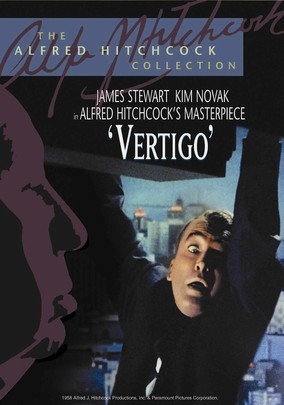
Vertigo-1958

Vertigo-1958

Director Alfred Hitchcock

Starring James Stewart, Kim Novak

Top 250 Films #1

Scott’s Review #151

1089727

Reviewed August 7, 2014

Grade: A

Over the years, Vertigo (1958) has quickly become one of my favorite Alfred Hitchcock films. With each repeated viewing, I learn, appreciate, or see something new.

It is an absolute masterpiece.

The primary appeal of Vertigo lies in its mystique and dream-like quality, which offer a beautiful cinematic experience. It is sometimes ominous, psychological, gloriously complex, and even confusing.

That is what makes it extraordinary.

Considering the time, the colorful opening visuals are dynamic, groundbreaking, and stunning.

The story involves a retired detective, Scottie, played by Hitchcock stalwart Jimmy Stewart. Scottie suffers from vertigo, which hinders his daily life.

After an incident in which a police officer is killed, and Scottie blames himself and his vertigo for causing the death, he whiles away the days brooding and keeping companionship with Midge, a college friend to whom he was once engaged.

One day, he is hired by another college friend to follow his wife, played tremendously by Kim Novak, who is acting strangely and periodically disappearing, obsessed with a painting of a woman from years past.

From this point, the plot twists and turns in a mysterious fashion, and a romantic, bizarre, and obsessive love story is intertwined.

Is Scottie in his right mind? Will his vertigo continue to haunt him? What is the secret to Madeleine and Judy? Is Midge as sweet as she appears?

The score to Vertigo is haunting and unforgettable, adding significantly to the film’s mood and ambiance.

Several location shots are featured in San Francisco, including the Golden Gate Bridge, steep streets, the Mission District, and the Redwood Forest.

As with all Hitchcock films, every set and detail is perfect, from paintbrushes, coffee mugs, curtains, and furniture to the gorgeous, bright red décor of the restaurant, which is heavily featured in the film.

How exquisite does Kim Novak look in the film??

Initially critically panned upon its release, it is now considered one of the greatest films. Its unique camera angles and slow, methodical pacing have influenced other films.

The film is not always an easy watch, as it is complex, to be fair, but like a fine wine, it improves with age.

Vertigo (1958) is a layered psychological thriller that gains more appreciation with each viewing.

Oscar Nominations: Best Sound, Best Art Direction

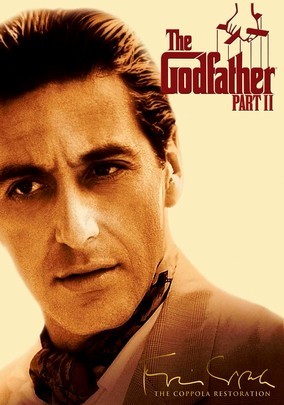
The Godfather: Part II-1974

The Godfather: Part II-1974

Director Frances Ford Coppola

Starring Al Pacino, Robert DeNiro

Top 250 Films #2

Scott’s Review #197

60011663

Reviewed: November 25, 2014

Grade: A

Frances Ford Coppola’s sequel (and technically also a prequel) to the highly regarded and successful The Godfather (1972) is one of the rare sequels to equal, if not surpass, the original in its greatness, creativity, and structure.

The Godfather Part II (1974) feels more profound, more complex, and ultimately richer than The Godfather- and that film itself is a masterpiece. Part II is much darker in tone. Francis Ford Coppola had complete freedom to write and direct as he saw fit, with no studio interference.

The results are immeasurable in creating a film masterpiece.

The film is sectioned into two parts, which is an exciting and practical decision.

The story alternates between the early twentieth century, following Don Corleone’s life, now played by Robert DeNiro, as his story is explained- left without a family and on the run from a crime lord, Don escapes to the United States as a young boy and struggles to survive in the Little Italy neighborhood of New York City.

He obtains a modest job as a grocery stockboy and finally celebrates his eventual rise to power in the mafia.

The other part of the film is set in 1958, as Michael Corleone faces a crumbling empire, with both rivals and the FBI investigating him and holding Senate committee hearings in Washington, D.C., and a failing marriage to Kay (Diane Keaton).

Betrayal is a common theme of the film, as Michael’s wife, brother, and mobster allies are revealed to be cagey enemies. Michael becomes increasingly uncertain and mistrustful of almost everyone around him. Is Kay a friend or foe? Is Fredo plotting against him? He even begins lashing out at Tom Hagen on occasion.

What makes The Godfather Part II so brilliant, and in my opinion richer than The Godfather, is that it is tougher to watch- and that is to its credit. Now, instead of being a warm, respected member of a powerful family, Michael is questioned, analyzed, and betrayed.

New, interesting characters are introduced, including Hyman Roth, played by Lee Strasberg, a former ally of Don’s, and Frankie Pentangeli, played by Michael V. Gazzo. These characters are intriguing, and their allegiances remain unknown throughout most of the film: are they loyal to the Corleones or deadly enemies?

The character of Michael evolves from conflicted to all-out revenge-minded, including seeking revenge against members of his own family. Michael is now a dark, angry character- gone is the nice, decorated war hero with his whole life ahead of him.

He is much older and has changed.

Similar to the original Godfather, the opening scene is a large celebration- this time, Anthony Corleone’s first communion celebration.

Additionally, the film’s finale involves the deaths of several significant characters one after the other.

Unique to this film are the multiple-location scenes, featuring New York, Nevada, Italy, Florida, and Cuba, which make for an enjoyable segue throughout and a more substantial budget.

The blow-up confrontation between Michael and Kay is devastating and shocking in its climax. When Michael punches Kay in a sudden rage, the audience feels punched as well.

The incredible scene at the end of the film, with the entire family gathered around for Don’s fiftieth birthday in 1942, is a special treat for viewers; familiar faces make cameo appearances.

I love these aspects of the film.

The rich history of Don is the most significant aspect of The Godfather Part II, known as “Godfather” and patriarch of the family. His life as a boy and young father is explained, so we see how he became one of the most powerful men in the crime world.

I love how he remains a decent man and helps people experiencing poverty and the victims of ruthless Don Fanucci, his predecessor. He loves his wife and children, but also loves his neighbors and helps them, believing in the principle of fairness.

Ultimately, the characters of Don and Michael are worlds apart.

The Godfather Part II (1974) is one of the most complex and well-written films in movie history- studied in film school, discussed, imitated, and championed.

It remains vital and should be viewed and analyzed repeatedly.

Oscar Nominations: 5 wins-Best Picture (won), Best Director-Francis Ford Coppola, Best Actor-Al Pacino, Best Supporting Actor-Robert De Niro (won), Michael V. Gazzo, Lee Strasberg, Best Supporting Actress-Talia Shire, Best Screenplay Adapted from Other Material (won), Best Original Dramatic Score (won), Best Costume Design, Best Art Direction (won)

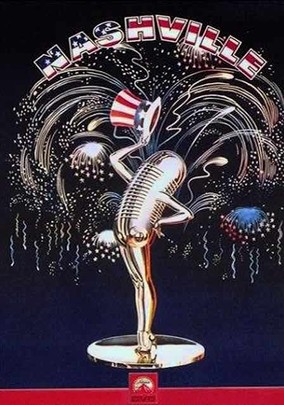
Nashville-1975

Nashville-1975

Director Robert Altman

Starring Lily Tomlin, Keith Carradine, Karen Black

Top 250 Films #3

Scott’s Review #47

60001541

Reviewed June 19, 2014

Grade: A

Nashville (1975)  is a brilliant film.

I have found that with each subsequent viewing, it creeps higher and higher on my list of favorite movies of all time.

The style is unique (largely improvised) and epitomizes creative freedom in the film during the 1970s.

Director Robert Altman lets his actors express themselves, even allowing them to write their songs; the dialogue overlaps at times, which results in a natural feeling as the viewer watches the cast of twenty-four principals intersect over five days at a political rally/country music festival.

It is pure Robert Altman at his finest.

Nashville is a satire of the political arena of the early 1970s, particularly the Vietnam conflict and its politicians.

The film certainly questions and challenges the government with an ironic patriotic setting (Nashville).

The country music industry was in uproar upon the film’s initial release. It is a layered film that can be discussed and appreciated, and every character is cared about.

I cannot adequately describe the multitude of nuances in each scene that are noticed over time.

Each character, even those with limited screen time, is vital to the story, as are the political elements —the questions of war, policies, and so on.

The chaotic bits and individual storylines come together at the end, and many background happenings are exciting to watch and take note of throughout each viewing.

With each experience, the audience will notice more and more. I certainly do.

Lily Tomlin, for example, plays Linnea, a haggard mother of deaf children with a supportive husband, a woman who, on the surface, is heroic; yet, she is a complex character. She is bored with her life and falls in love with a young musician despite the guilt and repercussions.

The musician in question is Tom Frank, played by Keith Carradine. Handsome and self-absorbed, he arrives in Nashville to dump his bandmates in hopes of a solo career and beds many willing females.

He also lashes out at a soldier at the airport, saying, “Kill anyone lately?”

Despite his unlikable character, Carradine gives one of the most beautiful performances in the film when he sings “I’m Easy”.

Several of the female characters assume he is singing the song for them, but who is he truly singing it for — if anyone?

Another character to analyze is Barbara Jean, played by Ronee Blakley. A frail yet very successful country singer, she is in and out of hospitals as she frets about her replacement singer stealing her thunder.

Her insecurities rise to the surface.

Insecurity is a common theme among the characters. Many of them are unsure, afraid, or lack confidence in their musical talent, relationships, or themselves.

These are only three examples of the twenty-four richly layered characters- some ambitious, some falling apart, others meandering through life.

Many songs throughout were written and performed by the actors themselves.

Nashville (1975) is storytelling and filmmaking at its best. A creation by Altman that is deservedly admired, revered, and heralded as a significant influence.

It is studied in film schools as it should be.

Oscar Nominations: 1 win-Best Picture, Best Director-Robert Altman, Best Supporting Actress-Ronee Blakley, Lily Tomlin, Best Original Song-“I’m Easy” (won)

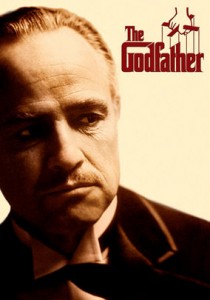
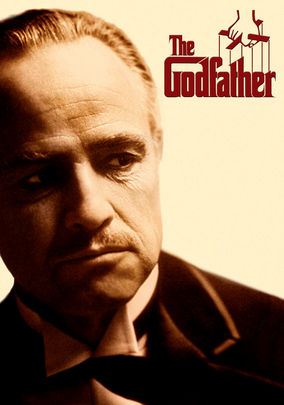
The Godfather-1972

The Godfather-1972

Director Frances Ford Coppola

Starring Marlon Brando, Al Pacino, James Caan

Top 250 Films #4

Scott’s Review #196

60011152

Reviewed November 24, 2014

Grade: A

The Godfather (1972) is one of the most identifiable and brilliant film masterpieces of all time. It is so ingrained in pop culture and film history that it was a blueprint for 1970s cinema, and its legend deserves to live on.

The film has not aged poorly nor been soured by over-exposure. It is as much a marvel today as it must have been when it was initially released in theaters.

The film revolves around the Corleone family- a mob family living in New York. They are high-powered, wealthy, and influential with politicians and law enforcement alike. They are the cream of the crop of organized crime families.

The patriarch of the family is known as “The Godfather”; his real name is Don Corleone, played by Marlon Brando.

The eldest son is hot-headed Sonny, played by James Caan. Middle son Fredo, played by John Cazale, is dim-witted and immature, serving as the family’s weak link.

Finally, the youngest son is the central character in the film. Michael, played by a very youthful Al Pacino, has just returned home from World War II, a decorated and Ivy League-educated hero.

Throughout the film, Michael wrestles with steering the Corleone family business toward the straight and narrow or continuing the death, bloodshed, and corruption that currently plague the family.

Rounding out the Corleone family is Tom Hagen, an Irish surrogate son of sorts, who serves as the family attorney. Connie, the temperamental and emotional sister, and Mama Corleone, the passive wife of Don, complete the prominent family.

The various supporting characters are numerous, ranging from family friends and relatives to corrupt mob figures and those introduced when Michael lives in Italy.

The brilliance of The Godfather lies in the richness of the numerous characters on the canvas, as well as the film’s structure and pacing.

Even minor characters are vital to the film, and every scene is essential and effortlessly paced, so that they neither seem rushed nor dragged out; the film is immeasurably character-driven.

My favorite character is Michael Corleone, as he is the most troubled and complex of all. Pacino plays him to the hilt as, initially, a nice guy trying to do the right thing, going against the grain, and non-traditional- he proposes to a WASP woman who has no Italian heritage.

When events develop in a particular way, Michael suddenly becomes the leader of the family, despite being the youngest son, and the complexities of the character deepen from this point.

Specifically, the revenge killing sequence is brilliant as the viewer is kept on the edge of their seat through a car ride, a meal in a restaurant, and a men’s room scene, until finally, all hell breaks loose, all the while Michael is conflicted, unsure, and intense.

Has he veered too far from being a nice guy? Can he salvage the family business without being ruthless? Michael faces a battle of good vs. evil.

The scenes are brilliantly structured- the grand opening scene alone is beautiful as the audience is introduced to the entire family- cheerfully dancing and frolicking during a bright and sunny outdoor wedding (Connie’s) at the Corleone estate, while inside a dark interior study, a man begs Don Corleone to help avenge his raped and beaten daughter by having her attackers killed.

Several scenes in The Godfather are my personal favorites —the aforementioned restaurant scene, where Michael is faced with a dilemma involving a corrupt policeman and a high-powered figure. One can feel the tension in this extended scene.

The scene in a Hollywood mansion where poor, innocent, horse Khartoum meets his fate in the most gruesome way imaginable.

Later, Michael’s beautiful Italian wife, Apollonia, has an explosive send-off.

Towards the end of the film, there is an improvised scene featuring a tomato garden with an elderly Don Corleone playing with his young grandson.

Finally, the brutal scene involving Corleone’s son Sonny at the toll booth is mesmerizing, murderous, and flawlessly executed.

The lack of any strong female characters and how women are treated (either beaten or passively following their husbands) is bothersome.

Still, unfortunately, circa the 1940s, this was the way things were.

One could argue that Kay Adams, played by Diane Keaton, is the strongest female character, as she questions the Corleone family’s motives and attempts to keep Michael honest and trustworthy. She has little in common with the other female characters.

Lines such as “I’m gonna make him an offer he can’t refuse” and “Don’t forget the cannolis” are unforgettable and quote-worthy.

The finale of the film is breathtaking —a combination of bloody kills mixed with a peaceful scene of Michael accepting the honor of becoming his nephew’s godfather. As he pledges his devotion to God and denounces Satan, the murders he orchestrated are simultaneously being executed.

The character, while complex, suddenly becomes a hypocrite.

Some view Michael as strictly a hero whose choices should not be questioned or analyzed; others view Michael as not a hero, but rather a complex, tortured, and flawed character.

One must watch The Godfather and The Godfather Part II (1974) as companion pieces, as Part I is slightly more straightforward and easier to follow than the more complex and layered sequel.

The Godfather (1972) is storytelling and filmmaking at its absolute best and continues to influence films to this day.

Oscar Nominations: 3 wins-Best Picture (won), Best Director-Francis Ford Coppola, Best Actor-Marlon Brando (won), Best Supporting Actor-James Caan, Robert Duvall, Al Pacino, Best Screenplay Based on Material from Another Medium (won), Best Costume Design, Best Sound, Best Film Editing

Psycho-1960

Psycho-1960

Director Alfred Hitchcock

Starring Janet Leigh, Anthony Perkins

Top 250 Films #5

Top 40 Horror Films #1

Scott’s Review #165

879522

Reviewed September 6, 2015

Grade: A

Psycho (1960) is the film to end all films, and not just within the horror genre. At the time of its release, it transcended the art of cinema to a new level and has influenced generations of films since, still holding up incredibly well today.

It is undoubtedly one of the greatest Alfred Hitchcock films and one of the greatest films ever made.

Hitchcock took considerable risks and dove from the thriller to the horror genre with Psycho.

The story revolves around a young woman named Marion Crane, superbly portrayed by Janet Leigh. Marion lives in Phoenix, Arizona, and sees her boyfriend (the dashing John Gavin) for frequent afternoon rendezvous at cheap motels when he is in town because they are both struggling financially.

She is presented with an opportunity, via her job, to steal $40,000 and flee the state to start a new life with her beau. She seizes the opportunity.

On the run, she stops at a run-down Bates motel where she meets owner Norman Bates, hauntingly played by Anthony Perkins.

Perkins and Leigh have fantastic chemistry together, and the audience picks up on it—is it romantic? Is there a mysteriousness to it? Something is odd about Norman. They bond over a quiet meal of sandwiches at the motel while discussing life and his ailing mother.

The famous shower scene and the shocking twist that follows are now almost taken for granted, as most people are already familiar with them. However, I can only imagine the shock viewers felt when they first saw these two delights.

To this day, both are still suspenseful.

Fortunately, when I saw this film for the first time, I didn’t know the ending, and I am glad I didn’t, because it took my breath away.

Killing off the leading actor at the start of the film, halfway through, was a novel idea and mind-blowing at the time of its release (1960).

This act left the audience’s mouths agape in disbelief, prompting them to ask, “What now?” “How can this be followed?” This act later influenced the original Scream (1996) film and surprised audiences again.

According to Hitchcock, no one could enter the film after it had started, and viewers were persuaded not to reveal the ending – oh, how I wish that occurred these days.

An aspect of the success and longevity of Psycho is the chemistry between Perkins and Leigh, who got along famously while shooting Psycho, and more importantly, the likability of Norman Bates. There is a rooting value for him, even though he is the villain.

When Marion’s car is only half-submerged in a lake containing her dead body, we root for it to sink entirely because of Norman. The concerned look on Norman’s face has a sense that affects the audio at this point in the story. Norman is troubled and wo, undead, and the audience does not have history.

Let’s not forget Janet Leigh. The audience sympathizes with her predicament. She is hopelessly in love with her man, steals money, is conflicted, and, at her core, is a friendly, decent, kind woman.

Halfway through the film, Marion’s sister, Lila, played by Vera Miles, is introduced as a detective, and the suspense and mystery intensify as they search for Marion and investigate the Bates Hotel and Norman Bates himself.

Miles then takes center stage as the lead in the film, which is intriguing.

The film then returns to horror at the terrific and terrifying conclusion, which will shock first-time viewers.

The musical score (especially the shrill strings) is incredibly effective and influenced other horror films to come (Friday the 13th immediately comes to mind).

Psycho is a film that can be enjoyed and studied over again.

Oscar Nominations: Best Director, Alfred Hitchcock, Best Supporting Actress-Janet Leigh, Best Art Direction, Black-and-White, Best Cinematography, Black-and-White

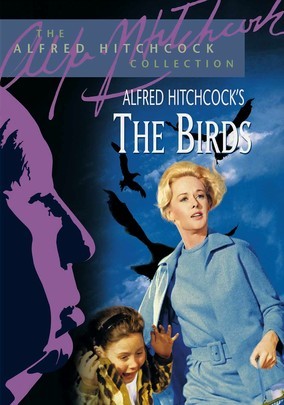
The Birds-1963

The Birds-1963

Director Alfred Hitchcock

Starring Tippi Hedren, Rod Taylor

Top 250 Films #6

Top 40 Horror Films #2    

Scott’s Review #173

308926

Reviewed September 22, 2014

Grade: A

The Birds is one of director Alfred Hitchcock’s finest works.

Made in 1963, following Psycho, it continues Hitchcock’s run of successes, both commercially and critically.

It is set in northern California (in San Francisco and Bodega Bay) and tells the story of unexplained bird attacks in a peaceful small bay town.

Tippi Hedren plays Melanie Daniels, a wealthy socialite from San Francisco who drives to Bodega Bay to pursue a love interest, Mitch Brenner.

Mitch, played by Rod Taylor, is a successful attorney who meets and shares a flirtation with Melanie the day before at a pet store in San Francisco. He regularly visits his mother (Jessica Tandy) and sister (Veronica Cartwright) in Bodega Bay.

Once Melanie arrives in town, birds begin to attack the locals living in the sleepy community periodically.

The Birds is a film that has held up incredibly well and is as exciting and horrifying today as it was in the past.

One intriguing aspect of the film is that it offers no rhyme or reason for the bird attacks, which keeps the viewer guessing when a gull swoops down and attacks innocent Melanie.

It is entirely mysterious and open to interpretation- are birds fed up with being caged?

Are the love birds that Melanie purchased the cause of the attacks? Do the birds hate humans? Why do they attack the children? Why do they peck the eyes of their victims out?

One could spend hours debating these questions.

A major creative success of the film is its decision to eliminate a musical score. The eerie silence and the loud sounds of the birds attacking create a haunting dynamic.

My favorite scene of The Birds features Melanie sitting on a wooden bench in the schoolyard, enjoying a cigarette. Behind her is a deserted jungle gym. She barely notices a tiny bird innocently flying past her and landing on the jungle gym.

She continues smoking her cigarette. The viewer sees what Melanie cannot- as slowly, hundreds of birds land on the jungle gym behind her.

Without music, the scene is deadly silent and dramatic, shifting from close-ups of Melanie to long shots of the birds gathering behind her.

Another interesting aspect of The Birds is the character relationships. Mitch’s mother, Lydia, is afraid of losing her son, so she initially despises Melanie. Mitch’s ex-girlfriend, schoolteacher Annie Hayworth, strikes up a close friendship with Melanie; one might expect them to be rivals.

A hysterical mother lashes out at Melanie, calling her evil and blaming her for the attacks.

During the long periods of calm, one wonders when the next attack will occur—and we know it will. We searched for clues to identify what triggers the attacks, but we found none.

This makes for brilliant and suspenseful filmmaking. They hardly come better than the masterpiece The Birds (1963).

Oscar Nominations: Best Special Effects

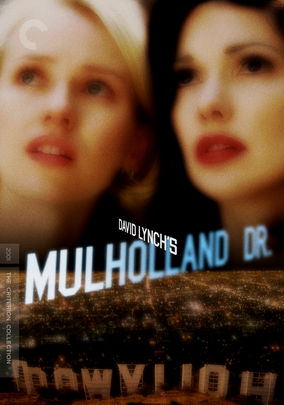
Mulholland Dr.- 2001

Mulholland Dr.- 2001

Director David Lynch

Starring Naomi Watts, Laura Harring, Justin Theroux

Top 250 Films #7

Scott’s Review #297

60021646

Reviewed December 12, 2015

Grade: A

Mulholland Dr. (2001) is my favorite David Lynch film and, as far as I am concerned, a pure masterpiece in experimental filmmaking.

Championed by many, yet hated by others for its non-linear and confusing storyline, trying to make sense of the mishmash of dreamlike plots is a waste of time and undoubtedly headache-inducing, as the film must be experienced and appreciated for its creativity.

My best analogy is that Mulholland Dr. is to film what Pink Floyd is to music – it must be savored and experienced. It is a film that invites interpretation and study.

The main story, if one is attempting to summarize in a paragraph, goes something like this:

Part 1- aspiring actress Betty Elms (played by then-unknown Naomi Watts) arrives in sunny Los Angeles as a perky, clean-cut girl. She stays in her aunt’s gorgeous suburban apartment while she is away filming a movie on location.

Betty meets an amnesiac woman, the gorgeous Rita (Laura Harring), who is hiding in the apartment. Before meeting Betty, we learn that Rita was involved in a car accident on Mulholland Dr. and is carrying a large sum of cash.

Still, she does not know who she is or even her name, making up the name “Rita” from a poster of Rita Hayworth she sees on the wall while showering.

Part 2: Betty (now named Diane) and Rita (now Camilla) are lovers, and Betty, no longer aspiring, has now become a neurotic, struggling actress with no work, and is involved in a love triangle with Camilla and another man, who are both great successes and pity Diane.

Diane and Camilla visit a club named Club Silencio, where a gorgeous singer brings them to tears with her singing, only to collapse and reveal herself as a phony. The host warns that everything is an illusion.

Intersecting vignettes seemingly unrelated to the central part of the story- a young director forced to cast a woman after threats from the mafia, a terrified man who sees a demented man behind the dumpster of a burger joint, and a detective searching for the clues to the car accident involving Rita- all come together to relate to the main story.

Mixed in with all of these stories are recurring odd characters- the seemingly sweet elderly couple that Betty meets on the airplane.

This strange cowboy appears every so often. Coco, the landlord, played by legendary film actress Ann Miller, in her last film, Coco, then doubles as a shrewish character in the alternate story, and finally, a mysterious blue key.

How do all these facets of story and character add up?

That is open to interpretation.

Some details support the theory that “Betty” is a figment of Diane’s imagination. She dreams of being fresh-faced and ready to take on L.A., and the woman that Betty and Rita find dead is likely Diane.

When the plot changes direction, the cowboy utters the line “Hey, pretty girl. Time to wake up.”, which seems to support this theory, though, as mentioned before, Mulholland Dr. is meant to be enjoyed, not stressed over if the puzzle does not always come together.

Mulholland Dr. (2001) is a masterpiece, pure and simple. An odd masterpiece with plots that can be discussed and dissected for ages…..and not understanding the film is not a bad thing.

Oscar Nominations: Best Director-David Lynch

Independent Spirit Award Nominations: 1 win-Best Cinematography (won)

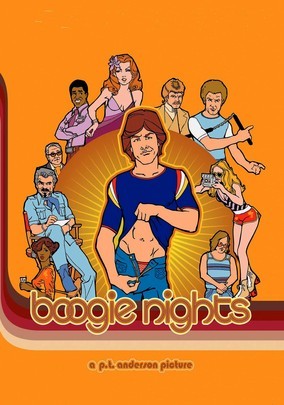
Boogie Nights-1997

Boogie Nights-1997

Director Paul Thomas Anderson

Starring Mark Wahlberg, Burt Reynolds

Top 250 Films #8

Scott’s Review #312

1180077

Reviewed December 31, 2015

Grade: A

Boogie Nights (1997) is a fantastic film about the pornography industry (The Golden Age of Porn) of the 1970s and 1980s, and does an excellent job of portraying the characters as human beings with feelings and emotions, rather than as nymphomaniacs or perverts.

They bond with one another as a family- a group of misfits striving to survive. This, and many other reasons, are why Boogie Nights is one of my all-time favorite films.

Written, produced, and directed by Paul Thomas Anderson (Magnolia, 1999; There Will Be Blood, 2007; Inherent Vice, 2014), he is a master at exploring the underbelly of society and flawed, desperate characters.

Boogie Nights is no different.

The dysfunctional family is the common theme of the film. Most of his characters are not happy people, but they are survivors who desperately seek a piece of happiness.

Many in his cast of Boogie Nights also appear in Magnolia. Mark Wahlberg (Eddie/Dirk Diggler), Burt Reynolds (Jack Horner), Julianne Moore (Maggie), Don Cheadle (Buck), William H. Macy (Little Bill), John C. Reilly (Reed Rothchild), Heather Graham (Rollergirl), Philip Seymour Hoffman (Scotty), Malora Walters (Jessie), and Alfred Molina (Rahad Jackson), round out the large cast.

The film is set in Los Angeles and spans the period from 1977 to 1984. Although only seven years pass, much happens to most of the characters during this time, and we experience their trials and tribulations.

The unique thing about Boogie Nights is that I care about every character, thanks to excellent writing and fantastic acting. They succeeded in obtaining my empathy for them. Boogie Nights is a highly character-driven film, which is an enormous part of its brilliance.

The cast is an ensemble one, but the main character is Eddie Adams, a high school dropout, who we meet working as a dishwasher at a nightclub. He has an abusive mother who kicks him out of the house, leading him to audition for and move in with Jack Horner.

Jack is a patriarchal figure who shares a house with Maggie, the matriarch of the household, and Roller Girl, a fellow high school dropout who is always seen wearing roller skates. Eddie’s talent is his large “manhood”.

We watch Eddie, at first shy and polite, rise to superstardom in the porn industry, becoming rich and living a lavish, drug-fueled lifestyle, where his ego gets the best of him. He, like many of the characters, hit rough times as the early 1980s shift to videotape was the death of many 1970s porn actors’ careers.

The musical soundtrack plays a crucial role in the success of Boogie Nights. Many scenes contain songs that were hits of the time or prior, including “Sister Christian”, “Jessie’s Girl”, “God Only Knows”, “Got to Give it Up”, “Ain’t No Stoppin’ Us Now”, and countless others- so much so that the soundtrack is almost a character of the film.

We look forward to hearing what song might be featured next.

At one point later in the film, circa 1983, as things begin to spiral out of control for many of the characters, the musical score turns ominous, with low bass music, a nighttime setting, and the lighting becomes darker. Several stories begin to intersect on a late L.A. night on the streets.

Jack, filming a scene in a limousine starring Rollergirl and a young college jock they pick up off the streets, Dirk, forced to prostitute himself for $10 to a young man in a pickup truck, and Buck, who innocently stops to buy doughnuts for his very pregnant wife Jessie.

Each of these stories ends in brutal violence, and the tone is crucial to the success of the scenes. This lengthy scene bears a resemblance to a Quentin Tarantino scene in its macabre tone.

Particular favorite scenes include the heartbreaking scene when Maggie loses custody of her son, the New Year’s Eve party at Jack’s house, and the ill-fated drug sale at Rahad Jackson’s.

Each is heartbreaking, powerful, fraught with tension, or otherwise empathetic to the characters, which makes them each quite powerful in different ways.

Induced in the drug sale scene is some black comedy- Rahad’s presumed Chinese houseboy has a fetish for firecrackers, which startle Dirk, Reed, and Todd, as the fear of possible gunshots fills the air. Maggie’s sob scene elicits viewer emotion as we cry with her, and the New Year’s Eve turn of events involving Scotty and Little Bill is tragic.

Boogie Nights (1997) is one of my favorite films because it contains brilliant writing, characters who are fleshed out, damaged, and human, a killer soundtrack, and a dark, mysterious industry (porn) that is both misunderstood and categorized.

Thanks to director Anderson, we see the people within this lifestyle as real individuals, with their own issues, but also with full hearts and kindness.

Oscar Nominations: Best Supporting Actor-Burt Reynolds, Best Supporting Actress-Julianne Moore, Best Screenplay Written Directly for the Screen

Halloween-1978

Halloween-1978

Director John Carpenter

Starring Jamie Lee Curtis, Donald Pleasence

Top 250 Films #9

Top 40 Horror Films #3

Scott’s Review #114

569090

Reviewed July 16, 2014

Grade: A

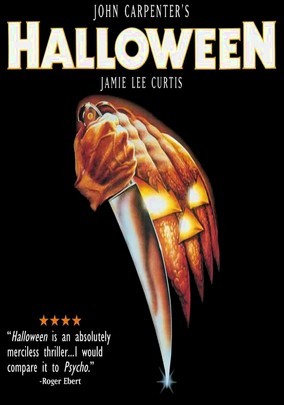
 Halloween is an iconic horror film from 1978 that set the tone for the barrage of slasher films to follow throughout the 1980s and into the 1990s.

Today, the film continues to hold up incredibly well, and I am proud to list it as not only one of my favorite horror films (which I watch religiously every Halloween) but also one of my favorite films of all time.

The focus is on style and substance over gore (the film contains little of it), and the score is one of the scariest and most effective in cinematic history.

The premise of the film is simple- a homicidal maniac is on the loose in a sleepy little town named Haddonfield, Illinois, targeting three female babysitters on a crisp Halloween night.

The audience knows that the six-year-old little boy dressed as a clown on a dark Halloween night years ago, who butchered his older sister to death, is the now grown-up culprit.

What we do not know, nor should we, is what his (Michael Meyers’) motivation is.  This confusion only adds to the impact.

Subsequent remakes have added complexities to the character, albeit unnecessarily so; however, in the original, we see a seemingly happy child with stable parents and a good life.

Similar stories have been told throughout film history. But Halloween is simply one of the greatest horror films ever made.

As simple as the story is, the way the film is made makes it a masterpiece. Everything about Halloween is mesmerizing – the lighting is perfect, the ambiance, the brilliant, scary musical score, the battle between good and evil, and the feeling of a chilly Halloween night.

Highly unusual for its time, the point of view of the killer and heavy breathing are prevalent throughout the film, which will startle and scare the viewer. The opening shot is through the eyes of a masked six-year-old kid wearing a clown mask.

The unique technical aspects continue to evolve.

Director John Carpenter had a vision for this film, and thankfully, no studio influence compromised it, as it was an independent film on a shoestring budget.

The Hitchcock influences are evident in the character names, such as Sam Loomis, and in many scenes where someone watches the action or peers around a corner or through a window, making the viewer anxious and nervous.

Set in small-town USA, a frightening element of the film is that it could happen anywhere, and the location is ingenious. There is very little blood, let alone gore. It is needless. It is the creepiness that makes the film brilliant.

The three teenagers are perfectly cast- Jamie Lee Curtis is the serious bookworm, P.J. Soles and Nancy Keyes are the flirtatious bad girls. Still, the chemistry is excellent, and the audience buys them as best friends.

The jump-out-of-your-seat moments are incredibly well-timed, and it is one of the few genuinely scary films.

Forget the horror genre alone- Halloween (1978) is one of the greatest films ever made.

2001: A Space Odyssey-1968

2001: A Space Odyssey-1968

Director Stanley Kubrick

Starring Keir Dullea, Gary Lockwood

Top 250 Films #10

Scott’s Review #314

207856

Reviewed December 31, 2015

Grade: A

In my opinion, 2001: A Space Odyssey (1968) is a masterpiece, pure and simple, and must be seen repeatedly to allow the message and the experience to sink in.

It is one of those films comparable to a fine wine – it just gets better and better with age, and this is palpable in deep thought, allowing the viewer to experience the rich taste of film art.

The delicious quality is meant to be savored and enjoyed- the slow pace and odd elements only enrich the film. Needless to say, it is one of my favorite Stanley Kubrick films.

Simply an epic journey through space.

Made in 1968, and not 2001, the film challenges and breaks down barriers in film, as Kubrick makes a film that he wants to make, and the results are genius.

The film contains no dialogue during the first twenty or the last twenty minutes.

The film begins in the African desert millions of years ago as the evolution of man is apparent- two tribes of ape-men dispute over a watering hole. A black monolith appears, and one of the tribes is guided to use bones as weapons.

Millions of years later, we meet a team of scientists, led by Dr. David Bowman and Dr. Frank Poole, as they embark on a mission aboard the United States spacecraft, Discovery One, on a journey to Jupiter.

The ship is mainly controlled by an intelligent, talking computer named HAL 9000, nicknamed “HAL”. Hal boasts that he is “foolproof and incapable of error”. As events unfold, the film dives into a study of humans versus technology in a cerebral game of mental chess.

The film is very tough to review analytically, as it is so intelligent and visually stimulating – it must be experienced. It challenges the viewer to think and absorb the events occurring.

Visually, it is breathtaking and still holds up shockingly well from this perspective. The use of classical music throughout- especially in dramatic scenes is effective.

The stunning scene where David and Frank converse about their suspicions regarding “HAL”, as the intelligent computer system looks on, is incredibly compelling. The scene is enhanced by the simple presence of an orange light, which seemingly displays a myriad of emotions (surprise, rage) in the viewer’s mind.

2001: A Space Odyssey (1968) is an enduring masterpiece.

Oscar Nominations: 1 win-Best Director-Stanley Kubrick, Best Story, and Screenplay Written Directly for the Screen, Best Art Direction, Best Special Visual Effects (won)

A Clockwork Orange-1971

A Clockwork Orange-1971

Director Stanley Kubrick

Starring Malcolm McDowell

Top 250 Films #11

Top 10 Most Disturbing Films #7

Scott’s Review #295

383466

Reviewed December 11, 2015

Grade: A

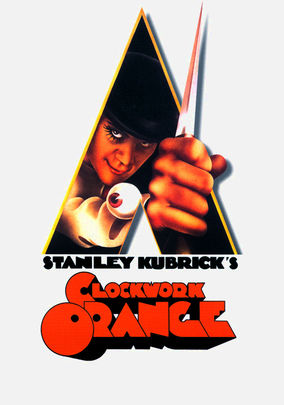
A Clockwork Orange (1971) is a groundbreaking Sta,nley it is Kubrick film, and my personal favorite in his collection, with his movies appearing on my Top 100 Favorite Films list.

Adapted from the 1962 Anthony Burgess novel, which was thought to be unfilmable, it becomes a psychedelic, creative, and fascinating experience from start to finish.

Bizarre and thought-provoking, Kubrick tells the story of a London sociopath living in futuristic London, and the strange behavioral modifications performed on him after he is apprehended by the police, in an attempt to “reform” him and transition him into a valuable member of society.

The film explores profound social and psychological themes, posing thought-provoking questions about these weighty topics.

Interspersed with classical music and featuring excellent, colorful sets, A Clockwork Orange is a masterpiece in bizarre cinematic artistry.

Alex DeLarge loves classical music (specifically Beethoven), violence, and hanging out with friends. He constantly skips school, beats people up, and parties with his friends. His pet snake is his best friend, and his parents seem afraid of him.

Finally arrested after murdering an odd lady with dozens of cats, Alex is sent away to prison, where he volunteers for an experimental “Ludovico” technique, which Alex assumes is a “get out of jail free” card.

What transpires next is a freakish and uncomfortable experience for Alex.

The film contains startling and disturbing scenes throughout- when Alex and his team of “droogs” become inebriated from a concoction of milk laced with drugs and embark on an evening of self-proclaimed ultra-violence, they drive to the country where they break into wealthy author F. Alexander’s house and beat him, crippling him for life.

They rape his wife while forcing him to watch, all the while Alex happily sings “Singin’ in the Rain,” timing the beats of the song to acts of violence.

The brutality and creativity of this scene are mesmerizing and certainly unforgettable.

We, the audience, might despise a character like Alex; however, sympathy is felt for him as his “reformation” begins. A disturbing scene, which is forever embedded in my mind, involves the attachment of a contraption forcing Alex’s eyelids wide open.

At the same time, he watches violent scenes and is administered a drug to make him sick, thereby associating the violence with illness.

He becomes psychologically screwed up.

Alex (thanks to an excellent portrayal by Malcolm McDowell) is charismatic and humorous and, in some warped way, quite likable to the audience, despite his devious ways.

A Clockwork Orange continues to disturb me after multiple viewings – who can forget the sinister grin that Alex wears and the creepy eyelash with mascara that he sports?

The film sends an interesting message about human nature as Alex turns from predator to the hunted. We ask, “Are human beings naturally prone to violence”?

The direction of the film is breathtaking – the weird colors, the (as traditional with Stanley Kubrick) long-shot camera angles, and the intense musical crescendos.

The genre of classical music is a fantastic and ominous choice, almost adding a level of sophistication to Alex and the violence.

The weird supporting characters (Alex’s parents, the probation officer, and his parents’ roommate) and the suddenly fast-forwarded sex scenes were unheard of for their time.

Immensely creative and unconventional filmmaking with a moral message and thought-provoking questions about humanity, A Clockwork Orange (1971) is a groundbreaking and fantastic, trippy experience.

A masterpiece from top to bottom.

Oscar Nominations: Best Picture, Best Director-Stanley Kubrick, Best Screenplay Based on Material from Another Medium, Best Film Editing

West Side Story-1961

West Side Story-1961

Director Robert Wise, Jerome Robbins

Starring Richard Beymer, Natalie Wood

Top 250 Films #12

Scott’s Review #188

1111583

Reviewed November 3, 2014

Grade: A

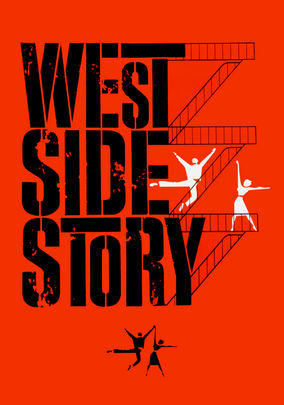
West Side Story is a musical from 1961 (based on the Broadway stage production from the 1950s), during a period in Hollywood where every other film released seemed to be a version of an enchanting musical.

This particular film version is much darker than most of its contemporaries within this genre. The dreary ending, fantastic and compelling in its dramatic elements, does not detract from the rest of the musical and its hum-along tunes.

West Side Story was crowned the 1961 Academy Award winner for Best Picture.

West Side Story is undoubtedly based on the Shakespearean tragedy of Romeo and Juliet- the Capulets and Montagues becoming rival teen street gangs of the Puerto Rican “Sharks” and the Polish”Jets,” with the lovesick teens Tony and Maria serving as Romeo and Juliet.

And yes, spoiler alert, the story does not end happily ever after.

Loads of suspension of disbelief must be taken- How many gangs sing and dance to each other, snapping their fingers in unison to perfectly choreographed beats?

Additionally, some gang characters do not look authentic, with clearly dyed hair, bronzed skin, or some other phony-looking get-up.

The film is a cherished friend, and these can be overlooked for my enjoyment of the film.

The story, set in 1950s New York City, pits the Sharks (a gang led by Bernardo) against the Jets (led by Riff), who have been bitter rivals for the turf of the rough streets of Manhattan’s west side for many years.

The gang’s girlfriends and one female, “Anybodys,” are in tow. She longs for the day when she can join the Jets and fight alongside the boys.

The other supporting characters primarily include various policemen (Lieutenant Schrank and Officer Krupke) who attempt to keep the gangs apart. They also include a local shopkeeper, Doc, who is the story’s moral compass. Doc encourages the gangs to get along and questions the logic of gang fights.

After a scuffle, the gangs decide to fight after an upcoming dance, and the Jets elect Tony to face Bernardo.

The story is surprisingly dark, especially in the inevitable final act. Amid all this darkness, however, lies a musical with cheery, catchy numbers (I Feel Pretty, Jet Song) and love-struck tunes (Maria and Somewhere).

A musical about diversity and rivalry, the story centers on lovesick Maria and Tony, a la Romeo and Juliet, and their struggle to be together despite adversity from their friends and family due to their significantly different backgrounds.

Throughout the film, we get to know other characters well- Anita, the girlfriend of Bernardo, for example, played by Rita Moreno, is the stubborn yet likable best friend of Maria, who thinks that Maria and Tony are wrong for each other and that things just are not supposed to be that way when you mix cultural diversity.

The film moves along quickly, featuring standoffs, fights, and plots to eliminate the other gang, a failed attempt at a dance to bring the two groups together, and Tony and Maria sneaking off to meet.

The lack of chemistry between Natalie Wood (Maria) and Richard Beymer (Tony) is noticeable, primarily upon multiple viewings. Still, decades later, it is also challenging to imagine anyone else in either role—so ingrained is the duo in film culture.

The cultural diversity of much of the cast (Rita Moreno was the only Puerto Rican) is fascinating, as is the fact that most of the singing was dubbed by other singers.

Yet, the film still manages to work very well.

Oscar Nominations: 10 wins-Best Motion Picture (won), Best Director-Robert Wise and Jerome Robbins (won), Best Supporting Actor-George Chakiris (won), Best Supporting Actress-Rita Moreno (won), Best Screenplay Based on Material from Another Medium, Best Scoring of a Musical Picture (won), Best Sound (won), Best Art Direction, Color (won), Best Cinematography, Color (won), Best Costume Design, Color (won), Best Film Editing (won)

The Conversation-1974

The Conversation-1974

Director Frances Ford Coppola

Starring Gene Hackman

Top 250 Films #13

Scott’s Review #83

60003586

Reviewed July 1, 2014

Grade: A

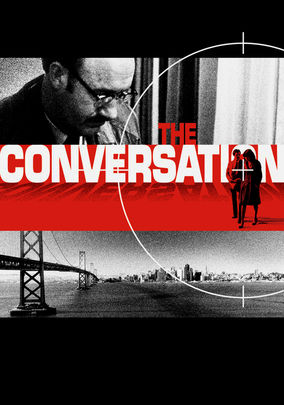
The Conversation (1974) is one of my favorite films. It is a thinking man’s psychological thriller that is pure genius.

Had The Godfather (1972) not been the success that it was, this film would never have been made.

It is a very personal story crafted by Francis Ford Coppola.

The film stars Gene Hackman as Harry Caul, a surveillance expert who is a technical genius but a social misfit, a cynical man suspicious of everybody.

He is paranoid.

He is hired by a mysterious ‘Director’ to tap a young couple’s conversations and submit the recordings to the Director’s assistant, played by a very young Harrison Ford (his first film).

Harry is also obsessed with his privac,y chastising his landlord for sending flowers to his apartment. His latest assignment becomes an obsession for him as he begins a downward spiral of paranoia concerning a young couple he feels is in danger.

For the viewer and the character of Harry Caul, we feel we have everything figured out but do we? Is the couple in danger? Who are they?

Many aspects of the film are fuzzy and unclear which is the genius of it and makes the viewer think. The atmosphere is repetitive and tense. The endless sound loops and the surveillance in the park are highly effective.

The creepy hotel scene towards the climax of the film is my favorite in its bizarre nature.

Each time I view The Conversation (1974) I see something different or try to dissect it in a new way. That to me is film-making at its greatest.

Oscar Nominations: Best Picture, Best Original Screenplay, Best Sound

Rosemary’s Baby-1968

Rosemary’s Baby-1968

Director Roman Polanski

Starring Mia Farrow, John Cassavetes, Ruth Gordon

Top 250 Films #14

Top 40 Horror Films #4

Scott’s Review #9

60002403

Reviewed June 17, 2014

Grade: A

Rosemary’s Baby (1968) is not only a great film, it’s a masterpiece. Easily one of my favorites in the horror genre, it’s also towards the top of the list of my all-time favorite films.

The beauty of this film lies in its power of suggestion and subtleties. It lacks the blood, gore, or standard horror frights one might expect.

It doesn’t need them.

The audience senses something is amiss through clues provided throughout the film. The closed-off room in the young couple’s apartment, the sweet, but a bit odd, elderly neighbors, a strange suicide, a mysterious, horrid-smelling, good luck charm. Rosemary’s due date (June 6, 1966- “666”).

The strange, dreamlike conception scene is intense and surreal. Her husband- claiming Rosemary passed out from too much alcohol- begins to become a suspicious man following the incident, but we are confused by his involvement- what are the neighbors up to, we wonder? Are they sinister or simply innocent meddlers?

In a sinister scene, Rosemary gnaws on bloody raw meat, catches her reflection in the glass, and is horrified by her behavior.

Mia Farrow is excellent as the waifish, pregnant Rosemary, who loses weight, rather than gains it.

The film also has a couple of real-life eerie occurrences: the building setting (The Dakota) is where John Lennon was shot and killed, and Director Roman Polanski’s wife, Sharon Tate, in a cameo, was murdered shortly after filming by Charles Manson.

Rosemary’s Baby shares a similar theme with other devilish/demon films, such as The Exorcist (1973) and The Omen (1976).

This is a film that must be seen by everyone and only shines brighter with each subsequent viewing.

Oscar Nominations: 1 win-Best Supporting Actress-Ruth Gordon (won), Best Screenplay Based on Material from Another Medium

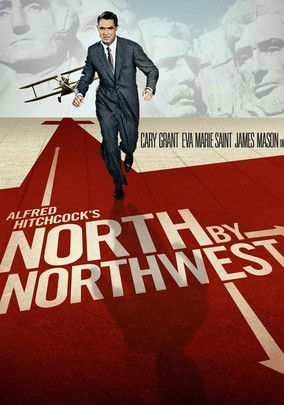
North by Northwest-1959

North by Northwest-1959

Director Alfred Hitchcock

Starring Cary Grant, Eva Marie Saint

Top 250 Films #15

Scott’s Review #90

60000544

Reviewed July 3, 2014

Grade: A

North by Northwest is a 1959 Alfred Hitchcock film, released during the director’s heyday (1950s and 1960s).

It is considered one of his most commercially successful films. It is mainstream fare that contains all the elements of a great Hitchcock film: adventure, intrigue, romance, and suspense.

Unlike in some of his other films, his characters are straightforward and not psychologically wounded, as in some of his others. This is not a slight but merely makes the film “for the masses.”

Charismatic Cary Grant plays the role of successful advertising executive Roger Thornhill. He works in bustling New York City, has a secretary, and is well respected in his circle.

While enjoying drinks at the club the evening before a planned trip to the theater, he becomes a victim of mistaken identity—thought to be George Kaplan- and is accosted by henchmen at a lavish Glen Cove, Long Island mansion.

After a botched attempt on his life, he is arrested and ultimately must race across the United States on the lam to find the real George Kaplan.

The incredible locales range from New York City to Long Island, Indiana, Chicago, and Mount Rushmore.

The film is exciting from start to finish, never letting up, and features a common theme of Hitchcock’s- an “everyman” falsely accused of a crime attempts to prove his innocence.

It differs from some Hitchcock films in that there is not as much psychological analysis of the characters, but rather a good, old-fashioned adventure story with many twists and turns.

In many ways, North by Northwest is a precursor to the enormously popular James Bond films, as Grant brought style, sexiness, and charisma to this sleek feature.

The set style and design look perfect. The lush Long Island estate set is flawless, with a grand staircase and a well-constructed library—not to mention the exterior shot of the enormous house.

The house in Mount Rushmore is sleek, quite trendy, and reeks of high sophistication. It is pretty grand and situated on an incline, featuring an airplane runway.

The chemistry between Grant and Eva Marie Saint is apparent and oozes from the screen from the moment they bump into each other on a train traveling from New York to Chicago. As they dine in the dining car, a flirtatious scene unfolds-the landscape whizzes by in the background, with the comforting train whistle and ambient noise working well.

Their relationship is established, and the characters are intrigued and slightly mistrustful of each other, which lends the scene an edge and complexity that works.

The film features a cutting-edge graphic design in the opening credits, similar to the design used in Vertigo during the same period. The green colors and the sophisticated advertising style of the graphics kick the film off in a creative, ultra-cool, modern way.

Interestingly, Martin Landau’s implied homosexuality in Leonard, henchman to the main villain, Phillip Vandamm, is precisely how Landau played the role. During Hitchcock’s time, homosexuality was strictly prohibited in film, but it was subtly portrayed.

Leonard’s fascination and jealousy towards Vandamm are intertwined with levels of flirtation and vengefulness.

Scene after scene of North by Northwest is filled with suspense—the crop duster scene is my favorite. Shot without music and on location in a dreary, clear, middle-of-nowhere field somewhere in Indiana, the scene is layered with suspense throughout.

Thornhill is scheduled to meet Kaplan at a designated spot. A lonely bus stop, random passing cars thought to be the intended, a deadly airplane, and an explosion all occur, creating a fraught scene.

New fans of Hitchcock should begin with this one—it is mainstream and one of his finest. It contains all the traditional Hitchcock elements, and all the pieces come together perfectly.

North by Northwest (1959) is a masterpiece.

Oscar Nominations: Best Story and Screenplay Written Directly for the Screen, Best Art Direction, Color, Best Film Editing

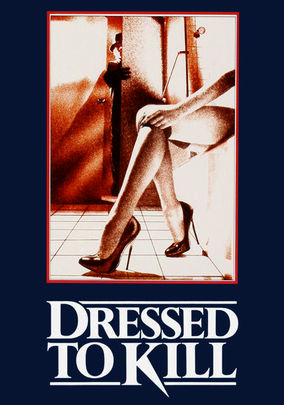
Dressed to Kill-1980

Dressed to Kill-1980

Director Brian De Palma

Starring Angie Dickinson, Nancy Allen, Michael Caine

Top 250 Films #16

Top 40 Horror Films #5

Scott’s Review #164

60020714

Reviewed September 2, 2014

Grade: A

Dressed to Kill (1980) is Brian De Palma’s most significant work throughout his storied career.

Set in New York City, the film is essentially divided into two halves.

The first half centers around Angie Dickinson, who plays a bored housewife named Kate. She is unhappy in her marriage and seeks therapy from a psychiatrist played by Michael Caine, to whom she makes sexual advances.

She is unfaithful to her husband, yet is a kind, intelligent, cultured woman. She adores her son and loves her husband but is utterly unfulfilled with life.

Do we, the audience sympathize with her? Does she get what she deserves? Is she a victim? One powerful scene involves a wide-eyed little girl who cannot stop staring at Kate. Can she sense Kate’s shenanigans? Does she sense her conflict? Does Kate feel guilt?

Kate is a complex character and brilliantly played by Dickinson, who gives the character sexiness, softness, and appeal.

After a shocking event in a high-rise elevator rivaled only by the shower scene in Psycho (1960) in its surprise and terror, the remainder of the film belongs to Nancy Allen, who plays a prostitute named Liz, determined to solve a mystery to clear her name.

De Palma sets the dreamlike tone with a sizzling opening shower scene sure to make the prudish blush in its explicitness, which I found deliciously sexy.

A ten-minute museum sequence speaks volumes without dialogue as Kate has a cat-and-mouse flirtation with a stranger.

The brilliance of Dressed to Kill is its versatility and complexity and contains one surprise after another, from the elevator scene to the final reveal to the final stage itself.

It is part horror film part thriller and always stylish.

The film was not well regarded upon its release, but over the years has been respected due to its creativity and excellent mood. Many scenes are shot in slow motion adding an effect to them.

Dressed to Kill (1980) is simply brilliant on every level.

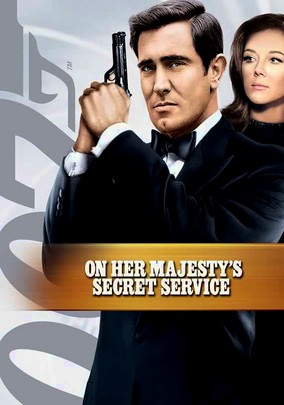
On Her Majesty’s Secret Service-1969

On Her Majesty’s Secret Service-1969

Director Peter Hunt

Starring George Lazenby, Diana Rigg, Telly Savalas 

Top 250 Films #17

Scott’s Review #156

28630765

Reviewed August 19, 2014

Grade: A

On Her Majesty’s Secret Service (1969) is often derided by fans of the James Bond franchise, which is a shame, as it is artistically and story-wise top of the heap and my personal favorite from the series.

Bond, now played by George Lazenby, is on the hunt for arch-nemesis Blofeld, played by Telly Savalas. Blofeld is intent on securing amnesty for his past deeds and is threatening to ruin the world’s food supply if his demands are not met.

Often known among Bond historians as “the one with George Lazenby”, who, if not for Sean Connery returning to the series in the next film, could have lasted much longer in the role, is a breath of fresh air and wonderfully cast.

Lazenby brings his form of charisma, great looks, and charm to the role, and Sean Connery is a tough act to follow, but Lazenby succeeds in spades.

Diana Rigg is one of the best Bond girls of all time as she is intelligent, sophisticated, confident, and beautiful, a great counterpart to Bond- she is more his equal, rather than simply just a conquest for him, and the two actors have real chemistry.

Telly Savalas is effective as Blofeld, though not my all-time favorite Bond villain by any stretch- something is missing in his performance.

In typical Bond fashion, the film begins in sunny Portugal, skips to London, and finishes in cold Switzerland. I love the icy, snowy Switzerland locales in the movie and the ski chase, downhill bobsled chase, car chase on ice, and subsequent blizzard, which are brilliantly atmospheric.- a perfect film to view on a cold winter’s night!

I love the inside quips in this one, especially when Lazenby says, “I bet this never happened to the other fellow,” and “He had lots of guts.”

Both are laugh-out-loud clever.

The shocking and tragic ending is uncharacteristic of a Bond film and a brilliant change from many of the movies, as Bond is humanized.

On Her Majesty’s Secret Service (1969) is more character-driven than the other films in the franchise while still providing lots of adventure, and should be revered as a more layered Bond offering.

The Sound of Music-1965

The Sound of Music-1965

Director Robert Wise

Starring Julie Andrews, Christopher Plummer

Top 250 Films #18

Scott’s Review #49

60001917

Reviewed June 20, 2014

Grade: A

The Sound of Music (1965) is a film that almost everyone has seen multiple times. It is undoubtedly ingrained in most people’s childhood memories, especially around the holiday season, and is a treasure to watch.

It is tough to be objective, as I’ve probably seen the film dozens of times and continue to appreciate and love it with each repeated viewing.

Maria (Julie Andrews) is a pretty, young, free-spirited woman living in the gorgeous hills of Austria. We first meet her on a lush hilltop where she sings with the birds and enjoys life.

While very popular with other nuns, she does not quite fit in at the Nonnberg Abbey, where she studies to become a nun. She is sent to discover herself as the governess of seven nearby children. They are the children of well-known and now-retired Georg von Trapp (played by Christopher Plummer).

Since his wife died, no life or music exists inside the house. Maria brings life and music to all, transforming everyone’s existence into a happier one. The threat of the powerful Nazis wishing to recruit a disapproving von Trapp adds tension.

Maria and the von Trapp family fall madly in love.

As a musical, it is top-notch and is the hallmark of all musicals. The songs are challenging to get out of one’s head (“The Sound of Music,” “Climb Ev’ry Mountain,” and “My Favorite Things” are personal favorites), but the list of gems goes on and on.

The political/Nazi story was lost on me as a child, but now I see the film does have a darker tone in the second half and becomes quite severe. Indeed, since it is a family film, the details are glossed over a bit, but so what? It is the wonderful music that makes The Sound of Music great and memorable.

The first half is wholesomely sugary, sweet, and safe, and, from what I’ve read, exceptionally loosely based on the real von Trapp family. However, this hardly matters, as escapism is sometimes needed.

I hate to dissect and overanalyze a film like this, a fantasy/musical extravaganza meant to be enjoyed—lighthearted and fun for everyone.

Oscar Nominations: 5 wins-Best Picture (won), Best Director-Robert Wise (won), Best Actress-Julie Andrews, Best Supporting Actress-Peggy Wood, Best Scoring of Music-Adaptation or Treatment (won), Best Sound (won), Best Art Direction, Color, Best Cinematography, Color, Best Costume Design, Color, Best Film Editing (won)

Rear Window-1954

Rear Window-1954

Director Alfred Hitchcock

Starring James Stewart, Grace Kelly

Top 250 Films #19

Scott’s Review #317

60000397

Reviewed January 2, 2016

Grade: A

I dearly love several Alfred Hitchcock films, and Rear Window (1954) is at the top of that list.

The film is a unique experience in that much of it is shot from the point of view of the main character, L.B. Jeffries, played with conviction by James Stewart, a fixture in several of Hitchcock’s great films.

Wheelchair-bound and confined to his Manhattan apartment, he has nothing more to do than spy on an entire apartment of neighbors across the street.

He witnesses a crime, and a cat-and-mouse game ensues.

What is great about this film is that the viewer gets to know the series of neighbors L.B. watches and glimpses into their lives, some of which are happy and some sad.

Rear Window is shot like a play. The chemistry between Stewart and Grace Kelly is nice, but secondary to the main story’s tremendous impact.

Rear Window (1954) can be watched repeatedly and enjoyed with each subsequent viewing.

Oscar Nominations: Best Director, Alfred Hitchcock, Best Screenplay, Best Sound Recording, Best Cinematography, Color

The Man Who Knew Too Much-1956

The Man Who Knew Too Much-1956

Director Alfred Hitchcock

Starring James Stewart, Doris Day

Top 250 Films #20

Scott’s Review #176

60020329

Reviewed September 26, 2014

Grade: A

The Man Who Knew Too Much is a classic 1956 Alfred Hitchcock film starring James Stewart and Doris Day. The two share tremendous chemistry.

They play a successful married couple: Ben and Jo McKenna, a Doctor and a well-known singer, who travel on a lovely trip to Morocco with their young son Hank.

They are a traditional American family that the viewer trusts and believes in on vacation abroad.

Suddenly, they are approached by a Frenchman named Louis Bernard, who appears somewhat too curious about Ben and his work.

Jo is immediately suspicious of the mysterious man.

This begins a series of events involving mistaken identity, an assassination attempt on England’s Prime Minister, and a trip to London to locate Hank, who criminals have kidnapped.

As with other Hitchcock films—think North by Northwest (1959)—the motivational plot is unclear and, one might argue, unnecessary. Why are the characters attempting to assassinate a political figure? Is there money to be gained? Is there power to be obtained?

These questions are never answered- the film is not about that, but rather about Ben and Jo’s predicaments. The villains —primarily an innocent-seeming English couple and a sneering, rat-like assassin —are one-dimensional characters. The motivations are not revealed.

A remake of the 1934 film with the same title, but far superior, the film is a suspenseful political thriller.

Some interesting comparisons to other Hitchcock films released around the same time that I continue to notice with each passing viewing-

North by Northwest– the ordinary man falling into international intrigue, and Vertigo– Jo is dressed in almost identical fashion to Madeleine/Judy- a classic, sophisticated grey suit with a pulled-up bun hairstyle; the musical scores are incredibly similar- identical in instances; Vertigo’s bell tower is reminiscent of Ambrose Chappel in The Man Who Knew Too Much. Stewart’s Ben climbs up the bell tower in The Man Who Knew Too Much, whereas in Vertigo is terrified of heights, let alone climbing.

These are fascinating tidbits to note for any fan of Hitchcock.

Doris Day’s performance, which is her most fabulous, impressed me. Known for her roles in lightweight romantic comedies and fluff, she proves to be a wonderfully emotional and dramatic character, quite effective in her own right.

The six-minute climactic final sequence, set at a musical concert at the Royal Albert Hall, is among the best in film history and uses no dialogue. This technique is jaw-dropping, as one realizes how much transpires within the six minutes, solely based on physical activity and facial expressions. The entire plot of the film reaches a searing crescendo—quite literally.

Day is strong in this sequence.

In his fourth turn in a Hitchcock film, James Stewart is charismatic, playing the everyman tangled in a web of deceit and espionage.  He takes charge but identifies with the audience; he can be your friend or neighbor, and we trust his character because he is a successful doctor.

The now-legendary song from the film, “Que Sera, Sera (Whatever Will Be, Will Be),” is an integral part of the finale and remains with the audience in a bittersweet yet enduring way long after the curtain closes on the film.

The Man Who Knew Too Much (1956) is exciting, suspenseful, engaging, and fun- just what a Hitchcock film should be.

Oscar Nominations: 1 win-Best Song-” Que Sera, Sera (Whatever Will Be, Will Be)” (won)

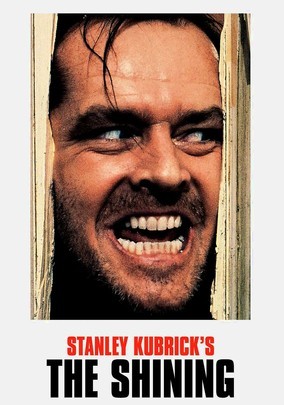
The Shining-1980

The Shining-1980

Director Stanley Kubrick

Starring Jack Nicholson, Shelley Duvall

Top 250 Films #21

Top 40 Horror Films #6

Scott’s Review #313

959008

Reviewed December 31, 2015

Grade: A

The Shining is one of the great horror masterpieces of all time.

Released in 1980, and atypical of the slasher craze that was rampant at that time, the film is a psychological ghost story with frightening elements, including a musical score, long camera shots, and a haunting, grandiose hotel set in a deserted locale.

Without the brilliant direction of Stanley Kubrick, The Shining would not be the masterpiece that it is, to say nothing of the talents of Nicholson and Duvall in the lead roles.

Based on the popular horror novel by Stephen King.

Nicholson plays Jack Torrance, an author and alcoholic, who takes his wife Wendy (Duvall) and son Danny to serve as caretakers at the vast Overlook hotel- for the winter in snowy Colorado.

The lavish hotel will be deserted for the season and Jack looks forward to months of peace that will enable him to complete his novel.

Unfortunately, the hotel is haunted by spirits of the past, and the added burden of the previous caretaker going mad and chopping his family to bits with an ax.

The real success of The Shining is that the hotel itself is a character and has nuances of its own. The hotel is deathly quiet as the Torrances take over for the season-long hallways are featured and the forbidden Room 237 takes on a life of its own.

Creepy images of two young girls and red blood gushing from the elevators take over. Young Danny can communicate with the chef without speaking to each other. Jack imagines a gorgeous nude woman in the bathtub only to discover she is a shriveled old hag.

The film’s cinematography coupled with the looming, morose, musical score perfectly go hand in hand and, in my opinion, are the reasons for the success of the film.

Throughout the film, there is a sense of dread and a forbidden presence that works beautifully.

The very first scene is an aerial shot of the Torrances driving along a mountainous road to be interviewed for the caretaker position. The vast land and mountains as we eventually see the Overlook immediately reveal to us the feeling of isolation, which is really what the film is about.

These exterior scenes are also gorgeous to marvel at.

The crisp, gloomy, winter scenes and the endless maze of animal shrubbery come into play during the film’s final act as Jack, now completely mad, chases Danny through the snowy paths that seemingly lead to nowhere.

The catchphrase, “Here’s Johnny!”, that is uttered from an ax-wielding Nicholson, is permanently ensconced in the relics of pop culture.

Nicholson and Duvall have such dynamic and palpable on-screen chemistry that makes the film work from a character perspective. There is something slightly off with each of the characters, readily apparent from the outset, but that has more to do with each actor being rather non-traditional in appearance.

I can imagine no other actors in these roles.

Author, Stephen King, who reportedly despised the film version of his novel, has since grown to respect the film and Kubrick’s direction, a great deal. The Shining is one of my favorite horror films in addition to being one of my favorite films of all time.

Gone With The Wind-1939

Gone With The Wind-1939

Director Victor Fleming/George Cukor

Starring Clark Gable, Vivien Leigh, Olivia de Havilland

Top 250 Films #22

Scott’s Review #201

70020694

Reviewed December 4, 2014

Grade: A

Gone with the Wind (1939) is the grand masterpiece of sweeping epic drama.

The film is based on Margaret Mitchell’s best-selling novel. Set in the American South (specifically, Georgia) during the Civil War era, it centers on the life of Scarlett O’Hara, a Southern belle who works on the cotton plantation Tara. After the South loses the war, she struggles to keep her plantation alive.

Initially, Scarlett cares little about the war but enjoys her spoiled, narcissistic lifestyle and romances with many men in the town, all vying for her attention. With all eyes on her, she revels in one sunny picnic and ball after another.

As war decimates the South, Scarlett must take over the plantation and survive the ravages of war.

Mixed in with the war theme is a romance between Scarlett and Rhett, one of cinema’s most recognized and enduring couples. Having gone through three directors (Victor Fleming, George Cukor, and Sam Wood), the film is as extravagant and precise in its style, attention to detail, and set design as films come.

At close to four hours, Gone with the Wind is a lavish production that can take an entire afternoon or evening to watch. It is divided into two halves—interestingly, Cukor directs the first half, and Fleming primarily directs the second.

It is a film that can be viewed and analyzed repeatedly, and the set pieces and flawless perfection alone are worthy of marvel. The first half is superior to the second, but that is like comparing prime rib to filet mignon—it’s a matter of personal preference.

The first half is brighter, cheery, and fantastic. The excellent Tara and neighboring plantation Twin Oaks host southern balls and parties filled with romance, gossip, and beautiful costumes. War is coming, but it is a delightful time of merriment.

The Southerners eagerly embrace the prospect of war, assuming it will last only two weeks and that they will emerge victorious. They party and celebrate.

The second half has a much darker tone.

By the beginning of the second half, Atlanta has burned, thousands of men have died, Tara is decimated, Scarlett’s mother has died, and her father has gone batty.

The rebuilding of the South is explored, the troubled Rhett and Scarlett marriage commences, their daughter dies, and the world-famous line uttered by Rhett to Scarlett, “Frankly my dear…. I don’t give a damn”.

Having been now directed by a different person (Fleming), the first and second halves almost seem like two separate films.

Vivien Leigh plays a beautiful role. In 1939, women were rarely portrayed as strong characters in films, so Gone with the Wind is groundbreaking for its portrayal of female characters.

Scarlett is selfish but rises above, is strong, saves her plantation, and succeeds as a successful businesswoman—almost unheard of in cinema in 1939. Her undying love for Ashley Wilkes but her inability to obtain him (he is married to his cousin Melanie) gives her a sympathetic vulnerability.

Clark Gable, already a massive star and the people’s choice to play Rhett, is charismatic and handsome. The fact that he and Leigh did not get along makes their fights and sexual tension electric. They love but hate each other, which is transmitted on screen.

Rhett is his own man—he defines himself as not a Northerner but not a Southerner. He is a vagabond and spends many nights at the local brothel in the company of Belle Watling. Rhett’s character is independent and strong.

The supporting characters are colorful, lively, and humorous. Aunt Pittypat’s dramatic worrying and smelling salts and Prissy’s insistence on expert childbirth when, in reality, she knows nothing is moments meant to lighten the mood.

Mammie, Scarlett’s mother figure, is a moral, kind, yet tough character. Melanie (Olivia de Havilland) is an even sweeter character, characterized by her caring and selflessness.

Lesser characters, such as Dr. Meade, Suellen, Carreen, India, and Frank Kennedy, serve their purpose and are no throwaways.

It is bothersome that, over the years, Gone with the Wind has been unfairly “feminized” once it began airing as an alternative to the annual Super Bowl. The assumption was that only women would enjoy it, which is silly.

I do not find this film to be a female film, and frankly, some of the battle scenes are pretty masculine, with epic fires and guns galore. Is Gone with the Wind now considered a racist film?

Perhaps so, and time has made the political incorrectness much more glaring- this point can be debated endlessly. Ashley participates in a hooded Klan organization and is portrayed as a hero in the film.

Indeed, throughout the film, the enslaved people are portrayed as happy, kindly, and comfortable with their place in life, vastly different from what transpired. However, Hattie McDaniel (Mammie) won the first-ever Oscar for a black actress, which was monumental progress and influence.

Using seemingly thousands of extras, the war-torn Atlanta scene where the camera rises up and up and up, panning down on hundreds of wounded and dead Union soldiers as Scarlett defeatedly walks among them, is still heartbreaking to watch and is a reminder of the power and destruction that war is.

Gone with the Wind is an epic masterpiece from the past that still holds up remarkably well. The sets, the rich characters, and the costumes can be admired and still inspire today.

Oscar Nominations: 8 wins-Outstanding Production (won), Best Director-Victor Fleming (won), Best Actor-Clark Cable, Best Actress-Vivien Leigh (won), Best Supporting Actress-Hattie McDaniel (won), Olivia de Havilland, Best Screenplay (won), Best Original Score, Best Sound Recording, Best Art Direction (won), Best Cinematography, Color (won), Best Film Editing (won), Best Special Effects

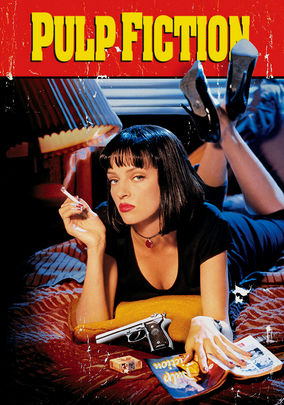
Pulp Fiction-1994

Pulp Fiction-1994

Director Quentin Tarantino

Starring John Travolta, Samuel L. Jackson, Uma Thurman

Top 250 Films #23

Scott’s Review #242

880640

Reviewed May 12, 2015

Grade: A

Pulp Fiction (1994) is one of the most influential films of the 1990s and single-handedly kicked the film industry in the ass. It led an entire generation of filmmakers, who were starved and determined to make more creative work after the largely dull decade of the 1980s.

The success of the film, both creatively and critically, helped ensure that edgier and more meaningful artistic expression would continue to occur.

The leader of the charge, of course, was director Quentin Tarantino.

With Pulp Fiction, a black comedy crime film, Tarantino mixes violence, witty dialogue, and a 1970’s cartoonish feel to achieve a filmmaking masterpiece.

The plot is non-linear, and the story contains three main focuses that intersect —a new style of filmmaking that has become commonplace in modern cinema, but at the time was a novel adventure.

Set in Los Angeles, Samuel L. Jackson and John Travolta portray hitmen named Jules and Vincent, who work for a powerful gangster, Marsellus Wallace, played by Ving Rhames. We get to know them as they interrogate four college-aged youths who double-crossed Marsellus, all the while discussing fast-food hamburgers and adventures in Europe.

On another front, Butch (Bruce Willis) is hired by Marsellus to lose a fight to another boxer. Later, Marcellus instructs Vincent to take his wife Mia (Uma Thurmon), a former unsuccessful television actress, out for dinner and a night on the town.

Finally, we meet Pumpkin and Honey Bunny (Tim Roth and Amanda Plumber), two small-town robbers plotting a heist at a local diner. As the film develops these plots relate to each other in unique ways.

The film is quite stylistic, resembling a 1970s film production in the way it looks, and the use of 1970s style sets- the diner, in particular, looks very of that time, and an automobile where a death occurs, is a 1970s, Chevy Nova.

The film, however, is set in present times.

The dialogue throughout Pulp Fiction is immensely impressive to me. Long dialogues occur between characters, usually sitting over a meal, discussing the meaning of life, religion, fast-food burgers, and other wonderfully real conversations.

I love the many food references- from Butch’s girlfriend salivating over an impending meal of blueberry pancakes to the French version of the Big Mac being discussed, to the price of a shake, these make the conversations between the characters rich and unique and oh so creative.

My favorite sequence is the one between Vincent and Mia, mostly taking place at a trendy 1950s-themed diner named Jack Rabbit Slim’s, where the staff dresses up in costume impersonating their favorite stars of the day, such as Marilyn Monroe.

After winning a dance contest (and a possible homage to Saturday Night Fever) the two go back to Mia’s place where she accidentally overdoses on heroin thought to be cocaine.

The song “Girl, You’ll Be a Woman Soon” by Neil Diamond, is both integral and haunting to the scene.

An intense and shocking scene of male gay rape is extremely violent and the hillbillies involved could be straight out of Deliverance from 1972 despite being in Los Angeles.

This scene is disturbing yet mesmerizing at the same time, and might I say even comedic in a dark way?

Pulp Fiction is not a mainstream affair and has its share of detractors and plain old non-fans, but for film-goers seeking a fun, entertaining, cleverly delicious work of art, influential to Hollywood and Independent filmmakers alike, Pulp Fiction (1994) is a film to watch over and over again and admire its style and creativity.

Oscar Nominations: 1 win-Best Picture, Best Director-Quentin Tarantino, Best Actor-John Travolta, Best Supporting Actor-Samuel L. Jackson, Best Supporting Actress-Uma Thurman, Best Screenplay Written Directly for the Screen (won), Best Film Editing

Independent Spirit Award Nominations: 4 wins-Best Feature (won), Best Director-Quentin Tarantino (won), Best Male Lead-Samuel L. Jackson (won), Best Supporting Male-Eric Stoltz, Best Screenplay (won)

Citizen Kane-1941

Citizen Kane-1941

Director Orson Welles

Starring Orson Welles

Top 250 Films #24

Scott’s Review #296

60000605

Reviewed December 12, 2015

Grade: A

Regarded as one of the greatest films ever made, Citizen Kane (1941) is a technically brilliant film that introduces fantastic new elements into a film that has not been seen before and has not been replicated for decades. It is a timeless masterpiece that continues to be enjoyed and marveled at in modern times.

One can forget what the story is about, as they can sit back, having no idea of what the story means (it can be a bit difficult to follow), and view the film from a cinematic perspective.

The various camera angles, shadows, and use of an actual ceiling (never seen in film before) are impossible not to appreciate for any film lover.

My favorite scenes occur when director (and star) Orson Welles uses snow falling outside as the cameras look through a window to observe the winter wonderland. This quality is simply astonishing in creative technicality.

I can view this scene over and over again.

The plot is a hybrid of drama and mystery. It examines the life and legacy of newspaper legend Charles Foster Kane.

The character, played by Welles himself, is loosely based on the real-life figure of William Randolph Hearst.

The film is told mainly through narrated flashbacks, as a newsreel reporter attempts to solve the big mystery centered around the deceased celebrity- his dying word, uttered from his lavish Florida mansion, was “rosebud,” and nobody seems to know who “rosebud” is or what the word represents.

As the story progresses, we learn more about the famous Kane. The reporter, Jerry Thompson, learns that Kane’s childhood in Colorado was one of poverty.

His mother, discovering a gold mine on her property, sent Kane away to be educated by a famous banker, thus securing his future. Thompson also interviews Kane’s business manager and Kane’s ex-wife, who is now a drunk and owns a nightclub, but neither can shed light on the mystery.

The mystery- never solved by Thompson nor anyone else- is revealed at the end of the film, to the viewer only, in fantastic form, and Kane’s childhood is key to the entire puzzle. This angle is creative, imaginative, and brilliant for the whole film.

Technically, one of the best, most creative film creations, Citizen Kane, has lost none of its marvels over the years and can be watched, studied, and introduced to new generations of film lovers eager to learn what a true movie gem is all about.

Oscar Nominations: 1 win-Outstanding Motion Picture, Best Director-Orson Welles, Best Actor-Orson Welles, Best Original Screenplay (won), Best Scoring of a Dramatic Picture, Best Sound Recording, Best Art Direction-Interior Decoration, Black-and-White, Best Cinematography, Black-and-White, Best Film Editing

Brokeback Mountain-2005

Brokeback Mountain-2005

Director Ang Lee

Starring Heath Ledger, Jake Gyllenhaal

Top 250 Films #25

Scott’s Review #338

70023965

Reviewed January 9, 2016

Grade: A

Brokeback Mountain (2005) is a groundbreaking film and one of the most significant releases of the 2000s. Never before had an LGBT film received as much exposure and widespread viewership as this one did.

Robbed of the 2005 Best Picture Academy Award (the great, but not as great, Crash won), Brokeback Mountain received other tremendous accolades and word-of-mouth buzz that helped it achieve great success.

A treasure that must always be remembered and appreciated.

Perfectly cast, Heath Ledger and Jake Gyllenhaal play two cowboys who fall madly in love with each other. The film spans a period from 1963 to the early 1980s. Through the years, we see their unbreakable bond tested by outside factors- namely, being gay is forbidden at this time and location, Wyoming and Texas.

Jack Swift (Gyllenhaal) and Ennis Del Mar (Ledger) meet one summer in 1963 when they are both hired by grizzled Joe Aguirre (Randy Quaid) to herd sheep on Brokeback Mountain in remote Wyoming.

They immediately form a friendship that turns physical on one drunken night. From this point, the men are inseparable and share a insurmountable passion.

Due to the times, there is no possible way they can openly share life, so they arrange for periodic “fishing trips”, away from their wives and children so that they can spend time together in secret.

The chemistry is evident between Ledger and Gyllenhaal, which is extremely important to the success of the film.

The audience needs to truly buy their bond and director Ang Lee is successful at eliciting wonderful performances from each actor. This is especially crucial during the first forty-five minutes of the film as all the scenes are only the two actors together.

The famous “tent” scene, in which Jack’s and Ennis’s passion first erupts is perfectly choreographed- it is as much animalistic as it is passionate and this sets the tone for the rest of the film.

Eventually, other characters are introduced and Ennis and Jack live lives largely separate from each other. Michelle Williams plays Alma, a kind-hearted country girl, married to Ennis. She accidentally stumbles on Jack and Ennis’s secret and keeps this hidden throughout the years.

Williams is fantastic in the role- sweet, yet saddled with the pain of knowing her husband is in love with another man causes her to mistrust and eventually destroys their marriage.

Jack forges a life in Texas and marries well-to-do Lureen (Anne Hathaway), but the marriage is a sham, Lureen’s father hates Jack, and Jack cannot forget Ennis. Jack is the aggressor, the one more confident with his sexuality, and one would surmise, would be the one more likely to be “out” if circumstances were different.

He looks for other men, even going to Mexico to find some companionship.

The ending of the film is tragic and heartbreaking and we witness Ennis being a good father to his now grown-up kids. A wonderful scene is written between Ledger and Kate Mara, who plays his daughter. She asks the lonely Ennis to attend her wedding and the scene is sweet and tender.

Another scene involving Ennis meeting Jack’s parents is monumental- as important as what is said in this wonderful scene is what is left unsaid.

Brokeback Mountain (2005) is an honest, graceful, and brave film, that thanks to the talents and direction of Ang Lee, was able to be made.

The exceptional cast led by Ledger and Gyllenhaal is dynamic and enables the film to come together as one masterpiece, that will surely never be forgotten.

Oscar Nominations: 3 wins-Best Picture, Best Director-Ang Lee (won), Best Actor-Heath Ledger, Best Supporting Actor-Jake Gyllenhaal, Best Supporting Actress-Michelle Williams, Best Adapted Screenplay (won), Best Original Score (won), Best Cinematography

Independent Spirit Award Nominations: 2 wins-Best Feature (won), Best Director-Ang Lee (won), Best Male Lead-Heath Ledger, Best Supporting Female-Michelle Williams