Category Archives: San Francisco

Basic Instinct-1992

Basic Instinct-1992

Director Paul Verhoeven

Starring Michael Douglas, Sharon Stone

Scott’s Review #1,545

Reviewed August 24, 2026

Grade: B+

Basic Instinct (1992), starring Michael Douglas and Sharon Stone, is a titillating thriller like Fatal Attraction (1987), both of which set the tone for many films patterned after it well into the 1990s.

It was the must-see film of 1992 and became a slick, stylistic mega blockbuster hit.

Body of Evidence (1993) and Sliver (1993), starring Madonna and Stone, respectively, are quick examples of the film’s influence.

Plus, Douglas starred in Fatal Attraction, so several films are connected.

With Basic Instinct, there is an immediate, sizzling sexual tension at hand, largely due to Stone’s smoldering kinkiness and bisexuality.

The actor was a relative newcomer at the time and moved to the forefront of Hollywood notoriety mainly due to the controversial full-frontal crotch exposure, which made headlines and shocked millions.

Other controversies surrounded Basic Instinct, which I will get to in a moment.

The film also put director Paul Verhoeven on the map. Unfortunately, he followed up Basic Instinct with the dreadful yet similarly veined film, Showgirls (1995).

The mysterious Catherine Tramell (Stone), a beautiful crime novelist, becomes a suspect when she is linked to the brutal death of a rock star. The dangerous and sensual femme fatale confidently struts her stuff as she toys with local police, leading a game of cat and mouse.

Primarily investigated by San Francisco homicide detective Nick Curran (Douglas), Catherine seduces him into an intense and addictive relationship. At the same time, the murder case becomes increasingly complicated when more seemingly connected deaths occur.

Is Nick’s life in danger? What does the mysterious character named Roxy (Leilani Sarelle) have to do with the central plot?

Besides being known for making Stone an A-list star, the film borrows from the likes of Alfred Hitchcock and Brian De Palma. This is a marvelous treat for fans of those directors.

In particular, Vertigo (1958) and Psycho (1960) clearly influenced it.

The brutal ice-pick murder at the very beginning is a direct nod to the famous shower scene in Psycho, but with the gender roles reversed (a man is killed instead of a woman).

For Vertigo, Catherine Tramell echoes the icy, enigmatic, and stylish blonde archetype seen in Kim Novak, and both films use San Francisco as a moody, atmospheric backdrop.

Finally, a lush, suspenseful musical score by Jerry Goldsmith pays homage to Hitchcock’s frequent composer, Bernard Herrmann.

As for De Palma, his thriller Body Double (1984) deals directly with voyeurism, obsession, and dangerous, manipulative femme fatales. It’s a direct stylistic and thematic stepping stone to Basic Instinct.

The film is enthralling and edge-of-your-seat intense for most of the way and has an unexpected, arguably jaw-dropping twist ending, but after a while it becomes a bit too gimmicky to earn a solid A grade.

It’s almost as if it borrows so much from other films that it lacks a real identity of its own, though it’s still an entertaining and shocking film.

I don’t share the repeated accusations of misogyny and homophobia that have gnawed at the film ever since it was released.

Sure, the killer is a female, and the killer is also bisexual, but that actually makes the events erotic and tinged with sexual energy and unpredictability; perhaps I merely wanted to enjoy the film.

On the other hand, one can argue that the film is boldly feminist. Catherine plays by her own rules and confidently, sometimes callously, consumes her prey.

She rejects traditional female passivity and wields total sexual, financial, and intellectual power over men.

Decades later, feeling slightly dated, mostly because similar films have more longevity, Basic Instinct (1992) nonetheless is recommended mostly for the smoldering chemistry between Douglas and Stone and for the creation of a badass female character.

Oscar Nominations: Best Film Editing, Best Original Score

Guess Who’s Coming to Dinner-1967

Guess Who’s Coming to Dinner-1967

Director Stanley Kramer

Starring Spencer Tracy, Katharine Hepburn, Sidney Poitier

Scott’s Review #1,539

Reviewed June 29, 2026

Grade: A

Guess Who’s Coming to Dinner is a groundbreaking, socially themed film made in 1967, in the midst of the Civil Rights movement that was sweeping the United States.

The movement aimed to abolish legalized racial segregation, discrimination, and disenfranchisement in the country, which most commonly affected African Americans.

So, the time was perfect for a star-studded film of this caliber.

The screenplay by William and Tania Rose is rich with character motivation and development.

Both the characters themselves and audiences can understand the perspectives of each of the six prominent characters as they slowly explain their thoughts and, at times, their underlying unconscious biases.

At the time of release, the film was understandably a commercial and critical hit during a fabulous time in cinema.

On the threshold of increased creative richness in the 1970s, the late 1960s laid the groundwork for expressionism and tremendous cinematic thought.

The film was one of the first to depict an interracial marriage in a positive light.

While a film like Guess Who’s Coming to Dinner would be dated if made in 2026, sadly, lots of blatant racism and discrimination still exist in the United States, though we have certainly made progress.

Joey Drayton (Katharine Houghton) is a young, free-thinking white woman from a wealthy family in San Francisco. She and a successful black doctor, John Prentice (Sidney Poitier), become engaged.

Beyond their racial differences, he is much older than she is and has been married once before.

They nervously fly to San Francisco to meet her parents and break the news, and they are to be married two weeks later in Switzerland.

Matt Drayton (Spencer Tracy) and his wife, Christina (Katharine Hepburn), are open-minded liberals who must confront the many issues and feelings the impending marriage arouses.

Also attending the Draytons’ dinner are Prentice’s parents, John Sr. and Mary (Roy E. Glenn Sr., Beah Richards), who vehemently disapprove of the relationship.

Other supporting characters, like the kindly Monsignor Mike Ryan (Cecil Kellaway), a white male, and the efficient yet unfeeling black housekeeper Tillie (Isabel Sanford), offer differing perspectives on the union.

While the interracial pairing is front and center, the set pieces and artistic design are flawless, offering a looming backdrop of San Francisco.

Frequent scenes occur on the family terrace, lush with bright flowers, images of the Pacific Ocean and the Golden Gate Bridge, and, in one sequence, a rich orange hue amid a dazzling sunset.

To say nothing of the lavish family estate with exquisite art, furniture pieces, and grand rooms all on display during the film.

Director Stanley Kramer deserves praise for these elements and many more, as the film is woven together tremendously well.

The acting is flawless all around, with the top honors going to Hepburn and Poitier.

A poignant scene in which Christina (Hepburn) remembers how happy Joey always was as a child, and how her past happiness pales in comparison to how happy she is now, will bring any viewer to a soggy mess as Hepburn slowly tears up.

Poitier shows his strong range during John’s knockdown, drag-out argument with his father, exclaiming that he owes nothing to his father and that a father’s role is to want the best for his child and let his child make his own choices.

While Mike thinks nothing but beauty from the union, Tillie is outraged at the nerve of John to mix with white wealth. She shockingly calls him ‘boy’ and scolds him for thinking above his ‘station in life’.

With Tillie and John Sr., we see that bias and racism are not always exclusive to the white community. Black people also see color and prejudice.

This is the film’s genius: most characters undergo deep dives and learn about themselves, for better or worse.

Some fun facts are that Houghton is the niece of Hepburn, and the film is Spencer Tracy’s final role, having battled illness throughout shooting, but insisting on finishing the film.

Guess Who’s Coming to Dinner (1967) challenges the norms of the times amazingly well, and the brilliance of the acting holds up decades later.

Oscar Nominations: 2 wins-Best Picture, Best Director-Stanley Kramer, Best Actor-Spencer Tracy, Best Actress-Katharine Hepburn (won), Best Supporting Actor-Cecil Kellaway, Best Supporting Actress-Beah Richards, Best Story and Screenplay-Written Directly for the Screen (won), Best Art Direction, Best Film Editing, Best Original Song, Score, or Adaptation Score

Golden Globe Nominations: Best Motion Picture-Drama, Best Director-Stanley Kramer, Best Actress Drama-Katharine Hepburn, Best Supporting Actor-Cecil Kellaway, Best Supporting Actress-Beah Richards, Best Screenplay, New Star of the Year- Actress- Katharine Houghton

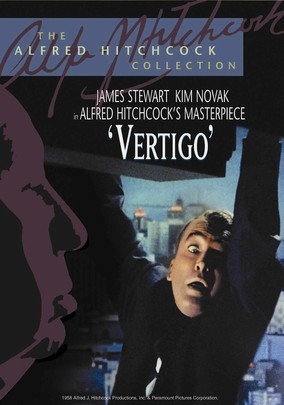
Vertigo-1958

Vertigo-1958

Director Alfred Hitchcock

Starring James Stewart, Kim Novak

Top 250 Films #1

Scott’s Review #151

1089727

Reviewed August 7, 2014

Grade: A

Over the years, Vertigo (1958) has quickly become one of my favorite Alfred Hitchcock films. With each repeated viewing, I learn, appreciate, or see something new.

It is an absolute masterpiece.

The primary appeal of Vertigo lies in its mystique and dream-like quality, which offer a beautiful cinematic experience. It is sometimes ominous, psychological, gloriously complex, and even confusing.

That is what makes it extraordinary.

Considering the time, the colorful opening visuals are dynamic, groundbreaking, and stunning.

The story involves a retired detective, Scottie, played by Hitchcock stalwart Jimmy Stewart. Scottie suffers from vertigo, which hinders his daily life.

After an incident in which a police officer is killed, and Scottie blames himself and his vertigo for causing the death, he whiles away the days brooding and keeping companionship with Midge, a college friend to whom he was once engaged.

One day, he is hired by another college friend to follow his wife, played tremendously by Kim Novak, who is acting strangely and periodically disappearing, obsessed with a painting of a woman from years past.

From this point, the plot twists and turns in a mysterious fashion, and a romantic, bizarre, and obsessive love story is intertwined.

Is Scottie in his right mind? Will his vertigo continue to haunt him? What is the secret to Madeleine and Judy? Is Midge as sweet as she appears?

The score to Vertigo is haunting and unforgettable, adding significantly to the film’s mood and ambiance.

Several location shots are featured in San Francisco, including the Golden Gate Bridge, steep streets, the Mission District, and the Redwood Forest.

As with all Hitchcock films, every set and detail is perfect, from paintbrushes, coffee mugs, curtains, and furniture to the gorgeous, bright red décor of the restaurant, which is heavily featured in the film.

How exquisite does Kim Novak look in the film??

Initially, it was critically panned upon its release, but it is now considered one of the greatest films. Its unique camera angles and slow, methodical pacing have influenced other films.

The film is not always an easy watch; it is complex, to be fair, but, like a fine wine, it improves with age.

Vertigo (1958) is a layered psychological thriller that gains more appreciation with each viewing.

Oscar Nominations: Best Sound, Best Art Direction

The Towering Inferno-1974

The Towering Inferno-1974

Director John Guillermin

Starring Paul Newman, Steve McQueen, Faye Dunaway

Top 250 Films #41

Scott’s Review #194

1059232

Reviewed November 15, 2014

Grade: A

The Towering Inferno (1974) epitomizes the disaster-film craze that swept audiences throughout the 1970s (Airport, Airport ’75 and ’77, The Poseidon Adventure (1972), and Earthquake (1974), to name a few).

I am (guilt-free) a huge fan of this 1970s movie genre, though some certainly look down on it; I am not one of them, and I think The Towering Inferno is one of the best.

The film is enormous, with a strong sense of adventure and danger.

The grand film tells of the trials and tribulations of an enormous cast of characters trapped inside a skyscraper aflame – led by Paul Newman and Steve McQueen (fun fact: the two actors reportedly despised each other).

An incredible skyscraper is erected in San Francisco with 138 floors; it is touted as the tallest building in the world and is incredibly state-of-the-art. At the ribbon-cutting ceremony, they hold an elaborate party atop the building, overlooking the gorgeous Pacific Ocean.

Due to faulty electrical wiring, the building catches fire, and the cast of characters faces one challenge after another to escape the grip of death.

The stellar cast features William Holden, Faye Dunaway, Fred Astaire, Robert Wagner, Jennifer Jones, and O.J. Simpson, in addition to Newman and McQueen.

The film is quite a soap opera style- numerous characters are introduced, many having affairs with each other or suffering some conflict.

Wagner, having a torrid office romance with his secretary, played by then up-and-coming star Susan Flannery, is deliciously sexy, and I yearned to know more about both characters.

Holden’s son-in-law is responsible for the faulty electrical system, yet he blames his father-in-law for cutting budgets.

Another subplot involves Astaire’s character attempting to swindle Jones’s character, only to fall in love with her.

The plots are so melodramatic that, given the period of the film, it has a definite primetime television soap opera style to it- think Dallas or Dynasty in a state of peril.

I enjoyed the enormous cast and trying to guess who will be killed off next, and in what elaborate way the film will burn them to death is a joy to watch- several victims fall or jump to their deaths, which eerily (and sadly) bring back morbid images of jumpers from the World Trade Center on 9/11.

The beginning of the film shows a dedication to firefighters everywhere, and the film has a definite moral and heroic quality to the firefighters sent to rescue the people in the building.

They are portrayed as heroes and are meant to be remembered amid all the drama of the story. This is admirable.

The special effects are elaborate and quite impressive- the glass elevator rescue scene is amazing!

The beautiful set designs are a treat to watch, as each lobby, apartment, or lounge in the skyscraper is exquisitely designed in peak 1970s style.

Every sofa or carpet featured is plush, colorful, and sophisticated.

The skyscraper, made of glass, is an amazing element of the film, and the aerial views of the building, especially while ablaze, are impressive, to say the least- remember, 1974 was long before CGI.

I assume they used small replicas of the building, but what an achievement from a visual perspective.

The effects certainly champion the syrupy story elements.

My only small gripe with The Towering Inferno is, assuming it is 138 stories high, the action taking place at the top of the tower- the rooftop- as well as the party scenes on the top floor- do not feel that high.

The scenic outlook overlooking the water and some land feels about 25 stories high, not 138.

Some find The Towering Inferno (1974) to be nothing more than schmaltzy drama- I say schmaltz was never done better.

Enjoy this feast of a big film.

Oscar Nominations: 3 wins-Best Picture, Best Supporting Actor-Fred Astaire, Best Original Dramatic Score, Best Song-“We May Never Love Like This Again” (won), Best Sound, Best Art Direction, Best Cinematography (won), Best Film Editing (won)

Golden Globe Nominations: 2 wins-Best Supporting Actor-Fred Astaire (won), Best Supporting Actress-Jennifer Jones, Best Screenplay, Best Original Song-“We May Never Love Like This Again”, New Star of the Year-Actress-Susan Flannery (won)

Zodiac-2007

Zodiac-2007

Director David Fincher

Starring Jake Gyllenhaal, Mark Ruffalo, Robert Downey Jr. 

Top 250 Films #223

Scott’s Review #1,134

Reviewed April 16, 2021

Grade: A

Zodiac (2007) is an excellent film in its own right. The attention to detail circa the 1960s and 1970s is spot on and adds to the flavor of the entire experience.

The locale of San Francisco is moody and riddled with the antics of the self-professed Zodiac Killer.

With excellent acting, the sum of its parts makes for a wonderful film experience.

The film is incredibly well-paced, character-driven, and layered in rich texture. What more can be asked of a cinematic production? It simply has it all and will engage any viewer craving mystery and intrigue.

David Fincher, as the director, creates a world unto itself with carefully crafted sets, artistic nuances, and, of course, a superb story. A lesson learned is that sometimes evil exists and cannot be caught despite best efforts, and the ramifications are endless.

Painfully, the characters in Zodiac slowly realize this.

Zodiac is based on the best-selling non-fiction book by Robert Graysmith, a pivotal character in the film. The novel is very similar to James Elroy’s 1987 novel The Black Dahlia, which also explores an unsolved case set in California.

The film tells the story of the search for the Zodiac Killer, a serial killer who terrorized the foggy San Francisco Bay Area during the late 1960s and early 1970s.

Investigators (Mark Ruffalo, Anthony Edwards) and reporters (Jake Gyllenhaal, Robert Downey Jr.) become obsessed with learning the killer’s identity and bringing him to justice.

Meanwhile, Zodiac claims victim after victim and taunts the authorities with endless and specifically graphic letters, bloodstained clothing, and cryptic messages shrouded in menacing phone calls.

The case remains one of the United States’ most infamous unsolved crimes.

Much of the acclaim must go to the three actors cast in the central roles, and Gyllenhaal is at the top of his game in the leading role. As cartoonist Robert Graysmith, he is the main hero and the person who spearheads the investigation, prompting disbelievers to listen to him.

Gyllenhaal is sensitive, sympathetic, and obsessed, and at first is perceived as a laughingstock, but audiences will immediately get behind the man, thanks to Gyllenhaal’s powerful acting.

The character-driven approach continues as Mark Ruffalo gives a wonderful portrayal of Inspector David Toschi. The tough-as-nails, no-nonsense approach led Toschi to obsession and fudging of evidence.

Finally, Robert Downey Jr. provides energetic gusto as Paul Avery, a journalist who turns to drugs and alcohol because of the intensity and emotional investment in the case.

Plenty of red herrings make the film fun, and the prime suspect of Arthur Leigh Allen, played by character actor John Carroll Lynch, may or may not be the assailant.

It’s breathtaking watching all the twists and turns in this ferociously complex film.

Zodiac is based on real events and is reportedly extremely historically accurate. Fincher and others spent eighteen months conducting their investigation and research into the Zodiac murders.

So, authenticity is everywhere in this film.

Watching a film that begins in 1969 and ends in 1983 is a joy for someone who grew up in that era. Fincher drizzles the film with timely automobiles, clothing, and other sets, making it feel like walking into a time capsule.

I’m sure this will only add to the viewer’s enjoyment.

For fans of films about the Zodiac Killer, the 1971 film Dirty Harry, starring Clint Eastwood, delivers an exceptional experience based on the real-life case.

But Fincher’s Zodiac is just as good.

Despite the behemoth running time- two hours and thirty-seven minutes, Zodiac (2007) is an edge-of-your-seat thriller.

The pulsating yet prowling pace is worth several viewings to appreciate the juiciness of all of the elements David Fincher offers.

A hefty round of applause is deserved.

Valentine-2001

Valentine-2001

Director Jamie Blanks

Starring David Boreanaz, Denise Richards

Scott’s Review #1,146

Reviewed May 26, 2021

Grade: C

Valentine (2001) is a horror film made in the wrong decade.

The film could have been more meaningful or relevant if only it had been made in the early 1980s.

Sadly, it feels like a weak retread and an ode to a former time. Its flight took off twenty years ago.

1981 or 1982 was the heyday of the slasher flick. It’s kind of like a band attempting to play 1980s pop hits passed off as original music- it doesn’t work.

Or, a cover band belting out Bon Jovi hits as their own.

What’s worse is that it’s set in 2001. It might have been a better film with feathered hair, parachute pants, and a direct tribute to the 1980s.

It’s painfully mediocre.

If I sound harsh, that is not my intention. Valentine is not a disastrous film, and the pacing is fine at a short one hour and thirty-six minutes. It’s just that it’s dreadfully unoriginal and therefore uninspiring.

It’s like the filmmakers thought, ‘let’s put some hot chicks in a slasher film and off them one by one and make some money.

But the joke’s on them. Valentine didn’t make much money and was universally panned.

Borrowing from several popular flicks like Prom Night (1980), Terror Train (1980), and My Bloody Valentine (1981), director Jamie Banks even steals the familiar holiday theme so essential to this genre.

Even the final twist is unfulfilling because, like in almost all slasher films, a twist is almost mandatory and therefore unsurprising.

Before I forget, the acting is painfully bad. So there’s that bonus.

The action begins at a junior high school Valentine’s Day dance in 1988. An outcast named Jeremy Melton asks four popular girls to dance and is disdainfully rebuffed by each.

They are mean girls. Their overweight friend Dorothy accepts Jeremy’s invitation, and they make out underneath the bleachers.

When bullies discover them, they are ridiculed. Dorothy lies and claims that Jeremy sexually assaulted her, resulting in his being beaten, expelled, and eventually institutionalized after the group testifies against him, lying on the witness stand.

Years later, on Valentine’s Day, Kate (Marley Shelton), Paige (Denise Richards), Dorothy (Jessica Capshaw), Lily (Jessica Cauffiel), and Shelly (Katherine Heigl) begin receiving scary messages from an unknown sender, signed “JM”.

The women are then killed off one by one by a psycho in a Cupid mask.

They reside in San Francisco.

They suspect the murderer is Jeremy, having returned to exact revenge. Ya think?

There is entertainment in the mean girls being hacked to bits unceremoniously, and it is satisfying.

I sided with the Cupid killer, but was I supposed to? Well, I did anyway. Jeremy is handsome and sympathetic. After all, they ruined his life. Why would we root for the girls to be spared?

And it’s enjoyable. The deaths include a slit throat, a brutal beating with a hot iron, and death by electrocution. A special Valentine’s Day edition is a box of chocolates filled with maggots!

I won’t ruin the final twist by revealing any specifics, but suffice it to say that, yes, Jeremy is indeed the killer. But it’s not quite in the way you’d think.

There is nothing original about Valentine (2001), which is about as formulaic a film as there ever was. Instead of ever watching or thinking about the film again, I’ll happily break out my copies of Halloween (1978) or Friday the 13th (1980).

But still, it’s not the terrible film most people think it is.

Milk-2008

Milk-2008

Director Gus Van Sant

Starring Sean Penn

Scott’s Review #744

Reviewed April 18, 2018

Grade: A

Milk is a 2008 film that successfully teaches its viewers both a valuable history lesson about the introduction of gay rights into United States culture and about the prolific leader associated with this, Harvey Milk.

The film belongs to Sean Penn, who portrays Milk, but it is also a fantastic biopic and a learning experience that captures his wonderful journey through the 1970s, mainly in San Francisco and New York City.

Moreover, Milk portrays a gay character not played for laughs, as many films do, but portrayed as a hero.

Harvey Milk was the first openly gay person ever elected to political office, winning a seat on the San Francisco Board of Supervisors in 1977.

The film, however, opens in 1978, after a stunning announcement of Harvey Milk’s assassination along with the Mayor of the city, which was met with much heartbreak.

The film then returns to 1970 as we meet Penn as Milk and follow his decade-long battles and prosperity of changing the gay culture.

Having seen actual footage of Harvey Milk, Penn perfects the mannerisms and the speech patterns of Milk, giving him an immediate, passionate, and likable persona. The political figure had such a whimsical and innocent style all his own that Penn perfectly captures.

His determination for honesty and fairness is admirable and inspiring, and Milk seems like he was an innately good person.

Particularly heartbreaking is Penn’s facial reaction during his assassination scene, a scene that director Gus Van Sant brilliantly shoots as a follow-up to a joyous scene when Proposition 6 is defeated.

As a troubled colleague, Dan White (Brolin), (rumored to be himself closeted and struggling with self-identity), fires several shots into Harvey at City Hall, the scene is filmed in slow motion for additional dramatic effect and poignancy.

The look of pain and sadness on Milk’s face will undoubtedly bring tears to even the hardest-hearted viewer.

The film shows the many close relationships that Milk formed throughout the 1970s, including his steady lover Scott Smith, played by James Franco.

The two actors share solid chemistry, as they are both fun-loving and driven in their hopes for what they aim to achieve.

Sadly, Milk’s drive eventually outweighs Smith’s, and they ultimately drift apart while retaining a special bond.

Emile Hirsch is nearly unrecognizable as Cleve Jones, a young man whom Harvey inspires and mentors throughout the pivotal decade.

A minute criticism noticed while watching Milk is that, except for Penn, many of the supporting characters (Hirsch, Franco, and especially Alison Pill) seem to be “dressed up” in 1970s costumes, giving a forced rather than authentic feel.

The costume designers seem intent on making them look so realistic that it backfires and makes them look more like actors made up to look like they are from the 1970s.

Penn, however, looks and acts spot-on and stands out from the rest of the cast by miles.

An inspiring biography of a legendary political figure, Harvey Milk, led by a fine lead actor (Penn), deserving of the Best Actor Oscar he was awarded, Milk is an astounding story of both triumph and tragedy.

The film successfully portrays a time when a class of people was not treated fairly, when equal rights were barely a possibility, and when the uprising occurred largely due to one man and his followers.

Milk (2008) is a wonderful testament to a time gone by and the accomplishments achieved since then- a truly inspiring and tragic message.

Oscar Nominations: 2 wins-Best Picture, Best Director-Gus Van Sant, Best Actor-Sean Penn (won), Best Supporting Actor-Josh Brolin, Best Original Screenplay (won), Best Original Score, Best Costume Design, Best Film Editing

Independent Spirit Award Nominations: 2 wins-Best Male Lead-Sean Penn, Best Supporting Male-James Franco (won), Best First Screenplay (won), Best Cinematography

Howl-2010

Howl-2010

Director Rob Epstein, Jeffrey Friedman

Starring James Franco

Scott’s Review #491

untitled

Reviewed October 9, 2016

Grade: B+

Howl (2010) is a compelling courtroom drama biopic starring James Franco, who is wonderfully cast.

This role, despite being in a small film with little recognition, cements Franco’s talents as an edgy actor willing to tackle challenging work rather than stick to mainstream safe fare.

Franco has become one of my favorite young actors. He is so diverse and believable in any role he takes on.

The story follows 1950s poet Allen Ginsberg and his trial to determine whether his poems were art or should be banned as indecent.

Much of the action takes place in the courtroom, and the film wisely mixes animation (in scenes of Ginsberg reading his poetry) with traditional scenes.

The film lets the viewer get to know Ginsberg’s character. He was troubled (his sexuality, delusions, stints in a mental hospital), for sure, but also had a true, authentic love of writing and poetry, which is inspiring in an age of digital technology.

Sometimes good old-fashioned words are the truest art.

Howl (2010) is an interesting little film.

The Fog-2005

The Fog-2005

Director Rupert Wainwright

Starring Tom Welling, Maggie Grace

Scott’s Review #444

70038804

Reviewed July 4, 2016

Grade: D

The Fog is a 2005 remake of the 1980 film The Fog, and overall, it is not very good.

It sucks.

Why the original creators, John Carpenter and Debra Hill, had anything to do with it is completely beyond me, unless they needed some fast cash.

It is so modernized that it loses the mystique that the original had.

The credit it does deserve is for a few good scares and for keeping with the same characters as the original. Otherwise, it is largely a disaster.

For starters, the ending is completely different from the original and includes some ridiculous, silly fantasy elements that don’t work at all.

An interesting actress in the television series Lost (2004-2010), Maggie Grace, attempting to embark on a film career, is wooden and one-dimensional.

There is no good acting in the entire movie. Not that I expect great acting in a horror film, but it just adds to the mess of storytelling and writing.

A big fail.