Category Archives: Fantasy

Chitty Chitty Bang Bang-1968

Chitty Chitty Bang Bang-1968

Director Ken Hughes

Starring Dick Van Dyke, Sally Ann Howes

Scott’s Review #1,490

Reviewed August 13, 2025

Grade: B

With a strong connection to James Bond, especially when looking beneath the most obvious details, Chitty Chitty Bang Bang (1968) offers pure escapist fun in the fantasy genre.

Albert R. Broccoli, who produced many of the 007 films, also serves as producer, a surprise given the differing genres. Furthermore, Ian Fleming, who wrote a series of James Bond books, also wrote the novel Chitty Chitty Bang Bang in 1964.

The screenplay was written by the famous British children’s author, Roald Dahl (James and the Giant Peach and Charlie and the Chocolate Factory), whose handprint can be noticed as well.

I missed some of the subtle and not-so-subtle trimmings upon my viewing until taking a deeper dive into research. I also did not know the James Bond connection before watching the film.

One day, in rural England, young siblings Jeremy and Jemima meet the striking Truly Scrumptious (Sally Ann Howes), who falls for their widowed father, Caractacus Potts (Dick Van Dyke), despite coming from different backgrounds.

Potts tinkers with various oddball inventions, including the family’s noisy rebuilt car, Chitty Chitty Bang Bang, which they name because of its unusual engine noises.

Caractacus tells Truly and the children a fantastical fable about the villainous Baron Bomburst (Gert Fröbe) and his evil designs on the Potts family car.

This becomes the central part of the film and the adventurous events that the family experiences.

For much of the film, events meander a bit more than I would have liked, and there seems not to be a clear direction. There were also too many over-the-top moments, mostly involving Caractacus’s wacky father (Lionel Jeffries) and various bumbling villain accomplices.

While enjoyable, the action felt silly and cartoonish.

After the intermission, the family ‘flies’ by car to a lavish castle owned by Bomburst in the childless nation of Vulgaria. There, they encounter frightened townspeople and the scary Child Catcher, wonderfully played by Robert Helpmann.

The colorful sets and art direction lend a helping hand to the secret of why there are no children in Vulgaria. We experience an odd yet witty toymaker played by Benny Hill and a splendid cat and mouse sequence involving human jack-in-the-boxes.

Later, a hidden grotto beneath the castle explains the mystery of where the town children are being kept and why.

While the Baron and Baroness (Anna Quayle) are unbelievably silly, the romance between Caractacus and Truly takes off and cements my investment in the pair.

Obviously and satisfyingly, they experience a happily ever after send-off after a couple of hiccups.

Van Dyke and Howes have dynamic chemistry despite Howes being a runner-up to Julie Andrews, who turned down the role, fearing it was too similar to Mary Poppins.

Fröbe (the diabolical title character from 1964’s Goldfinger) and the actor who played the familiar Bond character, Q (Desmond Llewelyn), make appearances. 

The Chitty Chitty Bang Bang car is practically a character in itself, boasting special powers and gadgets reminiscent of numerous unique Bond cars, and serves as a good comparison.

Finally, the name Truly Scrumptious is a similar character name, albeit much more family-friendly, to Pussy Galore from Goldfinger.

Of course, since Roald Dahl is involved, it’s no wonder children are in peril.

Other than the award-nominated title song, which is easy to hum and hard to forget, the other songs pale in comparison to this standout. I’d give second place to Trudy’s earnest ‘Lovely Lonely Man, a decent song.

For a family-ready affair with deeper particulars for eagle-eyed viewers to spot, Chitty Chitty Bang Bang (1968) is recommended around holiday time when other pleasant children’s musicals make their emergence.

The film would serve as a perfect warm-up act to the superior but companionable Oliver! (1968).

Oscar Nominations: Best Song- Original for the Picture, ‘Chitty Chitty Bang Bang’

The Wizard of Oz-1939

The Wizard of Oz-1939

Director Victor Fleming

Starring Judy Garland, Ray Bolger, Frank Morgan

Top 250 Films #33

Scott’s Review #34

70039535

Reviewed June 17, 2014

Grade: A

The Wizard of Oz is a magical film and one of my all-time favorites. Made in 1939, it still holds up amazingly well, and the nuances continue to be admired, especially given the period in which it was made. 1939 and Gone With the Wind belong to this film, as both were and are true classics.

This film is so deeply embedded in people’s minds that it can be challenging to examine it objectively. I fondly recall watching this gem annually as it aired on television each holiday season—traditionally around Thanksgiving if memory serves.

It’s a marvel from start to finish and masterfully artistic. How creative to show the first portion in black and white with dusty muted colors, not to mention the astounding twister sequence- done using a stocking.

Then, we are introduced to a magical world filled with luscious colors and the mind-blowing depth of art direction. Munchkin-land, Glinda the Good Witch, and Emerald City are beautiful, lavish, and treat.

Who does not become teary-eyed during Judy Garland’s rendition of “Somewhere Over the Rainbow”? The poignancy is given by the tragic (yet successful) life the star would lead.

Margaret Hamilton’s performance as the Wicked Witch/Elmira Gulch is deliciously nasty. She almost sneers at the camera as she mocks Dorothy, who whimpers in tears while missing Auntie Em. One can tell she thoroughly enjoyed this role.

And The Wizard of Oz is not simply a pop culture hit- it has merit and creativity. The special effects hold up tremendously well and were simplistic back then. There was no CGI in those days, but it was, in many ways, better than today’s CGI.

Audiences of all ages must see this film at least once, preferably on Blu-Ray. Judy Garland, later a tragic, troubled, and lost figure, captures an innocence that has been sadly lost through the years.

The characters (The Cowardly Lion, Scarecrow, and Tin Man) are perfectly cast and uniquely created without being too over-the-top.

Very few films are timeless, and this is one of them.

Oscar Nominations: 1 win-Outstanding Production, Best Song-“Over the Rainbow” (won), Best Art Direction, Best Special Effects

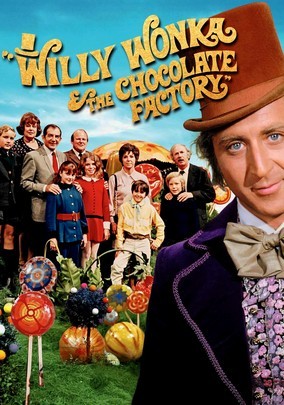
Willy Wonka and the Chocolate Factory-1971

Willy Wonka and the Chocolate Factory-1971

Director Mel Stuart

Starring Gene Wilder, Jack Albertson

Top 250 Films #35

Scott’s Review #206

60020949

Reviewed December 18, 2014

Grade: A

More than just a children’s movie, Willy Wonka and the Chocolate Factory (1971) is a terrific, imaginative, fantasy film that is timeless and meant for all ages to enjoy.

The mastery and creativity of the sets and art direction are astounding, and the story is sweet, whimsical, and captivating. Often, with children’s movies, we are treated to stories that are either dumb or contrived, which will entertain five-year-olds but bore or cringe adults.

Willy Wonka and the Chocolate Factory is none of the above. It is intelligent, filled with magic, and has a heart.

Charlie Bucket is a poor child whose mother earns a living by washing clothes. Along with his four bedridden grandparents, they lives a meager existence in a small cottage somewhere in Europe.

Particularly close with his Grandpa Joe, the two of them become obsessed with a contest held by mysterious Willy Wonka, the owner of an enormous chocolate factory nearby.

The contest consists of five “Golden tickets” being hidden in Wonka bars. The five lucky winners will receive a lifetime supply of candy and a tour inside the long-since-closed chocolate factory.

After a series of circumstances, Charlie obtains one of the tickets and the adventure begins.

The build-up to the trip into Willy Wonka’s factory is gripping- mainly because the viewer knows that a magical treat is in store and is filled with curiosity- what will the chocolate factory look like? What is Mr. Wonka like?

The four other winners- Augustus Gloop, Veruca Salt, Violet Beauregarde, and Mike Teevee are all unique and creatively written characters- all spoiled brats in their way, so Charlie is the “normal” child and has a true rooting value to him.

As the five children, along with a designated parent- or in Charlie’s case, Grandparent, begin their journey throughout the chocolate factory the audience is treated to a psychedelic experience with fantastic sets- a river made of chocolate, an entirely edible garden, lickable wallpaper, a bubble room, and a frightening riverboat.

The film is bright and colorful within the walls of the factory which perfectly contrasts Charlie’s dreary existence in the outside world.

As the four bratty children meet their fates in joyfully imaginative ways- gum chewer Violet blows up like a blueberry after chewing experimental Wonka gum that she is warned not to, Veruca is deemed rotten after throwing a fit and topples down a garbage chute.

The film is breathtaking and imaginative, filled with wonderment.

Gene Wilder plays the role of Wonka as over-the-top and it works tremendously.

All of the child actors play their roles competently as each character is distinguished from the others.

I love the scary riverboat tunnel scene as it is frightening, psychedelic, and magnificent. I also love the contrast between the enchanting colorful second half to the bleakness of the first. The sets are some of my favorites in their lavishness.

Specifically, the relationship between Charlie and Grandpa Joe is wonderful. Grandpa Joe is a father figure to Charlie, but so is Willy Wonka in a completely different way.

The greed of the children is also interesting and one hurrahs as each one gets his or her comeuppance.

The songs from the film are remarkable and quite cutting edge- each time one of the lucky five golden ticket winners meets their doom, the Oompa Loompas sing a tune that visually has weird shapes and colors-psychedelic and very hippy, of the late 1960’s-early 1970s era.

Other numbers such as “I’ve Got a Golden Ticket”, “Cheer up Charlie”, and “The Candy Man” are memorable.

A film for the ages, Willy Wonka and the Chocolate Factory (1971) is a celebration of creative film and quite cerebral at times and is far superior to most children’s fantasy/musical films.

Skip the 2005 remake starring Johnny Depp and enjoy the original.

Oscar Nominations: Best Scoring: Adaptation and Original Song Score

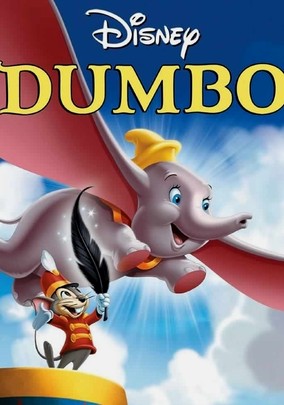
Dumbo-1941

Dumbo-1941

Director Ben Sharpsteen

Starring Various voices

Top 250 Films #138

Scott’s Review #559

Reviewed December 24, 2016

Grade: A

One of the best-produced (and at sixty-two minutes, one of the shortest) of the classic Walt Disney films of the golden age, Dumbo, in a similar fashion to another Disney classic, Bambi, is both heartbreaking and mixed with fun entertainment.

It should be heralded and viewed by everyone —children and adults alike —and teaches a valuable lesson in acceptance and tolerance, messages that never go out of fashion, despite the film being made in the grand old year of 1941.

To draw more comparisons to Bambi, we are introduced to the title character, Dumbo, who is nuzzled and cherished upon being brought into the world by storks by his warm and affectionate mother.

Dumbo is an elephant, and his mother is a circus elephant, where she spends her days as entertainment, along with a group of other female elephants —none of whom possess her grace, kindness, or dignity.

Sweet Dumbo is born with an imperfection- he has enormous ears. While others —namely the female elephants —ridicule and stare in horror at the lovable little elephant, his mother embraces and cuddles her little bundle of joy, eliciting a genuine, good-natured warmth rarely seen in cinematic history.

There is something innately good about this character (Mrs. Jumbo). She has a richness and way about her that is fantastic and consuming.

Sadly, one day, while entertaining the masses, a bratty human child taunts Dumbo, causing Mrs. Jumbo to go ballistic and immediately go into protection mode.

She was then deemed a “mad elephant”, shackled, chained, and worse yet- separated from her baby. How anyone can watch this portion of the film and not shed a tear or get a lump in their throat is beyond me.

Walt Disney was a master at eliciting raw emotion from his audience and writing heartbreaking yet charming stories.

The centerpiece of Dumbo is the extraordinary bond between mother and son —a sweet and powerful connection that almost everyone can relate to. The pride and joy in Mrs. Jumbo’s eyes when she is granted a visit from Dumbo while she is imprisoned is magical – it means the world to her.

The supporting characters are key to the richness of the film- Timothy Q. Mouse is an essential character in the story. Upon Dumbo and Mrs. Jumbo’s separation, he becomes Dumbo’s only friend, sympathizing with Dumbo, and is instrumental to Dumbo’s reunion with his mama as well as his future successes in the circus.

The bitchy female elephants are crucial, too- despite being one of their own, they still reject Dumbo and Mother. There are some light moments, such as when the ladies, (Catty, Giddy, and Prissy), gossip and act superior to others.

Another fun scene, to balance out the heavy drama, occurs when Timothy and Dumbo accidentally mistake champagne for water, causing them to hallucinate and imagine pink elephants.

Dumbo is essential in that it sends a powerful message about the way animals (especially circus animals) have historically been treated. Why animals should be used to amuse and entertain human beings is anyone’s guess, but this film serves as a powerful reminder of this.

Fortunately, the film has a happy and satisfying ending, which should please fans.

Dumbo (1941) is a timeless animated classic.

Oscar Nominations: 1 win-Best Scoring of a Musical Film (won), Best Original Song

Snow White and the Seven Dwarfs-1937

Snow White and the Seven Dwarfs- 1937

Director David Hand

Starring Various Voices

Top 250 Films #147

Scott’s Review #625

Reviewed March 18, 2017

Grade: A-

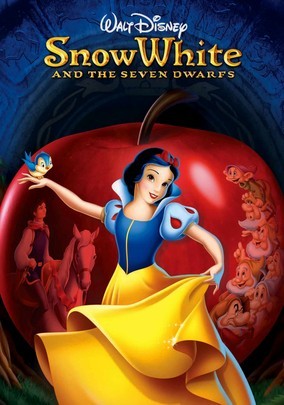
Snow White and the Seven Dwarfs (1937) is Walt Disney’s debut feature-length production and the first animated feature.

Until their release, animated stories were not features at all, but rather shorts that were shown as gag-filled entertainment, not to be taken too seriously.

Snow White and the Seven Dwarfs made animated films something to be appreciated and respected. The 1937 film was re-released in theaters numerous times until the 1990s and serves as a blueprint for what animated features would become.

The film is based on the famous fairy tale of the Brothers Grimm, and it is a cherished treasure.

Beautiful inside and out, Snow White is a lonely princess who lives with her devious, wicked stepmother, the Queen. Making the most of her troubled life, Snow White hums and sings with her bird friends, who gather to keep her company as her stepmother forces her to work as a scullery maid.

The Queen is a vain woman, jealous of Snow White’s natural beauty. She constantly consults her mirror to ask, “Who is the fairest one of all?”

One day, the Queen decides to put an end to Snow White and orders a henchman to kill her in the forest and return her bloody heart to her in a box. When the henchman cannot do the deed, he pleads with Snow White to flee.

She winds up in a bit of cottage housing seven dwarf men, whom she befriends, as the Queen is determined to take drastic measures to find her.

In the late 1930s and for years to come, animated features were not created as they are today. Instead, they were simplistic —and excellent —in using storyboards and drawings in their creation.

This daunting task, along with the creativity involved, makes them just lovely to look at.

Since Snow White and the Seven Dwarfs was the debut animated feature, the drawings are fantastic to view, like pictures, and to appreciate the craftsmanship involved.

The characters are richly created, with bright, vivid colors that distinguish them from one another—Snow White’s bright red lips and the blue and gold colors of her dress contrast with the regal purples used on the Queen, to say nothing of the deep red color of the poison apple.

The color makes the apple appear delicious but also dangerously blood red. These nuances lend the characters depth and texture.

The friendships Snow White forms with the dwarfs and the animal life in the forest are whimsical and filled with love, and the animal element later becomes a staple of Disney’s works, as seen in Dumbo and Bambi.

The animals are naturally drawn to Snow White because she is joyful and kind. They, in turn, warn her of impending danger as the Queen turns herself into an old woman and lumbers towards Snow White, snug in the cottage.

Snow White and the Seven Dwarfs features an old-style romance. The handsome Prince takes a shine to Snow White, noticing her natural beauty as she sings, and is later determined to save her, which he does when he magically kisses her in the film’s finale.

The songs featured only enhance the love story—”Some Day My Prince Will Come” is a lovely ode to romance, tenderly sung by Snow White as she longs for the Prince’s touch, frustrated with her life.

The seven dwarfs are created magically, and seven little men living together seem quite natural in those innocent times.

Each is distinctive—Dopey is my personal favorite in his innocence and playfulness—and Happy, Doc, Grumpy, Sneezy, Sleepy, and Bashful are all written with great zest. We fall in love with each of them from the first moment we meet them as they belt out “Heigh-Ho” in unison.

Since Snow White and the Seven Dwarfs deserve merit for being Disney’s first, it is overlooked that the film omits any family members of Snow White’s besides the evil Queen. Where are Snow White’s father and mother? Any siblings? Indeed, they are presumed dead, but they are never mentioned.

Also, why does the Queen have a Magic Mirror and have special powers that nobody else has?

At one hour and twenty-three minutes, Snow White and the Seven Dwarfs is a relatively brief film, yet it does not feel underdeveloped. The story and the characters are rich with appeal and intrigue, making the film a classic that should be shared with all youngsters.

It is a classic tale of good versus evil and a great love story, setting the tone for other Disney masterpieces to follow.

Oscar Nominations: Best Scoring

E.T. The Extra-Terrestrial-1982

E.T. The Extra-Terrestrial-1982

Director Steven Spielberg

Starring Henry Thomas, Dee Wallace

Top 250 Films #224

Scott’s Review #756

Reviewed May 10, 2018

Grade: A

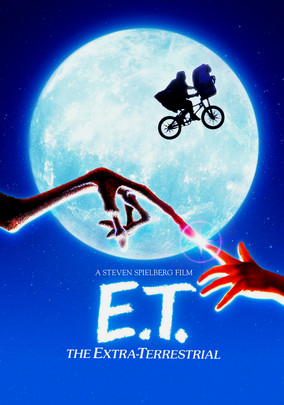
E.T. The Extra-Terrestrial (1982) is a wonderful, magical film that will succeed in melting the hearts of anyone with even a tad of cynicism. The film is otherworldly (quite literally) and contains a message of acceptance and appreciation of other beings.

Mixing many humorous moments with tender drama and tears, the film becomes part of a fantasy, science-fiction, and humanistic story. The film still feels fresh and relevant today with a bevy of forever-remembered scenes and references- a wonderful story of friendship.

The audience is immediately introduced to a pack of alien botanists, arriving in a California forest from their faraway planet to study plants one night. When government agents interrupt the peaceful moment, the “extraterrestrials” are forced to depart leaving one creature behind.

When ten-year-old Elliott (Henry Thomas) discovers and begins to communicate with what will come to be known as “E.T.”, the duo forge a wonderful, lasting friendship as they attempt to return E.T. to his homeland.

E.T. The Extra-Terrestrial is crowd-pleasing in every way offering a bit of everything for all of its lucky viewers.

Director Steven Spielberg reportedly made this film as a result of his desire to share a childhood imaginary friend with the world so the charm shines through in this very personal story.

The film contains an overall innocence that is pure benevolence- E.T. teaches Elliott as much as Elliott teaches E.T.

Who can ever forget the pair’s initial interaction as the use of Reese’s Pieces candy became a huge cultural phenomenon? The lovely quote “E.T. phone home!” is still as poignant and teary-eyed as it was in 1982.

Enjoyable and recognizable is E.T. himself becoming a cult figure. Odd-looking, wide-eyed, and yet of a lovable nature, even cute, the filmmakers were careful not to make him too frightening.

Using real actors and distorted voices E.T. became famous, appearing on lunch boxes, tee-shirts, notebooks, and binders throughout the early 1980s.

The film, released in the “modern age” of 1982, provides a genuine portrayal of suburban life at that time.

From the sunny sub-division style neighborhood that Elliott and his family live in, the absent father figure (so common in many 1980s films), the single-mom/divorced parents phenomenon takes hold and makes families like this commonplace.

If made in 1960 Elliott would have had two happy parents and a white picket fence.

Dee Wallace as Elliott’s mother Mary, received several mom roles throughout the decade, portraying them with a wholesome middle-America quality.

Henry Thomas, like Elliott, is crucial to the success of E.T. The Extra-Terrestrial and sadly the actor never did much beyond this great film. While tough to create chemistry with a creature from outer space, the young actor does just that as we see the two as connected friends.

The duo especially shines during the emotional “death” scene and the farewell scene finale.

The other supporting characters rounding out Elliott’s family are well cast and appropriate at relaying what a typical suburban family looks like.

Michael (Robert MacNaughton) is slightly surly yet protective as the older brother and Gertie, played by a very young Drew Barrymore (soon to experience superstardom throughout the 1980s and 1990s) is cute, bubbly, and teeters on stealing the show as the precocious five-year-old.

At its core what makes E.T., The Extra-Terrestrial so appealing is its heart- a sympathetic creature’s desire to return home and be with his loved ones is the main focus.

Only slightly reversed is a comparison to the 1939 masterpiece The Wizard of Oz. As Dorothy yearns to return to her home amid an exotic, unknown, and sometimes scary world, the same can be said for E.T. and this makes both films similar and equally appealing.

Rich with elegance, intelligence, and creativity, Spielberg creates a tale that is both primed for mass consumption and rife for mainstream appeal. Rather than weave a contrived or cliched story, he spins a magical and long-lasting, good story that will appeal to the kid in all of us.

E.T. The Extra-Terrestrial (1982) reaped many Oscar nominations but lost out on the big prize to the epic Gandhi that year.

Oscar Nominations: 4 wins-Best Picture, Best Director-Steven Spielberg, Best Screenplay Written Directly for the Screen, Best Original Score (won), Best Sound Effects Editing (won), Best Sound (won), Best Cinematography, Best Film Editing, Best Visual Effects (won)

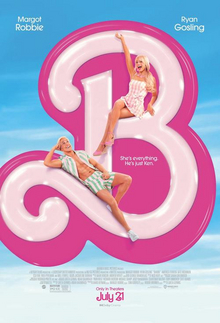
Barbie-2023

Barbie-2023

Director Greta Gerwig

Starring Margot Robbie, Ryan Gosling, and America Ferrera

Top 250 Films #226

Scott’s Review #1,381

Reviewed July 23, 2023

Grade: A

Greta Gerwig is a tremendously talented director who is influencing Hollywood films. The gifted woman crafted Lady Bird in 2017 to critical acclaim and forged ahead with another feminist and progressive project.

In Barbie (2023), she takes a traditional and iconic ‘Barbie doll’ product by Mattel and explores the positives and negatives of the doll throughout its existence.

An incredible opening sequence harkening to Stanley Kubrick’s 1968 masterpiece 2001: A Space Odyssey explains the evolution of the doll.

Barbie incorporates gender balance, creativity, thought, satire, and slapstick comedy fraught with meaning. Not forgotten is heart and humanity, and a look at how much progress has been achieved for women over the years, and how much more is still needed.

As if that’s not enough, Barbie deserves praise for its direction, production design, costumes, music, and cast performances.

Well done.

The film stars Margot Robbie as Barbie and Ryan Gosling as Ken, who embark on a journey of self-discovery after Barbie faces an existential crisis. Deemed the ‘stereotypical’ Barbie, she begins having peculiar and ‘un-Barbie’ thoughts of death and analytics, and must return to the real world to find her doll’s owner.

She soon longs to return to Barbie Land, which is a perfect place. Unless you’re a Ken who exists merely to pine after Barbie, but do they secretly resent this?

There are numerous positives to explore regarding Barbie, but one slight drawback is its proximity to silly comedy and goofiness. The meaning of the film mostly offsets this, but I fear that some audiences may be overwhelmed by gag jokes and lose the overall point of the story.

Let’s take a deep dive. The production design and art direction are dazzling and immediately noticeable. Particularly, I’m referring to Barbie Land and its pink and pretty sets. Luxurious pools, streets, houses, and cars are rich with color and ooze a fun vibe.

I can’t imagine these teams being overlooked during the year-end awards season.

Robbie and Gosling, looking blonde, buff, and tanned, are wonderfully cast and not only look the part but quickly switch from physical comedy to heavy drama without looking foolish.

Robbie, for example, while the classic Barbie type has layers of emotion that she channels. And Gosling could have looked like a buffoon with over-the-top sequences if not for a startlingly good dramatic scene towards the film’s climax.

The supporting cast is brilliant and includes Kate McKinnon as ‘weird Barbie,’ a perfect role for her to unleash her comedic prowess. How lovely to see Rhea Perlman again in the small but powerful role of Ruth Handler, co-founder of Mattel and creator of the Barbie doll.

Finally, America Ferrera and Will Ferrell add both comedy and meaningful spirit to their roles. And how could the inclusion of British stalwart Helen Mirren as the narrator not create credibility?

The main attraction, though, is the writing. Isn’t it always the case when it’s done intelligently?

The dynamic duo of Gerwig and Noah Baumbach (famous for, among other works, the 2019 film Marriage Story) pair well, giving equality messages to both Barbie and Ken. While it is easy to dismiss Ken, his role is valued and respected within the overall context of showing that everyone deserves a seat at the table.

I was touched by the film in various moments more than I ever expected. Wonderful sentiments about being a mother are powerfully stated by Ruth and Gloria (Ferrera) during various scenes and messages, such as everyone deserves respect and serving a purpose, which are hard not to get choked up over.

Barbie wins points for diversity and inclusion with nearly every ethnic group represented and a transgender character, Dr. Barbie (Hari Nef), featured prominently.

Providing roaring entertainment, bubble gum sets and design, and a message that will break your heart while exuding intelligence, Barbie (2023) is a win.

It’s a story about the wills of plastic and humanity, making for a perfect, harmonious blend. Who would have thought a film about Barbie would be so important?

Oscar Nominations: 1 win-Best Picture, Best Supporting Actor-Ryan Gosling, Best Supporting Actress-America Ferrera, Best Adapted Screenplay, Best Costume Design, Best Production Design, Best Original Song-“I’m Just Ken”, “What Was I Made For?” (won)

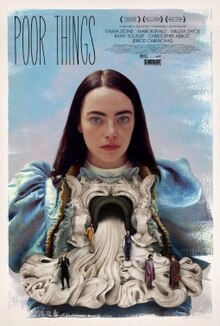
Poor Things-2023

Poor Things-2023

Director Yorgos Lanthimos

Starring Emma Stone, Mark Ruffalo, Willem Dafoe

Top 250 Films #244

Scott’s Review #1,413

Reviewed December 27, 2023

Grade: A

Yorgos Lanthimos is a peculiar director and the suggestion is for potential viewers to be familiar with his work before seeing his latest film release, Poor Things (2023).

I’ve said recently that other directors like Alexander Payne, Todd Haynes, Quentin Tarantino, and Martin Scorcese can easily be added to this list with a style not for everyone but that Cinemaphiles will salivate for style and texture alone.

Anyone who has seen Lanthimos’s Dogtooth (2009) or The Lobster (2016) will know exactly what I mean.

With Poor Things, he hits a grand slam home run that might garner him some Academy Awards in what can be arguably classified as his most progressive film.

Mentions like the art direction, cinematography, set design, and fantastic performance by Emma Stone must be immediately celebrated and called out as highlights.

The film is hardly mainstream or conventional and way out there channeling a parallel to Frankenstein with frightening and gothic sets and sequences galore.

All with a twisted and refreshing feminist quality.

Ultimately, I was satisfied with the knowledge that I had witnessed a cinematic marvel that encourages repeated viewings.

During the nineteenth century in London, England, Bella Baxter (Stone), is a young woman brought back to life by the brilliant and unorthodox scientist Dr. Godwin Baxter (Willem Dafoe) who is referred to as ‘god’.

He inserts the tender brain of the baby she was carrying when she leaped from a bridge to her death suicide style.

Under Baxter’s protection and supervision, Bella is eager to learn but acts like a toddler with limited speech and motor skills. She teeters around smashing plates with gleeful joy as she discovers her surroundings.

With superior intelligence and a hunger for the worldliness she is lacking, Bella runs off with Duncan Wedderburn (Mark Ruffalo), a slick and horny lawyer, on a whirlwind adventure across the continents from Lisbon, Portugal to Paris, France, and back to London.

Free from the knowledge and the prejudices women of her time were forced to endure, Bella grows steadfast in her purpose to stand for equality and liberation. She challenges societal norms with her vision and determination.

I can’t think of anyone else to play the role of Bella other than Stone. With wide eyes filled with wonder, she infuses her character with comedy and wit as she asks questions many women have but never dare to utter aloud.

Especially in Victorian London.

Ruffalo is outrageous and Dafoe is hideously stoic. Both actors bring star quality and wacky performances in different ways.

The look of the film is to die for as Lanthimos offers a looming fairy tale set design led by cinematographer Robbie Ryan.

The European cities of Lisbon, Paris, and London are given their chapters in the film and their focus. The waterfront in Lisbon in particular resembles the real city in a gothic and foreboding way.

The hotel in Paris where Bella becomes a prostitute is regal and polished. Bella wonders aloud why the male customers get to decide which woman they want to spend time with instead of the reverse.

It’s a fair question.

Her friend and fellow prostitute introduces her to socialism while Madame Swiney (Kathryn Hunter) explains capitalism.

Finally, the musical score by Jerskin Fendrix offers shrieking classical strings mixed with haunting pizazz and perfectly timed arrangements. They promote tension and drama at just the right moments.

2023 was a fabulous year for women in cinematic terms but not so much by the United States Supreme Court but that’s another story. The bombast and box office enormity of Greta Gerwig’s Barbie is followed by Lanthimos’s celebration of the thought-provoking Poor Things.

Both elicit insightfully quirkiness that successfully bulldozes over traditional gender norms with messages that women can do whatever they set out to do which is a vital quality for young minds to be exposed to.

Oscar Nominations: 4 wins-Best Picture, Best Director-Yorgos Lanthimos, Best Actress-Emma Stone (won), Best Supporting Actor-Mark Ruffalo, Best Adapted Screenplay, Best Film Editing, Best Cinematography, Best Costume Design (won), Best Production Design (won), Best Original Score, Best Makeup and Hairstyling (won)

Wicked: Part I-2024

Wicked: Part I-2024

Director Jon M. Chu

Starring Cynthia Erivo, Ariana Grande-Butera, Jonathan Bailey

Scott’s Review #1,453

Reviewed December 1, 2024

Grade: A

The extravagant Broadway musical Wicked (2024) is brought to the silver screen with beautiful results. It overtook the nation in hefty box office returns, and many donned witch hats for the event. The production has enough substance to justify the craze.

It is the first of a two-part film adaptation of the stage musical of the same name. The film is loosely based on Gregory Maguire’s 1995 novel, which is based on L. Frank Baum’s 1900 novel The Wonderful Wizard of Oz, its sequels, and its 1939 film adaptation.

Part II will emerge in late 2025.

Powerhouse Cynthia Erivo leads the charge as Elphaba, a young woman misunderstood because of her unusual green skin who has yet to discover her true power. When conceived, Elphaba’s mother and her secret beau drank a mysterious potion assumed responsible for her nature.

Elphaba is noticed by Madame Morrible (Michelle Yeoh), the Dean of Sorcerer Studies, and welcomed at Shiz University. Her disabled younger sister Nessarose (Marissa Bode) is a new student there.

Ariana Grande plays Glinda, a privileged and ambitious young woman who is jealous of yet enamored with Elphaba and yearns to discover her talent and powers.

Elphaba and Glinda forge an unlikely but powerful friendship. After encountering The Wonderful Wizard of Oz, their friendship reaches a crossroads, and their lives take very different paths.

The film begins with Glinda (the Good Witch of the North) recounting their relationship as Elphaba (or The Wicked Witch of the West) has just died to much celebration.

Whether viewers are familiar with the novels, the 1939 film, or the stage version, the rich history is well-combined.

The colorful sets and visuals are marvelous, with luminous greens encompassing the shimmering Emerald City. The Shiz University is more pastel with muted blue and pink colors.

Aside from the story, there is so much to look at visually. Be sure to glimpse background activity during dancing or celebration scenes to notice even more particulars.

Hints of what’s to come (the Cowardly Lion, a broomstick) also can be noticed.

The second half is the better portion when the action takes off and gets to a darker place. The colors are also darker than in the first half.

Watching the monkeys start to transition and grow wings painfully is a bit scary, especially for younger children.

The side story of animals losing their rights and being caged in the beginning, when they speak and even teach at a university, is complex to watch and represents the current state of the United States.

Director Jon M. Chu and screenwriters Winnie Holzman and Dana Fox wisely replace humans with animals as they remind audiences of groups of people (immigrants, the LGBTQ+ community) targeted by hate.

Sadly, as the Wizard of Oz and Madame Morrible remind Elphaba, the world needs another. ‘ The parallels between animals and humans are readily apparent.

Perhaps to combat the hate, Chu includes gay actors Jonathan Bailey and Bowen Yang in prominent roles.

Chu, most notable for Crazy Rich Asians (2018), delivers a stunning product filled with glamour, bravura, and necessary female empowerment.

The dynamic between Erivo and Grande-Butera is strong, making their rivalry/friendship believable and layered. Erivo gets the showier, albeit in a less attractive role, but she powerfully uses her voice to her advantage.

‘I’m Not That Girl’ and ‘Defying Gravity’ have quickly become favorites.

Wicked: Part I (2024) is an intriguing and spectacular production that raises critical societal questions. Whether you marvel at the visuals or explore gender and repression more deeply, the film has something for everyone.

Oscar Nominations: 2 wins-Best Picture, Best Actress-Cynthia Erivo, Best Supporting Actress-Ariana Grande, Best Film Editing, Best Production Design (won), Best Costume Design (won), Best Original Score, Best Sound, Best Makeup and Hairstyling, Best Visual Effects

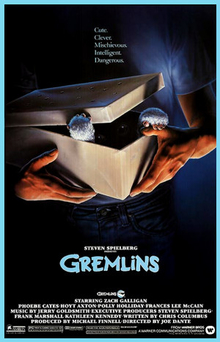
Gremlins-1984

Gremlins-1984

Director Joe Dante

Starring Zach Galligan, Phoebe Cates

Scott’s Review #1,443

Reviewed September 28, 2024

Grade: B+

A mishmash of film genres like black comedy, horror, and Christmas, Gremlins (1984) is one of the films responsible for the new Motion Picture Association of America (MPAA) rating of PG-13 introduced in the mid-1980s.

Too soft for an adult R rating but too scary for a PG rating many films fit better in the PG-13 category.

The film features a cute E.T. the Extra-terrestrial (1982) reminiscent creature named Gizmo. Since Steven Spielberg’s executive produced Gremlins, there are comparisons to the successful mega box office film.

But Gremlins is darker than E.T. especially when the spawn of Gizmo emerges in a fierce, aggressive manner and one dons a mohawk-style haircut. Many of the gremlins die and a few humans are killed by the gremlins giving it a scarier vibe.

This is thanks to director, Joe Dante, who gives the film a 1950s B movie style that offers a dark campy style.

A gadget salesman, Randall Peltzer (Hoyt Axton) is looking for a special Christmas gift for his son Billy (Zach Galligan) and finds one at a store in Chinatown. The shopkeeper is reluctant to sell him the “mogwai” but does and warns him never to expose him to bright light, or water, or feed him after midnight.

Naturally, when Randall returns to his home in the United States all of this happens and the result is a gang of gremlins that decide to tear up the town on Christmas Eve.

There are a couple of ways to view this film. The ‘message’ is a statement of the consumer culture running rampant in the 1980s. Wanting everything but not appreciating things is stated during the final scene.

The Chinese shopkeeper repossesses the “mogwai”, scolds the family for their negligence, and criticizes Western society for its carelessness with nature.

In a touching scene, Gizmo, having bonded with Billy, bids him goodbye. The touched shopkeeper concedes that Billy may be ready one day and, until then, Gizmo will be waiting.

Anyone with a pet will get a teary eye or two.

One can also view Gremlins as an entertaining popcorn flick with superior special effects and a fun story. The visual effects and the art direction are worth a pause for. Impressive are the sequences in the town where the stores and homes are perfectly dressed for the holidays.

The Christmas lights, trees, snow, and other trimmings provide feelings of warmth and spirit.

Galligan and Phoebe Cates who plays his love interest, Kate, have wonderful chemistry as a teen romance blossoms. This makes the audience more invested in their peril as they try to save the townspeople from doom.

Axton and Frances Mee McCain who plays Billy’s mother, Lynn, also are rootable. They are believable as a lovely suburban couple who have a wacky side.

Corey Feldman and Judge Reinhold appear in small roles as a friend and Billy’s obnoxious boss, respectively. Neither role is developed or necessary but familiar faces are always nice to see in cinema.

Polly Holliday nearly steals the show as the dog-hating Ruby Deagle. In a clear nod to Mrs. Gulch in The Wizard of Oz (1939) she sneers and snickers in an ill-fated attempt to have Billy’s dog destroyed.

Delightfully, she gets a death scene where the gremlins terrorize her to death when her stair chair goes wonky and throws her out a window. Holliday is a hoot and must have had a ball playing the villain.

Other stock characters like the disbelieving police force are cliched and only serve to hinder the actions of the main characters.

Gremlins (1984) is a darling film that holds up well. It’s mischievous without going full horror and can be enjoyed by the entire family on Christmas Eve. The quirky comedy elements and cool visuals make the film fun and impressive.

All of Us Strangers-2023

All of Us Strangers-2023

Director Andrew Haigh

Starring Andrew Scott, Paul Mescal, Claire Foy

Scott’s Review #1,439

Reviewed September 22, 2024

Grade: A

A moody, dark-lit experience, All of Us Strangers (2023) is a dreamy affair in all the best ways. It’s a bit of a ghost story combined with a love story and can be challenging to explain. 

Especially noteworthy are some elements like the lighting and mood which serve as enhancers. The lavish setting of London, England, and its surroundings are presented as lonely and depressing.

Loneliness is an encompassing description of the film summing up the character-driven story set mostly in an enormous yet almost vacant luxury high-rise apartment.

The vacant building is an effective backdrop to the main character’s experience.

We get inside his head and travel down a tunnel of self-reflection and acceptance just as he does. It’s unclear what is imagined or real, raising the stakes and catapulting the viewer into a world of questions.

The best pleasure comes after finishing the film and wondering how all the pieces come together or even if they do. I wasn’t sure what happened in the conclusion but the overall experience left me thinking. 

The British film follows a lonely screenwriter named Adam who works as a television writer. He develops an intimate relationship with his mysterious male neighbor while revisiting memories from the past involving his parents.

Andrew Haig directs the film and Andrew Scott plays the screenwriter from which the story is his vehicle. Paul Mescal plays his neighbor and love interest.

Haigh is best known for efforts like 45 Years (2015) and Lean on Pete (2017). Both are quiet films and character-driven. All of us Strangers is the best of the trio, though.

The film also has some teary moments of sweetness mostly shown through an LGBTQ+ lens but the film is not only for members or allies of the community but for anyone with a heart or craving something cerebral.

Viewers who have lost parents far too soon before feelings are expressed and only cherished memories remain will find All of Us Strangers to resonate mightily.

Specific to the LGBTQ+ community, what gay man wouldn’t want to travel thirty years into the future and have deep conversations with his parents about his lifestyle? Having missed those prominent years because of death. 

In the story, Adam’s parents died in a car accident when he was a child. Since he never ‘came out’ to them he travels to their house outside of London and imagines conversations with them separately and together. 

The best scenes are between Andrew Scott and Claire Foy who plays Adam’s mother. They are lengthy and poignant and brilliant acting by both are showcased. 

In an ideal fantasy, his mother would leap into Adam’s arms and champion his lifestyle becoming his most ardent supporter. Haig writes the scenes better than that as real-life situations might play out with conflict and misunderstandings.

The mother wants to understand and support but has hesitancies and ideas about a lifestyle different than Adam’s. The scenes become tense and complex not because of shouting but because of a deep struggle for understanding.

Not to be outdone by Foy’s performance in the unique relationship between father and son deliciously played by Jamie Bell. 

Adam has resented his father’s emotional distance for years never forgetting how he needed his father’s support as a child and never got it.

In a powerful scene, Adam and his father embrace. The embrace is one that Adam needed as a child.

The film is for everyone because why wouldn’t anyone want to visit their dead parents years later? Even if still alive there are things between parent and child never said or expressed. 

So many scenes are emotional, poignant, and meaningful in All of Us Strangers. 

The finale is trippy and made me recall David Lynch’s Mulholland Drive (1992) where what is real may not be and who we think a character’s life is all about may not be so.

Though wrapped in fantasy, All of Us Strangers (2023) is focused on grief through a deep emotional lens and uses superior acting to tell its story.

Independent Spirit Award Nominations: Best Film, Best Director-Andrew Haigh, Best Lead Performance-Andrew Scott

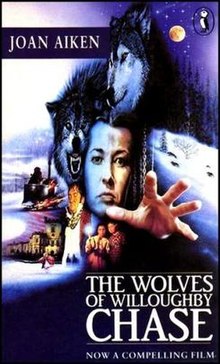
The Wolves of Willoughby Chase-1989

The Wolves of Willoughby Chase-1989

Director Stuart Olme

Starring Stephanie Beacham, Emily Hudson, Aleks Darowska

Scott’s Review #1,418

Reviewed January 20, 2024

Grade: B+

The Wolves of Willoughby Chase (1989) is a British dark fantasy film directed by Stuart Orme in his theatrical directorial debut. Most notably a rock video director, I am unsure if Orme ever directed another film.

The film is based on the 1962 novel of the same name, written by Joan Aiken which was quite popular with children during the 1960s and beyond.

Similar to the book, the film is set in an alternate history version of nineteenth-century England where wolves roam the countryside. The animals prance around the wintery landscapes causing fear for those humans who spot them.

The experience is playful and escapist with similarities to both Oliver! (1968) and The Witches (1990). Especially in regards to the former some of the action takes place in a bleak workhouse where children are mistreated by adults.

Predictably and satisfying, the evil adults get their comeuppance while the nice children and warm adults live happily ever after. This is a main part of the fun of watching the perilous situations.

The plot centers around two young girls. Bonnie (Emily Hudson) is the daughter of Lord and Lady Willoughby, who live at the grand yet cozy country estate named Willoughby Chase. Lady Willoughby (Eleanor David) is ill, and the couple plan to recuperate basking in the warm sun along the Mediterranean.

In urban London, Bonnie’s cousin, Sylvia (Aleks Darowska), is leaving her impoverished Aunt Jane (Lord Willoughby’s cousin) to keep Bonnie company while her parents are away.

While on the train, she meets a mysterious man, Mr. Grimshaw (Mel Smith) whom they decide to bring back to Willoughby Chase after falling unconscious when wolves attack the train.

Meanwhile, Bonnie and Sylvia’s cousin, Letitia (Stephanie Beacham) is their new governess. She is evil and determined to get rid of the children so that she inherits money and the estate.

Billed as a children’s film, as Oliver! was, some of the sequences may be too much for younger kids. The ferocious wolves may cause fright while a scene involving one of the girls being locked in a chest might cause nightmares.

There is a presumed drowning and another character catches on fire.

For adults, particularly those who enjoyed the book as youngsters the dangerous situations are light fare and merely make Bonnie and Sylvia more heroic and justified in escaping the adult’s clutches.

The art direction and set designs are also a big part of the fun. Numerous scenes of winter and snow-covered roads and pathways are what make The Wolves of Willoughby Chase a perfect watch for a frigid January evening.

I’m not sure if the film would feel as atmospheric in July or August.

The estate where much of the action takes place has a warm and cozy feel. It made me want to curl up by a raging fire with a good book.

There’s an undertone of class distinction when the servants are all dismissed to save money and I questioned why Sylvia and her aunt didn’t simply live on the estate. The poor living amongst the rich is a perfect setup for more meaningful storylines but the intent is more for The Wolves of Willoughby Chase to be fun.

Beacham is delightful while slightly over-the-top playing a fiendish character. Most known for appearing on television’s ‘Dynasty’ the actress has also made British horror films.

I assumed she planned to kill the parents and the girls but what about the aunt?

It doesn’t matter much because her plan is foiled and the girls are reunited with their loved ones.

The Wolves of Willoughby Chase (1989) contains a nice musical score that enhances the adventures. The film is a bit too scary for kids but perfect for young adults and older.

Wonka-2023

Wonka-2023

Director Paul King

Starring Timothée Chalamet, Calah Lane, Olivia Colman

Scott’s Review #1,414 

Reviewed January 3, 2024

Grade: B+

Wonka (2023) is only the third live-action film based on Roald Dahl’s iconic 1964 novel Charlie and the Chocolate Factory, following Willy Wonka & the Chocolate Factory (1971) and Charlie and the Chocolate Factory (2005).

The latter was an inadequate and unnecessarily dark film starring Johnny Depp that threatened to ruin the trademark fantasy of the original.

Fortunately, director Paul King mostly known for directing the Paddington films opts for a warm and even gooey experience that does perfect justice to the original starring Gene Wilder with many connections to that film, especially costumes, characters, and locale.

It’s saccharine sweet but not sickeningly sweet instead feeling both fresh and genuine.

The wonderful and familiar featured song ‘Pure Imagination’ appears instantly as the film begins which does wonders to capture and captivate the nostalgic audience—mixed with other new gems like ‘A World of Your Own’ hooks newer and younger viewers.

The effort works well as a kindly old friend dusted off the shelf for a new waltz across the dance floor and a dizzying chocolate delight crowd-pleaser is the result of Wonka.

Wonka is released in December amid the sugary Christmas holiday season. A marketing win what parents could refuse a delicious trip to the cinema?

The wondrous story of how the world’s greatest inventor, magician, and chocolate maker became the beloved Willy Wonka (Timothée Chalamet) we know today begins with the young actor brazenly wearing a similar garb as Wilder did in the 1971 effort.

I adore this feat and pointed display because it makes crystal clear the attempt to leverage history instead of upheaval.

Chalamet is perfectly cast as Willy in large part because he resembles Wilder with his wiry build and waifish face. There exists a kindness and trustworthiness that transfers well from the big screen to the audience member.

Throughout the film, there is light peril that Wonka faces like a crooked debt owed to the even more crooked Mrs. Scrubitt’s (Olivia Colman) boardinghouse or the vengeful competitor Arthur Slugworth (Paterson Joseph) but it’s nothing he can’t handle with a grin and shrug of the shoulders.

His feathers are not ruffled easily because he believes in the magic of chocolate. In a dear flashback scene featuring his mother, played by Sally Hawkins, she inspires him to always believe in himself and be a good person.

This is at the heart of the film.

Along for the ride are new friends orphan Noodle (Calah Lane), Abacus Crunch (Jim Carter), and others trapped within Scrubbit’s and henchman Bleacher, played by Tom Davis.

There’s even a connection with the fan favorite Oompa-Loompa’s led by Lofty (Hugh Grant) who becomes a close ally in the end. As historical viewers will know the pair reunites in business.

Despite all these terrific additions the main attraction is the chocolate naturally. Highlights are a lavish chocolate attempted drowning, a chocolate store, and more than enough chocolate colorful flowers to whet one’s appetite.

The film is weird and zany without being too far out there and retains its touchy-feely approach.

Wonka (2023) successfully builds a multi-generational bridge between audiences with a powerful human connection. Grandparents, parents, and children alike can all see the film together with a common love of chocolate and magic.

The dangers are light-hearted and the filmmakers keep age-appropriate sensibilities and the result is family-friendly material with a kindhearted approach.

We all need this sometimes.

Camelot-1967

Camelot-1967

Director Joshua Logan

Starring Richard Harris, Vanessa Redgrave, Franco Nero

Scott’s Review #1,370

Reviewed June 21, 2023

Grade: A-

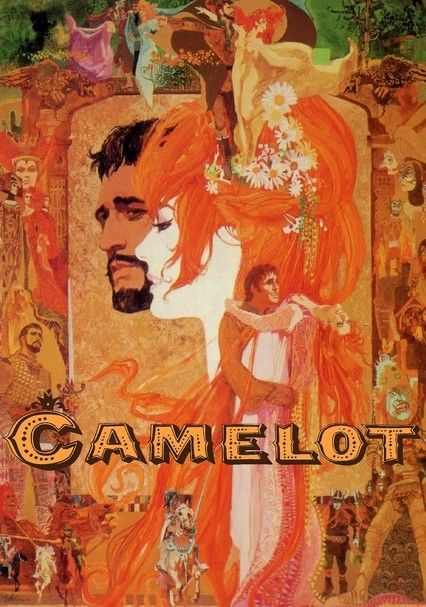
Camelot (1967) is an adaptation of the well-known Broadway spectacle that explores the creation of the Knights of the Round Table. It’s the Middle Ages, and King Arthur is the main character.

Unfortunately, the original stars of the stage, Richard Burton and Julie Andrews, declined to participate. Still, their replacements, Richard Burton and Vanessa Redgrave, are more than adequate in their prominent roles.

At an epic length of nearly three hours, not every moment is the edge of your seat, and some lagging exists, but the film does justice to the stage production, only with a big budget to add extravagance.

The setting and experience are pure magic, not only because of the far-removed time. The Shakespearean elements are strong as royalty and entitlement mesh with scheming, jealousy, and dangerous romance.

This makes for some juicy soap opera drama.

After the arranged marriage of Arthur (Harris) and Guinevere (Redgrave), the king gathers the noble knights of the realm to his Round Table. The dashing Lancelot (Franco Nero) joins but soon falls in love with Guinevere.

When Arthur’s illegitimate and conniving son, Mordred (David Hemmings), reappears in the kingdom and exposes the secret lovers, Arthur finds himself, by his own rules, trapped into taking action against his wife and closest friend.

There are some dull moments to face at epic length, especially in the first half. I tuned out once or twice, but then I was whisked back to the dramatic events.

The great moments are genuinely outstanding, with enough punch to pack a emotional wallop.

During a sequence when Lancelot is challenged to a game of jousting with some knights, events turn deadly, and one knight, Sir Dinadan, is critically injured. Horrified, Lancelot pleads for Sir Dinadan to live, and as he lays hands on him, Dinadan miraculously recovers.

The scene is fraught with emotion as a decisive moment occurs between the men. It’s also pivotal to the storyline because it links Lancelot with Guenevere and sets off a romantic chain of events.

Guenevere is so overwhelmed and humbled that her feelings for Lancelot begin to change. Despite his vows of celibacy, Lancelot falls in love with Guenevere.

More than one song is lovely in Camelot, and as the production went on, I yearned for more musical numbers.

My favorite is the coy  “The Lusty Month of May,” which appears when Guinevere and the women frolic and gather flowers to celebrate the coming of spring. Later, Lancelot and Guenevere sing of their forbidden love and how wrong life has all gone in ‘I Loved You Once In Silence.’

In the eyes of the law, the lovers are to be punished so they are aware they are not long for this world.

Visually, Camelot is a spectacle rich in style and pizazz. Whimsical colors and a ton of vibrant and fragrant flowers appear regularly amid fields of greens and forests of trees.

The castles and battlefields also support Gothic structures and masculine power, which perfectly balance the exquisiteness of the other aspects.

This more than makes up for any drudgery the story might have. It’s nice to sit back and be fulfilled by the cinematic beauty, especially considering the romance at the heart of the picture.

So when the story drags, one can enjoy the visuals and escape for a moment.

Also impressive is the story of friendship and how a woman’s affection for a man can tear apart two male friends.

Camelot (1967) is a behemoth epic that requires patience. Some parts flat-out drag. But the daring, compelling triangle among the three leads usually turns the experience into an above-average thrill ride.

Oscar Nominations: 4 wins-Best Art Direction (won), Best Cinematography, Best Costume Design (won), Best Costume Design (won), Best Original Song Score or Adaptation Score (won), Best Sound

The Three Lives of Thomasina-1963

The Three Lives of Thomasina-1963

Director Don Chaffey

Starring Patrick McGoohan, Susan Hampshire

Scott’s Review #1,367

Reviewed June 7, 2023

Grade: B

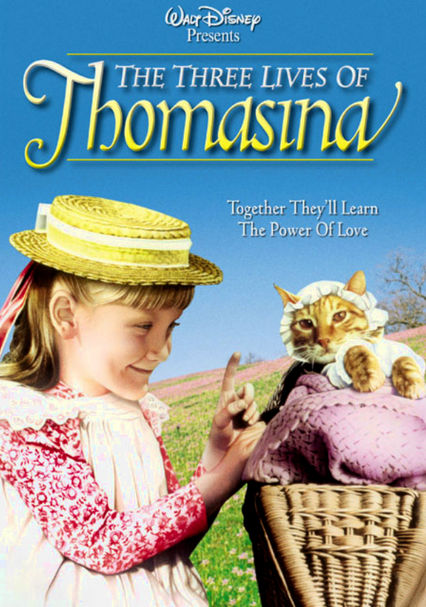
The Three Lives of Thomasina (1963) is a film in which the animal, in this case, a sleek orange tabby cat, steals the show from the humans. It’s not as if the acting by the actors is terrible, but who doesn’t love a cute feline clad in a bonnet?

The film is a Disney production but not one of the top tier nor mainly well remembered and was unknown to me before I watched it.

It’s similar to Mary Poppins (1963) in its cheery tone, and the two child stars were signed to play the Banks children after The Three Lives of Thomasina.

There are enough tender and sentimental moments to satisfy fans who may crave a more profound or darker veneer, but there is some fluff and predictability to wrestle with.

With high hopes of entertaining our cats Zeus and Thora with this film, the furry felines essentially slept through the experience and rendered it uninteresting.

Schoolgirl Mary McDhui (Karen Dotrice) lives in a small village in Scotland with her stoic veterinarian father, Andrew (Patrick McGoohan), and her cherished cat, Thomasina.

When Thomasina is injured, Andrew has the animal euthanized, which infuriates Mary, who vows never to forgive her father. Unbeknownst to everyone, Thomasina’s still-living body is rescued by Lori (Susan Hampshire), a kind animal healer who nurses the cat back to health.

The romantic intention of uniting Andrew and Lori is evident from the start, and the pair have decent chemistry. Lori is a Snow White-type character, whistling, prancing through her grade, and befriending any animal who languishes near her.

Terrified by her healing power, neighborhood kids deem her a witch, but she doesn’t look the part. With golden hair and attractive features, she is more Rapunzel than the Wicked Witch of the West.

Andrew is a masculine character we’ve seen in stories. Widowed, he has lost faith in humanity and god alike, living a sad existence with his housekeeper and kids.

To nobody’s surprise, Andrew, Lori, the kids, Thomasina, and the housekeeper ride off into the sunset as happy as clams.

Though the story is generic, other aspects of The Three Lives of Thomasina spruce things up brighter than the Scottish flowers. The landscape is magical, with lush countryside sequences and cute side streets and cottages.

A fabulous sequence occurs at the midpoint when a ‘dead’ Thomasina soul goes to a feline afterlife and meets the Egyptian cat goddess Bastet. Since Thomasina still has eight lives left, Bastet returns her to her body.

The sparkling and twinkling lights and the myriad of other felines are beautiful and filled with emotion.

Hopefully, the real-life animals were treated kindly, but in 1963, I’m not sure how much could be faked. Still, fantastic work mimicking a wounded badger is impressive.

The thrilling finale involves a tribe of gypsies setting up camp in town and opening their traveling circus. Laden, with apparent stereotypes which seem clear in 2023 but were unnoticed in 1963, the gypsies abuse their animals, causing a stir among the townspeople.

A fight, fire, and justice prevail, and all animals are spared.

A 1960s Disney film with family-friendly themes and compassion, The Three Lives of Thomasina (1963) will satisfy cat lovers or anyone fond of animals. The real-life Thomasina is worth the price of admission for her gorgeous good looks alone.

Encanto-2021

Encanto-2021

Director Jared Bush, Byron Howard

Voices Stephanie Beatriz, John Leguizamo

Scott’s Review #1,323

Reviewed December 16, 2022

Grade: B+

Encanto (2021) is a lovely film produced by Walt Disney Animation Studios. It’s part musical, part fantasy, and part comedy with plenty of bright, colorful, and culturally significant sequences that are quite pleasing to the eyes.

The musical numbers are wonderfully catchy and fun, especially the standouts ‘We Don’t Talk About Bruno’ and ‘Welcome to the Family Madrigal’. Since the musical numbers are primarily created by Lin-Manuel Miranda and composed by Germaine Franco, they are professional and memorable.

The film has a wholesome, upbeat, yet diverse quality that makes it challenging not to enjoy.

The representation provided is a significant win for the film.

The setting of Colombia helps with this, and the main character, Mirabel (Stephanie Beatriz), is darling. Her positive and forthright personality is cheerful and instantly likable, and I imagine inspiring young girls everywhere.

It’s nice to see Disney expand its reach internationally in today’s world of inclusion and diversity.

The Madrigals are an extraordinary family who live hidden in the mountains of Colombia in a charming residence called the Encanto.

The magic of Encanto is well known throughout the nearby town, and its magic has blessed every child in the family with a unique gift, except Mirabel, who mysteriously has no gift.

Or so it would appear.

When Mirabel discovers that the magic surrounding the Encanto is in danger of running out, she may be their last hope.

The success of Encanto lies in the character of Mirabel. She is imperfect and unique, yet firm and confident, defying the mold. This is what Disney does well to make her relatable. You could say that Mirabel feels left out and isolated, different from her more conventional siblings.

The primary objective is to craft a character that the audience can identify with and feel a connection to. Since the target demographic of Encanto is young females, the idea is successful.

The animation is also inspiring. Challenged with genuinely replicating the mountains of Colombia, the gorgeous, lush locales can frequently be seen in sequences. The way the family estate rests along the landscape made me want to be there with them.

The colorful pastels and psychedelic moments are dizzying in a good way. The costumes alone are evidence of this, including embroidered wool with astonishing patterns. With pinks, purples, blues, and yellows, it’s an orgy of spectacular images.

The Madrigals appear to be an affluent family revered by their community, but besides having magical powers, it’s unknown how they cultivate their wealth.

They serve the villagers with their gifts, but what does that mean exactly? Are they paid with cash?

Encanto (2021) won the Academy Award for Best Animated Feature, and this is no surprise. The Academy sometimes rewards creativity and diversity over mainstream fluff, and this film is an example of when the Academy gets it right.

The entire family can enjoy the film for multiple reasons, rather than just a product that appeals to kids whose parents are forced to tag along.

Oscar Nominations: 2 wins-Best Animated Feature (won), Best Original Score, Best Original Song-“Dos Oruguitas” (won)

The Witches-2020

The Witches-2020

Director Robert Zemeckis

Starring Anne Hathaway, Octavia Spencer

Scott’s Review #1,314

Reviewed November 16, 2022

Grade: B

A remake of the 1990 film starring Anjelica Huston, The Witches (2020) sometimes delivers the goods and occasionally derails off the tracks into campy, over-the-top, wackadoo.

Mostly, on the part of the star Anne Hathaway, who plays an evil and powerful witch.

But, regardless of what this adult thinks, it will please, surprise, and fascinate youngsters who see it. There’s a comforting and vital message of friendship and family roots ingrained in the story, which is a nice touch.

In 1968, seven-year-old orphan Charlie Hansen (Jahzir Bruno) travels from Chicago to Alabama to live with his grandmother, Agatha (Octavia Spencer), after his parents are killed in a car accident.

After a dastardly witch approaches him in a grocery store, they flee to a seaside resort to avoid the child-hating witches. Agatha has a troubled past with the witches who long ago turned her best friend into a chicken.

When the two arrive at their hotel, they find a coven with villainous plans. They are accompanied by a mouse named Daisy and an English boy named Bruno (Codie-Lei Eastick).

I much prefer the first half of The Witches to the last.

The wonderful and caring relationship between Agatha and Charlie is a beautiful dynamic. When she envelops him with love and southern cooking in her cozy home, understanding the trauma he has endured, it is heartwarming and genuine.

Spencer is terrific in any role she plays, of course, but her calm and stoic demeanor when paired against the witches is lovely. She is prepared for trouble and sneaks to a back room where she keeps crystals and other anti-witch weaponry.

But the relationship with the little boy is darling and top-notch. I wish they would have just stayed at home and nurtured their relationship with Daisy and Bruno.

The weakest section of the film involves the witches themselves. As they flock to the hotel for a convention to plot the destruction of children everywhere, they appear more silly than scary, especially when they remove their wigs and reveal bald, scabby heads.

Director Robert Zemeckis must have given Hathaway free rein to ham it up because she certainly does just that.

I’m a fan of hers, so it’s not a personal knock, but she teeters toward ridiculous pretty quickly. I understand the need to make a children’s film villain colorful, memorable, and loud, but there is no restraint, which causes the character to feel more silly than terrifying.

On the plus side, Hathaway must have had a ball letting loose and leaving all constraints on the sidelines.

Inevitably, the kids are changed into cute mice and must convince their loved ones that they are themselves while figuring out how to change back to human children.

Not much has changed from the 1990 version, except for a few tweaks here and there, and the story remains the same. However, I prefer the original by a hair.

Huston beats Hathaway in a comparison.

Some inconsistencies emerge, such as how Agatha can afford to stay in a grand hotel. She knows someone connected to the hotel, but the who’s and why’s aren’t clear.

It’s never explained what happened to Agatha’s friend who wound up as a chicken, and I wanted more from Stanley Tucci than an uninteresting hotel manager role with little to do.

However, the action sequences are adventurous and energetic, and it’s fun cheering as the Grand High Witch (Hathaway) is transformed into a rat.

I wanted more of the homespun love between Agatha and Charlie, as well as the simple Southern town that felt so lovely and welcoming. Still, The Witches (2020) provides family-friendly entertainment that many can enjoy.

Up the Sandbox-1972

Up the Sandbox-1972

Director Irvin Kershner

Starring Barbra Streisand, David Selby

Scott’s Review #1,308

Reviewed October 18, 2022

Grade: B

Up the Sandbox (1972) is likely the least successful film in the Barbra Streisand collection and more obscure than likely desired. The star performs no songs and the film is experimental but it’s unclear if it was intended to be or not.

Streisand takes a break from comedies and musicals and ventures into unknown territory, taking a risk that doesn’t always pay off.

On the flip side, she never looked more beautiful in a film.

The film has its moments. It’s shrouded in early progressive feminism which provides intrigue and it’s tough to go wrong with a bankable star like Streisand in a lead role.

Still, the fantasy sequences get too weird and sometimes unnecessary, and the film doesn’t always make a lot of sense.

The film gets taken down at least a notch for two anti-gay slurs that are shamefully unnecessary to any plot direction.

I award Up the Sandbox credit for thinking outside the box and being unconventional but all the parts don’t come together in a cohesive unit leaving me unfulfilled but recognizing the superior qualities.

The cover art (see above) is wacky and thought-provoking.

Margaret (Streisand) is a young wife and mother who is bored with her day-to-day life in New York City playing second fiddle to her successful and too-busy husband, Paul (David Selby).

He is a professor at Columbia University and they reside in a cramped yet fairly sophisticated apartment.

To combat boredom, she regularly escapes into increasingly outrageous fantasies: her mother breaking into the apartment, an explorer’s demonstration of tribal fertility music at a party causing strange transformations, and somehow joining terrorists to plant explosives in the Statue of Liberty.

Streisand is well cast and while other actresses could have given a fine performance she plays New York Jewish better than anyone. Her plight to break out of her life of doldrums is perfectly conveyed as she yearns to equal the balance between men and women.

She has resentment for going down the path of housewife, just like her mother did, and vowing to be nothing like her, as the women bicker and feud throughout the film.

The sequences involving her mother are the best in the film. Played by Jane Hoffman, Margaret’s mother provides all of the expected Jewish mother stereotypes like nagging and judging, hilariously.

The funniest mother/daughter sequence sees Margaret smash her mother’s head into a giant birthday cake. Naturally, it’s just her fantasy.

Up the Sandbox wins big by the lofty amount of location sequences showing early 1970s New York City, absolutely fascinating to view. One with an appreciation for Manhatten can be assured of a pleasant viewing experience.

The most heartfelt and sentimental moments occur during a long shot of the still-under-construction World Trade Center. Seeing the Twin Towers still being erected brings back teary memories of 9/11.

Lavish sequences are set in and around Columbia University in upper Manhattan and the campus can frequently be seen as Margaret and her friends trudge their baby strollers around the campus and surrounding areas.

Where the film fails is when it teeters too far out in fantasy land. It makes little sense why Margaret would join terrorists intent on blowing up Lady Liberty or what the group’s intentions are.

Perhaps it is a metaphor for something that went over my head.

Even when the screenplay is a dud Ms. Streisand holds her head high and plays the comedy or drama with sincerity and professionalism. With her well-known perfectionism, she would have been aware when things were not working.

A film not remembered well, Up the Sandbox (1972) scores some points with its locales, progressivism, and star power but stumbles off course too many times to recommend.

If only Streisand would have belted out a number or two amid her scripted fantasies the film might have worked better.

Dune-2021

Dune-2021

Director Denis Villeneuve

Starring Timothee Chalamet, Rebecca Ferguson, Oscar Isaac

Scott’s Review #1,282

Reviewed July 29, 2022

Grade: B

Dune (2021) is a film that, under normal circumstances, I would not have seen. I’m not a massive fan of blockbuster, fantasy films. If not for the slew of Oscar nominations the film received, ten to be precise, Dune probably would have flown under my radar.

I needed to see what all the fuss was about.

Paul Atreides (Timothee Chalamet), a brilliant and gifted young man born into a destiny that he doesn’t wholly understand, must travel to the most dangerous planet in the universe to ensure the future of his family and his people.

As malevolent forces explode into conflict over the planet’s exclusive supply of the most precious resource in existence, only those who can conquer their own fear will survive.

My assessment of the film before even viewing it proved correct. It’s an epic-length, science-fiction, fantasy type of adventure film all rolled into one. I liken it to the unwieldy Lord of the Rings (2001-2003) trilogy in tone and content, and it shares a peculiar reminiscence with the popular television series Game of Thrones (2011-2019).

For most of Dune, my attention was squarely glued to the story as well as the astounding cinematic grandiose trimmings. I knew if I didn’t pay close attention, I would quickly be out in a left field (I’ve made this mistake before).

Overall, I admired Dune and struggled to grade it either a B or a B+, finally deciding on the latter. The visuals are astounding and cleverly show off what can be done with enough CGI to make a film a marvelous spectacle.

But, for me, there needs to be more, and I struggled with the plot after a while.

The story is too confusing.

Why do fantasy or epic films often have overly complex plots with too many characters to keep track of? It started okay, and I was clear who Paul’s family is, and more or less who the good guys are. But then other groups like the Fremen (who I think are good) and House Harkonnen (who are all bald and I think are bad) are introduced, and a battle over valuable spice ensues.

To complicate matters, Paul suffers from strange dreams/visions mostly involving a young girl and some battle scenes involving Paul’s connection to a mysterious sword. He can also command without speaking, somehow.

I had no prior history to draw from, which in retrospect did me a disservice. Dune, a novel written by Frank Herbert in 1965, was adapted into a 1984 film directed by David Lynch, which was deemed a disaster.

I probably should have read the book.

The acting is quite good, especially by Chalamet and Isaac, utterly believable as father and son. Their connection and chemistry are pliable, but there is not enough of it; instead, the primary focus is on Paul’s relationship with his mother, played by Rebecca Ferguson.

Chalamet, already an Oscar-nominated actor for Call Me By Your Name (2017), has the chops to carry a film.

Other worthy turns are by legendary British actress Charlotte Rampling as a Reverend Mother, and Javier Bardem as Stilgar, leader of the Fremen tribe.

Despite running for over two and a half hours, Dune does not drag. The bright, sweeping desert scenes featuring a pulsating underground worm were well balanced with darker scenes in the Harkonnen’s lair.

Dune (2021) is incredibly healthy and is a clear spectacle. I found it too similar to other genre films to give it a thumbs up unless you are already a fan of the novel, but this style of cinema may not really be my cup of tea.

Villeneuve, who directed Blade Runner 2049 in 2017, knows his way around the fantasy genre and is perfectly capable. He is directing Dune: Part II to be released in 2023, so I’d expect more of the same.

Oscar Nominations: 6 wins-Best Picture, Best Adapted Screenplay, Best Original Score (won), Best Costume Design, Best Sound (won), Best Film Editing (won), Best Makeup and Hairstyling, Best Cinematography (won), Best Production Design (won), Best Visual Effects (won)

The Abyss-1989

The Abyss-1989

Director James Cameron

Starring Ed Harris, Mary Elizabeth Mastrantonio

Scott’s Review #1,210

Reviewed December 19, 2021

Grade: B+

Well before he created Titanic (1997) and Avatar (2009) and became a household name, director James Cameron made the gorgeous, special effects-laden film The Abyss (1989).

The film followed hits like Terminator (1984) and Aliens (1986).

These films undoubtedly allowed him to make a film that he wanted to make with the necessary freedoms.

The Abyss is completely visual and the interesting cast of characters with possibilities for development are never allowed to shine through instead feeling stale. They are usurped by the constant flow of underwater lush worldly spectacles that utterly encompass the film.

Even when the central characters get a moment to dig deeper into their backstories Cameron never goes for the emotional jugular instead encouraging the viewers to focus on the extraterrestrial and science fiction elements rather than his characters.

That’s the type of director Cameron is and recommended watching The Abyss on the big screen, or the biggest screen possible. I did not and recognize the sheer bombast that a cinema watching would render.

I missed out.

The film, and specifically Cameron, must be heralded for the vast loveliness of the art direction, visual effects, and cinematography.

Forget the convoluted plot entirely and sit back and enjoy the spectacle.

Ed Harris and Mary Elizabeth Mastrantonio portray Bud and Dr. Lindsey Brigman formerly married petroleum engineers who still have some issues to work out. When an American submarine sinks in the Caribbean, a US search and recovery team works with an oil platform crew, racing against Soviet vessels to recover the boat.

Deep in the ocean, they encounter something unexpected and the American team is determined to find out what. Is it the Russians or a deadly and intelligent extraterrestrial force?

The story is overly complicated and riddled with stereotypical plot points. As the team becomes submersed in their submarine they experience the standard trouble- a hurricane, a rogue team leader, a flooded rig, and freezing temperatures.

Harris and Mastrantonio have pretty good chemistry here but we never fully grasp their marital problems or why there is a distance between them. Thrown together on this mission they predictably face peril and come close to losing each other.

When they embrace in the final scene it is a wrapped up like a tight bow sort of ending that underwhelms.

But, man are the visuals amazing. When the team drops at the alien city in the deepest trenches of the ocean floor the beautiful underwater camera shots take center stage. The technical consistencies are simply breathtaking and become the focal point of the film.

I daresay The Abyss (1989) features the greatest underwater sequences ever seen on film to this date but somehow decades later the film feels forgotten or overshadowed by Cameron’s other works.

Perhaps the dated Cold War plotline and the traditional romance have not served the film well in the long run.

Oscar Nominations: 1 win-Best Art Direction, Best Cinematography, Best Visual Effects (won), Best Sound

Back to the Future-1985

Back to the Future-1985

Director Robert Zemeckis

Starring Michael J. Fox, Christopher Lloyd

Scott’s Review #1,205

Reviewed December 5, 2021

Grade: A-

Being a child of the 1980s films like Back to the Future (1985) left an indelible mark on me. I fondly recall excitedly going to the movie theater on a Saturday afternoon with a giant tub of popcorn in tow and enjoying the hell out of this film.

I’ve subsequently seen it several times since.

There exists a magical, futuristic element that left me and countless other youngsters and adults alike with a sense of wonder. And one amazing car!

Michael J. Fox, a huge television star of the 1980s largely thanks to the sitcom Family Ties, powered through to the big screen with the help of this film and others.

The 1980s was a wonderful decade to grow up in.

Small-town California teen Marty McFly (Fox) is thrown back into the 1950s when an experiment by his eccentric scientist friend Doc Brown (Christopher Lloyd) goes awry.

Traveling through time in an amazing DeLorean car, Marty encounters younger versions of his parents (Crispin Glover, Lea Thompson), and must make sure that they fall in love or he will cease to exist.

To further complicate matters, Marty has to then return to his own time and save the life of Doc Brown.

Back to the Future is one of those films that has something for everyone and the stars perfectly aligned to make it a blockbuster popcorn hit. Besides the science fiction elements, there is humor, a cool 1950s throwback vibe, romance, and natural chemistry between Fox and Lloyd who together carry the film.

It’s hardly an art film and goes for the jugular with mainstream additions like a killer soundtrack led by The Power of Love by Huey Lewis and the News which was all over top 40 radio in the summer of ’85. Counterbalancing the current times was another smash hit Johnny B. Goode, a 1958 Chuck Berry tune.

There is a safe vibe for sure and director Robert Zemeckis knows his action-adventure romantic comedies. This may be his best work but he also skews adding much diversity or heavy topics. He simply creates a fun, entertaining film.

Fox is perfectly cast in the role of Marty and I cannot imagine anyone else in the part though method actor Eric Stolz was the original choice and spent several dismal weeks filming scenes until he was replaced.

Fox is the ultimate boy next door, cute but goofy, and relatable to teenage boys across middle America.

Lloyd is perfect as the zany Doc Brown. He is wacky without being too ridiculous and bridges the gap between generations. The character is presumed to be old enough to be Marty’s (in present-day) grandfather and the two characters rely on each other. Back to the Future shows that an unlikely friendship can develop.

The film is also great at depicting the vast differences between the 1950s and the 1980s. At a simpler time, the 1950s are viewed as wholesome while the 1980s are perceived as the decade of excess and some fun is poked at both generations. But, both generations can also connect.

In an acute moment, Marty helps secure his parent’s bond and ensures he is created. This could be viewed as icky to some but the romance between the two parents is tender and sweet. The interactions between all characters are sentimental without being saccharine.

Back to the Future was the feel-good film of 1985 and a must-see for those living in the period. It holds up surprisingly well with then state-of-the-art special effects not now looking dated or laughable. It also explores growing up as an adolescent and identifying with one’s parents and the differences they have.

Who can’t relate to that in some way?

Oscar Nominations: 1 win-Best Original Screenplay, Best Original Song-“The Power of Love, Best Sound, Best Sound Effects Editing (won)

Dark Shadows-2012

Dark Shadows-2012

Director Tim Burton

Starring Johnny Depp, Michelle Pfeiffer, Helena Bonham Carter

Scott’s Review #1,203

Reviewed December 3, 2021

Grade: C+

Sometimes a great idea doesn’t pan out. On paper, relaunching the unique and gothic 1960s daytime television series Dark Shadows with a tribute on the big screen with even bigger stars sounds wonderful.

The endless possibilities and the inevitable nods to history are head-spinning.

Sadly, the film version of Dark Shadows (2012) directed by Tim Burton is miscategorized and misunderstood by all involved. It’s billed as a dark comedy rather than horror or even fantasy and comes across as more of a mockery than a real nod to the series.

It’s completely over-the-top and misses any of the wonder and the spookiness that made the long-ago black and white show a daily adventure.

I do not profess to have seen the entire series but I have watched much of the first season and understand the appeal. Fans will be disheartened by Burton’s botched attempts to recreate a great idea.

Depp, a frequent guest star in Burton’s film works, strikes out as the iconic character Barnabas Collins, the eighteenth-century vampire who awakens in the twentieth century though he’s not as bad as he was when he feebly stepped into the Willy Wonka character in 2005.

Yikes.

The only saving grace is the creative and magical visual effects and set design which provides enough imagination and macabre fascination to at least partly save this otherwise messy experience.

The plot gives a brief explanation of the history.

In eighteenth-century Maine, Barnabas Collins (Depp) presides over the town of Collinsport. A rich and powerful playboy, Barnabas breaks the heart of a witch named Angelique (Eva Green) who deviously makes him pay.

Angelique turns Barnabas into a vampire and buries him alive.

Two centuries later, Barnabas escapes from his tomb when builders are erecting a Mcdonald’s and finds the current 1970s Collinsport a very different place. His once-grand estate has fallen into ruin, and the dysfunctional remnants of his family have fared no better.

His resurrection creates complications and drama for the entire family.

Burton knocks it out of the park with the visuals.

The gothic mansion, in particular, is right up his alley and he embraces the possibilities with gusto. Every creak or wind sound heard within the mansion co-aligns with the dark and dreary purples and brown colors.

Frequent candles mark the proper mood and investigating the vast number of rooms was something to look forward to.

Since the rest of the film sucked I had nothing better to do than fully embrace and focus on the art and set designs.

Heavyweights like Michelle Pfeiffer, Helena Bonham Carter, and Depp do their best but oddly overact in nearly every scene. Their direction must have been skewed toward comedy instead of adding any meat or emotional relevance to the characters.

The original series created something strangely dramatic and compelling on a shoestring budget. There was a delicious haunting and grabbing nature that made you anticipate the next episode and who might fall victim to the vampire.

The film veers into a vastly different territory.

Burton and Depp’s Barnabas struts around emitting one-liners for intended giggles. The other characters appear to be dressed for Halloween and are dumb and morose.

The feeling I got was that of a retread to a situation comedy like The Addams Family rather than a horror soap to be taken seriously.

The sexual references and the occasional bloody vampire effects are okay but seem peppered in to justify the dark comedy.

Even an uninspired cameo by shock rocker Alice Cooper is perceived as a weak attempt to add something frightening or dangerous.

Unsurprisingly, Dark Shadows (2012) performed poorly at the box office and was derided by true fans of the series and almost every other film critic.

This caused Barnabas and his family to slink back into their coffins possibly for good.

What a shame.

Edward Scissorhands-1990

Edward Scissorhands-1990

Director Tim Burton

Starring Johnny Depp, Winona Ryder, Dianne Wiest

Scott’s Review #1,198

Reviewed November 20, 2021

Grade: B+

Edward Scissorhands (1990) is a Tim Burton creation, given appropriate funding only after the smash success of his 1989 film Batman. A creative and romantic fantasy, it is an unconventional project made as charming and whimsical as its stars were at that time.

The film is part sad, part magical, with enough science fiction and romance sprinkled in to make it work across genres. The result was another box office hit for Burton, teen idol status for its lead stars, and an obvious Academy Award nomination for the deserving Makeup department.

As unconventional and original as it appears on the surface the film suffers slightly from being a bit mainstream. There is a safe, romantic comedy feel that takes the film away from a much darker tone it could (and should) have had.

Still, Edward Scissorhands is entertaining and fascinating.

An eccentric scientist, deliciously played by Vincent Price, builds an animated human being, the gentle and soft-spoken Edward (Johnny Depp). He dies before he can finish assembling Edward, leaving the poor young man with a freakish appearance accentuated by the scissor blades he has instead of his hands.

Friendly suburban saleswoman Peg (Dianne Wiest) discovers Edward and takes him home, where he falls for Peg’s teen daughter Kim (Winona Ryder). However, Edward’s hands make him an outcast despite his kindness and artistic talent.

This is a challenge for all of them.

By 1990 Johnny Depp was becoming a huge Hollywood star and so was Winona Ryder. As the ‘it’ actors, this helps Edward Scissorhands tremendously by not only adding ticket sales but also a fascination with them as a couple.

The chemistry is palpable and so is the classic good girl helping boy reform. Depp’s Edward is a sympathetic hero and is instantly mysterious and likable.

Wiest, then in her prime, is a hoot as the comical Avon lady who introduces Edward to the joys and pains of suburban Americana. Particularly enjoyable are the perfectly manicured landscapes in Peg’s neighborhood where she goes door to door selling her products.

As one can easily predict, the beautiful plants and bushes suffer from Edwards’s dangerous hands.

The Gothic mansion where Peg discovers Edward is a deliciously creative set piece that has the classic Burton stamp. The director is so defined by his artistic sets and design that half the fun of the film is discovering and noticing these fabulous creations.

The mainstream part comes with the story and a smattering of 1982’s E.T. sentimentality included to win over middle-American audiences. This isn’t bad but it does lighten the heavy drama and sinister approach that Burton could have honed in on.

Much of the credit must go to Depp because on paper the premise could easily be dismissed as silly, trivial, or outlandish. The actor brings pathos to the role and makes the audience believe in and fall in love with the character.

He makes Edward even more rootable by adding some obvious cliches- Kim’s jealous boyfriend Jim, played by Anthony Michael Hall, and the eccentric religious fanatic who believes that Edward is evil incarnate, played by O-Lan Jones.

Adding these villains and most of the rest of the neighborhood as either clueless or misunderstanding townsfolk adds to the reduction of most of the supporting cast to standard stock characters.

Burton, along with Depp, Ryder, and Wiest, gives Edward Scissorhands (1990) heart.

It’s a beautiful fairy tale that feels magical and adventurous save for some mediocre storytelling. It’s an above-average film that won over the masses at the time of release.

Oscar Nominations: Best Makeup

Soul-2020

Soul-2020

Director Pete Docter

Voices: Jamie Foxx, Tina Fey

Scott’s Review #1,172

Reviewed August 18, 2021

Grade: B+

It’s pretty reassuring when a magical animated feature comes down the pike. Too often, the mainstream multiplex summer offerings are trite or too ‘kiddish’ for my tastes.

Soul (2020) is creative, colorful, and sentimental, with a terrific musical score composed by Trent Reznor (Nine Inch Nails).

The writing is fresh and inventive, with gorgeous animation that feels magical. I did not see the film on the big screen and bet it would have made the experience even more delightful.

Soul is not too dark, nor is it too trivial. It strikes a perfect balance between humanism, darkness, and hope. The title can be construed with a double meaning.

Based on the musical angle, the lead character is a piano player, the soul could mean rhythm, but I’m only half right. An out-of-body or celestial experience and the essence of a living being are also part of his soul.

While watching the film, I kept ruminating over how lovely and inspirational a film like Soul is during a crushing pandemic. It has heart and magic.

Unfulfilled music teacher Joe Gardner (Jamie Foxx) finally lands the gig of a lifetime at the best jazz club in town, supporting legendary Dorothea Williams (Angela Bassett). But his excitement gets the best of him, and he stumbles into a maintenance hole on a New York City street.

Lying in a coma, Joe enters a fantastical place: The Great Before. There, he teams up with Soul 22 (Tina Fey), and together they find the answers to some of life’s biggest questions while embarking on a journey in the switched bodies of Joe and a therapy cat.

Set in the massive Big Apple itself, the film offers a wealth of hustle, bustle, and life. I adored the setting. The smoky jazz club, with its sultry set design and creative music, made me feel immersed in the wonderful surroundings.

The story itself slightly confused me when Joe arrived in the “Great Beyond” as a soul. Assuming this meant death, I was relieved when he backtracked to the “Great Before” and met with counselors all named Jerry. The counselors, I realized, prepare unborn souls for life with the help of mentor souls.

This didn’t resonate with me as much as other aspects of the film.

Foxx and Fey are fine doing the voices for Joe and 22, respectively, but they are not the highlight either. I never really thought of either of them throughout the duration. There were better aspects to focus on.

Disney/Pixar’s feature film, which features a black central character, is worthy of mention, and it is about time. Joe’s family is black, adding an incredible mother figure and supporting characters of ethnicity to the fold.

The music, the music, the music! This makes Soul as good a film as it is.

Trent Reznor’s collaboration alone made me eager to see it. His creative use of keyboards and partnership with fellow Nine Inch Nails bandmate Atticus Ross provide proper ambiance to the metaphysical sequences.

A hallucinogenic, trance-like musical beat is unique and trippy.

Younger children may be perplexed or bewildered by much of the activity, so I’m not sure I’d recommend it for that demographic. However, music fans and admirers of rich stories with a subtext of life will likely enjoy the experience and the subsequent message that Soul (2020) provides.

Oscar Nominations: 2 wins-Best Animated Feature Film (won), Best Original Score (won), Best Sound

Onward-2020

Onward-2020

Director Dan Scanlon

Starring Tom Holland, Chris Pratt

Scott’s Review #1,164

Reviewed July 23, 2021

Grade: B+

An emotionally satisfying adventure film that the whole family can enjoy, Onward (2020) feels fresh and inventive while still employing some standard plot points.

Pixar/Disney sure knows how to churn out animated features with a nice message and a family sensibility.

There is also plenty of diversity that delivers an inclusive feeling, so hugely important in the modern age.

Kids are impressionable and learn so much from the films they watch, so this quality brought a smile to my face in an otherwise enjoyable experience.

The film also celebrates non-traditional families, showing that not having a traditional mother and father and a pet dog doesn’t make you strange or unworthy of love and understanding.

Onward is not entirely outside the box, however, and is careful to lure in the mainstream middle America audience. Still, some progressive treats mix well with a robust brotherly adventure tale.

Though the title, Onward, doesn’t stick in my mind very long, the film itself does.

I may have even shed a tear or two during the heartfelt finale.

Teenage elf brothers Ian and Barley (voiced by Tom Holland and Chris Pratt) embark on a magical quest to spend one more day with their deceased father, who loved magic. Their journey is filled with cryptic maps, overwhelming obstacles, and discoveries like any good adventure.

But when their Mom (voiced by Julia Louis-Dreyfus) finds out her sons are missing, she goes into mother lion mode and teams up with the legendary manticore (voiced by Octavia Spencer) to bring her beloved boys back home.

The lead character, Ian, is a sixteen-year-old boy with growing pains and vulnerabilities that immediately make him likable. He is eager to make friends but awkward about doing so.

It is suggested that he has no friends coming to his birthday party, but it’s unclear why not. Ian is also a nervous driver, terrified of traversing a busy freeway.

He is an ordinary kid whom the audience can see in themselves or a former self of years gone by.

His brother, Barley, is the opposite. He is fearless and doesn’t care who he befriends or what people think of him. His outrageous vehicle, named Guinevere, is a rebuilt van.

Think the mystery mobile from Scooby-Doo.

The crux of Onward is about relationships. At first, we assume that the big payoff will be between Ian/Barley and their father. While that happens, a surprise blossoms along the way, and instead of a standard father/son dynamic, we get a brother/brother one.

This is a treat and conveys a dual message. Never take for granted a loved one already in your life because one day they may be gone.

I enjoyed the adventures of Ian and Barley mostly because I just knew that some reunion would occur between the boys and their father. Their gift of a day spent with their father was marred by the fact that only his bottom half was visible, but I suspected we would eventually see the rest of him.

Avoiding complete predictability, only one of the boys gets to interact with his father as the other looks on longingly.

I enjoyed this element quite a bit as it avoided cliché and offered raw emotion.

Speaking of diversity, two gay female police officers appear in one scene, and a suggestion that some of a motorcycle gang of pixies might be gay is also noticed. Again, this is important for child viewers to be exposed to.

Another win is the animation itself- look at the cover art above for proof. With gorgeous purple and blue colors, the nighttime scenes work exceptionally well with a bright and luminous look that I adored.

A slight miss was that the boy’s mother never got to reunite with her dead husband, and their relationship was treated as merely an afterthought. The featured plot was that the brothers missed their Dad. A reunion between husband and wife would have been nice.

With a tender and emotionally satisfying conclusion, this cemented my appreciation for Onward (2020). There may be a tad too many car chase scenes and a couple of hokey plot ploys, but the film has a lot of heart that shines through.

Oscar Nominations: Best Animated Feature