Category Archives: Airplanes

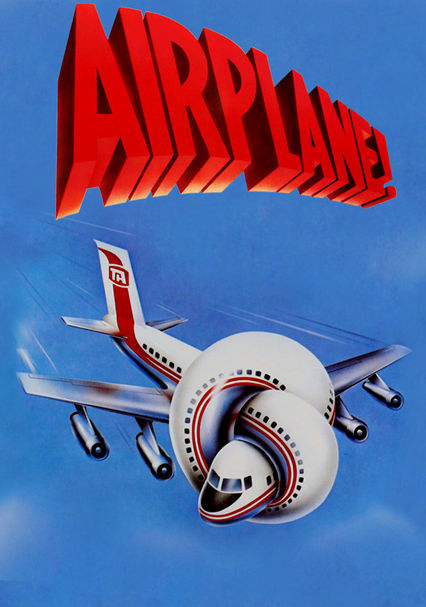
Airplane!-1980

Airplane! -1980

Director Jim Abrahams, David Zucker, Jerry Zucker

Starring Robert Hays, Julie Hagerty

Scott’s Review #1,087
Reviewed December 2, 2020

Grade: A-

Airplane! (1980) is a landmark film in the spoof genre, leading the pack in the decade of silly (the 1980s), where films of this ilk and dumb comedies, in general, became a dime a dozen, oversaturating the market.

While the film is unabashedly brainless with gags for miles, the jokes work, and the tasteless brand of humor provides plenty of belly laughs.

Better yet, Airplane! never ages, holding up incredibly well long after its initial release. It’s just perfect for a Saturday late-night watch, or when one needs cheering.

It’s in my Top 10 comedies.

When it was originally released, the timing was perfect to spoof the aging world of disaster films. I refuse to believe that Jim Abraham and the Zucker brothers had malcontent on their minds since they created a friendly and benevolent yarn that’s well-timed.

Good comedy is tough to find, but this film gets it right. The monotone dialogue said with a straight face is what makes the hysterics genuine and palpable.

Not unfairly, it is to say that Airplane! is to disaster films what Mary Hartman, Mary Hartman was to daytime soap operas. A celebration and a clever wink to each, infusing much-needed light-hearted appreciation.

It’s fun to re-watch Airport (1970) and Airport ’75 with fresh eyes and a new perspective in parallel to this film.

Ted Striker (Robert Hays) is an ex-fighter pilot traumatized by the war, now working as a taxi driver. He is terrified of flying despite his previous occupation.

His girlfriend, Elaine (Julie Haggerty), conveniently a flight attendant, dumps him just before her flight from Los Angeles to Chicago.

Naturally, Ted throws caution to the wind and boards the flight in hopes of reconciling.

When several of the passengers and flight crew succumb to food poisoning, an inflatable named Otto must steer the plane toward Chicago.

The crew convinces Ted to muster up the courage to safely land the plane because Otto cannot do it, and subsequently conquer his fear of flying. A perilous yet comical landing ensues, and Ted and Elaine happily reunite.

The plot is a direct steal from Airport ’75 when poor Karen Black’s flight attendant character is famously instructed how to land the aircraft. Until, in a sexist fashion, the men arrive to take control, sending her back to serve coffee. This is intentional and spot-on to show the ridiculous nature of that plot point.

The gags are legendary, the “Surely you can’t be serious”, “I am serious…and don’t call me Shirley” exchange is the most famous one, always providing a laugh.

The effortless dialogue, as inane as it is, somehow works exceptionally well and combines brilliantly with the pacing and delivery.

It’s like a long and wonderful episode of television’s Saturday Night Live.

The chemistry between Ted and Elaine is very strong, making the audience root for their eventual reconciliation, though it’s obvious they will ride off into the proverbial sunset together.

Actors Hays and Hagerty deserve tremendous praise for aligning the characters so well. Also of note are the efforts of Leslie Nielsen and Peter Graves as Doctor Rumack and Captain Oveur, respectively.

Nielsen would subsequently become famous for spoof films, none of them as good as Airplane!

I’ll never profess to be a slapstick person, but Airplane! (1980) is one that I embrace, undoubtedly because of my love for disaster films and fondness for airplanes.

It is advisable to sit back, relax, and enjoy the zany ride that this satirical and very funny film offers.

The Concorde…Airport ’79-1979

The Concorde…Airport ’79-1979

Director David Lowell Rich

Starring Alain Delon, Susan Blakely, Robert Wagner

Scott’s Review #1,078

Reviewed November 7, 2020

Grade: B

The fourth and final installment of the popular Airport film franchise, The Concorde…Airport ’79 (1979) has an appealing, sophisticated international flavor, mainly French, that may turn off some viewers seeking a more traditional, domestic offering.

The three previous installments contained a wholesome Americana quality that is lacking in this one. The rich culture is the high point for me in a film that by all accounts is not very good.

By the late 1970s, the disaster genre had all but crashed and burned, so the film was commercially unsuccessful, and the franchise was thus abandoned.

The plot is utterly ridiculous, even by disaster standards, and my hunch is that ideas for what could go wrong on an airplane were hard to come by. After all, it’s not easy to top an airliner crashing and sinking into the ocean, leaving most passengers unscathed.

This time, we experience an airplane flying upside down (more than once!), nose-diving (more than once!), and nearly doing backflips and somersaults (more than once!).

Disappointing is the limited amount of deaths that occur despite these treacheries, unless you count a shooting inside an apartment and a suicide that have little to do with the plane ride.

Back to my original point, the cultured and vibrant foreign presence, specifically Paris and its lustrous and historic offerings, is the high point of The Concorde…Airport ’79.

The City of Lights is prominently featured as a team of American Olympic athletes travels from Washington, D.C., to Moscow, with a layover at Charles de Gaulle Airport.

The heavenly site of the Eiffel Tower is an immediate identifier as French pilot, Captain Paul Metrand (Alain Delon), flies the state-of-the-art Concorde to the United States to transport its passengers to the games.

There is a strong French flavor to this film. During the Paris layover, George Kennedy’s Joe Patroni, now a pilot, befriends a gorgeous woman named Francine, with whom he bonds over dinner.

They and others embark on a fabulous French bistro experience and have the time of their lives. Who cares that she is later revealed to be a prostitute? The setting oozes with French goodness, food, and sexy accents.

One peculiarity is why the trip goes from Paris to Washington, D.C., back to Paris, and then on to Moscow. It’s a bit confusing and unnecessary.

Unintentionally funny is how the Concorde is attacked by a drone en route to Paris, and then a bomb is planted on the plane before takeoff to Moscow.

Trouble occurs in the same plane with the same passengers.

You would think anyone with half a brain would sit the second leg out, perhaps hopping on the nearest boat or train out of town.

The main story is secondary and quite superfluous. Robert Wagner plays Kevin Harrison, a corrupt arms dealer who plots the destruction of the Concorde because news reporter and girlfriend, Maggie Whelan (Susan Blakely) has evidence of his weapons sales to communists.

He plans to blow up the plane, killing all the passengers, instead of hiring an assassin to kill only Maggie when she lands and before she can tell authorities.

The plot is completely story-driven.

Several celebrity cameos are added mostly for comic relief and largely go nowhere.

Jimmie Walker as the pot-smoking, saxophone-playing Boise, and Martha Raye’s bathroom-crazed Loretta are ridiculous by any standards. Charo’s one scene as Margarita, a woman who sneaks her dog onto the plane and is subsequently kicked off the flight, is a waste of time.

I would have rather witnessed another scene of Loretta needing to use the restroom or Boise getting high.

And Susan Blakely overacts throughout the film.

Despite all these hard knocks, The Concorde…Airport ’79 (1979) is good entertaining fun, not to be taken seriously, and encouraged for fans of the genre.

There is much fun to be had with the guest stars, once A-list, now B or C-list, and the crash-landing finale over the snowy Alps is pretty cool.

Just know what you are getting yourself into.

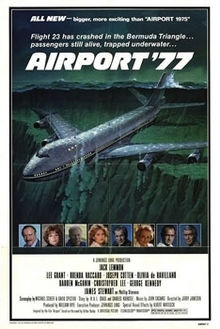
Airport ’77-1977

Airport ’77-1977

Director Jerry Jameson

Starring Jack Lemmon, Lee Grant, Brenda Vaccaro

Scott’s Review #1,072

Reviewed October 20, 2020

Grade: B+

The word that springs to mind after a viewing of the disaster flick Airport ’77 (1977) is “entertaining”. Whether this is positive or negative depends on the viewer and what they want out of a film.

As a huge fan of the disaster genre, I was one satisfied customer, though there is little to distinguish the film from other efforts. It is a more cohesive and professional-feeling effort than its predecessor, Airport ’75.

The fun is watching the cast, the grandiose list of who’s who of Hollywood heavyweights gracing the opening credits.

We wonder who will survive and who will not.

The star is the airplane. Shown in both interior and exterior shots, the luxurious, privately owned Boeing 747-100 is a standout in the picture.

Owned by wealthy philanthropist Philip Stevens (James Stewart), the plane is packed with VIPs and priceless art traveling to his Florida estate for a party.

The wealthy travelers are drugged, and the aircraft is subsequently hijacked before crashing into the ocean in the Bermuda Triangle and sinking 100 feet, prompting the survivors to undertake a desperate struggle to live.

The airplane set is a feast for the eyes. A double-deck plane (naturally!), the plush green carpets, and the spiral staircase, complete with a robust bar stocked with every type of liquor imaginable, are wonderful trimmings.

It allows the viewer to forget all about the typical in-flight treats like their seat being kicked, a screaming baby, or a fat man snoring, and escape to the pleasures of champagne, caviar, and slippers.

Seriously, the sets are tremendous and worthy of their accolades.

Jerry Jameson, primarily a television director, sticks to a formulaic approach that makes the film look like a long television series. Think Murder, She Wrote, Dallas, or Dynasty at 30,000 feet.

I say this because the melodrama is sky-high (no pun intended), and situations arise between flight crew and passengers to create more tension than the crash itself.

The juiciest drama exists between husband and wife, Martin (Christopher Lee) and Karen Wallace (Lee Grant). He flirts with women at the bar, drinks too much, and gets jealous. They squabble. You get the idea.

What a joy it is to see some of the stars on-screen together, specifically Stewart, Olivia de Havilland, and Joseph Cotten. Nicholas Cotten is a romantic match for de Havilland’s Emily Livingston, and they appear to be old friends.

Fans of classic cinema will undoubtedly associate him with Shadow of a Doubt (1943) and her with Gone with the Wind (1939), and to see the legendary stars side by side is darling, nearly worth the price of admission.

Stewart is perfectly cast as the rich and distinguished man eager to see the impending arrival of his estranged daughter and her son, hopeful of a happy reunion.

These delights are why I love this genre.

The actors teeter back and forth between phoning in their lines and enthusiastically having a ball with their respective roles. Sometimes it’s hard to tell which is which. I’ll bet the set was tension-free as everyone was earning a bundle of cash.

And why not? The budget is plentiful and overabundant.

The plot is generally ludicrous, as is to be expected. The thought that anyone, let alone nearly everyone, could survive a crash into the ocean and remain unscathed as it sinks to the depths of the water is beyond silly.

Suddenly, when all passengers conveniently emerge from their drug-induced stupor simultaneously, hysterics erupt, which is quite humorous. As the water slowly seeps into the plane, a frenzied effort to find a way out begins.

The last portion of the film, involving a rescue crew arriving to save the passengers, is a disappointment, lacking much in the way of captivation.

Airport ’77 (1977) has all the elements its target audience expects. If the well-known cast were instead unknowns, the crash peril and its following adventure would not be danger personified, and the dramatic and romantic tensions left out, the film would be a disappointment.

The film is like sinking your teeth into a fattening, highly caloric Whopper from your favorite Burger King. It’s a guilty pleasure you wouldn’t necessarily tell your health-conscious friends about, one you get so much enjoyment from.

But it’s fun, so why not indulge from time to time?

Oscar Nominations: Best Art Direction, Best Costume Design

Airport 1975-1974

Airport 1975-1974

Director Jack Smight

Starring Charlton Heston, Karen Black, George Kennedy

Scott’s Review #1,060

Reviewed September 8, 2020

Grade: B+

Possessing all the disaster film genre schmaltz, proper trimmings, and then some, Airport 1975 (1974) is good, hammy entertainment that gleefully satisfies. However, artistic types will be embarrassed to admit how much they like it.

The Towering Inferno (1974) and Earthquake (1974) were among the highest-grossing films of the year, and it is little wonder why. The offering has enough adventure and peril to satisfy the entire family.

I watched this film practically in tandem with Airport (1970) and it feels a letdown by comparison, but that hardly matters. Both are very good.

With great anticipation, the filmmakers paid a ton of cash to secure a bevy of Hollywood stars of yesteryear, ensuring they could rake in the box office.

Most are past their prime but still marketable. What a treat to see legendary silent film star Gloria Swanson playing herself as a passenger.

The unequivocal star and hero of the film is Charlton Heston, as he also was in Earthquake. Karen Black, Myrna Loy, Linda Blair, Susan Clark, Nancy Olson, and George Kennedy (reprising his role from the first Airport) round out the stellar cast.

Worth its price of admission is watching the opening credits to see who is in the cast.

Unlike Airport, which wisely spent much of its time inside the actual airport setting up the events and stories, Airport 1975 takes flight right away and crafts its trials and tribulations within the aisles and cockpit of the plane.

We learn right off the bat that the main romantic couple is Heston and Black. Captain Alan Murdock (Heston) apparently cannot commit to Chief Stewardess Nancy Pryor (Black), and they plan to meet up in Los Angeles to discuss the drama further.

We know they will have more to do with each other as her flight to La La Land takes off.

Quickly, a small plane flown by businessman Scott Freeman (Dana Andrews) is diverted to Salt Lake City airport, and he suffers a massive heart attack while descending.

His plane naturally crashes into the cockpit of the enormous Boeing 747, killing two pilots and blinding the other.

With no one able to fly the plane, Nancy must figure out how to avert disaster as it cascades over mountains and contemplates a fuel leak. Murdock and crew try to land the plane remotely or get somebody up there to save the day.

Predictably, Murdock is that man.

If Airport 1975 weren’t so damned fun, it would be offensive since it’s riddled with gender stereotypes. Screenwriter Don Ingalls composes a project so fraught with machismo and masculinity that the female characters have little chance to do much of anything without being saved by a man.

Let’s cite a couple of examples. Nancy is left alone in the open cockpit to navigate the plane.

Worth mentioning is that her hair remains perfect throughout.

Anyway, Murdock must explain to her how to check various controls, which he does as if she were a five-year-old learning the alphabet, referring to a picture of the “little airplane” and calling her “dear”.

She rattles off a puzzled “what?” before figuring out where or what the “little airplane” is.

Secondary Stewardess Bette (Christopher Norris) is boy-crazy, asking Nancy if the flight crew is “sexy” before making googly eyes at the Latin pilot, Julio (Erik Estrada). He is married, but that doesn’t seem to bother either of them.

They flirt while he orders her to bring him a cup of coffee. The male characters telling the female characters to get them drinks is a common theme in Airport 1975.

Naturally, Murdock eventually makes it on board to take over the controls and land the plane.

We imagine Nancy’s character thinking, “Good Heavens, thank goodness a man arrived just in the nick of time to save all of us!” She is promptly sent to get Murdock a drink and fluff pillows.

But these are gripes I can look past, given that if this film were made in 2020, Nancy would either land the plane or Murdock would be a female character and Nancy a male character.

Imagine that!

The real threats are the peril and drama associated with the events on the flight.

A sick kid (Linda Blair) must reach land quickly so that she can be provided medical assistance, while a crack in the airplane’s ceiling could burst at any moment, killing everyone on board.

For popcorn-fueled entertainment sure to please any viewer, Airport 1975 (1974) is a perfect late-afternoon, rainy-day suggestion.

It is advisable not to look too deeply into the stereotypes and contrived setups, or this will ruin the fun. Instead, hop aboard and enjoy the bumpy flight from the comfy cushions of your living room with the assurance that you will land safe and sound.

Airport-1970

Airport-1970

Director George Seaton

Starring Burt Lancaster, Dean Martin, Helen Hayes

Scott’s Review #1,059

Reviewed September 2, 2020

Grade: A

The film that helped launch the popular disaster genre that captivated much of 1970s cinema, Airport (1970), led the pack in innovation and entertained audiences with a large cast of A-list Hollywood stars in peril.

What fun!

The blueprint continued with The Poseidon Adventure (1972), Earthquake (1974), and The Towering Inferno (1974).

Interestingly, Airport contains little death, unlike the others, which systematically killed off cast members in a reverse whodunit, more like “who gets it”.

It holds up quite well.

Airport is pure bliss for me. An enormous fan of the disaster epic, this one satisfies my obsessions with airports and airplanes, adding late-1960s sophistication and style, plus a healthy dose of subplots.

From a romantic triangle to mental illness to an elderly stowaway named Ada (Helen Hayes), the storylines mesh so that there’s never a dull moment. Events unfold over a twenty-four-hour period, with a busy, snowy Chicago airport as the backdrop.

The cinematic spectacle was based on a little-known novel of the same name by Arthur Hailey, adapted into a screenplay by George Seaton, who also directed the flick. I love it when a director also writes the dialogue because a better experience often prevails.

Seaton directed Miracle on 34th Street (1947) and a slew of other films, so he knows a thing or two about pulling the heartstrings while offering adventure.

The film was rated “G,” so it’s a family-friendly affair.

A cold and snowy winter night in Chicago results in flight delays and a 707 plane getting stuck on the runway in snow and mud. As crews dig to free the plane, Airport manager Mel Bakersfield (Burt Lancaster) is forced to work overtime.

His furious wife Cindy (Dana Wynter) demands a divorce. He’s in love with Tanya anyway, a pretty customer relations agent for the airline, Trans Global Airlines, a clever play on Trans World Airlines.

Other characters emerge, including a high-spirited chief mechanic (George Kennedy) and Vernon, a married TGA captain having an affair with stewardess Gwen (Jacqueline Bisset), who is pregnant with his child.

The heavy is a mentally disturbed man named D.O. Guerrero (Van Heflin) who is so down on his luck that he desperately crafts a handmade bomb and takes out an insurance policy that his struggling wife Inez (Maureen Stapleton) will receive upon his death.

He boards a plane to Rome with most of the other characters, intent on detonating the bomb, killing himself, and leaving Inez with some financial relief. When she catches on, she hurries to the airport, desperate to stop the flight from departing. Of course, things don’t go so well.

The Guerreros are my favorite characters. D.O. could have easily been written as a villain, one-note, and dastardly, but he isn’t. He is a sympathetic character, pained and wounded; his troubles are the result of war, and he oozes compassion.

Stapleton is tremendous as Inez, the suffering wife who loves her husband and desperately wants them to have a nice life. The actress gives a gut-wrenching performance that should have won her the Oscar.

Instead, it went to Hayes’s comic talents.

The main appeal of these stories is that the audience slowly gets to know and falls in love with the characters. They become like good friends.

The pacing is so good that the real action takes place only in the last forty-five minutes of the film.

Strong characters and rich stories are offered as the buildup, and we know that peril is eventually coming, and indeed it does.

The special effects and the airplane set are fantastic for 1970. The luxury airline, with its plush seats and catered meals, is on display, and the entire length of the plane, including the cockpit, is used extensively.

Characters walk up and down the aisles frequently, creating the illusion of a vast, stylish airliner, even though a small set was probably used.

The stewardesses and pilots offer a glimpse of what a luxury it used to be to fly in style without the annoyances of long security lines, check-ins, and constant hassles.

Hell, D.O. casually walks on the plane with a bomb, and Ada gets on without a second glance when she claims to be giving a passenger their dropped wallet!

Airport (1970) set the tone for similar films and successfully mixes sudsy, dramatic stories of its characters’ lives with the thrills and plights of those same characters in danger.

I don’t consider it the fluff that many others do, but a satisfying, well-constructed film that still holds up well.

Three sequels followed the film and were hilariously spoofed by the comedy Airplane! (1980).

It bears repeated viewings.

Oscar Nominations: 1 win-Best Picture, Best Supporting Actress-Helen Hayes (won), Maureen Stapleton, Best Screenplay Based on Material from Another Medium, Best Original Score, Best Sound, Best Costume Design, Best Art Direction, Best Cinematography, Best Film Editing

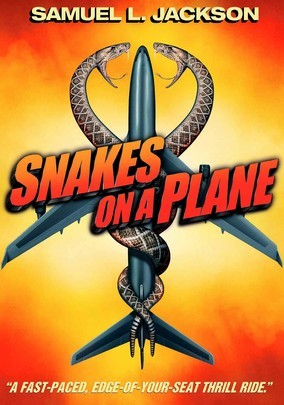
Snakes on a Plane-2006

Snakes On A Plane-2006

Director David R. Ellis

Starring Samuel L. Jackson

Scott’s Review #607

Reviewed January 11, 2017

Grade: B

Snakes on a Plane, the surprise internet bruhaha sensation of 2006, has much to criticize.

The plot is inane, the acting way over the top, and the subject portrayed in such a dumb manner that I could see the results being horrific, but there is just something I enjoyed about the film, too, as admittedly stupid as it is.

I could not help but sit back and enjoy it.

I enjoyed the setting of an airplane- trapped at 35, 000 feet, in peril, has always enamored me (think Airport disaster films of the 1970s).

The story involves a plot to release hundreds of deadly snakes on a passenger flight, to kill a witness to a murder trial.

Of course, innocent passengers meet their dire fates as the cartoon-like characters are offed one by one, in a horror-film style.

Sadly, the film did not live up to expectations, commercially or critically, and was considered something of a dud after all the hype, but I rather enjoyed it for what it was.

Hardly high art, it entertained me.

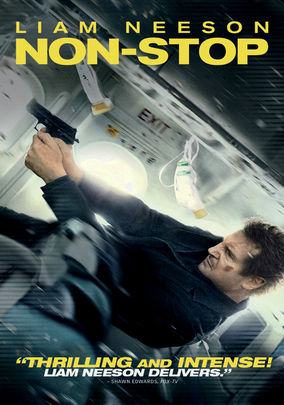
Non-Stop-2014

Non-Stop-2014

Director Jaume Collet-Serra

Starring Liam Neeson, Julianne Moore

Scott’s Review #55

70292864

Reviewed June 22, 2014

Grade: B-

I am a sucker for a good airline disaster action film.

I found Non-Stop (2014) to have two parts- the first one hour and fifteen minutes and the final thirty minutes.

A film like this (action, popcorn flick) requires suspension of disbelief.

The events in this film will NEVER happen.

In recent years, Liam Neeson, at sixty years old plus, has settled nicely into action hero star in mediocre to above-average film roles.

He has found his niche.

The first part of the film is highly entertaining. One hundred and fifty passengers on board an international flight from New York to London are in peril when a terrorist begins texting troubled U.S. Air Marshall (Neeson) that someone on the flight will die every twenty minutes unless One hundred and fifty million dollars is transferred to their account.

From this point begins a compelling whodunit.

Which passenger is sending the text messages? Could it be a flight attendant or the captain of the plane? Several characters are introduced and some red herrings commence. Who begins framing the Marshall? Why?

This is compelling fun stuff.

Most of the action takes place on the plane giving the film a claustrophobic atmosphere.

Then, however, the second part of the film takes over. Not to give spoilers away, but it reaches a ridiculous, silly conclusion, and I found myself saying out loud, “this is stupid”.

A needless and contrived plot of a little girl on the flight is trivial.

I expected more from Michelle Dockery of Downton Abbey fame.  Lupita N’Yongo is given a throwaway role (let’s assume she was cast before her Oscar-winning turn in 12 Years a Slave in 2013).

Popcorn fun, but disappointing ending summarizes Non-Stop (2014).