Tag Archives: Rutanya Alda

The Long Goodbye-1973

The Long Goodbye-1973

Director Robert Altman

Starring Elliott Gould, Nina van Pallandt

Top 250 Films #50

Scott’s Review #830
Reviewed November 14, 2018

Grade: A

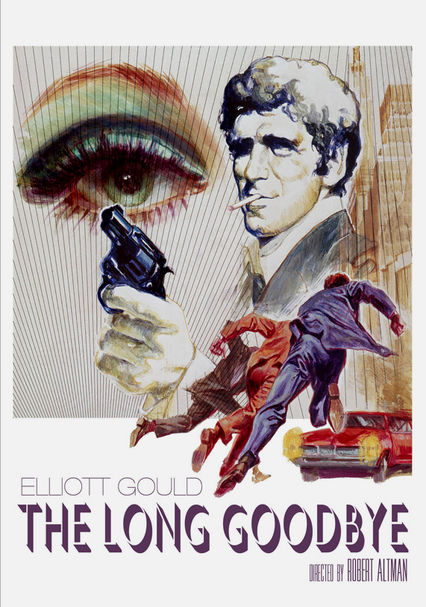
Nearly a full-fledged character study of one man’s moral fiber, The Long Goodbye (1973) is an edgy piece of direction by the famous mastermind Robert Altman.

The setting of Los Angeles’ underbelly is both fabulous and practical, as is the dim lighting and excellent camera work prevalent throughout. The film is not cheery, but rather bleak, which suits me just fine, given the dreary locale.

Perhaps a more obscure Altman offering, but the film sizzles with zest and authenticity.

The film is based on a story written by Raymond Chandler in 1953.

Altman, however, opts to change the setting from 1950 to present times- 1970s Los Angeles and present a film noir experience involving deceit and shenanigans where all is not as it seems.

I think this is a wise move, and I could not help but draw many comparisons (mainly the overall story) to Chinatown (1974), released the year after The Long Goodbye, but a film much better remembered.

Elliott Gould is wonderful as Phillip Marlowe, a struggling private investigator and insomniac. He is asked by a friend, Terry Lennox, for a ride to the Mexico border one night and agrees to do the favor.

This leads to a mystery involving police, gangsters, and Eileen and Roger Wade after Phillip is questioned regarding his connection to Terry, who is accused of murdering his wife, Sylvia.

The seedy side and complexities of several characters are revealed as the story unfolds and the plot gradually thickens.

My favorite aspects of The Long Goodbye are not necessarily the primary storytelling, though the writing is filled with tension.

As the film opens, an extended sequence featuring a “conversation” between Phillip and his cat is both odd and humorous. The finicky feline refuses to eat anything other than one brand of cat food.

As Phillip tries to reason with the cat by talking and meowing, he is forced to venture out in the middle of the night to an all-night grocery store.

Altman, known for allowing his actors free rein with improvised dialogue, appears to let Gould experiment during this scene.

Phillip’s neighbors, a bunch of gorgeous twenty-something females, seem to do nothing except exercise on their balcony, get high, and ask him to buy them brownie mix for a “special occasion”.

As they stretch topless, usually in the background and almost out of camera range, they are a prime example of an interesting nuance of the film. The girls are mysterious but have nothing to do with the actual plot, adding even more intrigue to the film.

In one of the most frightening scenes in cinematic history and one that could be straight from The Godfather (1972), crazed gangster, Marty Augustine (Mark Rydell), slices the beautiful face of his girlfriend to prove a point to Marlowe.

In a famous line, he utters, “That’s someone I love. You, I don’t even like.” The violent act is quick, unexpected, and fraught with insanity.

Finally, the film’s conclusion contains a good old-fashioned twist worthy of any good film noir. In the end, the big reveal makes sense and begs to raise the question, “Why did we trust this character?”

In addition to the viewer being satisfied, Marlowe also gets a deserved finale and proves that he cannot be messed with or taken for a fool.

The Long Goodbye is undoubtedly the best film of Gould’s career. With a charismatic, wisecracking persona, the chain-smoking cynic is considered a loser by most.

He is an unhappy man and down on humanity, but still wants to do what is right. He lives a depressed life with few friends and the company of only his cat.

While his neighbors marginally entertain him, he goes about his days only barely getting by emotionally. Gould is brilliant at relaying all these qualities within his performance.

The addition of the title theme song in numerous renditions is a major win for the film, and something that becomes more noticeable with each viewing. The ill-fated gangster’s girlfriend hums along to the song playing on the radio at one point, and a jazz pianist plays a rendition in a smoky bar.

This is an ingenious approach by Altman and gives the film a greater sense of mystery and style.

There is no question among cinema lovers that Robert Altman is one of the best directors of all time.

In his lengthy catalog of rich, experimental films, The Long Goodbye (1973) is neither the best-remembered nor the most recognizable.

I implore film fans, especially fans of plodding mystery and intrigue, to check this great steak dinner of a film out.
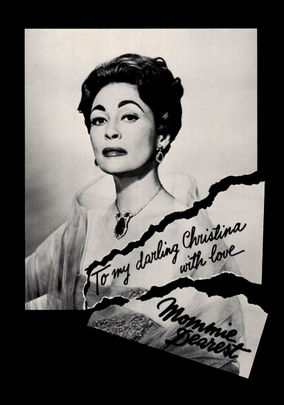
Mommie Dearest-1981

Mommie Dearest-1981

Director Frank Perry

Starring Faye Dunaway, Steve Forrest

Top 250 Films #154

Scott’s Review #195

60020629

Reviewed November 20, 2014

Grade: A

Camp, camp, camp!

By this point in film history, Mommie Dearest and this description go hand in hand, but when made in 1981, it was meant to be a much more serious film than it turned out to be.

Sadly, because of a few very over-the-top lines, it is forever inducted into the halls of cult-classic memory.

Based on the scandalous tell-all book written by Christina Crawford (Joan’s adopted daughter), Mommie Dearest tells the story of Joan Crawford, a Hollywood screen legend, from her heyday in the 1930s until her death in 1977, and mostly focuses on the tumultuous relationship with Christina, played as an adult by Diana Scarwid.

Convinced a baby was missing from her life and unable to conceive after several miscarriages with a former flame, Crawford’s beau at the time, an attorney, wrangles a way for her to adopt both Christina and, later, Christopher Crawford.

Dealing with her mother’s demands and abuse, Christina goes from a happy little girl to a rebellious teen sent to live in a convent and later struggling to find her way as an actress in New York City with no financial support from Mom.

The film also wonderfully describes the career of Crawford- from highs (winning the Academy Award for Mildred Pierce) to lows (being cut from MGM and reduced to screen tests).

The film recounts Joan Crawford’s continuing battles with booze and neuroses.

From start to finish, the film belongs to Dunaway as she becomes Crawford- the eyelashes, the mannerisms, every detail is spot on.

Unfortunately for Dunaway, due to the unintentional comedic view of this film, she was robbed of an Oscar nomination, shamefully so. The film was awarded several Razzies- a derogatory honor given to the year’s worst films.

Dunaway must have put her heart and soul into this performance.

During the infamous wire hanger scene, Dunaway looks frightening as her face, caked with cold cream, reveals a grotesque mask- reminiscent of Batman character The Joker- as she shrieks at her daughter in the middle of the night, during a drunken tirade, after finding beautiful clothes on wire hangers.

She then trashes her daughter’s bathroom, insisting it is already filthy.

One will shriek with gales of laughter as Crawford berates her maid Helga for not scrubbing beneath a potted plant, only to insist, “I’m not mad at you, Helga, I’m mad at the dirt”.

In another haunting scene, Joan throws a birthday party for Christina, complete with a merry-go-round, balloons, presents, and the paparazzi.

Joan’s attire is a little girl’s dress, matching young Christina’s- a morbid foreshadowing of the competition that is to exist between them as the years go by.

The secondary characters are merely an extension of Dunaway’s character and do their best to support her- her harried live-in assistant, Carol Ann, played by Rutanya Alda, both of her love interests, lawyer, Greg Savitt, played by Steve Forrest, and later, Pepsi-Cola mogul Alfred Steele, played by Harry Goz.

The actors do their best with the material given and are neither exceptional nor flawed. None of these supporting characters has any backstory beyond reacting to Crawford’s drama and, if written better, could have given the film a bit more depth.

The look of the film is pleasing- Crawford’s house is beautifully decorated with lavish furniture, and the colors throughout the film are both bright and vivid.

The now-legendary lines of “No wire hangers ever!”, “Christina! Bring me the ax!”, and “Don’t fuck with me fellas, this ain’t my first time at the rodeo” are hysterical in their melodrama and effect.

Crawford is portrayed as an obsessive-compulsive, demanding, control freak. One may debate the authenticity of Christina’s claims against Joan Crawford until the end of time.

Not the masterpiece it was intended to be, Mommie Dearest (1981) can be enjoyed viewing after viewing for some campy silliness, with one hell of a great performance by Dunaway mixed in.

Last Exit to Brooklyn-1989

Last Exit to Brooklyn-1989

Director Uli Edel

Starring Stephen Lang, Jennifer Jason Leigh

Top 250 Films #176

Scott’s Review #152

70141619

Reviewed August 13, 2014

Grade: A-

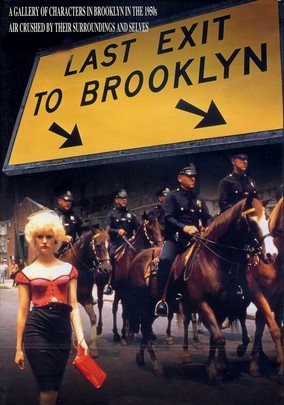
Last Exit to Brooklyn is a slice-of-life type film that takes place in the early 1950s and is set in lower-class Brooklyn, NY.

It tells the story of a group of struggling neighborhood people- sex workers, union members, drag queens, etc. whose lives intersect. Also in the neighborhood is a military base where soldiers come and go on their way to war-torn Korea.

The central characters, though there are several with small yet interesting stories, are Harry, played by Stephen Lang, a sexually conflicted union worker with a wife and newborn child.

He is in love with a selfish drag queen, and Marilyn Monroe lookalike, Tralala, played superbly by Jennifer Jason Leigh, a prostitute whose best days are behind her, and who will do anything for attention.

The sets and cinematography in the film are very well done- the feeling of despair and hopelessness are accomplished by the dowdy streets, homes, and bars that the cast frequents.

Some of the characters are sympathetic- the aforementioned plus Tralala’s love interest, the Diner boy madly in love with Tralala, and the virginal seeming (but not really), Donna, portrayed by a young Rikki Lake. Other characters are abhorrent in their violence and hatred.

Last Exit to Brooklyn is quite a dark film and sometimes tough to watch but captures a dreary time and atmosphere. The Brooklyn set is excellent in its dreariness.

Jennifer Jason Leigh is the standout as the tough-talking, boozy prostitute who is losing her luster and the final scene of the film is truly a heartbreaker.

The topics of union, strike, bisexuality, gangs, and drag queens are covered and unique characters and conflict/loneliness are presented.

This film is an overlooked gem from 1989.

The Fury-1978

The Fury-1978

Director Brian De Palma

Starring Kirk Douglas, Amy Irving, John Cassavetes

Scott’s Review #1,446

Reviewed October 15, 2024

Grade: A-

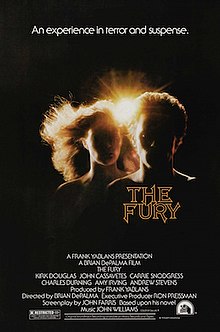
The Fury (1978) is one of Brian De Palma’s films that flies under the radar and is underappreciated. It features many of his trademark effects, such as slow-motion camerawork, and includes actors who appear in more than one of his psychological thriller films.

The story might be more complicated than it needs to be, and while legendary actor Kirk Douglas gets top billing, he disappears for a good part of the film before returning towards the end. He hands the reins to Amy Irving, who capably carries the rest of the film.

This is a small gripe for a film that ranks pretty close to classics like Dressed to Kill (1980), Carrie (1976), and Blow Out (1981).

I’m as guilty as anyone else for underappreciating The Fury since it’s only my second time viewing it.

The all-star cast features John Cassavetes as the villain, Carrie Snodgress, Charles Durning, Douglas, and Irving. That’s enough to make cinema fans want to see it. There are also unique actors in small roles who flesh out the quirky cast in a major win.

The screenplay by John Farris was based on his 1976 novel of the same name, which feels a lot like a popular Stephen King novel.

The Fury utilizes the talents of esteemed John Williams, who scored such greats as Fiddler on the Roof (1971), The Poseidon Adventure (1972), and Jaws (1975), to name a few. The highly lauded composer aptly uses the music to enhance the overall product.

Events start in Israel when a plot separates CIA agent Peter Sandza (Douglas) from his son, Robin (Andrew Stevens), but the distraught father manages to see through the ruse.

He realizes that Robin is being held at an institute by Ben Childress (Cassavetes) because the teenager possesses supernatural powers that Ben intends to weaponize.

Meanwhile, Gillian (Amy Irving), a teen with telekinesis, forms a psychic connection to Robin and teams up with Peter to find and rescue him. They are forced to endure villains intent on destroying them for their own gain.

I am amazed how well the film, made in 1978, holds up tremendously decades later, considering the characters play dated video games and the automobiles are very 1970s. The overindulgence of 1970s ‘stuff’ is what holds the most appeal.

Appealing is the glimpse at hundreds of extras appearing in the many exterior Chicago scenes. While Gillian and her friend La Rue (Melody Thomas Scott) stroll down the boardwalk, they pass teams of regular people harkening back to a time long ago.

The unwieldy American sedans popular in the mid-1970s pepper the streets of Chicago. At the same time, the sofa and carpet styles of the time are prominently featured at the Paragon Institute, evoking a nostalgic hug of authenticity.

When the character Gillian is introduced during a high school sequence that parallels Carrie, the similarities are immediately apparent.

Carrie and Gillian are both high school students with psychic powers, including telekinesis, that harm people who physically touch or provoke them.

The kicker is that Irving also appeared in Carrie, but not as the title character.

The best scenes are when Hester (Snodgress) is struck and killed by a car propelling her bloody body through the windshield or when Institute employee, Dr. Susan Charles (Fiona Lewis) is tortured and spun to death over a lavish dinner table setting.

The food references are plentiful, mouthwatering, and fun to track. Hester and Gillian chat and giggle over heaping hot fudge sundaes, while scrambled eggs and dinner are mentioned during other scenes.

Some plot holes or inexplicable story points, like Robin’s turn into a psycho and turning on his father because another psychic will replace him, aren’t as compelling as other points of the film.

During one scene, Gillian has Robin’s powers transfer to her, causing her body to writhe and contort in an unconvincing way, and Irving looks plain silly.

Being a huge De Palma fan, I’m glad I dusted The Fury (1978) off the shelf because it’s a terrific watch with an exceptional cast. It contains many of De Palma’s trademarks, making it fantastic, especially for his fans.

Rocky II-1979

Rocky II-1979

Director Sylvester Stallone

Starring Sylvester Stallone, Talia Shire, Carl Weathers

Scott’s Review #1,317

Reviewed November 24, 2022

Grade: B+

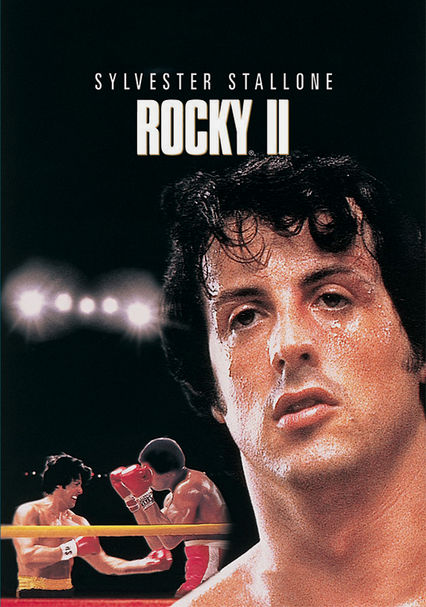
Rocky II (1979) is a terrific sequel and entertaining sports film. It doesn’t recreate the wheel or challenge cinematic artistic freedom or expression or anything like that. But it knows what it wants to achieve and gets there in fine fashion.

It’s a straight-ahead vehicle that capitalizes on the enormous critical and commercial success of Rocky (1976) and enthralls with a winning climax in the squared-off boxing ring, naturally.

The film is a crowd-pleaser through and through, and the powers that be even let boorish, notoriously difficult actor Stallone take the director’s reins (yikes!).

The actor even writes the screenplay for the film.

Events begin immediately following the first Rocky film, which is a wise decision. Cocky world champion Apollo Creed (Carl Weathers) has defeated working-class Philadelphia boxer Rocky Balboa (Stallone) in the closest of battles, with both men requiring medical attention.

Despite vowing not to engage in a rematch, Rocky’s Cinderella story has caught the national sports media’s attention, allowing him to capitalize on his sudden fame. Creed arrogantly prods his newfound nemesis into getting back into the ring.

Plagued with financial problems and a pregnant wife, Rocky is goaded out of retirement and back into the ring for the fight of his life.

Supporting players Talia Shire (Adrian), Burgess Meredith (Mickey), and Burt Young (Paulie) return to the fold, which provides excellent continuity and familiarity, another key to Rocky II’s success.

Additionally, Shire, Meredith, and Young are such top-quality actors that they enhance Stallone’s performance.

Rocky is unquestionably the best role of Stallone’s long career. Never known for great acting chops, he won the lottery with this iconic role and did quite well with it on his second outing.

The character is impossible not to root for, and the Italian Stallion’s charisma shines across the big screen. Who doesn’t like an underdog, especially when all he cares about is the timid Adrian (another underdog)?

His ‘Yo, Adrian, I did it!’ is legendary.

I’ll never cease to be enamored with Shire’s portrayal of Adrian compared to her other iconic role as Connie Corleone in The Godfather films. Adrian and Connie are like night and day, which is a big part of the fun of viewing them both.

Of course, the setup of Rocky II is contrived, and the storyline dictated. We know the final thirty minutes or so will showcase the bloody rematch between Rocky and Creed, and we, the audience, salivate thirstily as the fight approaches.

There’s a trivial plot about Adrian giving birth to their son (Rocky Jr., obviously) and slipping into a coma, only to be resurrected by determination and to give her blessing for Rocky to fight, but we all know what’s coming.

Like clockwork, the final fight arrives! As the men slug it out through fifteen brutal, sweaty rounds, the editing is fantastic. The sequence feels like a retread, but it still delivers an enthralling, bombastic finale.

Fans will not be disappointed.

Sure, Rocky II suffers from a saccharine romance and a predictable ending, but it’s also a feast for the eyes and the ultimate sports match-up.

Compared to Rocky (1976), the film is a letdown despite carefully keeping the Philadelphia underdog, blue-collar elements that made the original such a hit.

Subsequent sequels would parlay into nationalistic, patriotic nonsense using the Cold War as a prop, but Rocky II (1979) remains all-American and robust in spirit and climax.

When a Stranger Calls-1979

When a Stranger Calls-1979

Director Fred Walton

Starring Carol Kane, Charles Durning

Scott’s Review #1,046

Reviewed July 29, 2020

Grade: B+

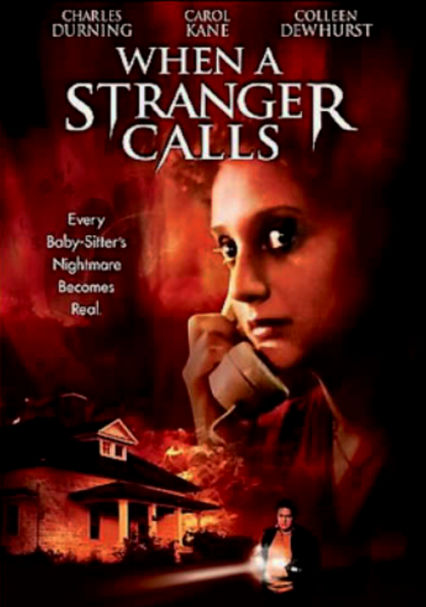
When a Stranger Calls (1979) has the great honor of possessing one of the most frightening twenty minutes in horror film history, kicking the daylights out of the stunned and transfixed viewer from the first frame.

While still a very good film, the pacing slows and shifts into a different kind of film before kicking back into high gear for the final twenty minutes of action.

This results in some imbalance and imperfections throughout.

Carol Kane, Tony Beckley, and Colleen Dewhurst make the film as good as it is, and they are the standouts for me.

Teenage babysitter Jill Johnson (Carol Kane) calmly walks through an affluent California neighborhood for a quiet evening of watching two children.

The doctor and his wife are embarking on a night of dinner and a movie, and the children will be no trouble, Jill is told, since they are recovering from colds and are already fast asleep in their beds.

Shortly after they leave, Jill begins receiving odd phone calls from a man who asks, “Have you checked the children?” At first, assumed to be a practical joke, the calls become more menacing, prompting Jill to get the police involved.

Now terrified, Jill is told by the alarmed police to calmly get out of the house because the calls she is receiving are coming from inside the house!

She flees and is met head-on by Detective John Clifford (Charles Durning), who apprehends an English merchant seaman named Curt Duncan (Tony Beckley), who has ripped the children to shreds with his bare hands.

He is subsequently sent to an asylum, only to escape seven years later, prompting Clifford to hunt him down like an animal.

The film is sectioned into two segments and multiple genres. The beginning and conclusion are standard horror sequences, while the guts of the film delve into a psychological thriller or crime-drama territory, with similarities to Dirty Harry (1971).

Clifford spends much of his time trying to track down Duncan in a cat-and-mouse game throughout Los Angeles. Colleen Dewhurst plays a middle-aged woman who catches the eye of Duncan one night in a seedy downtown nightclub.

Director Fred Walton makes Clifford a hard-edged, grizzled detective who has seen it all and has no mercy for Duncan, intent on killing him rather than capturing him.

Durning is not the best part of the film, and the role might have been cast with a more charismatic actor.

Perplexing is what Duncan’s motivation is for killing others, other than simply being crazy, which is not a good enough explanation. Was he abused as a child? During some scenes, he is sympathetic, more like a wounded child than a crazed killer.

He wants a friend, whereas Clifford, the good guy, is sometimes unsympathetic and tough to root for.

With “deer caught in headlight’s eyes” expressions and emotions, Kane’s Jill is brilliant at using her eyes to great benefit. The audience feels her peril, fear, and panic during her scenes. When Duncan resurfaces looking for her again (though it’s not clear why he obsesses over her), her nice life, two children, and husband’s lives are all placed in jeopardy.

Dewhurst, who could have easily been cast as the lead in Gloria (1980), is tough as nails and no-nonsense, though she does feel sympathy and some attraction for Duncan.

In 1996, when Scream was released and provided the oomph that the horror genre desperately needed, thanks were justifiably given to When a Stranger Calls for its mighty influence.

The first twelve minutes of Scream (1996) are a direct homage to this film when a stranger calls (pun intended!), and the leading lady’s life spirals out of control due to a phone call and a menacing voice.

Parts of the opening sequence are influenced by Black Christmas (1974), a brilliant horror film instrumental in the making of so many others. The revelation that the killer is inside the house is a plot device that remains scary and satisfying.

Offering a cross-genre approach that works best with its terrifying horror elements, When a Stranger Calls (1979) is a sometimes terrific, sometimes uneven picture.

Thanks to compelling acting, the slowed-down middle portion does not ruin the entire experience, but what an erupting and memorable beginning and end.

Followed by an unsuccessful sequel and an even more disappointing remake in 2006.