Category Archives: Post-apocalyptic

On the Beach-1959

On the Beach-1959

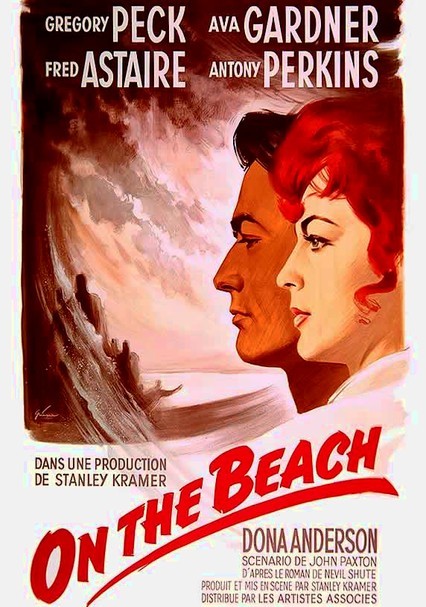
Director Stanley Kramer

Starring Gregory Peck, Ava Gardner

Scott’s Review #1,179
Reviewed September 19, 2021

Grade: A-

On the Beach (1959) is a film that showcases a grim subject matter but remains relevant considering the period in which it was made.

The Cold War era kept most people on edge with the threat of nuclear war as it rolled into the 1960s.

The lavishness of the 1950s turned into a more distrustful time as countries gained modern technological advances, making nuclear weapons a real possibility.

The film was not met with much praise or popularity at the time.

Indeed, people were content in the cinematic bubbles of nice, comforting films that largely emerged during the 1950s, but On the Beach was a fantastic discovery decades later.

I suppose people expected a sweeping epic romantic adventure, but they received a harsher tale. It’s not nearly as dark as it could have been.

The black-and-white cinematography is highly effective at conveying a cold, stark world that is left for the film’s characters. Another success is that the film is set in the future, 1964 to be exact, while the film was made in 1959.

The film is hardly a downer.

While the subject matter of nuclear disaster and devastation sounds heavy, there is as much romance as social storytelling. The romance between Peck and Gardner is compelling and the best part of the film experience.

As the story begins, we learn that World War III has already occurred, leaving Australia the only remaining safe place for survivors.

However, wind currents carrying lingering radiation are headed their way, condemning those on the continent to certain death.

When the survivors receive a strange signal from San Diego, California, Commander Dwight Towers (Peck) must embark on a mission with Lieutenant Peter Holmes (Anthony Perkins) to see if humanity still has hope.

They leave behind Moira (Gardner) and Mary (Donna Anderson), the women they love.

Director Stanley Kramer knows his way around a message movie. In 1967, he directed the racially significant Guess Who’s Coming to Dinner, starring Spencer Tracy and Katharine Hepburn.

The romance between Dwight, Moira, Peter, and Mary is my favorite aspect of the film. Dwight has lost his wife and two children, so out of loneliness, he falls for Moira, who has never married and has no one.

Their soon-to-be doomed romance is fraught with complications as they tenderly cling to each other, knowing their time is limited.

Peter and Mary, on the other hand, are married with an infant young daughter. A significant conflict the couple deals with is whether to take suicide pills rather than get sick and die a slow and painful death.

There is enough chemistry between Peck and Gardner to keep the viewer engaged, but it’s tough to watch Perkins, a known gay man, play a macho father figure with a newborn.

For some reason, it’s also hard not to see Norman Bates from Psycho (1960). I half-expected Peter to attack Mary in the shower with a butcher knife.

Still, the acting is good.

On the Beach states a powerful message in its conclusion. Ultimately, within just a few days of the shifting winds bringing the toxins to Australia, the last pockets of humanity are dead.

Melbourne’s empty, windblown streets are filled with dramatic music over a single powerful image of a previously seen Salvation Army street banner that reads, “There is still time… Brother”.

Indeed, there is.

This leaves the viewer pondering their fate and the terrible dangers of nuclear war. Decades later, On the Beach (1959) still frightens and teaches about the ravages of world conflict and the plea for a peaceful society.

Oscar Nominations: Best Scoring of a Dramatic or Comedy Picture, Best Film Editing

Golden Globe Nominations: 1 win-Best Motion Picture-Drama, Best Director-Motion Picture-Stanley Kramer, Best Performance by an Actor in a Supporting Role in any Motion Picture-Fred Astaire, Best Original Score-Motion Picture (won), Promoting International Understanding
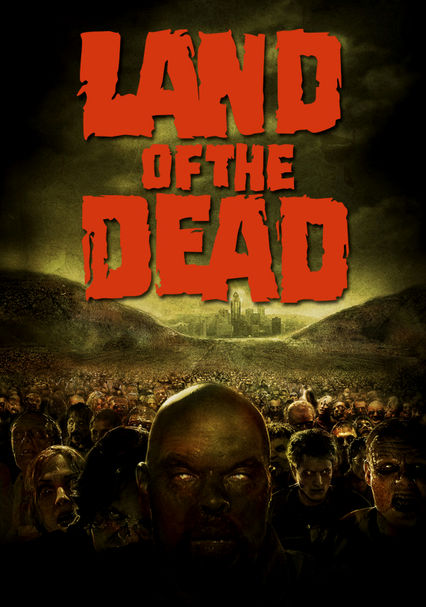
Land of the Dead-2005

Land of the Dead-2005

Director George A. Romero

Starring Simon Baker, John Leguizamo

Scott’s Review #1,077

Reviewed November 6, 2020

Grade: C+

Land of the Dead (2005) is a post-apocalyptic horror film written and directed by George A. Romero, the fourth of Romero’s six Living Dead movies, preceded by Night of the Living Dead (1968), Dawn of the Dead (1978), and Day of the Dead (1985).

The result is a mediocre effort, with weak acting and too much silliness. The film’s goofy nature negates any sense of foreboding or dread, despite plenty of zombies.

The result is camp over horror, rather than a blended mix of both, which would have worked better.

Comparing Land of the Dead to Night or Dawn is a tough ask, since the former is so much better and makes political points.

There is nothing like that in Land of the Dead besides a weak side story about the class distinction that goes nowhere, and some jokes about the Bush regime.

That’s a shame because it would have made the film more relevant.

What we are served is a healthy dose of shoot ’em up or slice ’em up scenes where zombie heads or some other appendage are blown or sliced off.

This was fun for a while, but I wanted something more.

Wisely, and staying true to the other films, the events are set around Pittsburgh, Pennsylvania, which helps with continuity. The geographical reference to the famous “three rivers” immediately identifies the city used.

As events kick off, we learn that the zombie population has outnumbered the human population, forcing the humans to barricade themselves within a structured community for safety.

There exist the haves who live in a luxury high-rise and the have-nots who survive in squalor.

Dennis Hopper plays the rigid government figure, Paul Kaufman, and our good guy is the handsome Riley Denbo (Simon Baker), who helps those in need.

Conflict erupts when it’s discovered that the zombies exhibit superior intelligence. They storm the gates of the city in droves and wreak havoc on the people of the community.

Other characters along for the ride are Cholo (John Leguizamo), Slack (Asia Argento- yes, daughter of famous horror director Dario Argento), and Charlie (Robert Joy).

The rest of the film is a battle between good and evil (the zombies and greedy Paul) and not much else.

Why do zombies exhibit advanced intelligence? Are they cloning or are more humans becoming zombies? These questions are not answered.

Creatively, Land of the Dead looks good. It is stylistic, dark, and mysterious. Scenes where zombies parade around in misty and gloomy conditions are cool. The slicker, more commercial style gives a modern, fresh look and feel.

Reminiscent of Danny Boyle’s 28 Days Later (2002), that’s not a bad thing, though it’s tepid for Romero. 28 Days Later rejuvenated the zombie genre, so patterning after it doesn’t hurt Land of the Dead.

Another positive is the homoerotic nature of the relationship between Cholo and Mike (Shawn Roberts), a rookie. Both masculine and aggressive, there exists a hint of tenderness and closeness that feels romantic.

When Mike is bitten and commits suicide to avoid turning, Cholo is devastated, implying that they might have shared a close background.

Unfortunately, this is never explored after Mike’s death.

On that note, the characters are not particularly interesting or well-crafted. Paul is merely bad, while Riley is heroic. Cholo is angry and rebellious, while Slack is a prostitute. Charlie is the sidekick.

Everyone has their place, but little substance is given to their past lives, their hopes for the future, or anything beyond escaping the zombies. I get that’s the goal, but more personal stuff would have been better.

The rest is what you would expect from a zombie film and nothing more, which feels lazy of Romero, especially since he wrote the screenplay. He tends to deliver better products with some meaning or interpretation.

In Dawn of the Dead, for example, the zombies sought the mall because it was familiar to them. One could argue that a city and its lights offer more of the same, but this feels weak and has already been explored.

I guess I was expecting more of something that would grab me into the world of the film, and nothing ever did.

A forgettable affair, Land of the Dead (2005) does not require repeated viewings as its predecessors do. This film was one-and-done for me.

Some trimmings and entertainment are present, but I yearned for more substance than a standard Saturday late-night zombie fest. There are enough of those already.

Zombieland-2009

Zombieland-2009

Director Ruben Fleischer

Starring Jesse Eisenberg, Woody Harrelson

Scott’s Review #586

Reviewed January 6, 2017

Grade: B

Zombieland (2009) is a fun, entertaining, popcorn-style flick. The film is not designed to be taken very seriously given the subject matter of zombies- nor should it.

Rather, the film goes over the top frequently to elicit a good time and plays for laughs. Sometimes it is successful, adding dark comedy to the story; other times the film comes across as silly.

The story takes place during a time when zombies have overtaken the world, and humans are left to fend for themselves and survive.

The film is a more cartoon version of the popular television series, The Walking Dead, despite pre-dating it.

Though it lacks the heavy drama of the series.

Still, for 2009, the film is a novel idea, and the movie works more often than not.

Woody Harrelson is amusing and charismatic. Jesse Eisenberg is falling into the Ben Stiller and Will Ferrell trap of playing the same character over and over again.

I am personally a big fan of Abigail Breslin, and she does not disappoint in this film.

Zombieland (2009) will likely only be remembered as a fun midnight, Saturday night fluff film, if that.

28 Weeks Later-2007

28 Weeks Later-2007

Director Juan Carlos Fresnadillo

Starring Robert Carlyle, Rose Byrne, Jeremy Renner

Scott’s Review #513

70058018

Reviewed November 6, 2016

Grade: B-

At the time of its release, I remember 28 Weeks Later (2007) as a successful follow-up to the original 28 Days Later (2002), a clever play on the title, and as picking up events some seven months after the original.

Watching the film now, however, I see flaws, mostly in the lack of a character-driven story and the resulting traditional action-type film.

Still, the film is far from all bad.

The action begins as the audience meets a “family”, barricaded in a homey residence, attempting to resume normalcy in life by preparing and serving a delicious family dinner- almost reminiscent of Thanksgiving.

The scene is tranquil and rich in familiarity.

When a little boy pounds on the door to be let in, the terror begins, and the Rage virus is proven to be alive and well still.

The story written for 28 Weeks Later has nothing to do with the original and contains none of the original characters. Rather, a father, mother, and a young boy and girl are the family that we follow throughout the film.

Rose Byrne stars as a doctor- laughingly named Scarlet- and Jeremy Renner as a U.S. military presence, NATO having been sent in to keep order as best they can.

The opening sequence is fantastic as peacefulness turns deadly rather quickly, and the characters are in immediate peril.

In another scene, when the father and mother are alone in a laboratory and events go awry, the sequence is gory, shocking, and quite heartfelt.

These are merely moments, however, and are not quite enough to carry the film into a successful sequel.

Another positive to note, even more prevalent than in the original, are the wonderful location shots of London. From the London Eye to Big Ben to street shots of downtown London and the surrounding streets are capably done, and I loved seeing the aerial views of said city.

The conclusion at Wembley Stadium was also great. This was a treat for any London fan and gave the film a clear sense of place.

Conversely, I was not a fan of the characters in 28 Weeks Later.

Whereas, in 28 Days Later, the characters were well-drawn and compelling, rich with beauty and emotion, the same cannot be said for the sequel.

I am unclear what the purpose of Renner’s tough, no-nonsense military type was, or Byrne’s sympathetic, but pointless turn as a scientist/doctor.

Both held little appeal and gave snore-worthy performances. Or perhaps the roles were just not written well. Regardless, neither worked.

The dynamic between the father and mother did work, but the kids were not the best actors, and I found their additions pointless as well.

The last scene, a frenetic trip through a tunnel by the infected and arriving in gorgeous Paris- a shot of the Eiffel Tower as proof- is a nice touch.

With a few nice touches, cool location shots, and intense peril in a few sequences, but with limited compelling characters, 28 Weeks Later (2007) is okay, but hardly an upgrade to the original or even close to a character-driven film.

No follow-up film, while initially planned, was ever completed, at least as of this writing.

28 Days Later-2002

28 Days Later-2002

Director Danny Boyle

Starring Cillian Murphy, Naomie Harris

Scott’s Review #507

60027998

Reviewed November 2, 2016

Grade: B+

Before the influx of zombie-related horror films and television shows filled the land- arguably offset by the success of The Walking Dead series, a little film came along.

Now almost teetering on the brink of being forgotten, this genre presented it with fresh insight and creative storytelling, posing questions amid the mayhem.

28 Days Later (2002) rejuvenated this largely dormant film category with a gritty story of peril among a group of survivors spared from a deadly virus.

The film is smart in how it explores moral issues and society’s need to continue.

We initially are immersed in confusion as chaos immediately ensues.

After a brief prologue of a group of laboratory chimpanzees gone mad, inflicted with rage, being let loose by animal liberators, and killing all present as well as inflicting the humans, we meet a lone man named Jim.

The timing is relevant as it is “28 days later” from the incident.

The young man awakens in a hospital to find himself alone amid downtown London- not a soul in sight. Fortunately, he has been in a coma and missed the crumbling of society due to an outbreak- somehow Jim has been spared.

Gradually, Jim meets others uninfected by the virus, and they forge through the country in search of a military base rumored to be a haven.

The infected humans are not zombies, but rather, violent creatures who destroy anyone in their path.

The film not only presents the grotesque creatures but also challenges the audience to think in a political sense- how will the survivors forge a new society?

How will women be treated differently from and by their male counterparts in a world that now lacks any police force or government?

My initial reaction to watching 28 Days Later- years after its initial release- is that it now seems slightly dated, but that has more to do with the legions of copycat films that have come after it and have been exposed to.

We have become more encompassed by this type of film, both in genre and in style. Appreciation is warranted for its gritty, fast-paced camera-work, extreme violence, and the use of “infected” who turn from human beings to vicious beings.

A fantastic part of this film is that it is not simply a horror film; it is more layered than that.

There are moments of great beauty and tender moments among Jim and Selena, the sole surviving female other than the young, waif-like Hannah, whose world has been shattered by the death of her loved ones.

In one sad scene, a couple has peacefully committed suicide, rather than face what would surely become of them.

There is a sense of a human story in 28 Days Later (2002), which made me find the film heartfelt and almost sweet.

Even the military soldiers- their motivations questionable- are relatable based on the world being turned upside down.

A layered, complex zombie film with some character-driven elements.