Category Archives: Best Picture-Musical or Comedy Golden Globe Winners

An American in Paris-1951

An American in Paris-1951

Director Vincente Minnelli

Starring Gene Kelly

Top 250 Films #113

Scott’s Review #120

Reviewed July 19, 2014

Grade: B+

A classic film directed by Vincente Minnelli, An American in Paris is a musical from 1951 set in marvelous Paris- though, to be fair, the entire movie, save for the opening scenes of Paris, is shot exclusively on a sound stage.

Gene Kelly stars as Jerry Mulligan, a struggling American artist who lives in a quiet neighborhood with his best friend, Adam Cook.

Jerry optimistically sings and tap-dances his way through life, befriending neighbors and school kids and spending time at the local cafe until he is finally noticed by wealthy art buyer Milo, played by Nina Foch.

This sets off a quadrangle when Jerry falls for youthful Lise (Leslie Caron), already dating a suave French singer, Georges Guetary.

An American in Paris is a cheerful fantasy film. It is bright and colorful and filled with musical numbers and dancing.

Highlights in this department are “‘S Wonderful” and “I Got Rhythm”.

The brilliance lies in the incredible eighteen-minute epic finale, which features Gene Kelly’s ballet on Parisian sets designed by various artists. It is as innovative as anything in film history.

The film’s drawback is the lack of chemistry between Kelly and Caron, which I notice more with each passing viewing.

There is more chemistry between Kelly and Foch, who is meant to be the odd woman out, and I still find myself rooting for them rather than the intended couple.

I love that none of the four characters in the story is a villain, which adds to the film’s merry feel.

The predictable ending is fantastic and romantic.

An American in Paris won the 1951 Best Picture Oscar, upsetting the heavily favored A Streetcar Named Desire.

Oscar Nominations: 6 wins-Best Motion Picture (won), Best Director-Vincente Minnelli, Best Story and Screenplay (won), Best Scoring of a Musical Picture (won), Best Art Direction, Color (won), Best Cinematography, Color (won), Best Costume Design, Color (won), Best Film Editing

Golden Globe Nominations: 1 win-Best Motion Picture-Musical or Comedy (won), Best Director-Motion Picture-Vincente Minnelli, Best Performance by an Actor in a Motion Picture-Musical or Comedy-Gene Kelly

Guys and Dolls-1955

Guys and Dolls-1955

Director Joseph L. Mankiewicz

Starring Marlon Brando, Frank Sinatra, Jean Simmons 

Scott’s Review #887

Reviewed April 19, 2019

Grade: B+

The interesting pairing of Marlon Brando and Frank Sinatra in the playful musical Guys and Dolls (1955) provides enough bombast and playboy inclinations to make the music lively and entertaining.

Though not one of my all-time favorites in the genre, the film keeps pace with a nice flow and hearty musical numbers, successfully transferring the Broadway show to the big screen with an endearing production.

Nathan Detroit (Sinatra) is a full-fledged gambler who lives and breathes the sport.

Although he is commonly criticized for his deeds, the police are clamping down on the shenanigans around town. He is desperate to obtain a deposit for the use of a secret venue that allows gambling.

Spotting acquaintance and fellow gambler Sky Masterson (Brando) the duo embark on a ridiculous and hilarious bet involving Sky’s invitation to dinner in Havana, Cuba with Sarah Brown (Jean Simmons) a devout religious figure and non-gambler.

Predictably, events spiral out of control with romance, misunderstandings, and charming musical numbers.

The setup is plot-driven but forgivable, given the fun involved. We are sure Masterson will fall head over heels for the missionary and seemingly unattainable Sarah.

Will he get the girl? Will she forgive him when she realizes what Masterson and Nathan have hatched at her expense? Of course, the fun is in the revelations as the film goes along.

Naturally, Nathan has his antics. He must marry his years-long intended, Adelaide (Vivian Blaine), because he lost a different bet.

The premise, plot, and conclusion all feel rather frivolous and chauvinistic in the modern world, as do many 1950s productions.

The film clearly shows a naughty guy meeting a good girl. The guy pursues the girl, gets her, and then rides into the sunset. The overall production is not cutting-edge or particularly progressive, but it is okay because of the fun and good chemistry among the characters.

Brando and Sinatra possess as much chemistry together as Brando and Simmons do.

The conclusion is satisfying and wrapped neatly like a tidy Christmas bow. To no one’s surprise, both couples tie the knot in beautiful style as all the misfires and misunderstandings end with a double wedding in Times Square, with Sky marrying Sarah and Nathan marrying Adelaide.

A perfect climax and a way to show the bright and bustling New York City amid a romantic backdrop can forgive any other weaknesses the film may contain.

What makes the film rise above standard fare and mediocrity as an overall piece is the wonderfully adorable tunes and the pairing of Sinatra a Brando.

The actor-turned-singer Brando and the singer-turned-actor Sinatra crackle with harmony as they play off each other in style.

The clap-along “Sit Down You’re Rockin’ the Boat” never fails to get any audience on its feet, and the clever “Luck Be a Lady,” a classic Sinatra standard, still resonates today.

The art direction, cinematography, costumes, and music all wrap the film together nicely, giving it a tight, well-muscled, extravagant feel with maturity and richness that is perfect for the decade in which it was released.

Guys and Dolls sits beside other musicals with a style all its own. A handful of Oscar nominations followed, though none were for the top honors of Picture or any acting nominations.

The 1960s brought a decidedly darker texture to cinema, leaving many 1950s films feeling dated or superfluous compared to more essential story directions.

While this is the case with Guys and Dolls (1955), there also exists an innocence in watching the pure and charming character relationships and the resulting fun and frolicking.

A lively musical score, the bright lights of New York City, and the unusual locale of Cuba make the film lovely entertainment.

Oscar Nominations: Best Scoring of a Musical Picture, Best Art Direction, Color, Best Cinematography, Color, Best Costume Design, Color

Golden Globe Nominations: 2 wins-Best Motion Picture-Musical or Comedy (won), Best Actress in a Leading Role-Jean Simmons (won)

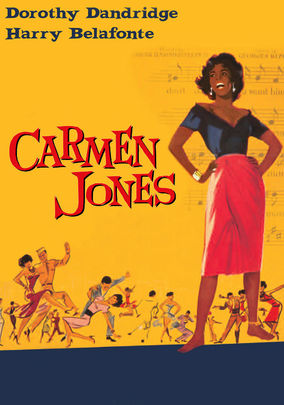
Carmen Jones-1954

Carmen Jones-1954

Director Otto Preminger

Starring Dorothy Dandridge, Harry Belafonte

Scott’s Review #736

Reviewed April 3, 2018

Grade: B+

It was pretty taboo at the time of release (1954) because it featured an all-black cast with no white members. Carmen Jones is to be celebrated for her contribution to film history for this groundbreaking feat alone.

Directed by Otto Preminger (who, ironically, is Caucasian), the film features legendary actress Dorothy Dandridge in a Marilyn Monroe-style performance worthy of the stars’ talents.

The film is a musical with an inevitable tragedy at the conclusion.

The 1954 feature is based on a 1943 stage production of the same name, based on the music of the famous 1875 Georges Bizet production of Carmen.

These facets add to the film’s richness, as it is layered with solid historical detail, and the well-known tragic elements make the conclusion unsurprising.

Brazen and beautiful, Carmen is a seductress who works in a parachute factory in North Carolina during World War II.

After trading fists with a co-worker, Carmen is jailed and assigned to handsome Corporal Joe (Harry Belafonte), who is to escort her to the authorities.

While Carmen is not shy about pursuing the young man, his fiancée, virginal Cindy Lou, fumes and schemes to keep her man.

The result is a triangle. Carmen and Joe eventually fall madly in love, leaving poor Cindy Lou behind, but their love faces hurdles.

The somewhat lighthearted first portion of the film, with coquettish humor, is offset by a much darker path it takes.

As Carmen and Joe finally profess their love and share a night of passion, she leaves him in the middle of the night, unable to endure prison time.

This results in Joe being imprisoned, as the couple ultimately cannot stay apart despite repeated obstacles to their happiness.

An additional character, a boxer named Husky, with designs on Carmen, is introduced, complicating matters.

In a sad form, much like the opera Carmen, the final scene is devastating and startling as Joe treads a dark, gloomy path of destruction. The character of Joe is nuanced- at first, a “nice guy”; the character is an example of complexity and what a man will do for love.

The viewer wonders what will become of Joe and how he could risk his life performing an act in the heat of passion.

In 1954, what a profound and fantastic role for a female, let alone a black female. Typically cast in roles such as maids, servers, or even less glamorous parts, Dandridge was wonderful to see capture a challenging role of this caliber.

She is a vixen as she sinks her teeth into the meaty and flirtatious Carmen.

Dandridge’s pizzazz, flair, and singing and dancing performances made her a star, and she is forever known as a groundbreaking talent.

There cannot be enough said about the importance of casting all-black actors in Carmen Jones. Monumental, of course, given the time.

The result is a film of significance to black culture, showing that they no longer needed to appear in “white films” as supporting players but could carry a movie on their own.

How profound and remarkable this was!

My only criticism of the film is undoubtedly related to the progress made for black actors and characters, though there is still plenty more work to be done.

At times, the filming feels a shade dated (there are more great roles for black actors now) and has a slightly grainy look.

Some of the supporting characters’ acting is also not the strongest, but as Carmen Jones is a historical film, liberties must be taken.

Thanks to the genius and the funding of Preminger, who needed to produce the film independently due to a lack of interest, the result is a film that has gone down in history as worthy, edgy, and open-minded.

Wisely casting talented stars with great pipes, the film is a solid success.

Oscar Nominations: Best Actress-Dorothy Dandridge, Best Scoring of a Musical Picture

Golden Globe Nominations: 2 wins-Best Motion Picture-Musical or Comedy (won), New Star of the Year-Actor-Joe Adams (won)