Category Archives: Coming-of-Age

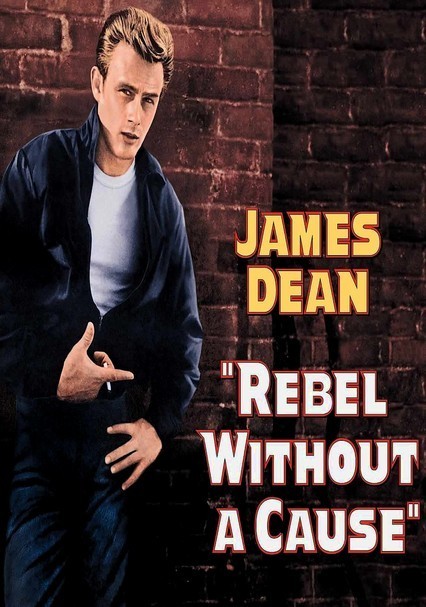
Rebel Without a Cause-1955

Rebel Without a Cause-1955

Director Nicholas Ray

Starring James Dean, Natalie Wood

Top 250 Films #112

Scott’s Review #885
Reviewed April 14, 2019

Grade: A

Rebel Without a Cause (1955) is usually most associated with being the best-remembered film of star James Dean’s short-lived career. East of Eden (1955) and Giant (1956) are his other notable films in a far too brief span of time.

With Rebel Without a Cause, Dean and underappreciated director Nicholas Ray crafted a story about teenage angst and rebellion that is brilliantly authentic and was the first of its kind to influence countless other films.

In Los Angeles, three teenagers meet and commiserate at the juvenile section of the police station, revealing their respective crimes.

Jim Stark (Dean) has been brought in for drunkenness and meets John “Plato” Crawford (Sal Mineo), who was brought in for killing a litter of puppies, and Judy (Natalie Wood), who was brought in for curfew violation.

All three suffer from problems at home and confide in one another. Their most profound revelations connect them and bond them for life.

To complicate matters, Jim is a new student and must endure the challenges that come with it, in addition to his troubled home life.

His main rival is Buzz Gunderson (Corey Allen), who challenges Jim to a knife fight and, finally, a deadly “Chickie Run” game.

This leads to Buzz’s death, which infuriates his gang, who mistakenly assume that Jim ratted them off to the cops. This puts a target on Jim’s back as he slowly falls in love with Judy and develops a deep friendship with Sal, who idolizes him.

One key to the success of Rebel Without a Cause is in the casting. Dean, rebellious in real life and the roles he portrayed, chews up each scene he appears in.

The famous scene in which Jim quarrels with his father (Jim Backus) culminates in a dramatic emotional unraveling and an exclamation of “You’re tearing me apart!” as his blind-sided parents bicker over how best to handle the situation.

Dean is a pivotal reason for the film’s success and landmark status.

Wood infuses her character, Judy, with poignancy and a calm demeanor. Judy is a good kid who behaves wildly out of frustration over her inability to communicate with her deliberately distant father (William Hopper).

Finally, Plato (Mineo), who is so sensitive that he threatens to break apart at the seams, has taken to killing puppies as a desperate cry for attention from his wealthy, always absent parents.

Wood and Mineo support the film brilliantly.

Jim and Judy are likable as a pair from opposite sides of the tracks, another influential aspect of the film that became commonplace in oodles of entertainment genres over the years.

Good Girl meets Bad Boy is dangerous, tender, and filled with story possibilities.

It is implied that Plato is in love with Jim, but in 1955, films were meticulous about pushing the envelope much further than an implication when it came to homosexuality.

Rumors ran rampant that Dean and director Ray had a torrid love affair off-screen.

Another positive is that the film is told within twenty-four hours, providing excellent pacing and an action-packed emotional punch.

The best scenes occur at night, especially the deadly car race, and the fantastic conclusion takes place in the old, deserted mansion that the trio of friends claims as their sanctuary.

The tragic ending is sure to bring a tear or two to anyone who watches and is entranced by the event’s decisive finality.

Watching the film today, one must appreciate the enormous influence Rebel Without a Cause has had.

Some classics that succeeded Rebel and stand out on their own include American Graffiti (1973), The Breakfast Club (1985), and even West Side Story (1961), which also starred Natalie Wood.

Each is riddled with teenage angst, hormones, and elevated emotions, and all contain a seriousness and a depth all their own.

Rebel Without a Cause (1955) is a film that should be viewed and revisited for more than just the prominent and impressive story it tells.

The film is well directed and speaks to a generation of unruly, angry teenagers, giving them a much-needed voice. It is fraught with emotion and balance, offering current and future generations of teenagers lessons to learn from.

Oscar Nominations: Best Motion Picture Story, Best Supporting Actor-Sal Mineo, Best Supporting Actress-Natalie Wood

Golden Globe Nominations: 1 win-New Star of the Year-Actress-Natalie Wood (won)
Bambi-1942

Bambi-1942

Director David Hand

Starring Various voices

Top 250 Films #129

Scott’s Review #556

Reviewed December 22, 2016

Grade: A

Bambi (1942) is one of my favorite classic Disney animated features. It is simply a lovely, endearing, and heartbreaking tale.

Gorgeous and flawless, the film conveys a clear message about animals yearning for peace in a world where hunters seek to disturb and kill the graceful deer.

After all these years, this message still resonates loud and clear, sad, heartbreakingly. All deer hunters should watch this film and dare to take a shot.

Bambi was released during the Golden Age of Disney films, which was led by notable films such as Snow White, Dumbo, and Pinocchio, among others.

We first meet baby Bambi as his dear mother nurtures and nestles him, fawning over him with pride and teaching him the joys of the forest. Bambi’s father is the Great Prince of the Forest- protector of all the creatures of the land.

Bambi’s mother (unnamed) warns an exuberant Bambi to be cautious of the gorgeous yet dangerous meadows, where the deer are vulnerable and unprotected.

During the film’s famous gut-wrenching scene, tragedy occurs, and violence disrupts the peaceful forest, leaving Bambi alone, lost, and devastated, forced into a cruel world of tragedy, realism, and responsibility.

The scene gets to me every time, as we see the pain and harshness of life for the sweet deer, to say nothing of the other animals in the forest —namely, Thumper (a rabbit) and Flower (a young Skunk).

These characters are Bambi’s best friends. The dripping teardrop that oozes from Bambi’s eye can never be forgotten.

To counterbalance the film’s darkness, Disney successfully incorporates cheerful scenes of the animals dancing and interacting with each other as a unified community.

This is nice, as it shows the power and bond between the creatures – they are united as a family and take care of one another. I love this message, especially as young people will watch the film for the first time.

There is also a sweet romance offered between Bambi and Faline.

Watching the film and listening to the musical score is a way to experience sheer beauty. The music makes the film powerful- its classical and operatic elements are gorgeous and will elicit emotions.

Visually, each frame is a drawing set against a still, and it is magical to watch and marvel at the amount of work that undoubtedly went into this preparation.

In the end, the circle of life comes full circle. Bambi becomes the Great Prince of the Forest, replacing his father as the protector. Now, all grown up with two tiny babies of his own, he must protect his family and friends.

Life goes on. This is a sad yet realistic message. How brave Disney was in creating a masterpiece like Bambi.

Personal satisfaction is observing my beloved female feline friend, Thora, become mesmerized and attentive to the film each time I watch it.

Disney’s Bambi is a wonderful, cherished treasure that evokes emotions and conveys a valuable, poignant message. It is a timeless masterpiece to be enjoyed for generations to come.

One will not escape the film with dry eyes, a testament to the marvelous filmmaking involved.

Oscar Nominations: Best Scoring of a Dramatic or Comedy Picture, Best Original Song-“Love Is a Song”, Best Sound Recording

Splendor in the Grass-1961

Splendor in the Grass-1961

Director Elia Kazan

Starring Natalie Wood, Warren Beatty

Scott’s Review #1,231

LEAD Technologies Inc. V1.01 Sized3000

Reviewed February 20, 2022

Grade: A-

Splendor in the Grass (1961) is mainly a film about teenage angst, but that angst spills over into the adults as pressure is heaped on many characters.

Fortunes are gained and lost following the Wall Street Crash of 1929, which left some characters obsessed with money while the teenage characters grappled with their emotions.

It offers poetic relics and references from the English poet William Wordsworth about life and the longing for love that can be reflected on.

The film was written by William Inge, who also wrote 1955’s Picnic, and directed by Elia Kazan, famous for A Streetcar Named Desire (1951) and On the Waterfront (1954).

Splendor in the Grass is an uneasy watch, but it offers glimpses of the brilliance of those other films. Isn’t the point of a superior movie to make us think and ponder?

At the risk of sounding a tad dated some sixty years later, how powerful a film must have been in 1961, sending shock waves through audiences expecting a more wholesome show.

It’s also legendary Hollywood actor Warren Beatty’s debut, showcasing an emotionally superb performance by Natalie Wood.

Bud Stamper (Warren Beatty) and his high school sweetheart, Deanie Loomis (Natalie Wood), have an innocently blossoming relationship if only they could be left alone.

Their parents’ mutual oppressiveness weighs it down.

Bud’s father, Ace (a terrific Pat Hingle), is hell-bent on Bud attending Yale University in the fall. He is afraid Deanie will become pregnant, ruining the bright future he expects from the affluent young man.

Deanie’s mother (Audrey Christie) cautions her daughter from engaging in sexual relations and remaining a ‘good girl’ because she is frightened of Bud not marrying a girl with questionable morals.

Both parents’ meddling causes the teens emotional pressure and threatens to ruin their relationship and, perhaps, their futures. Bud’s mother is complacent, and Deanie’s father offers his daughter proper support.

There is a lot of story going on in Splendor in the Grass, and all of it is juicy and relevant from the perspective of whoever the viewer takes.

This is part of the beauty of the film- told through the eyes of Bud and Deanie and the fragile feelings teenagers possess; their parents can be dissected as well, and they want the very best for their kids.

The romance is not just about Bud and Deanie. Other players and potential love interests are introduced, and we wonder if Bud and Deanie will ride off into the sunset together.

Inge and Kazan pose several questions to us. Do people who belong together make it? Do some people settle for different lives based on sacrifice? Can heartbreak lead to madness and a different perspective for some?

The terrific screenplay written by Inge is the film’s sweet spot. It’s complex and fraught with emotion and questions.

The setting of remote Kansas in the late 1920s gave me a feeling of stifling predictability and one’s life already planned for them rather than encouragement to reach for the stars.

This is dangerous territory in itself.

Bud is expected to get an education but wants to live on a simple ranch and be a family man. Deanie is trained to be sweet and kind and to resist the pleasures of the flesh like her mother did, but is that enough for her?

Kazan, a master of brutal yet realistic films, brings excellent writing to life. Based on his other films, I knew I was not in for a cheery experience but rather a harsh reality. That sits well with me, as films that make one think are celebrated.

Splendor in the Grass (1961) resembles Rebel Without a Cause (1955) and stars Wood.

The film teaches me that although generations come and go, the feelings and emotions young people experience in their youth never change.

Oscar Nominations: 1 win-Best Actress-Natalie Wood, Best Original Screenplay (won)

Golden Globe Nominations: 1 win-Best Motion Picture-Drama, Best Performance by an Actor in a Motion Picture-Drama-Warren Beatty, Best Performance by an Actress in a Motion Picture-Drama-Natalie Wood, New Star of the Year-Actor-Warren Beatty (won)

Tadpole-2002

Tadpole-2002

Director Gary Winick

Starring Aaron Stanford

Scott’s Review #1,125

Reviewed March 23, 2021

Grade: B

Tadpole (2002) is an enjoyable coming-of-age effort that carefully, or too carefully, toes the line between being cute and exploring some morally questionable material.

The film gets away with the naughty subject matter because there exists a wholesomeness that lands somewhere between fresh and a commodity.

It’s a fun romp, but nothing memorable either, borrowing from better films.

Aaron Stanford, the lead actor, makes the film better than it might have been and seamlessly matches wits and comic timing with heavyweight actors like Sigourney Weaver, John Ritter, and Bebe Neuwirth.

He is charming, just like his character, and carries the film.

Oscar Grubman (what a name!) is compassionate and sophisticated, reciting Voltaire and speaking fluent French.

When he arrives home for Thanksgiving weekend, it is revealed that he has a major crush on his stepmother, Eve (Weaver).

She and Oscar’s father, Stanley (Ritter) share a ritzy Manhattan apartment and entertain a girl they think would be perfect for Oscar but he only has eyes for Eve and rebuffs the poor girl.

Despondent at not having a chance with his stepmom but desiring her, Oscar visits a local bar and runs into Eve’s best friend, Diane (Neuwirth).

He gets drunk, and she takes him home, winding up in bed together! Oscar is filled with remorse.

Oscar’s and Diane’s tryst is the caveat for the rest of the antics of the film. Oscar is terrified that Diane will tell his father and Eve, especially as she is on the guest list for dinner the next night!

An amusing game of footsie under the table ensues between Oscar and Diane.

Diane is a Mrs. Robinson-type character to Oscar’s Benjamin if we want to draw comparisons to The Graduate (1967), and how could we not? Eve is like Elaine, Mrs. Robinson’s daughter.

Unsuspecting and slightly naive. It’s fun to reminisce about the classic film that director Gary Winick borrows from.

Speaking of Winick, he has a knack for creating coming-of-age stories featuring teenage characters with light angst, and he commonly releases independent films.

My hunch is that if Tadpole were a big-budget mainstream affair, even more concessions might have been made for the brewing May/December romance.

The “dinner scene” is the best part of Tadpole, providing strong physical comedy and a hilarious setup. It’s a stretch in plausibility and borrows from many slapstick comedies, but somehow the scene works well and stands out.

The subject matter of a woman three times the age of Oscar is not as harsh as it sounds and is largely played for laughs and misunderstandings. This is where the film misses the mark and stays firmly in the safe lane.

Imagine the juicy possibilities that would occur if Eve reciprocated Oscar’s advances. Now that is an interesting concept!

I shudder to think that if Oscar were a fifteen-year-old girl and Eve a forty-something-year-old man, this film would never have been made.

The double standard gnawed at me.

The ending is wholesome and predictable, making the film satisfying for the character yet limiting for the viewer. Oscar more or less “snaps out of it” and realizes that girls his age are okay after all.

I half-wondered whether the film would be revealed to have been all Oscar’s dream.

The cougar-esque subject matter provides light entertainment, never daring to go as far as it could have, or should have.

In the end, we understand a young, pubescent boy’s dreams and desires and may fondly recall when we were his age and all the troublesome sexual feelings that bubbled under the surface.

Tadpole (2002) is a watchable independent comedy with enough to digest, thanks to its worthy cast.

Shelter-2007

Shelter-2007

Director Jonah Markowitz

Starring Trevor Wright, Brad Rowe

Scott’s Review #758

Reviewed May 16, 2018

Grade: B+

By the mid-2000s, independent LGBT films were coming fast and furious as the genre was still relatively new and ripe for the picking with good ideas.

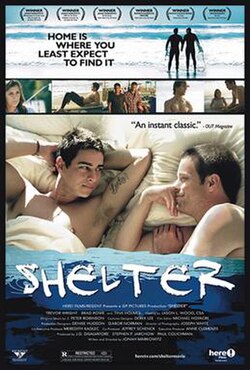
With Shelter (2007), we have a sweet film that focuses on the new romance between two young men, one of whom is coming to terms with his sexuality.

The lead characters are not gay stereotypes and could easily pass for straight men, a characteristic impressive in LGBT films- and other mainstream films for that matter.

Rather than focusing on the discrimination the characters may face or on obstacles from other characters (family and friends), the film wisely makes the story a character study of the demons one man wrestles with while “coming out”.

The small film is written intelligently, save for one supporting character’s plot-driven decision.

Also, in the modern age, we are beginning to see a bevy of similarly themed films emerge from the LGBT community, and Shelter offers nothing we have not seen before.

Set in sunny southern California, our main protagonist is Zach (Trevor Wright), an aspiring artist in his early twenties.

The ultimate “good guy,” he is popular with friends and girls and frequently babysits his five-year-old nephew Cody while his sister parties and has one-night stands.

When Zach meets his best friend’s older brother, Shaun (Brad Rowe), the pair fall in love as Zach wrestles with his sexuality and conflicts with his plans.

Zach’s sexual and family struggles are the main themes of the film.

Shelter (not sure I get the title’s meaning) is a solid slice-of-life story.

Zach initially dates a pretty girl, Tori, who is blonde, wholesome, and a girl-next-door type. This is done intentionally to show that Tori is a girl any young straight man would be interested in.

We never see Zach show interest in any men other than Shaun, so the film leans towards a solid romantic drama once the fellas get together.

Still, we see Zach’s internal struggles and his acceptance of himself for who he is play out.

Actor Wright and director Jonah Markowitz capture this successfully.

Shaun, arguably second fiddle to Zach, is a character that I feel is very well written. Avoiding negative stereotypes, Shaun is handsome, masculine, and charismatic.

Completely confident and exuding great poise, he is a character that any gay male should look up to. He is openly gay yet “one of the guys” as he should be.

He immediately connects with Cody, becoming a father or a cool surrogate-uncle figure for the lad. A quick concern of Zach’s sister, Jeanne, about having the boy around a gay man is trivialized in a quick form.

Another positive aspect of the film is the multiple scenes that show Zach, Shaun, and Cody as a happy family, and how normal that is. Examples of this are frolicking around the beach, playing football, or engaging in horseplay.

A quiet dinner of barbecue steaks and red wine for the men and macaroni and cheese for Cody elicits images of a connected family unit, despite some in society still poo-pooing this idea.

The film presents the connectivity as normal.

A tiny flaw in the character of Jeanne shows her willingness (almost eagerness) to leave Cody (and her ailing father) behind when she decides to take off to Oregon with her brand new boyfriend. This point seems rushed and out of character.

While a party girl with a crappy job at a grocery store, Jeanne exhibited heart and was portrayed as sympathetic and caring throughout the film. Surprisingly and unrealistically to me is that she would give up her life.

A paltry excuse of “Oregon not allowing kids” was left unclear and unexplained.

A part coming-of-age story, part coming-out story, Shelter (2007) is an example of a little film that could with an appreciation of independent cinema.

The film tells a nice story about one man’s journey of self-discovery and the people he surrounds himself with. With impressive California oceanfront and working-class principles as a backdrop, the film has a calming texture and weaves a solid viewing experience.

Beautiful Thing-1996

Beautiful Thing-1996

Director Hettie MacDonald

Starring Glen Berry, Scott Neal

Scott’s Review #675

Reviewed August 20, 2017

Grade: B

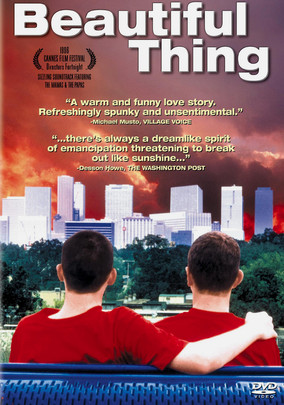
Based on the play of the same name, Beautiful Thing is a heartwarming 1996 British LGBT film written by Jonathan Harvey and directed by Hettie MacDonald.

Incorporating music from the Mamas and the Papas, and specifically Mama Cass, the film undoubtedly was groundbreaking upon release in the 1990s due to its taboo (at that time) gay romance. Still, in 2017, this film suffers a bit from both a dated feel and a play-it-safe vibe.

The action, as in a play, takes place almost entirely within a working-class London apartment building in the present.

The lead character is Jamie (Glen Berry), a high school student, intrigued by his male classmate and neighbor, Ste (Scott Neal).

He also must keep an eye on his flighty mother, Sandra, who changes boyfriends like the weather, and aspires to open her pub- she is currently dating neighbor and understanding hippie, Tony.

Ste is the other central character. Shyer than Jamie, he has a difficult upbringing, living next door to Jamie with an abusive father and brother.

Ste and Jamie eventually bond, and a secret love story begins as the young men conceal their relationship from everyone else.

In the mix is a vivacious black teenage neighbor girl, Leah, who is obsessed with Mama Cass’s records, which her grandmother owns and frequently plays. Leah and Sandra are engaged in a light feud, largely because Sandra believes Leah is a bad influence on Jamie.

Given that Beautiful Thing (1996) was made, the film deserves enormous praise for simply existing at a time when LGBT films were hardly the norm.

Watching in 2017, though, the film loses a bit compared with subsequent LGBT releases that broke more barriers in mainstream viewership and explored much darker themes (LGBT masterpieces like 2006’s Brokeback Mountain and 2016’s Moonlight immediately come to mind).

Beautiful Thing also has a safer, lighter touch than the aforementioned films, making it seem too much like fluff now.

Director MacDonald mixes in humor so that, while the message of a same-sex relationship is important, it is softened a bit by the comedy.

Specifically, the sidekick, Leah, lightens the message.

The supporting characters may get a bit too much screen time. Sandra’s giggle-worthy job interview, her attempts to do “respectable work” in an office environment, or her man-hungry escapades take away from the main story.

I also never felt any real threats or danger to the same-sex relationship. Sure, there is some brief disapproval, and a quick mention of Jamie not liking football (a negative gay stereotype that is unnecessary), combined with Ste’s abuse at the hands of his family, but even that is not perceived as a major obstacle to their, at that time anyway, shocking relationship.

On the other hand, the chemistry between the two leads (Berry and Neal) is wonderful and the best aspect of the film.

Both actors convey the emotions of the characters perfectly- both coming into their sexuality, Berry’s Jamie is the more confident one, asking Neal’s Ste, in a sweet scene, whether he has ever been kissed.

This leads to a sleepover that is innocent and tender rather than steamy or sexual. I completely buy the characters as young lovers, coming to terms with their own identities while supporting each other’s needs and becoming a good team.

The final scene, naturally accompanied by a Cass Elliot song “Dream A Little Dream Of Me”, is a touching, wonderful scene. Jamie and Ste dance together in broad daylight, for their entire complex to see, and subsequently are circled by both supporters and the curious.

As a show of support, Sandra and Leah join the boys and end their dispute.

Beautiful Thing (1996) offers a heartwarming conclusion to a fine, yet lightweight by modern standards, LGBT romantic film.

An Education-2009

An Education-2009

Director Lone Scherfig

Starring Carey Mulligan, Peter Sarsgaard

Scott’s Review #584

Reviewed January 4, 2017

Grade: B+

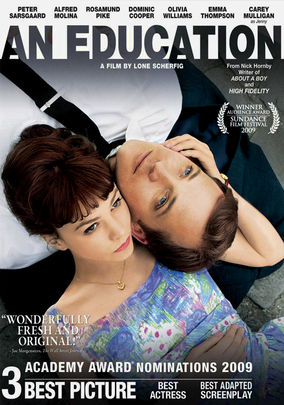
An Education, a British film released in 2009, is a small, little gem of a film. The storytelling and the acting are very good.

Since it is a British film, the accents can be a little distracting for some, but I enjoyed it very much.

It tells the story of an intelligent, college-driven teenager named Jenny (Mulligan), who falls in love with an older, charismatic man (Sarsgaard).

She faces conflict from her family and teachers, most notably her father, played by Alfred Molina.

The individuals in her life have differing opinions on which path Jenny should choose. This leads to the main conflict in the film.

The setting is rainy, cold London in 1961.

Headed for Oxford and a successful career (not common for a female in those days), Jenny is willing to risk it all for love, but is she being taken advantage of?

The film is romantic, comical, and serious all rolled into one. The story is nothing original, to be frank, but specifically, the excellent acting makes it worth seeing.

An Education (2009) proves filmmakers can take a good story, told before, and make it compelling to an audience.

Carey Mulligan deservedly received an Oscar nomination for this film and made her debut as a high-caliber young actress to watch.

Oscar Nominations: Best Picture, Best Actress-Carey Mulligan, Best Adapted Screenplay

Independent Spirit Award Nominations: 1 win-Best Foreign Film (won)

Kisses-2008

Kisses-2008

Director Lance Daly

Starring Kelly O’Neill, Shane Curry

Scott’s Review #500

70109157

Reviewed October 28, 2016

Grade: B+

Kisses (2008) is an Irish film that tells the story of two pre-teenage kids (Dylan and Kylie) who run away to Dublin on Christmas to escape their dysfunctional families and their small-town, morose life.

Instead, they become attracted to the “big city” and the hope of finding Dylan’s older brother, who has run away to escape the oppressive environment.

At first, Dylan and Kylie barely know each other, neighbors, but far from close.

Gradually, they become best friends and form an unbreakable bond.

While in Dublin, they face terror and charming moments of wonderment as they traverse the city, mainly at nighttime.

The two leads have great acting and chemistry, especially as untrained actors. Kylie- an extrovert and full of life- successfully brings out the best in Dylan, who is reserved and withdrawn, so the pair complement each other as they experience their adventures.

The cinematography in Kisses (2008) is fantastic, as one gets to experience the hustle and bustle of Dublin and the quiet countryside of a small Irish town, which is an immense threat and a contradiction in lifestyles.

Show Me Love-1998

Show Me Love-1998

Director Lukas Moodysson

Starring Alexandra Dahlstrom, Rebecca Liljeberg

Scott’s Review #496

60000454

Reviewed October 22, 2016

Grade: B

Throughout the latter part of the 1990s, films with a more LGBT perspective (then referred to as the gay and lesbian genre) were being released more readily.

It was not until the 2000s that mainstream offerings on the subject (Monster, 2003, Brokeback Mountain, 2006) hit the big screen to wide acclaim.

Show Me Love (1998) is a Swedish coming-of-age story about two high school girls, who are opposites in terms of social acceptance, who find love.

Interestingly, the film was directed by a male, Lukas Moodysson.

Show Me Love originally had a different title, a crude reference to the town the film is set in, in western Sweden. Still, when the film was considered for Academy Award contention (it did not make the cut), filmmakers were advised to modify the film’s title to include any shot.

The film contains a grainy look- using handheld cameras in parts and, of course, is in the Swedish language.

Agnes is sullen, introverted, and brooding. Known throughout the high school hallways as the angry, weird lesbian, she has few friends, and the ones who are kind to her, she shuns away.

Elin, by contrast, is popular, lively, and charming- everybody loves her.

However, Elin is restless in the tiny Swedish town where she lives and yearns for excitement. When Agnes develops a crush on Elin, she confesses it all to her computer but to no one else.

The film is nicely put together and, given the year 1998, is quite brave. Today, many years have passed, and progress within the LGBT community has been made; a film like Show Me, Love is a more common occurrence.

Director Moodysson does not go for anything gratuitous or steamy but rather spins a sweet coming-of-age tale, not only of teen love and hormones but also of outcasts and feelings of loneliness.

It’s a film that most can relate to in some way.

The actresses portraying the leads (Dahlstrom and Liljeberg) are fantastic in their roles, playing them with conviction and believability.

Despite being opposites, we buy their attraction and chemistry. Nothing is forced or dishonest.

My favorite scenes are the awkward 16th birthday party for Agnes, thrown by her well-meaning yet clueless parents. When nobody except a disabled girl shows up, Agnes viciously insults her, causing her to leave.

The family sits in the living room, eating the food that was planned for anticipated guests. It’s a poignant, rather sweet moment. Despite Agnes’s unpopularity at school, she has a very strong, loyal family unit- that is nice to see.

Later, Elin and her sister attend the party, but more as an excuse to avoid another one. Finally, Elin and Agnes share a kiss, but is it a mean dare or is it authentic?

A clever aspect of the film is how Moodysson distinguishes between Elin’s and Agnes’s sexualities. Agnes is gay, open, and out. Elin is very different and has boys interested in her.

The girls could not be more different, and this adds a layer of complexity, as each is at a different stage in self-discovery. This feature also makes Show Me Love very honest in its storytelling.

The film is not a masterpiece and could have ventured into more controversial territory. Could they be harmed for being lesbians, given the town they live in? Why is Agnes so sullen?

This is a stereotype (the brooding lesbian) that needs to be changed, though, given the time of the film, I will give it a slight pass. Why not make Agnes a happy, cheerful, gay girl?

How will Elin’s sister deal with Elin’s sexuality, or is it merely a phase for her?

All sorts of darker issues might have been explored, but Show Me Love (1998) is tender, sweet, and lighter fare, yet still an adventurous offering.

Inside Out-2015

Inside Out-2015

Director Pete Docter

Starring Amy Poehler, Diane Lane

Scott’s Review #272

80030684

Reviewed September 8, 2015

Grade: B+

Frequently, when I view a modern animated feature, (and by contemporary, I mean 1990 and beyond), I am either bored or left with a “meh” feeling, or both. It seems the trend is “Let’s create a manufactured film that will appeal to kids who will drag their parents to it”.

It is almost as if mediocrity is accepted in the animated film, but Inside Out (2015) challenges this trend with a thoughtful, interesting slab of story.

With this latest Pixar offering, we find a refreshing, intelligent film that makes the viewer think, containing a genuine cute factor, with lots of colors and interesting animation interspersed throughout.

Our story finds eleven-year-old Riley Anderson, and her five different personalities, working within her brain in unison. The emotions are five distinct little people representing (and named) Joy, Sadness, Disgust, Fear, and Anger. They overlap, conflict, and humorously strive to take control of Riley’s mind and thought processes.

Joy is central, and the happiest of emotions. They all live in Riley’s conscious mind, named Headquarters.

One day, Riley and her family pack up and move from Minnesota to the unknown and overwhelming city of San Francisco to capitalize on a job opportunity offered to Riley’s father.

The city is bustling and the family is thrown for a loop. Riley in particular has difficulty adjusting to this vastly different world and finds herself friendless and acting out of character.

Sadness accidentally begins touching other emotions within Riley’s mind, which sets off strange emotions causing her to behave erratically and become irritable.

Joy and Sadness struggle to return to Headquarters and fix the issues.

Inside Out is a complex animated film and will go way above the heads of many youngsters who will undoubtedly see it.

I find this rather refreshing.

It is a coming-of-age tale for adults and mature kids that challenges its audience rather than spitting out a retread or formulaic family story that we have seen countless times.

Riley and her parents are arguably supporting players in the story, taking a back seat to the small, interesting creatures in Riley’s mind. Her mind is a carnival of riches and cool characters emerge. I smiled as more characters were introduced. Riley’s imaginary friend from years ago, Bing Bong, was pulled to the forefront of her emotions, as he was sadly forgotten in her mind.

Who cannot relate to this? A childhood ritual of creating a friend.

I adored the trip through Riley’s mind and marveled at the revelation of the inner workings of her mind, with creative colors and bright interesting lights.

What a super-cool adventure for a young film lover to experience! Inside Out is quite sophisticated.

The main concern is the level of patience that this film requires. It is not a force-fed story but encourages one to experience and feel.

Touching scenes prevail, but the message I receive from Inside Out is important. A multitude of emotions in every human being is normal and the way the film shows them overlap and work together is ingenious. Nobody is one emotion, nor should they be as the movie promotes successfully.

Human beings are meant to feel.

The film also contains humor. I laughed out loud when one character saw a button labeled “puberty” and assumed it was unimportant. This inside joke is also alluded to after the film- a sequel perhaps? Since Riley is only eleven, puberty will be a natural progression.

Inside Out challenges the norm in animated films and entices audiences to think. It feels genuine, which is impressive in itself. It is sentimental without feeling contrived or corny.

The film succeeds on many levels.

Oscar Nominations: 1 win-Best Original Screenplay, Best Animated Feature Film (won)