Tag Archives: William H. Macy

Train Dreams-2025

Train Dreams-2025

Director Clint Bentley

Starring Joel Edgerton, Felicity Jones, William H. Macy

Scott’s Review #1,515

Reviewed February 4, 2026

Grade: A-

Train Dreams (2025) offers a character-driven approach to filmmaking that is also wonderfully cinematic, thanks in part to Clint Bentley’s direction.

Bently also wrote and produced 2023’s Sing Sing, but I think Train Dreams is the superior effort in terms of visuals alone. Adolpho Veloso is the film’s lead cinematographer and deserves major praise for the gorgeous look the film achieves.

The tone is often serene and quiet, allowing viewers to immerse themselves in the scenes’ tranquility without making the film drag. Landscapes, forests, and luminous sunsets are featured, providing an environmentally ubiquitous experience.

Will Patton narrates the film.

Train Dreams begins around 1917 and recounts the life of Robert Grainier, fantastically portrayed by Joel Edgerton, an example of an actor/director who continues to choose quality projects.

This may be his best role yet.

Robert begins life as an orphan, arriving in the desolate town of Bonners Ferry, Idaho, where he works aimlessly as a logger until he meets Gladys Olding (Felicity Jones). They marry, build a log cabin along the Moyie River, and have a daughter, Kate.

When tragedy strikes, Robert must reassess his life and purpose as he grows older and the years pass aimlessly by. Through the elements, he recognizes both beauty and brutality during his life-altering events and the redundancy of everyday life.

The scenes featuring Edgerton and Jones are the warmest and most touching. The pair shares a strong chemistry made more palpable because Robert is forced to leave his family for a portion of the year for work. Their joy at each reconciliation is apparent, with golden sunsets enveloping the happy couples’ most memorable moments.

Years later, Robert meets another woman named Claire (Kerry Condon), a Forest Service worker who is nearly a doppelganger for Gladys. We tenderly see the progressive, fearless woman Gladys might have become decades later, had she not been in a terrible accident.

Edgerton, the standout performer, easily displays his emotions on his face. Though tortured, he is also a dreamer and a kindly man, as proven when he is disturbed by an immigrant who is shot and killed, and an older man who has dementia.

There is an overall intimacy to Train Dreams that the audience can grasp. Robert’s frequent visions of Gladys, Katie, and the immigrant both disturb and comfort him as he evaluates his usefulness over his decades on Earth.

For a viewer like me who lives in a city, Train Dreams was an important reminder to appreciate the small, silent things in life, such as birds, grass, and trees. So easily overlooked, these elements remain long after the self-important human beings pass through.

I asked myself when the last time I was in a forest was, and I couldn’t come up with an answer.

Intricate sequences of spinning trees, with shifting focus, further enhance the creativity of the cinematography and production design.

The message Bentley creates also appears to be a comparison of the peace America once had, now tarnished by political discord, corruption, and chaos, which has destroyed most of its serenity.

But that’s a different conversation.

Above all, Train Dreams (2025) taught me not to get so hung up on stress and the rat race, but to put the brakes on from time to time to appreciate what really matters.

Oscar Nominations: Best Picture, Best Adapted Screenplay, Best Cinematography, Best Original Song, “Train Dreams”

Independent Spirit Awards Nominations: 3 wins-Best Feature (won), Best Director- Clint Bentley (won), Best Lead Performance- Joel Edgerton, Best Cinematography (won)
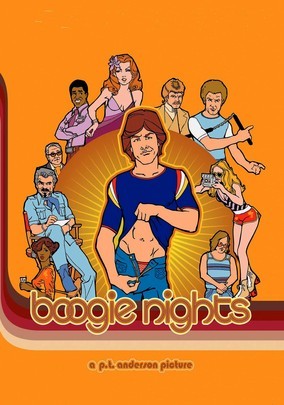
Boogie Nights-1997

Boogie Nights-1997

Director Paul Thomas Anderson

Starring Mark Wahlberg, Burt Reynolds

Top 250 Films #8

Scott’s Review #312

1180077

Reviewed December 31, 2015

Grade: A

Boogie Nights (1997) is a fantastic film about the pornography industry (The Golden Age of Porn) of the 1970s and 1980s, and does an excellent job of portraying the characters as human beings with feelings and emotions, rather than as nymphomaniacs or perverts.

They bond with one another as a family- a group of misfits striving to survive. This, and many other reasons, are why Boogie Nights is one of my all-time favorite films.

Written, produced, and directed by Paul Thomas Anderson (Magnolia, 1999; There Will Be Blood, 2007; Inherent Vice, 2014), he is a master at exploring the underbelly of society and the flawed, desperate characters who inhabit it.

Boogie Nights is no different.

The dysfunctional family is the film’s central theme. Most of his characters are unhappy, but they are survivors who desperately seek a piece of happiness.

Many of the Boogie Nights cast also appear in Magnolia.

Mark Wahlberg (Eddie/Dirk Diggler), Burt Reynolds (Jack Horner), Julianne Moore (Maggie), Don Cheadle (Buck), William H. Macy (Little Bill), John C. Reilly (Reed Rothchild), Heather Graham (Rollergirl), Philip Seymour Hoffman (Scotty), Malora Walters (Jessie), and Alfred Molina (Rahad Jackson), round out the large cast.

The film is set in Los Angeles and spans the period from 1977 to 1984. Although only seven years pass, much happens to most of the characters, and we experience their trials and tribulations.

The unique thing about Boogie Nights is that I care about every character, thanks to excellent writing and fantastic acting. They succeeded in earning my empathy. Boogie Nights is a highly character-driven film, which is an enormous part of its brilliance.

The cast is an ensemble, but the main character is Eddie Adams, a high school dropout whom we meet working as a dishwasher at a nightclub. He has an abusive mother who kicks him out of the house, leading him to audition for and move in with Jack Horner.

Jack is a patriarchal figure who shares a house with Maggie, the matriarch of the household, and Roller Girl, a fellow high school dropout who is always seen wearing roller skates. Eddie’s talent is his large “manhood”.

We watch Eddie, at first shy and polite, rise to superstardom in the porn industry, becoming rich and living a lavish, drug-fueled lifestyle, where his ego gets the best of him. He, like many of the characters, hit rough times as the early 1980s shift to videotape was the death of many 1970s porn actors’ careers.

The musical soundtrack plays a crucial role in the success of Boogie Nights. Many scenes contain songs that were hits of the time or prior, including “Sister Christian”, “Jessie’s Girl”, “God Only Knows”, “Got to Give it Up”, “Ain’t No Stoppin’ Us Now”, and countless others- so much so that the soundtrack is almost a character of the film.

We look forward to hearing what song might be featured next.

Later in the film, circa 1983, as things begin to spiral out of control for many of the characters, the musical score turns ominous, with low bass and a nighttime setting, and the lighting grows darker. Several stories begin to intersect on a late L.A. night on the streets.

Jack, filming a scene in a limousine starring Rollergirl and a young college jock they pick up off the streets, Dirk, forced to prostitute himself for $10 to a young man in a pickup truck, and Buck, who innocently stops to buy doughnuts for his very pregnant wife Jessie.

Each of these stories ends in brutal violence, and the tone is crucial to the scenes’ success. This lengthy scene bears a resemblance to a Quentin Tarantino scene in its macabre tone.

Particular favorite scenes include the heartbreaking scene when Maggie loses custody of her son, the New Year’s Eve party at Jack’s house, and the ill-fated drug sale at Rahad Jackson’s.

Each is heartbreaking, powerful, fraught with tension, or otherwise empathetic toward the characters, making them each quite powerful in different ways.

Induced in the drug sale scene is some black comedy- Rahad’s presumed Chinese houseboy has a fetish for firecrackers, which startle Dirk, Reed, and Todd, as the fear of possible gunshots fills the air. Maggie’s sob scene elicits an emotional response as we cry with her, and the New Year’s Eve turn of events involving Scotty and Little Bill is tragic.

Boogie Nights (1997) is one of my favorite films because it contains brilliant writing, characters who are fleshed out, damaged, and human, a killer soundtrack, and a dark, mysterious industry (porn) that is both misunderstood and categorized.

Thanks to director Anderson, we see the people in this lifestyle as real individuals with their own issues, yet also with full hearts and kindness.

Oscar Nominations: Best Supporting Actor-Burt Reynolds, Best Supporting Actress- Julianne Moore, Best Screenplay Written Directly for the Screen

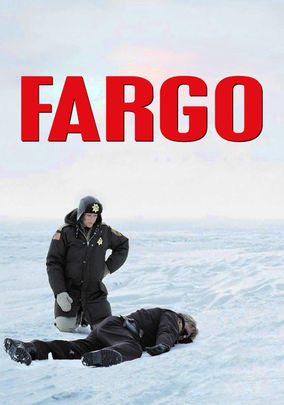
Fargo-1996

Fargo-1996

Director Joel Coen and Ethan Coen

Starring Frances McDormand, William H. Macy

Top 250 Films #66

Scott’s Review #366

493387

Reviewed January 9, 2016

Grade: A

Fargo (1996) is a treasure as far as I’m concerned, and the role that deservedly propelled Frances McDormand to the forefront of the film audience’s minds, not to mention a gold statue for Best Actress.

The film epitomizes dark humor and zany freshness during a time in cinema when originality was emerging, and independent films were gaining popularity.

Fargo led the pack.

The film suffers from derision from locals in and around the upper Midwest U.S.A. for its depiction of accents — perhaps overdone, but hysterical all the same.

Set against snowy, icy locales, the film effectively conveys a harsh, small-town atmosphere.

The introduction of a crime, initially done innocently, escalates out of control.

Fargo is a part caper, part thriller, and part adventure, and is a layered, cool film.

The fact that it’s 1987 is excellent. The cars, the Oldsmobile dealership, all work particularly well.

McDormand plays a local Police Chief, Marge Gunderson, who is very pregnant and stumbles upon the crime, slowly unraveling the mystery.

All the while, the character keeps her cool, cracks jokes, and delivers witty one-liners after another, presenting a slightly dim-witted image but brilliantly deducing aspects of the crime.

William H. Macy, largely unknown in 1996, is perfectly cast as a car salesman, Jerry Lundegaard.

Nervous and shaky, yet with down-home respectability, he hatches a plot to have his wife kidnapped, the ransom to be paid by her wealthy father, enabling Jerry to pay off an enormous embezzling debt, and splitting the money with the kidnappers.

Predictably, things go awry and spiral out of control.

I love how the film crosses genres and is tough to label- is it a crime drama, a thriller, or a comedy? A bit of each, which is the brilliance of it.

Fargo (1996) is an odd little piece of art and is remembered as one of the best films of the 1990s, making Frances McDormand a star.

Oscar Nominations: 2 wins-Best Picture, Best Director- Joel Coen, Best Actress- Frances McDormand (won), Best Supporting Actor- William H. Macy, Best Screenplay Written Directly for the Screen (won), Best Cinematography, Best Film Editing

Independent Spirit Award Nominations: 6 wins-Best Feature (won), Best Director- Joel Coen (won), Best Male Lead- William H. Macy (won), Best Female Lead- Frances McDormand (won), Best Screenplay (won), Best Cinematography (won)

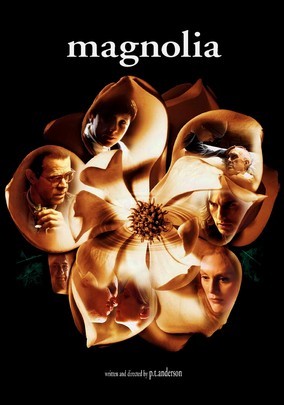
Magnolia-1999

Magnolia-1999

Director Paul Thomas Anderson

Starring Tom Cruise, Julianne Moore, John C. Reilly

Top 250 Films #67

Scott’s Review #777

Reviewed June 21, 2018

Grade: A

Paul Thomas Anderson is one of my favorite modern directors. In my opinion, his best film is Boogie Nights (1997), but he has also created other dark offerings, such as Phantom Thread (2017) and Inherent Vice (2014).

Arguably, his most distinctive effort might be Magnolia (1999), a cerebral film that explores themes of forgiveness and the meaning of life.

An ambitious effort, featuring a stellar ensemble cast, makes the film a fantastic experience.

Set in the San Fernando Valley (a mountainous area of Los Angeles), the film resembles David Lynch’s Mulholland Drive (2001) in its setting and oddness, as well as its unusual dialogue and offbeat characters.

A narrator explains three situations of extreme coincidence and surmises that chance may not be the only responsible party. Anderson then weaves an intricate tale involving numerous characters, intersecting lives, and a riveting climax on a rainy California day (an oddity in itself!).

The plot begins when we meet Jim Kurring (John C. Reilly), a police officer who is called to investigate a disturbance.

After finding a woman’s body in an apartment closet, events turn bizarre as a children’s game show host (Philip Baker Hall), his estranged daughter (Melora Walters), the show’s former producer, Earl (Jason Robards), who is dying from cancer, his drug-addicted wife Linda (Julianne Moore), Earl’s male caretaker (Philip Seymour Hoffman), a former game show champion (William H. Macy), and finally, an intense motivational speaker (Tom Cruise).

Quite a bevy of talented actors!

As the plot progresses mysteriously, the connections among the characters are revealed, and their peculiar motivations begin to take shape.

For example, Linda, who married Earl for his money, seems to have an epiphany and demands her lawyer change Earl’s will. Later, a character may have a connection to Earl and Linda, but is it all as it seems?

In Magnolia, the film is so wonderfully strange that it leaves the audience guessing for most of its running time.

Bizarre scenes are commonplace throughout the film. My favorite one is a marvelously creative scene. Suddenly, frogs begin to fall out of nowhere from the Los Angeles sky, with numerous consequences for the characters.

The incident causes a ripple effect, of sorts, as many of the characters’ fates are determined. Though one may not be able to make heads or tails of this scene or take complete logic from it, it’s enthralling all the same.

Magnolia has an overall quirky tone- sometimes upbeat, sometimes melancholy- that I adore. Films that are tough to figure out and feature an interesting musical score are so rich in flavor.

Aimee Mann is responsible for composing many of the songs on the musical soundtrack, so much so that she received a title credit on the soundtrack itself. Mann infuses her music with moody, diverse richness and ambient essentials.

Many actors make frequent appearances in Paul Thomas Anderson’s films. Magnolia alone seems almost like a Boogie Nights reunion with Moore, Walters, Macy, Baker Hall, and Philip Seymour-Hoffman to name just a handful.

The amazing aspect is that all of the aforementioned actors play vastly different, and arguably even more complex roles than they did in Boogie Nights.

Similar to Quentin Tarantino’s actors appearing in many of his films, this must be a creative treat for them.

There is no doubt that Magnolia (1999) is a complex, dream-like film. Open to interpretation and reflection, I find it a brilliant movie that I would like to revisit and dive into further with each viewing, hopefully for a better understanding and even deeper appreciation.

Oscar Nominations: Best Supporting Actor-Tom Cruise, Best Screenplay Written Directly for the Screen, Best Original Song-“Save Me”

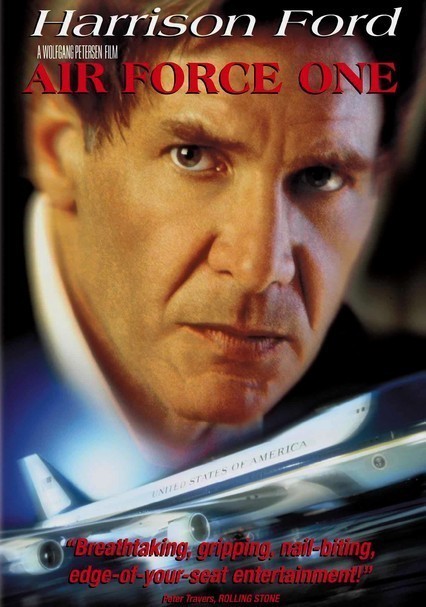
Air Force One-1997

Air Force One-1997

Director Wolfgang Petersen

Starring Harrison Ford, Gary Oldman, Glenn Close

Scott’s Review #1,085

Reviewed November 21, 2020

Grade: B+

If ever a straight-ahead, summer blockbuster, popcorn flick existed, Air Force One (1997) is it. Surprisingly, this is not a bad thing. It’s not cerebral, but it’s never dull.

The film has hooks and muscle and assembles a thrill ride, edge-of-your-seat action fest. Some would say this is just what the doctor ordered, and they’d be right, provided the mood is for a mind-escaping, meat-and-potatoes affair.

Air Force One is pure Americana. With a patriotic musical score and a clear hero and villain, it’s easy to know who to root for. Suspension of disbelief is mandatory since some scenes are as implausible as Santa Claus shimmying down a chimney on Christmas Eve, but the film is entertaining.

The action is non-stop.

At the tail end of his prime action star years (the 1980s and 1990s), Harrison Ford stars as the president of the United States of America, James Marshall.

After making a bombastic speech in Moscow vowing never to negotiate with terrorists, a group of them led by the dastardly Ivan (Gary Oldman) hijacked Air Force One with the president and his family on board.

Marshall, a former soldier, hides in the cabin of the plane and races against time to save his family and those aboard the flight from the terrorists.

The plot is implausible and hokey and reeks of plot points to carry the story along, but surprisingly, the film works. There is no way a president would ever race around performing stunts aboard an airplane, conquering the villains like clockwork.

But Ford has the charisma to make us believe it could happen, and his character is a family man, a Vietnam veteran, and a Medal of Honor recipient. Can this guy be any more perfect?

Oldman, always reliable as a villain, is perfectly cast. His character’s motivations are simplistic and nationalistic. Ivan believes that the collapse of the Soviet Union has ruined his country and somehow it’s the fault of the United States.

The reasoning is silly, but it’s in keeping with the patriotic nature of Air Force One- the ‘us versus them’ mentality. The United States is good; Russia is bad. It’s what middle America wants, and the target audience of this film is clear. Back to the Cold War.

Wolfgang Petersen, who directs the film, knows his way around the action genre. After all, he crafted the memorable Das Boot (1981) and Outbreak (1995). The film has a Tom Clancy-Patriot Games meets Die Hard (1988) style.

Petersen meshes the score with the quick editing style to layer the film with more action than slowed-down conversational scenes. We know how it’s going to end but enjoy the ride.

Looking closely, the film is not just for the guys.

Glenn Close is cast as a female Vice President and a strong gender-twisting presence. Kathryn Bennett is a bold, careful woman and the implication is that she is more than capable of taking over should anything happen to the president.

Her scenes mostly take place in the White House Situation Room and provide a nice calm as she is pressured by the Defense Secretary (Dean Stockwell) to declare the president incapable.

The scenes between Stockwell and Close are very strong.

Air Force One (1997) is a cliché-riddled and mainstream Hollywood creation to the max. Both the pacing and the pulsating style make the film a guilty pleasure and quite enjoyable.

When the mood strikes to kick back and relax with a fun, action-packed affair, this one is your choice. Just don’t dissect the details too much or expect real-life to mimic art.

Oscar Nominations: Best Sound, Best Film Editing

The Sessions-2012

The Sessions-2012

Director Ben Lewin

Starring John Hawkes, Helen Hunt

Scott’s Review #413

70209251

Reviewed June 18, 2016

Grade: B-

The Sessions (2012) is a cute, sentimental type film that is pleasant but not much more.

I found the film to be a bit safe, although Helen Hunt’s full-frontal nude scenes are surprising to me and quite brave of the actress. I’ve never been much of a Helen Hunt fan and I have always found her to be overrated, but her performance is very good.

I felt, for the subject matter, the film is too sentimental and too Hollywood, though I do admit to enjoying it.

It might have been grittier and the characters explored a bit more though.

I did not enjoy William Macy’s silly priest character. His character seems rather unnecessary to the rest of the film and has no real point except being the unnecessary moral compass.

The dynamic between John Hawkes and Helen Hunt’s characters is the best part, otherwise, The Sessions (2012) is a mediocre offering.

Oscar Nominations: Best Supporting Actress-Helen Hunt

Independent Spirit Award Nominations: 2 wins-Best Male Lead-John Hawkes (won), Best Supporting Female- Helen Hunt (won)

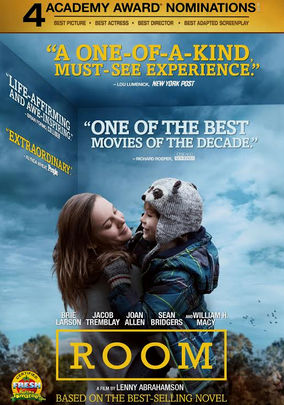
Room-2015

Room-2015

Director Lenny Abrahamson

Starring Brie Larson, Jacob Tremblay

Scott’s Review #373

80073823

Reviewed January 31, 2016

Grade: A

Room (2015) is a compelling story of a woman’s battle in captivity with her five-year-old son in tow.

The film also tells of the after-effects of reclusive living as they both strive to adapt to their changing world.

Receiving a slew of Academy Award nominations, the film is more than a one-dimensional story of peril or rescue, but rather, a smartly woven tale that delves into the psychological issues involved with being confined in a room for years, giving the film a deeper meaning.

Room is adapted from the novel of the same name, written by Emily Donoghue.

We meet twenty-four-year-old Joy (Larson) and her five-year-old son Jack, who live in squalor in a shed made into one room. They exist from food and supplies delivered by their captor “Old Nick”, who abducted Joy seven years prior.

He periodically rapes her and is Jack’s father, though there is no affection on either side. Joy has attempted escape before but has failed.

She is determined to break free once and for all and allow her and Jack a normal life.

In the first half, we learn about Joy and Jack and how they exist and forge a life together. Joy tells Jack they are real and the outside world and people on television are not.

They live in a fantasy world and Jack periodically treats objects (chair, toilet, bed) as real-life things, giving morning greetings to these objects- this is both cute and sad. His only channel to the outside world is a small skylight, which he endlessly gazes at.

I love how the film suddenly changes course at the halfway point and shifts focus to the aftereffects taking a dark, complex, psychological turn.

The first half takes place entirely in the “room”, and suddenly, a new world has blossomed. A monumental event changes the course of the film.

From this point, the film deals with the traumatic effects of being shut away for years. Joy suffers from depression. Jack sees a new world. We see how other characters deal with the turn of events.

Joy’s parents, wonderfully played by Joan Allen and William H. Macy react in completely different ways.

How have their lives changed because of Joy’s abduction? Will they see Old Nick every time they lay eyes on Jack? How will Joy’s mother’s new boyfriend react?

There is a strong theme of coping throughout the film and how all the characters cope with life events and attempt to resume a life of normalcy. There is such a unique humanistic feel to the film that makes it deeper than I would have expected.

Sure, Brie Larson gives a dynamic performance, but the film offers reflection and thought.

The direction and camera work are a marvel. We see a blurred view of what Jack sees in “the real world”.  It is almost like the audience is reawakening to life and we see it through a child’s eyes- the sights, the sounds.

Jack has created an imaginary dog in his mind and the film introduces more than one real dog that plays a pivotal role. We see Jack’s joy and terror at the new experiences.

Room (2015) encompasses thought-provoking ideas making what might only have been a basic story and turning it into an intricate journey into human psychology through many different nuances and facets.

What a wonderful, dark experience this is.

Oscar Nominations: 1 win-Best Picture, Best Director-Lenny Abrahamson, Best Actress-Brie Larson (won), Best Adapted Screenplay

Independent Spirit Award Nominations: 2 wins-Best Female Lead-Brie Larson (won), Best First Screenplay (won), Best Editing

Cake-2014

Cake-2014

Director Daniel Barnz

Starring Jennifer Aniston, Adriana Barraza

Scott’s Review #257

80017263

Reviewed July 14, 2015

Grade: B+

Cake (2014) is a film about a woman suffering from chronic physical pain and depression that she constantly battles after a terrible accident that she was involved in.

Jennifer Aniston gives a wonderful performance as Claire Simmons, a grumpy, sarcastic, bitter victim of unimaginable loss. Aniston’s performance is the best part by far.

It is interesting to note that Aniston Executive produced this film.

Similarly and somewhat sadly, Reese Witherspoon had to produce her own 2014 film (Wild) centered on a female role for both women to showcase their powerful acting chops. Too few films about women are made these days unless female star power is used, which is too bad.

Claire has been through hell and back.

As the story opens, Claire sits angrily in a support group filled with other women with problems. One of the women, Nina, (played by Anna Kendrick) has just jumped off of a freeway overpass to her death—a giant photo of her glares jarringly at the other women.

When Claire prods about the details of the death and uses sarcastic tones, she is politely asked not to return to the group by the lead counselor, Annette, (played by Felicity Huffman).

Claire returns to her well-maintained Los Angeles home and the audience is introduced to her well-meaning housekeeper and confidant, Silvana, played by Adriana Barraza. Barraza herself gives a powerful performance.

Nina appears throughout the remainder of the film in visions as Clare debates suicide.

Let me discuss Jennifer Aniston’s performance in particular. I thought it was amazing and she was shamefully overlooked for an Oscar nomination.

She was superior to at least a couple of the other Best Actress nominees from 2014 (Felicity Jones immediately comes to mind as one).

Her character of Claire starts as a bit of a shrew but gradually becomes quite sympathetic as the story becomes layered and the audience gets to know what makes her tick.

We do not know how she came to be in her predicament initially. We know she was in a terrible accident, but it slowly takes time for all of the details to emerge. We only know she is in pain and angry. Claire’s relationship with Silvana is an interesting one.

They spar, Claire takes Silvana for granted at times, but throughout the film, a close friendship emerges between the women. In a touching scene, they hold hands as they sleep.

Two scenes in particular are heartbreaking and honest. A man played by William H. Macy emerges on the doorsteps of Claire’s house and she is engulfed in rage at his appearance.

The power that Aniston emits in this scene is unrivaled. In another scene she sees a portrait hanging on her living room fireplace mantle given by a friend- she bursts into tears and sobs emotionally. At this point, the plot makes more sense and we feel Claire’s raw pain.

The subject matter of depression and suicide is not a cheery one, and Cake delves deeply into this territory. The film is a bit of a downer, slow, and, at moments, drags a bit, and teeters on the verge of a lifetime television movie (yikes!), but MUCH better than that thanks to Aniston’s compelling portrayal.

With a lesser actress, the film might have felt watered down and safe.

Some light moments fail. For instance, when Claire “blackmails” Annette and bribes her with vodka for the address of Nina, this seems very trivial and silly.

Thanks in large part to a gripping performance by one of Hollywood’s underrated talents, Cake (2014) takes a film on the border of being one-dimensional to a grander level of dynamic acting by its leading lady.

A supporting cast of similar talents helps the film rise above the mediocrity it may have been if served by lesser casting choices.