Category Archives: Psychological Drama

If I Had Legs I’d Kick You-2025

If I Had Legs I’d Kick You-2025

Director Mary Bronstein

Starring Rose Byrne, Conan O’Brien, Christian Slater

Scott’s Review #1,521

Reviewed February 25, 2026

Grade: A-

Not being a parent myself, nor ever having the desire to be one, I was nonetheless enthralled by the subject of stressed parenting explored in If I Had Legs I’d Kick You (2025).

Examining our frazzled lead character, Linda’s, descent into madness after enduring day after day of adult chaos and kid problems, the role is wonderfully played by Rose Byrne.

The actor, though memorable in 2011’s classic Bridesmaids, is usually associated with one-note or throwaway roles throughout her long career.

It’s inspiring to see her finally get her due by playing a complex role with so much chops and receiving an Academy Award for Best Actress in 2025.

With her life crashing down around her, Linda, ironically a psychotherapist, attempts to navigate her child’s mysterious illness amid pressure from her therapist, her absent husband, a missing client, and an increasingly hostile relationship with her own therapist (Conan O’Brien), also a colleague.

After her living room is destroyed by water damage, she is reduced to renting a dingy motel for an extended period, where she encounters hostile motel workers.

Her saving grace is her late-night solitude, when she can peacefully indulge in wine and pot while sitting on the beach, contemplating her life.

Director Mary Bronstein, who also appears as a therapist, cleverly doesn’t show Linda’s daughter or husband for nearly the entire film, revealing them only through their grating voices. They irritate and stress Linda out to no end.

Undoubtedly, Bronstein either wanted to keep the focus on Linda and her daily peril or to leave it uncertain whether they even existed outside Linda’s mind.

The plot mostly involves a medical situation where Linda’s daughter, Delaney, has a pediatric feeding disorder that necessitates nightly supplemental feeding through a tube and participation in a day hospital program.

Her husband, a ship captain, is away, presumably at sea. This leaves Linda to handle everything.

Linda trudges through her days, arguing with a parking attendant and a contractor, while having misunderstandings with her therapist, patients, and a bitchy girl at her motel.

The supporting characters are well cast and add leverage to Linda’s peril by being completely unsympathetic and sour. O’Brien is excellent as the self-absorbed therapist, while Danielle Macdonald is good as a needy patient who ditches her baby.

But the film belongs to Byrne.

From the first scene, she wears a weary look, and her close-up facial expressions speak volumes about her peril. Linda looks washed out and exhausted while things spiral out of control. Nearly dozing off as a patient chatters away, she finally has had enough.

On the other hand, she is constantly on the brink of losing her shit.

Thanks to Byrne, we are treated to fist-pumping scenes where she lets loose on both therapists and the bitchy motel girl, instantly making Linda the only rootable character in the lot.

Still, she’s not exactly likable herself and incessantly makes poor choices. Her irritation with everything grows tiresome until the final sequence, when the film parleys into a message about mental illness.

If I should have found the film depressing, I didn’t.

Sprinkled with macabre humor, the film must have been influenced by the 1970 masterpiece Diary of a Mad Housewife, starring Carrie Snodgrass as a woman emotionally tortured by her selfish family and on the brink of a breakdown.

Bronstein, also the screenwriter, makes Linda the only character the audience should focus on, and all events are told from her perspective, which makes the film a winner.

Never knowing where events are headed, If I Had Legs I’d Kick You (2025) is a sheer delight in comedic/dramatic insanity. Though it carries a strong central theme of mental wellness, it also promotes the important message that it’s also okay not to have kids who will ruin your life.

Oscar Nominations: Best Actress-Rose Byrne

Independent Spirit Award Nominations: 1 win-Best Director-Mary Bronstein, Best Lead Performance-Rose Byrne (won)
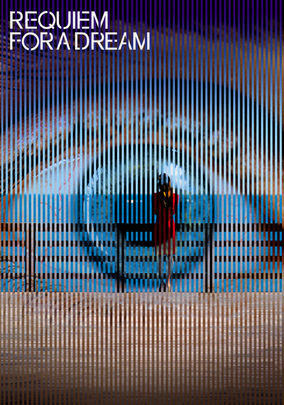
Requiem for a Dream-2000

Requiem for a Dream-2000

Director Darren Aronofsky

Starring Ellen Burstyn, Jared Leto

Top 250 Films #95

Top 10 Most Disturbing Films #3    

Scott’s Review #172

60001134

Reviewed September 21, 2014

Grade: A

Requiem for a Dream (2000) is a disturbing film and, at times, tough to watch.

Still, it is a brilliant masterpiece, visually and in storytelling, that I appreciate more and more with each painful (in a good way!) viewing experience.

The film is easily one of the most disturbing films I have ever seen.

The subject matter is drug trafficking/addiction that affects more than one character in the cast- a myriad of different films have tackled this subject- think Traffic, released around the same time as Requiem for a Dream, for a comparison.

At the risk of directly comparing Requiem for a Dream to Traffic, which is unfair, I will say that, as gritty as Traffic is, Requiem for a Dream makes it look like a kid’s film.

Director Darren Aronofsky’s direction is superb.

The story revolves around a young man (Harry) from Brooklyn, played by Jared Leto; his girlfriend, Marion, played by Jennifer Connelly; Harry’s mother, Sara, played by Ellen Burstyn; and Harry’s best friend, Tyrone, played by Marlon Wayans.

Each individual falls into a trap of drug addiction in their own way, but all are written sympathetically so that the audience cares about them and feels their sorrows intensely.

Harry and Tyrone are involved in drug selling but aspire to be successful, and both love their mothers and their significant others- in Harry’s case, that is Marion.

Marion (Connelly) falls in over her head and is forced to turn tricks to feed her heroin habit. She is an intelligent young woman from an affluent family, which makes her downward spiral into prostitution all the more shocking.

The standout among the central characters is Sara Goldfarb, who is a lonely, widowed woman obsessed with a television game show.

Sara develops delusions of grandeur of becoming a contestant and is tragically determined to lose weight to fit into her favorite red dress.

She becomes dependent on diet pills and begins hallucinating that her refrigerator is attacking her.

Aronofsky perfectly blends fantasy sequences that showcase Burstyn’s real attractiveness, contrasting them with Sara’s desperation. Sara is a sad character, and Burstyn is mesmerizing in the role.

How she lost the Oscar to Julia Roberts in 2000 is and always will be one of the biggest Oscar travesties, in my opinion.

The special part of this film lies in its visual and cerebral aspects. The film is dreamlike in its texture and features extreme, fast-paced close-ups of the diet pills or heroin being consumed.

The viewer feels the highs and lows the characters experience, and there is a immediate sense that all the characters are doomed and hopeless.

Besides, this film has one of the most effective and haunting scores I have ever experienced, right up there with John Carpenter’s Halloween (1978).

The slow-motion sequences combined with frenetic images make this quite cerebral to watch.

I cannot watch this film very often as it is too disturbing and upsetting, but I sure am glad it was made at all.

Oscar Nominations: Best Actress-Ellen Burstyn

Independent Spirit Award Nominations: 2 wins-Best Feature, Best Director-Darren Aronofsky, Best Female Lead-Ellen Burstyn (won), Best Supporting Female-Jennifer Connelly, Best Cinematography (won)

The Hours-2002

The Hours-2002

Director Stephen Daldry

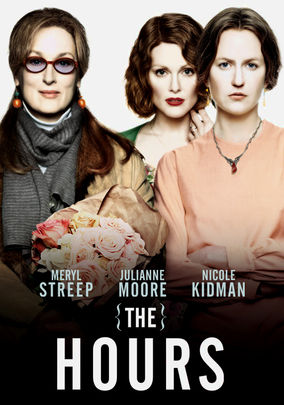
Starring Nicole Kidman, Julianne Moore, Meryl Streep

Top 250 Films #169

Scott’s Review #803

Reviewed August 17, 2018

Grade: A

The Hours (2002) is a film containing the ultimate in acting riches. With names like Nicole Kidman, Meryl Streep, and Julianne Moore associated with the film, this is not surprising.

Not solely belonging to the ladies, however, Ed Harris, in particular, is dynamic in his role, as are all the other males who appear in the film.

Told in three different sections in chronological order, but going back and forth, the stories all share connections via the novel Mrs. Dalloway, written by Virginia Woolf.

One of the best films of the decade!

Each segment of the film takes place within a single day, but decades apart.

Wisely, director Stephen Daldry frequently switches between the stories, leaving a sort of cliffhanger and making the drama more compelling and spicy.

In 1923, a depressed Virginia Woolf is portrayed by an unrecognizable Nicole Kidman in a role that won her the Best Actress Oscar.

Woolf resides outside of London and struggles to complete her novel amid nervous breakdowns and the watchful eye of her husband, who is aware of her mental pain.

In 1951, Laura Brown (Julianne Moore) seemingly has it all, living the “American Dream”. Residing in a nice neighborhood with a loving husband, she is pregnant with her second child and spends her days at home raising her young son, Richie, whom she is very close to yet does not understand.

After a fleeting lesbian dalliance with a neighbor, Laura goes off to a hotel with bottles of pills, intending to kill herself. She changes her mind after reading Woolf’s novel and dozing off, deciding instead to make a different decision.

Finally, in 2001, Clarissa (Meryl Streep) is bisexual and in a same-sex relationship. She lives with Richard (Harris), whom she dated in college, and is now the best of friends.

He is gay, stricken with the AIDS virus, and close to committing suicide as he plans to jump out of a window.

This story (set in the present) is crucial to the film because it involves two characters from the 1951 story. These characters intersect with others in a touching and heart-wrenching way.

The greatest parts of The Hours are the brilliant acting and the richly written storytelling.

Arguably, Kidman, Streep, and Moore could all have won Oscars for their performances.

I must mention that, as brilliant as Kidman is (she is the sole Oscar recipient) and as universally good as Streep is, I would have given the Oscar to Moore, the standout in my opinion.

Glamorous and intelligent, warm to her son, she makes a monumental and controversial decision. The character should not be sympathetic- yet she is.

This is a testament to Moore’s infusion of the character with confidence, reasonable thought, and even some empathy. We finally understand why she does what she does.

May I boast for a moment about Harris’s performance? Richard, once known as Richie as a kid (this will give something away), has lived a difficult life.

Abandoned, wounded, and suffering much loss, he is a tragic figure, pained beyond belief. His suffering is so monumental that we almost welcome his demise, and Harris offers so much of himself in this difficult role.

He is both physically and emotionally hurt, and Harris portrays this in spades.

Uniquely, all three stories work independently of each other. Yes, characters from one appear in another, but they are like well-crafted vignettes.

Similarly, they each begin with breakfast, then involve the planning of a party or celebration of some sort, and culminate in sadness.

Yet the film does not feel like a downer or preachy in any way; rather, it is good, solid, humanistic storytelling, which I adore.

Sure, the film is considered a drama, but it also contains multiple gay or bisexual characters and therefore must be included in the chambers of LGBT filmmaking.

With an A-list cast, the film helps lead the charge (successfully so) to bring more rich LGBT films to the center stage and garner mainstream audiences.

The great aspect of The Hours is that it is a mainstream film- a good, solid drama.

Based on a Pulitzer Prize-winning novel by Michael Cunningham, The Hours (2002) does not try to draw parallels between the stories or necessarily connect them in an obvious fashion.

Rather, the film version provokes thought both with LGBT and feminist approaches. Each female central character lives in a world run by men, as Woolf argues in her novel.

The film brilliantly adapts the novel and brings it to large audiences in a fantastic, riveting fashion.

Oscar Nominations: 1 win-Best Picture, Best Director-Stephen Daldry, Best Actress-Nicole Kidman (won), Best Supporting Actor-Ed Harris, Best Supporting Actress-Julianne Moore, Best Adapted Screenplay, Best Original Score, Best Costume Design, Best Film Editing

Blonde-2022

Blonde-2022

Director Andrew Dominik

Starring Ana de Armas, Adrien Brody, Bobby Cannavale

Scott’s Review #1,305

Reviewed October 7, 2022

Grade: A

Blonde (2022) is not the kind of film that I expected.

When I became aware that a new film vehicle showcasing the legendary film icon Marilyn Monroe was in the works, I assumed it would be a biographical-style effort. After all, this is hardly the first time the star’s life has been explored.

Throw in bits about her struggles, her love life, her famous screen roles, and her rise to fame, and there you’d have it.

My only real thought was who would be playing her?

Films about Marilyn have been made before, including the most recent effort I can recall, My Week With Marilyn (2011), starring Michelle Williams, a superior film but hardly groundbreaking or well remembered ten years later.

Released via the Netflix streaming service, director Andrew Dominik kicks the shit out of any preconceived notions about glamorous, happy, and prosperous Marilyn.

He creates a story focused on the dark side of the star: her failures, her insecurities, her forced abortions, and her humiliations. The result is a film that is both tragic and profound, and it should be well remembered.

Blonde delves into facts and some of the more profound thoughts of the legend herself, creating a muddy and dreamlike quality that makes the viewer apprehensive about what’s going on.

Since it’s based on Joyce Carol Oates’ 2000 fictional memoir, which is her interpretation of events, it makes truth and imagination all the muddier.

It’s not happy days watching Blonde, which left me wondering if Marilyn had a happy day in her life. From her abortions to sexual harassment, drug addiction, and physical abuse by her husband, she excitedly scampers off to a date with President Kennedy, only to be forced to give him oral sex.

Ana de Armas, known for Knives Out (2019) and No Time to Die (2021), is brilliant as Marilyn. Her mannerisms, speech patterns, and facial expressions reveal a genuine, layered portrayal rather than a carbon copy imitation of her.

Blonde boldly reimagines the life of one of Hollywood’s most enduring icons in two hours and forty-seven minutes of storytelling. It is advisable not to watch the film in one sitting, but instead spread it over three nights to let the story unfold.

Events begin with her volatile childhood as Norma Jeane, marked by an abusive mother and an absent father, and her rise to stardom and romantic entanglements. Blonde blurs the lines of fact and fiction to explore the widening split between her public and private selves.

In a way, Marilyn suffered from a split personality, longing to be Norma Jeane and despising Marilyn.

Enhancing the ambiguity, Dominik elects to use cinematography that is sometimes blurry as if in a sleepy haze, and sprinkles color with the primarily black and white filming. He even films one abortion scene from the perspective of Marilyn’s vagina.

These creative details lead me to classify Blonde as an art film and a highly interpretive one.

While not a crowd-pleaser, Blonde is not all doom and gloom either.

Tidbits about her most famous films, Gentlemen Prefer Blondes (1953) and Some Like It Hot (1959) are featured, showcasing one or two neat camera tricks, so it appears that de Armas is acting opposite Tony Curtis.

I worry that poor reviews for Blonde may hinder de Armas’s chances of receiving an Academy Award nomination. Positive reviews usually help secure Oscar recognition.

Thankfully, despite many critics and viewers having issues with the film, de Armas has received worldwide acclaim.

Bobby Cannavale and Adrien Brody are excellent as Marilyn’s husbands, controlling Joe DiMaggio and insecure artist Arthur Miller. Both actors combine effective acting with distinguished portrayals, allowing the audience to appreciate the appeal of both men.

Other interesting subplots involve Monroe’s ‘throuple’ romance with bisexual actors Cass and Eddy, and a haunting exposure of the abuse suffered by Marilyn at the hands of her mother, Gladys, wonderfully played by Julianne Nicholson.

There is little doubt that Blonde (2022) is an unconventional film that may not appeal to everyone. However, it’s the down-and-dirty texture and tour-de-force portrayal of Monroe that won me over.

It chilled me to the bone in the best possible way.

Oscar Nominations: Best Actress-Ana de Armas

The Lost Daughter-2021

The Lost Daughter-2021

Director Maggie Gyllenhaal

Starring Olivia Colman, Dakota Johnson

Scott’s Review #1,232

Reviewed February 21, 2022

Grade: A

Throughout The Lost Daughter (2021), there is a constant feeling of dread that may result in viewer anxiety.

We know that bad things are coming, but we do not know how or when. This makes for good drama done exceptionally well by director Maggie Gyllenhaal in her astounding debut.

She has acted for years and has made the transition to writer/director.

Gyllenhaal adapts her film from a novel written by Italian author Elena Ferrante. The experience is extremely female-centered, and having a female pen both book and film makes it a rich and authentic project.

The result is a brilliant depiction of motherhood and choices, making it essential for everyone to see and appreciate.

However, the film is not for everyone, nor will it please those seeking a conventional work about mother-daughter love and moments of happily skipping through the field of daisies. It has feel-good moments, but it’s much darker than some might expect.

For me, those aspects are what make The Lost Daughter so damned amazing.

We meet middle-aged Leda (Olivia Colman) when the woman embarks on a seaside vacation in Greece. She begins to observe a young mother, Nina (Dakota Johnson), and her daughter, Elena, on the beach and becomes obsessed with them.

Leda unwisely butts heads with the mother’s menacing extended family, who may be mafia-related.

Leda begins to have memories of her early motherhood when she struggled to raise two young girls while balancing her career as a professor. When she spontaneously steals Elena’s doll, she becomes increasingly obsessive, battling moments of rage and emotion.

Colman is a perfect choice for the central character. From the first moment she appears on the screen, we know there is conflict surrounding her. She is consumed by anger and either guilt or tension.

The actress is outstanding at portraying Leda’s complexities through her eyes and facial expressions. Many shots of Leda quietly observing events or sitting on the beach, deep in thought, are powerful.

Though a quiet film, The Lost Daughter never drags or lags, thanks to Gyllenhaal’s perfect portrayal of a doleful atmosphere. I was dying to know Leda’s secrets, and the interspersing flashbacks to a young Leda, wonderfully played by Jessie Buckley, finally provide resolution.

But that’s just the beginning of the fun. Once Leda’s backstory is revealed, and Gyllenhaal makes us wait quite a while for the reveal, there are more places for the film to go, like what about the stolen doll?

The viewer will not only wonder why Leda stole the doll but also why she won’t return it, especially when it’s known how desperately the family wants it back. Will they kill her when they find out she has it?

Beneath all the drama, a lingering question is posed to the viewers. Do I want to be a parent? The film is not only for women, but men can certainly ask themselves the same question.

The inclusion of a male character played by Ed Harris is evidence of this. In his youth, he struggled with being a father.

The film has a sense of purpose and meaning that many films lack. A film that poses questions and makes the viewer squirm a bit is top-notch for me. The basic story of a lone woman on vacation evolves into a tale of intensity and psychological warfare within oneself and one’s feelings.

The Lost Daughter (2021) is a complicated watch, but it offers a lesson in outstanding acting, directing, writing, and how atmosphere and mood can enhance a story layered with intrigue.

As shocking and unsettling as moments are, I was left feeling satisfied that I had seen something of worth and merit.

I can’t wait to see what Gyllenhaal does next.

Oscar Nominations: Best Actress-Olivia Colman, Best Supporting Actress-Jessie Buckley, Best Adapted Screenplay

Independent Spirit Award Nominations: 3 wins-Best Feature (won), Best Director-Maggie Gyllenhaal (won), Best Screenplay (won), Best Supporting Female-Jessie Buckley

Birth-2004

Birth-2004

Director Jonathan Glazer

Starring Nicole Kidman

Scott’s Review #1,124

Reviewed March 18, 2021

Grade: B+

Because of the film’s complex storyline, Birth (2004) is a tough sell for most cinema lovers.

A grown woman embarking on any romance with a ten-year-old boy will turn off viewers, though, can you even imagine if the genders were reversed?

I was fascinated by the premise and the endless possibilities of a conclusion.

I’m not quite sure what I expected to happen ultimately, but I felt slightly underwhelmed by the ending.

All in all, it is a daring effort that I wish had more payoff.

The first hour or so is extremely provocative.

Nicole Kidman excels at making the unbelievable material as believable as possible, and Jonathan Glazer directs the film very well, giving it a haunting, mysterious Stanley Kubrick vibe.

The director would come into name recognition following his 2013 masterpiece Under the Skin.

The film opens with a voiceover of an unknown man, a professor, lecturing about his disbelief in reincarnation. The audience then sees the man jogging through New York City’s Central Park, where he collapses and dies.

It takes Anna (Kidman) ten years to recover from the death of her husband, Sean (the professor), but now she’s on the verge of marrying her boyfriend, Joseph (Danny Huston), and finally moving on.

We suspect she may not be completely keen on marrying Joseph, but most of their relationship is unclear. We know that she aches for Sean.

On the night of their lavish engagement party, a young boy named Sean (Cameron Bright) turns up, claiming to be her dead husband reincarnated.

At first, she ignores the child, thinking it’s a joke, but his knowledge of her former husband’s life is uncanny, leading her to realize that he could be telling the truth slowly.

Anna is conflicted to say the very least, and Kidman effortlessly makes the audience believe that what is considered ridiculous might be true.

Is there a supernatural element here?

Her family members, led by her mother, Eleanor (Lauren Bacall), are disbelieving and antagonistic towards the boy for disrupting Anna’s life.

An issue is that, other than one supporting character, Clara (Anne Heche), who has a great opening sequence burying mysterious letters, the others have next to nothing to contribute to the story except to brood and get angry.

Bacall, in particular, is completely wasted in a role that any other older actress could have played.

Parallels to Rosemary’s Baby (1968) are hard not to make. Anna dons a similar pixie haircut to Rosemary. They both reside in swanky, old-style New York City high-rises with a ghostly, haunting feel.

The ambiance is a positive.

My favorite camera shot that Glazer includes is a lengthy one of Kidman’s Anna. In a close-up, the character’s reactions are on full display for what feels like several minutes. Kidman gets to show her tremendous range- tears, shock, realization.

I’ve noticed a similar shot in a handful of modern films, and it’s an actor’s delight- a viewer’s too!

The finale, without giving much away, is interesting to a point. The big reveal involving Clara is intriguing until the viewer backtracks and tries to add up all the events.

The fact is, they don’t add up, and I longed for something more concrete or believable.

There is no good payoff.

Birth (2004) doesn’t always add up to satisfaction, but it’s edgy, gloomy, and unpredictable, and I enjoyed those facets enough to recommend it.

This is not a mainstream film like Ghost (1990) with a similar theme- it’s much more cerebral and thought-provoking.

Kidman’s performance is the main draw here, but it’s tough to find a film in which she isn’t great.

Mystic River-2003

Mystic River-2003

Director Clint Eastwood

Starring Sean Penn, Tim Robbins, Kevin Bacon

Scott’s Review #801

Reviewed August 10, 2018

Grade: A

Mystic River (2003) is a film I consider the second-best offering directed by Clint Eastwood.

Along with Million Dollar Baby (2004), Eastwood successfully creates two compelling back-to-back dramas, not too dissimilar from each other.

He was unquestionably the “it” director of the early 2000s, and with Mystic River, he helms a gritty, mystery drama with a stellar cast, nuts-and-bolts storytelling, and enough twists and turns to keep the audience guessing and ultimately shocked.

All of these pieces result in a memorable experience.

The film is based on the novel of the same name, written by Dennis Lehane. A tremendous element is a locale of Boston, and an Irish, blue-collar/working-class theme, prevalent throughout the story.

Thanks to the cinematography, which illuminates a grey, stormy look, the rest of the film is enhanced. I adore films shot in and around Boston, as it offers so much culture and flavor.

Eastwood hardly misses a beat, with some cold, grizzled touches that play into the hardships and struggles of the characters’ everyday lives.

The story begins with the central characters (Jimmy, Dave, and Sean) as young boys, in a three-musketeers-type scenario where they are like blood brothers.

After an incident occurs where Dave is accosted by men and sexually abused, he is ultimately rescued after four torturous days, but his life is never the same.

Fast forward twenty-five years, and the boys are now men, still living in a working-class Boston neighborhood. Each is now married; their lives have moved on, drifted apart, and they have vastly different personality types.

They reunite after a tragedy occurs.

For starters, a major win for Eastwood is the casting of each male character.

Sean Penn plays Jimmy, the volatile ex-con, who runs a small store, while Sean, played by Kevin Bacon, has become a Massachusetts State Police officer, putting him directly at odds with Jimmy.

Sadly, Dave (Tim Robbins) now lives a quiet life, still harboring trauma, shame, and guilt from his childhood experience.

When Jimmy’s daughter (Emmy Rossum) is brutally murdered, the three friends’ lives are intertwined as they search for the killer, taking the viewers down a dark path filled with secrets, some from the past.

Laura Linney and Marcia Gay Harden give tremendous performances as Jimmy’s and Dave’s wives, respectively.

Mystic River is a film in which all the great elements come together perfectly. From the acting to the story’s components to the whodunit to the exciting twist and conclusion to the overall film, it is truly exceptional.

But what sets it apart from a standard drama or thriller is the characterization and relationships among these characters.

Childhood memories can last a lifetime in their monumental importance, as evidenced many times by Jimmy, Dave, and Sean. Blood brothers, yes, but when tragedy strikes, old wounds and fresh wounds together run deep.

The themes of violence and revenge are firm staples of this film and are common to many Eastwood films. Viewers may also find themselves conflicted with whom to sympathize with or where their allegiances should lie.

Jimmy, the anti-hero, will garner sympathy for the vicious loss of his daughter- pain that can never be fully healed.

Did Dave, the obvious prime suspect, kill the girl? If so, was it on purpose or by accident? Are others, specifically his wife, involved in a cover-up?

Eastwood carves the setup spectacularly, but is it a simple red herring? These events make the film unbelievably compelling.

Fabulous are the performances all around, but especially by Penn and Robbins, both awarded with Oscar wins for Best Actor and Best Supporting Actor, respectively.

Penn never delivers a poor performance, but Jimmy is one of his best characters yet.

As for Robbins, he fills the character of Dave with empathy- a wounded bird left damaged through no fault of his own, suffering a terrible fate due to circumstances, misunderstandings, and ultimately tragedy.

Mystic River (2003) watched alongside Million Dollar Baby (2004) would make for an excellent Saturday night for fans of Clint Eastwood’s directorial talents.

These two are the best of the best with great character development and rich writing.

The direction, however, enhances the spectacular elements and takes them a bit further, providing appropriate texture and a wonderful atmosphere.

Oscar Nominations: 2 wins-Best Picture, Best Director-Clint Eastwood, Best Actor-Sean Penn (won), Best Supporting Actor-Tim Robbins (won), Best Supporting Actress-Marcia Gay Harden, Best Adapted Screenplay

Notes on a Scandal-2006

Notes on a Scandal-2006

Director Richard Eyre

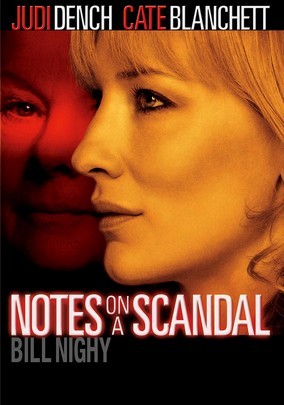
Starring Judi Dench, Cate Blanchett

Scott’s Review #793

Reviewed July 23, 2018

Grade: A

A British drama centering on the world of teachers, illicit affairs, and sexuality, Notes on a Scandal (2006) is a superlative effort with thrills and drama galore.

Featuring heavyweights like Judi Dench and Cate Blanchett, there is no way this film could be a dud based on the acting alone.

The chemistry between the women and the carefully crafted thrills created by director, Richard Eyre, make the film a compelling joy to view- perhaps multiple times for additional entertainment.

The story is told mainly from the perspective of Barbara Covett (Dench), a rigid and bored schoolteacher nearing retirement at a comprehensive school in London.

Barbara is a spinster and a closeted lesbian, constantly writing in her journal for comfort- this is the main narrative of the story and is tremendously effective.

When a young and attractive art teacher, Sheba Hart (Blanchett), arrives on the scene, Barbara fancies her and is determined to get closer.

After Sheba begins an illicit affair with a male student, Barbara discovers the shenanigans and uses the situation to her advantage.

The scandal results in both women’s careers being at risk, as well as Sheba’s troubled home life coming to fruition.

Notes on a Scandal is a good, solid psychological thriller/drama with enough twists and turns to keep the viewer engaged. The film is not very long- at one hour and thirty-two minutes, there is hardly any time for lagging.

The best achievements, however, are with the superior acting of the two leads. With other lesser talents, this film might have suffered from too much melodrama and not enough meat.

With great acting chops, Dench and Blanchett do not let this happen; instead, they treat the audience to a riveting affair.

As fantastic as Blanchett is, Dench’s Barbara is the standout, taking center stage throughout the film.

Interestingly, despite both actresses being leads, Dench received an Oscar nomination for Best Actress, while Blanchett was nominated for Best Supporting Actress.

But there is no question that both actresses deserved the praises they reaped- and then some.

Dench delivers such a delicious performance that she arguably makes the film worth watching. Wearing no makeup and dressed as conservatively as imaginable, the subject will cast an icy stare or thoughtful gaze that runs shivers up and down the viewer’s spine.

As conflict and drama unfold, Barbara proves she is nobody to be messed with.

Still, the character has an underlying vulnerable quality, simply yearning for affection and love from another woman. One wonders if she has ever really had the love she deserves.

Dench is brilliant at revealing Barbara’s nuances.

The film poses an interesting moral question that will leave some viewers undoubtedly not fans of Sheba’s.

The fact that she lusts after an underage male, Steven Connolly (Andrew Simpson), and has relations with him, while having a husband and disabled child at home, may be too much for some.

Surely, the character will not be championed by many, but I found Sheba complex and difficult to grasp.

This complexity is to the filmmaker’s credit and allows for a more layered character study of both Sheba and Barbara- neither is cut and dry.

An interesting aside of the film is what if the genders of the roles were reversed? Would the film have the same effect if Sheba were a male character and Steven were a teenage girl? What if Barbara were a straight woman? What if Barbara were a gay male character?

These other possibilities left me wondering as I watched the film. Wisely, I think director Eyre got things just right.

Notes on a Scandal (2006) is a film that reminds me of a British version of Fatal Attraction (1987) meets Single White Female (1992).

The story holds elements of each and was adapted from a 2003 novel of the same name. With frightfully good performances by both Dench and Blanchett, this film is a memorable thriller not to be missed.

Oscar Nominations: Best Actress-Judi Dench, Best Supporting Actress-Cate Blanchett, Best Adapted Screenplay, Best Original Score

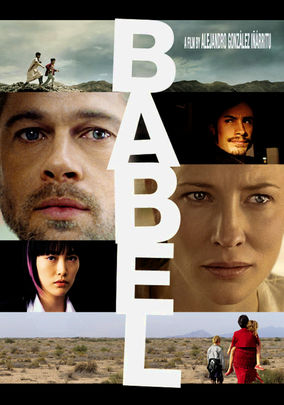
Babel-2006

Babel-2006

Director Alejandro G. Iñárritu

Starring Brad Pitt, Cate Blanchett

Scott’s Review #791

Reviewed July 19, 2018

Grade: A

Babel (2006) is part of director Alejandro G. Iñárritu’s “Death Trilogy” films- Amores Perros (2000) and 21 Grams (2001) are the others.

The director crafts a riveting drama involving intersecting stories that are a thrill ride a minute and highly compelling.

The film is at risk of being forgotten, however, largely due to Iñárritu’s subsequent successes- Birdman (2014) and The Revenant (2015). Still, Babel is a fantastic companion piece to either Traffic (2000) or Crash (2006), as those films hold a similar style.

The three stories are riveting in their own right and could each be a gripping short film.

The fact that characters within each segment are related to the others in some way takes the stories over the top.

The film switches back and forth between stories, which is a huge plus, making the tension even more palpable as we begin to connect the dots.

The spliced editing is a remarkable achievement in ensuring seamless continuity.

Each story is summarized below.

An affluent American couple, Richard and Susan (Brad Pitt and Cate Blanchett), vacation in Morocco, happily enjoying a bus tour.

When two local boys play with their father’s rifle and experiment by shooting at long range, the American woman is shot, leading to a terrorist accusation. At the same time, the couple desperately seeks medical attention in the middle of nowhere and in a foreign country.

In Japan, a wealthy businessman (and owner of the rifle) is investigated while his promiscuous teenage daughter (Rinko Kikuchi) seeks attention from young men.

The girl, who is deaf, is angry and depressed due to her mother’s recent suicide.

As she flirts with a local detective, she slips him a mysterious note. She implores him to read the note only after he leaves her father’s gorgeous high-rise apartment, leading to a mysterious revelation.

Finally, in southern California, Richard and Susan’s Mexican nanny, Amelia (Adriana Barraza), cares for the couple’s young children. Almost like a real family member, Amelia adores the kids (and they love her.)

When she is notified that the couple will be delayed returning home, she panics and foolishly takes the kids across the border to Mexico to attend her son’s wedding.

When an incident involves the police, Amelia and the kids’ lives are in peril.

The connecting stories are only part of what makes Babel so fantastic, but an enormous aspect is the direction Iñárritu gives the characters.

As the stories play out, we care deeply for the characters that play a great role in adding meat to each story.

Sometimes the characters’ connections are immediately known; other times, the audience can savor the inevitable big reveal. Not every story featured in Babel will have a happy ending, which makes the film all the more compelling and satisfying.

How incredible are the different locales and cultures featured in Babel from a geographical perspective alone?

The action traverses from the hip, modern metropolis of Tokyo, with slick nighttime sequences, dance clubs, and urban hip-hop beats.

The deserts of remote Morocco, with their vast, sweeping landscapes, blend perfectly with the hot Mexican atmosphere and the cultural nuances of a real Mexican wedding.

Another key element is the characters’ different backgrounds and the conflicts this sometimes leads to. As Richard frantically seeks medical attention for Susan, he encounters resistance from some while receiving aid from a local veterinarian.

At the Mexico-United States border, Amelia and her brother are not treated well by Border Patrol. One cannot help knowing that this is because they are Mexican and carrying American children, thus discriminated against.

Wonderful call-outs are deserved for the relatively unknown actors Kikuchi and Barraza, both of whom received tremendous accolades in 2006 for their work, even though they could easily have been overlooked in favor of bigger, high-profile stars like Blanchett and Pitt.

I love it when this happens, and gritty performances get the respect they deserve. Both actors give great performances in complex, layered characters.

Since making Babel, Iñárritu has progressed to great acclaim with Oscar winners like Birdman (2014) and The Revenant (2015), but let’s not forget that Babel received a heap of Oscar nominations, though sadly only one victory for the musical score.

Unfortunately usurped by his more high-profile works, Babel (2006) is an excellent, fast-paced, and layered film with spectacular characters, storytelling, and editing.

Oscar Nominations: 1 win-Best Picture, Best Director-Alejandro G. Iñárritu, Best Supporting Actress-Adriana Barraza, Rinko Kikuchi, Best Original Screenplay, Best Original Score (won), Best Film Editing

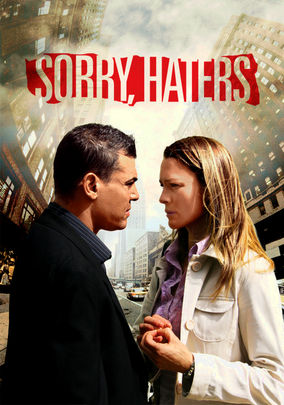
Sorry, Haters-2005

Sorry, Haters-2005

Director Jeff Stanzler

Starring Robin Wright

Scott’s Review #787

Reviewed July 12, 2018

Grade: A

Sorry, Haters (2005) is a small indie film that was not well received by audiences or, at least not by many, by film critics, but that I am a champion of.

The film is a little-known gem and a showcase piece for star Robin Wright, who has become quite the indie queen over the years.

Thankfully, the film did receive some recognition via two independent film nominations, which is how I heard of it.

Regardless, Wright gives a fantastic performance as a troubled television executive who becomes involved with a Muslim taxi driver in New York City, panic-stricken post 9/11.

Ashade (Abdel Kechiche) struggles with driving a cab and the myriad of family issues he faces, including legal troubles.

When an upscale, white woman, Phoebe (Wright), enters his cab one night, she insists on forging a friendship, but what is her motivation?

She immediately seems slightly unbalanced and tense.

Reluctant but in need of her help, Ashade’s life becomes entangled with hers as Phoebe offers her assistance. But when her true motivations are revealed, the audience will never see the terrific and terrifying conclusion coming.

The film is very dark in tone and is hardly a feel-good film.

The best aspect of Sorry, Haters is the complicated relationship between Phoebe and Ashade and how it plays out in the story.

More accurate is the complex dynamic of Phoebe herself as her motivations are slowly revealed.

As great as Kechiche is, the standout is Wright, but both play well opposite each other. Her role is more developed and the centerpiece as the audience slowly becomes aware of her dark secrets and disturbing behaviors.

Phoebe immediately claims to be going through a divorce and hires Ashade to drive her to nearby New Jersey to observe her ex-husband.

She talks his ear off, recounting how she has lost her family. This scene becomes the first clue that Phoebe may be unbalanced.

As the film progresses, this becomes more obvious. As Phoebe dines with colleagues, she engages in reluctant conversation while violently cutting her leg with a fork beneath the table for relief.

Wright can do no wrong as an actress, appearing in numerous films over the years. She is not a “box office” type of actress, and this is to her credit. She chooses independent films that let her sink her teeth into meaty, complex female roles.

The role of Phoebe is of that ilk. The character is unstable, bordering on madness, with rage bubbling under the surface.

Wright portrays these emotions successfully.

Let’s not forget the other leading actor- Kechiche is purely dynamic in the male leading role. The audience will undoubtedly sympathize with this man and his character right away.

Since the period is so close to the events of 9/11, and the character is Muslim (some big clues to the climactic conclusion here), the man is a prime target for discrimination.

Since his brother is imprisoned and needs a legal team, Ashade is quite vulnerable and ultimately at Phoebe’s mercy.

The interesting dynamic between Phoebe and Ashade is that they do not share a romantic relationship at all. Developing a friendship based on need, there is something not right about the situation, and director Jeff Stanzler establishes the appropriate mood with many scenes set either at night or in the confines of Ashade’s taxi.

Dialogue frequently seems awkward between the two.

Despite not being an easy film to watch, Sorry, Haters (2005) is a film with a powerful message and great scenery of one of the world’s most vibrant cities.

The film is dark, even dour, but above all, it contains a powerful message with a timely subject matter. Rich in character development between the leads and the maniacal motivations of some.

I found the film to be topical, riveting, and disturbing.

Independent Spirit Award Nominations: Best Female Lead-Robin Wright Penn, Best Screenplay

The Children’s Hour-1961

The Children’s Hour-1961

Director William Wyler

Starring Audrey Hepburn, Shirley MacLaine

Scott’s Review #620

Reviewed March 3, 2017

Grade: B+

The Children’s Hour (1961) is one of the earliest films to center around an LGBTQ+ theme and the subsequent scandals the subject would provoke in the innocent year of 1961, pre-Civil Rights and pre-Sexual Revolution.

However, since the film was made in the year that it was, homosexuality was presented as something dark and evil rather than something to be accepted or even embraced.

Still, the film and its director, William Wyler, are brave enough to recognize the topic. They create a compelling film rich with well-written characters and some soap opera-style drama.

The Children’s Hour is based on a 1934 play by Lillian Hellman.

The setting appears to be New England, perhaps Connecticut or Massachusetts, though the film never identifies the exact area.

College friends Karen (Audrey Hepburn) and Martha (Shirley MacLaine) open a private all-girls boarding school catering to their affluent community. They run the school with Martha’s Aunt Lilly, a faded Broadway actress who often hen-pecks the women.

Karen has been dating handsome obstetrician Joe (James Garner) for two years. When he proposes marriage, she hesitantly accepts, which saddens Martha.

All the while, spoiled brat child Mary, furious over being punished by her teachers, plots revenge against Martha and Karen and embellishes a heated discussion between the ladies into a scandalous lie she whispers to her grandmother (Fay Bainter).

The grandmother promptly tells the parents of the other students, who remove their children from the school en masse. The lie is that Karen and Martha are lovers, and Mary witnessed the two women kissing.

Meanwhile, Mary is blackmailing a fellow student, Rosalie (Veronica Cartwright), over a stolen bracelet.

The town ostracizes Martha and Karen.

The Children’s Hour becomes even more compelling when one of the women begins to realize that she does indeed have homosexual feelings towards the other woman and has always harbored anger and resentment as well as feeling “different” from other women.

As well-written as the film is, the fact that the audience does not get to hear what Mary whispers to her grandmother is telling and prevents the film from being even more powerful than it is.

Also, the downbeat conclusion to the film sends a clear message that in 1961, audiences were not ready to accept lesbianism as anything to be normalized or to be proud of.

The decision was made to make it abundantly clear that one of the central characters is not a lesbian. Any uncertainty may have risked freaking out mainstream audiences at the time.

Since the traditional opposite-sex romance between Karen and Joe is at the forefront of the film, I did not witness much chemistry between actors Hepburn and Garner.

Still, I might have been at the point of achieving a subliminal sexual complexity.

The Children’s Hour and William Wyler deserve heaps of praise for going so far as to suggest that censorship in film in 1961 would allow them to offer nuggets of progressivism mixed into a brave film.

Incidentally, Wyler made another version of this film in 1936 named These Three. Because of the Hays Code, any hint of lesbianism was forbidden, causing Wyler to create a standard story of a love triangle between the three, with both Martha and Karen pining after Joe.

What a difference a couple of decades make!

MacLaine and Hepburn must be credited with carrying the film and eliciting nice chemistry between the women. However, it is too subtle to be realized if the chemistry is of a friendship level or a sexual nature.

And I adore how Wyler makes both characters rather glamorous and avoids stereotypical characteristics.

Oscar Nominations: Best Supporting Actress-Fay Bainter, Best Sound, Best Art Direction, Black-and-White, Best Cinematography, Black-and-White, Best Costume Design, Black-and-White

Golden Globe Nominations: Best Director-Motion Picture-William Wyler, Best Performance by an Actress in a Motion Picture-Drama-Shirley MacLaine, Best Performance by an Actress in a Supporting Role in any Motion Picture-Fay Bainter

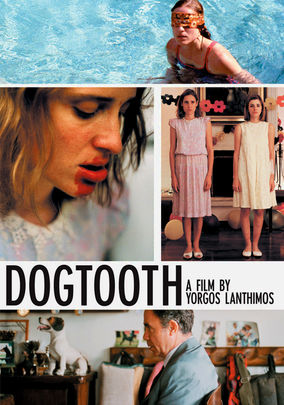
Dogtooth-2009

Dogtooth-2009

Director Yorgos Lanthimos

Starring Christos Stergioglou,  Michelle Valley

Top 10 Most Disturbing Films #9

Scott’s Review #515

70119657

Reviewed November 11, 2016

Grade: A-

Dogtooth is a Greek drama nominated for the 2010 Best Foreign Film Academy Award.

The film is not for the weak at heart and is most bizarre and disturbing- troubling even.

But after digesting it, I realized how much I appreciated its creativity.

It tells the story of three siblings who are homeschooled and shut out from the rest of the world by their overprotective parents. The teenage kids are curious, damaged, and sad.

They know no other world besides the one their parents created for them.

Certain words mean certain things to them- a language of their own. It challenges the art of parental control as the kids’ curiosity builds and builds.

The movie itself is very difficult to follow (non-linear) yet is mesmerizing and perverse.

Warning: Some subject matter can be hard to take for some (incest, cruelty to animals, full-frontal nudity).

I thought it was a fascinating and bravely made film.

Oscar Nominations: Best Foreign Language Film