Tag Archives: Mary Lynn Rajskub

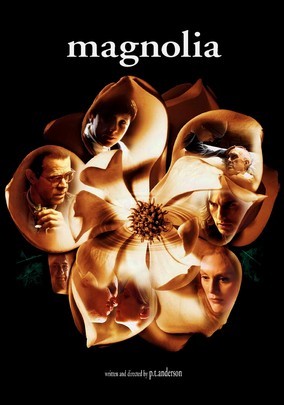
Magnolia-1999

Magnolia-1999

Director Paul Thomas Anderson

Starring John C. Reilly, Julianne Moore, Melora Walters

Top 250 Films #67

Scott’s Review #777
Reviewed June 21, 2018

Grade: A

Paul Thomas Anderson is one of my favorite modern directors. In my opinion, his best film is Boogie Nights (1997), but he has also created other dark offerings, such as Phantom Thread (2017) and Inherent Vice (2014).

Arguably, his most distinctive effort might be Magnolia (1999), a cerebral film that explores themes of forgiveness and the meaning of life.

An ambitious effort, featuring a stellar ensemble cast, makes the film a fantastic experience.

Set in the San Fernando Valley (a mountainous area of Los Angeles), the film resembles David Lynch’s Mulholland Drive (2001) in its setting and oddness, as well as its unusual dialogue and offbeat characters.

A narrator explains three situations of extreme coincidence and surmises that chance may not be the only responsible party. Anderson then weaves an intricate tale involving numerous characters, intersecting lives, and a riveting climax on a rainy California day (an oddity in itself!).

The plot begins when we meet Jim Kurring (John C. Reilly), a police officer who is called to investigate a disturbance.

After finding a woman’s body in an apartment closet, events turn bizarre as a children’s game show host (Philip Baker Hall), his estranged daughter (Melora Walters), the show’s former producer, Earl (Jason Robards), who is dying from cancer, his drug-addicted wife Linda (Julianne Moore), Earl’s male caretaker (Philip Seymour Hoffman), a former game show champion (William H. Macy), and finally, an intense motivational speaker (Tom Cruise).

Quite a bevy of talented actors!

As the plot progresses mysteriously, the connections among the characters are revealed, and their peculiar motivations begin to take shape.

For example, Linda, who married Earl for his money, seems to have an epiphany and demands her lawyer change Earl’s will. Later, a character may have a connection to Earl and Linda, but is it all as it seems?

In Magnolia, the film is so wonderfully strange that it leaves the audience guessing for most of its running time.

Bizarre scenes are commonplace throughout the film. My favorite one is a marvelously creative scene. Suddenly, frogs begin to fall out of nowhere from the Los Angeles sky, with numerous consequences for the characters.

The incident causes a ripple effect, of sorts, as many of the characters’ fates are determined. Though one may not be able to make heads or tails of this scene or take complete logic from it, it’s enthralling all the same.

Magnolia has an overall quirky tone- sometimes upbeat, sometimes melancholy- that I adore. Films that are tough to figure out and feature an interesting musical score are so rich in flavor.

Aimee Mann is responsible for composing many of the songs on the musical soundtrack, so much so that she received a title credit on the soundtrack itself. Mann infuses her music with moody, diverse richness and ambient essentials.

Many actors make frequent appearances in Paul Thomas Anderson’s films. Magnolia alone seems almost like a Boogie Nights reunion with Moore, Walters, Macy, Baker Hall, and Philip Seymour-Hoffman, to name just a handful.

The amazing aspect is that all of the aforementioned actors play vastly different, and arguably even more complex roles than they did in Boogie Nights.

Similar to Quentin Tarantino’s actors appearing in many of his films, this must be a creative treat for them.

There is no doubt that Magnolia (1999) is a complex, dream-like film. Open to interpretation and reflection, I find it a brilliant movie that I would like to revisit and dive into further with each viewing, hopefully for a better understanding and even deeper appreciation.

Oscar Nominations: Best Supporting Actor-Tom Cruise, Best Screenplay Written Directly for the Screen, Best Original Song-“Save Me”
Little Miss Sunshine-2006

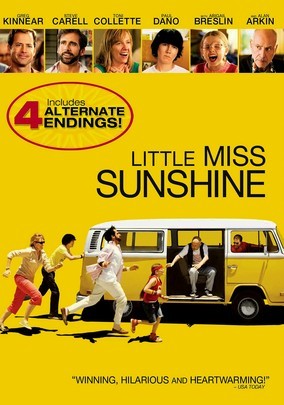
Little Miss Sunshine-2006

Director Jonathan Dayton, Valerie Faris

Starring Greg Kinnear, Steve Carell

Scott’s Review #697

Reviewed November 23, 2017

Grade: A

A film that became a sleeper hit at the time of its 2006 release and went on to earn year-end award honors galore, Little Miss Sunshine holds up quite well over 10 years after its debut.

Combining family humor with heart, audiences will fall in love with the antics of the dysfunctional Hoover family, warts and all, as they strive to overcome endless obstacles to give their precocious seven-year-old daughter, Olive, a chance to compete in a beauty pageant hundreds of miles away.

The film is a comedic treat, full of charm and uproarious fun.

Directors  (and husband and wife team) Jonathan Dayton and Valerie Faris start right to work, kicking off the humor in style as the one hour and forty-one-minute film introduces depressed Uncle Frank (Steve Carell) to the rest of the Hoovers as he comes to live with the family after a failed suicide attempt.

Frank, who is gay and has recently been dumped, is Sheryl Hoover’s (Toni Collette) brother and has a dry sense of humor.

He fits in well with the other peculiar members of the clan- Dad Richard (Greg Kinnear), a struggling motivational speaker, Grandpa Edwin, a vulgar, irritable man, brother Dwayne, angry and refusing to speak, and finally, pudgy-faced Olive.

The brightest spots in Little Miss Sunshine are the exceptional writing and the nuanced, non-one-dimensional characters.

Each character is both good and troubled in their own way, and the overall message of the film is an important one.

The plot of the film encompasses a beauty queen pageant and the lifestyle this involves- hypocrisy and plastic nature are the main themes.

When the family stops at a roadside cafe for breakfast, Olive hungrily orders ice cream and is shamed by a member of the family- she must watch her figure, she is told.

Other members instead encouraged Olive to be herself.

Little Miss Sunshine offers an interesting dissection of the pressures very young people face to be perfect, especially in the beauty pageant business, and of the messages society sends.

Shocking is a scene in which many of the contestants, all under the age of ten, appear wearing sexy, glamorous makeup and bikinis.

Little Miss Sunshine is a very funny film, and this is undoubtedly due to the chemistry among the talented cast.

Quite the ensemble: all five principal characters have interesting relationships with each other.

Too many film comedies suffer immensely from forced jokes or typical “set-up” style humor, plot devices created to elicit a response from the audience, which I call “dumbing down”.

Little Miss Sunshine, however, feels authentic and fresh- a situation becomes funny because there is an honest reaction by the characters.

The film is a slice of the life experience of an average blue-collar family.

A standout scene is the hysterical one in which a highway patrol officer pulls over the Hoovers.

To say nothing of the fact that the Hoovers are “escorting” a corpse to their destination, along with pornographic magazines, their classic, beat-up, yellow Volkswagen bus barely runs and contains a malfunctioning horn that beeps at inopportune times.

These hilarious scenes work on all levels, as the comic timing is palpable and elicits a laugh-out-loud response.

Furthermore, the climactic “beauty pageant” scene is fraught with physical humor.

Olive, the oddball in a group of hypersexualized, young starlets, takes inspiration from her grandfather to simply “be herself”.

She does so in a hilarious version of “Super Freak” that is R-rated, both shocking the audience and celebrated by others- specifically her entire family.

Olive successfully proves that she can be herself and happily does so.

How wonderful and refreshing to find a comedy with honest, ample humor and real integrity that can shine many years after its first release and retain the richness and zest that originally captured legions of viewers.

As proven over time by many independent films, wonderful writing and directors who share a vision go a long way toward achieving a quality piece of filmmaking.

Oscar Nominations: 2 wins-Best Picture, Best Supporting Actor-Alan Arkin (won), Best Supporting Actress-Abigail Breslin, Best Original Screenplay (won)

Independent Spirit Award Nominations: 4 wins-Best Feature (won), Best Director-Jonathan Dayton and Valerie Faris (won), Best Supporting Male-Alan Arkin (won), Paul Dano, Best First Screenplay (won)

Julie & Julia-2009

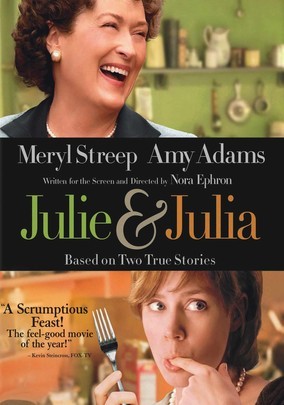
Julie & Julia-2009

Director Nora Ephron

Starring Meryl Streep, Amy Adams

Scott’s Review #588

Reviewed January 7, 2017

Grade: A-

Julie & Julia (2009) is a darling film about cooking that centers on the legendary chef Julia Child. It is for the foodie or culinary geek in all of us.

The film is lighthearted and will ruffle no feathers, but it is a delicious, well-told treat.

The film tells of the life of Julia Child (Meryl Streep), at one time an aspiring chef, contrasted with the life of a young New Yorker, blogger Julie Powell (Amy Adams).

Julie is determined to cook all five hundred twenty-four recipes in Child’s famous cookbook, Mastering the Art of French Cooking, within one year.

The film, of course, would not be half as good without the amazing talents of Streep, who portrays Julia Child herself. All of Julia Child’s personality characteristics are portrayed exceptionally well by Streep.

Her laugh, voice, and zest for life are all perfect. Of course, since Streep is not nearly as tall a woman as Child was, liberties had to be taken by way of camera trickery.

Regardless of Streep’s performance, props for a nice performance by Adams, too.

Julie & Julia (2009) is a cute, charming, light, fun movie. I thoroughly recommend it.

Oscar Nominations: Best Actress-Meryl Streep

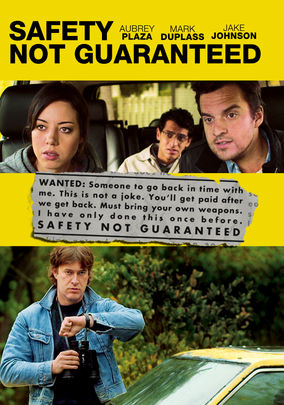
Safety Not Guaranteed-2012

Safety Not Guaranteed-2012

Director Colin Trevorrow

Starring Mark Duplass, Aubrey Plaza

Scott’s Review #440

70227946

Reviewed July 3, 2016

Grade: B-

Safety Not Guaranteed is similar in style to another 2012 independent film, Ruby Sparks, in that they pose the question of “Is this fantasy or reality”?

The film deals with the subject matter of time travel.

The story centers around a magazine journalist, who, along with two interns, follows a man convinced that he is building a time travel machine.

The story then develops into a romantic comedy of sorts and the audience is unsure if the guy is crazy or purely a genius.

It’s an interesting concept, intelligently written, and Aubrey Plaza and Mark Duplass are both quite likable in the lead roles.

The one flaw for me was, at times, the movie dove into slapstick territory with a silly secondary story of a stereotypically written Indian character attempting to lose his virginity.

Besides that, Safety Not Guaranteed (2012) has intriguing intentions.

Independent Spirit Award Nominations: 1 win-Best First Screenplay (won), Best First Feature